As Dhanteras tells it: the bride who sat up
North and West India, the first day of Diwali · 3 min read
King Hima had waited a long time for a son, and when the boy was born the palace was loud with music for days. Then the astrologers drew up his chart, and the music stopped.
"He will grow up strong," the oldest of them said at last. "He will be good. But on the fourth day after his wedding a snake will bite him, and he will not live."
The king and queen kept the boy close and kept the prophecy closer. He grew up as the astrologer had promised, strong and good. When he was sixteen a bride was found for him, and they were married. Somebody told her what was written in the chart, or she found it out. The story does not say which. It says only what she did about it.
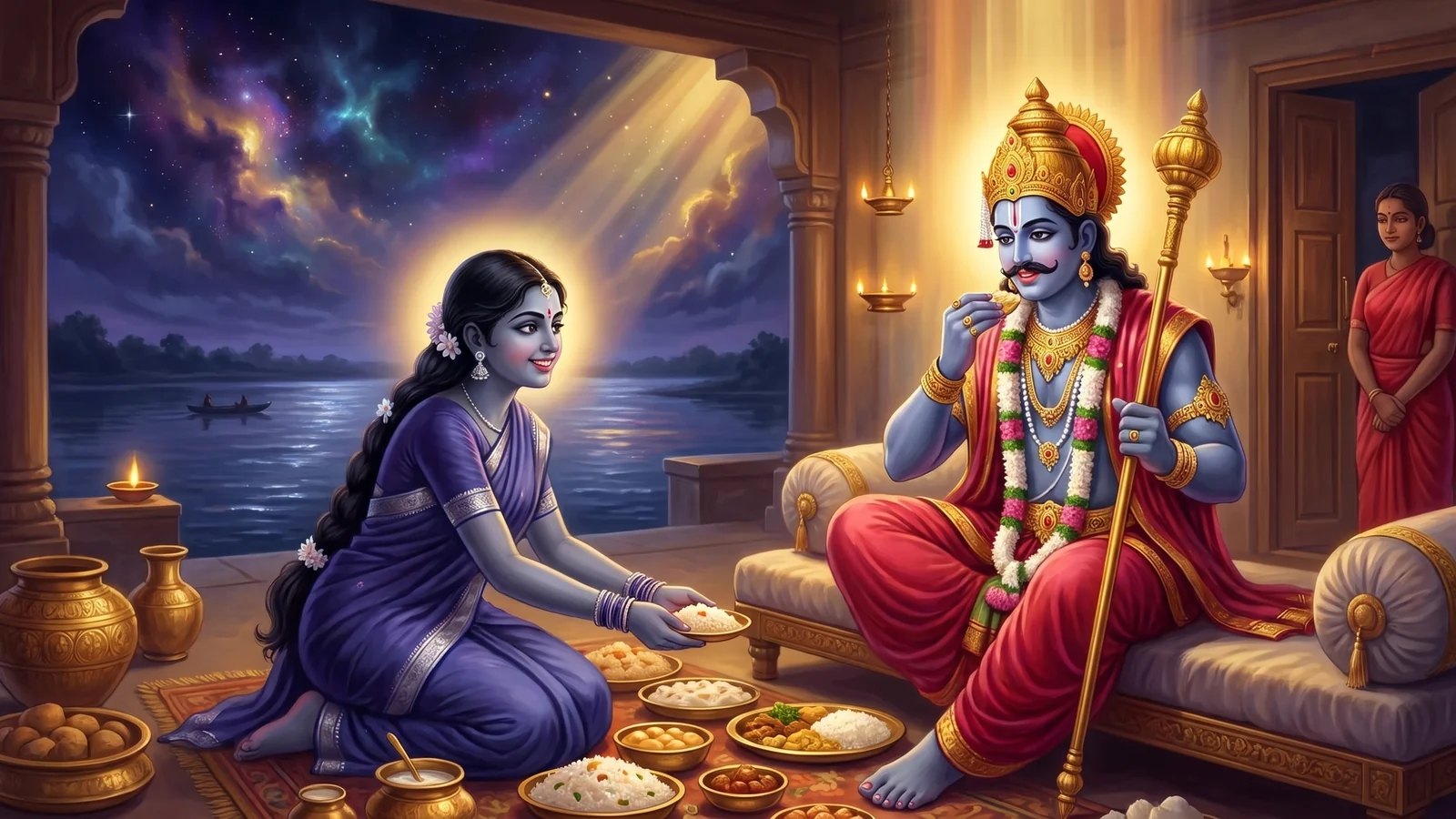
On the fourth day she did not weep. She went through the house and gathered every ornament she owned, every bangle and anklet and chain, and every coin of gold and silver she could find. She carried them to the door of the bedroom and piled them across the doorway in a heap that caught the light.
Then she lit lamps. She set them on the heap and along the walls and in every corner, until there was no shadow left anywhere for a snake to lie in.
Her husband watched all this from the bed.
"What are you doing?"
"Keeping you company," she said. "You are not to sleep tonight. Not for a moment."
"And if I am tired?"
"Then I will tell you a story."
She told him one, and then another. When the stories ran low she sang. Every time his eyes began to close she started a new song, louder than the last, and he laughed and sat up again.
Late in the night Yama came for the prince. He came in the form the chart had named, a serpent, sliding along the floor of the dark palace towards the bedroom.
At the door he stopped. In front of him rose a heap of gold, and on it and all round it burned lamps, so many that his eyes were dazzled. He could not see past the glare. He could not find the way in.
So he did what anyone does at a blocked door. He waited. He coiled himself on top of the heap of ornaments and lay still.
Inside the room a young woman was singing. Yama listened. She finished one song and began another, and then she told a story, and he found that he wanted to hear how it ended. The night went on. The lamps did not go out, because she kept filling them. The prince did not close his eyes, because she would not let him.
When the sky began to grow pale, the fourth night was over. The hour written in the chart had come and gone, and the prince was still sitting up in bed, listening to his wife.
Yama uncoiled himself from the heap of gold and went quietly away.
As Yama's messengers tell it
Skanda Purana, Karttikamasa Mahatmya 9, and the Dhanteras katha · 2 min read
There is a second way of telling it, and in this one the prince dies.
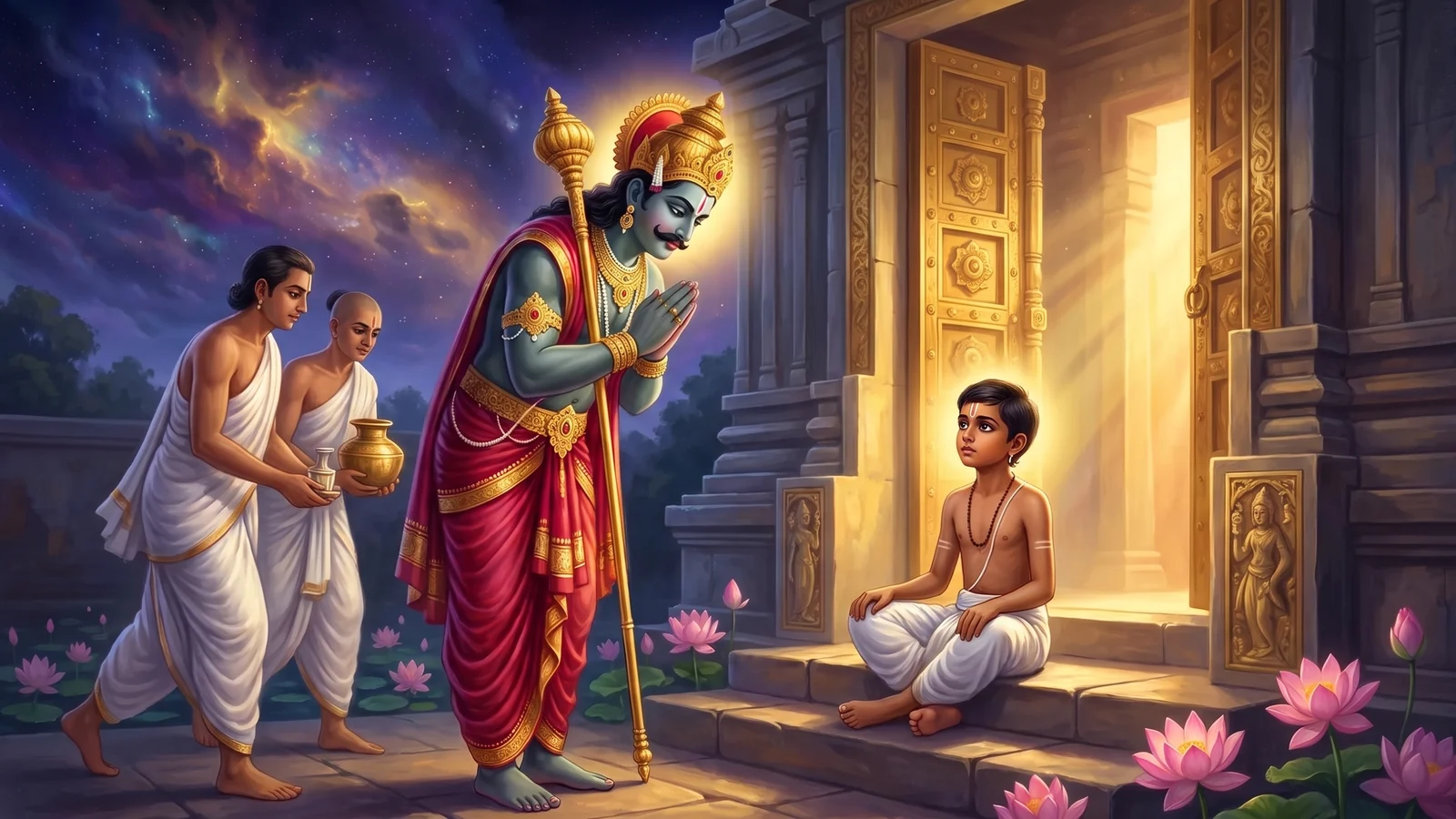
Once, the story goes, Yama put a question to his messengers, the ones who go out with the noose and bring back the dead.
"You carry off thousands every day. Has any of them ever made you feel pity?"
They said they only did as they were ordered. Yama asked again, and this time one of them spoke of a king named Hema and his son. The boy's stars had said he would die four days after his marriage, and he did. The messengers had come for him on the fourth day. His bride, married four days, had thrown herself on the body and wept so bitterly that they wept too as they carried his life away.
"Lord," the messenger said, "is there nothing a person can do against a death that comes before its time?"
The Skanda Purana gives Yama's answer, and gives it as a command. On the thirteenth night of the dark fortnight, it says, whoever lights a lamp at the entrance of the house in the early part of the night, and speaks a verse asking the son of the Sun to be pleased, with Death and his noose and rod, with Time, and with the goddess of fortune, is not to be fetched to Yama's city during the festival of lights. Not even if an untimely death is due.
"Let my order be carried out," Yama tells them.
The Purana has its own prince as well. It says only that the infant son of a king called Hemanaka was saved from untimely death on that day by the mercy of the Lord, and then it moves on to the rules for the next morning. The rest it leaves to the people who tell the tale at their doors.