Festival · The wheat harvest and the new year of the sun
Baisakhi
Baisakhi, on the first day of the month of Vaisakh in mid April, is the harvest festival of Punjab, when the wheat is ready to cut and the farmers dance the bhangra. It is the day the sun enters Aries, the solar new year across much of India, kept with a bath in a holy river. For Sikhs it is also the day in 1699 when Guru Gobind Singh founded the Khalsa at Anandpur.
Also calledVaisakhiVisakhiMesha SankrantiKhalsa Sajna Diwas
Next, in 2027Wednesday 14 April 2027
Prime godsSurya and Ganga and the rivers
with 1 more
WherePunjab, Haryana, Himachal Pradesh, Jammu, Delhi and Uttarakhand, and Punjabis across the world
How longOne day, with fairs that run on for a few days
The first of Vaisakh, when the sun enters Aries, on 13 or 14 April
Why it is kept
Baisakhi is the first day of the month of Vaisakh, in mid April, when the wheat of Punjab turns gold and is ready for the sickle. It is a farmers' festival, loud with drums, and also the morning the sun enters Aries and begins a new year. For Sikhs it carries a third meaning, the birth of the Khalsa.
In the Hindu calendar the sun's year begins when it enters Mesha, the Ram, and that day is kept across India under many names. In the Punjab it falls just as the winter wheat ripens, so it became the harvest festival, the day the farmers give thanks before the reaping. A bath in a holy river begins it, the Ganga at Haridwar above all, and in the old Punjab the pool at Katas, made, the story says, from the tears Shiva shed for Sati.
For Sikhs the day is the founding of the Khalsa. On Baisakhi of 1699 Guru Gobind Singh gathered the Sikhs at Anandpur and created the order of the Khalsa with the first five initiates, the Panj Pyare. Since then it has been the Sikh new year of faith as well as of the harvest.
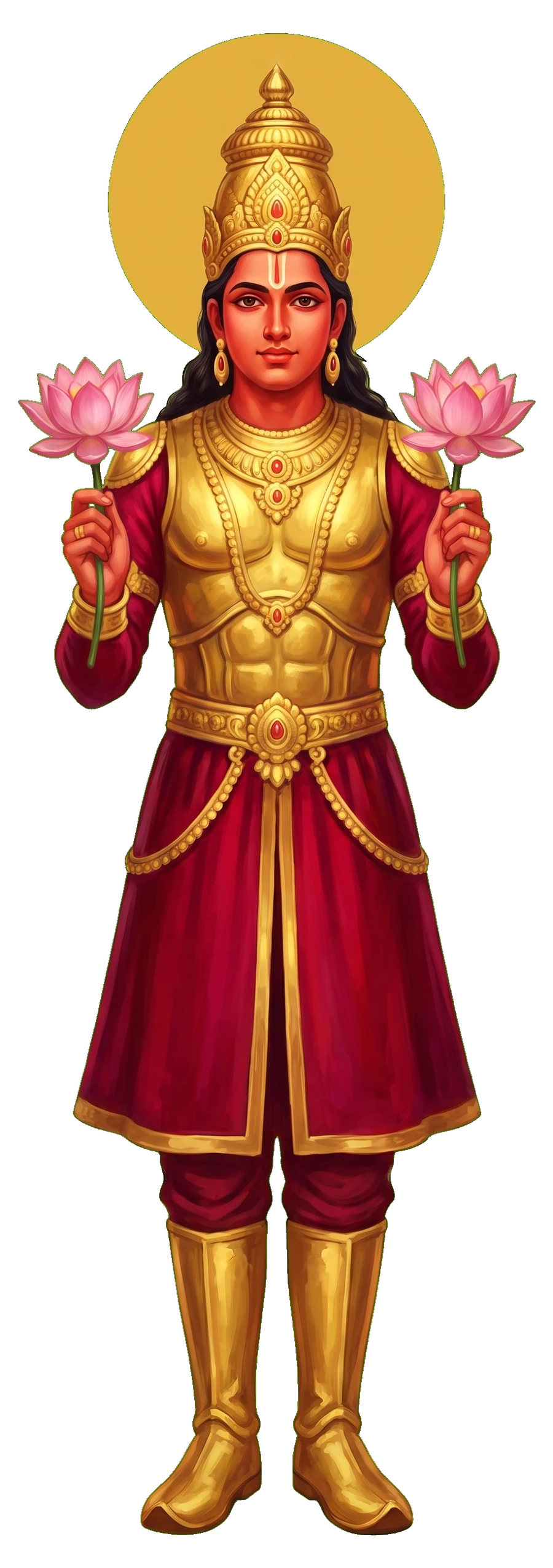
The sun, whose entry into Aries, Mesha Sankranti, begins the solar year. Baisakhi is one of the sun's new year days, kept the same morning as the new years of Bengal, Assam, Odisha, Kerala and Tamil Nadu.
G
Prime god
Ganga and the rivers
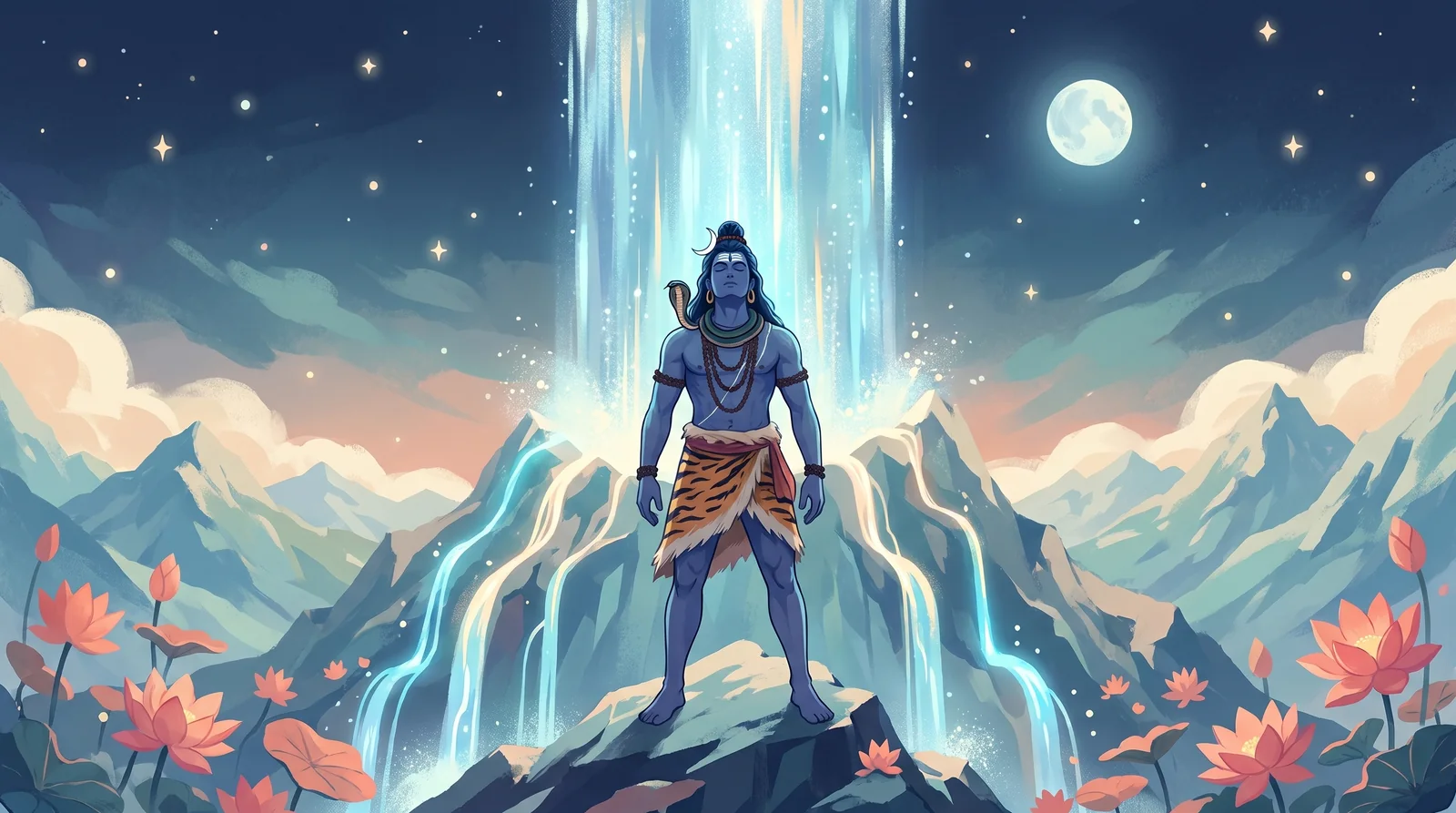
A bath in the Ganga at Haridwar, or in any river or tank, is the first act of the Hindu Baisakhi, and the great bath of the Haridwar Kumbh falls on it.
S
Shiva
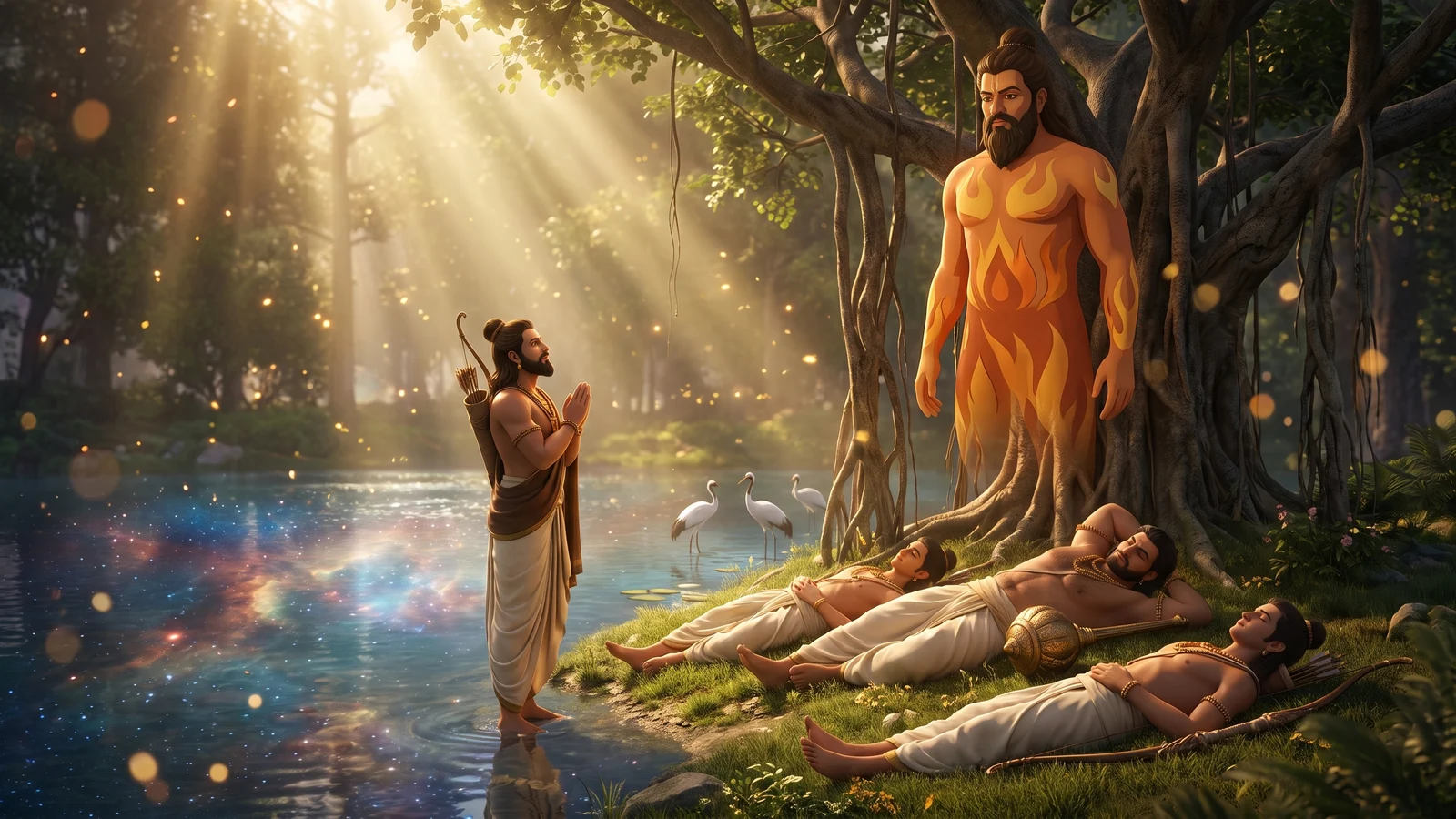
The god of Katas, in the Salt Range of Punjab, where his tears for Sati are said to have made the pool in which the Punjab bathed every Baisakhi.
The day of Baisakhi
1
Baisakhi
The first of Vaisakh, the day the sun enters Aries · Wednesday 14 April 2027
VaisakhiMesha SankrantiKhalsa Sajna Diwas
People bathe early, in a river or at the gurdwara's tank, and go to the temple or gurdwara. The farmers give thanks for the wheat, and in the villages the harvest is begun. Fairs are held, with wrestling, swings and food, and the men dance the bhangra and the women the gidda to the dhol. Sikhs hold processions, nagar kirtans, and new members take amrit.
The great harvest festival. The golden wheat stands ready, the dhol is beaten, the bhangra is danced in the fields, and fairs fill every town. At Anandpur Sahib and at Talwandi Sabo's Damdama Sahib the gatherings are the biggest of the year.
Haryana, Himachal Pradesh and Jammu
Harvest fairs and river baths. In the hills it is Bisu or Basoa, with fairs at the temples, and in Jammu the Baisakhi fairs are held on the banks of the Tawi and the Chenab.
Haridwar, Uttarakhand
Hundreds of thousands bathe at Har Ki Pauri, and in a Kumbh year, as in 2027, Baisakhi is the day of the great royal bath.
Katas Raj, in the Salt Range of PunjabThe old Baisakhi fair
Before 1947 the Punjab came to bathe in the pool of Katas, said to be Shiva's tear. A traveller counted twenty thousand there in 1848. The temples are now in Pakistan.
Across IndiaThe same sun, other new years
The sun's entry into Aries is also Pohela Boishakh in Bengal, Rongali Bihu in Assam, Pana Sankranti in Odisha, Vishu in Kerala, Puthandu in Tamil Nadu and Juir Sheetal in Mithila, each with its own customs and its own place in the Lore.
SikhsKhalsa Sajna Diwas
On Baisakhi of 1699, at Anandpur, Guru Gobind Singh called for a Sikh willing to give his head, and five men came forward one by one, the Panj Pyare, the five beloved. He gave them amrit, sweetened water stirred with a double-edged sword, and so founded the Khalsa, and then took amrit from them himself. Baisakhi is kept as the Khalsa's birthday with processions, readings of the Guru Granth Sahib and amrit ceremonies.
The Punjab and the nationJallianwala Bagh
On Baisakhi of 1919 British troops under General Dyer fired on a peaceful crowd gathered in the Jallianwala Bagh at Amritsar, killing hundreds. The day is remembered at the memorial there every year.
How it is kept
The day starts with a bath and a visit to the temple or the gurdwara, where the Guru Granth Sahib has been read through without a break over the days before. Sikhs walk in nagar kirtans behind the Panj Pyare, the gurdwaras serve langar to all comers, and new members of the Khalsa take amrit.
Then come the fairs. In the villages and towns of the Punjab there is wrestling and racing, swings and stalls, and the dhol plays for the bhangra and the gidda, the dances of the harvest. Farmers start the reaping, and in the evening families eat together. In Haryana, the hills and Jammu the same day brings harvest fairs and river baths of its own.
In the old texts
The Puranas and the astronomers count Mesha Sankranti, the sun's entry into Aries, as one of the year's holiest moments for a bath and for giving. The story of the Katas pool is a local tradition, set down by the historian Sujan Rai Bhandari in 1695, who wrote that the Hindus came there on Baisakhi and that the earth had two eyes, Pushkar and Katas.
The founding of the Khalsa is told in the Sikh histories of the eighteenth and nineteenth centuries, among them the Gur Sobha of Sainapati and later the Panth Prakash, and the day's place as the Sikh festival of the harvest goes back to the Gurus, who called the Sikhs together at Baisakhi.
Where this page comes from. Written by Devalok from the Katas Raj tradition as recorded by Sujan Rai Bhandari (1695), the Sikh accounts of the Khalsa, and accounts of the festival across the Punjab and North India, as recorded in the Devalok Lore. Our own words throughout.