Festival · A night when the guardian spirits of the coast come down to speak
Bhuta Kola
The worship of the daivas, the guardian spirits of Tulu Nadu, on the coast of Karnataka and northern Kerala. Through a whole night a dancer from a hereditary family is painted and dressed in palm fronds and a great headdress, sings the spirit's origin, and is possessed by it. As the daiva, he then hears the village's quarrels, gives judgment, and blesses the fields. The season runs from Deepavali to the end of the harvest in May.
Also calledBhoota KolaDaiva KolaNemaDaivaradhaneBhuta Aradhane
Next, in 2026Sunday 8 November 2026
8 November 2026 to 24 May 2027
Prime godsPanjurli and Guliga
with 2 more
WhereTulu Nadu, the coast of Dakshina Kannada and Udupi in Karnataka and Kasaragod in Kerala
How longEach kola is one night, from dusk to dawn; the season lasts about six months
From Deepavali, in October or November, to Pathanaje, the tenth day of the solar month of Vrishabha, in late May. Each village and each family house keeps its own kola on its own night, most of them from December to April
Why it is kept
Bhuta Kola is not one festival but a season of them. On the Tulu coast every village, and every old family house, has its daivas, the spirits who guard it. Once a year each daiva is called down for a night, through a dancer whose family has done this for generations. He sings its story, wears its face and, the people say, becomes it, and through him the spirit speaks to the people it protects.
The daivas are the guardians of the land. They protect the fields, the cattle and the houses, and they keep justice. In return they must be honoured with a kola every year, and a family or a village that neglects its daiva expects trouble, illness in the house or quarrels over land. The kola keeps the bargain: the spirit is fed and honoured, and it promises another year of protection.
It is also a court. In the night of the kola the daiva hears disputes that the people cannot settle, and its word is final. The paddanas, the songs of how each daiva came to be, are the coast's own scripture, telling how a boar raised by Parvati became Panjurli, how a hungry spirit born of Shiva's ash became Guliga, and how men and women of the coast became daivas after they died.
Who is worshipped
P
Prime god
Panjurli
The boar spirit, raised by Parvati on Kailasa and sent down by Shiva to guard the crops and cattle of the coast. One of the most widely kept daivas, and the judge of many villages.
G
Prime god
Guliga
The fierce guardian of boundaries, born of a stone in the ash of Kailasa, whose hunger only Vishnu's little finger could end. Often kept beside Panjurli.
T
The daivas
More than three hundred and fifty spirits, among them Jumadi and Bante, Kalkuda and Kallurti, Koragajja, and the twin heroes Koti and Chennaya. Some are gods, some are animals, some were once people.
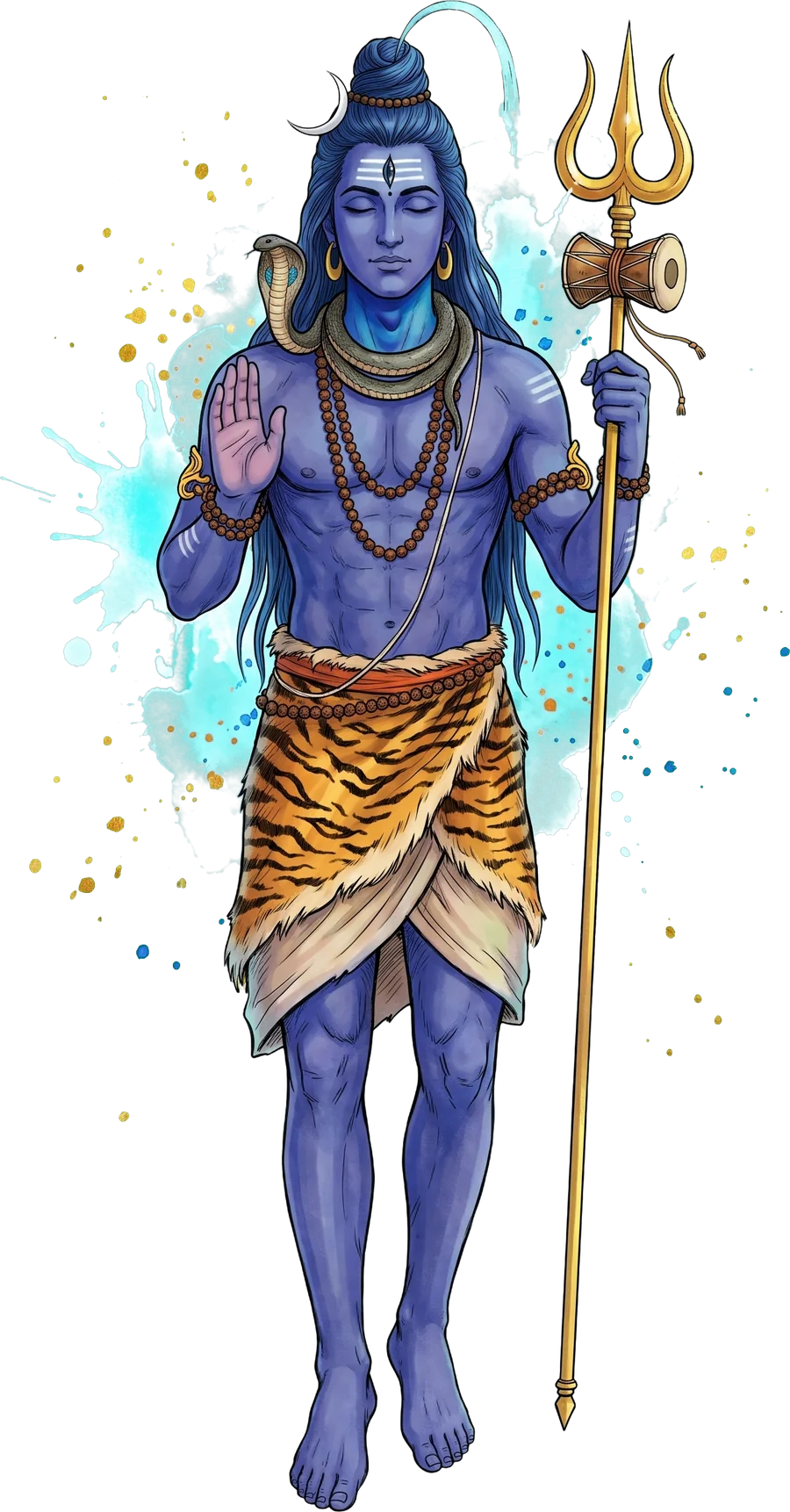
The great gods in whose garden and ash several daivas are born, and who send them down to the coast. In the kola they are a frame for the daiva's own story.
The night of a kola
1
The bhandara
Dusk
bringing out the ornaments
The daiva's sword, bell, anklets and mask are kept in a bhandara house or the shrine. At dusk they are carried out to the open ground in a procession with drums and torches, and a flag, the kodi, is raised.
2
The paddana
Evening into night
the song and the dressing
The dancer, the paathri, of the Pambada, Nalike or Parava communities, is painted in yellow and red. As he is dressed in a skirt of tender coconut fronds and the great arch of the ani on his back, the women of his family sing the paddana, the spirit's origin, in Tulu, to a drum.
The dancer, with the gaggara bells on his ankles, dances until the daiva comes into him. His movements change; Panjurli roots and grunts like a boar, Guliga stamps and roars. He is given rice, coconut, and in some kolas a cockerel, and holds a torch of coconut fronds.
4
The nudi
Before dawn
the judgment
The possessed daiva sits before the people and speaks. Families bring their disputes over land, money and marriage, and he gives his word, which is accepted as final. Then he blesses the village, gives out prasad, and the spirit leaves the dancer at dawn.
The heart of the kola, with shrines, daivasthanas, in almost every village and every guttu, the old family house of a landholding lineage. A family that has moved to Mumbai or the Gulf still comes home for its daiva's night.
Kasaragod, KeralaBhuta Kola and Theyyam
Across the border, Kasaragod keeps both the Tulu kola and the Malayali theyyam, its close relative, whose dancers and spirits share much with it.
The nemaThe larger festival
A nema is a grander kola kept by a whole village or a temple, sometimes over several nights, with many daivas danced in turn and a fair around it.
Tulu-speaking communitiesEvery caste of the coast
The kola is kept by Bunts, Billavas, Mogaveeras, Brahmins and many other communities, and the dancers come from communities long at the bottom of the caste order, who in the night of the kola are the voice of the spirit to whom everyone bows. Some daivas, like the Bobbarya of the sea, are kept by Muslim and Hindu fishermen alike.
How it is kept
The kola is held in the open, on the ground before the shrine, after the harvest. As night falls the daiva's ornaments are carried out with drums and torches. The dancer is painted in turmeric yellow and red, with patterns drawn round his eyes, and dressed in a skirt of fresh coconut fronds, silver ornaments, and on his back the ani, a great arch of palm and bamboo that frames his head. The women of his family sing the paddana, and as the night deepens he dances, faster and fiercer, until the daiva comes.
Then he is no longer the dancer. The people bow to him and offer him rice, coconuts and flowers. He sits, and listens, and judges, and blesses, and at dawn the spirit leaves and the dancer is himself again. The whole village is there all night, and a kola is a meeting of families as much as a rite.
In the old texts
The daivas are not in the Puranas. Their texts are the paddanas, oral songs in Tulu, often hundreds of lines long, which differ from family to family and were first written down by scholars in the nineteenth and twentieth centuries. Folklorists have recorded more than fifteen paddanas of Panjurli alone. Many of them frame the spirit's story with the great gods, Shiva, Parvati and Vishnu, but the daiva and its village are always at the centre.
The kola became known far beyond the coast through the film Kantara in 2022, which ended with a kola of Panjurli and Guliga. The families who keep it ask that it be watched with care, as worship and not as a show.
Where this page comes from. Written by Devalok from the Tulu paddanas of Panjurli and Guliga as sung at the kola and recorded by folklorists of Tulu Nadu, the comparative studies of the Tulu oral epics, and accounts of the Bhuta Kola in Dakshina Kannada, Udupi and Kasaragod, as recorded in the Devalok Lore. Our own words throughout.