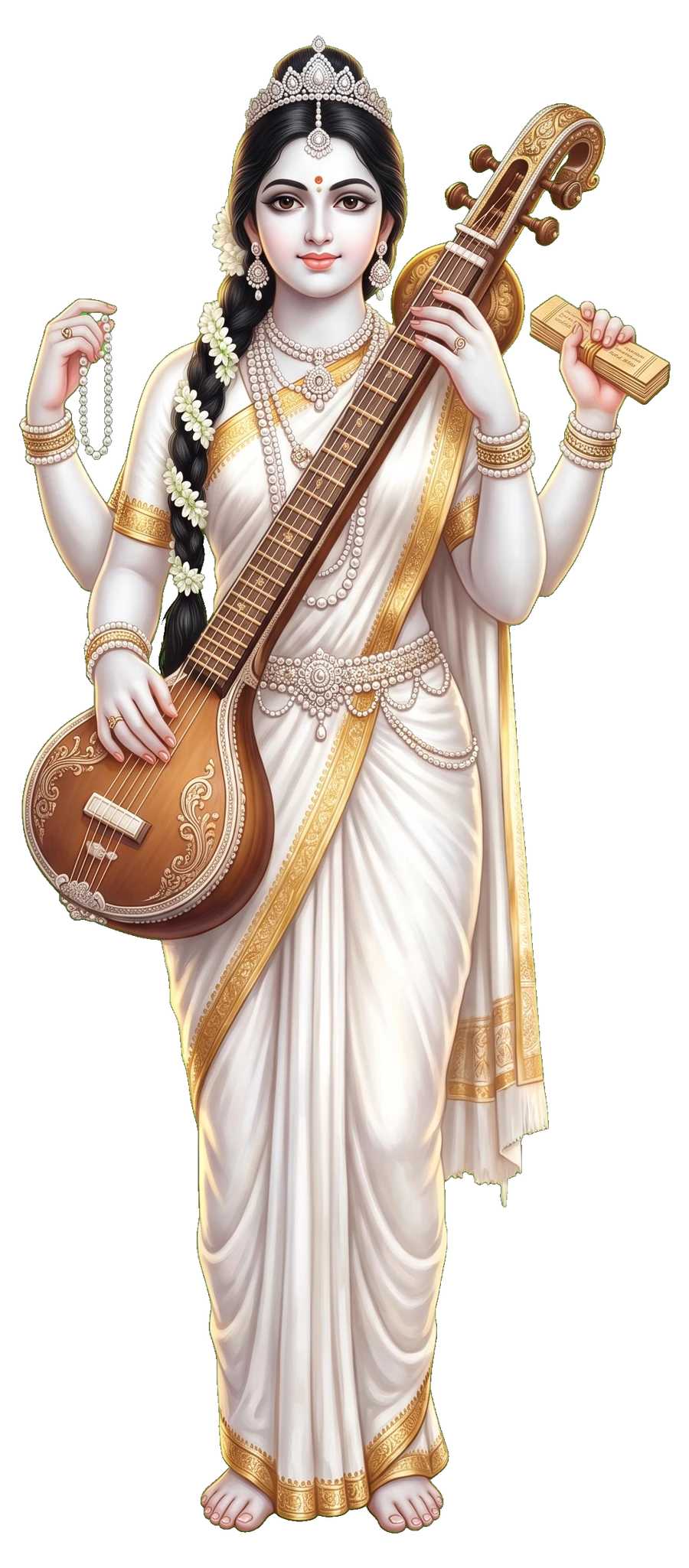
Navratri, the nine nights, is the great festival of the Goddess, kept in the bright half of Ashvin in September or October. Each night is given to one of her nine forms, the Devi Mahatmya is read through, and she is worshipped in a pot of water set up on the first day. Gujarat dances the garba around her lamp, Bengal keeps the last days as Durga Puja, the south lays out its steps of dolls, and the tenth day is Dussehra.
Also calledNavaratriSharad NavratriSharadiya NavaratriDurga PujaGoluDasara
Next, in 2026Sunday 11 October 2026
11 to 19 October 2026
Prime godsDurga and The Navadurga
with 2 more
WhereAll India, above all Gujarat, Bengal, the Himalaya, Karnataka and Tamil Nadu, and Nepal
How longNine nights, and the tenth day, Vijayadashami
The first nine days of the bright half of Ashvin, in September or October, with a second Navratri in spring in Chaitra
Why it is kept
Navratri means nine nights. Twice a year, at the turn of the seasons, in spring and again in autumn, India keeps nine nights for the Goddess, and the autumn ones, in Ashvin, after the rains, are the great ones. They end in the tenth day, Vijayadashami, the day of victory.
The Devi Mahatmya tells how the gods, beaten by the buffalo demon Mahisha, let their anger out of their bodies as light, and the light became a goddess carrying all their weapons. She fought him for nine days and killed him on the tenth. Later she killed the demon kings Shumbha and Nishumbha and all their generals. The nine nights are kept for those battles, and for the Goddess who promised to come back whenever the world calls her.
Rama is part of it too. In the Bengal telling he worshipped the Goddess in autumn, out of her season, before his last battle with Ravana, and won. That is why the great puja falls now, and why Dussehra, the day he killed Ravana, closes it.
The Goddess herself, the power of all the gods in one form, who killed the buffalo demon Mahisha and the demon kings Shumbha and Nishumbha. Bengal and the hills see her as Parvati, Shiva's wife and the Himalaya's daughter, coming home for the festival.
T
Prime god
The Navadurga
Her nine forms, one for each night, from Shailaputri, the mountain's daughter, on the first, to Siddhidatri, the giver of powers, on the ninth. Each has her own colour, her own offering and her own temples.
Worshipped on the last days with books and instruments laid before her, above all in Kerala, Karnataka and Tamil Nadu, where children begin their letters on the tenth day.
The nine nights and the tenth day
1
Ghatasthapana
The first day of the bright half of Ashvin · Thursday 30 September 2027
Kalash SthapanaShailaputri Puja
The Goddess is called into a pot of water, a kalash, set on a bed of earth sown with barley, with mango leaves and a coconut at its mouth. A lamp is lit beside it that must burn through all nine nights. Shailaputri, the daughter of the mountain, is worshipped, and the fast of the nine days begins.
Each night belongs to one form, in order Shailaputri, Brahmacharini, Chandraghanta, Kushmanda, Skandamata, Katyayani, Kalaratri, Mahagauri and Siddhidatri. Many keep a colour for each day. The Devi Mahatmya is read through over the nine nights, and in Gujarat the garba is danced every night around the lamp in the pot.
The height of the festival. Little girls are worshipped as the Goddess and fed, the Kanya Puja. At the moment the eighth day turns into the ninth Bengal keeps the Sandhi Puja with a hundred and eight lamps and lotuses, the hour Chamunda killed Chanda and Munda. On the ninth the south lays tools, books, vehicles and weapons before the Goddess, the Ayudha Puja.
The tenth day of the bright half of Ashvin · Saturday 9 October 2027
DussehraDasaraBijoya Dashami
The Goddess's victory and Rama's. The barley shoots grown in the pot are given as blessings, images are carried to the river in Bengal, and children begin their letters in the south. The day has its own page, Dussehra.
Every night women and men dance in rings around a lamp in a pierced clay pot, the garbo, which stands for the womb and the Goddess within it, and later with pairs of sticks in the dandiya. Ambaji, Pavagadh and Bahucharaji are full of pilgrims. The garba of Gujarat is on UNESCO's list of intangible heritage.
Bengal, Assam, Odisha, Bihar and TripuraDurga Puja
The last five days are Durga Puja, when the Goddess comes home to her mother with her four children, in clay images set up in pandals. Its story and its days have their own place in the Lore, and the spring Basanti Puja keeps King Suratha's older worship.
Tamil Nadu, Karnataka and Andhra PradeshGolu, Bombe Habba and Bommala Koluvu
Families set up steps of dolls, gods, saints, villagers, animals and toys, in odd numbers of tiers, and invite neighbours each evening to see them, sing and take home sundal and small gifts. Karnataka's Mysuru keeps a royal Dasara, with Chamundeshwari on the hill above.
KeralaPooja Vaippu and Vidyarambham
Books and tools are laid before Saraswati on the eighth evening and not touched until the tenth, when they are taken back and small children write their first letters in rice.
North India and the Himalaya
Fasting for nine days, the Ramlila plays of the Ramayana on every night, and the Kanya Puja of little girls. The great Goddess shrines, Vaishno Devi, Naina Devi, Chintpurni, Jwalaji and Mansa Devi, are crowded through the nine days.
NepalDashain
Nepal's greatest festival, fifteen days long, with jamara barley sown on the first day and given with red tika by the elders on the tenth.
ShaktasThe great festival of the Goddess
For those who worship the Goddess as the highest power, these nine nights are the year's centre, and the Devi Mahatmya, the Durga Saptashati, is their text, recited whole on each day or across the nine.
All communities of Gujarat and BengalThe festival of the city
Garba nights and the pandals of Durga Puja draw people of every faith, as dancers, artisans, drummers and visitors. Many of the clay images of Kolkata are shaped in Kumartuli, and the dhak drummers come in from the villages.
How it is kept
On the first morning a pot of water is set up as the Goddess, on earth sown with barley, with a lamp that burns for all nine days. Many fast, eating once a day or only fruit and milk, and the Devi Mahatmya is read through in homes and temples. Each night belongs to one of her nine forms, and in many places to a colour.
The evenings are for dancing and visiting. In Gujarat the garba is danced around a lamp until late at night, in the south the steps of dolls are set out and neighbours come to see them, in Bengal the pandals open for the last five days. On the eighth or ninth day little girls are fed as the Goddess, and on the ninth tools, books and vehicles are worshipped. On the tenth the barley shoots are handed out as blessings, and the Goddess is sent home.
In the old texts
The Devi Mahatmya, part of the Markandeya Purana and some fifteen hundred years old, is the Goddess's own text, and its frame story ends with a king and a merchant worshipping her on a riverbank. The Devi Bhagavata Purana describes the nine-day worship in the autumn and the spring and says Rama kept it, on Narada's advice, before he crossed to Lanka.
The Kalika Purana and the later Bengali texts give the rites of the autumn puja, and the fifteenth-century Krittivasi Ramayana tells of Rama's untimely worship and the hundred and eighth lotus. The nine forms of the Navadurga come together in later tradition and in the Devi Kavacha read before the Mahatmya.
Where this page comes from. Written by Devalok from the Devi Mahatmya (Markandeya Purana 81 to 93), the Devi Bhagavata Purana, the Kalika Purana, the Krittivasi Ramayana, and accounts of the festival across India and Nepal, as recorded in the Devalok Lore. Our own words throughout.