Festival · The first day of spring, and the day of Saraswati
Vasant Panchami
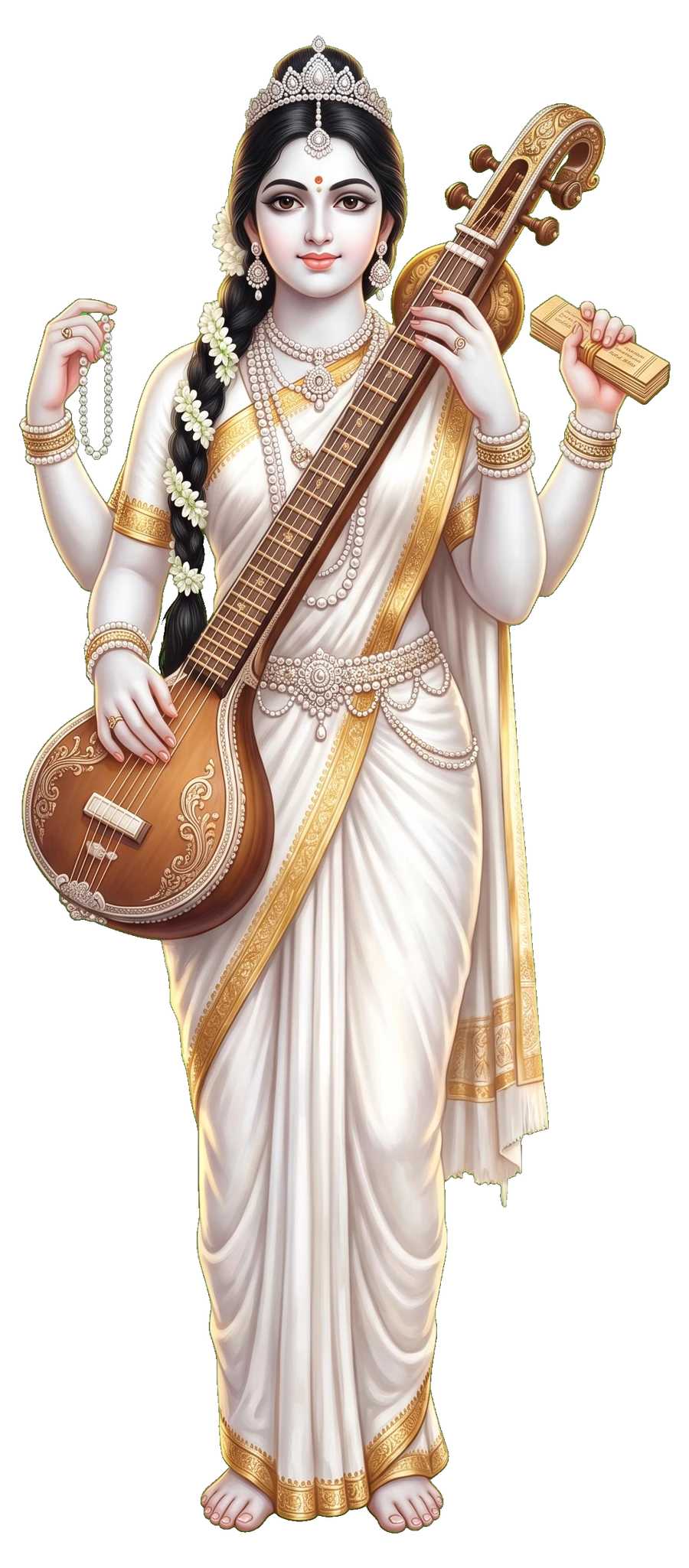
Vasant Panchami, on the fifth day of the bright half of Magha, is the first festival of spring and the day of Saraswati, the goddess of learning, music and speech. Students set their books and pens before her, small children write their first letters, and much of the north dresses in yellow for the mustard fields in flower.
Also calledBasant PanchamiSaraswati PujaShri PanchamiBasant
Next, in 2027Thursday 11 February 2027
Prime godSaraswati
with 2 more
WhereAll North and East India, above all Bengal, Bihar, Odisha, Punjab and Uttar Pradesh, and Nepal
How longOne day
The fifth day of the bright half of Magha, in January or February
Why it is kept
Vasant Panchami is the fifth day of the bright fortnight of Magha, the day the north says spring begins. The cold is going, the mustard is in yellow flower across the plains, and the day belongs to Saraswati, the goddess of speech, learning and music. It is the festival of everyone who reads, writes, studies or plays an instrument.
The festival's own story is that Brahma made the world and found it silent. He sprinkled water from his pot, and Saraswati rose with a veena; with her first note the rivers began to murmur, the wind to sound and people to speak. Vasant Panchami is the day she appeared, and so it is the day to ask her for words, for knowledge and for a clear mind.
It is also the first day of spring. Vasanta, the spring, is Kama's friend in the old poetry, and the classical calendars made this a festival of love and of the new season. The yellow that everyone wears is the colour of the mustard and of the spring sun, and of Saraswati's own day.
The goddess of speech, learning and music, who in the festival's telling rose from Brahma's water pot with a veena and gave the silent world its voice. Vasant Panchami is kept as the day she appeared.
K
Kama and Rati
The god of love and his wife, whose friend is Vasanta, the spring. In the older Sanskrit festival calendars the day began the season of love, and in some homes Kama and Rati are still worshipped.
Rama, who in the tradition of the Dangs of Gujarat reached the hermitage of Shabari on Vasant Panchami and ate the berries she had tasted for him.
The day of Vasant Panchami
1
Vasant Panchami
The fifth day of the bright half of Magha · Thursday 11 February 2027
Saraswati PujaShri Panchami
Saraswati is worshipped in homes, schools and colleges, in the morning, while the fifth day lasts. Books, pens and instruments are placed before her and not used for the day. Yellow clothes are worn and yellow food is cooked, saffron rice and kesari, and small children are seated to write their first letters, the Vidyarambha or Hate Khori.
Bengal, Bihar, Jharkhand, Assam and OdishaSaraswati Puja
The great day of students. Clay images of a white Saraswati with her swan are set up in schools, colleges and street pandals, students fast until the puja and offer flowers, and the next day the images are taken to the river. In Bengal it is the day young people go out together in yellow saris and dhotis.
Punjab, Haryana and LahoreBasant
The kite festival. The sky fills with yellow kites, people dress in yellow and eat yellow sweet rice, and fairs are held in the mustard country. Before 1947 Lahore's Basant was the most famous of all.
Uttar Pradesh, Madhya Pradesh and Rajasthan
Saraswati and Vishnu are worshipped, yellow is worn, and in Braj the forty days of Holi begin on Vasant Panchami, when the wood for the Holika fire is first gathered at the temples.
Dang, GujaratShabari Dham
At Shabari Dham near Subir, said to be where Shabari met Rama, a fair is held and Rama's coming is remembered on this day.
Uttarakhand and HimachalShri Panchami
Barley shoots and yellow flowers are offered, and the plough is first put to the field for the new season in some villages.
South India
The south keeps its own Saraswati Puja at Navaratri, in autumn, but the temples of Saraswati at Sringeri, Koothanur and Basar hold special worship, and the Vidyarambha of Basar is crowded on this day.
Sufis of DelhiSufi Basant
At the dargah of Nizamuddin Auliya in Delhi, the qawwals sing in yellow and offer mustard flowers at the shrine. The story is that the poet Amir Khusrau saw Hindu women going to a temple in yellow with mustard flowers and dressed the same way to make his grieving master smile, and the dargah has kept Basant ever since.
SikhsBasant at the gurdwaras
Sikhs sing the hymns in Raga Basant from this day, and fairs are held at gurdwaras in Punjab. Maharaja Ranjit Singh made Basant a court festival with yellow tents and yellow dress.
Jains and Buddhists
Jain and Buddhist schools in the north keep the day as the start of spring and of the year's study, though the goddess of learning in Jain worship is Shruta Devi.
How it is kept
In the morning Saraswati is worshipped at home or at school, with white and yellow flowers, sandal and sweets. Books, pens, slates and instruments are placed before her and blessed, and students do not study that day, because their books are with the goddess. Little children are sat on a parent's lap to write their first letters, often the syllable om, on a slate or in rice.
Yellow is worn and yellow food is eaten: saffron rice, kesari halwa, boondi, and in Bengal khichuri and the plum-like kul, which many will not eat until it has been offered to Saraswati. In Punjab the day is for kites. In Bengal the clay images are carried to the river on the following day.
In the old texts
Saraswati is a river and a goddess in the Rig Veda, and she becomes the goddess of speech as she is joined with Vac in the Brahmanas. The Puranas tell of her birth from Brahma, and the Brahmavaivarta Purana has Krishna himself first worship her on the fifth of Magha and ordain the day for her. The story of the silent world is the one told on the day itself, in the vrat books and at home.
The spring festival is old too. Kalidasa and the Sanskrit plays describe a Vasantotsava, a spring festival of love and of Kama, and the medieval calendars place the start of spring on this day. Shabari's story is in the Valmiki Ramayana; the tradition that Rama came to her on Vasant Panchami belongs to the Dangs and to the Hindi festival books.
Where this page comes from. Written by Devalok from the Vasant Panchami katha, the Brahmavaivarta and Matsya Puranas, the Valmiki Ramayana (Aranya Kanda 74), the traditions of the Dangs and the Nizamuddin dargah, and accounts of the festival across North India, as recorded in the Devalok Lore. Our own words throughout.