Who Vishnu is
Vishnu is the god who keeps things going. Brahma makes the worlds and Shiva ends them, and between those two moments, which is to say nearly all the time, Vishnu looks after what exists. He is called the preserver, and the stories show what that means in practice: whenever something goes badly wrong, he is the one who turns up.
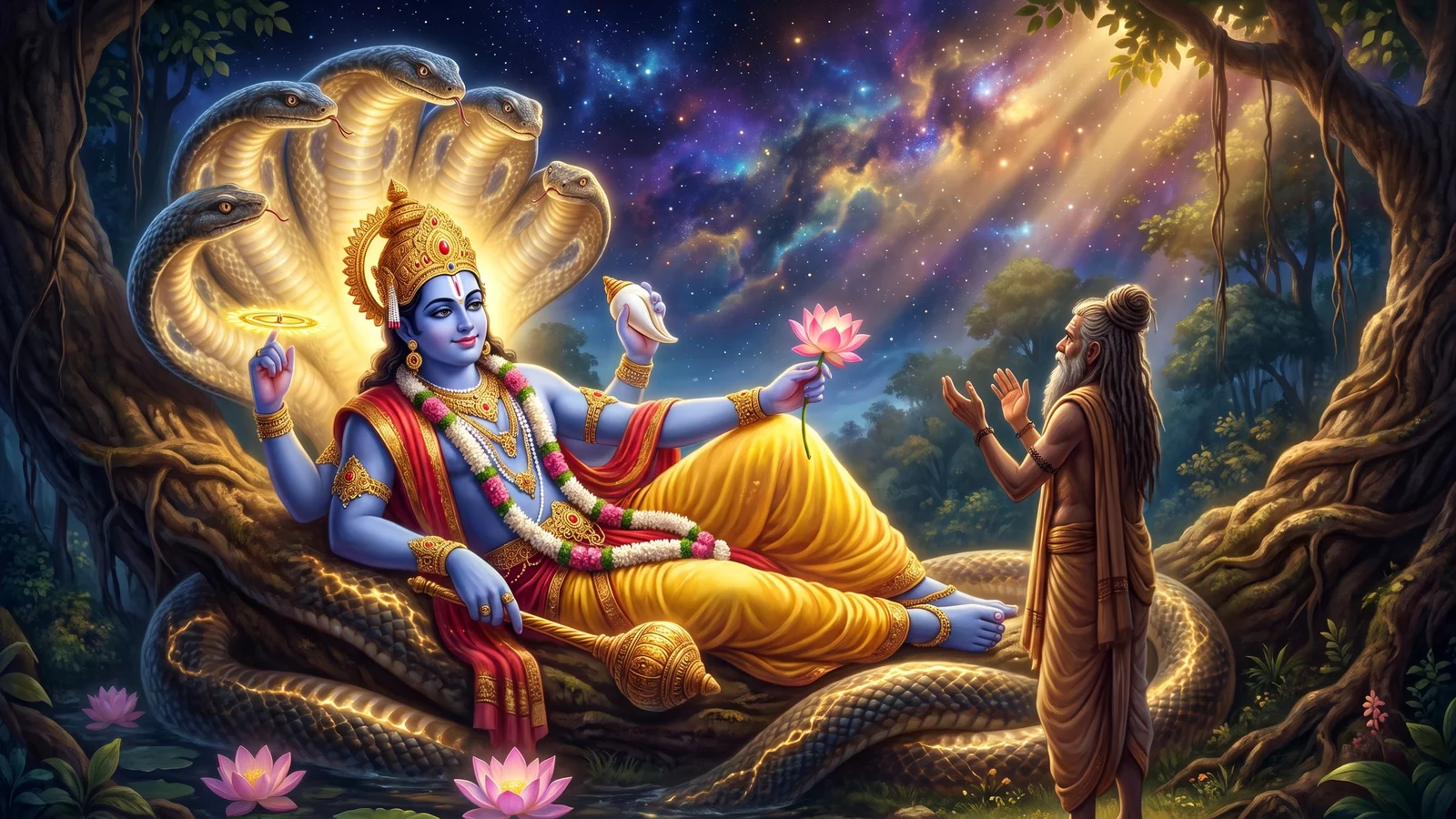
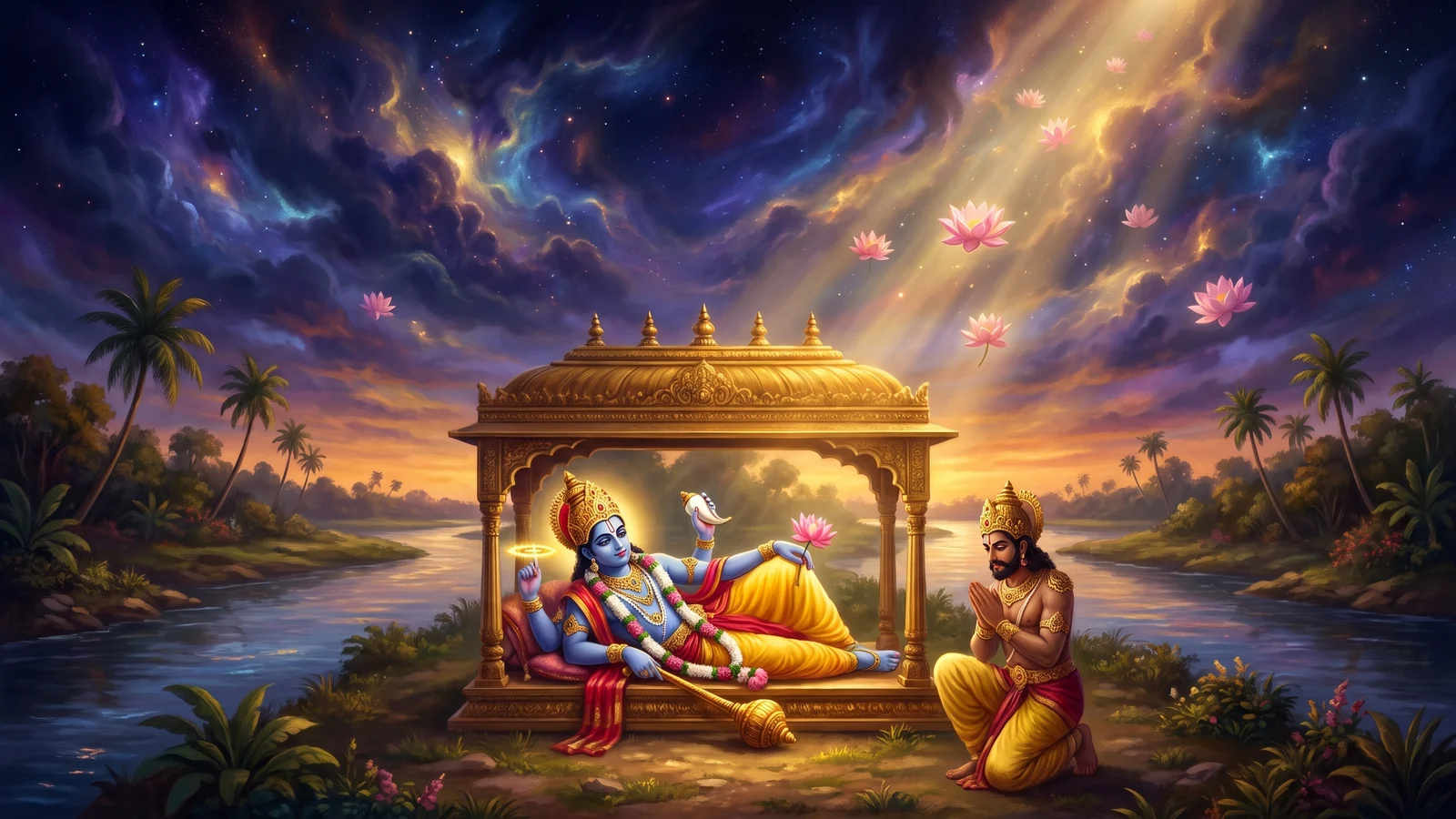
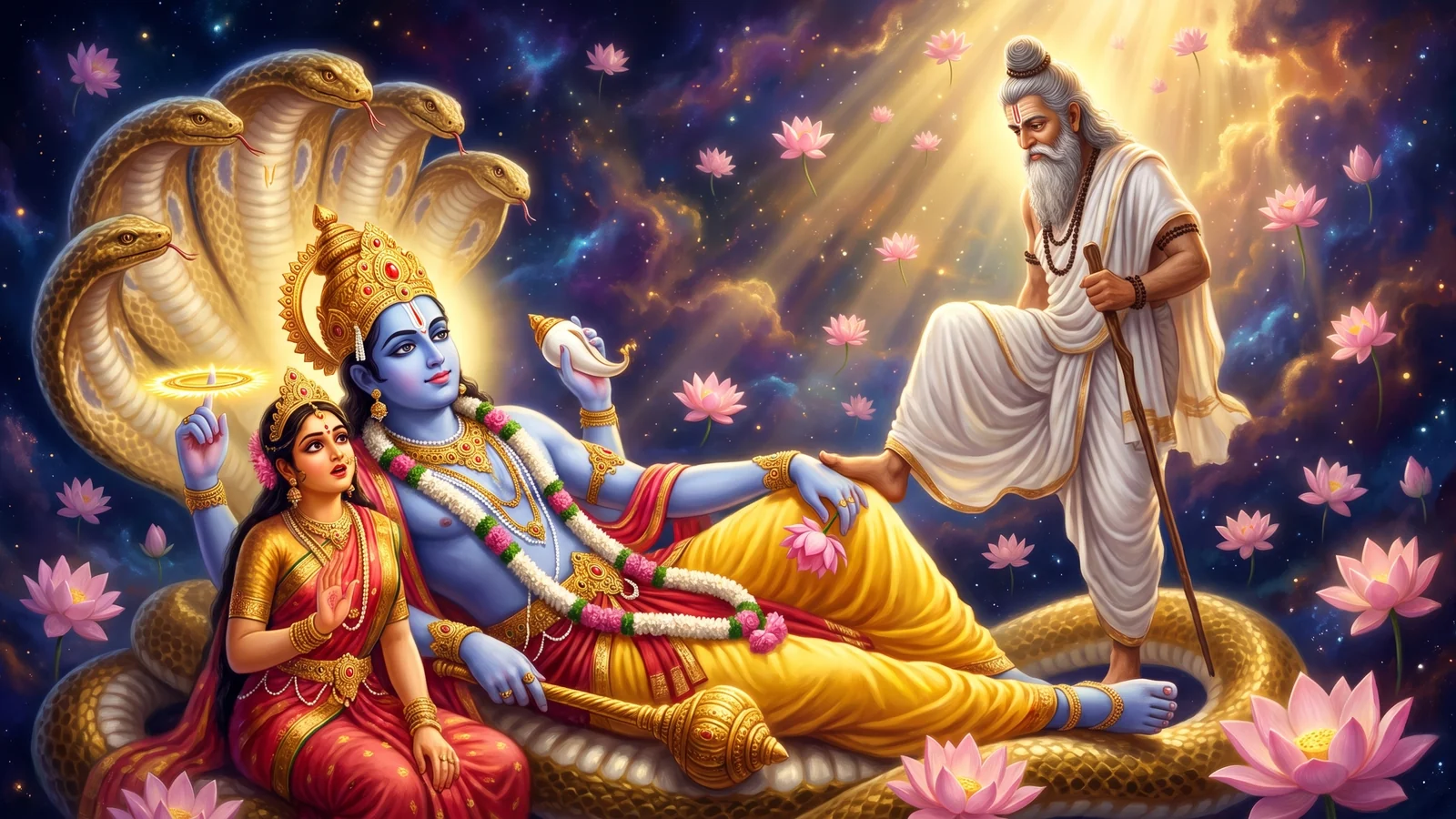
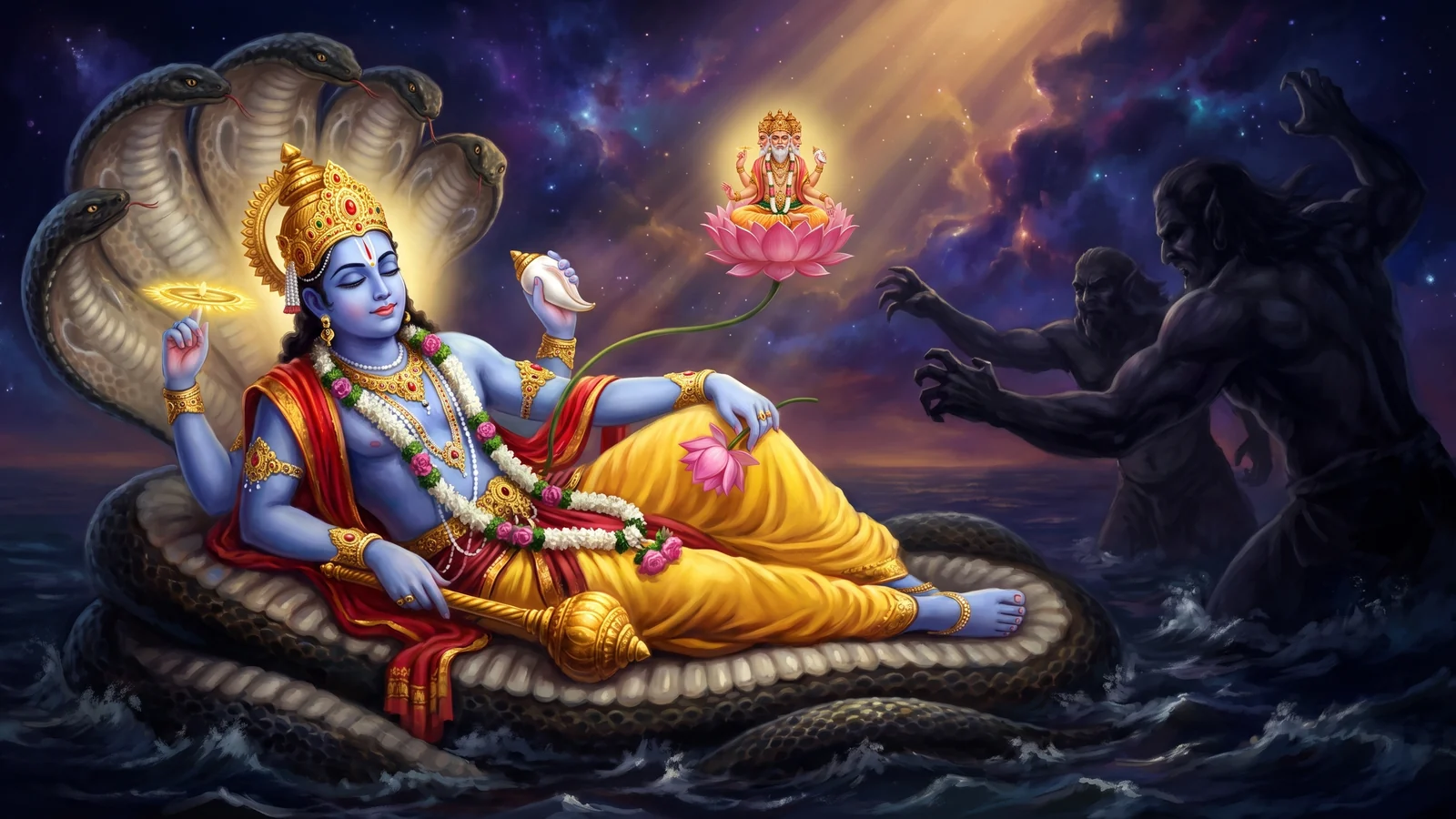
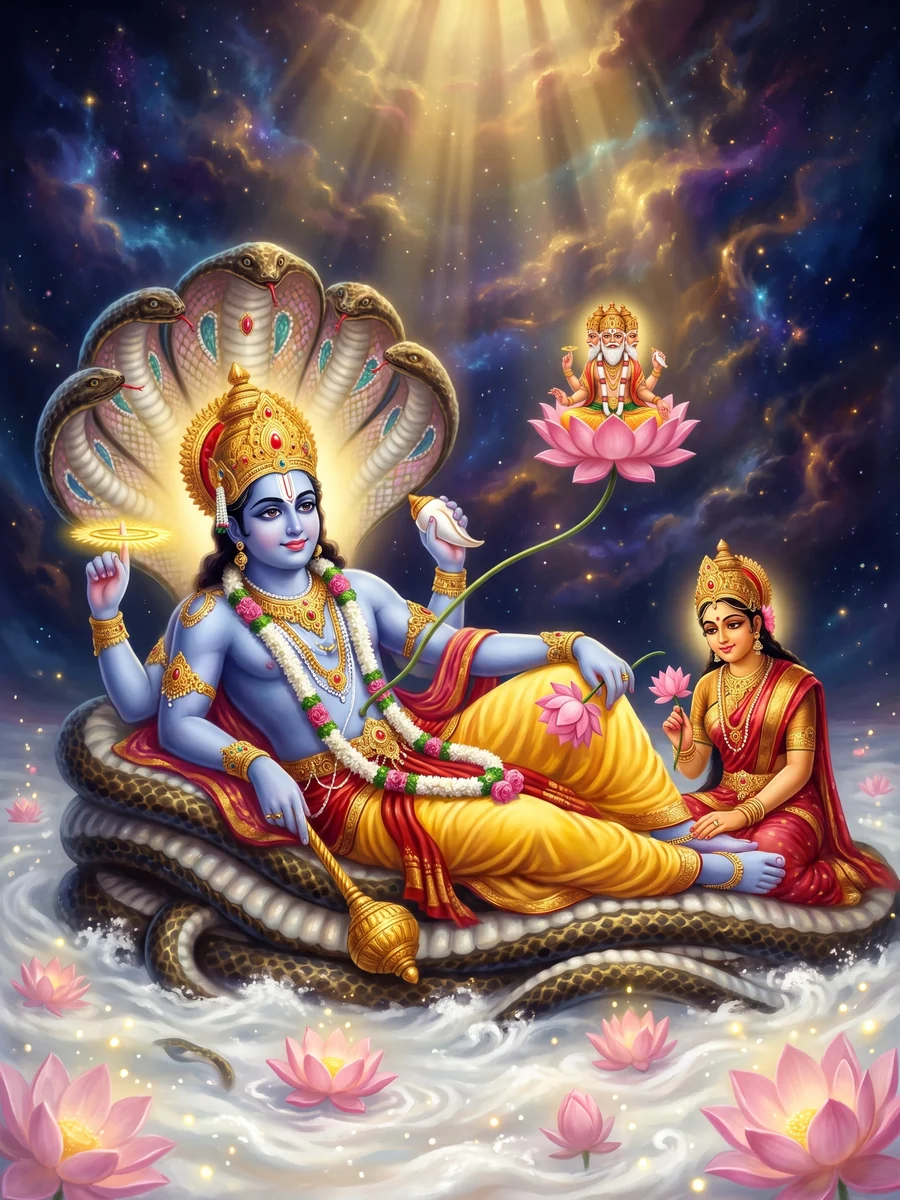
Most of the time he is pictured lying down. He rests on the coils of the serpent Shesha, who floats on the ocean of milk, with Lakshmi at his feet and a lotus rising from his navel. On that lotus sits Brahma, which is the Purana's way of saying that even the creator came out of him. Vaishnavas take the picture literally: for them Vishnu is the whole of God, and everything else is his work. Shaiva and Shakta texts tell the same picture the other way around, and this site gives each its own say.
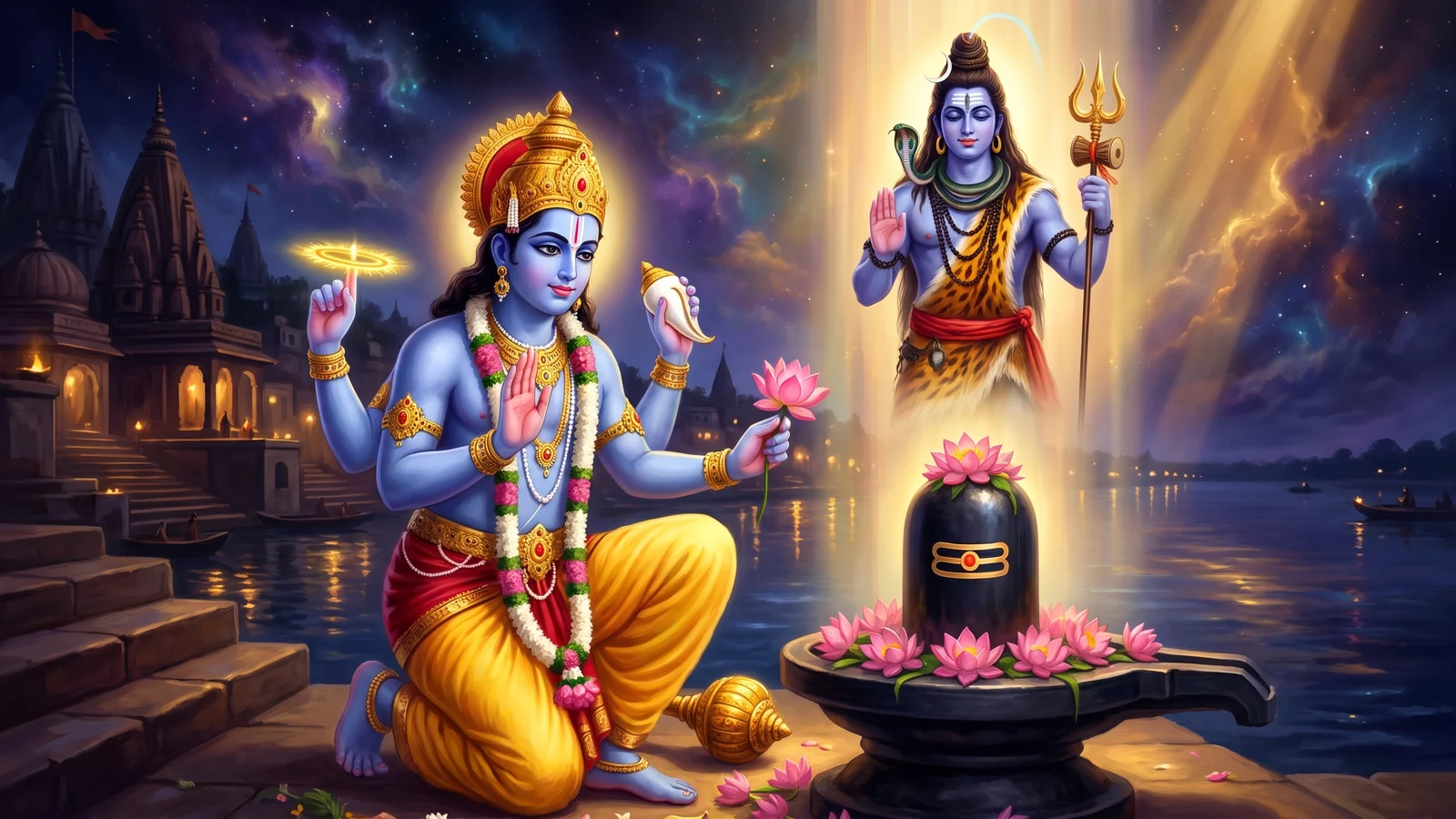
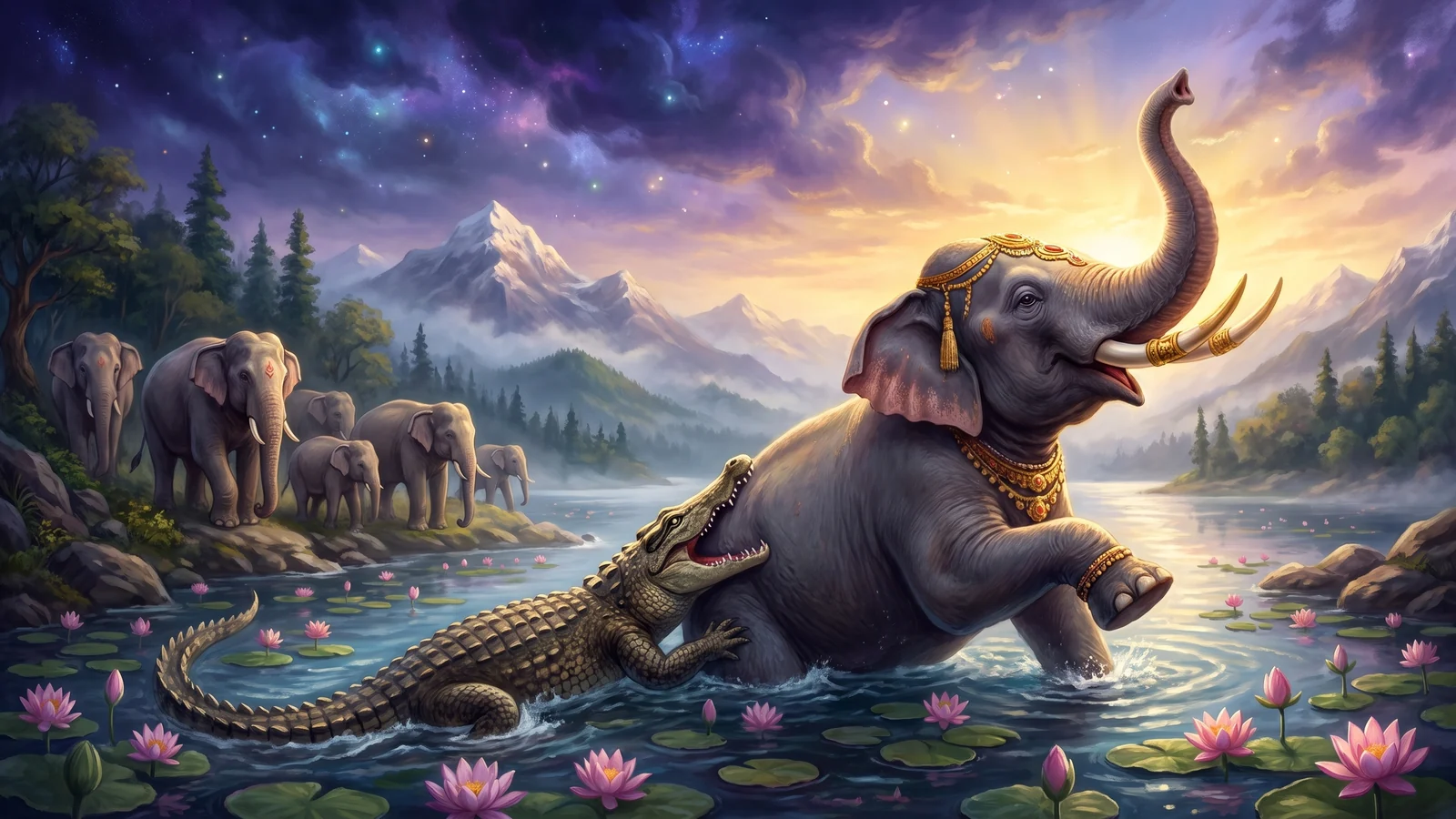
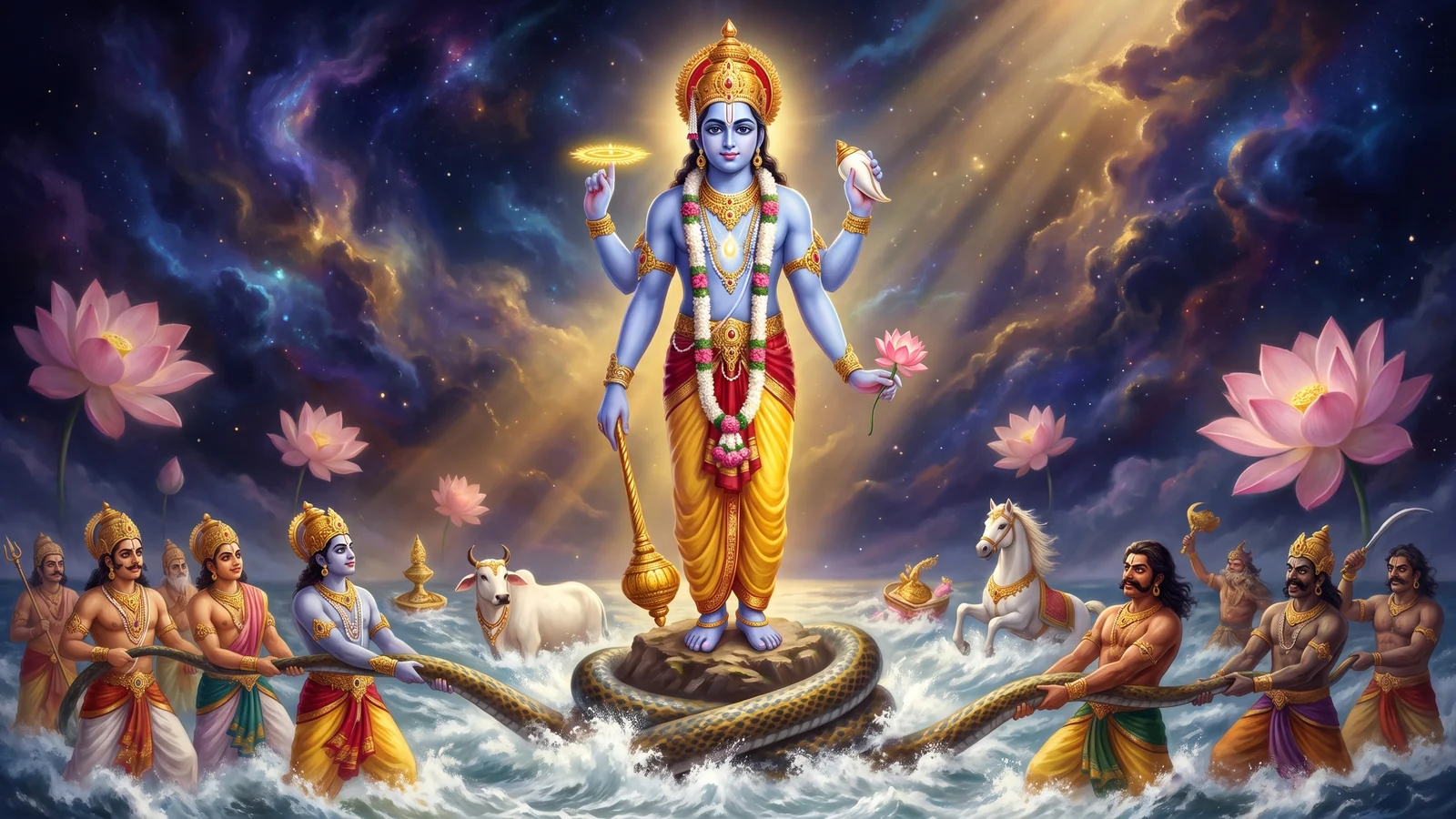
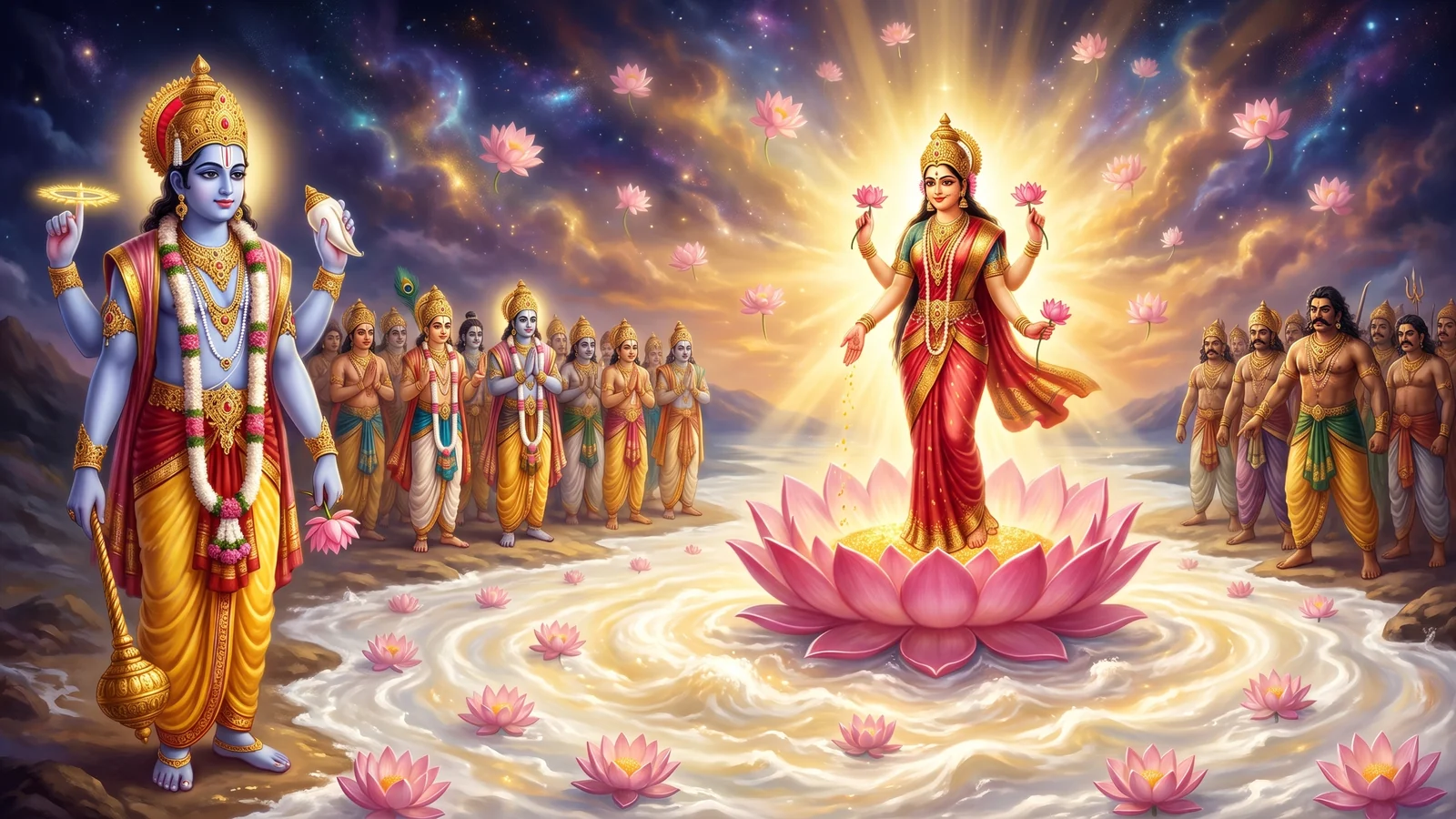
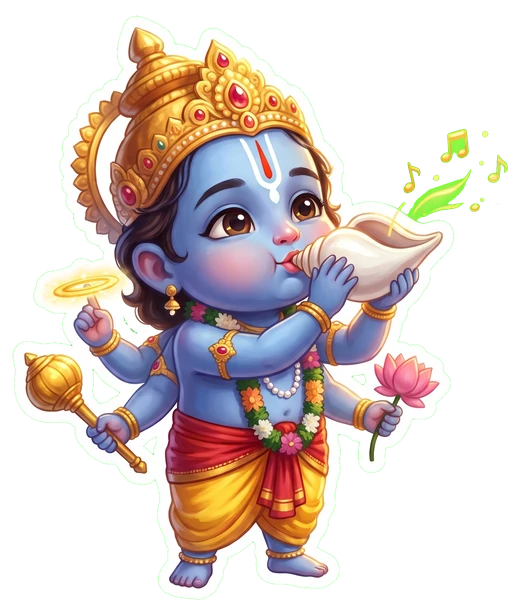
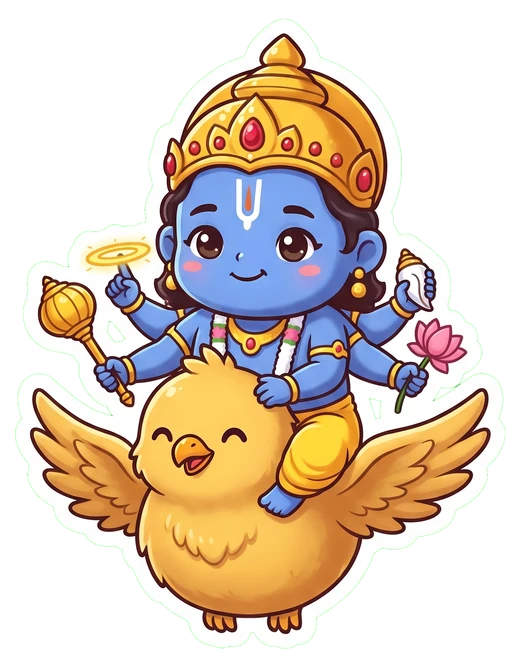
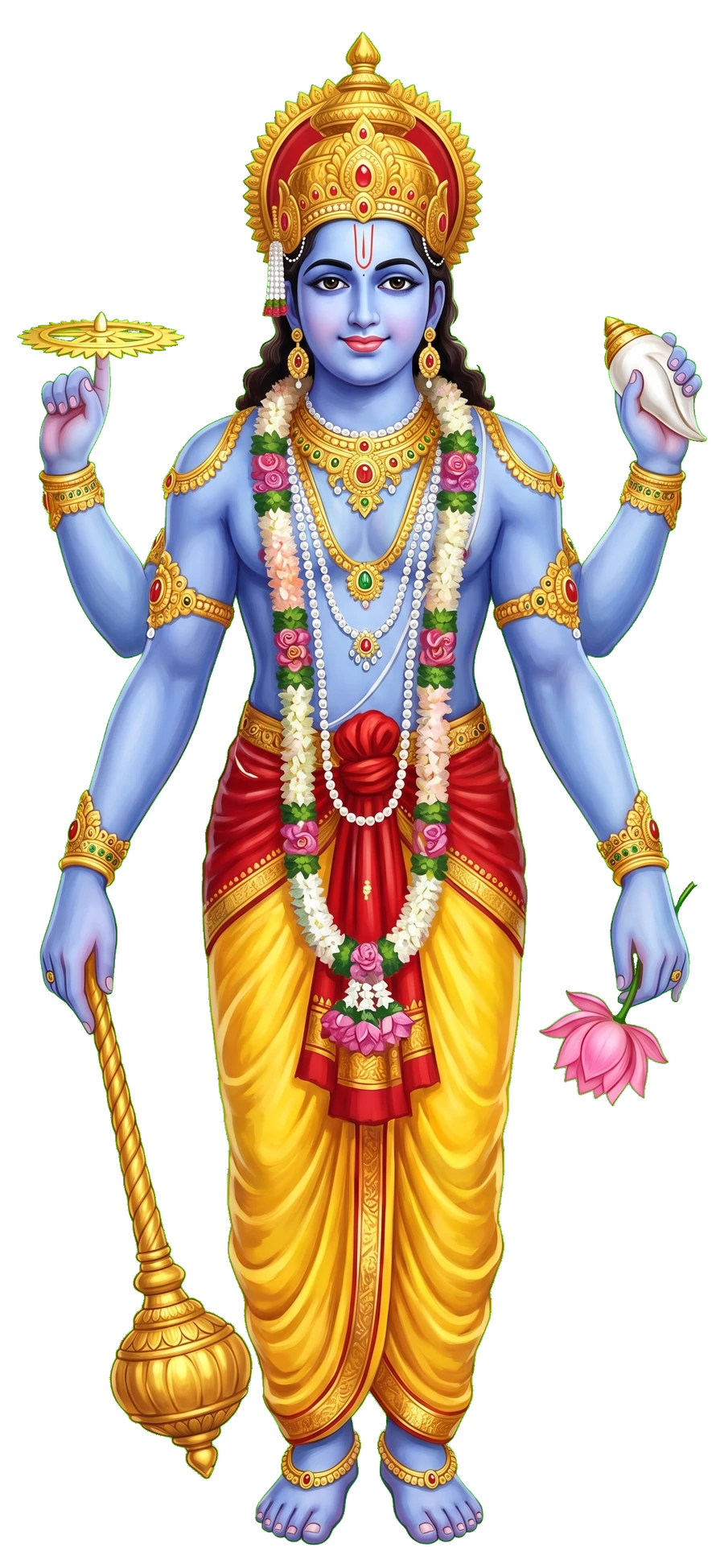
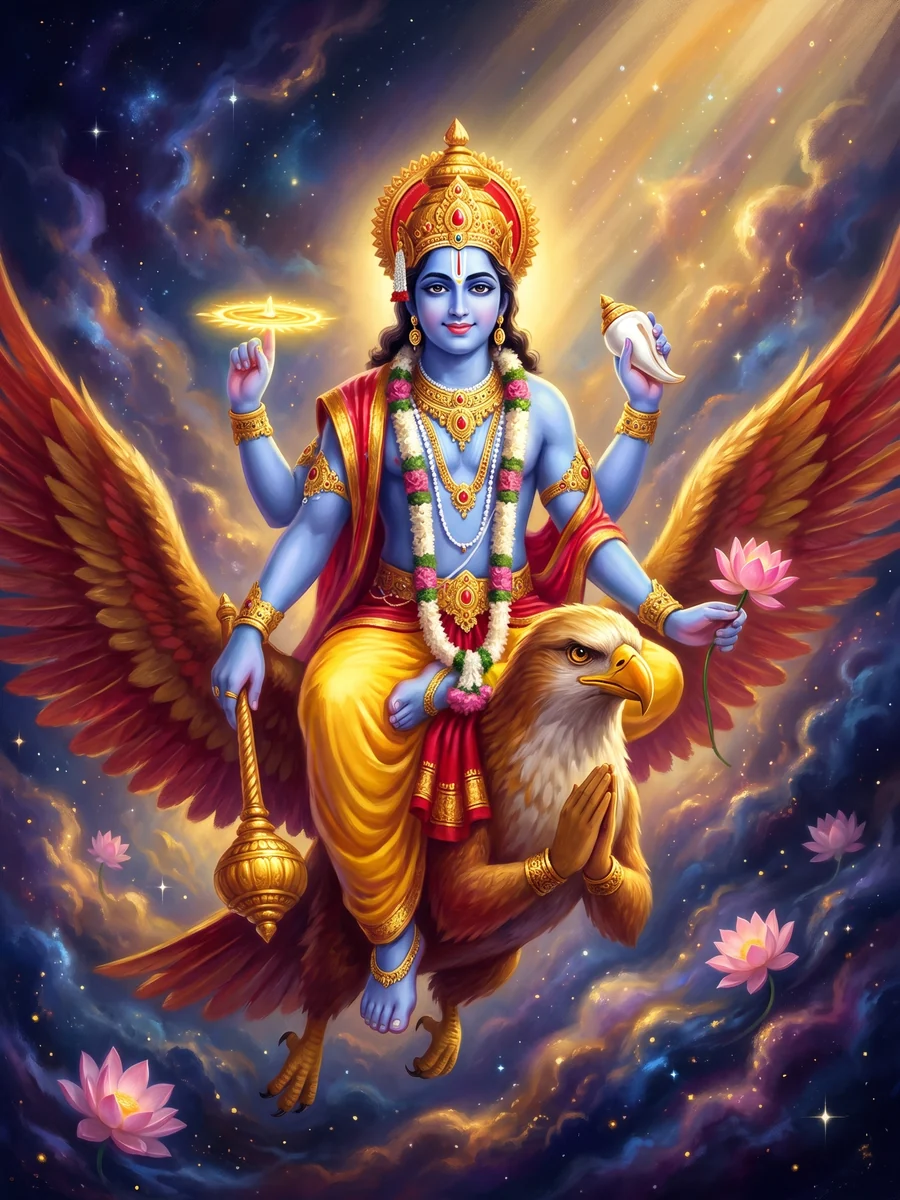
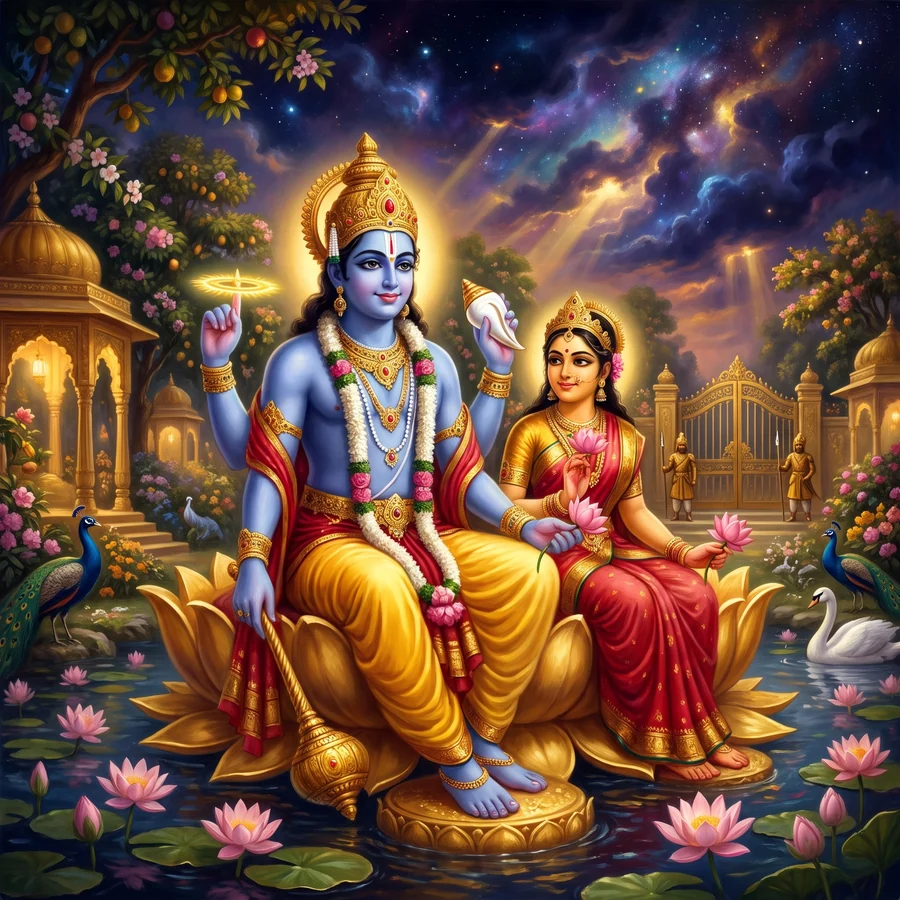
When he gets up, he gets up fast. He rides the eagle Garuda, and the stories are full of the moment his shadow falls across a lake, a palace or a battlefield just in time. In his four hands he carries a conch to announce himself, a discus that always finds its mark, a mace and a lotus. He wears yellow silk and a garland of wild flowers, and on his chest is the Kaustubha gem and the goddess Lakshmi, who chose him from among all the gods and has not left since.
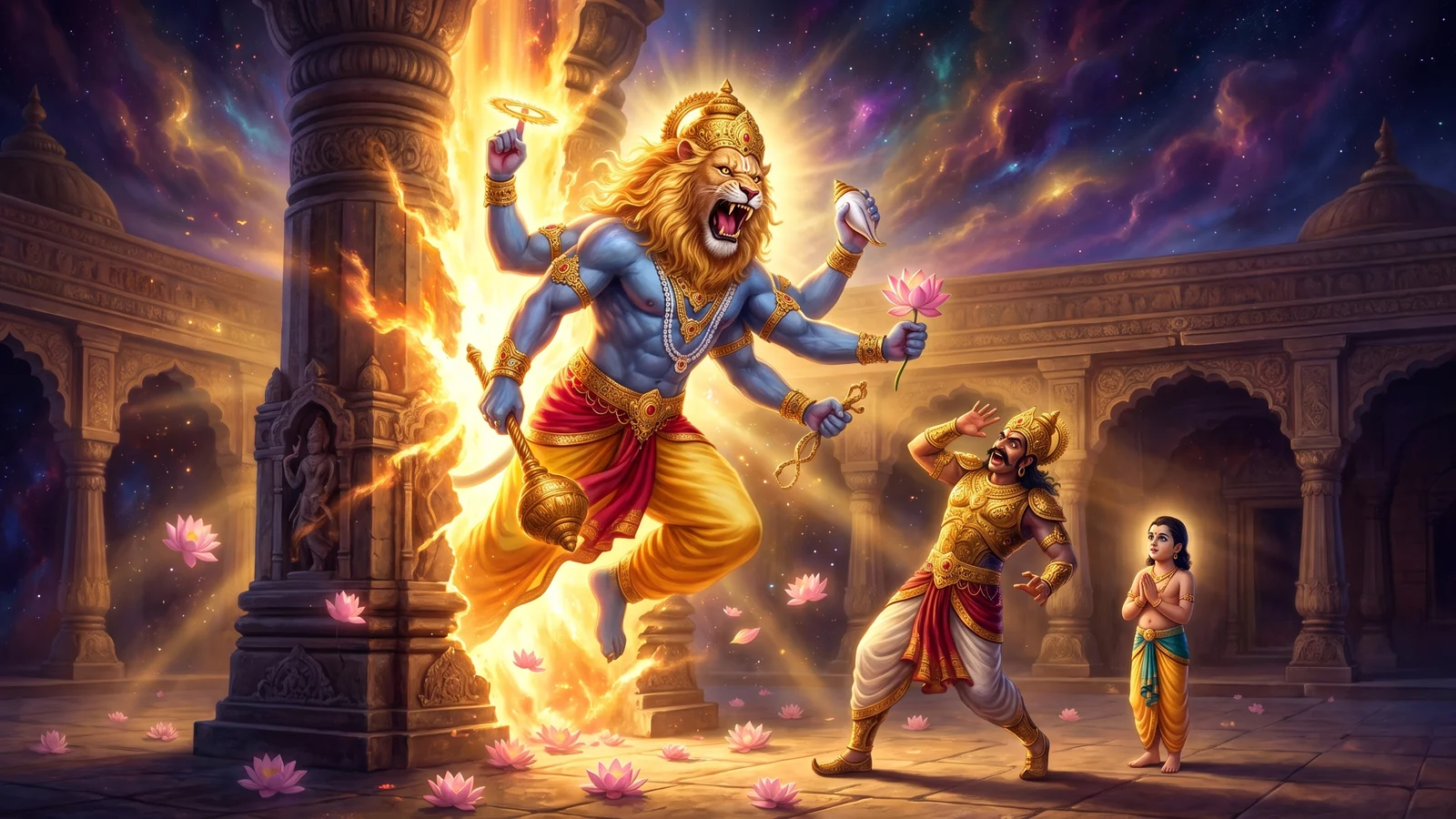
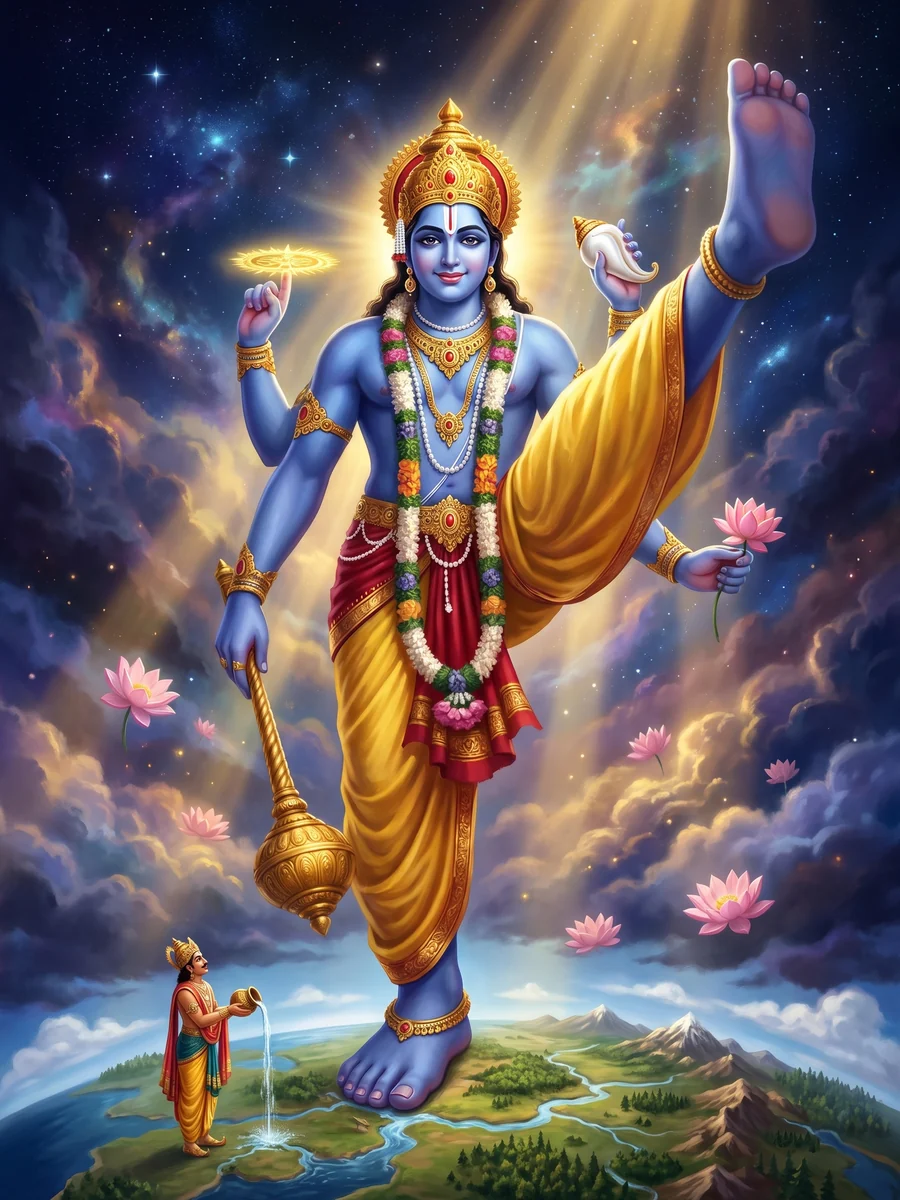
He also has a habit of becoming someone else. A fish, a tortoise, a boar, a man with a lion's head, a dwarf, an enchantress, a prince, a cowherd: these are his descents, the avatars, and some of them have stories so large that they will have their own section on this site. The stories here are his own.
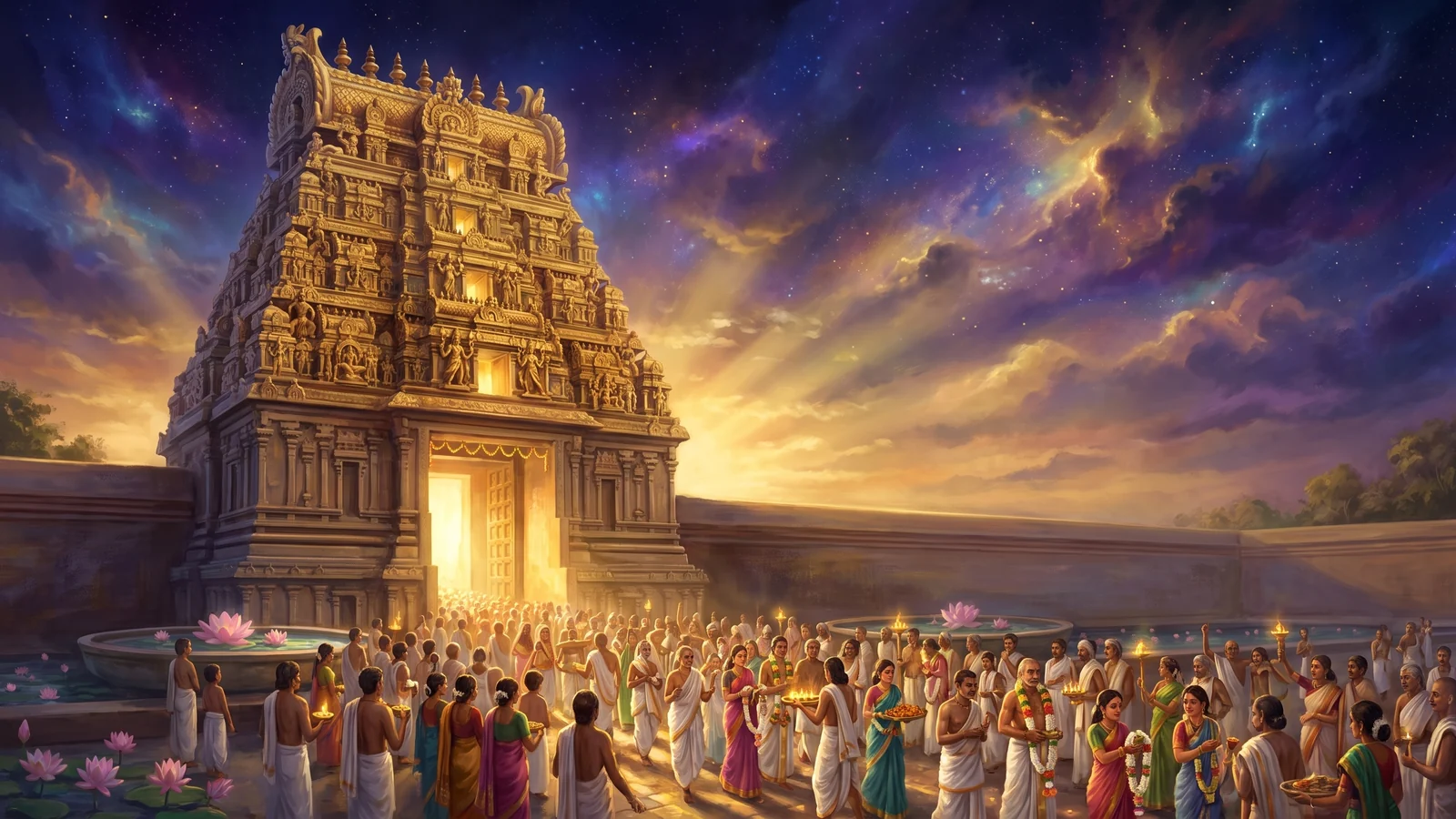
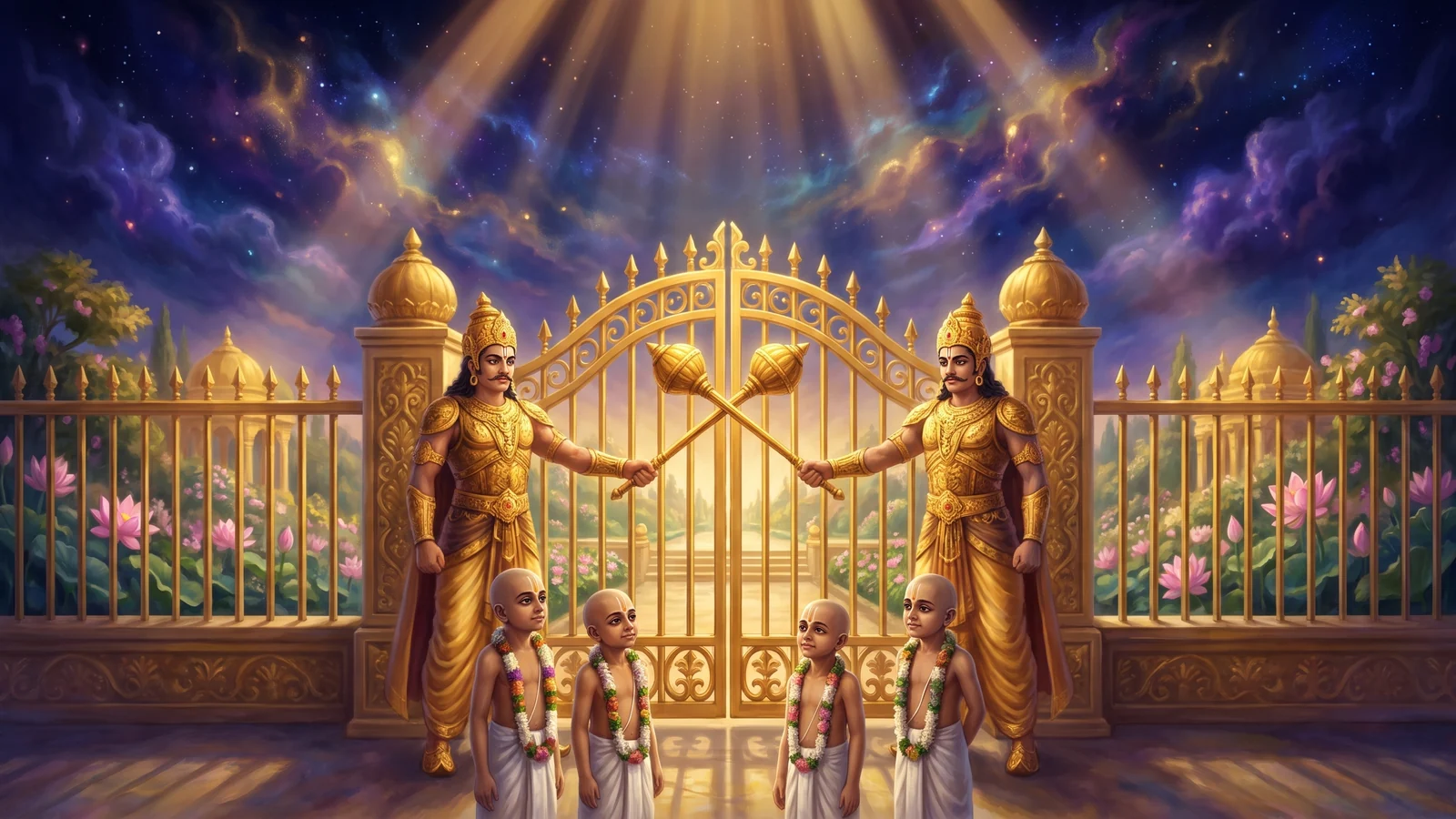
In the south he is Perumal, Ranganatha, Venkateswara and Padmanabha, each with a temple and a tale of how he came to stay there. His great day is Vaikuntha Ekadashi, when the gate of his heaven is said to stand open.
Om Namo Narayanaya: I bow to Narayana.