As the Padma Purana tells it
Padma Purana and Shiva Purana · 3 min read
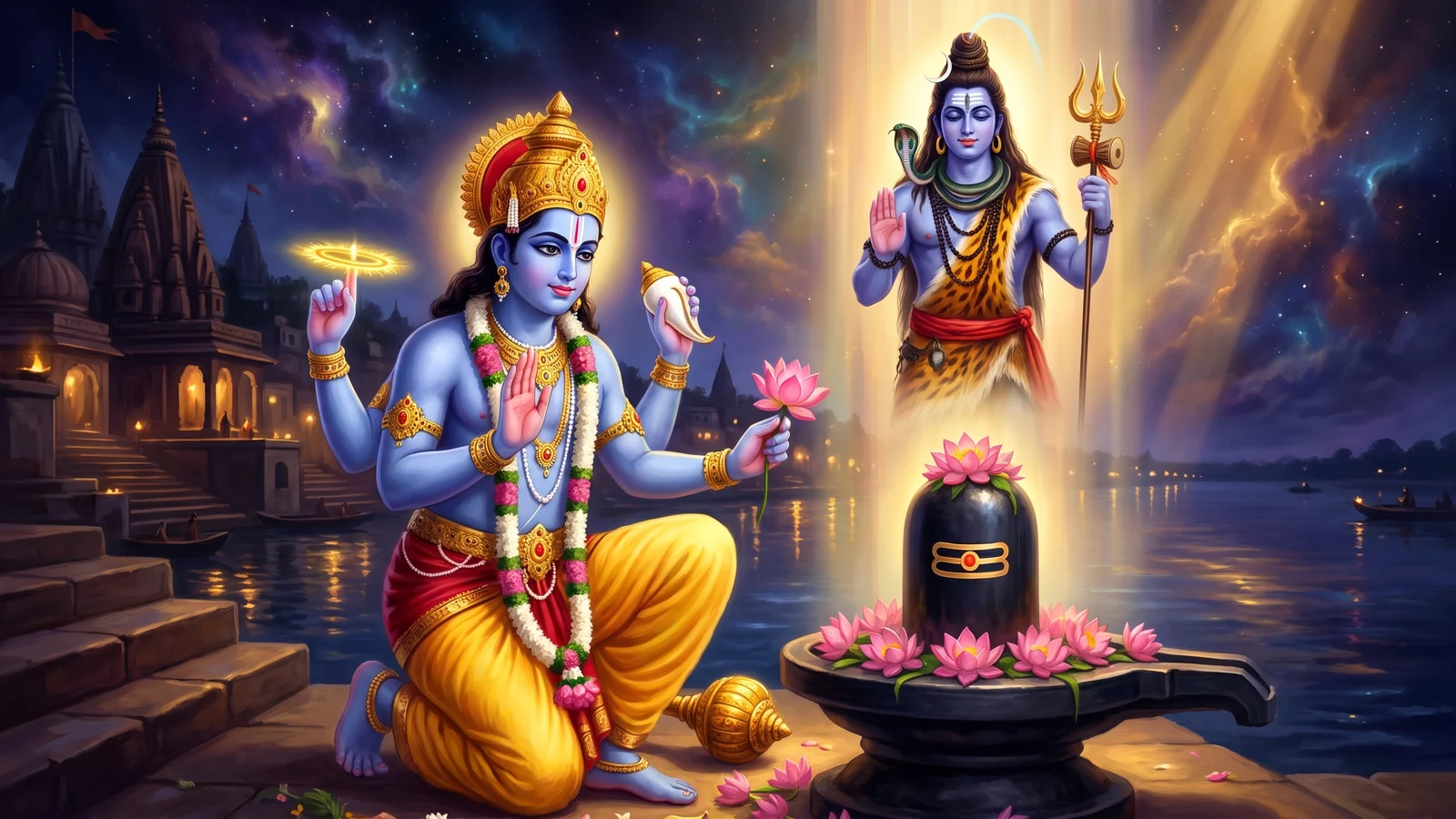
Jalandhara was born of the ocean. That is where the Puranas begin with him, and it is nearly all they need to say about his strength. He had the sea in him, and the sea does not tire.
He married Vrinda, and she was faithful to him in a way the texts treat as a power in its own right. As long as she kept faith, nothing in the three worlds could kill her husband. Not a weapon, not a god. Her vow was the wall around him.
So when Jalandhara made war on the gods, the gods lost.
They lost ground, they lost their places, and at last they came to Vishnu with the question the whole story turns on.
"He cannot be beaten," they said. "Not while she holds to him. What do we do?"
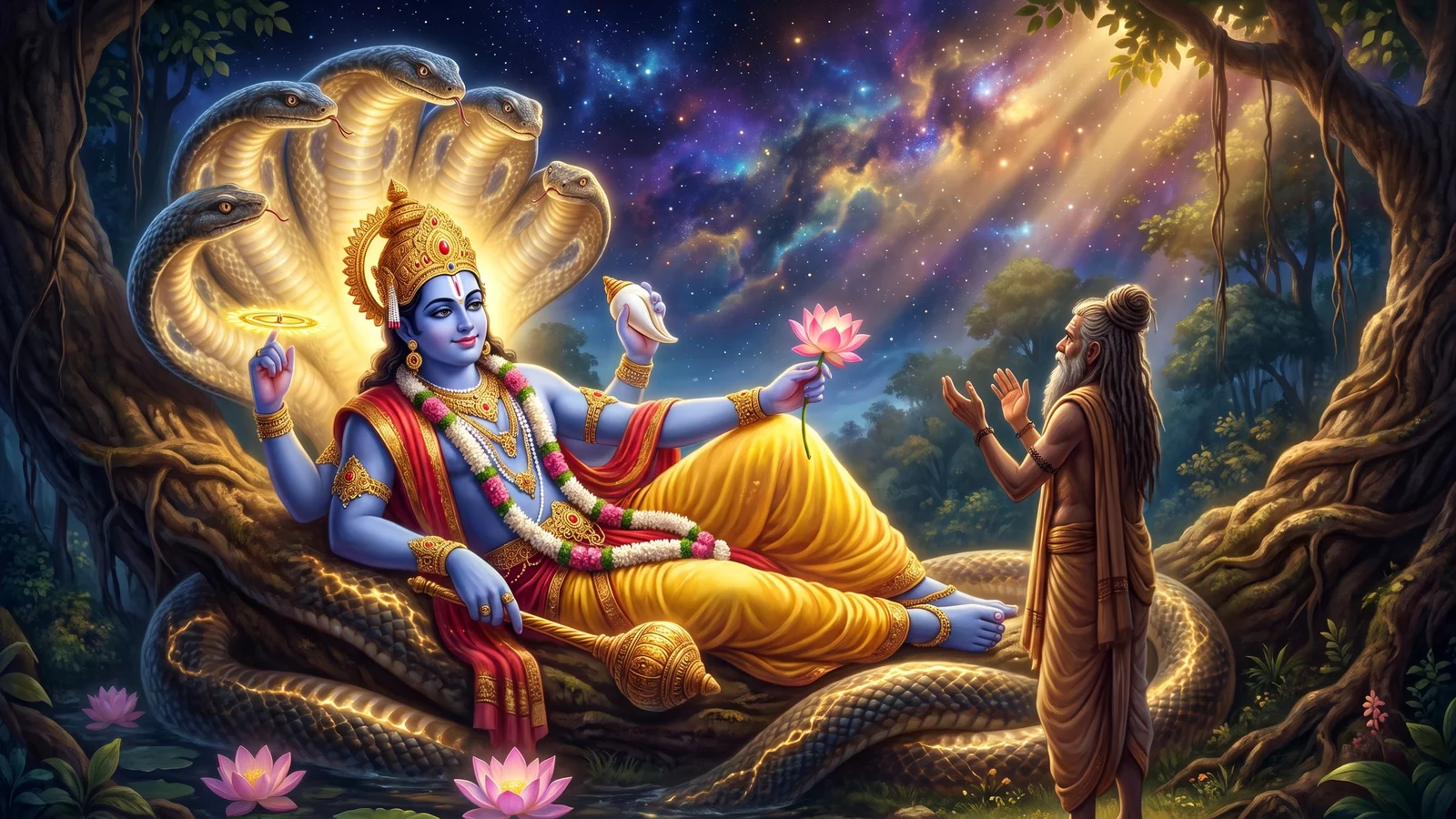
Vishnu was quiet for a long moment.
"There is one way," he said at last. "It is not a clean one."
What he did next the texts report plainly, and they do not dress it up.
He took Jalandhara's shape. The face, the voice, the walk, every small thing a wife knows better than anyone alive. Then he went to Vrinda's house while her husband was away at the war.
She saw her husband at the door and ran to him.
"You are back," she said. "You are safe. They told me nothing could touch you, and I believed them, and still I was afraid."
He let her believe it.
What happened in that house the Puranas state in a line, and so does this telling. Her fidelity was breached, though she had never broken it, because she did not know. And far away on the field the wall around Jalandhara came down. Shiva could kill the demon now, and did.
Vrinda learned the truth. The texts do not say who told her. Perhaps nobody had to; perhaps the face in front of her simply stopped being her husband's. She stood and looked at the god who had done this, and she did not weep first. She cursed first.
"You wore his face," she said. "You let me take you for him. For that you will turn to stone, cold and hard, and people will hold you in their hands. And you will know what I know now. You will lose your wife, and you will learn what it is to be parted from her."
Vishnu did not argue. The Puranas give him no defence to make, and he makes none.
Then Vrinda went to where her husband's body lay. She had the pyre built, she climbed onto it, and she burned with him.
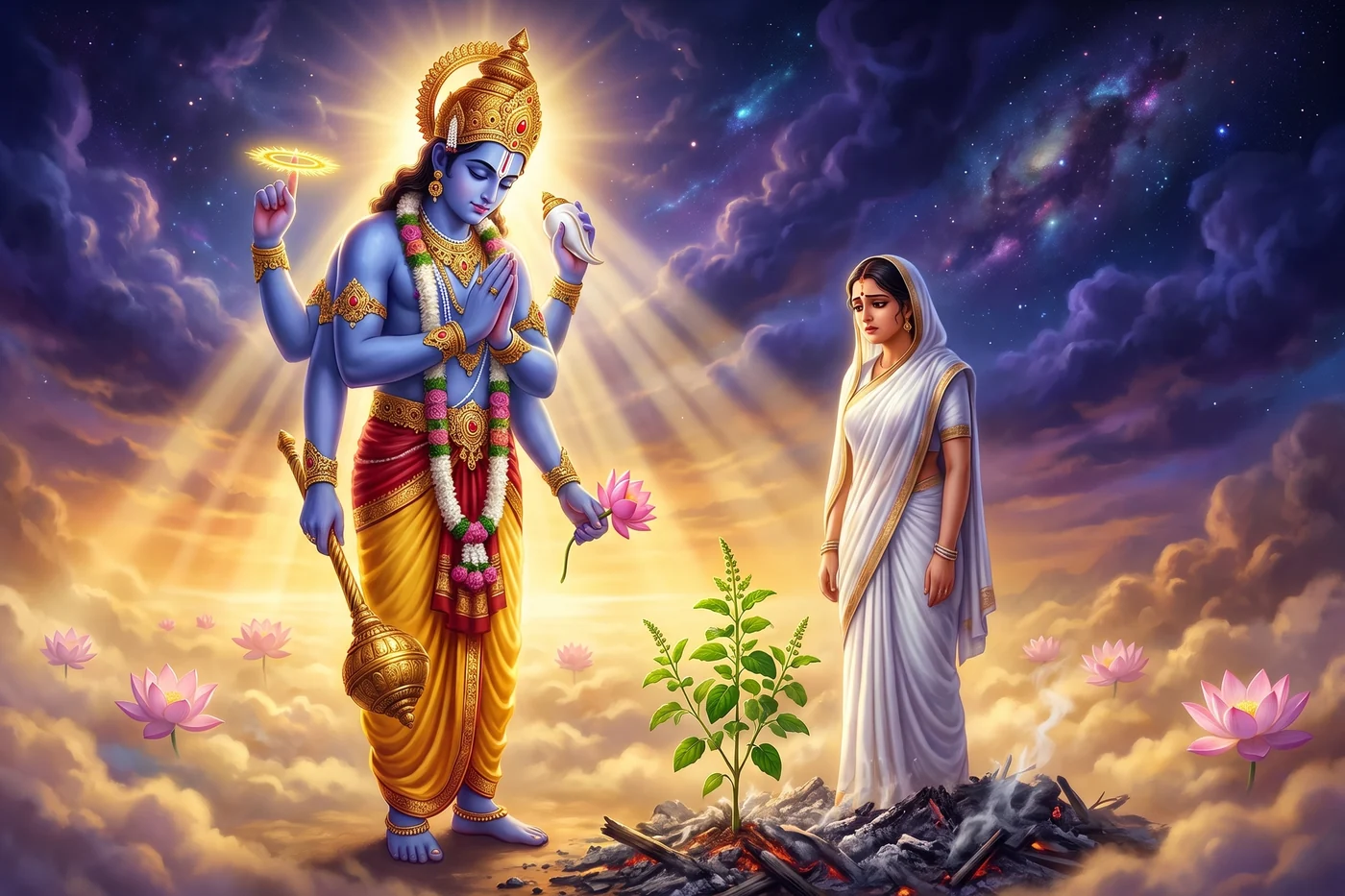
Where she had burned, a plant came up out of the ashes. A small green shrub with a sharp clean scent, the holy basil, tulsi.
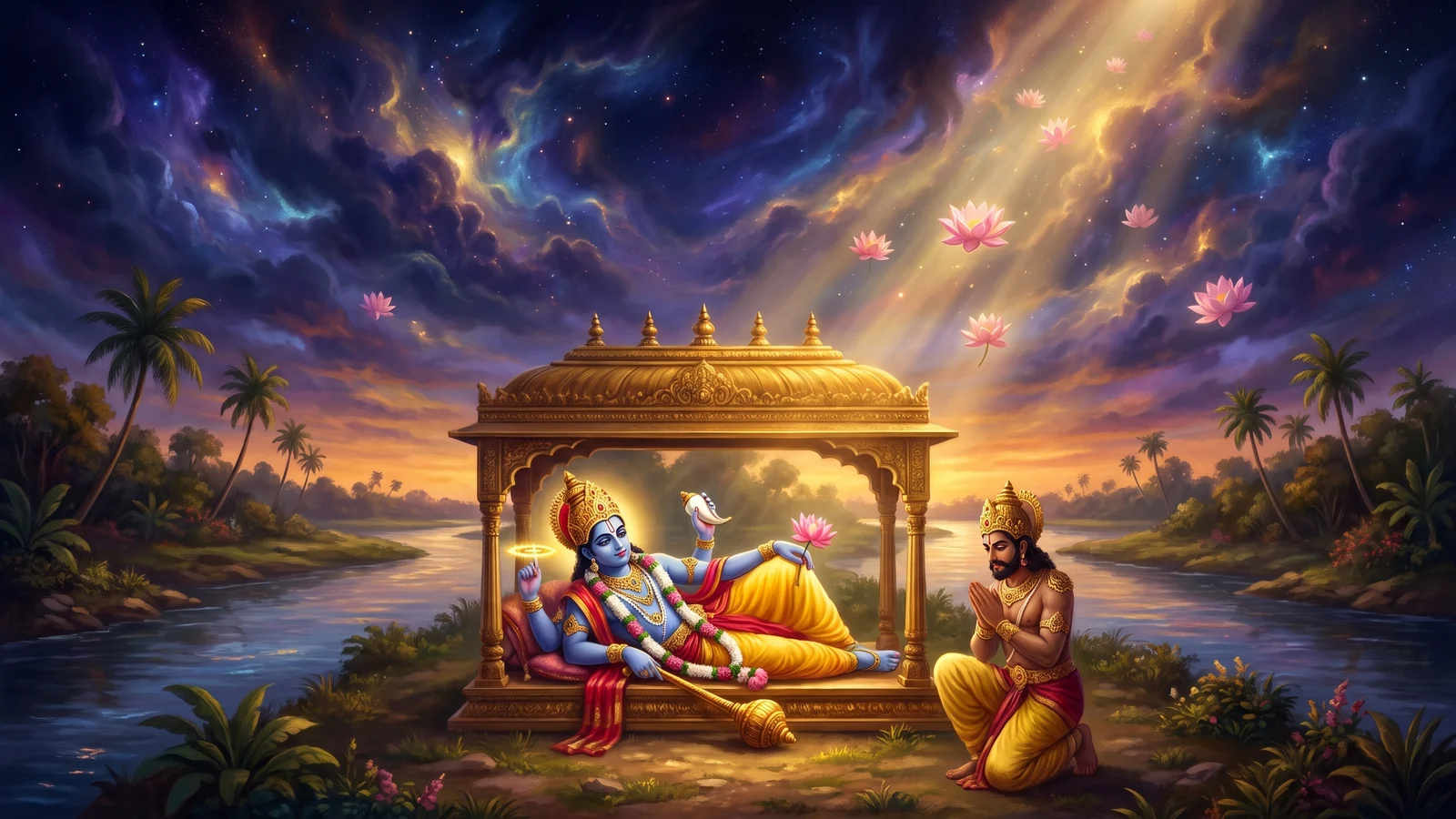
Vishnu looked at it and knew her. To make good what could not be undone, he took the plant as his bride.
The curse stood all the same. The black shaligrama stone that Vaishnava households keep and worship is, in their telling, Vishnu made stone, the first half of her curse fulfilled to the letter. Of the second half the tradition says only that it was spoken, and leaves it there. The plant beside the stone is the rest of the story, the wife he took to answer for the wife he took away.
As the courtyard keeps it: the wedding of Tulsi
Maharashtra, Gujarat and Andhra · 1 min read
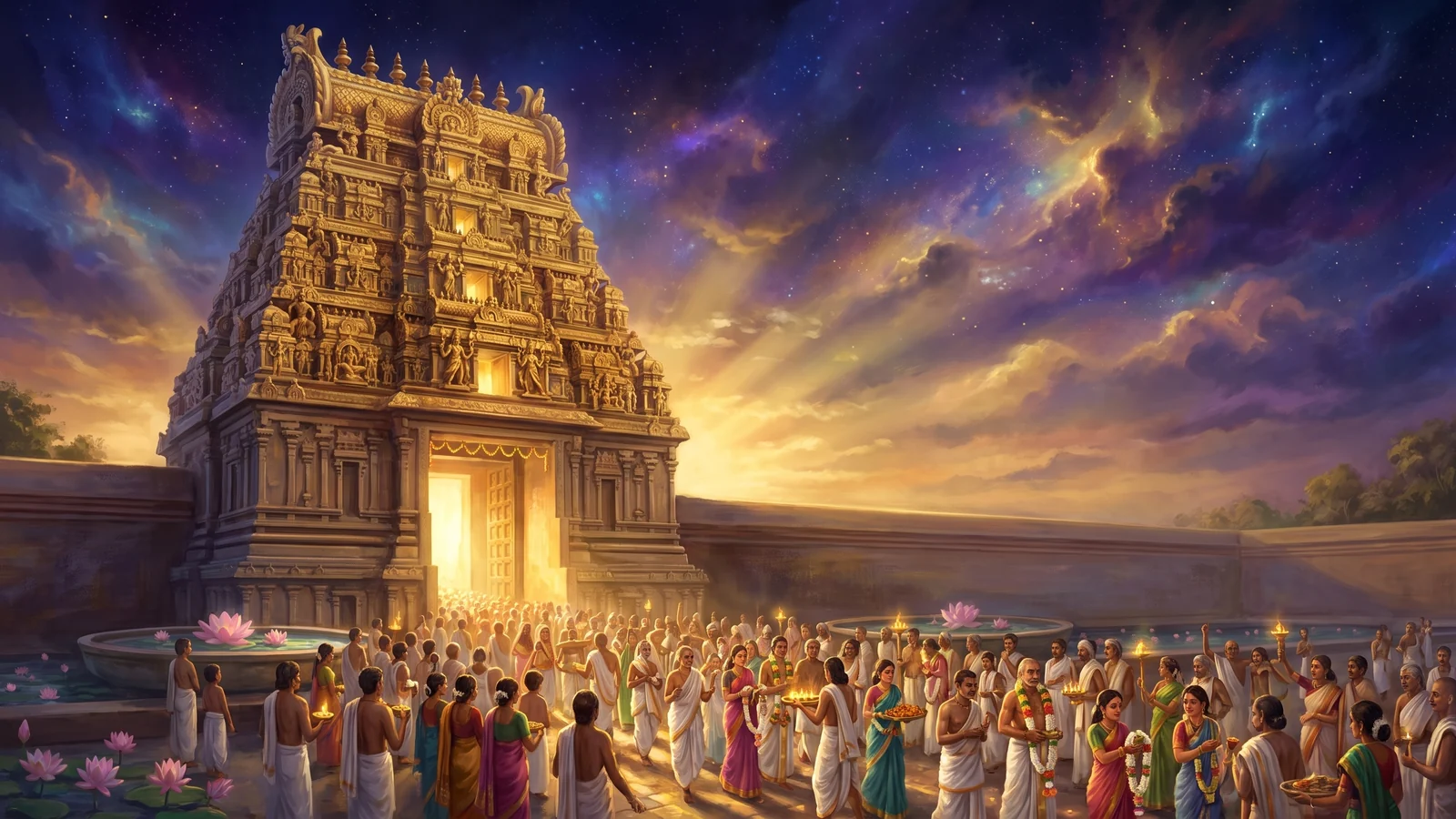
In a great many houses across the west and the south, the tulsi does not grow in the garden. She grows in a raised pot in the courtyard, and she is tended as if she were a person of the house. Once a year she is also married.
The wedding falls in the month of Kartik, on a day between Prabodhini Ekadashi and the full moon of Kartik Purnima. The rains are over by then. The roads are dry, the sky is clear, and the wedding season of the year is about to open. The plant's wedding is the first of them.
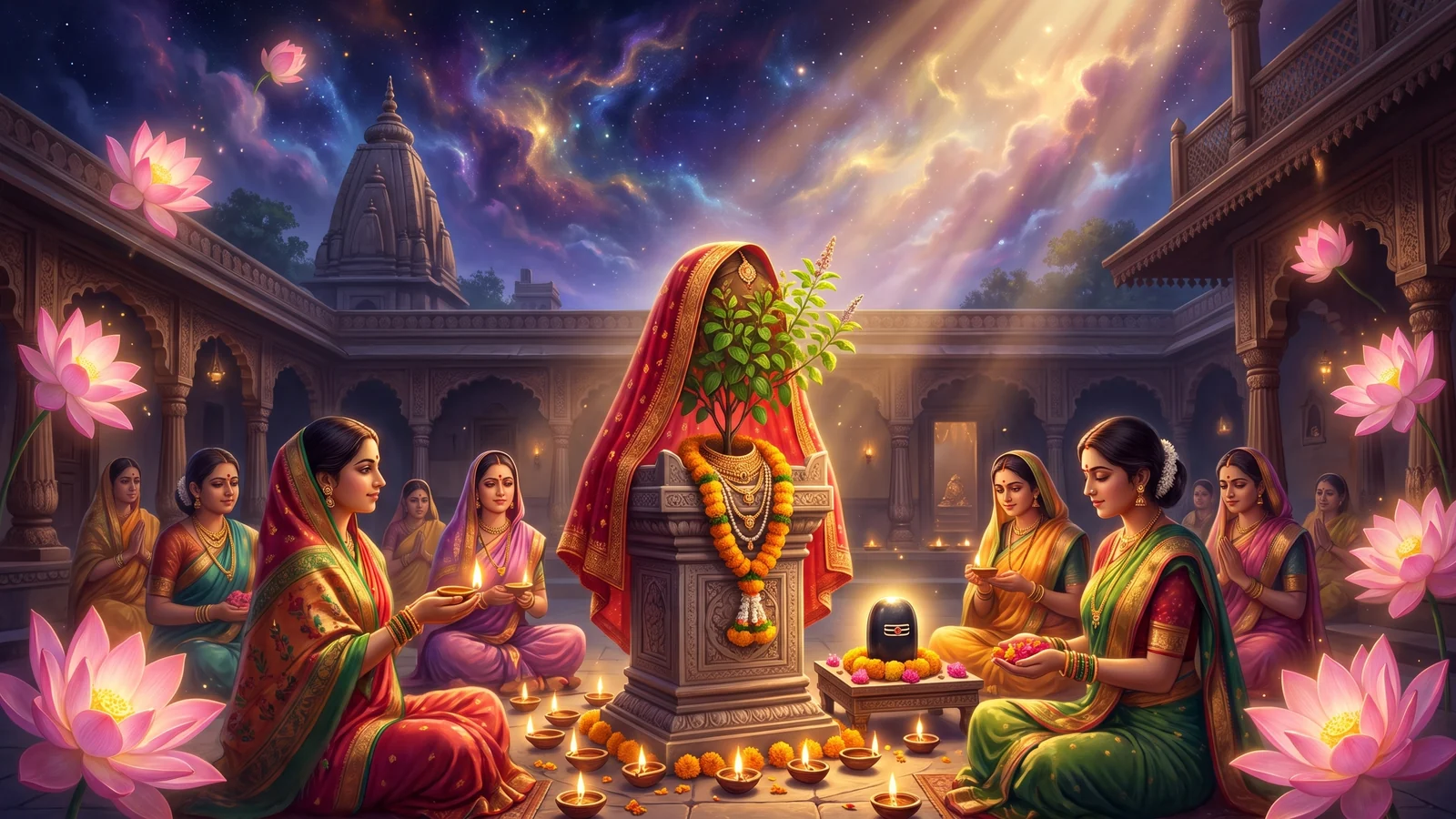
The pot is washed and painted. The plant is dressed as a bride, with cloth and ornaments sized for a shrub, and the courtyard around her is lit. Beside her is set the groom. In some houses he is a black shaligrama stone from the river. In others he is a branch of the amla tree. Either way he is Vishnu, come for his bride.
Then the family does what it would do for a daughter of the house. The same rites, in the same order, as far as a plant and a stone can take part in them. The bride is Vrinda, the groom is the god she once cursed, and the wedding is his word to her kept once more.
Ask in Maharashtra, in Gujarat and in Andhra how it is done, and each will answer differently, because each keeps its own customs and its own order of things. What is the same everywhere is the shape: a bride in a pot, a groom who is a stone or a branch, and an ordinary wedding, done properly, for a small green plant.