As the Sriranga Mahatmyam tells it
Srirangam · 3 min read
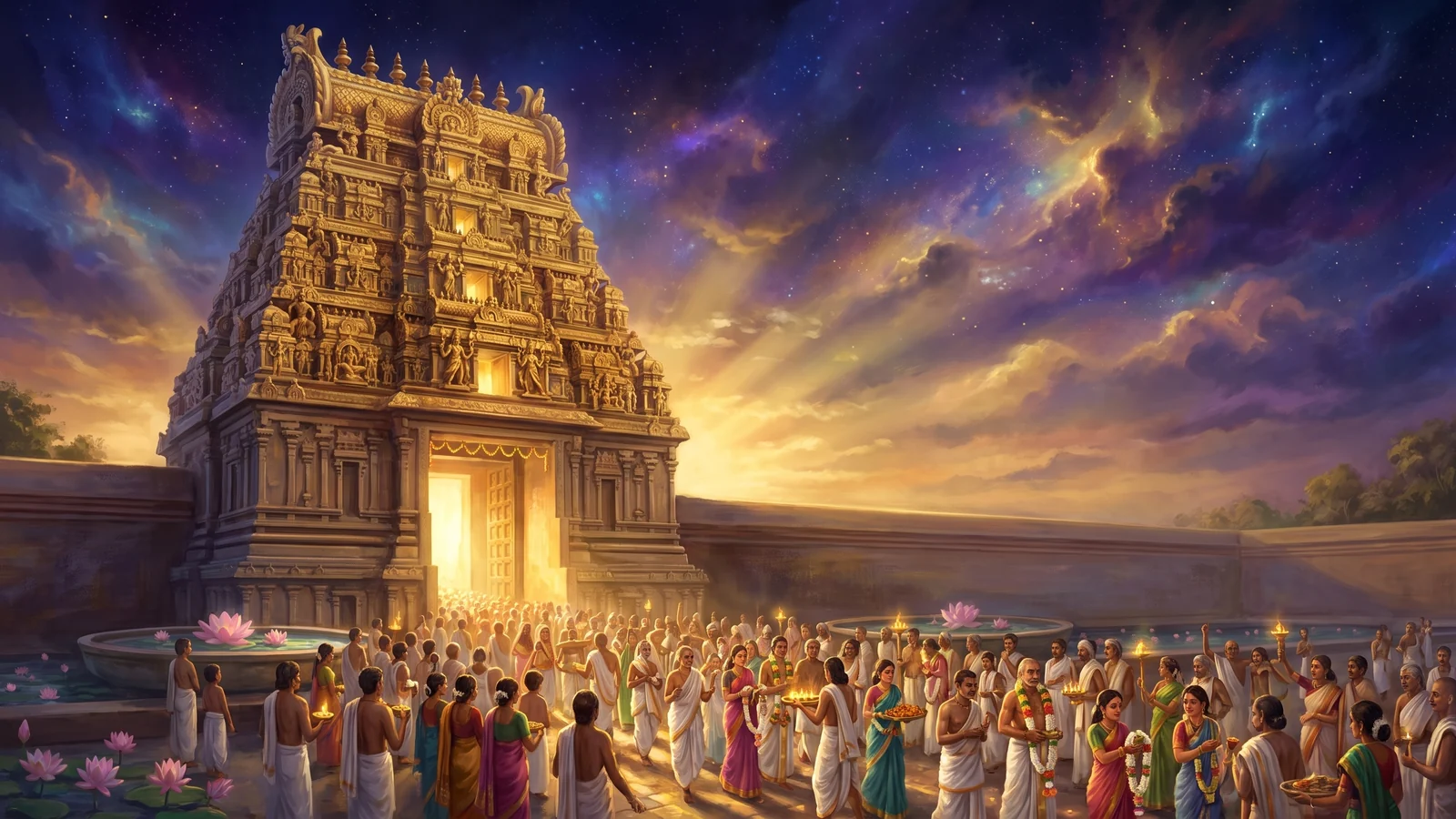
The temple on the island has one feature that every visitor notices and nobody can explain at first sight. The god lies on his serpent facing south. Every other great image of the sleeping Vishnu looks another way. The temple's own account, the Sriranga Mahatmyam, exists to answer that one question, and it begins at the beginning of things.
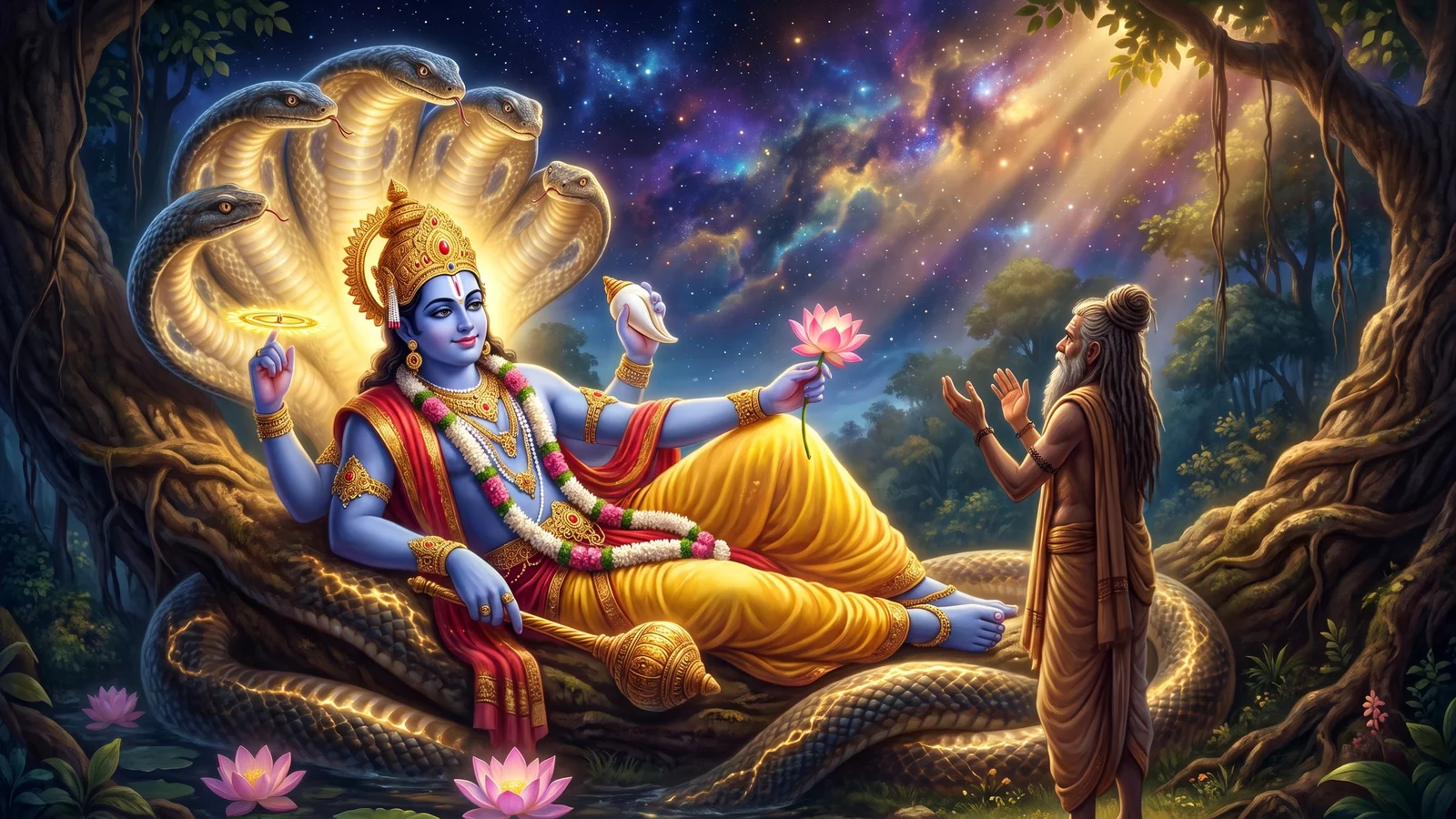
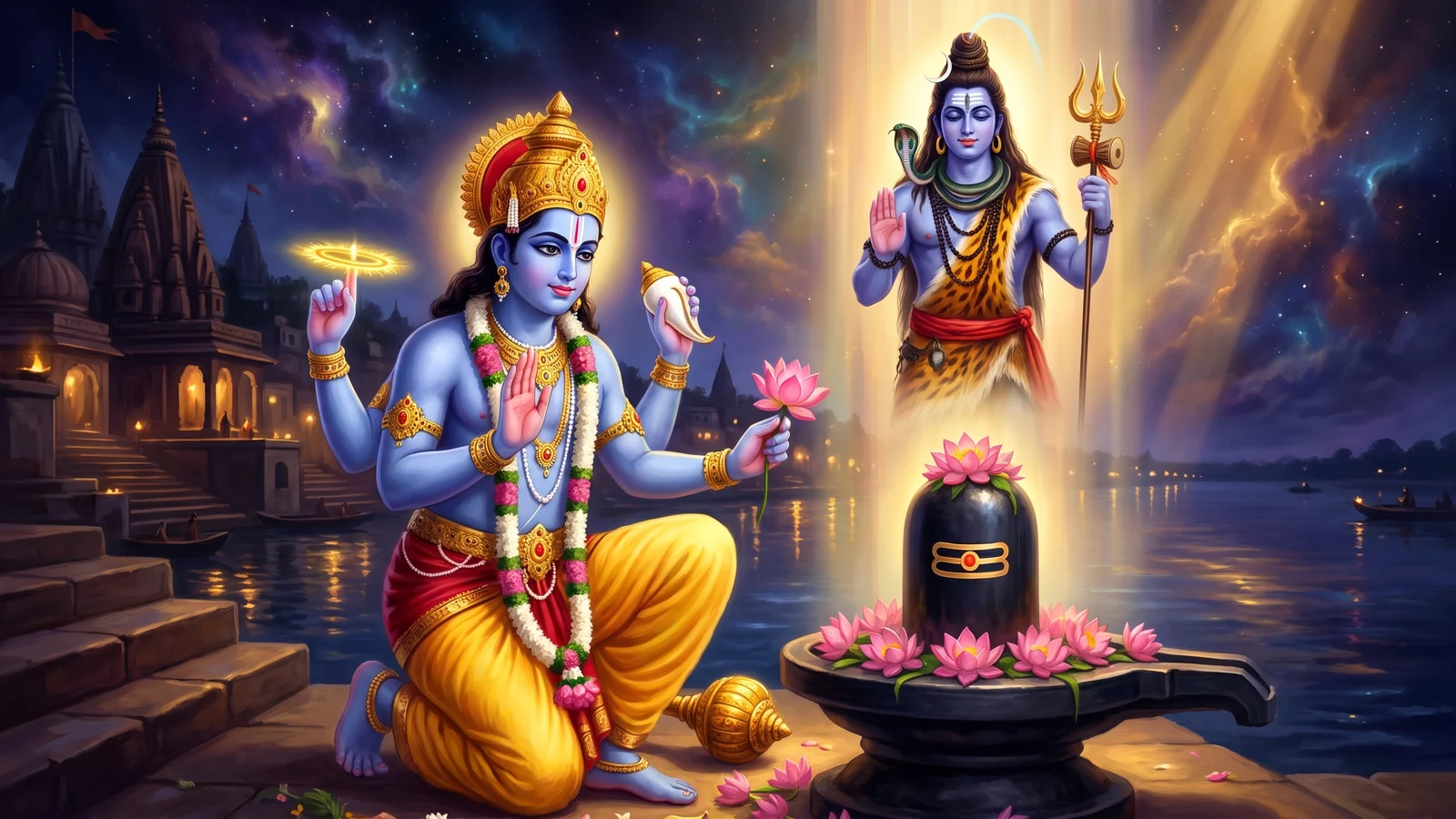
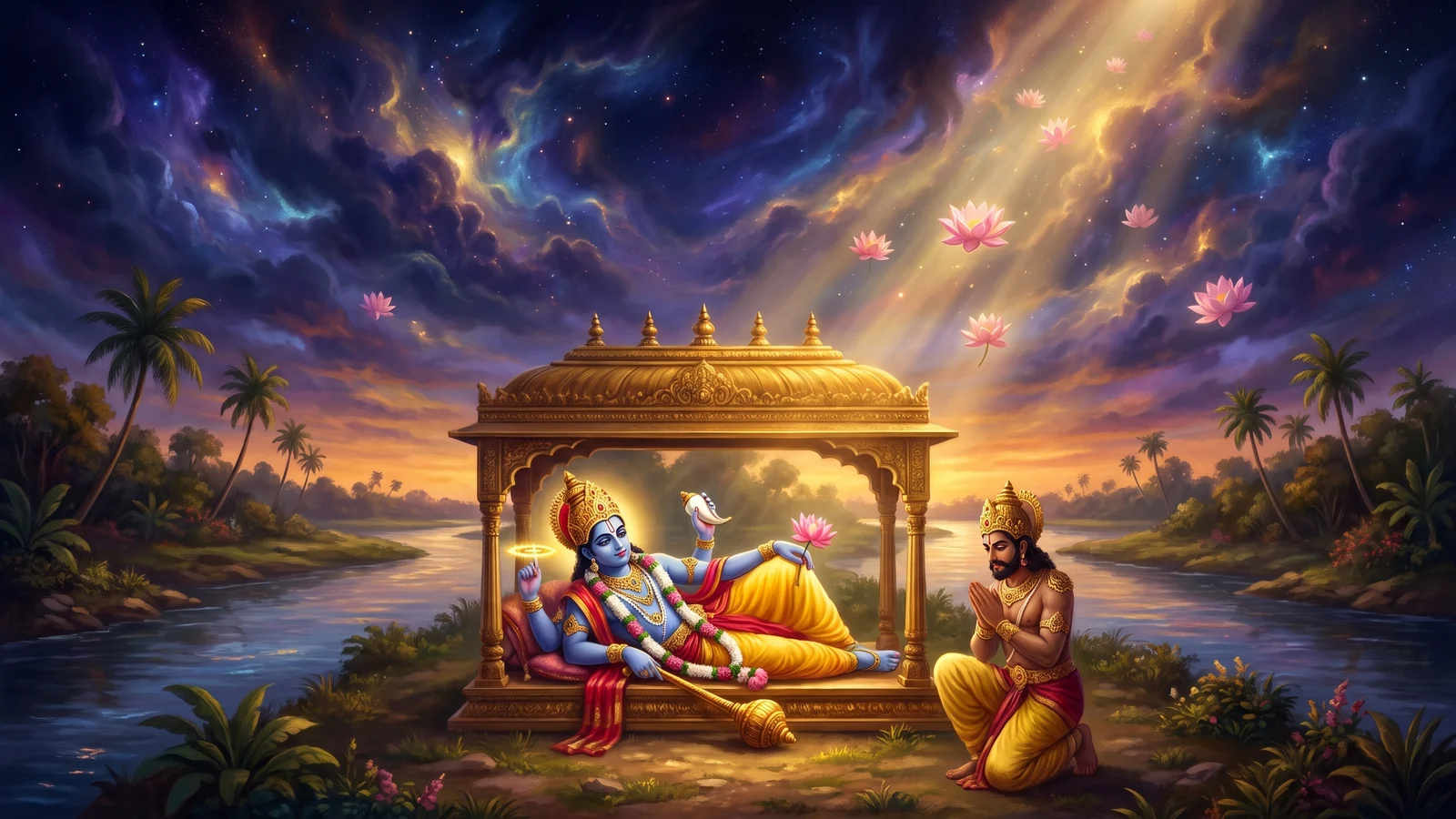
While Brahma sat in austerities, the story says, the ocean of milk was churned, and out of it came a shrine. Not a stone or a jewel but a whole small house of the god, with the reclining Vishnu already inside it. It was called the Ranga Vimana. Brahma kept it in his own world, Satyaloka.
In time Ikshvaku, who founded the line of kings at Ayodhya, carried it down to his city. The kings of the sun's line worshipped it after him, father to son, for longer than anyone counted.
The last of them to hold it was Rama.
Home from Lanka and crowned at last, he had a guest to send away. Vibhishana, his ally in the war, was going back to Lanka, and Rama wanted to give him something that mattered.
"Take this," he said, and he gave him the shrine of his fathers. "It has been in my house since the first of us. Keep it in yours."
Vibhishana took it with both hands and set out south.
The way to Lanka is long, and on the bank of the Kaveri the river splits and makes an island. Vibhishana stopped there to rest, and he set the shrine down on the ground beside him.
When he had rested he bent to lift it, and it would not come.
He tried again. It did not move. It was not heavy; it was simply not going anywhere.
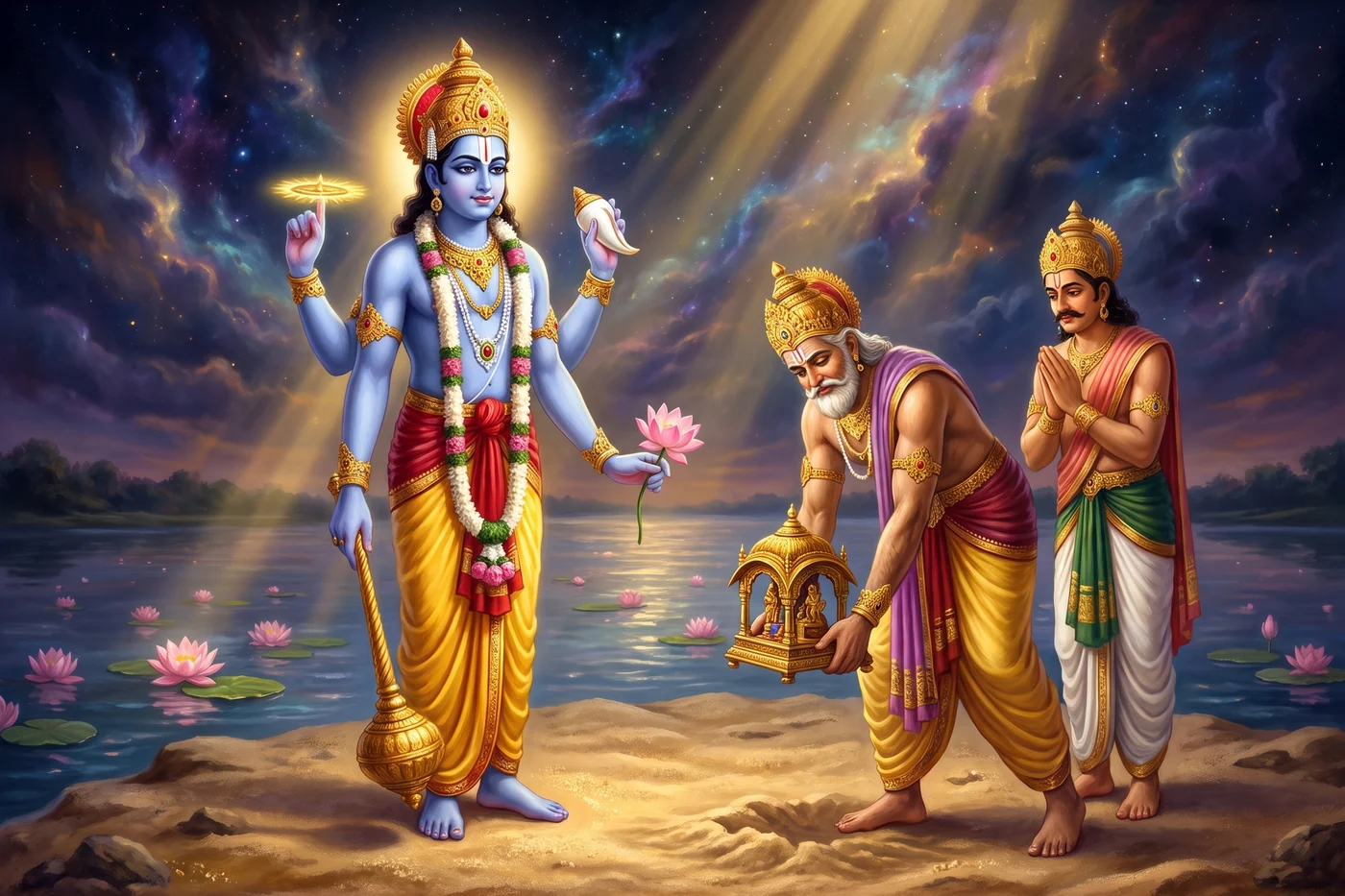
Now there was a king in that country, Dharmavarma, and for a long time he had been praying for exactly this. He had asked the god, over and over, to come and stay on his island in the river. When word reached him of the shrine that would not be lifted, he came to the bank himself.
"You answered me," he said to the god. "Stay. I will build around you."
Vibhishana stood between the king and the shrine with nothing to say. He had been given a gift and he could not carry it home.
Then the god spoke, from inside the shrine, and settled it.
"I will stay here," he said. "But I will lie facing south, toward Lanka, so that I am always looking at the friend I could not go with. That is my one condition, and it is for ever."
So the shrine stayed on the island, and the king built around it, and the god has looked south from that day to this.
That is the temple's story. Outside the temple the island has a long record of its own. The Silappadikaram, the old Tamil epic, already knows a sleeping god on an island in the Kaveri. Every one of the twelve Alvars, the poet-saints of the Tamil Vaishnava tradition, sang of this place, which no other temple can say; the temple counts two hundred and forty-seven of their verses. And of Andal the tradition says that when she finished her Thiruppavai she entered the god himself, and that was the end of her story on earth.
As the temple remembers 1311: Thuluka Nachiyar
Srirangam · 1 min read
The second story the temple tells is not from the beginning of time. It has a date, and the date is 1311.
In that year the army of Malik Kafur came south and reached the island. The temple's golden processional icon, the image that is carried out to the people on festival days, was taken as plunder and carried north, all the way to Delhi.
What happened in Delhi the temple tells in its own way. The icon was brought into the Sultan's household, and the Sultan's daughter saw it.
She fell in love with it. That is the word the temple uses and there is no softer one. She would not be parted from the golden image, and she kept it by her.
Then the image was recovered and brought home to the island. How it came back, this telling does not stop to say. What it says is that the princess followed it. She left Delhi and came all the way south after the god, and when she reached the temple she died at the door of the sanctum.
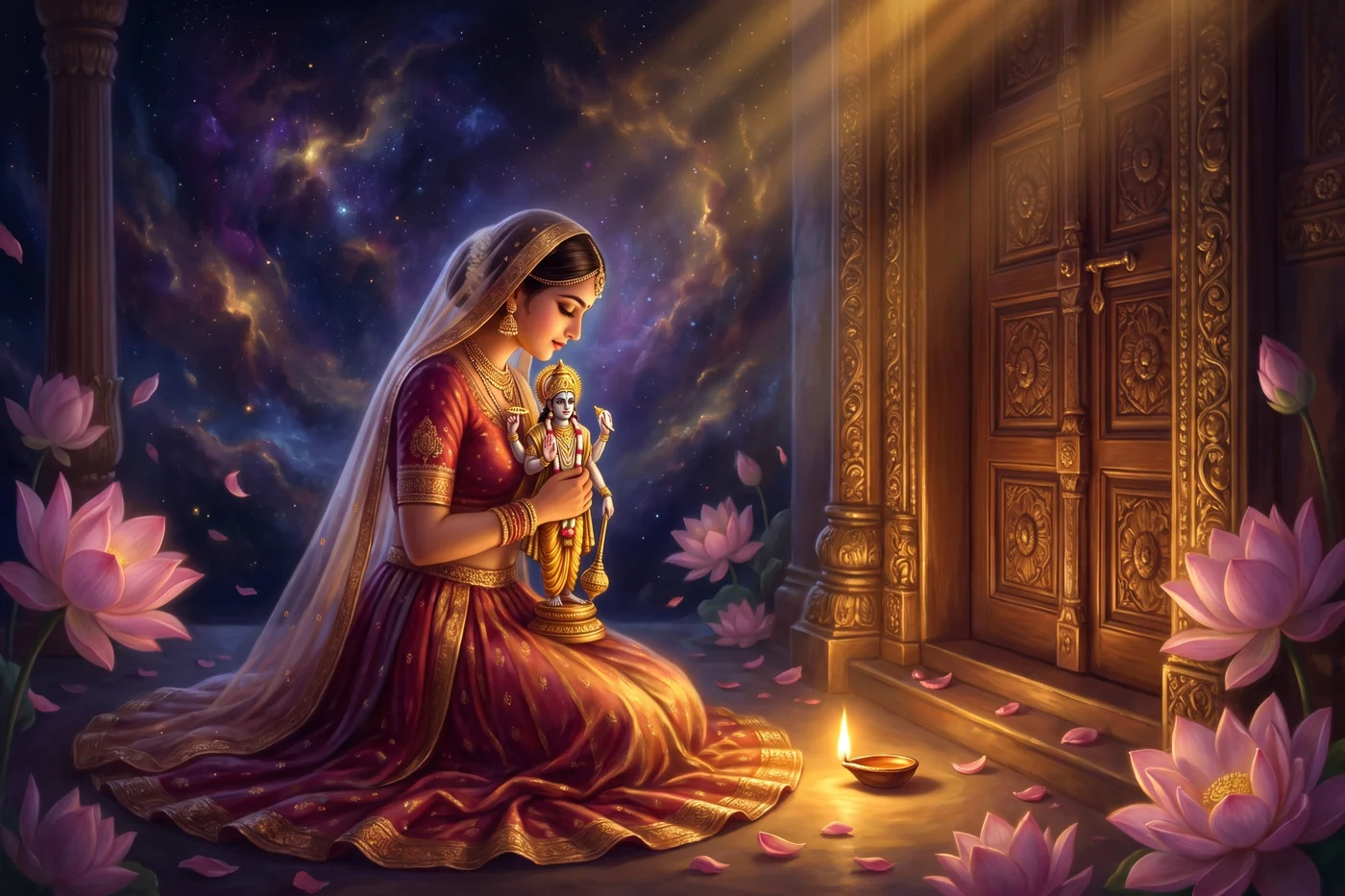
The temple did not forget her. It gave her a name, Thuluka Nachiyar, the Muslim consort, and it gave her a shrine of her own within its walls, where she is honoured still.
It did more than that. On her days the god himself is dressed in Muslim clothes for her, and the offering set before him is not the usual temple food but butter and chapatis, the food of her own country. A princess from a court that came to rob the temple is kept, seven centuries on, as one of its own.