As the Bhagavata Purana tells it
Bhagavata Purana 7.4 to 7.10 · 3 min read
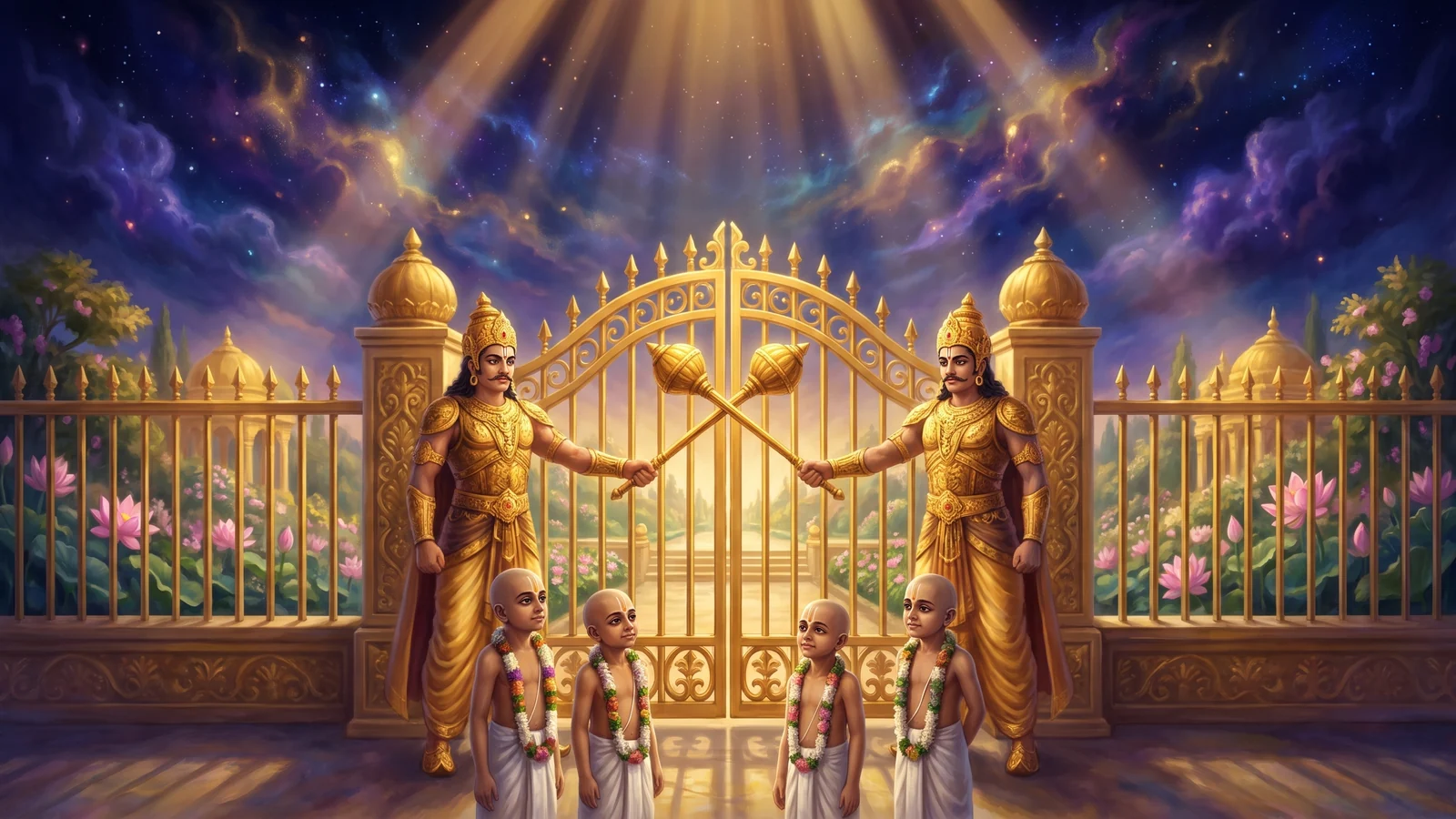
Hiranyakashipu had made himself very hard to kill.
He had gone to Brahma with long years of penance behind him and asked for a boon, and he had worded it with care. He was not to be killed by any man, nor by any beast. Not by any weapon. Not by day and not by night. Not inside a house and not outside one. Brahma granted it, clause by clause, and the asura king went home and took the three worlds for himself.
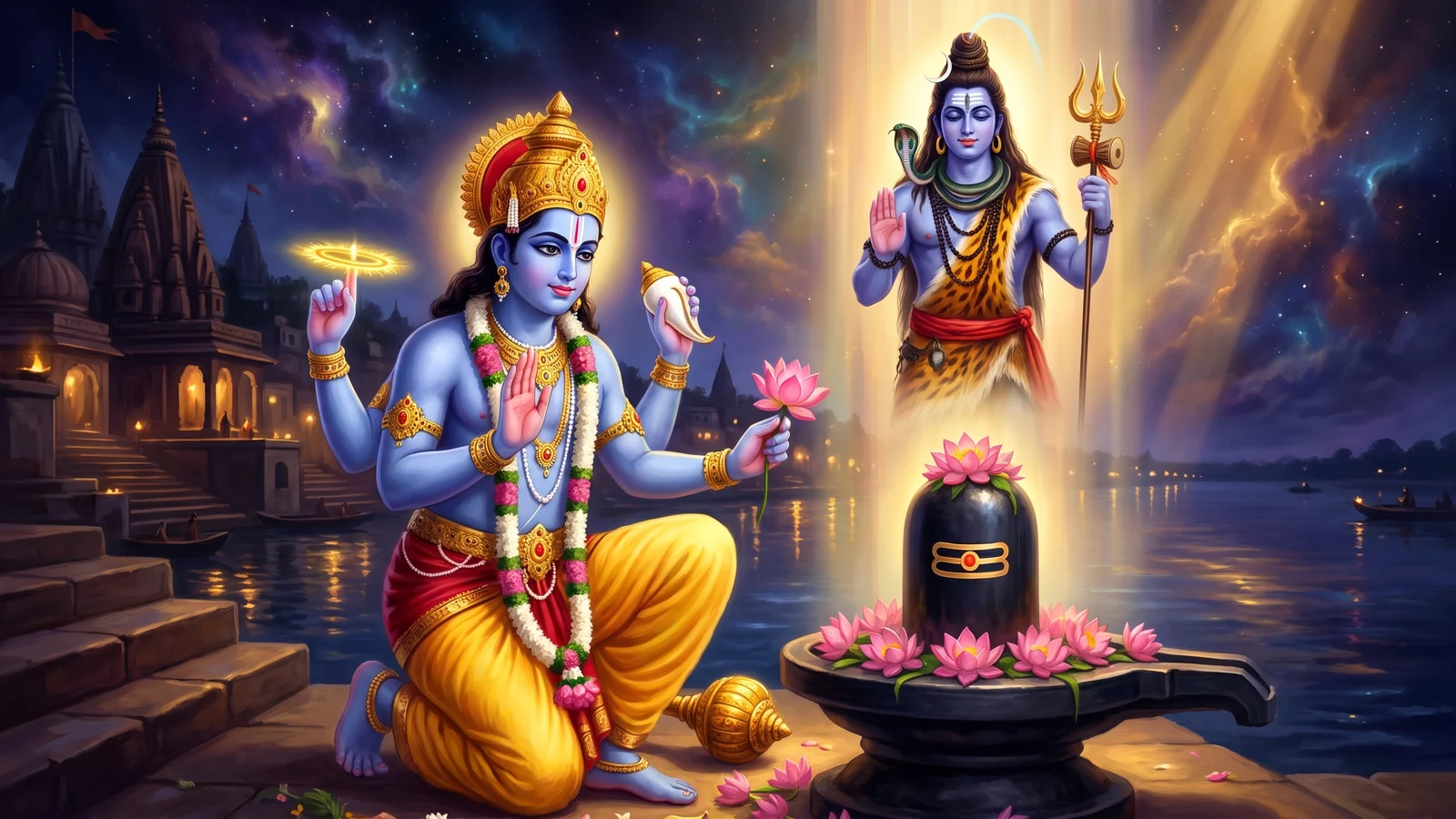
He had a reason for wanting them. Vishnu had killed his brother Hiranyaksha, and Hiranyakashipu hated the name of Vishnu more than anything that lived.
And his own son could not stop saying it.
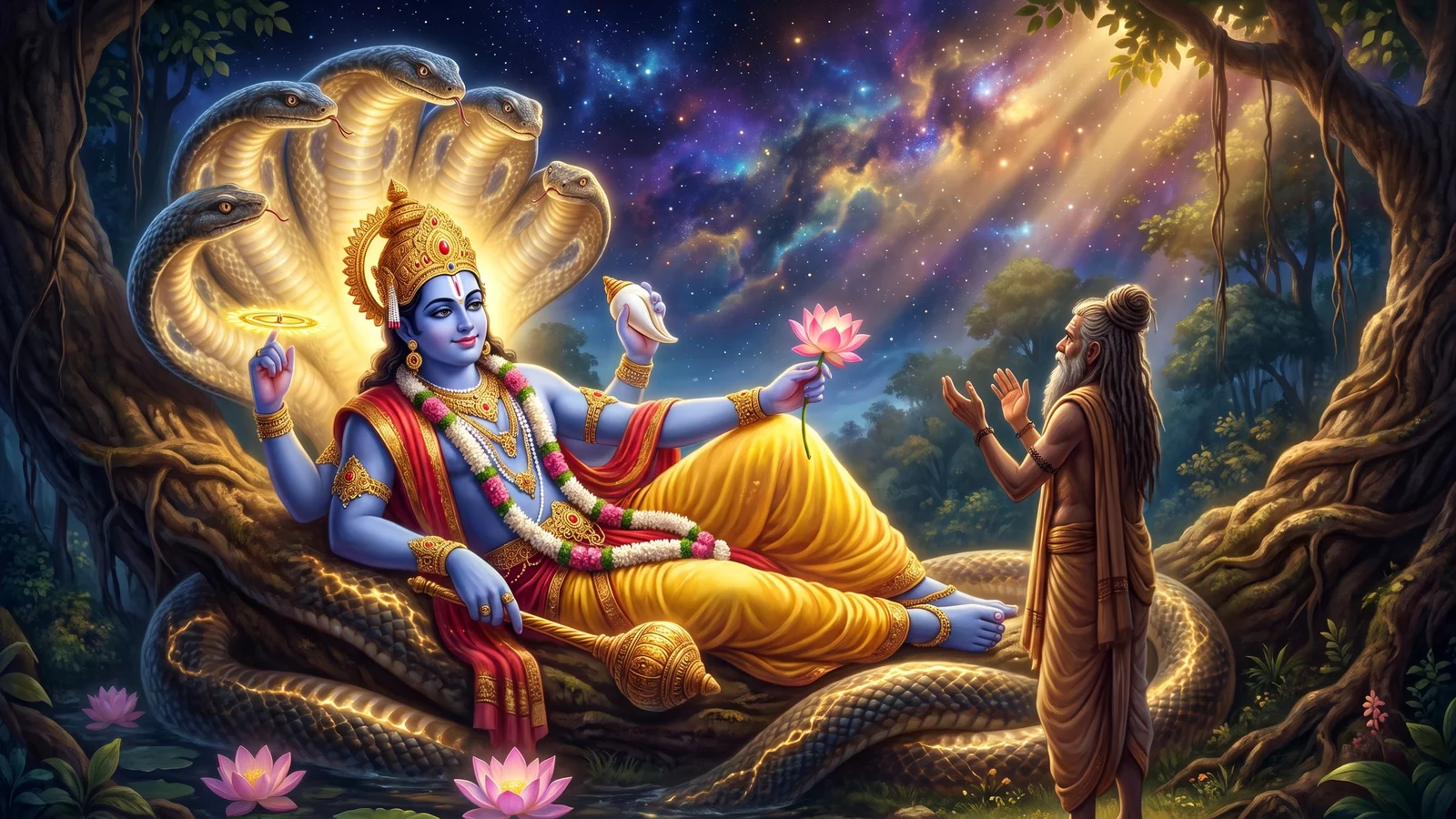
The boy was Prahlada. While he was still in his mother's womb the sage Narada had taught her, and the unborn child had listened. He came into the world loving Vishnu, and nothing anyone did afterwards could get it out of him.
"Tell me the best thing you have learned," the king said to him one day, pleased with his small son.
"To love Vishnu," said the boy. "There is nothing else worth learning."
The king's face changed. From that day he wanted the boy dead.
They gave him poison, and he drank it and lived. They drove elephants at him, and the elephants would not tread on him. They shut him in with serpents, and he was not bitten. They threw him from a cliff, and he came walking back up the path.
Then the king's sister Holika stepped forward. She had a gift: fire could not burn her. She took the boy on her lap and sat down in a pyre, and the flames went up around them both. When they sank, Holika was ash. Prahlada walked out of it without a mark.
At last the king had the boy brought into the great hall. It was late in the day. The light was going.
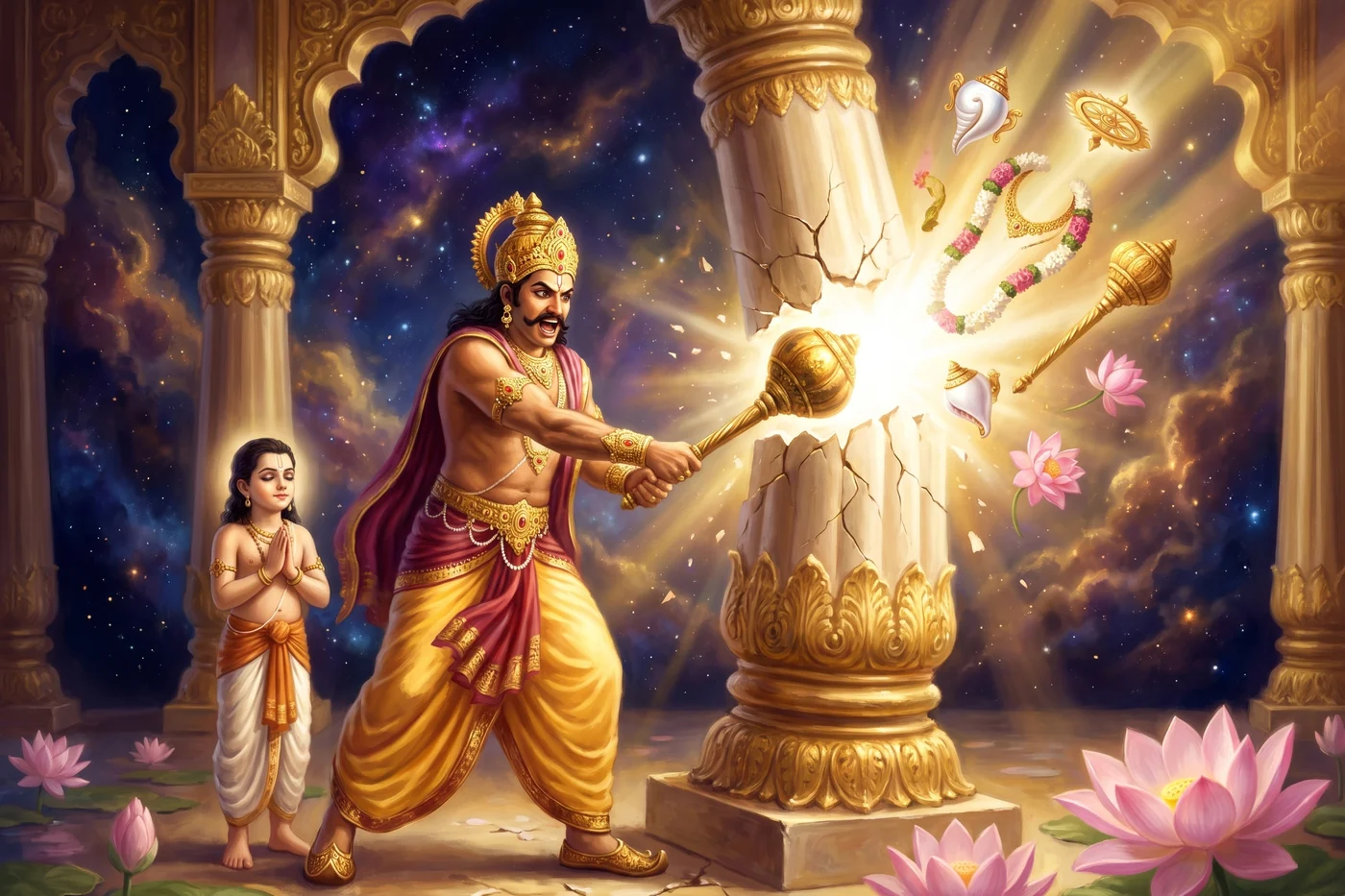
"Where is he, this god of yours?" said Hiranyakashipu. "You say he is everywhere. Is he in this pillar, then?"
"He is," said Prahlada.
"Then let him come out of it." And the king struck the pillar.
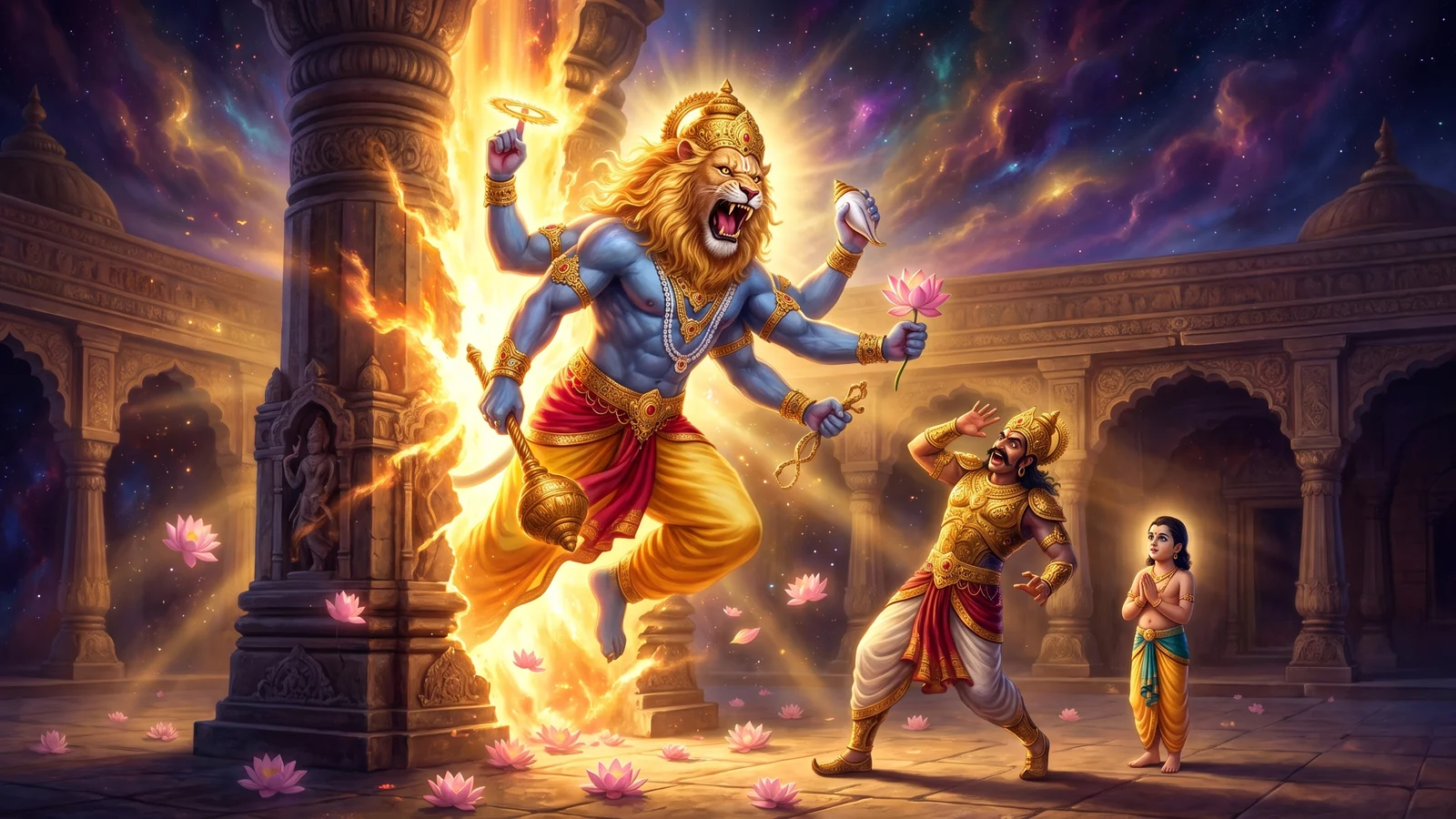
There came a sound. The Bhagavata says it seemed to crack the shell of the universe itself. The pillar split from top to bottom, and out of it came a shape that was neither a man nor a lion.
It had a mane and a man's arms and claws like hooks, and it roared. It took the king up as if he weighed nothing. It was dusk, neither day nor night. It carried him to the doorway of the hall, neither inside nor out. It laid him across its lap and opened him with its claws, which are no weapon. Neither man nor beast had done it. Every clause of Brahma's boon was left whole, and the king was dead.
Then the man-lion stood in the doorway with the blood on him, and the rage did not go out of him. The gods came to the edge of the hall and stopped. Not one of them dared go nearer.
The boy went.
He walked up to the thing that had come out of the pillar and bowed, and began to praise it. "I was never afraid of my father's elephants," he said, "or his fire, or his serpents. I am not afraid of you. There is only one thing I am afraid of, and that is to be far from you."
The roaring stopped. The man-lion looked down at the child, and the anger left him.
He set Prahlada on his father's throne, king of the asuras, and the hall was quiet again.
As the North keeps it: Holi
North India · 2 min read
In the north the story is kept by fire.
On the evening before Holi, in towns and villages across North India, a great pile of wood is built in an open place and lit after dark, and people stand round it in the dark with the light on their faces. Somebody in every crowd knows why they are there, and tells it: this fire is Holika's.
She was the king's sister, they say, and she had been promised that fire could not harm her. Her brother had tried every way he knew to be rid of his son, and the child had come through all of it without a scratch. So the aunt made an offer.
"Give him to me," she said. "I will sit in the fire with him on my lap. It will not touch me. It will finish him."
The wood was piled, and she sat down on it with the boy, and the fire was lit. The boy did not struggle. He sat quite still with his hands together and his eyes closed and the name of his god on his lips.
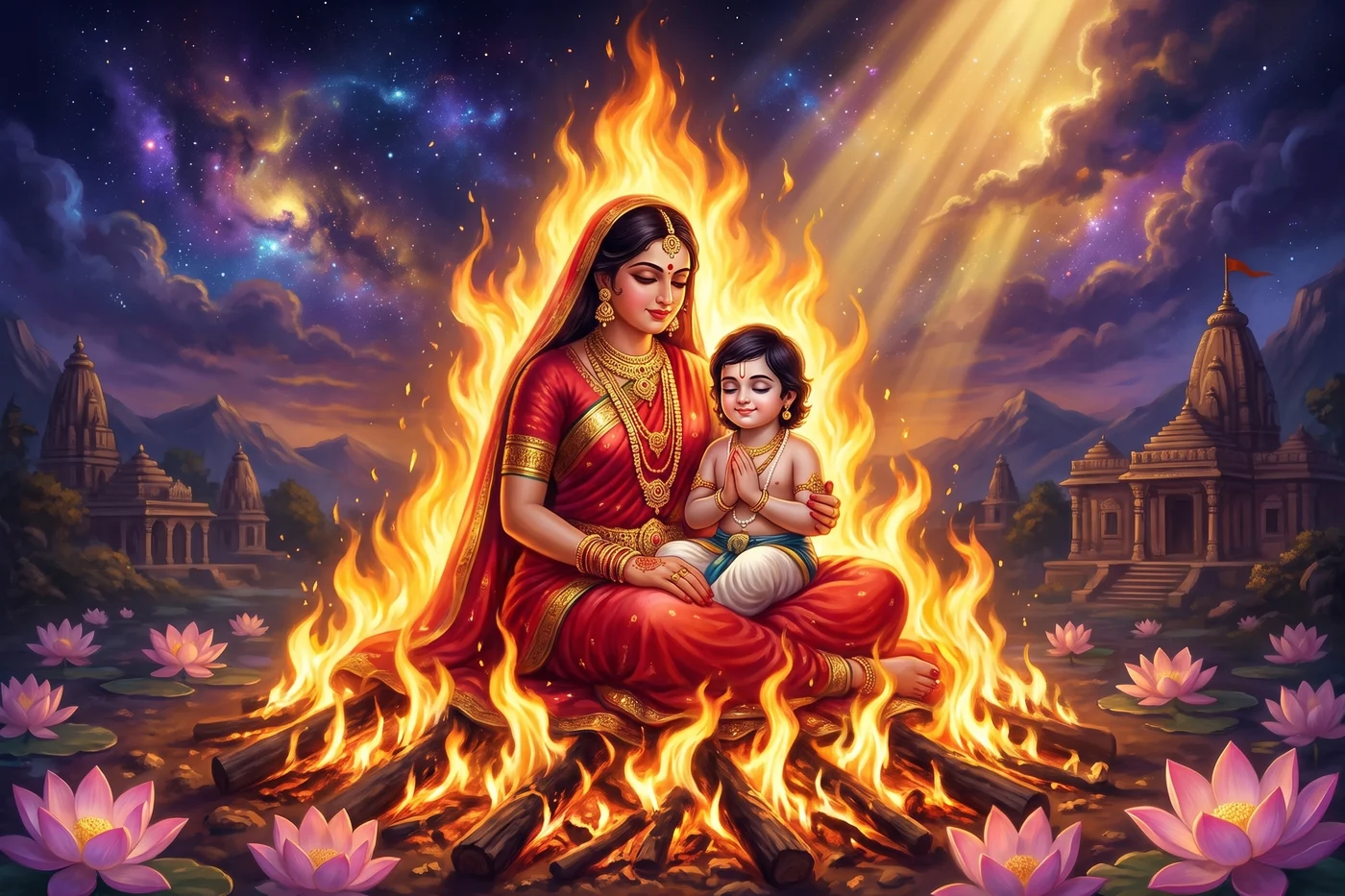
The flames rose round the pair of them. And the promise that should have kept her turned the other way. The fire took her, and it held him, and when the pile had burned down to embers the boy stood up out of it and walked away.
That is the pyre that is burned every spring. The festival takes its name from her, Holi from Holika, and the night belongs to her and to the child she meant to kill.
Of the man-lion who came out of the pillar afterwards, the bonfire says very little. Ask at the fire what happened next and many will tell you to look in the books. That part is the Purana's. This night is the boy's.
As the southern hills tell it
Ahobilam, Simhachalam, Yadagirigutta · 1 min read
The Bhagavata never says where the pillar stood. Three hills in the south say they know.
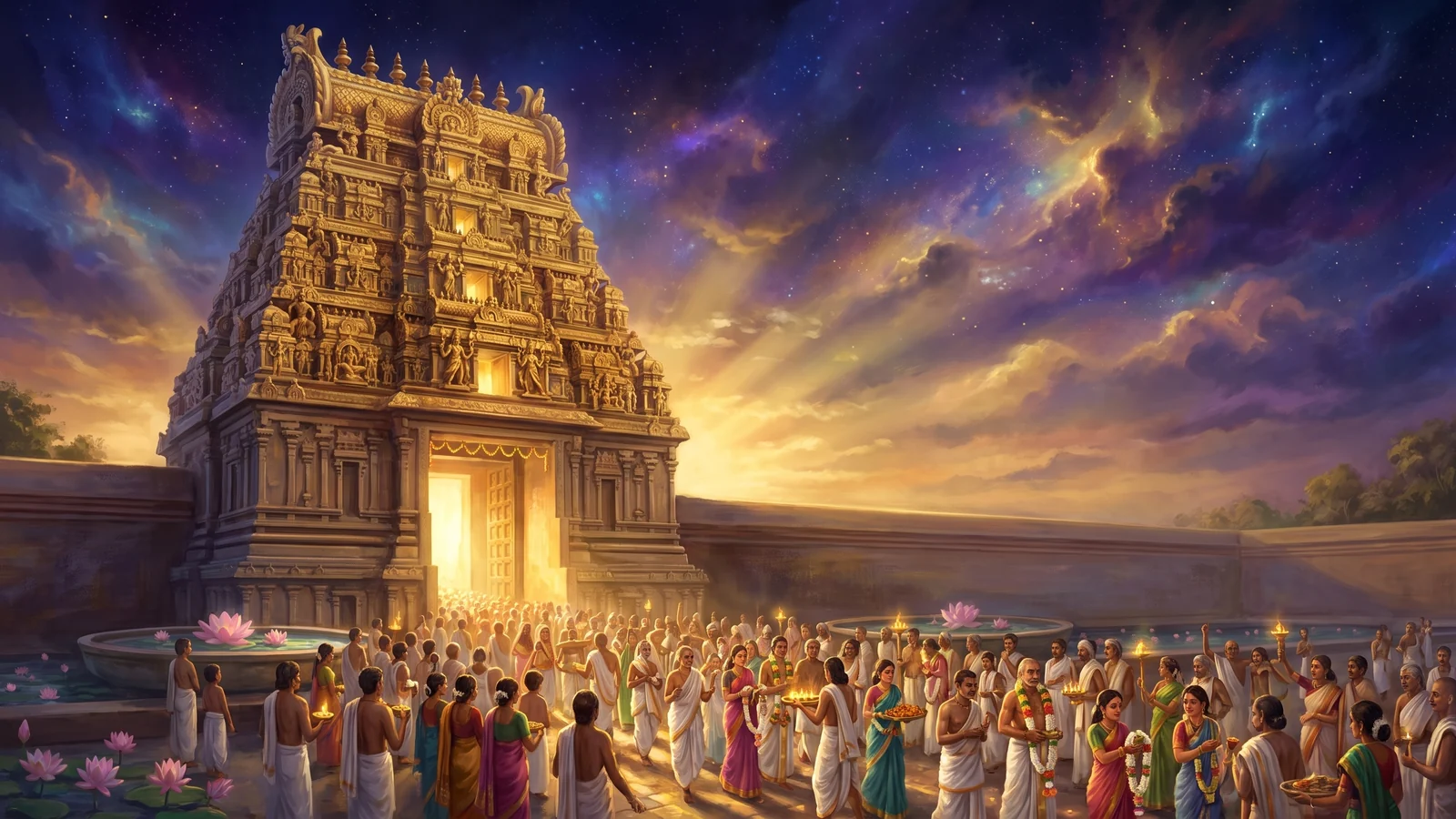
The first is Ahobilam, in the Nallamala hills of Andhra Pradesh. Here, the people of the hill say, is the very place where the pillar split and the king died, and the man-lion is honoured in nine temples on the hill, not one. A pilgrim who climbs between them is walking the ground of the story as the hill tells it.
The second is Simhachalam, near Visakhapatnam on the coast. The god here is Varaha-Narasimha, the boar and the man-lion named together in one image, and that image is kept under a coat of sandal paste. The pilgrim sees the paste, and knows what is beneath it.
The third is Yadagirigutta, in Telangana, where the man-lion is worshipped on his own hill, and the crowds come up as they come up at the other two.
None of the three tells the story differently from the book. What they add is the ground. Where the Purana has a hall with a pillar in it and no address, the south has a hill one can climb, a doorway to stand in, a stone to put a hand on.
All three are visited as Prahlada's places as much as the god's. The child who would not stop saying the name is remembered on every one of them, and those who climb the hills say they are climbing them as he did.