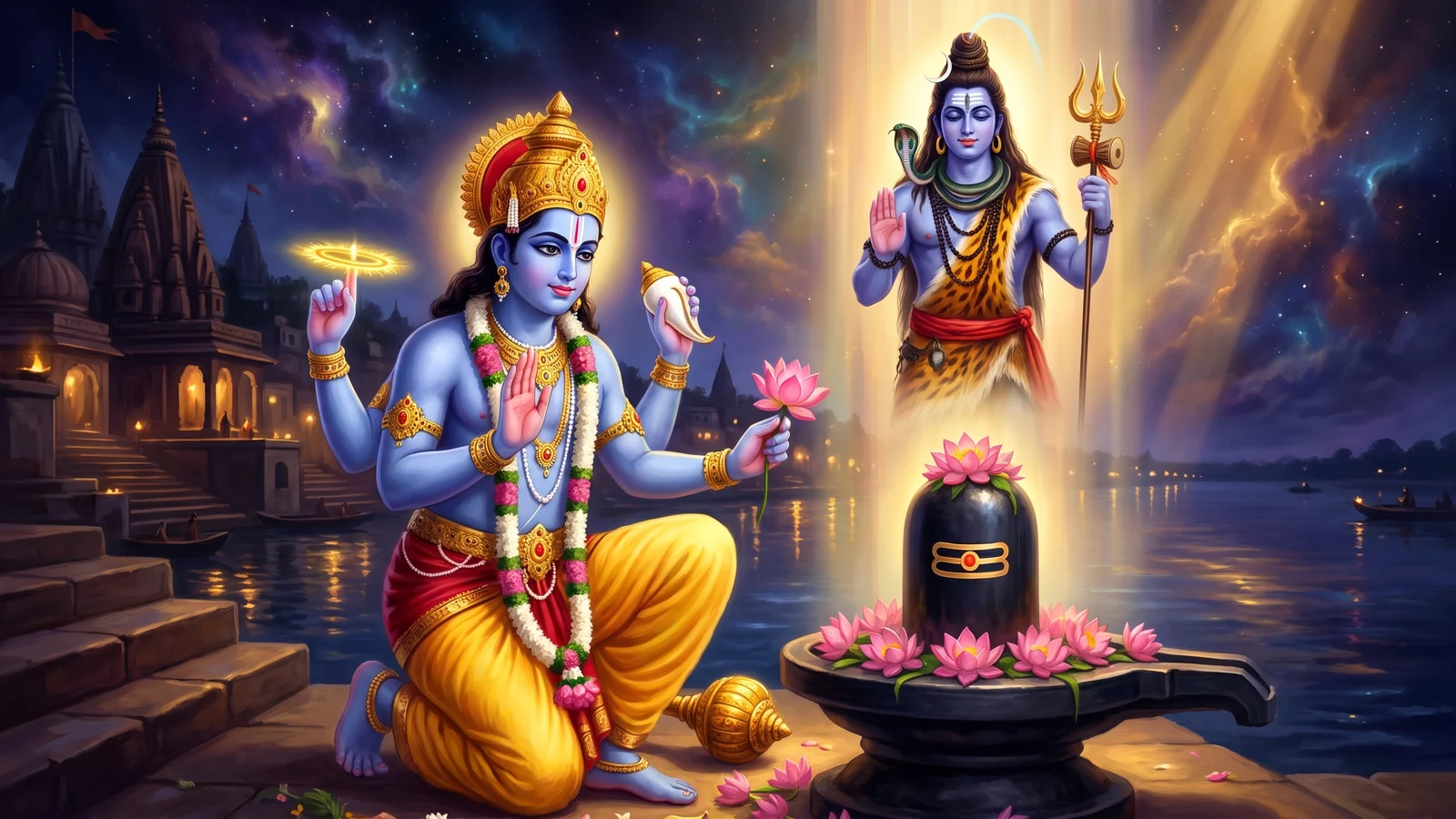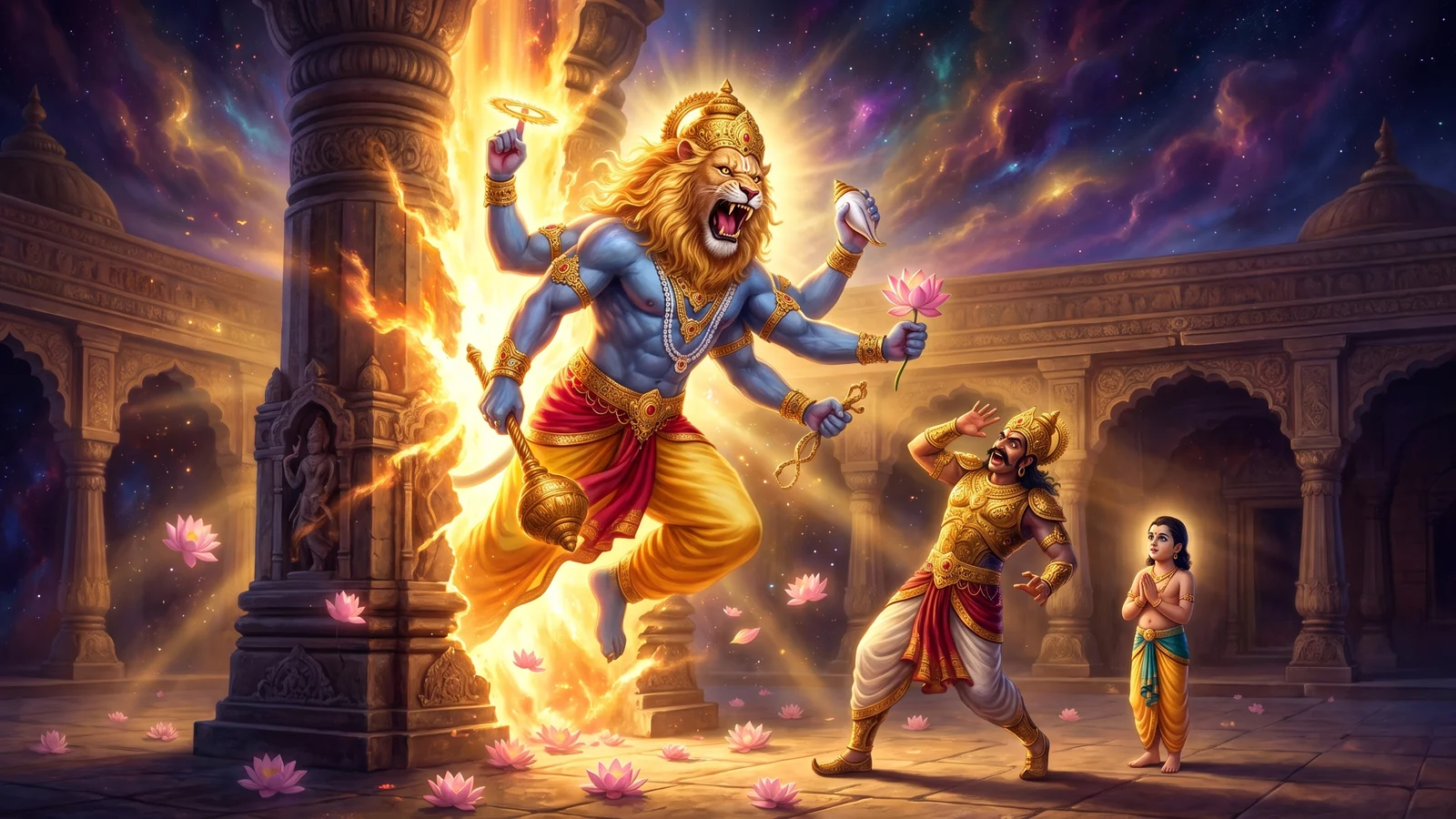
As the Padma Purana tells it
Padma Purana · 3 min read
There was a demon called Mura, and he had taken the heavens.
That is where the Padma Purana begins. Mura had driven the gods out of their places one by one, and the gods had nowhere left to stand. They came to Vishnu, as they do in every age when something has gone past them.
"He has our seats," they said. "He has our sky. We cannot put him down and we cannot go home."
Vishnu went out to meet the demon, and the two of them fought.
The text does not describe the battle blow by blow, and this telling will not invent one. It says only that the fight went on for a very long time, and that Mura would not fall, and that at the end of it Vishnu was tired. Not beaten, but tired in the way that even a god can be tired after a war with no end in it.
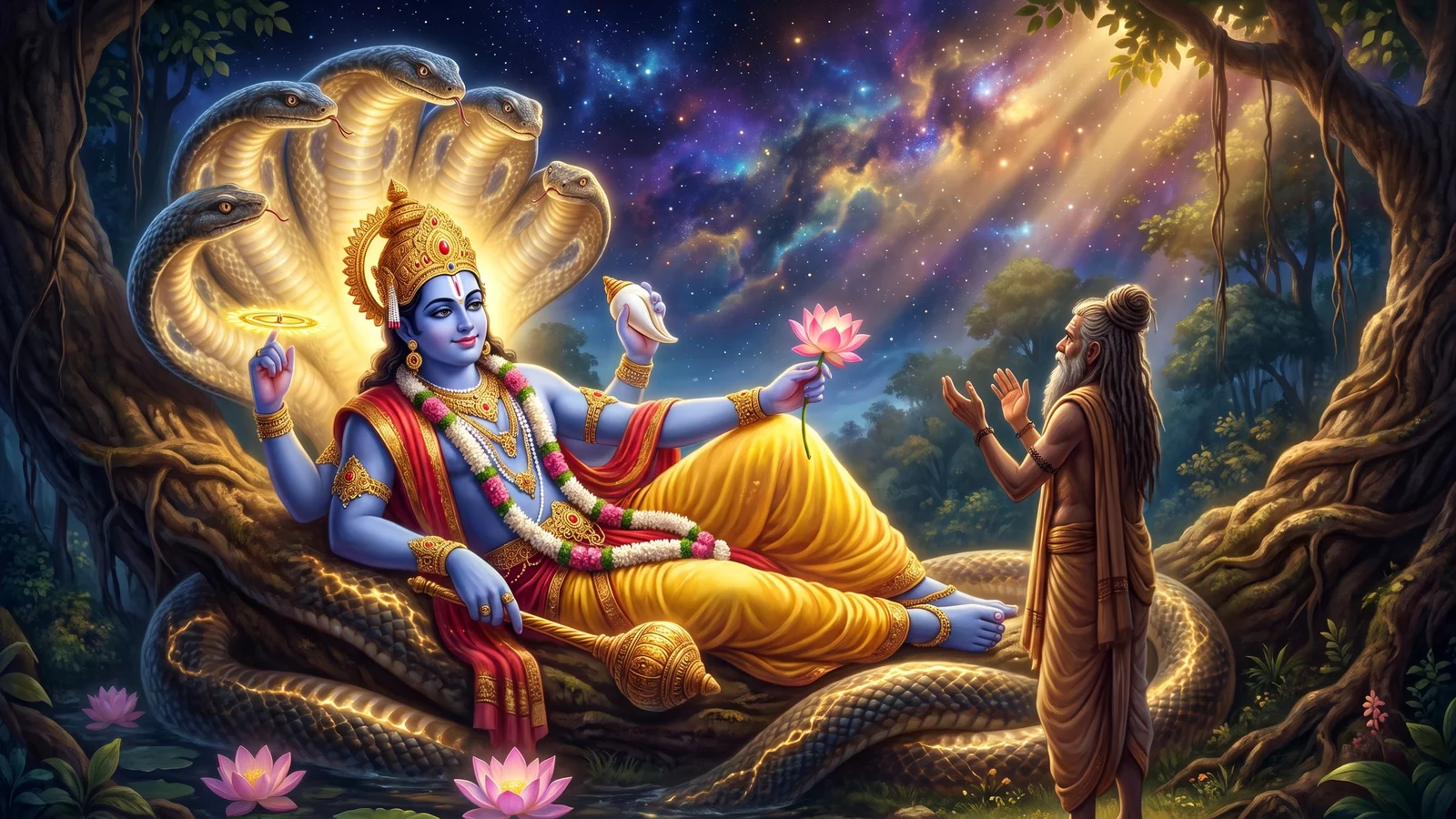
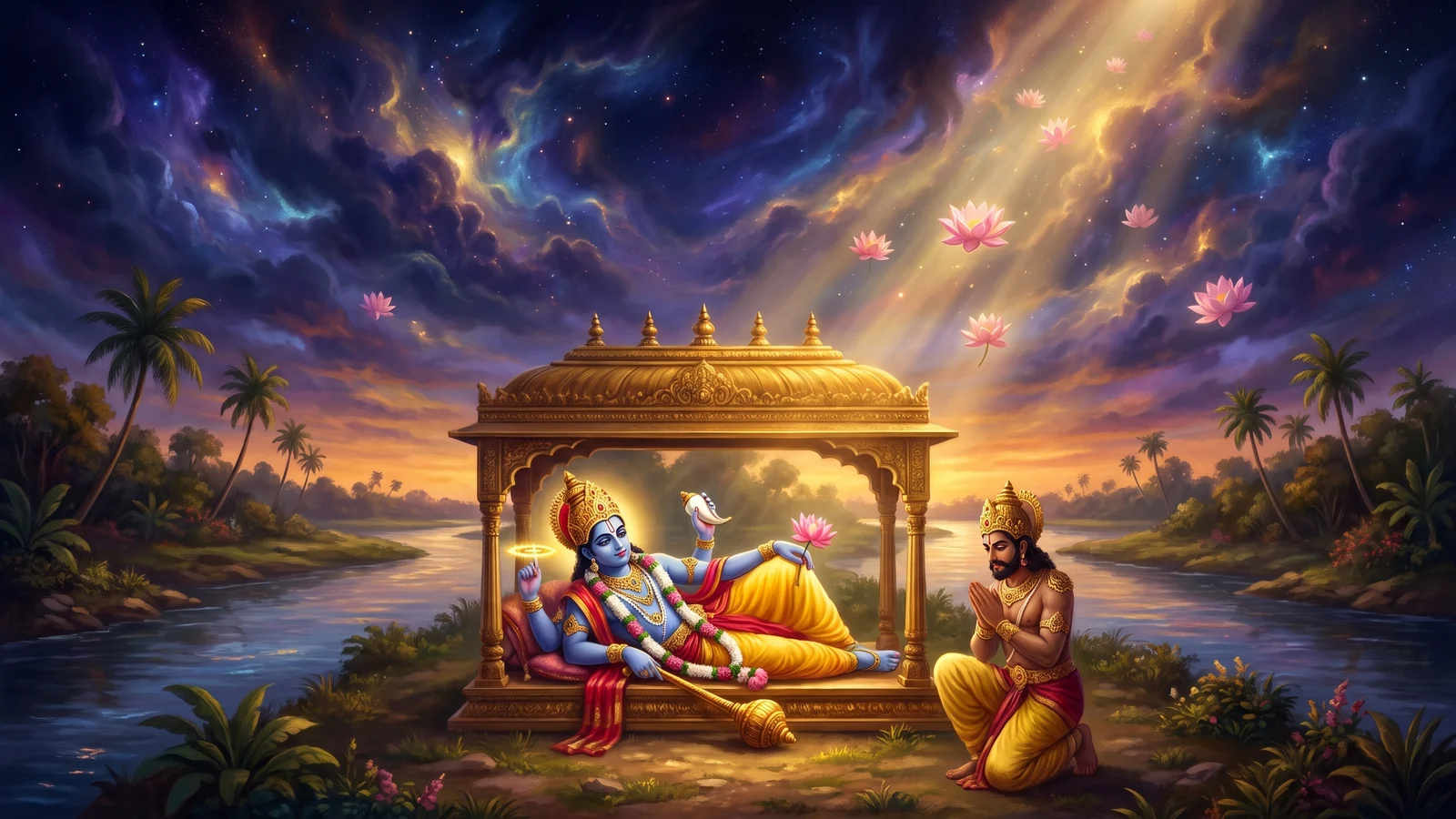
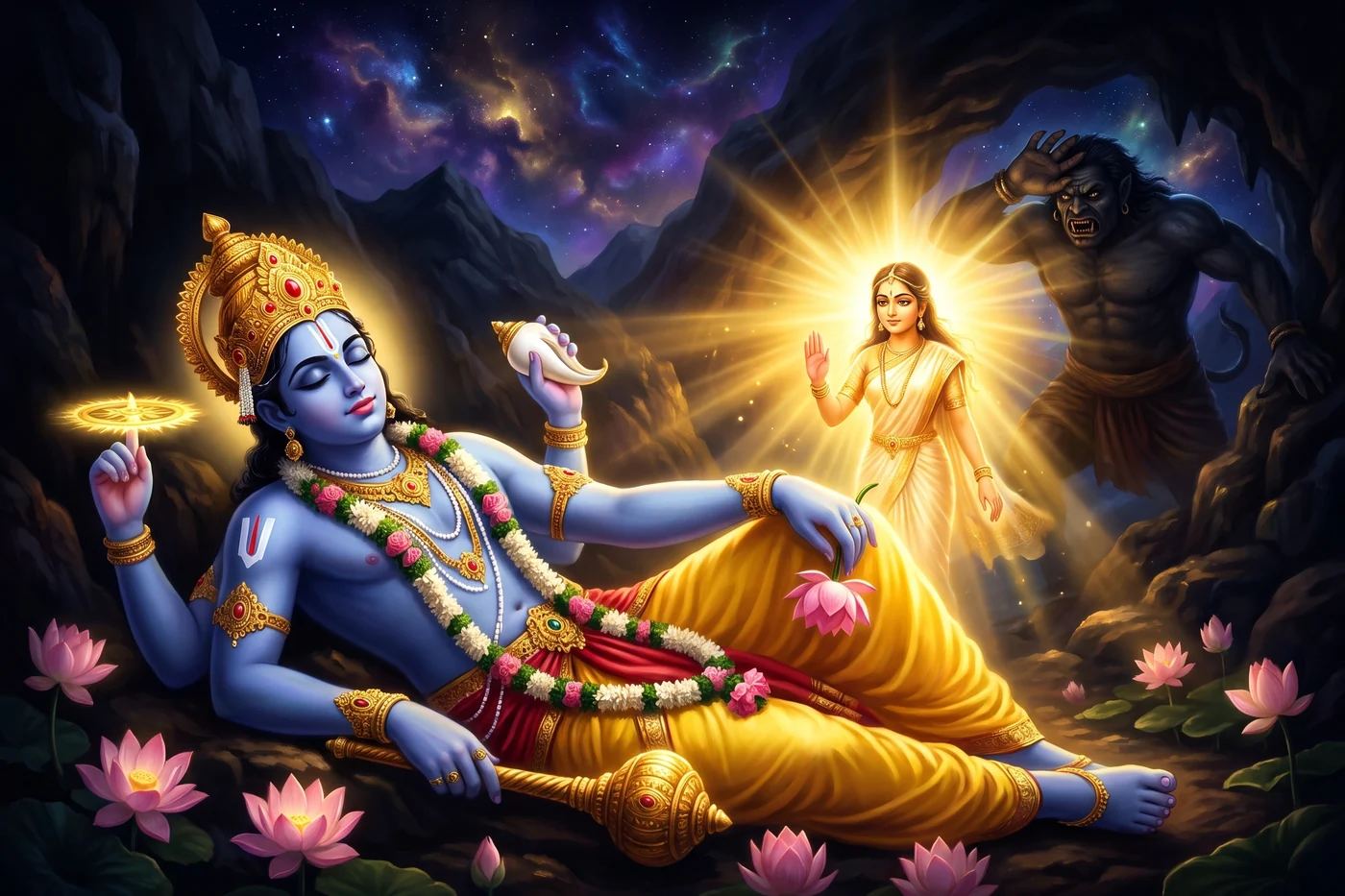
So he withdrew. He found a cave in a mountain, went in, lay down, and slept.
Mura followed him.
He came to the mouth of the cave and looked in and saw the god asleep on the floor, and he understood what he had been given. The one enemy he could not beat awake was lying in front of him with his eyes shut.
"Sleep, then," Mura said. "I will make it last."
He raised his weapon and stepped in.
What met him was not Vishnu. Out of the sleeping god, without his waking, there came a woman, and she was made of light. The text calls her a shining female power; some name her Yogamaya, the god's own power that works while he rests. She rose between Mura and the sleeper, and she did not give way.
Mura struck at her and she struck back. He had fought the gods out of heaven and fought Vishnu to a standstill, and this woman of light destroyed him where he stood, in the mouth of the cave, while the god he had come to kill slept on.
Then Vishnu woke.
He saw the demon dead and the woman standing over him, and he knew her, because she had come out of himself.
"You came from me while I slept," he said, "and you did what I had not finished. It is the eleventh day of the fortnight. Ekadashi is your name, and the day is yours."
And he gave her a promise to carry.
"Whoever keeps a fast on your day, and holds to it, I will release. They will not be born again."
That is the whole of the story as the Padma Purana gives it, a battle, a cave, a sleep, a woman of light and a name. It is enough to have made a day.
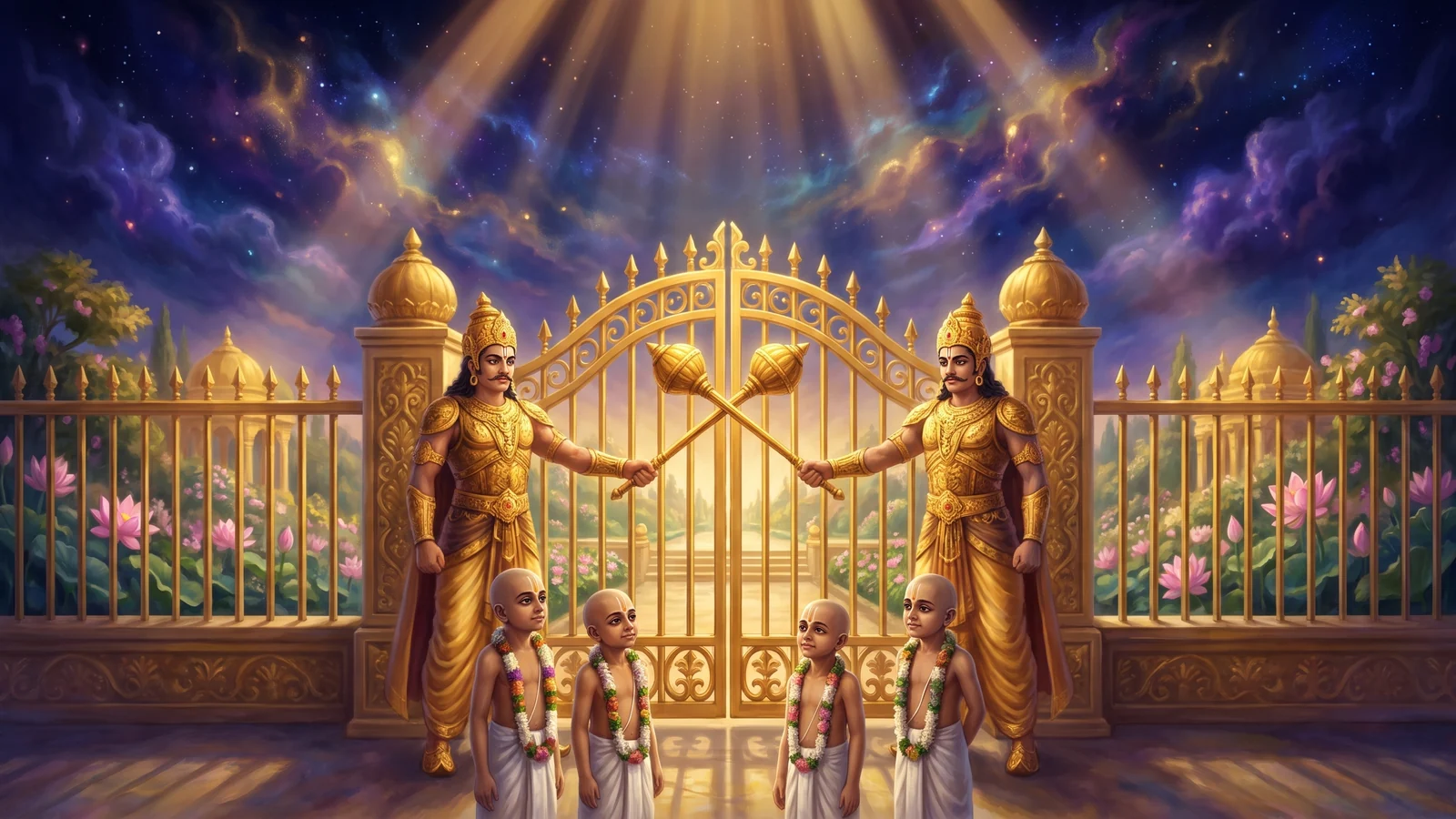
Devotees have added one thing to it, which the text does not say and which they hold to all the same. On the eleventh day of the bright half of the solar month of Dhanu, in the depth of winter, the northern gate of Vaikuntha, Vishnu's own world, stands open.
As Srirangam and Tirumala keep it
Srirangam, Tamil Nadu; Tirumala, Andhra Pradesh · 1 min read
At Srirangam the day belongs to a gate.
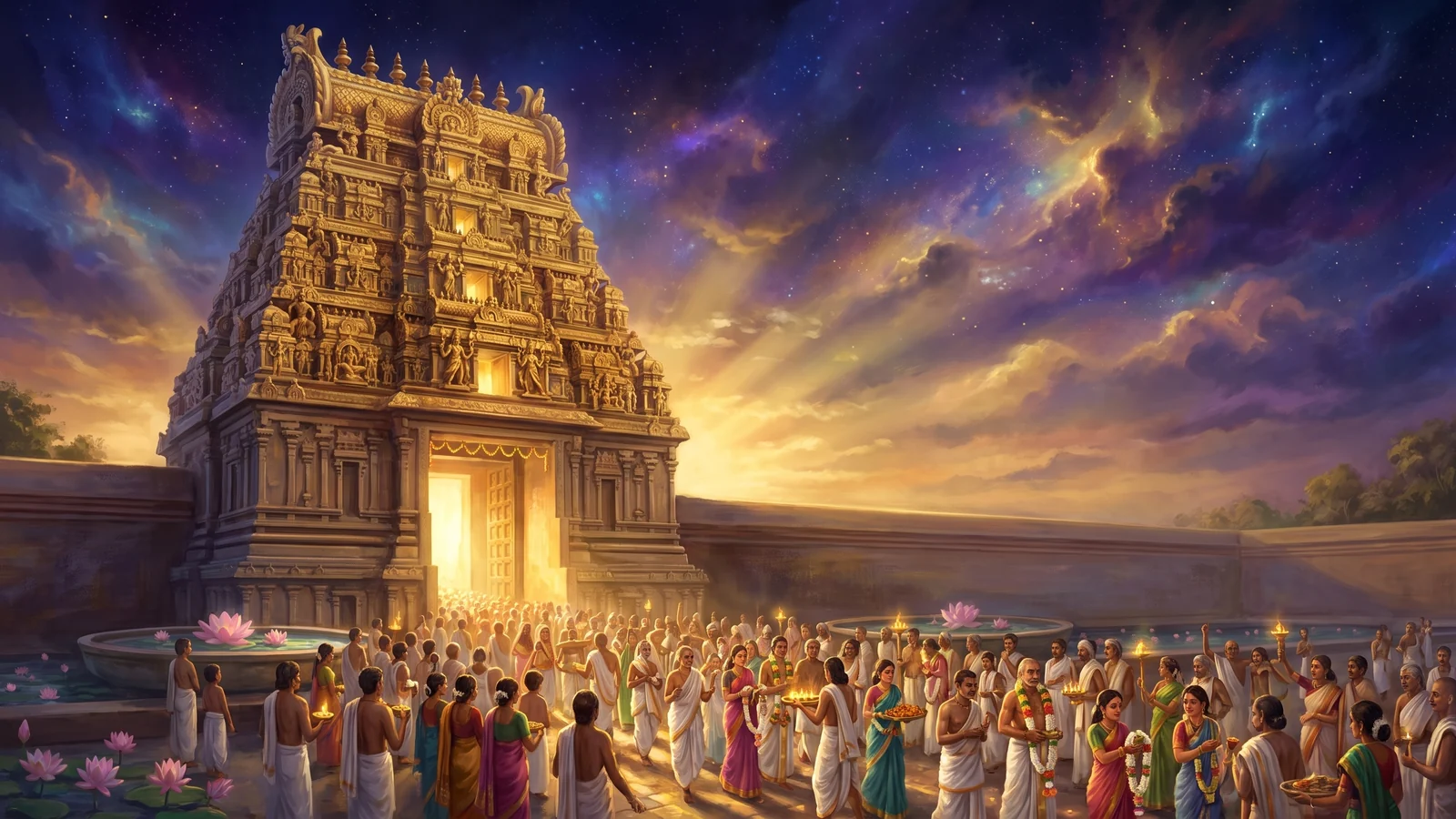
The great temple on the island has many gateways, but one of them is kept shut for the whole year. It is called the Paramapada Vasal, the doorway of Paramapadam, the highest station, the Sri Vaishnava name for the god's own world. On one morning in the Tamil month of Margazhi, and on that morning only, the bars are drawn back and the gate is opened.
Then the god is carried through it.
The god is carried out through the opened Paramapada Vasal while the people press in behind him to follow. Something like a million of them come to Srirangam for this one day, for the chance to go through the door after the god, because the belief is plain: the gate of the temple and the gate of Vaikuntha are, on this morning, the same gate.
Up on the hill at Tirumala the same day is kept with a passage rather than a door. Around the sanctum of Venkateswara runs a way called the Vaikunta Dvaram, the gate of Vaikuntha. On this day it is opened to pilgrims, and they go round the god through it, and come out the other side having walked, in their own account, through the entrance of his world.
The day has three names, depending on where one stands. In Tamil Nadu it is Vaikuntha Ekadashi. In Andhra and Telangana it is Mukkoti Ekadashi. In Kerala it is Swargavathil Ekadashi, the Ekadashi of the door of heaven. One date, one gate, three languages for it.