As the Shiva Purana tells it
Kashi (Varanasi) · 3 min read
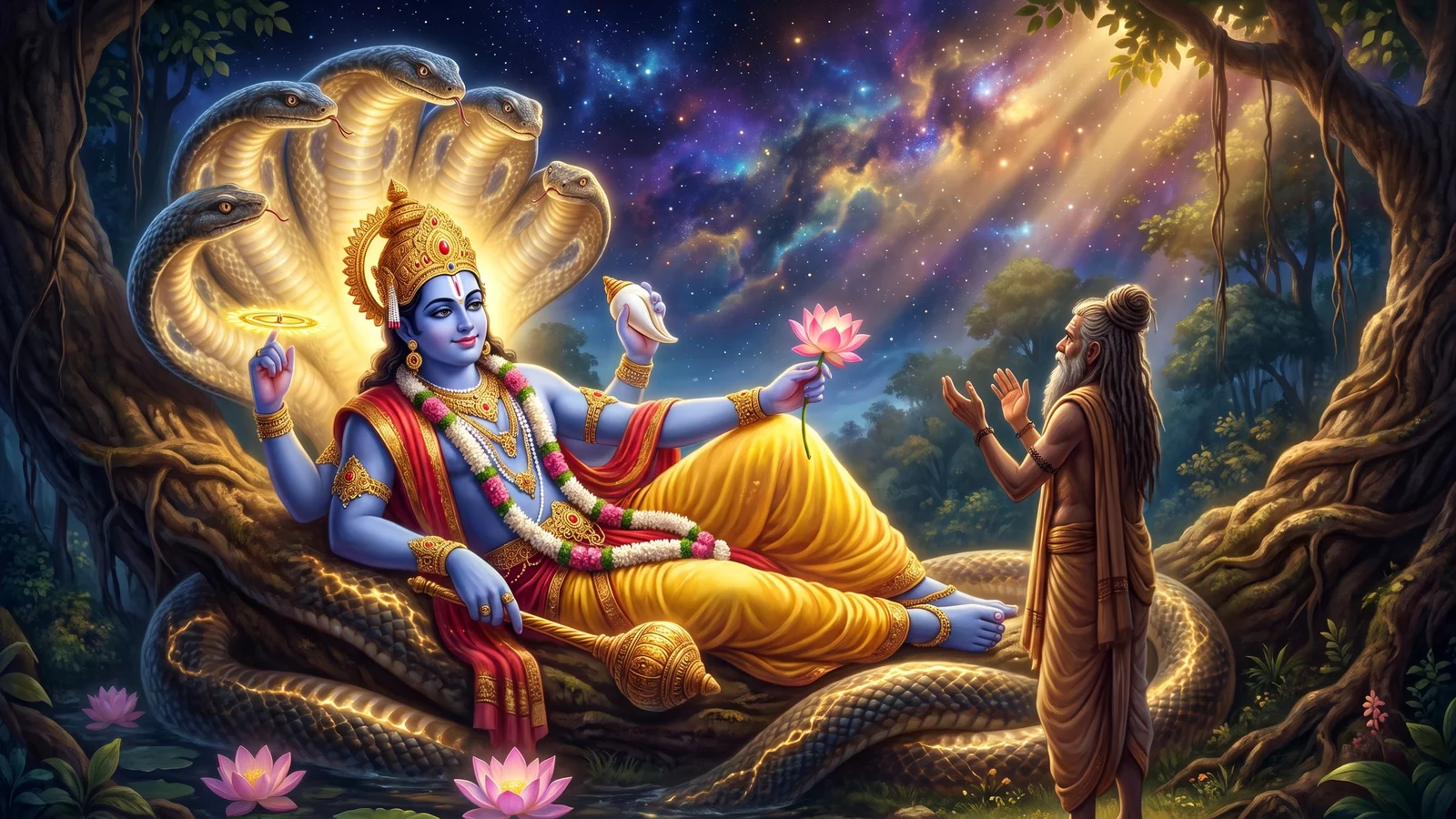
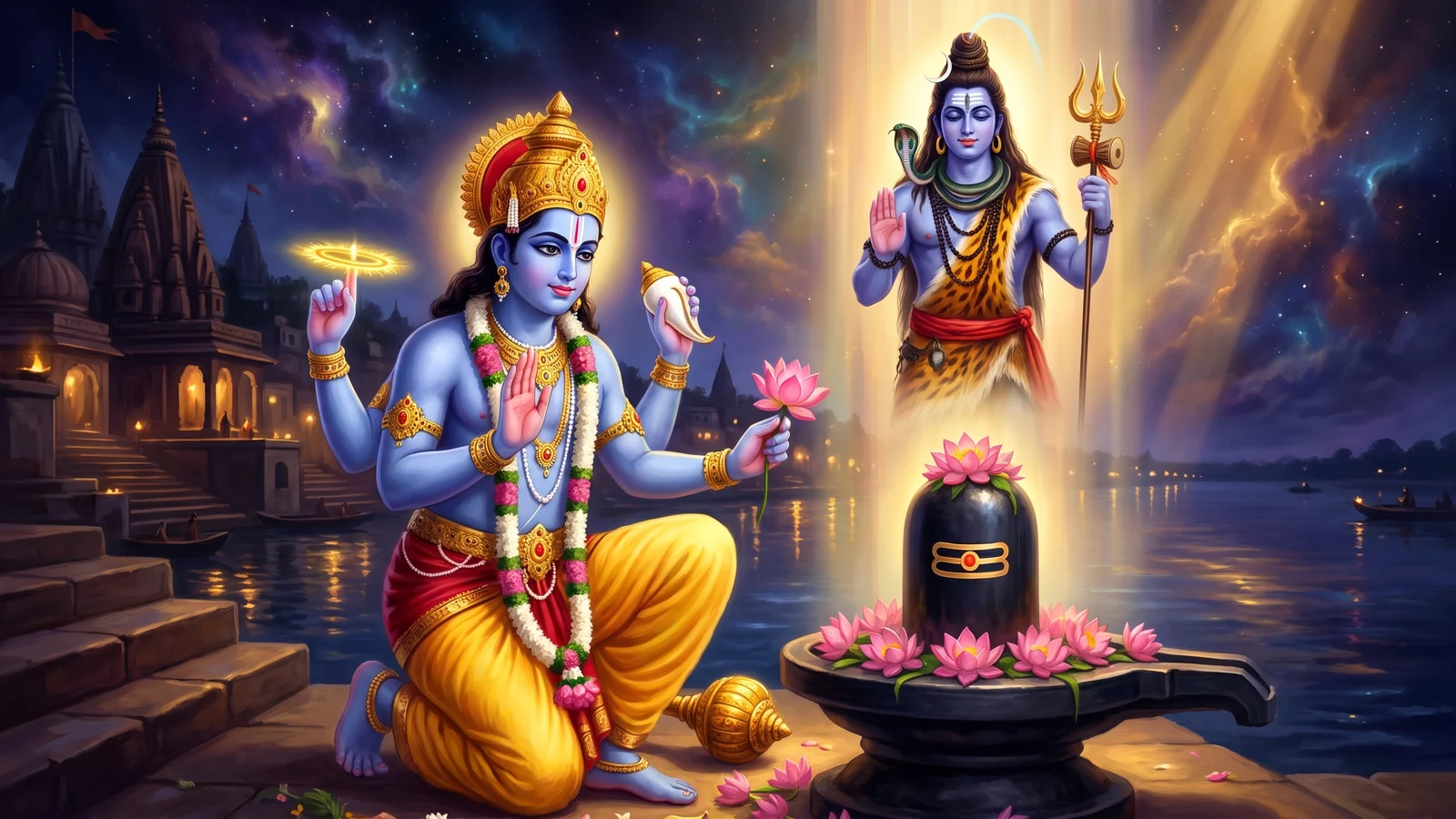
Vishnu came to Kashi to worship Shiva.
The Shiva Purana does not stop to explain why. It says he came, and that he brought a thousand lotuses with him, and that he meant to lay every one of them on the linga with his own hands.
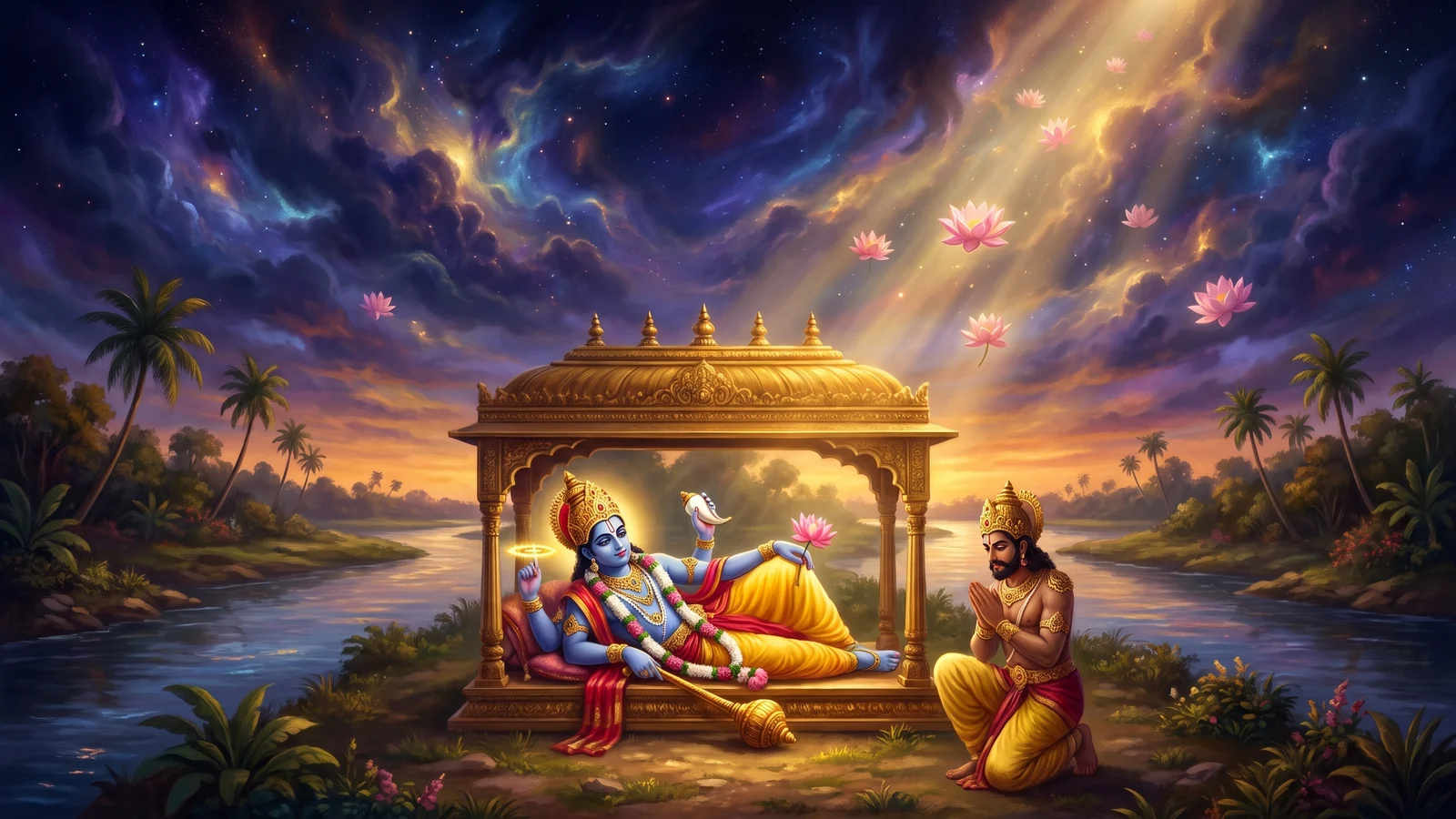
He knelt down before the stone with the flowers heaped beside him, and he began.
"One," he said, and laid the first on the linga. "Two." He took them from the heap one at a time, and he set each one down with care, and he counted as he went, because a thousand is a number and he had promised a thousand.
The heap went down and the linga disappeared under petals. The day wore on. Vishnu did not hurry.
What he did not know was that Shiva had been watching, and had reached out quietly and taken one flower from the heap and hidden it. The text says why: he wanted to test him. He wanted to see what Vishnu would do when the count came out wrong.
"Nine hundred and ninety-eight," said Vishnu. "Nine hundred and ninety-nine."
He reached for the next, and his hand closed on nothing.
He looked at the heap. It was gone. He looked at the ground around him, under his knees, behind him. No lotus. He went over the count in his head and it came out the same: nine hundred and ninety-nine, and one short, and the offering not complete.
For a moment he was still.
Then he said, half to himself, "The poets have always said that my eyes are lotuses." He almost smiled. "Then I am not short at all. Here is the thousandth."
And he raised his hand to his own face.
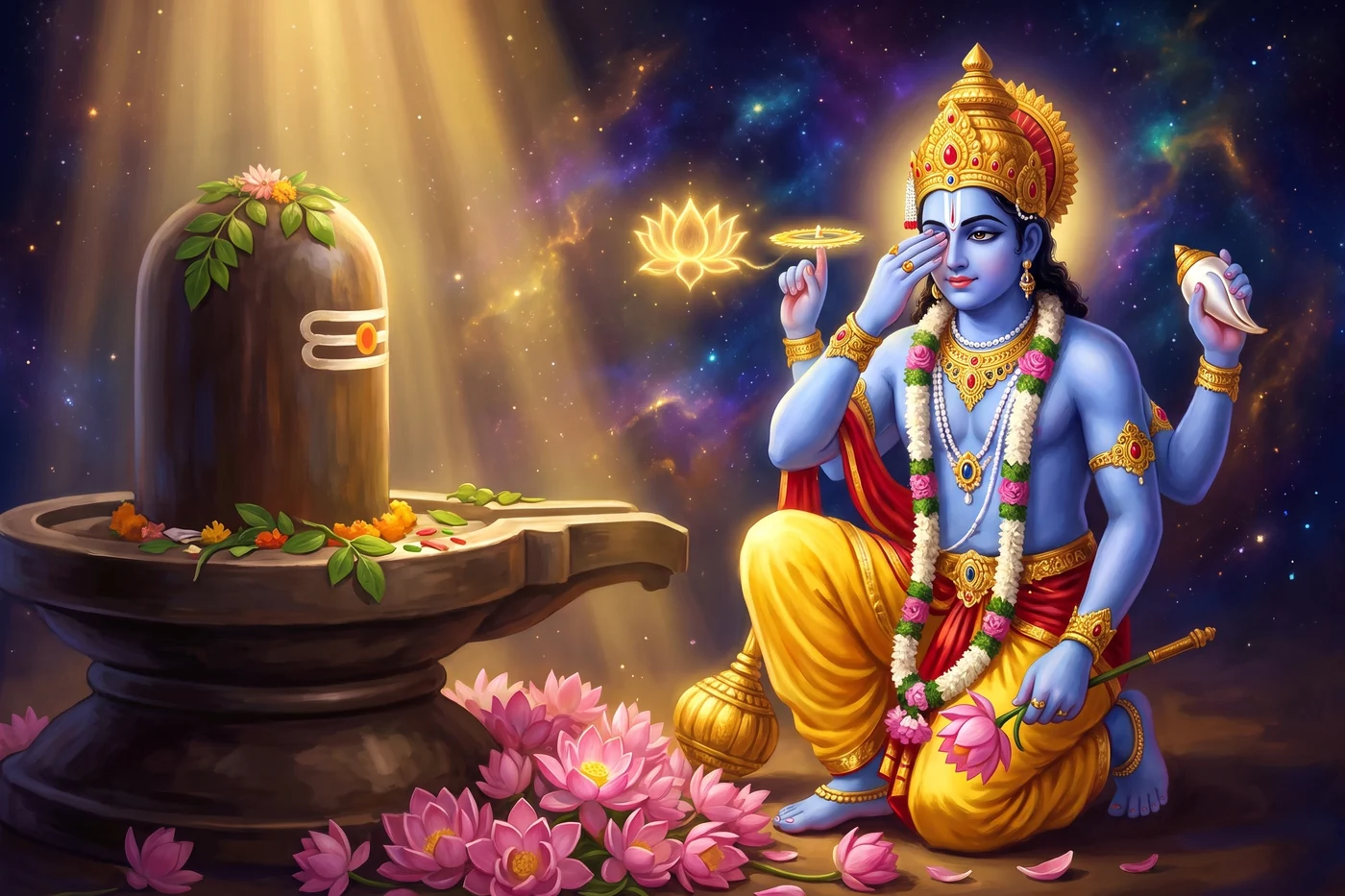
He took out his eye and laid it on the linga, in the thousandth place, among the petals.
"Enough."
Shiva was there, in front of him, in a blaze of light.
"It was I who took the flower," he said. "I wanted to see how far you would go, and now I have seen it." He touched Vishnu's face, and the eye was back where it had been, whole, and seeing. "No one has given me more than this. So take something of mine."
And he put into Vishnu's hand the Sudarshana, the discus, the wheel of light that Vishnu has carried ever since.
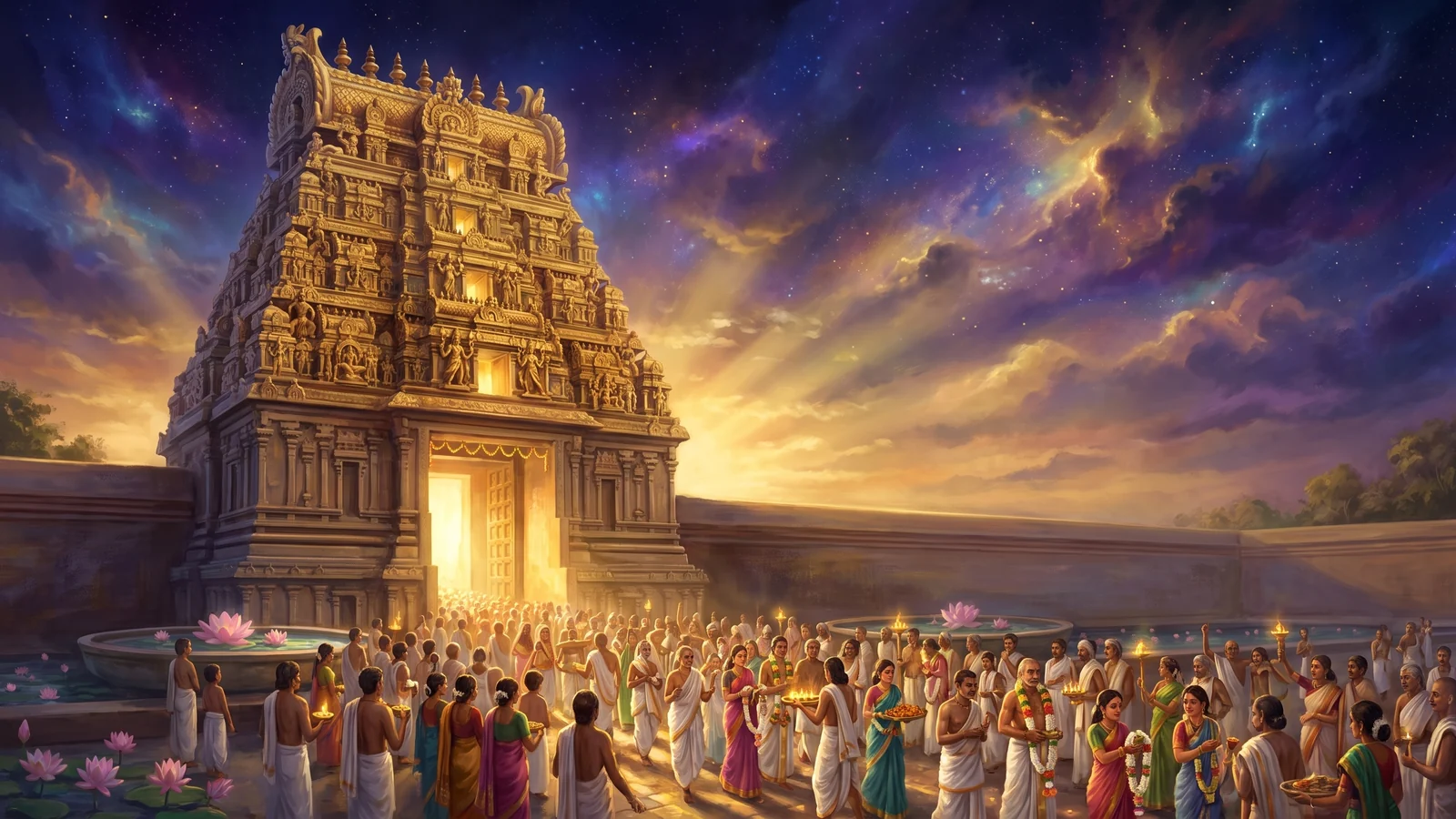
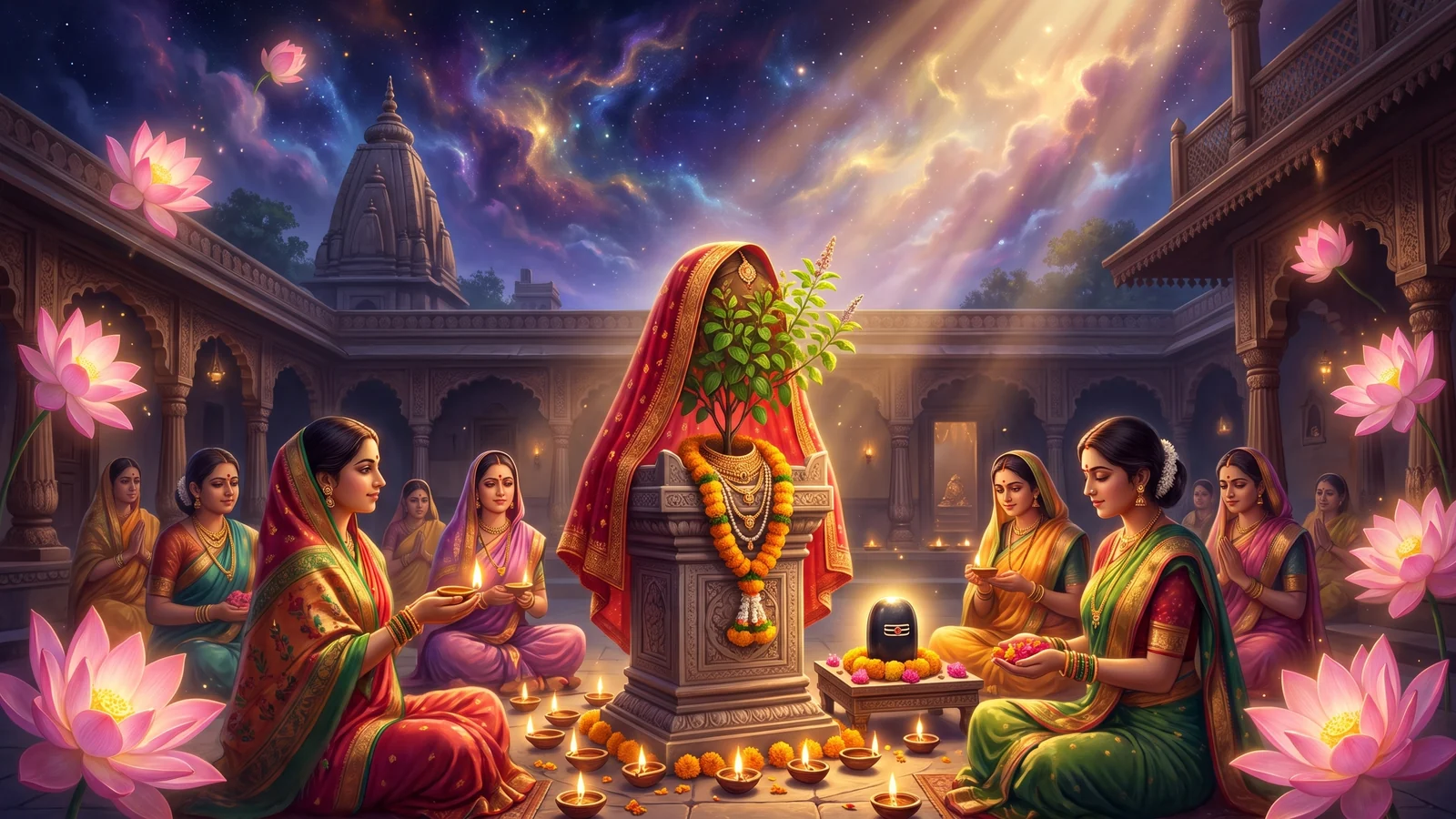
The night is kept still. It is called Vaikuntha Chaturdashi, the fourteenth day of the bright half of the month of Kartik, and at the Kashi Vishwanath temple in Varanasi it is marked by a rite that happens on no other night of the year. Shiva is offered tulsi, the leaf that belongs to Vishnu. Vishnu is offered bael, the leaf that belongs to Shiva. Each god receives the other's leaf, which on any other day would not be done, and for one night each is treated as the other's worshipper.
Which chapter of the Shiva Purana holds the story we have not been able to pin down. The retellings agree on what happened, and they do not agree on the page.
As the Vaishnava texts tell it: the craftsman and the sun
Ramayana and the Puranas · 2 min read
The Ramayana is brief about it. The discus was made, and the one who made it was Vishvakarma, the craftsman of the gods. The Puranas tell where the metal came from, and it is a strange story.
Surya, the sun, had a wife named Sanjna, and she could not bear him. Not his temper. His glare. He burned too bright to be lived with, and she could not stand near him.
So Vishvakarma took the sun into his workshop and set him on his lathe.
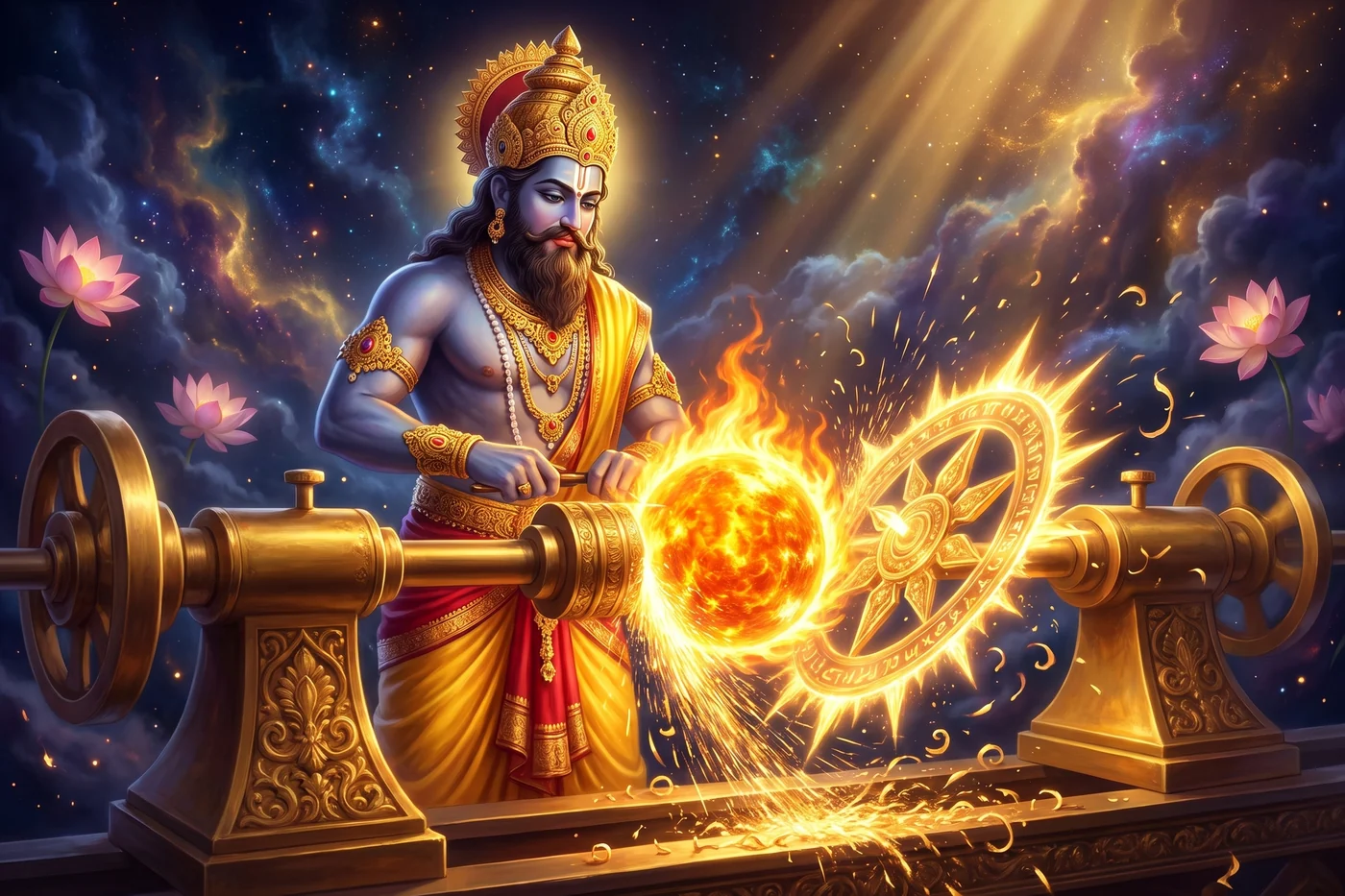
He turned him as a craftsman turns a piece of work, and he ground away an eighth of his brightness, so that Sanjna could live with what was left. The shavings of light fell from the lathe. Vishvakarma gathered them up, and from them he forged weapons for the gods, and the finest of them was a wheel with a rim like a blade, which he gave to Vishnu. That is the Sudarshana.
A wheel made from the sun does not sit idle, and the texts follow it from one hand to the next.
At the churning of the ocean an asura slipped in among the gods in disguise and drank the nectar, and the discus took off his head. The head lives on as Rahu.
In the hall of Yudhishthira's great sacrifice it took the head of Shishupala, from the hand of Krishna this time.
On the fourteenth day of the war at Kurukshetra, Krishna held it up before the sun and hid the daylight, so that Arjuna could reach Jayadratha.
When Sati died and her body was borne through the worlds, it was this wheel that cut it into the pieces that fell to earth and became the seats of the Goddess.
And it stood guard over King Ambarisha, by Vishnu's own boon, so that nobody who meant him harm could touch him.
The one who made it is a craftsman. The one who sharpened it, in this telling, is the sun's own wife, who only wanted a husband she could look at.