As the Bhagavata Purana tells it
Bhagavata Purana 8.8 · 3 min read
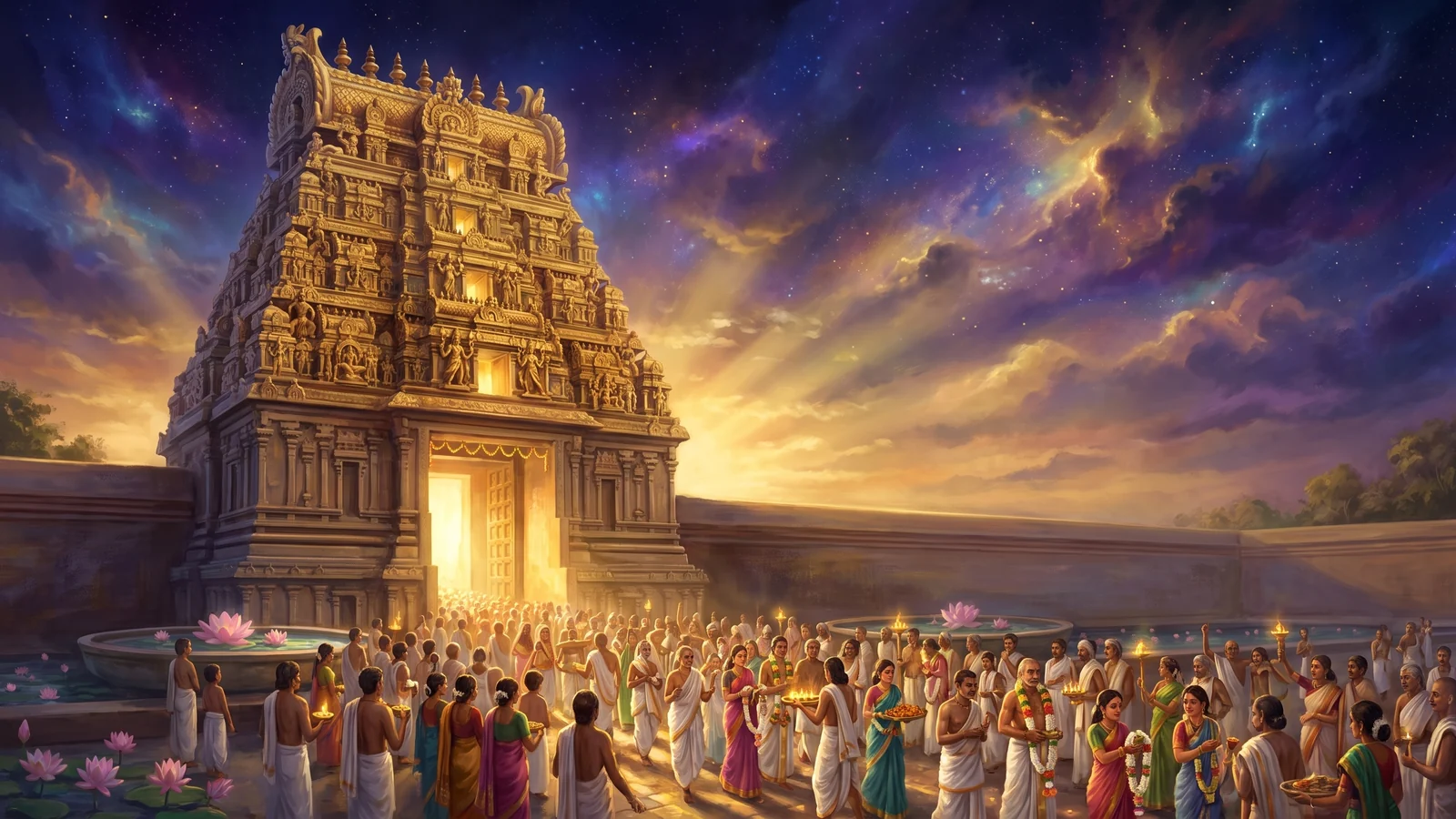
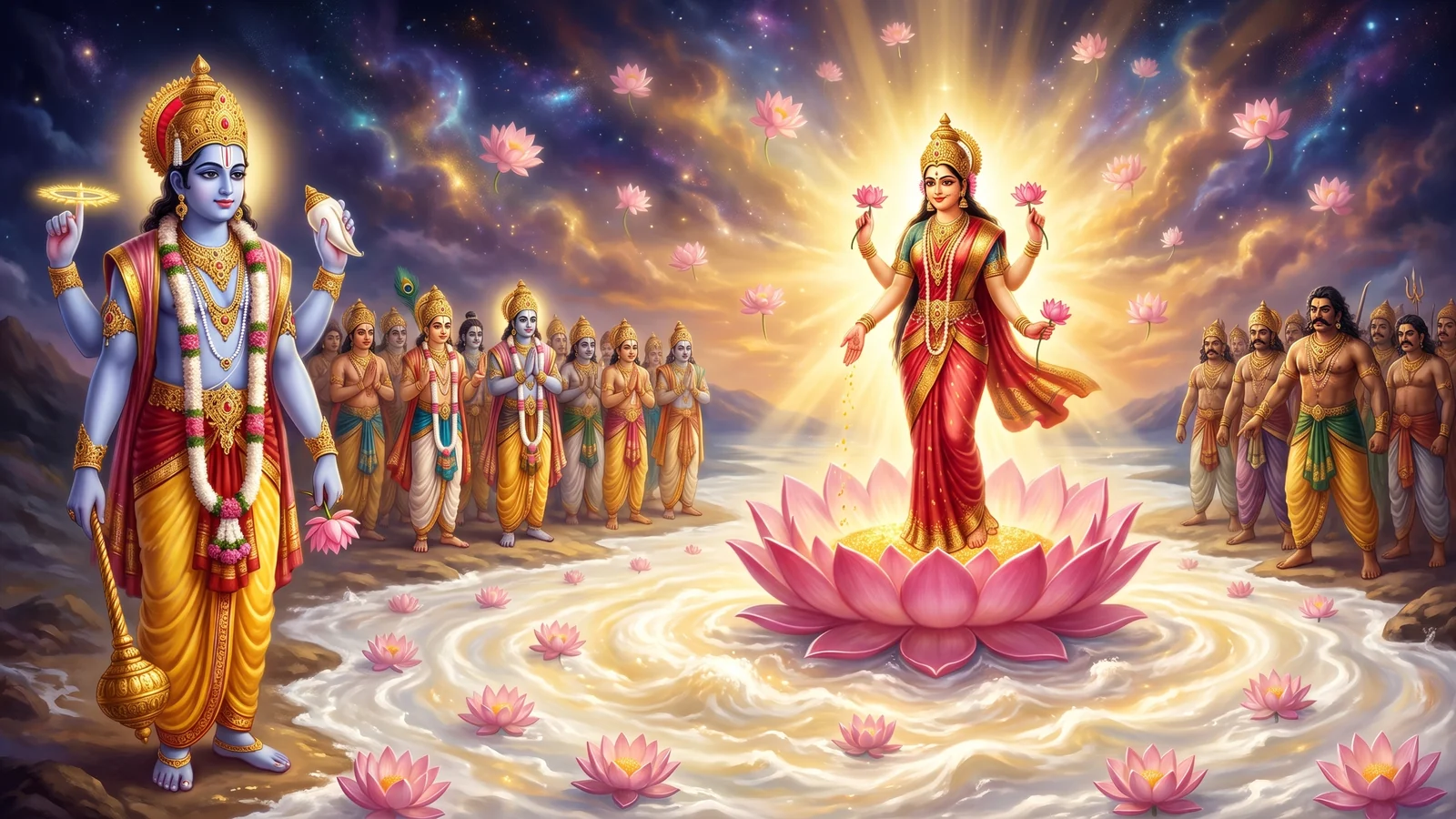
The ocean of milk had been turning for a long time, and it had already given up wonders: a cow, a horse, an elephant, a jewel, a tree, dancers. Then the water parted and something came out of it that made the whole crowd forget the rest.
A woman stood on the sea. The Bhagavata reaches for the brightest thing it knows and says she was like lightning, and then says that lightning was not enough. She was Lakshmi, and she had come to stay in the world.
The gods looked at her. The asuras looked at her. The sages, who were supposed to be beyond such things, looked at her. Every one of them, the text says, wanted her for his own.
But Lakshmi was not a prize that had come up with the other prizes. She was going to choose.
She took a garland of flowers in her hands and stepped onto the shore, and she began to walk down the line of them, slowly, looking into each face.
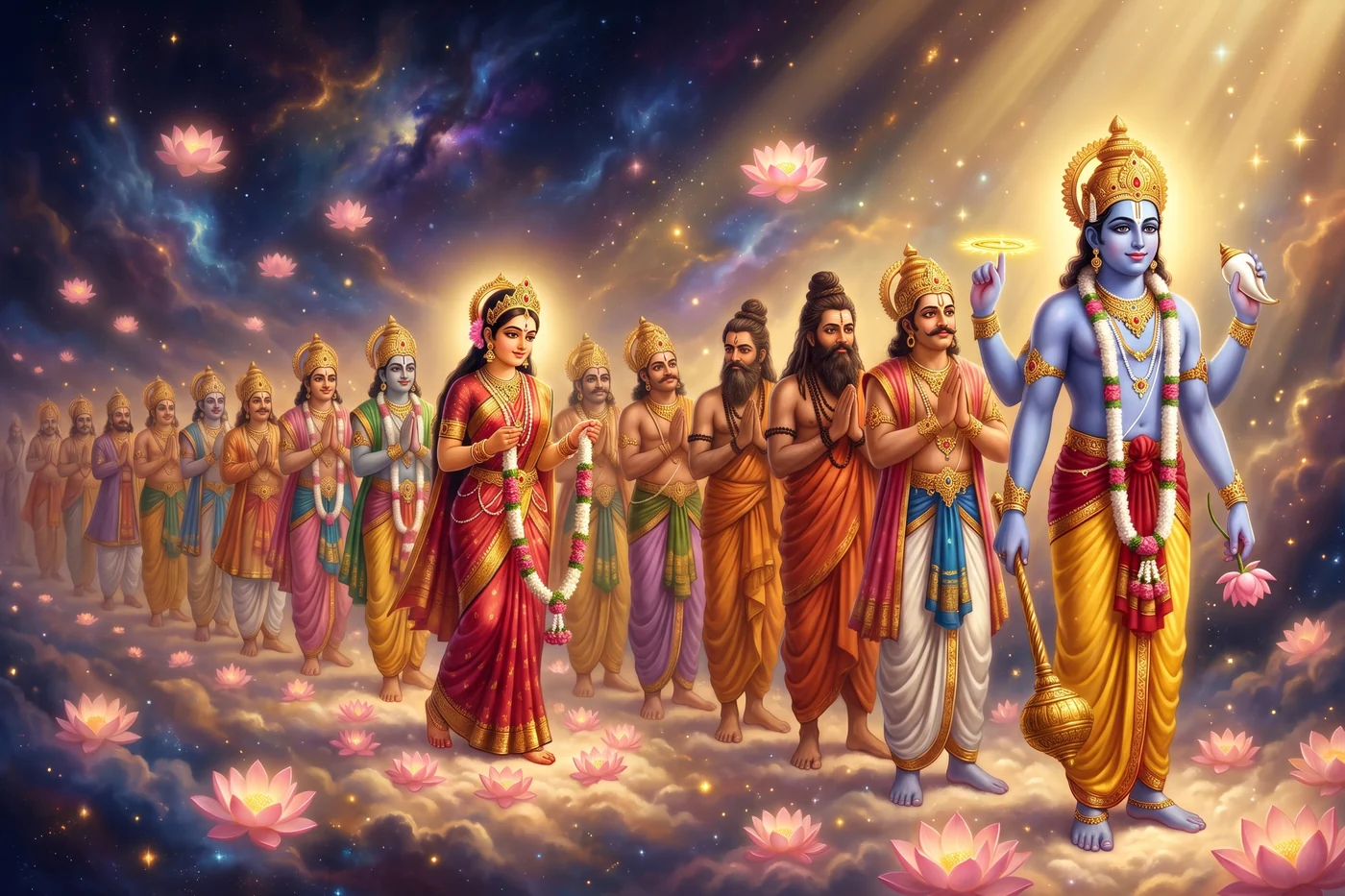
She came to a sage. He was thin with fasting, and his eyes were steady.
"Austerity," she said to herself. "Real austerity. But he has not mastered his anger. One hard word and all of it would burn away."
She walked on. She came to a scholar, a man who had read everything there was to read.
"Knowledge," she said. "But he holds on to it, and to his pride in it. He has not learned to let go."
She came to the gods, the lords of the sky, who were handsome and strong and had never had to ask anybody for anything.
"Power," she said. "And it will end. Time rules them, and while it does they rule nothing."
So it went. There were kings, and great warriors, and beings of every rank, and the Bhagavata goes through them one after another. In each of them Lakshmi found something good, and in each of them she found what was missing beside it. Nobody was whole. She passed them all, and the garland stayed in her hands.
Did she pass Vishnu, you might ask, and then turn back?
No. She came to him last, and she stopped.
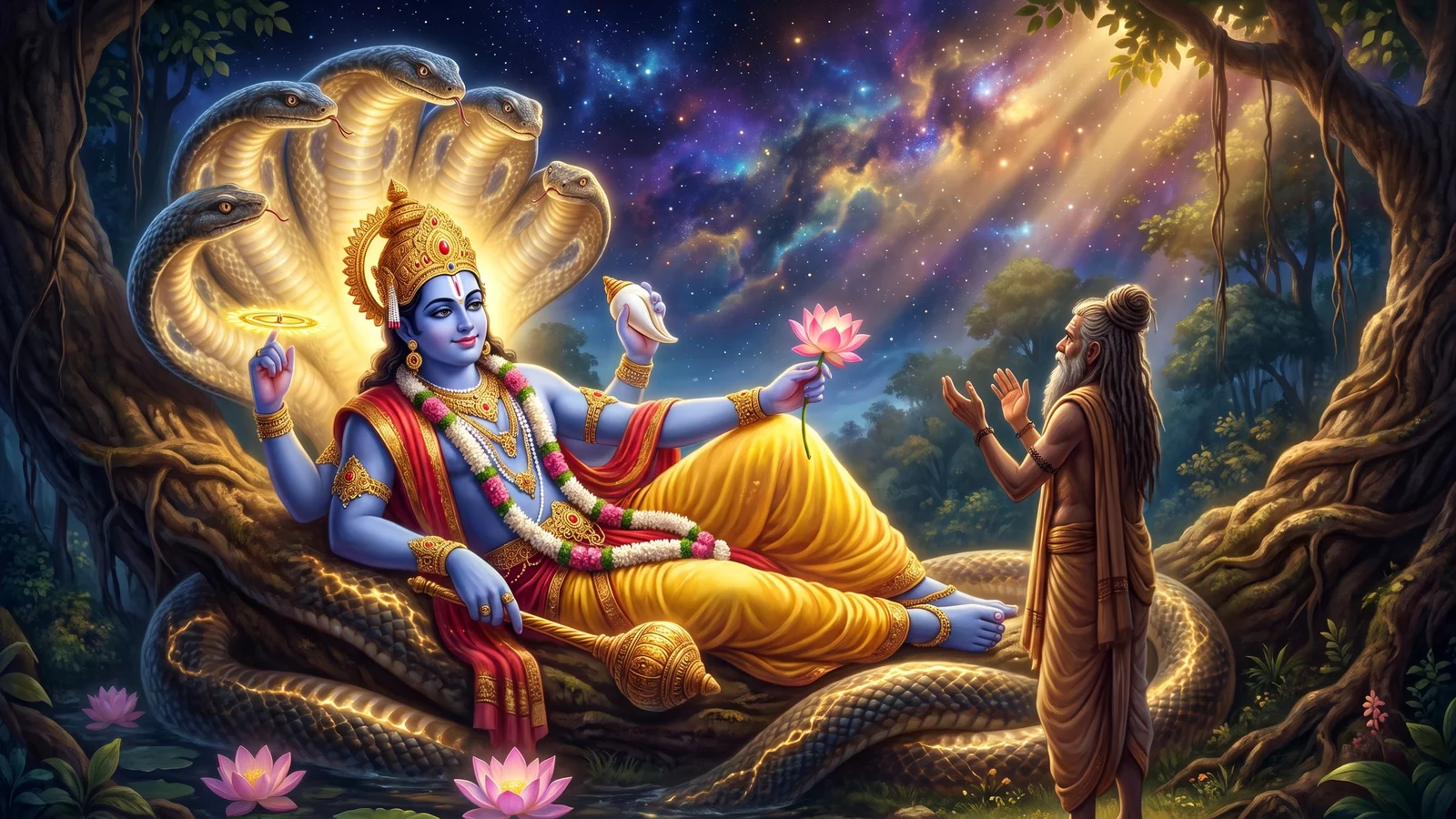
He had not stepped forward. He had not called to her or made himself tall. He was standing where he had stood, and he did not look like a man who wanted anything, because he did not. The Bhagavata puts it in one line: he depends on nothing, and he lacks nothing.
That was what she had been walking the length of the shore to find. Everyone else had a hole in him that her wealth could fill, and that was exactly why she would not go to them. He had none.
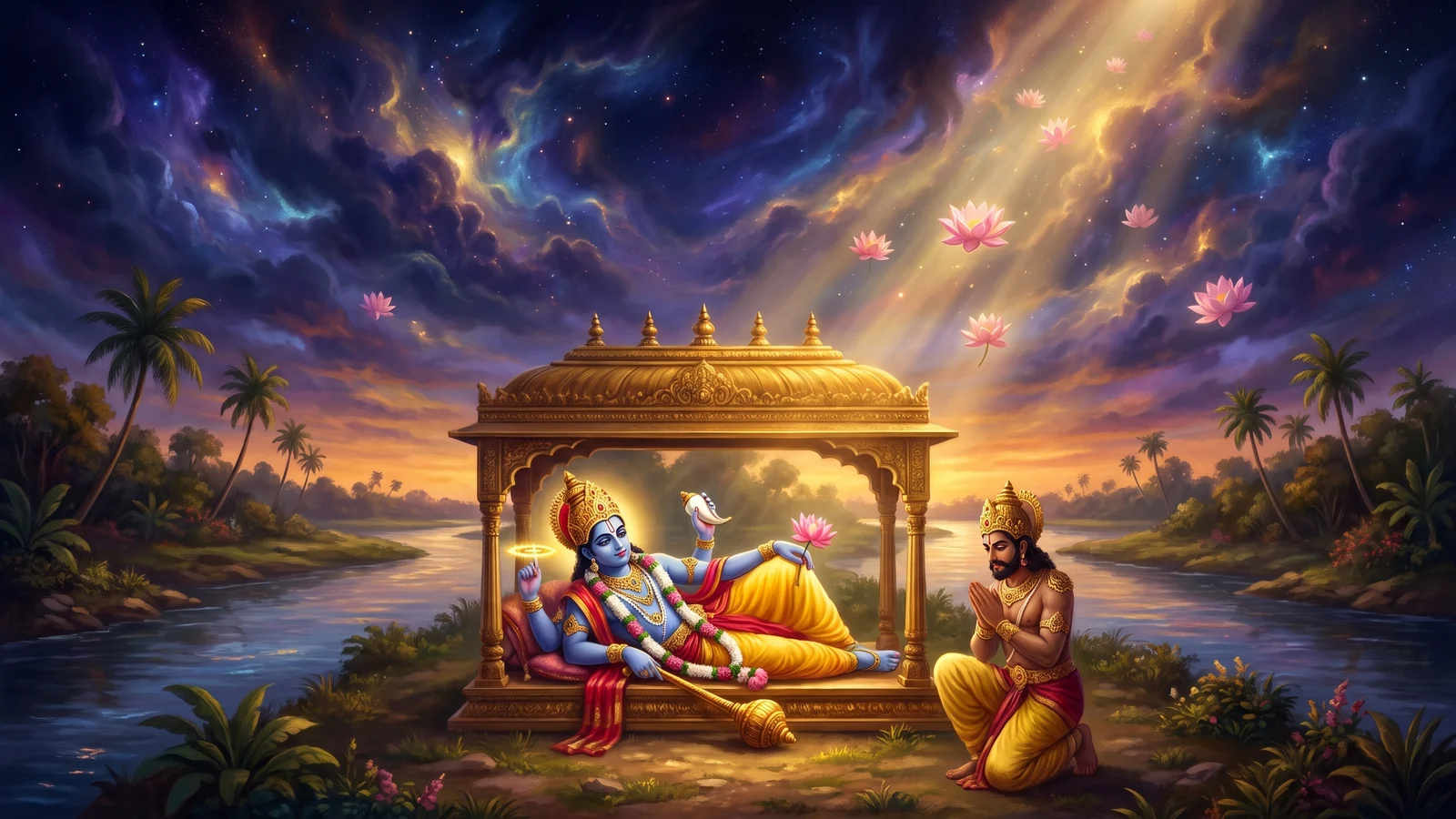
She lifted the garland and put it around his neck.
"There," she said. "The one who asked for nothing."
Then she went to him and took her seat on his chest, beside the Kaustubha jewel that had come out of the same ocean a little before her and had been set there. She has never left it.
The gods and the asuras, who had each hoped, went back to the churning.
Sri Vaishnavas, who hold Vishnu and his consort to be one in all things, read this scene as the beginning of it. From this day, they say, the two of them are never apart. Wherever he is, she is, and together they fill the whole of what exists.
As the Veda sings it: Shri before she was Lakshmi
Shri Sukta and the Shatapatha Brahmana · 2 min read
Long before anyone churned an ocean, the word was there. Shri. In the Rigveda it turns up again and again, more than a hundred times, and it is not yet a woman's name. It means splendour. It means the shine on a thing that is going well: a full house, a strong king, a good harvest, a face that people turn towards.
Then the word begins to stand up and walk.
At the end of the fifth book of the Rigveda there is a hymn, fifteen verses long, that was added later than the rest. It is the Shri Sukta, and it calls on her as a person. She is golden. She is seated in a chariot. The singer asks her to come, and asks for what she brings with her, the whole glow of a prosperous life.
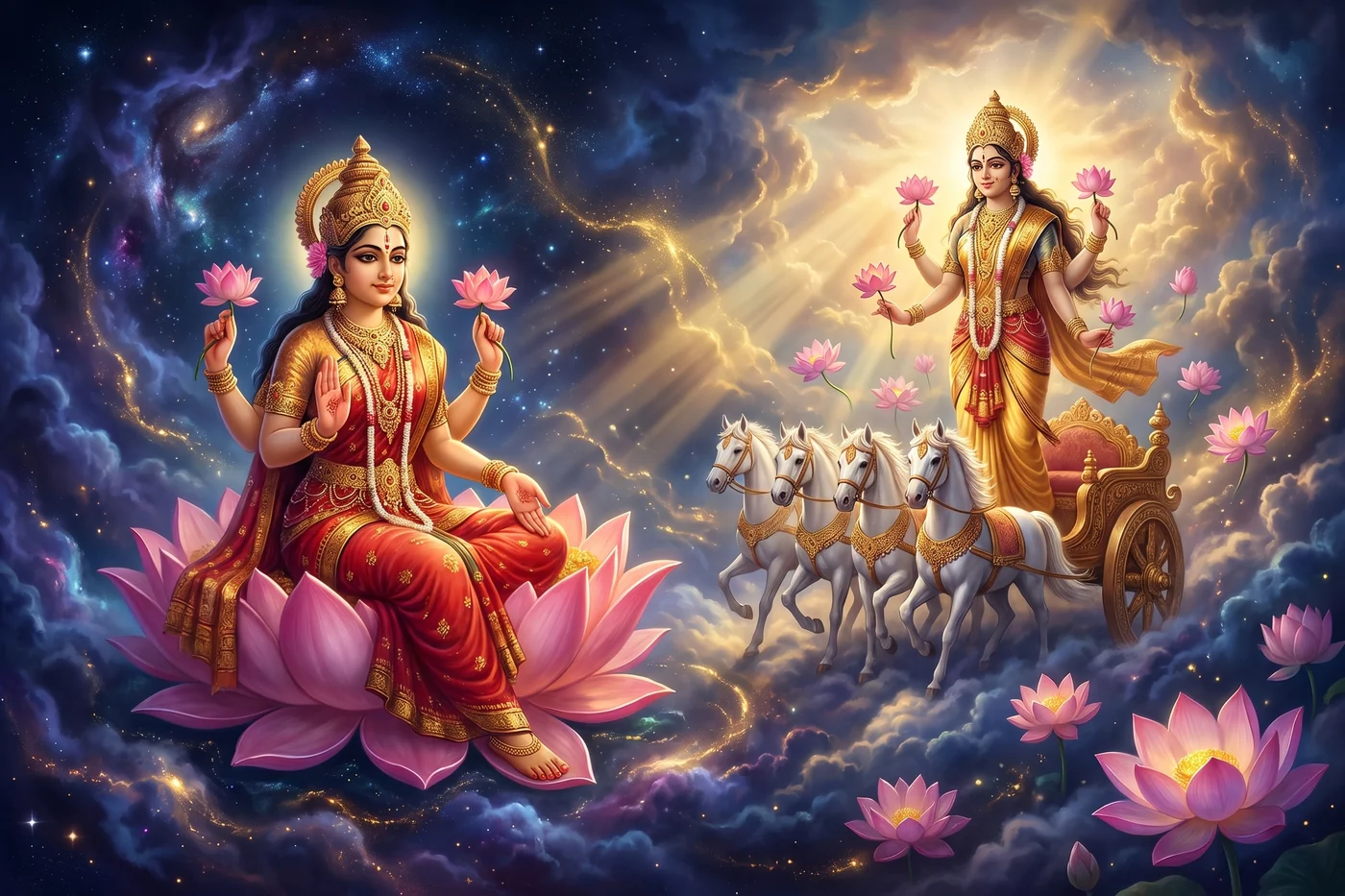
The Atharva Veda goes a step further and speaks of a hundred Lakshmis, as if good fortune came in a crowd.
The Shatapatha Brahmana, a book about the sacrifice, gives her a birth, and it is not from the sea. She comes out of Prajapati, the lord of creatures, the one who made everything by his own effort. She steps out of him shining, and she is trembling.
The gods see her, and what they feel is not love. The Brahmana says they looked at her and at everything she carried, and spoke to one another.
"Look what she has," they said. "Let us take it."
The Brahmana tells it in a few lines, and they are enough to show the shape of the thing. In the Veda, Shri does not choose anybody. She is born bright and shaking, and the first thing the gods do is try to rob her of her gifts.
Much later, the Pancharatra texts, and the Lakshmi Tantra among them, would turn this all the way round and make her Vishnu's own creative power, so that nothing he does is done without her. But that is the Purana's goddess again. The Vedic Shri has no husband in these lines, no ocean, no garland. She is splendour itself, just at the moment it takes a shape.