As the Shiva Purana tells it
Told across India · 3 min read
Daksha was a son of Brahma, a lord among the gods and a man who liked things done properly. He had many daughters. The youngest and dearest, Sati, had married Shiva, and Daksha had never got used to it.
His son-in-law owned nothing. He lived on a mountain, wore ash and snakes, and kept company with ghosts. But the thing Daksha truly could not forgive was smaller than any of that. One day Daksha had walked into a great assembly, and every god had risen to greet him. Every god except one. Shiva had stayed seated.
Daksha took it as contempt, and he carried it with him like a stone in his shoe.
In time he announced a sacrifice greater than any before it. Invitations went out to every god, every sage, every king of the three worlds. One name was left off the list.
On Kailash, Sati saw the chariots of the gods crossing the sky and asked where they were all going. When she heard, her face lit up.
"My father's sacrifice! My mother and my sisters will be there. Let us go."
"We were not invited," said Shiva.
"A daughter does not need an invitation to her father's house."
"Sati," he said gently, "he left us out so that the whole world would see it. If you go, he will hurt you with words. Nothing good will come of this."
But it was her father's house, and she went.
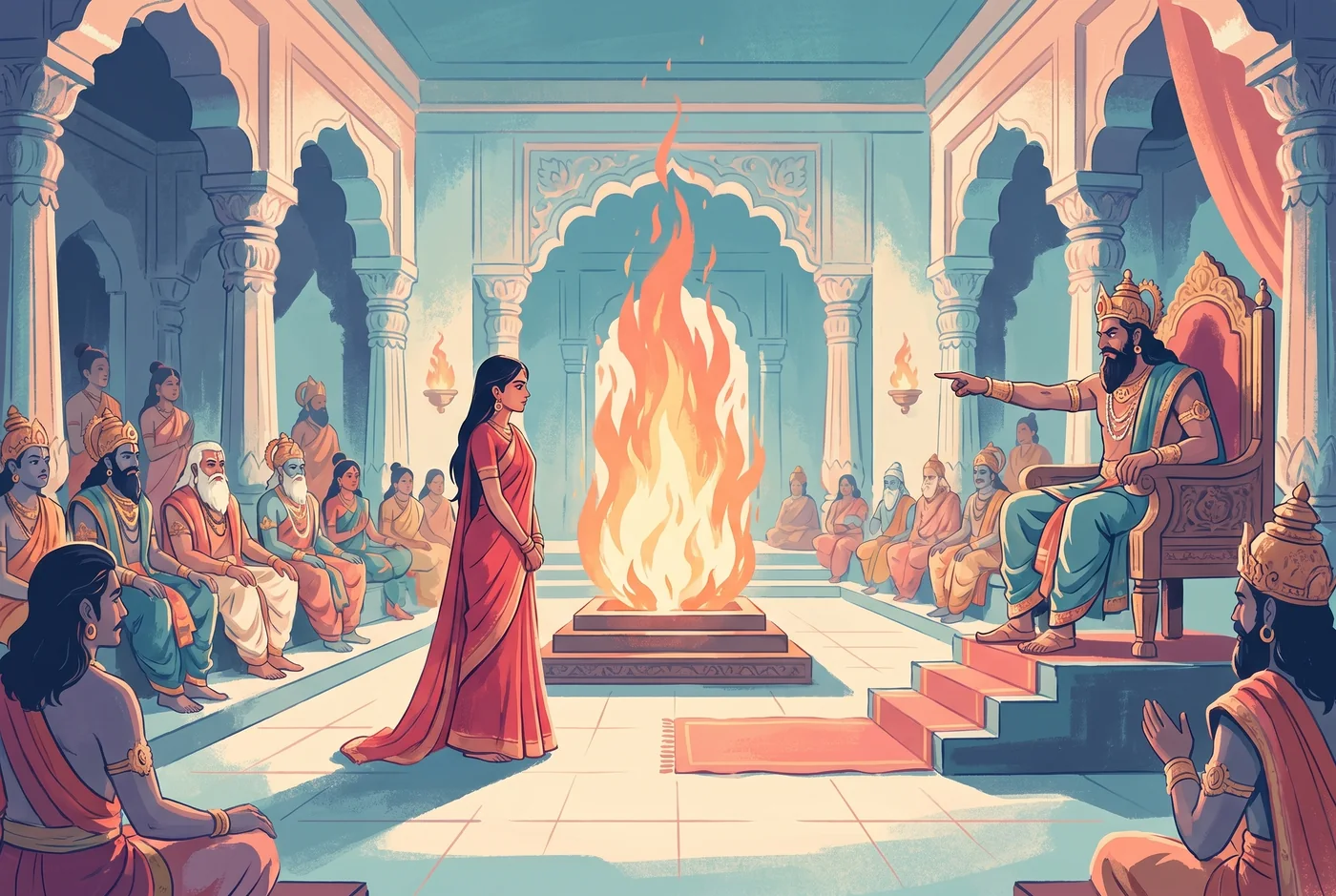
Nobody rose to greet her except her mother. Her father looked at her as he might look at a stranger.
"So you have come," said Daksha, loudly enough for the whole hall. "And where is your husband? Dancing in a burning ground? What god is that, with no house, no family and ashes for clothes? A beggar. I was a fool to give you to him."
The gods looked at the floor. Not one of them spoke.
Sati stood very still.
"You are speaking of the one the whole world bows to," she said. "And I am ashamed that this body of mine came from you. I will not keep it."
She sat down on the ground and closed her eyes. She drew her breath inward and woke the fire of yoga within herself, and in front of all those gods and sages she burned.
When the news reached Kailash, Shiva said nothing at all.
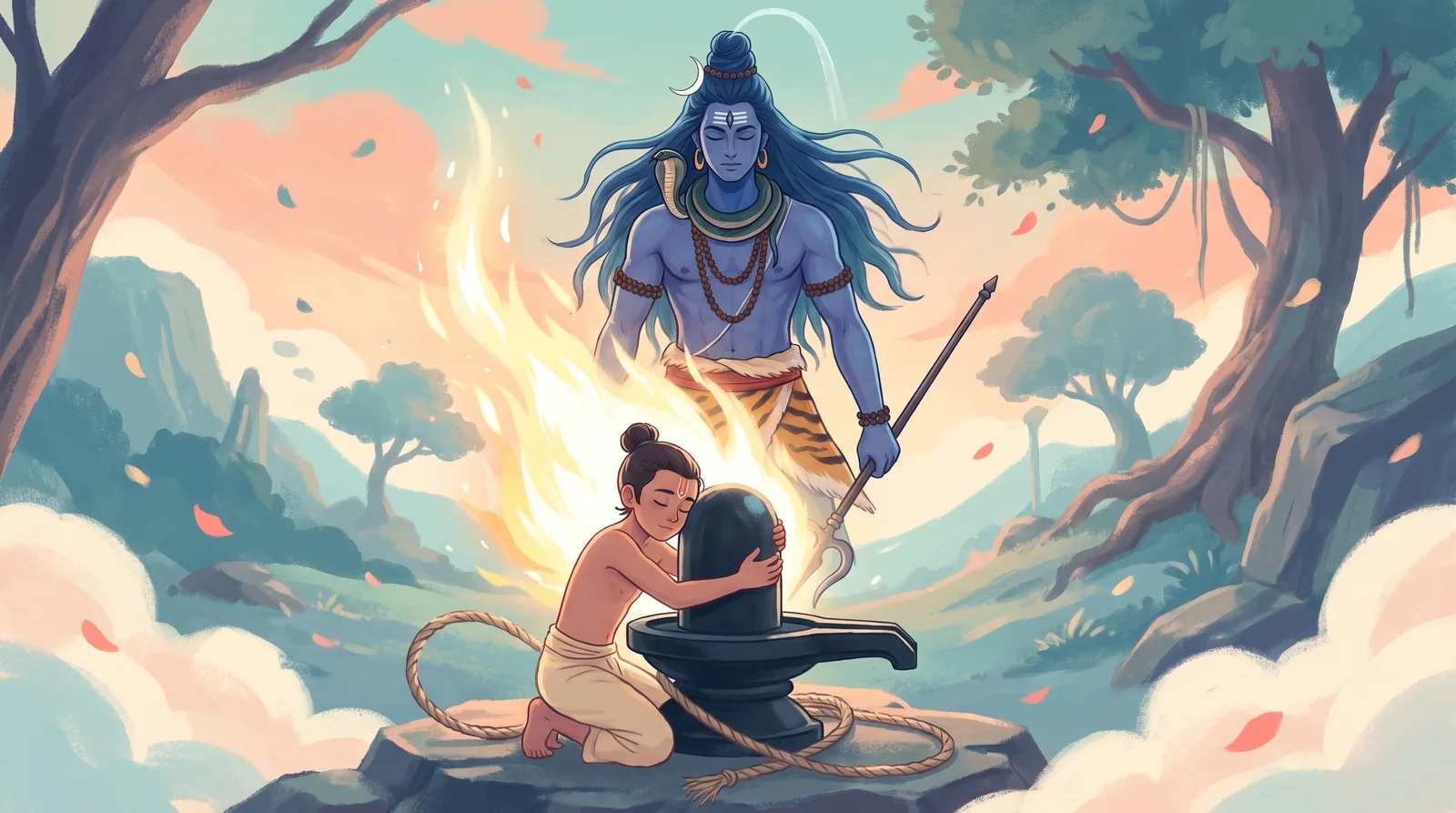
He pulled a single lock of hair from his head and dashed it on the rock. Where it struck, a warrior stood up, as tall as the sky and dark as a storm: Virabhadra. Beside him rose the fierce goddess Bhadrakali.
"Daksha's sacrifice," said Shiva. "End it."
They fell on the hall like a storm. The altar was broken, the gods scattered, the fires put out. Virabhadra found Daksha and took his head.
Then it was quiet, and the frightened gods came to Shiva with joined palms and begged him to be merciful. A sacrifice left broken is a danger to the world.
His anger had gone, and only grief remained. He let Daksha live. Since his own head was lost, Daksha was given the head of a goat, and he finished his sacrifice with it and bowed, at last, to his son-in-law.
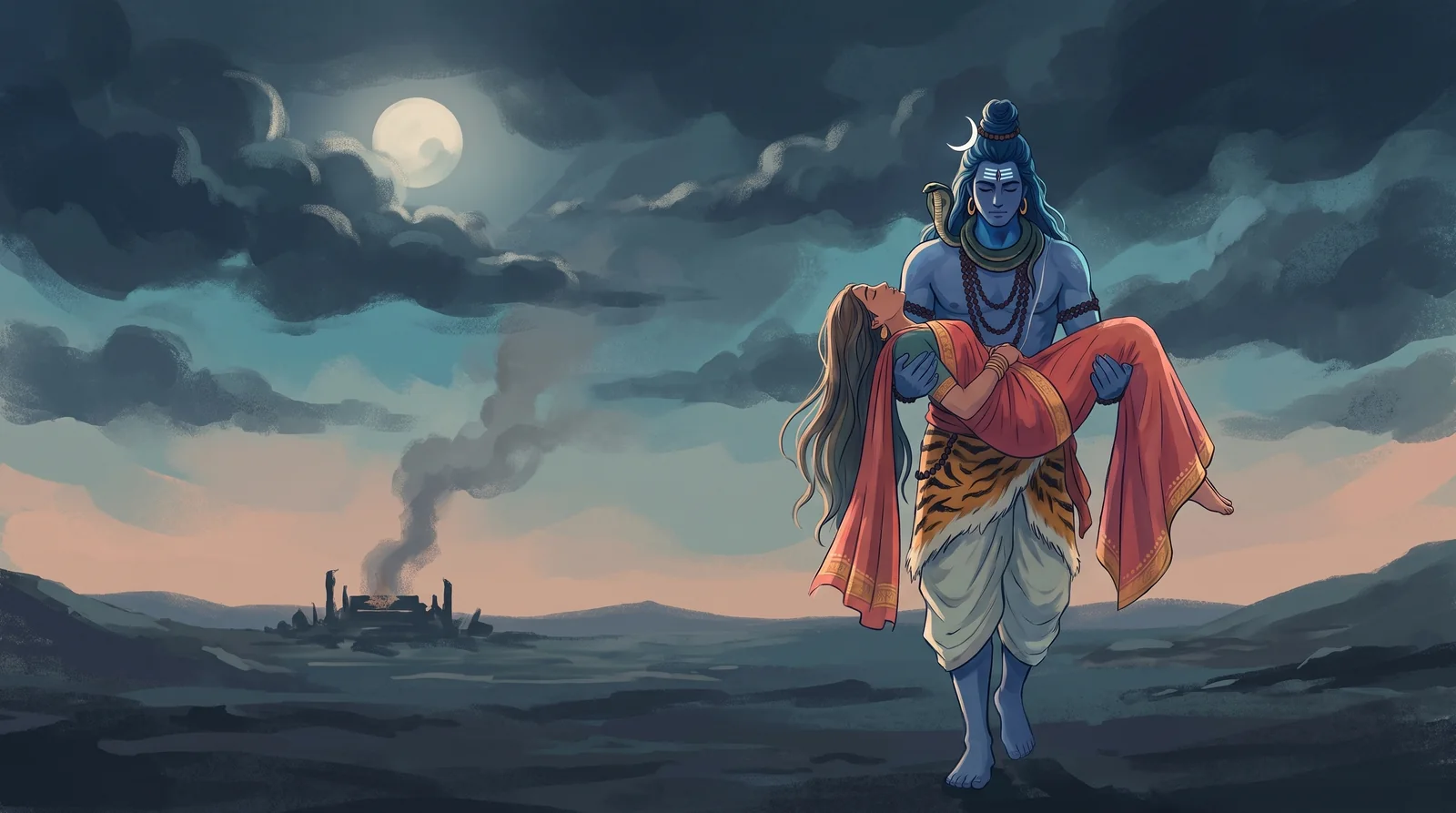
Shiva did not stay to see it. He lifted Sati's body in his arms and walked away. He walked across the whole earth carrying her, unable to put her down. As he wandered her body fell away from him, piece by piece, and wherever a piece touched the ground, that place became holy. Those are the Shakti Peethas, the seats of the goddess.
Sati was not gone for ever. She was born again as the daughter of the mountain king and named Parvati. But that is another story.
As the Bhagavata Purana tells it
Told across India · 1 min read
The Bhagavata tells of the same insult, the same journey home and the same death by her own inner fire. Where it differs is in what comes after, and in who makes the peace.
When Virabhadra had wrecked the sacrifice and Daksha lay headless, the gods fled, bruised and terrified, to Brahma.
Brahma did not comfort them. "You sat in that hall and let a guest be insulted, and you gave Shiva no share of the offering," he said. "You are in the wrong. Go and ask his pardon." And he went with them.
They found Shiva calm again. He forgave them easily, for in this telling he says he does not hold on to the faults of the foolish. Daksha was raised with a goat's head. It is Vishnu who then arrives at the sacrifice, and by his counsel and Shiva's mercy together the rite is completed and the worlds are set right.
But Shiva's grief had not ended. In the Vaishnava telling of what followed, he took up Sati's body, laid it across his shoulder and began to wander, and he would not stop. The world cannot go on while Shiva mourns.
So Vishnu followed him, quietly, at a distance. With his discus he cut away the body, little by little, so gently that Shiva did not notice the weight leaving him. When at last his shoulder was empty, he came to himself and returned to Kailash to sit in meditation.
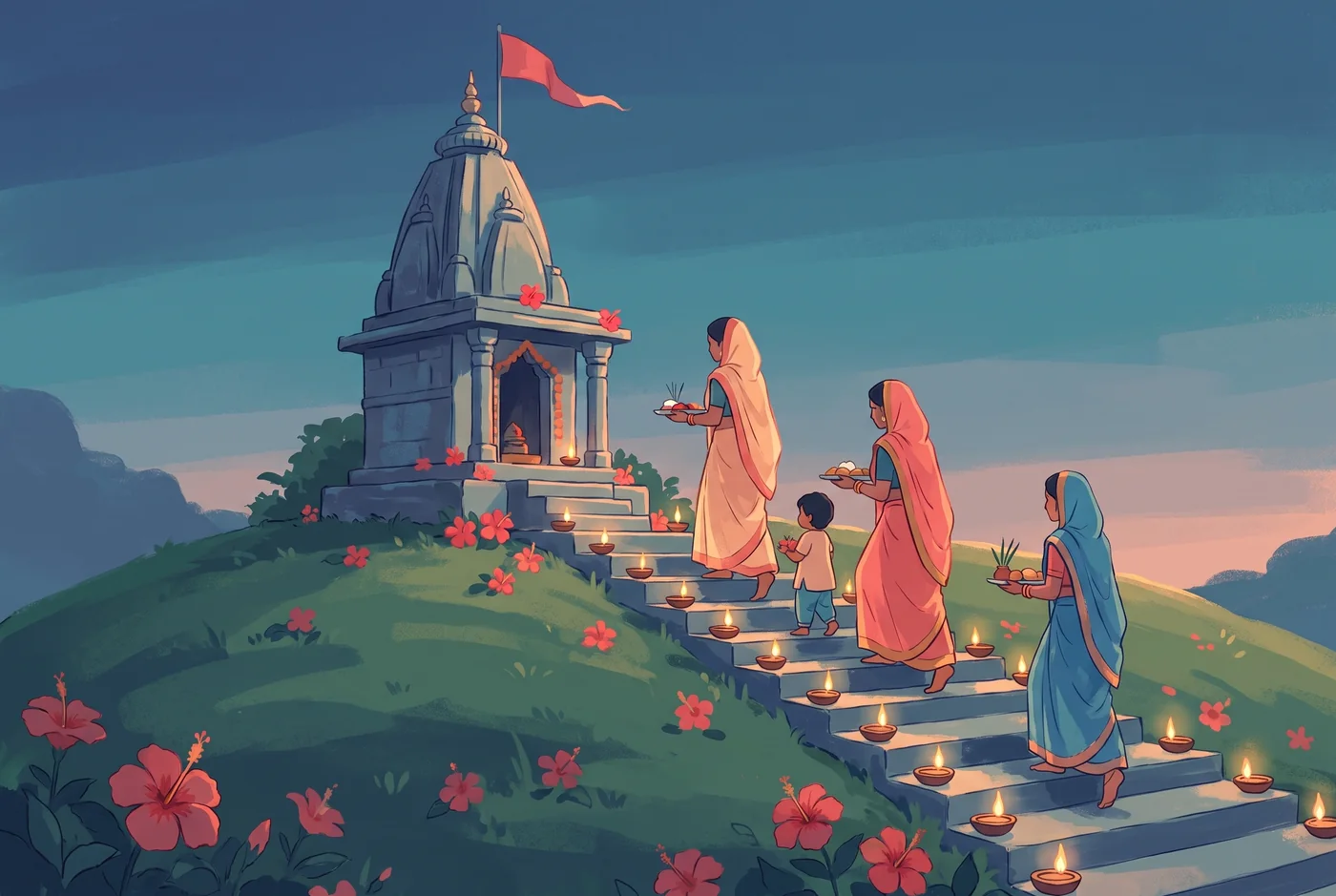
Wherever a part had fallen, a shrine of the goddess stands. The lists do not agree on how many there are. Some say fifty-one, some eighteen. They lie from one end of the land to the other.