As the Bhagavata Purana tells it
Told across India · 3 min read
There was once a demon named Vrika who wanted power and wanted it quickly.
On the road he met the sage Narada, who knows everybody's business, and asked him a practical question.
"Of the three great gods, which is the easiest to please?"
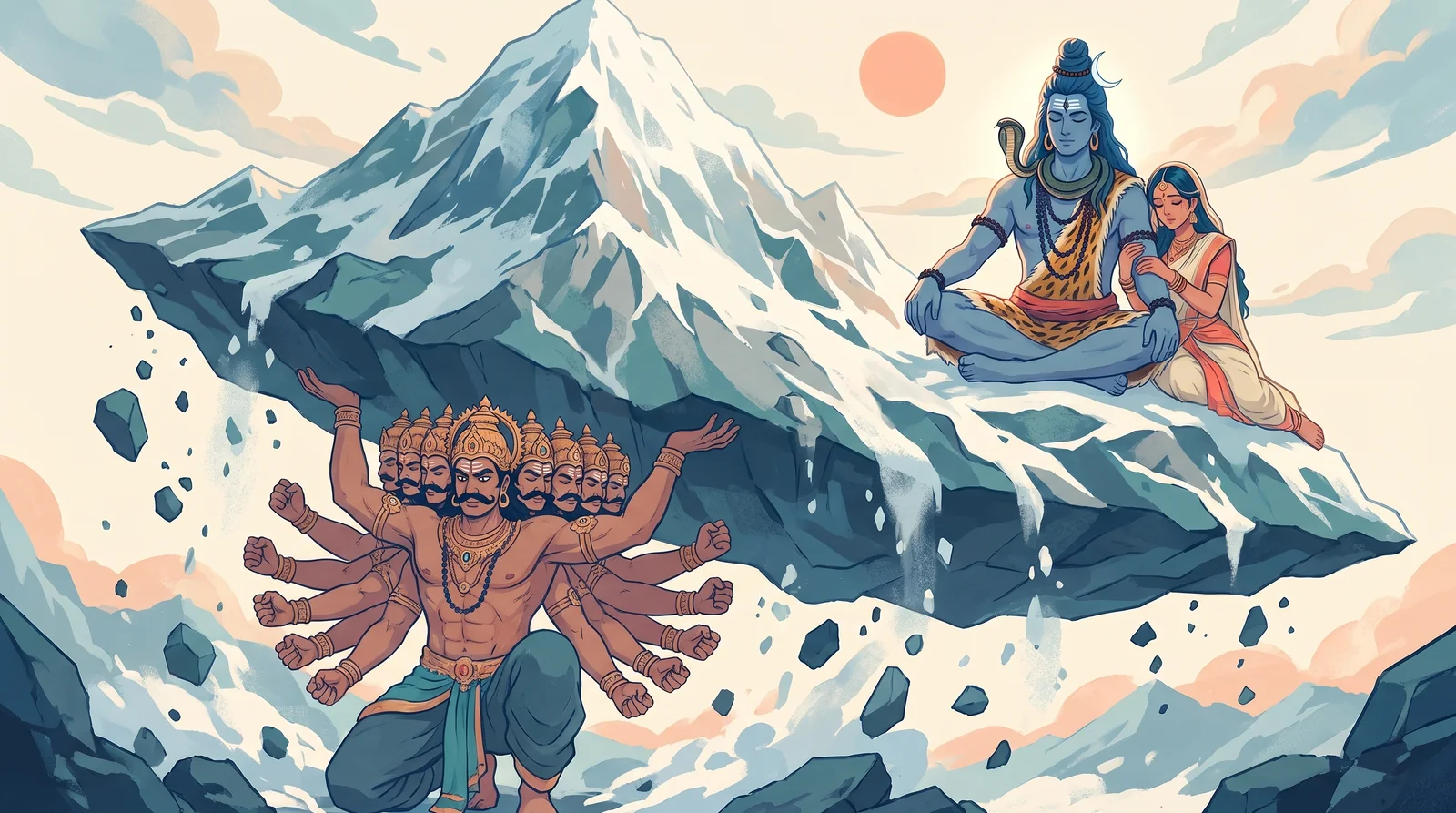
"Shiva," said Narada without a pause. "He is pleased by very little, and angered by very little too. Look at what he gave Ravana. Look at what he gave Bana. Go to him."
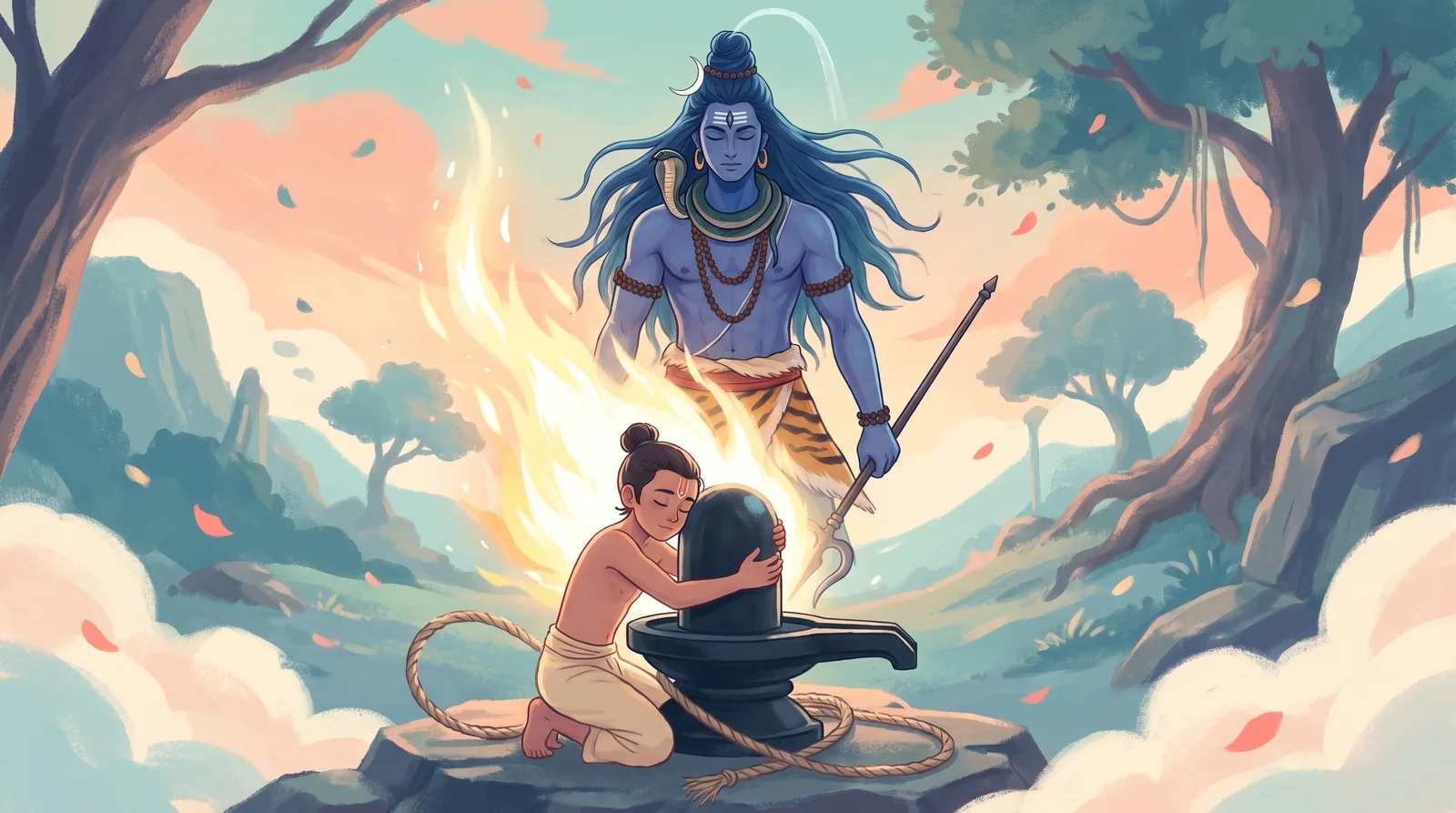
So Vrika went to Kedara, in the mountains, lit a fire and began to worship. He was not a patient worshipper. He cut pieces from his own body and fed them to the flames. He kept this up for six days, and Shiva did not come. On the seventh, Vrika took hold of his own hair and raised the blade to his neck.
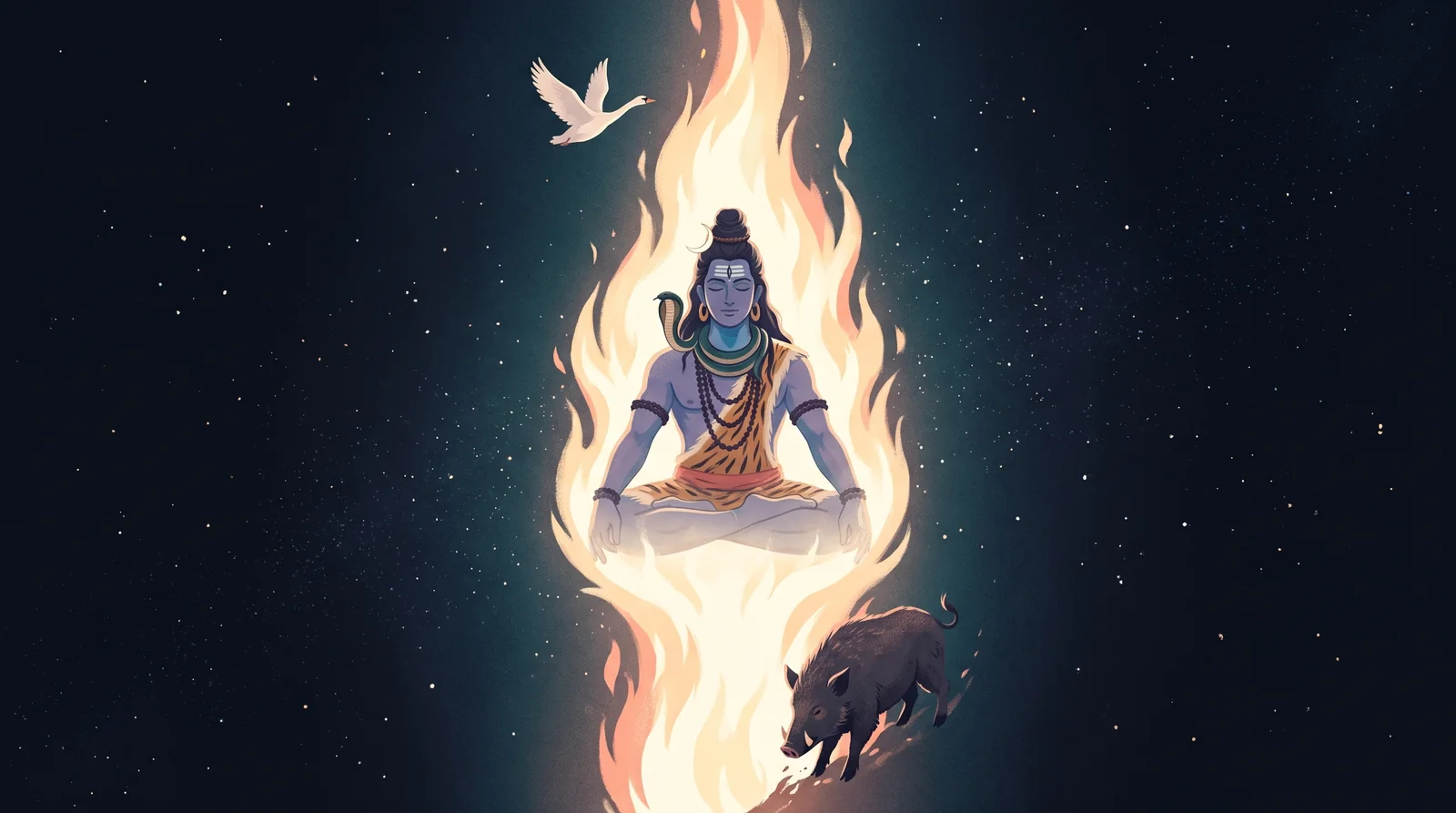
Shiva rose out of the fire and caught his arm.
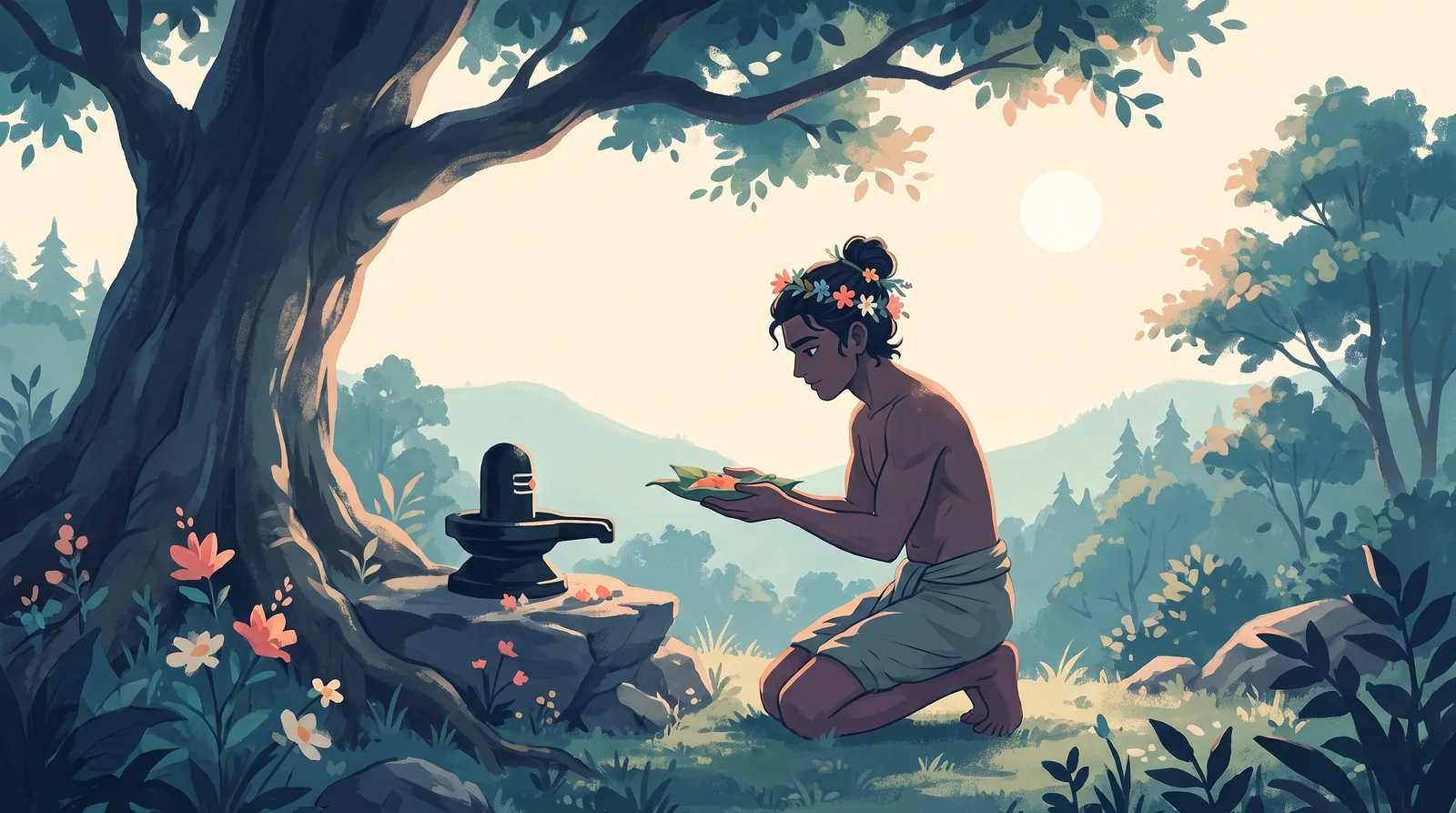
"Enough," he said, and at his touch the demon's body was whole again. "You need not hurt yourself for my sake. I am content with water, if it is given with love. Ask for what you want."
Vrika had it ready.
"Let anyone whose head I touch with my hand die on the spot."
Shiva was silent for a moment. It was a dreadful thing to ask for. But he had given his word, and he does not go back on it.
"So be it," he said.
Vrika looked at his hand. Then he looked at Shiva.
"Let us see whether it works," he said, and reached for Shiva's head.
Shiva ran.
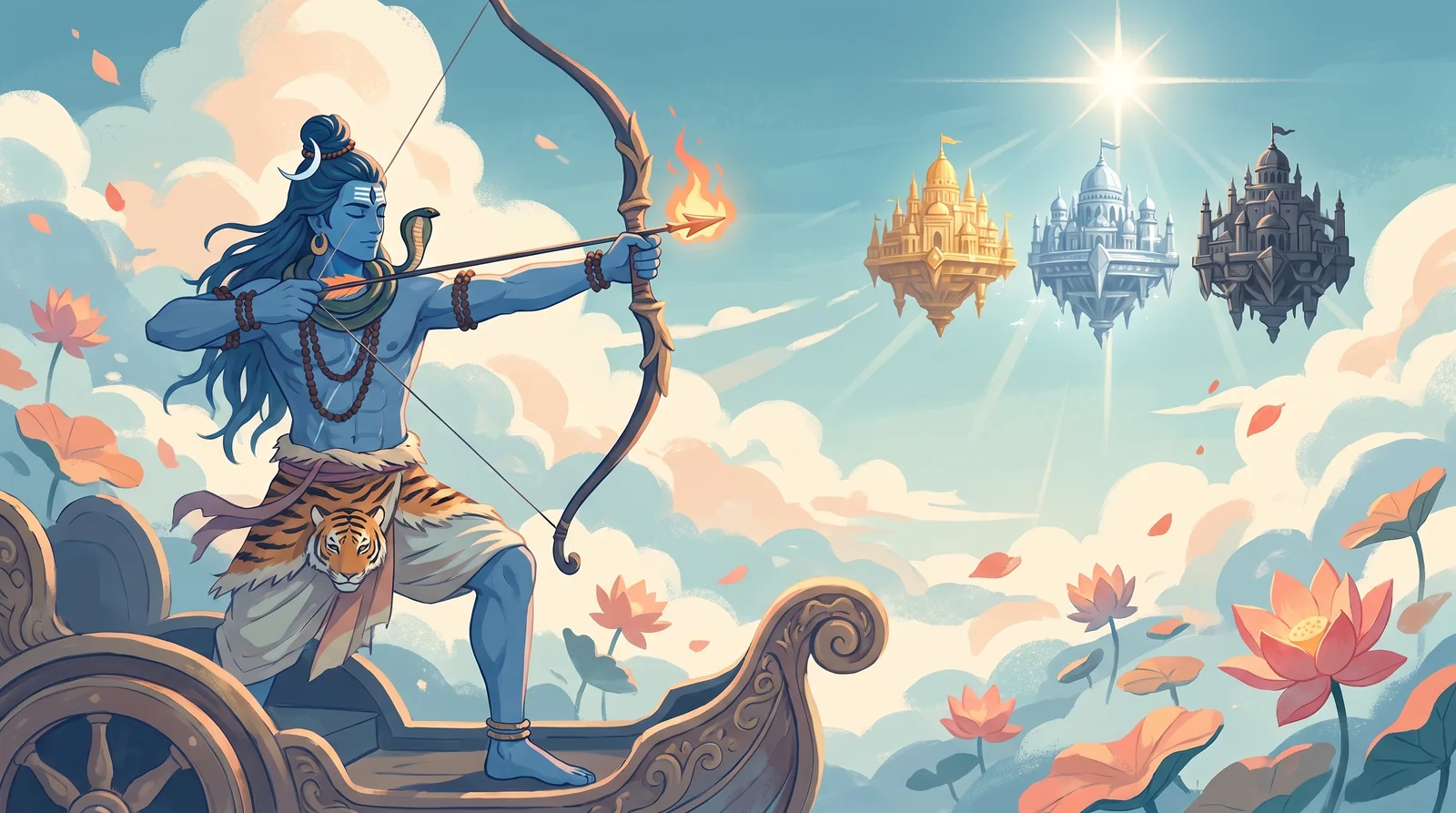
It is a sight the storytellers enjoy: the great god, who swallowed the world's poison and burned three cities with one arrow, running for his life from his own gift. He ran over the earth and through the sky. He ran to the ends of the worlds, and the demon came pounding after him with his hand stretched out. The other gods watched in silence. None of them knew what to do.
At last Shiva came to Vaikuntha, where Vishnu lives.
Vishnu saw the two of them coming a long way off, and he understood at once. He did not reach for a weapon. He changed his shape, and walked out on to the road as a young student, small and bright-eyed, with a deerskin, a staff and a string of beads.
He joined his palms and bowed to the demon.
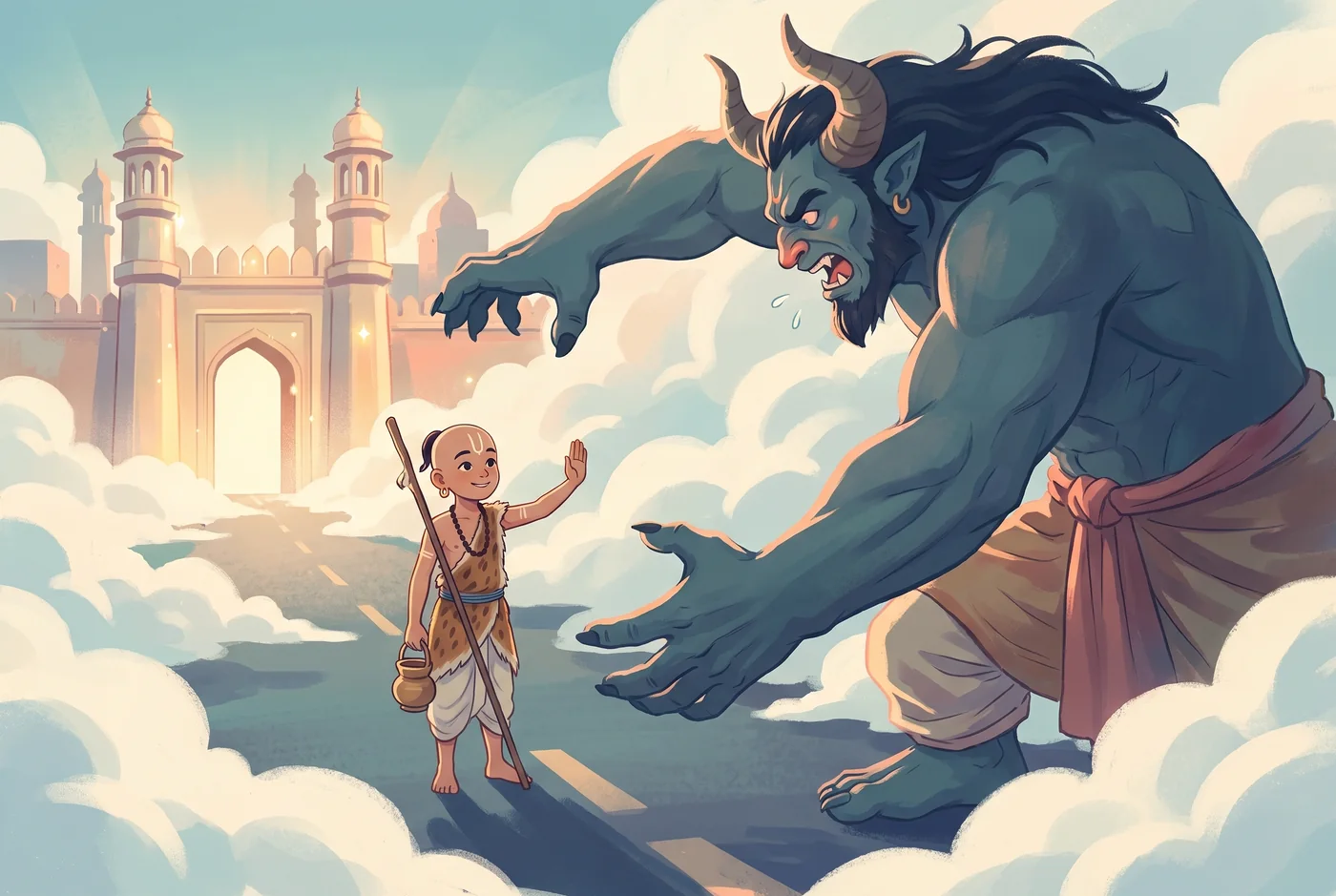
"Son of Shakuni, you look worn out," he said sweetly. "You have come such a long way. Rest a moment. A body like yours should be looked after. Tell me what you are after, and perhaps I can help."
No one had ever spoken to Vrika so kindly. He stopped, and still panting, he told the whole story.
"Oh," said the student, and his face fell. "Oh dear. And you believed him? Shiva? Have you not heard? Ever since Daksha cursed him he has lived like a ghost among ghosts. His word is worth nothing these days. I would hate to see a great king like you made a fool of."
Vrika frowned.
"There is an easy way to find out," said the student. "Put your hand on your own head. If nothing happens, as I expect, you will know he lied, and you can deal with him as he deserves."
The demon was tired, flattered and thoroughly muddled. He lifted his hand and laid it on his own head.
The boon worked perfectly.
The gods cried out with relief and showered flowers from the sky. Vishnu, himself again, turned to Shiva with a smile.
"He was destroyed by his own wrongdoing," he said. "Nobody who harms the great can prosper, least of all one who harms you."
As the dancers tell it: Bhasmasura and Mohini
South India · the Karnataka coast and Kerala · 2 min read
The story most people know is not quite the Bhagavata's. It lives on the stage, and it has a different name and a different trick.
Here the demon is Bhasmasura, the ash demon, born, some say, from the ash on Shiva's own body. The boon he wins is that whatever he touches on the head will turn to ash. And of course the first head he wants to try it on is Shiva's.
Shiva runs. This time Vishnu does not come as a student. He comes as Mohini, the most beautiful woman in the three worlds.
Bhasmasura stops in his tracks. He forgets Shiva and forgets the boon. He has only one thought left.
"Marry me," he says.
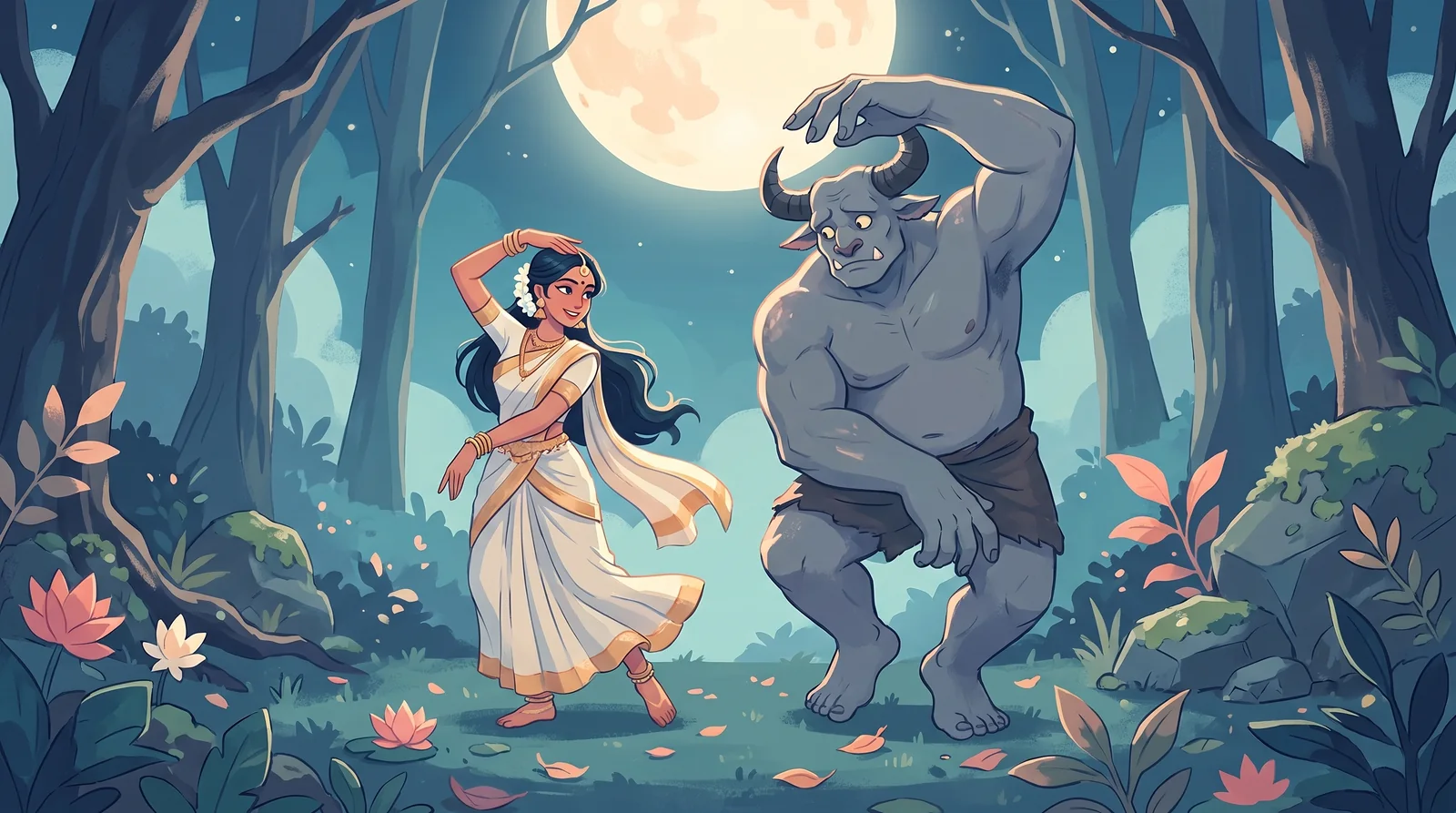
Mohini laughs. "I am a dancer," she says. "I could only marry a man who dances as well as I do. Can you follow me, step for step?"
"Anything you can do, I can do," says Bhasmasura.
So she dances, and he copies her. She lifts an arm and so does he. She turns and he turns. She bends and sways and stamps, and the great clumsy demon bends and sways and stamps along with her, his eyes fixed on her and his mind quite empty. They go faster. He is so pleased with himself that he no longer thinks at all. He only follows.
Then Mohini, still smiling, lifts her hand and rests it on the top of her own head.
Bhasmasura does the same, and a moment later there is a heap of ash on the ground where he stood.
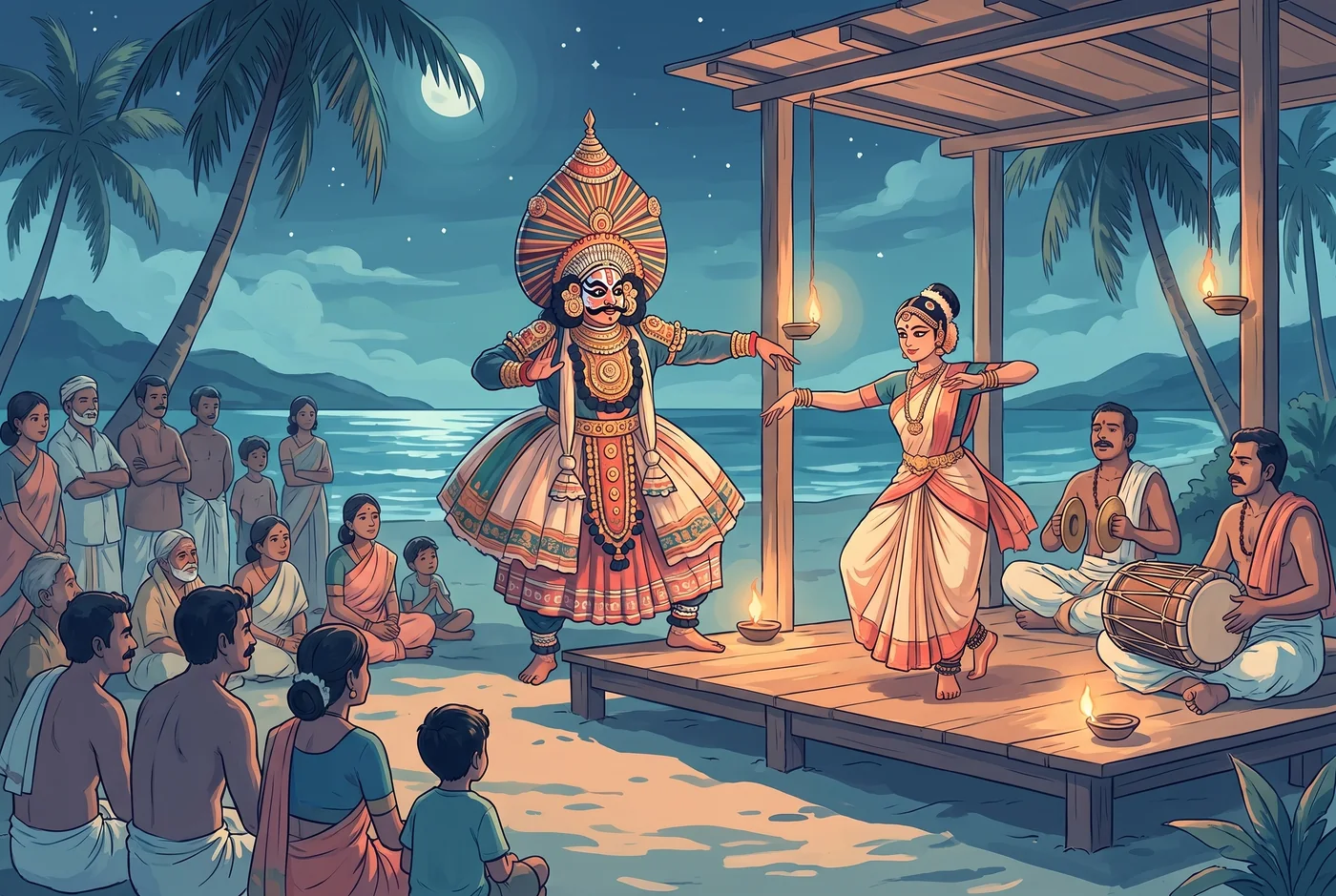
Performers love this story, because the trick is itself a dance. On the Karnataka coast the Yakshagana troupes play it through the night, in towering headdresses, to the beat of drums. In Kerala it is one of the well-known stories of Kathakali. Bhojpuri women dance it, and it has travelled further still, into the dances of Indians who settled in the Caribbean and into old tellings in Sri Lanka and Thailand.