As the Shiva Purana tells it
Told across India · 3 min read
After Sati died, Shiva shut his eyes.
He went up into the high snows, sat down, and sank into a meditation so deep that the seasons passed over him unnoticed. He wanted nothing from the world any more.
But Sati had not left the world. She was born again as the daughter of Himavat, king of the mountains, and his queen Mena, and they named her Parvati, the girl of the mountain. She grew up in a palace among the peaks. And from the time she was small, before she could have said why, her heart was fixed on the silent ascetic who sat on the slopes above her father's house.
When she was grown she went up to serve him. Every day she swept the ground where he sat and brought water and flowers. Shiva did not open his eyes.
The gods, who needed this marriage for reasons of their own, lost patience and sent Kama, the god of love, with his bow of sugarcane and his arrows of flowers. Kama crept close, took aim at the meditating god and let fly.
Shiva's eyes opened. All three of them. A flame leapt from the third, and where Kama had stood there was a little ash. Then Shiva rose and walked away without a glance at anyone.
Parvati stood looking at the ash for a long time.
"So beauty will not do it," she said. "Then I will win him the way he himself would understand."
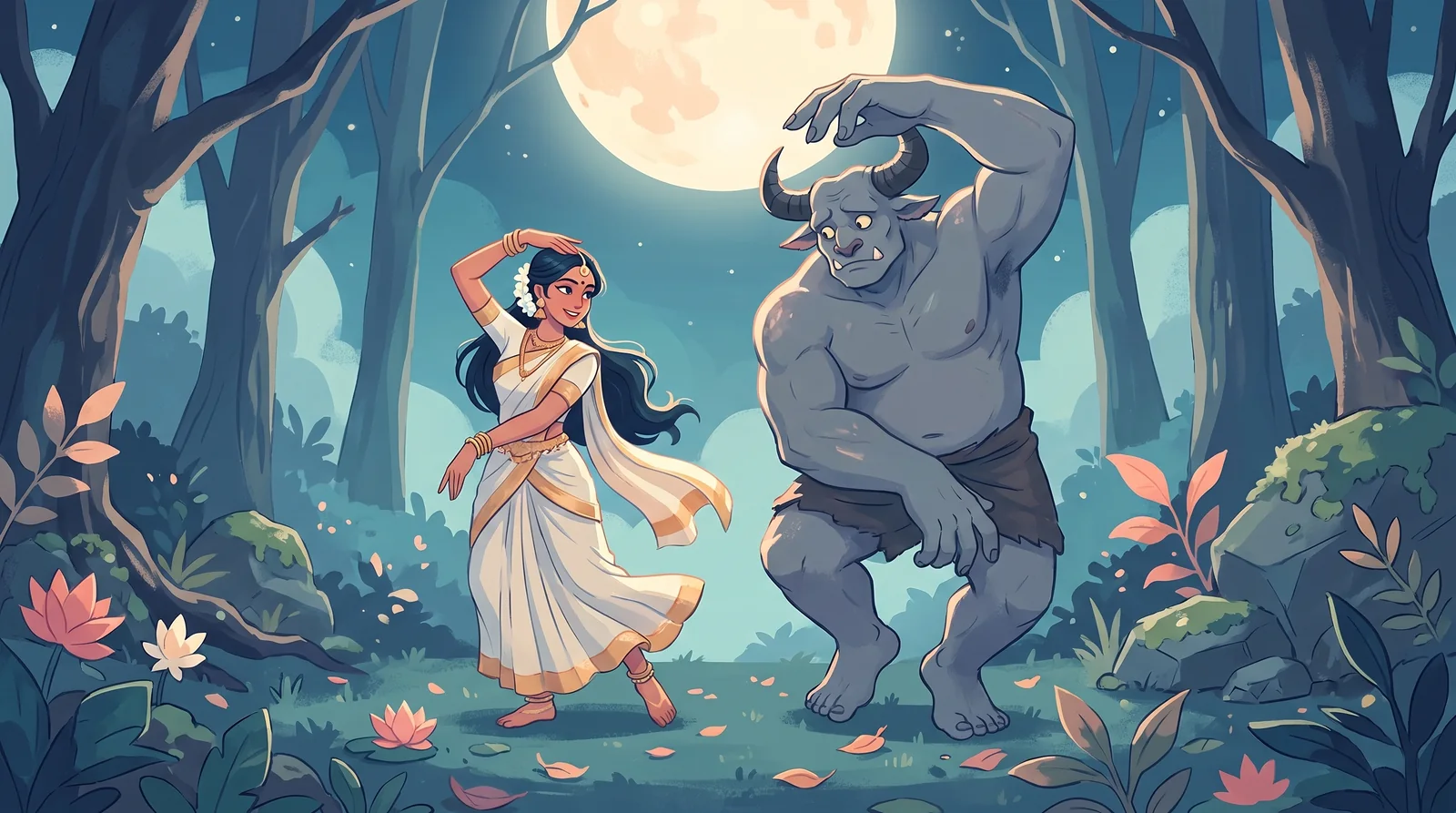
She took off her jewels and her silks and put on rough bark cloth. Her mother wept and begged. Parvati kissed her and went up into the forest alone.
There she did what the ascetics do. In summer she sat between blazing fires with the sun overhead. In the rains she slept on bare rock. In winter she stood in freezing water through the night. She ate fruit, then only leaves that had fallen by themselves, and at last she gave up even the leaves. The poets call her Aparna for that: the one who would not take so much as a leaf.
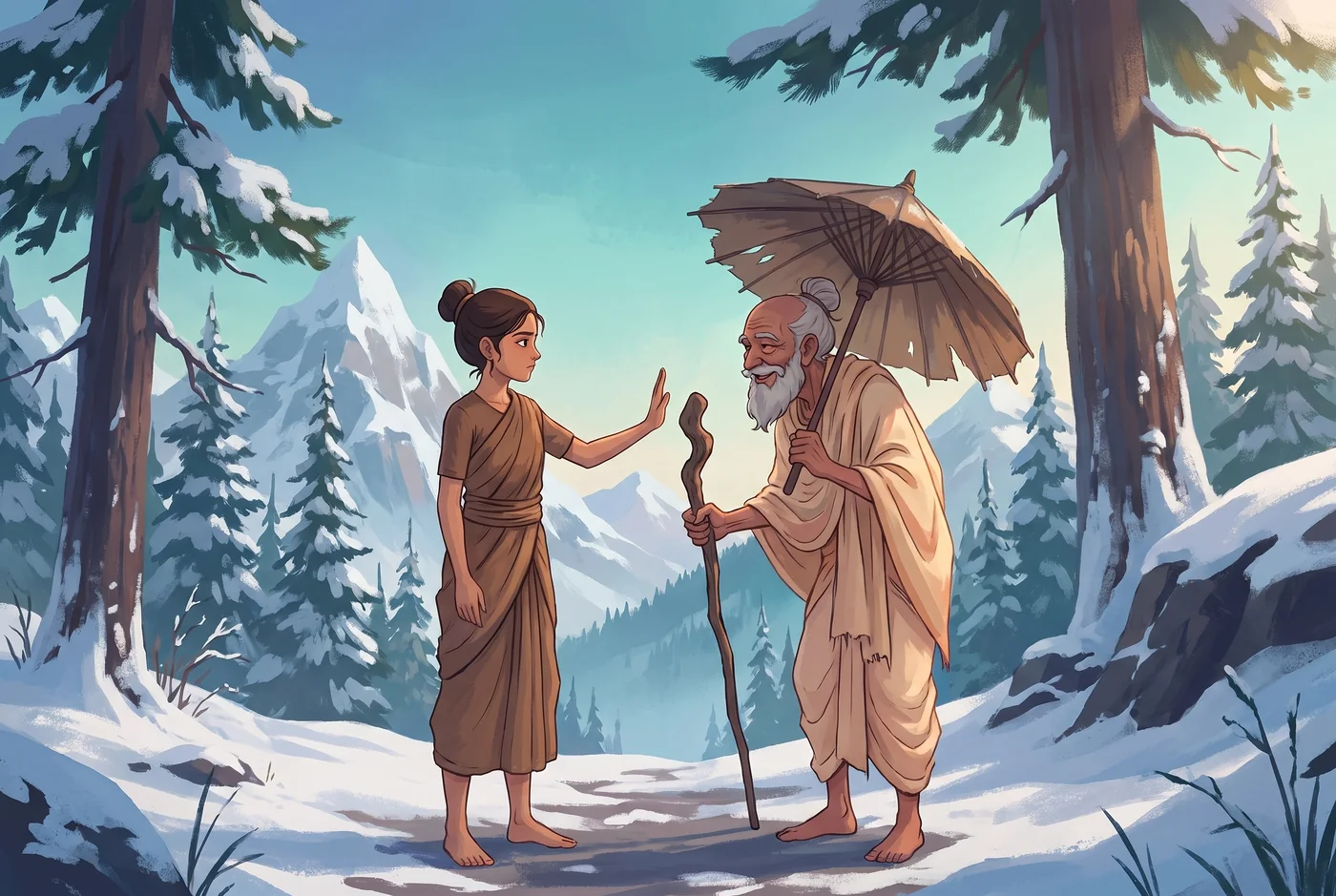
One day an old brahmin came hobbling through the forest with a stick and stopped in front of her.
"Child, what a waste," he said. "A princess, starving herself in the snow. And for whom?"
"For Shiva," said Parvati.
The old man laughed out loud. "Him? Have you seen him? He has no house. He sleeps in burning grounds. He wears snakes and smears himself with ash. He has no family, no money, and nobody knows where he came from. You could have any prince in the world. Go home."
Parvati's eyes flashed.
"You know nothing about him," she said. "He owns nothing because he needs nothing. The whole world leans on him. Say what you like, old man, but not in front of me. I will not hear one more word against him."
She turned her back to leave.
A hand caught hers. When she looked round, the old brahmin was gone, and Shiva stood there smiling.
"From today," he said, "I am yours. You have bought me with your penance."
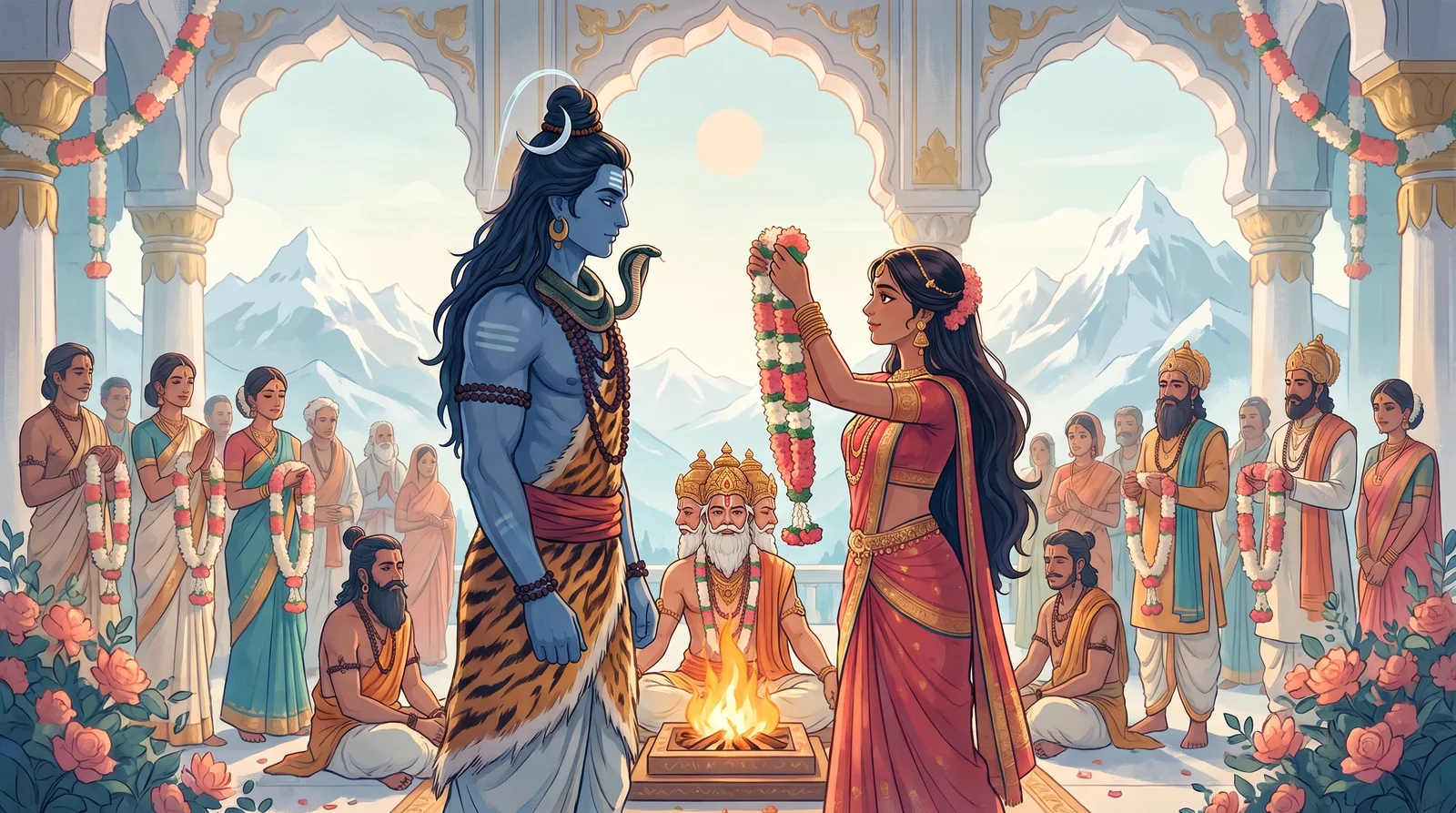
The wedding was held at Himavat's palace, and the mountains had never seen anything like it. The groom came riding a bull, with ash on his skin and a crowd of wild ganas dancing behind him, and they say the bride's mother nearly fainted at the sight. Brahma himself sat by the fire as priest and spoke the rites.
So Sati and Shiva were together again. In time they had two sons, Kartikeya, the young war-god, and Ganesha.
As the women of Teej tell it
North India and Nepal · Rajasthan, Uttar Pradesh, Bihar · 1 min read
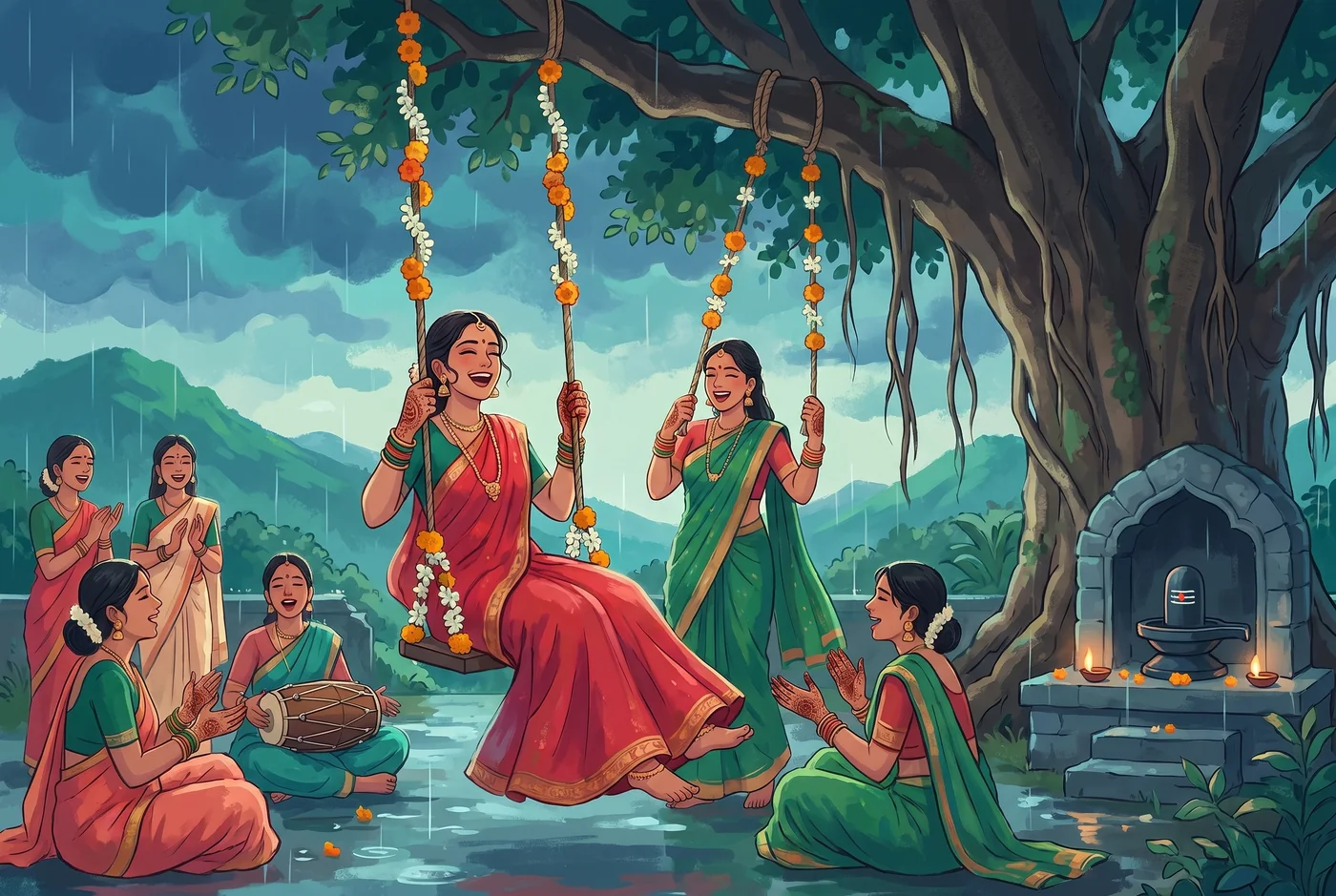
When the monsoon comes to north India and the hills turn green, women put on red and green, paint their hands with henna, hang swings from the trees and keep a fast. The festival is Teej, and the story they tell on it is Parvati's, with a few things the Puranas leave out.
It did not take her one lifetime, they say. It took a hundred and eight.
A hundred and seven times she was born, loved Shiva, fasted and prayed for him, and died without him. She never once changed her mind. In the hundred and eighth birth she was Parvati, and only then did he accept her. That is how long she was willing to wait.
There is a second part, told on the day called Hartalika Teej. Her father, they say, did not understand what she wanted. Meaning well, he promised her in marriage to Lord Vishnu, a splendid match that any king would be proud of.
Parvati was in despair. She told her closest friends, and her friends did not waste time arguing with a king. In the night they took her by the hands, led her out of the palace and hid her deep in the forest, where the wedding party could not find her.
There, in the forest, she went on with her fasting and her prayers, without food or water. And there Shiva came to her and gave his word.
The match with Vishnu was never made, and the wedding that followed is the one everybody knows.
The women who fast on Teej are remembering her fast. They keep it for a husband's long life, and in honour of a girl who knew her own mind.