From the Vedas to the Puranas
The oldest hymns of India praise Indra, Agni and Rudra. The stories most of us grew up with are about Shiva, Vishnu and the Goddess. They are one tradition, many centuries apart. This page follows each god across the gap.
→
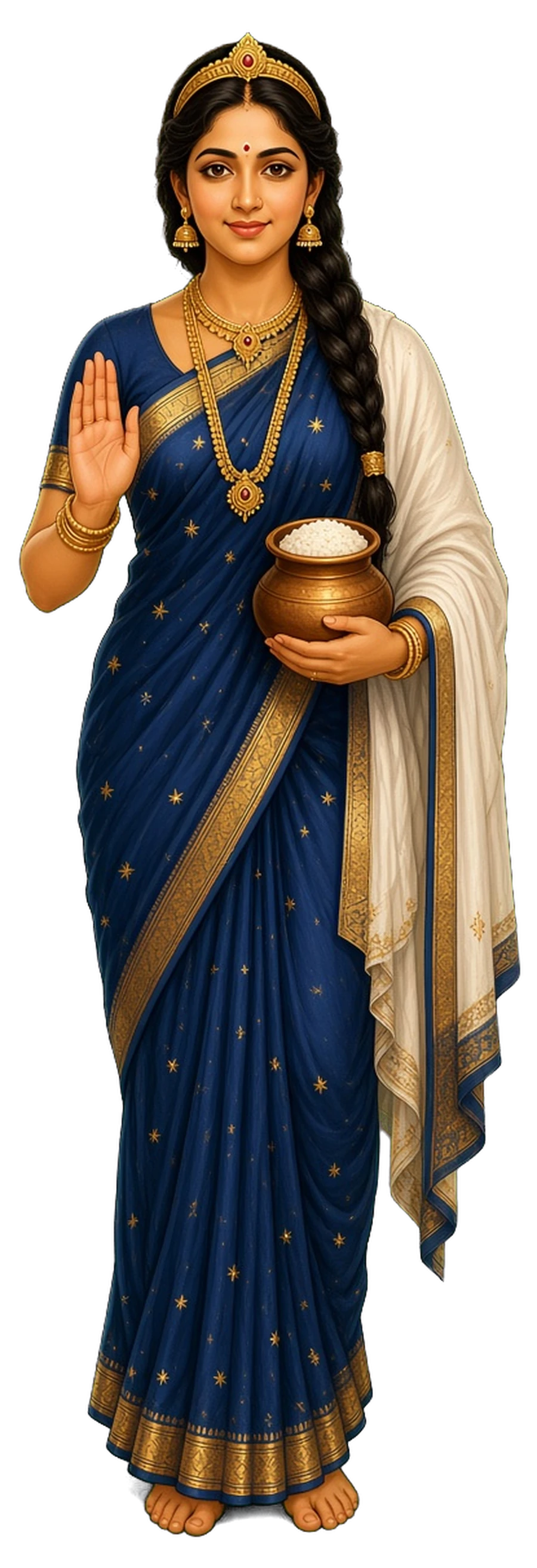
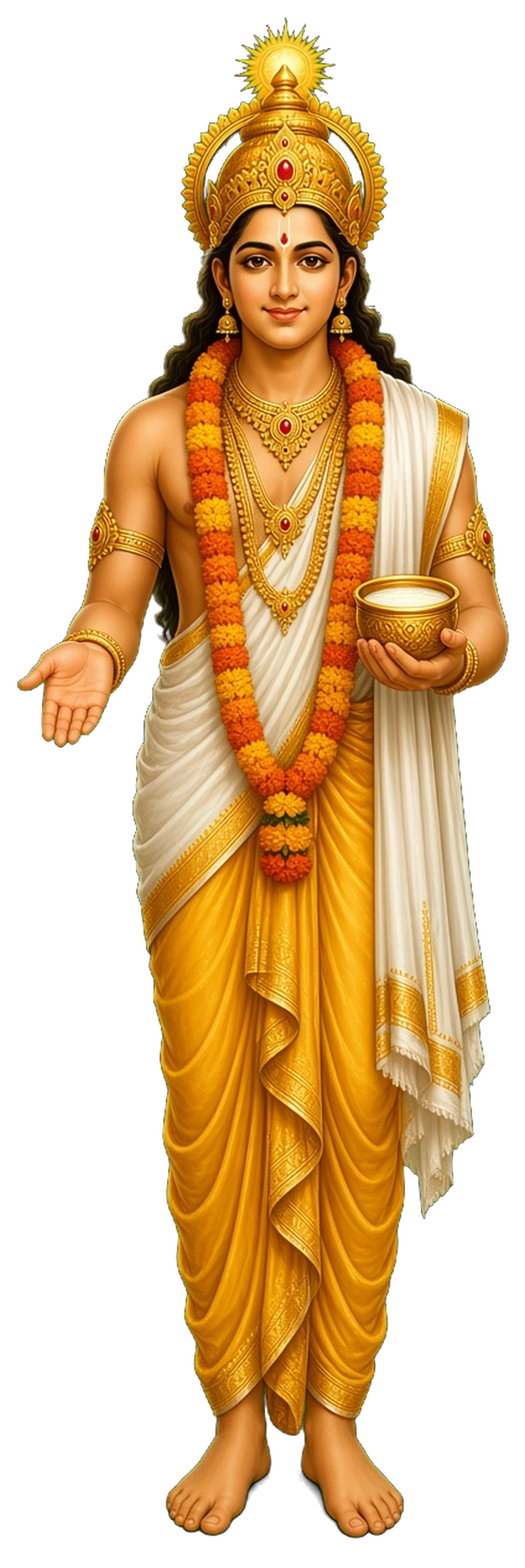
Aditi keeps her name and her motherhood in every later age. In the Brahmanas she is the earth itself, and in the epics and Puranas she is Devamata, the mother of the gods, the daughter of Daksha and the wife of the sage Kashyapa.
Read what became of Aditi
In the Puranas
AditiThe same god, in a smaller place
→
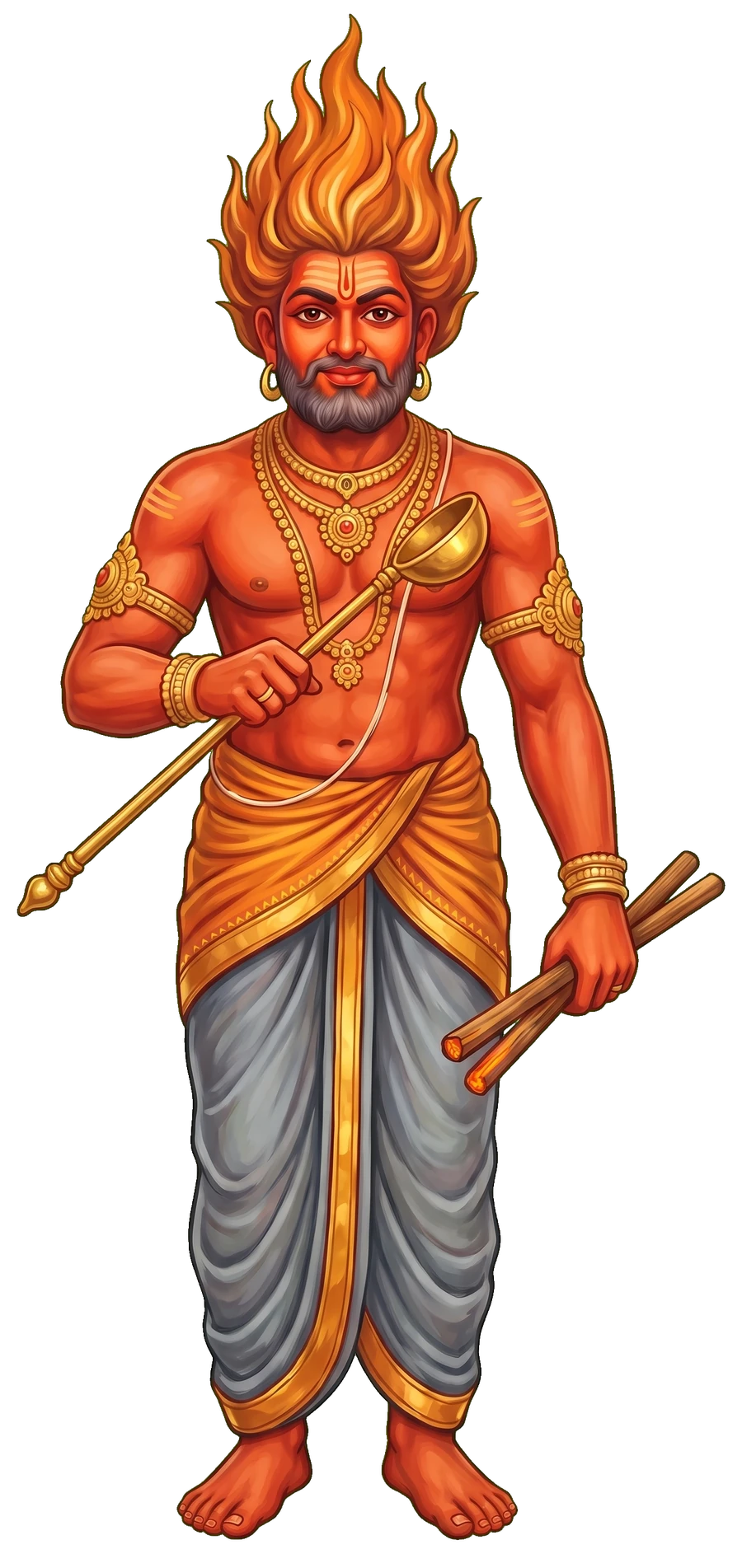
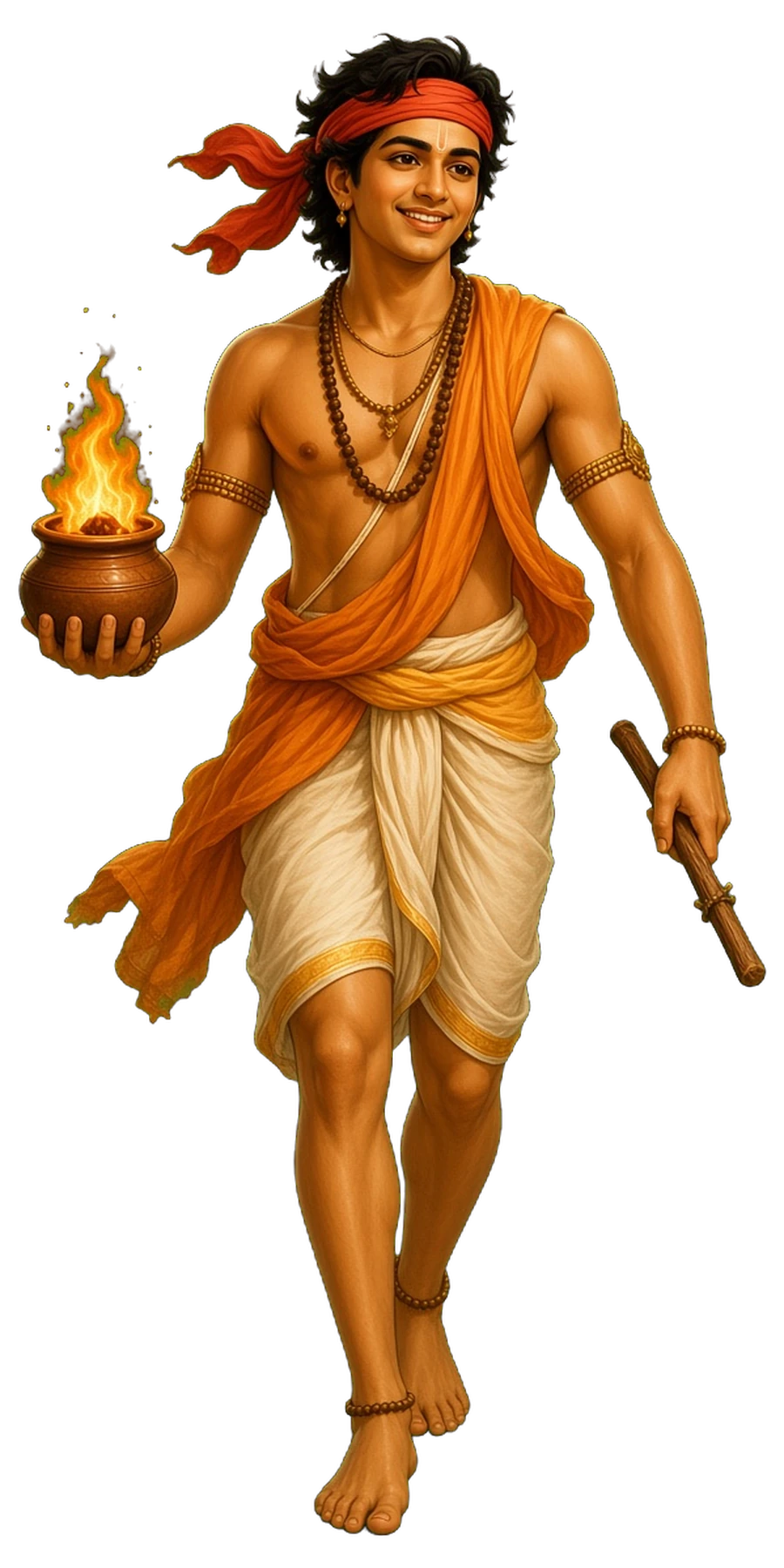
Agni never turned into another god. He is still Agni in the Puranas and still Agni today. What changed is his rank.
Read what became of Agni
In the Puranas
AgniThe same god, in a smaller place
→
Apam Napat did not grow into a god of the Puranas. He was already half merged with Agni in the Rigveda, and in later India his name lives on as a title of fire and in one moment of the Soma sacrifice, when an offering is made to him in the water.
Read what became of Apam Napat
In the Puranas
Apam NapatThe same god, in a smaller place
→
The Waters did not become a single later goddess. The Vedic company of nameless mothers gave way to rivers with names, faces and stories of their own, above all Ganga, while water itself went on being used and addressed in worship much as the Rigveda addressed it.
Read what became of Apas
In the Puranas
ApasThe same god, in a smaller place
→
Aranyani did not become another goddess, and no later goddess is said by her own tradition to be Aranyani grown up. She stays where the Rigveda left her, in one hymn. We searched the Brahmanas, the two epics and the Puranas that are available in translation and found no story about her in any of them.
Read what became of Aranyani
In the Puranas
AranyaniThe same god, in a smaller place
→
Brihaspati never changes his name. In the Brahmanas, the epics and the Puranas he is still the priest of the gods, and by the end he is also Guru, the planet Jupiter, with Thursday as his day. One thing of his went to another god.
Read what became of Brihaspati
In the Puranas
BrihaspatiThe same god, in a smaller place
→
Dyaus did not become a Puranic god. No temple was built to him and no image of him was made. In the later books his name survives in one unexpected place: the Mahabharata knows a minor god called Dyu, one of the eight Vasus, who steals a sage's cow and is born on earth as Bhishma.
Read what became of Dyaus
In the Puranas
DyausThe same god, in a smaller place
→
Indra is still Indra in the Puranas. He keeps his name, his thunderbolt and his throne. What he loses is his place at the top.
Read what became of Indra
In the Puranas
IndraThe same god, in a smaller place
→
Matarishvan did not grow into a god of the Puranas. He turned into a word. Already in the Atharvaveda his name means the wind, and in all later Sanskrit matarishvan is one of the ordinary names of Vayu.
Read what became of Matarishvan
In the Puranas
MatarishvanThe same god, in a smaller place
→
Mitra never became a great god of the Puranas. He stayed what the later Vedic texts had made him: the gentle half of the pair Mitra-Varuna, keeper of the day, and one of the twelve Adityas who share the year between them.
Read what became of Mitra
In the Puranas
MitraThe same god, in a smaller place
→
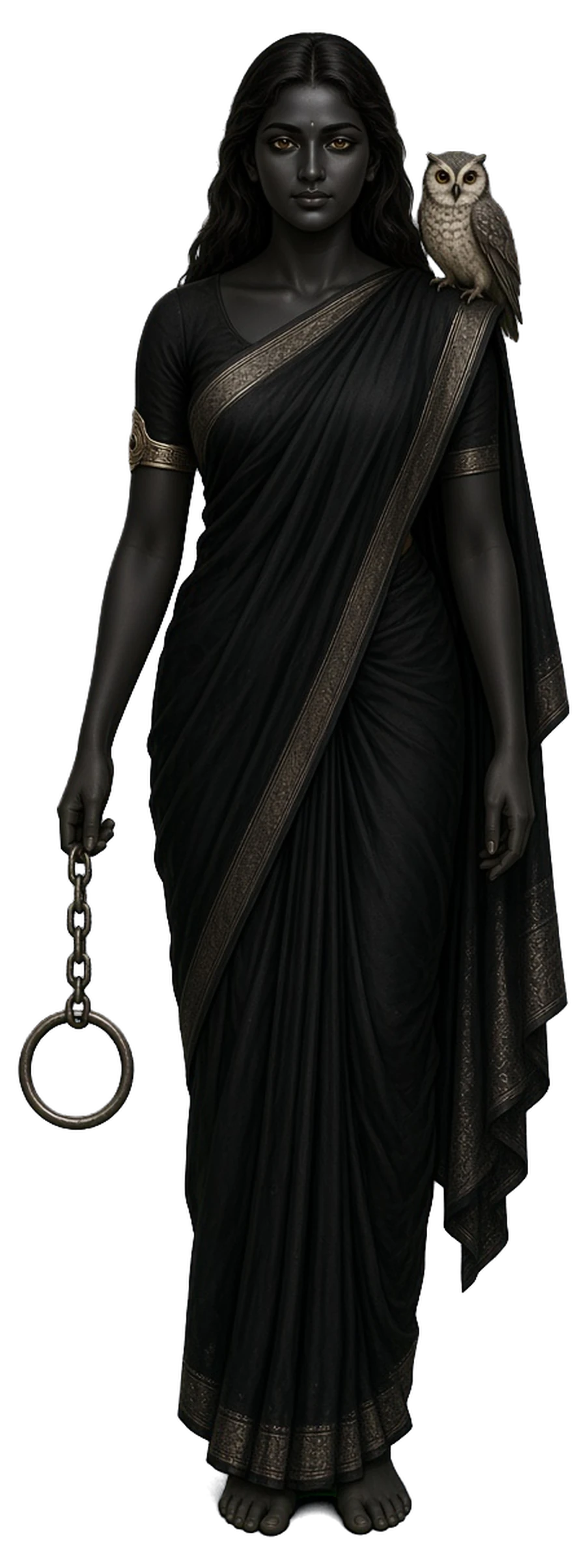
Nirriti never became one of the great goddesses of the Puranas. What happened to her is stranger. She kept her name and her quarter of the sky, and in many later texts she turned into a male god, the guardian of the south-west.
Read what became of Nirriti
In the Puranas
NirritiThe same god, in a smaller place
→
Parjanya never grew into a great Puranic god. His work of sending rain passed to Indra, and his name became an ordinary Sanskrit word for a rain cloud. He is remembered as one of the twelve Adityas, the gods who take turns with the sun through the year.
Read what became of Parjanya
In the Puranas
ParjanyaThe same god, in a smaller place
→
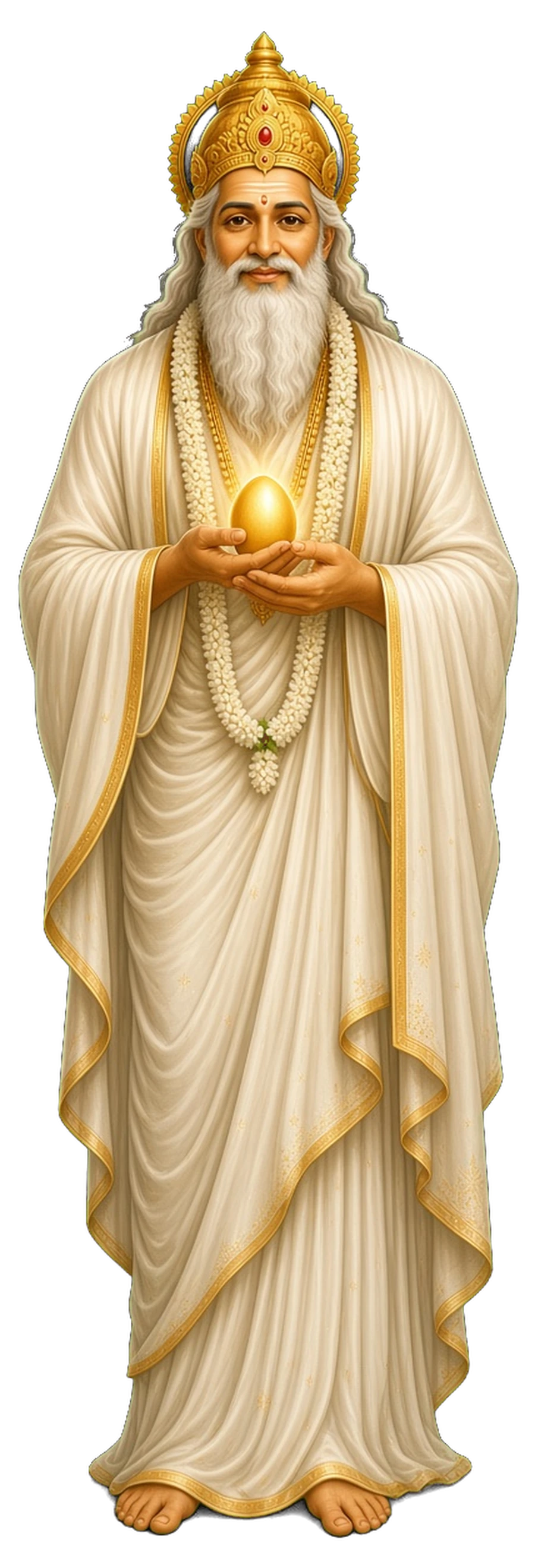
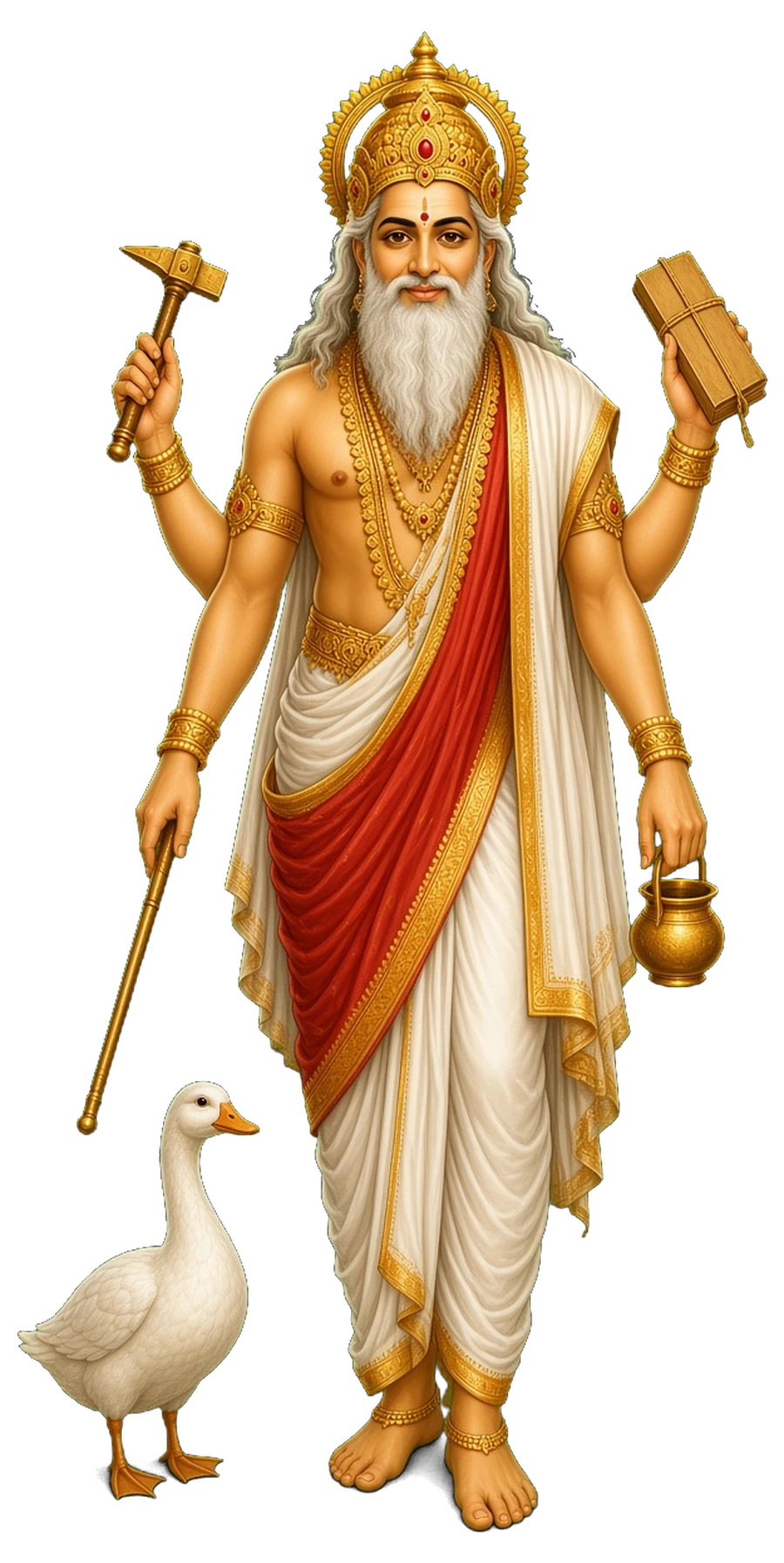
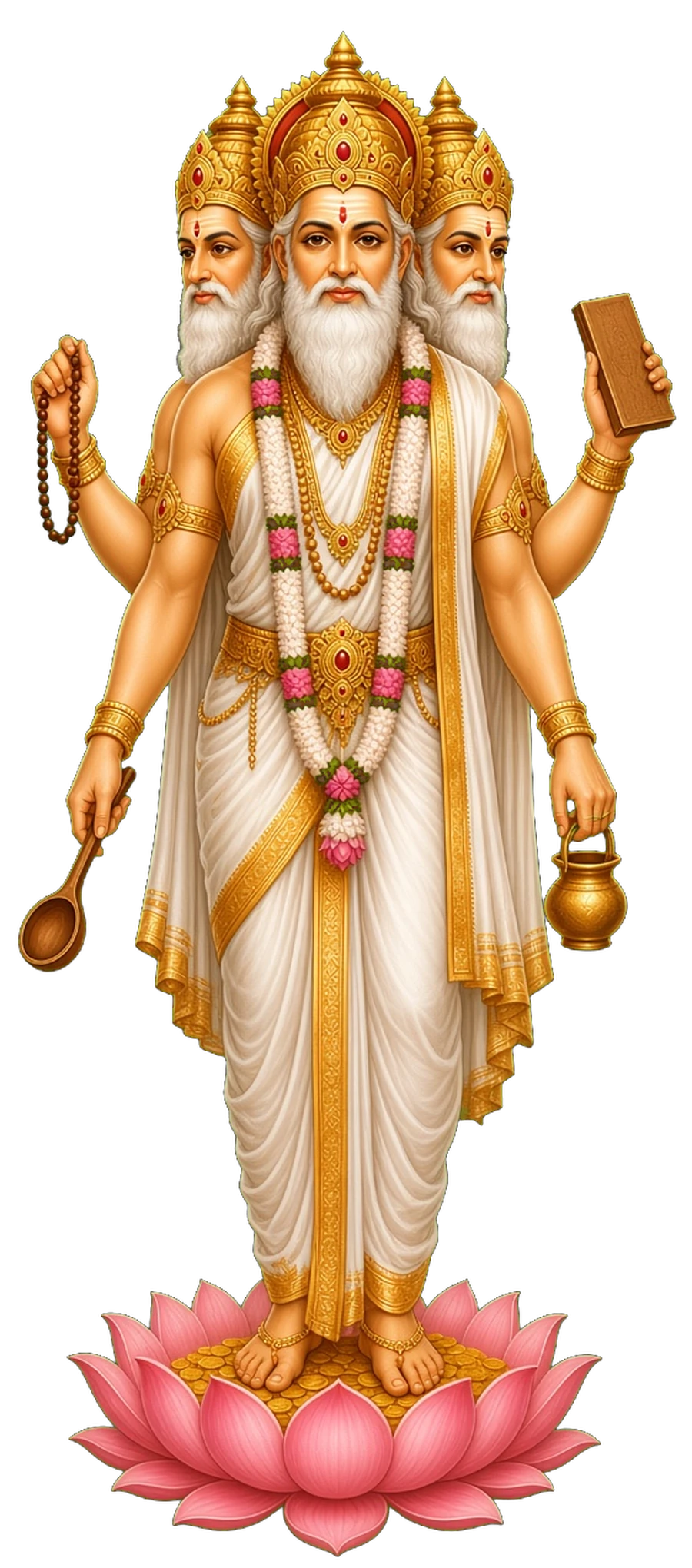
Prajapati did not vanish after the Vedas. He became Brahma. The Mahabharata and the Puranas give the grandfather of the worlds Prajapati's title, his golden egg and his work of creation, and the old name lives on as a word for any great father of creatures.
Read what became of Prajapati
In the Puranas
PrajapatiThe same god, in a smaller place
→
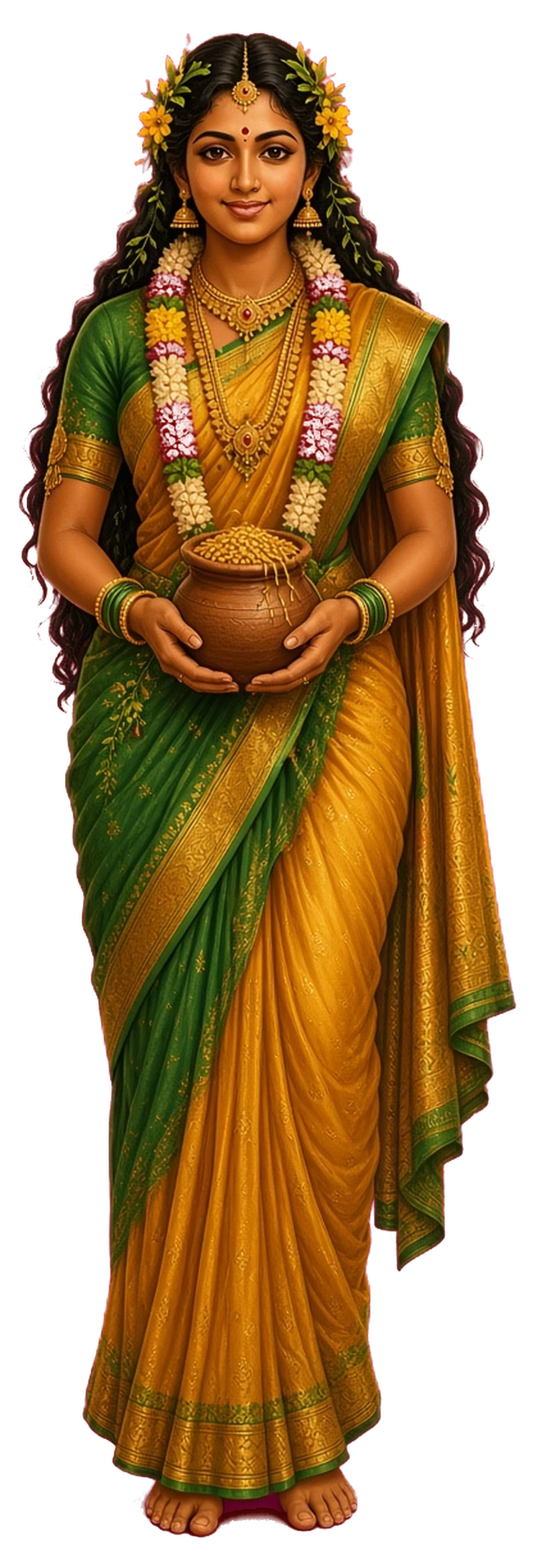
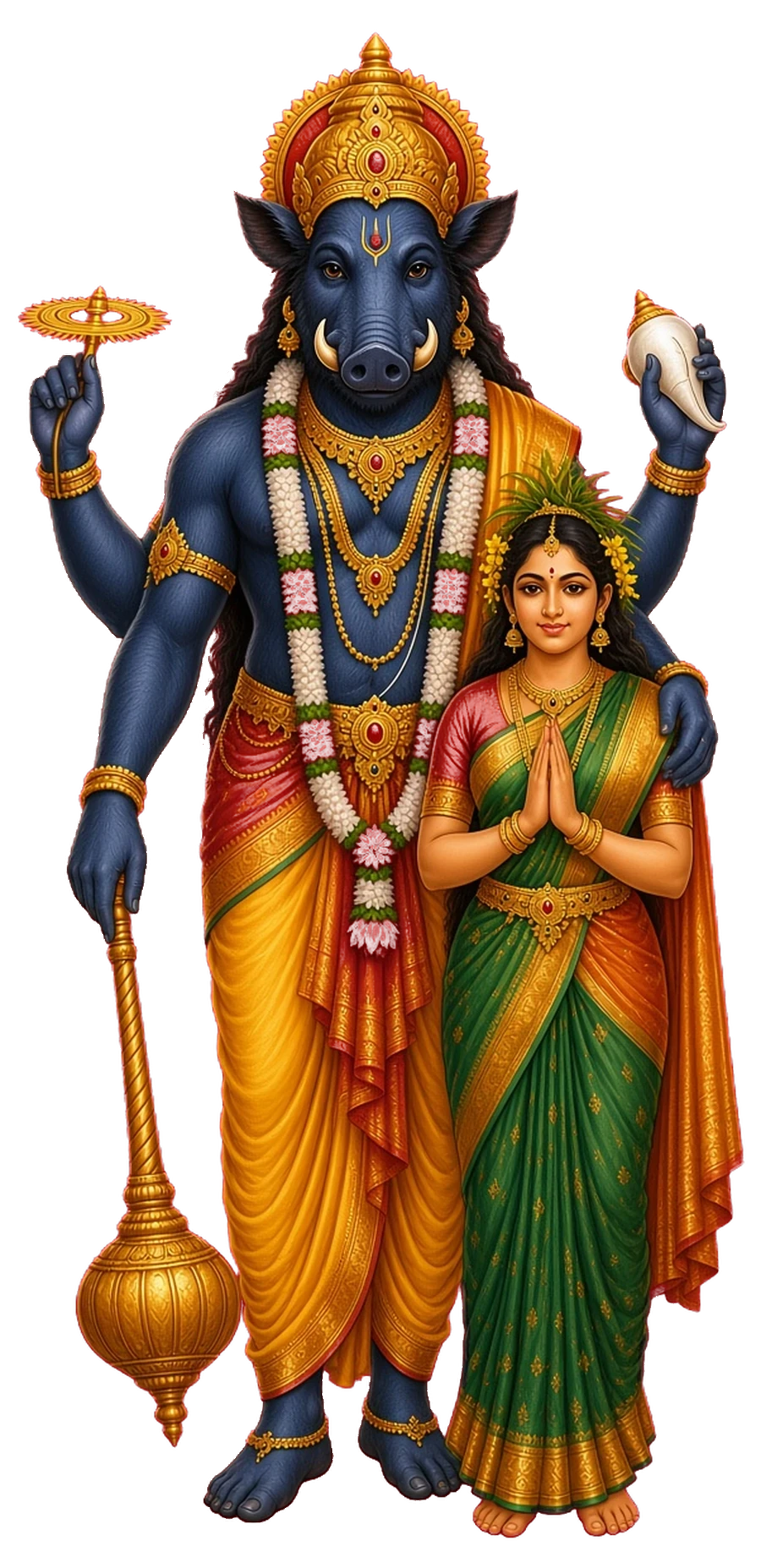
Prithvi lives on in the Puranas as Bhumi or Bhudevi, the Earth goddess, and her partner changes. In the Vedas she is the wife of Father Sky. In the Puranas she stands beside Vishnu, who lifts her out of the waters as the boar Varaha.
Read what became of Prithvi
In the Puranas
PrithviThe same god, in a smaller place
→
Pushan has no Puranic form of his own. The Puranas keep his name as one of the twelve Adityas, the sons of Aditi who are forms of the sun, and they remember him otherwise for one thing only, his missing teeth.
Read what became of Pushan
In the Puranas
PushanThe same god, in a smaller place
→
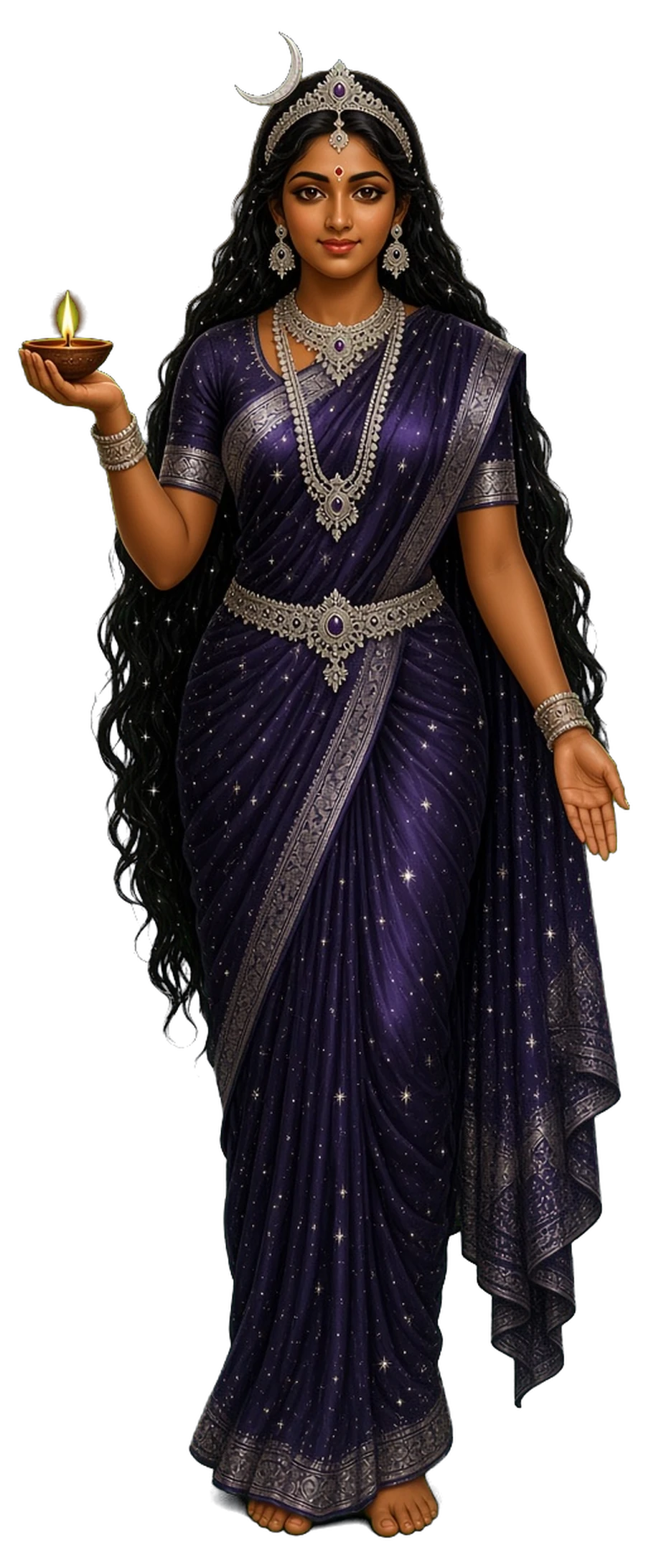
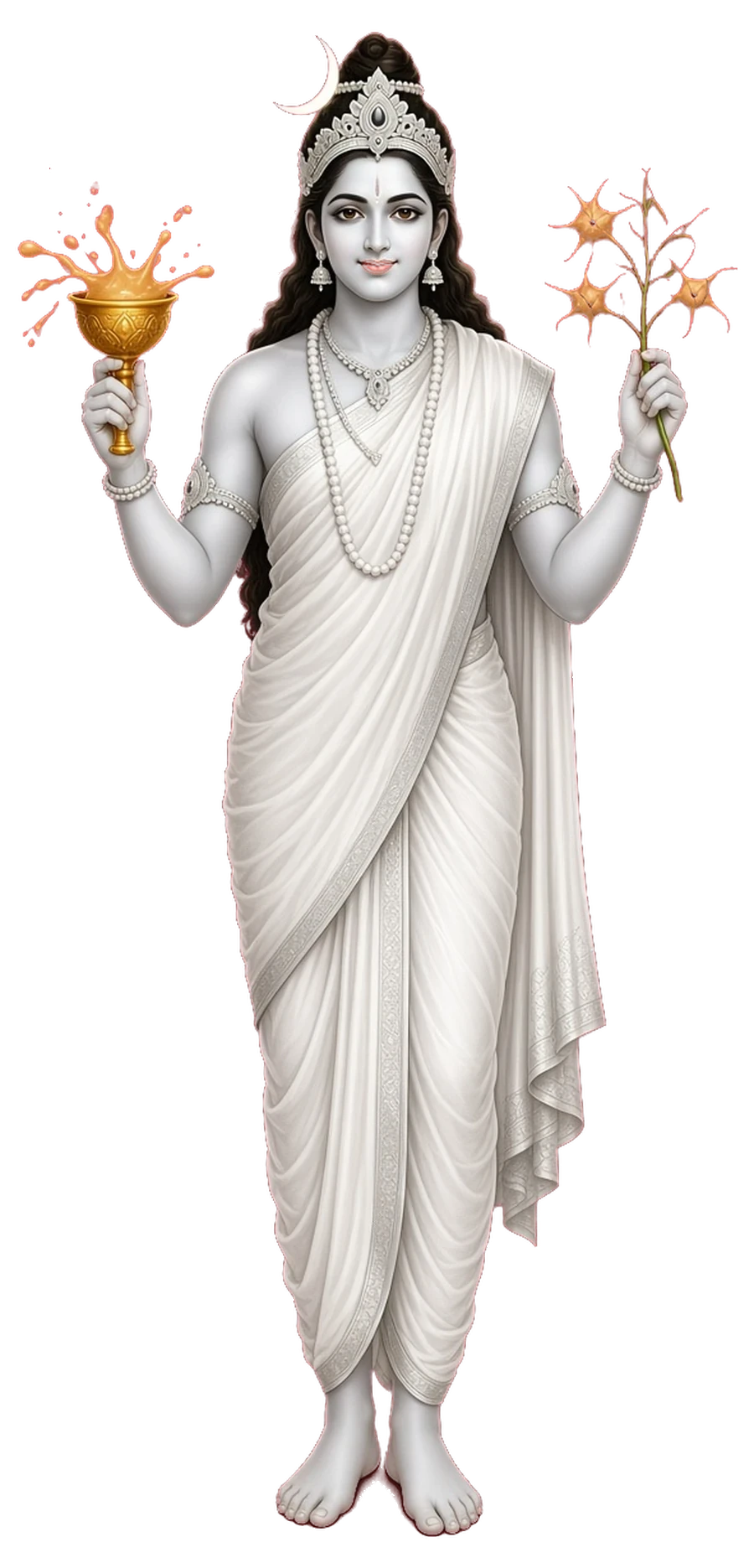
Ratri never received a great temple cult under her own name, but she did not fade as her sister Dawn did. She was drawn into the worship of the great Goddess.
Read what became of Ratri
In the Puranas
RatriThe same god, in a smaller place
→
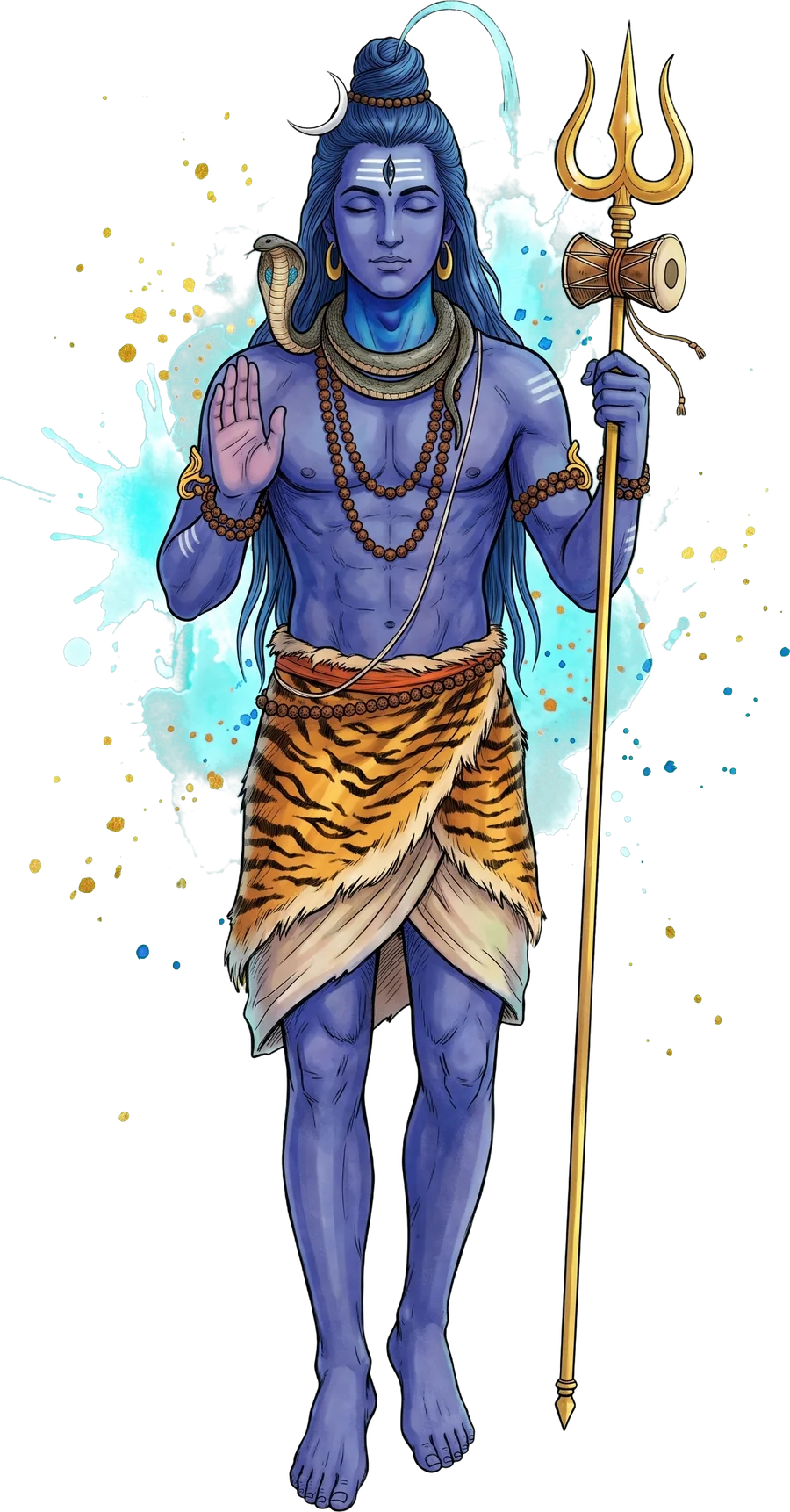
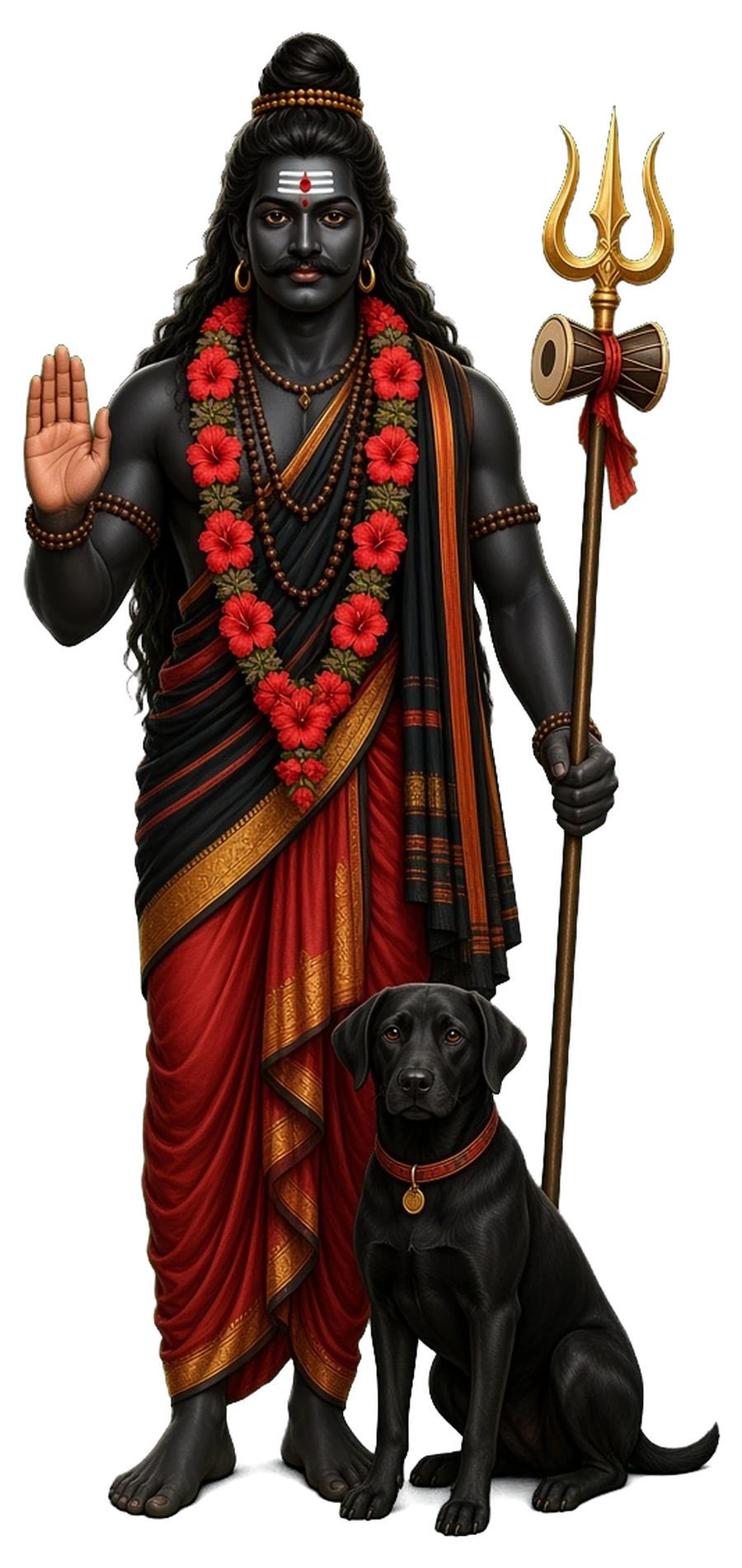
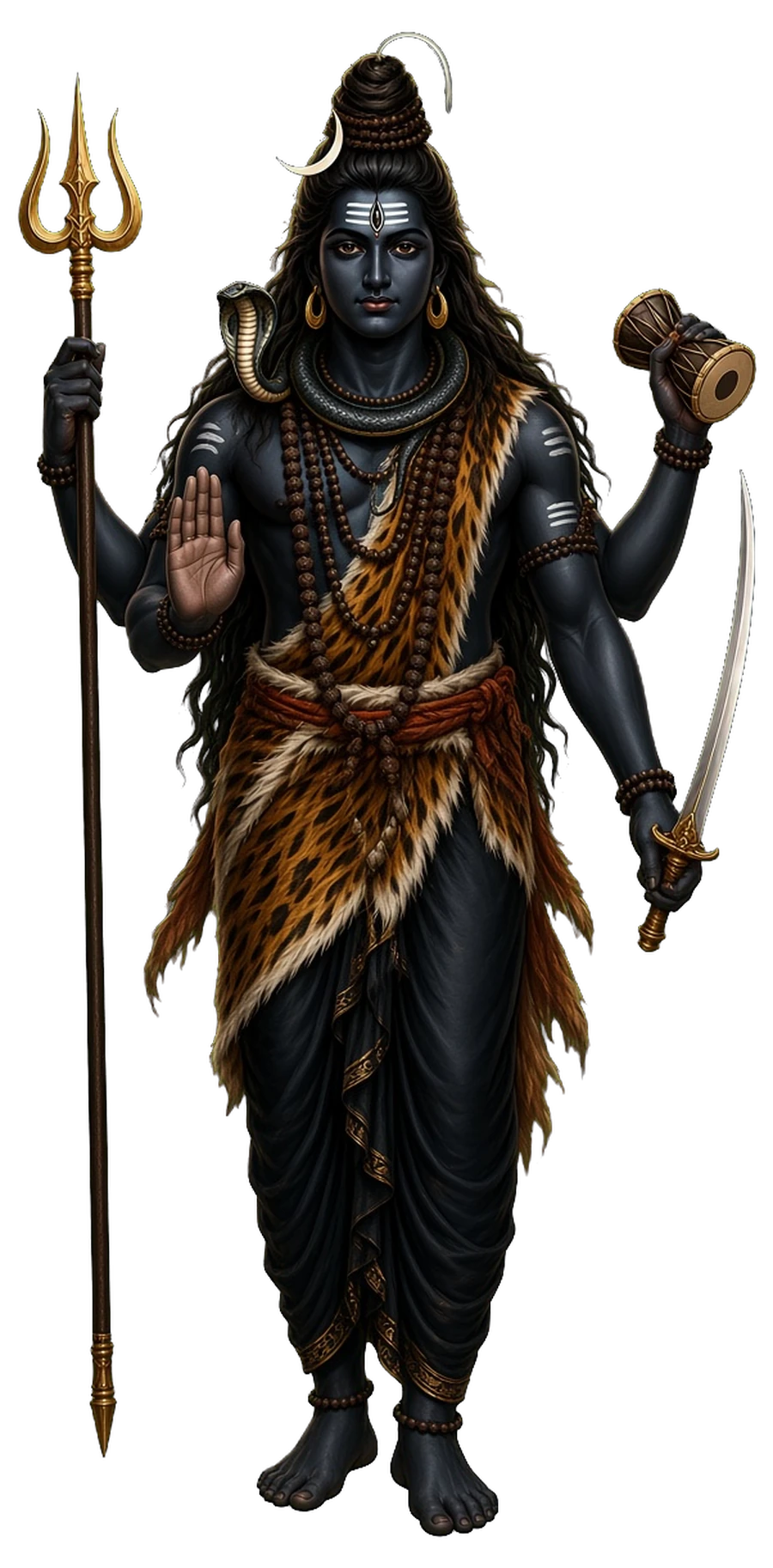
Rudra became Shiva. No other god changed so much between the Vedas and the Puranas, and the change can be followed text by text.
Read what became of Rudra
→
Savitr himself fades after the Vedas, and his verse does not. The Puranas keep his name in the list of the twelve Adityas, the sons of Aditi who are forms of the sun, and tell no stories about him. The verse addressed to him became the most repeated prayer in India, and in time a goddess.
Read what became of Savitr
In the Puranas
SavitrThe same god, in a smaller place
→
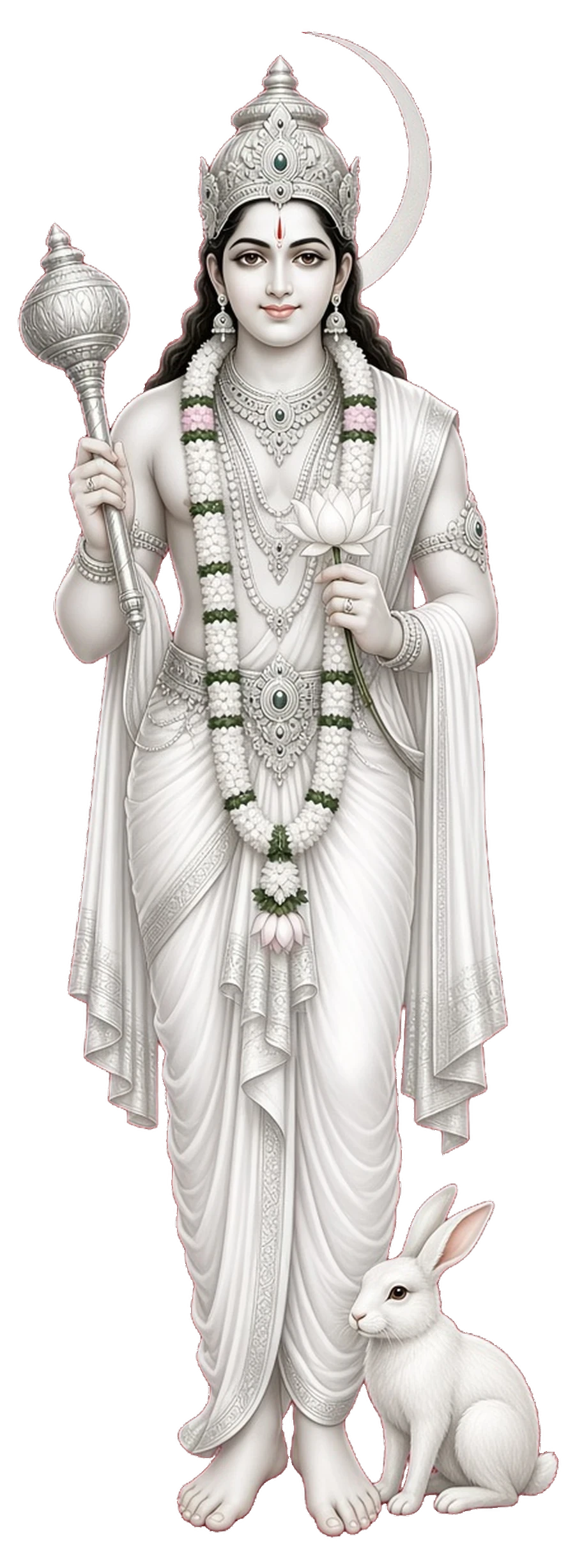
Soma became the Moon. In the Rigveda he is a plant and its pressed juice, and only one or two late hymns place him among the stars. By the time of the Brahmanas the matter is settled: "King Soma, the food of the gods, is no other than the moon," says the Shatapatha Brahmana.
Read what became of Soma
In the Puranas
SomaThe same god, in a smaller place
→
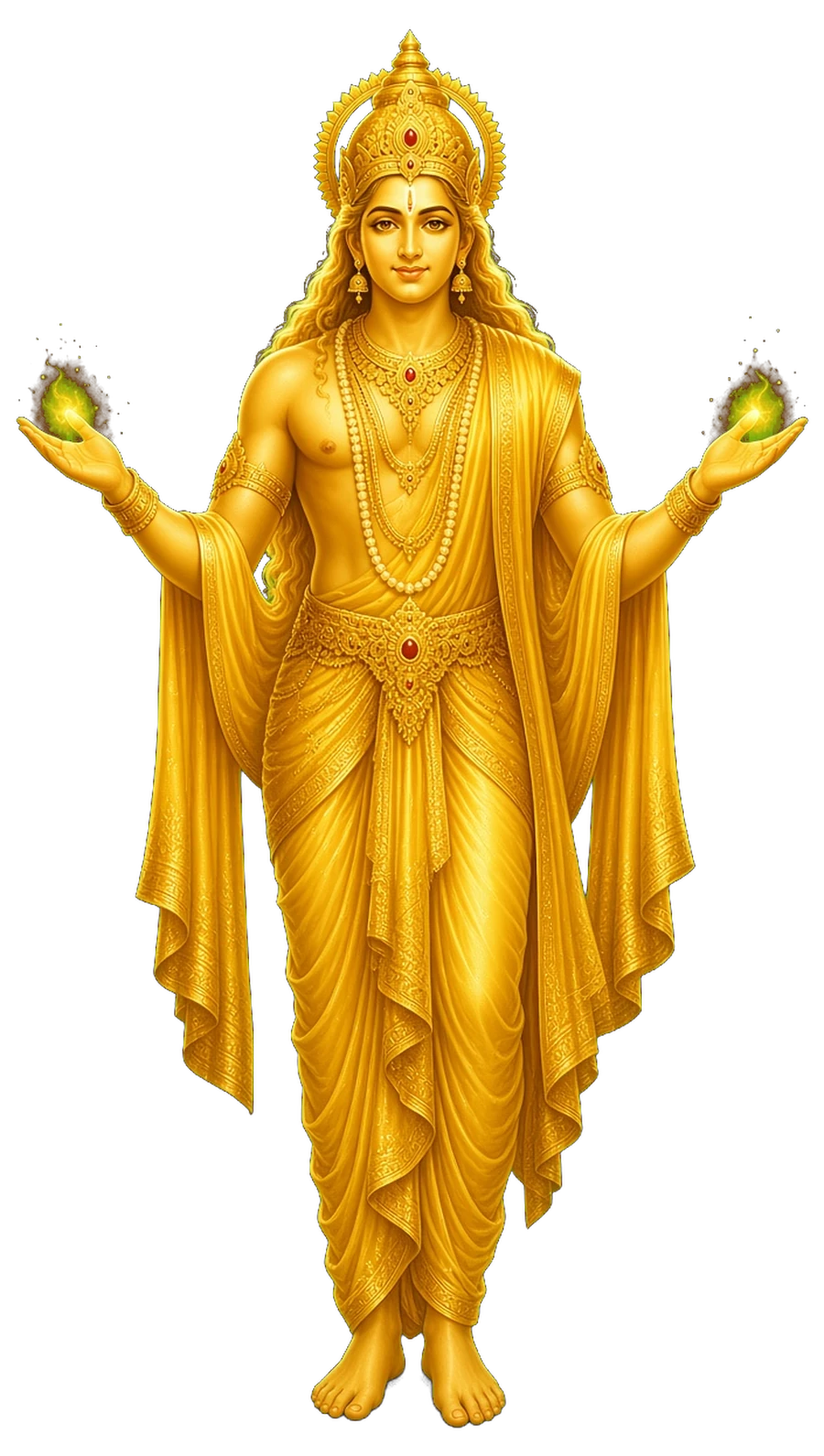
Surya did not fade as Indra and Varuna did. He is still worshipped every morning, by name, wherever a Hindu faces east with water in cupped hands, and he still has temples and festivals of his own. What changed is that the later texts gave him a family, a household and a body that sculptors could carve.
Read what became of Surya
In the Puranas
SuryaThe same god, in a smaller place
→
In the later books the Adityas become twelve, and they become the sun. The Shatapatha Brahmana and the Brihadaranyaka Upanishad say that the twelve Adityas are the twelve months of the year, and from then on Aditya is simply a name for the sun.
Read what became of The Adityas
In the Puranas
The AdityasThe same god, in a smaller place
→
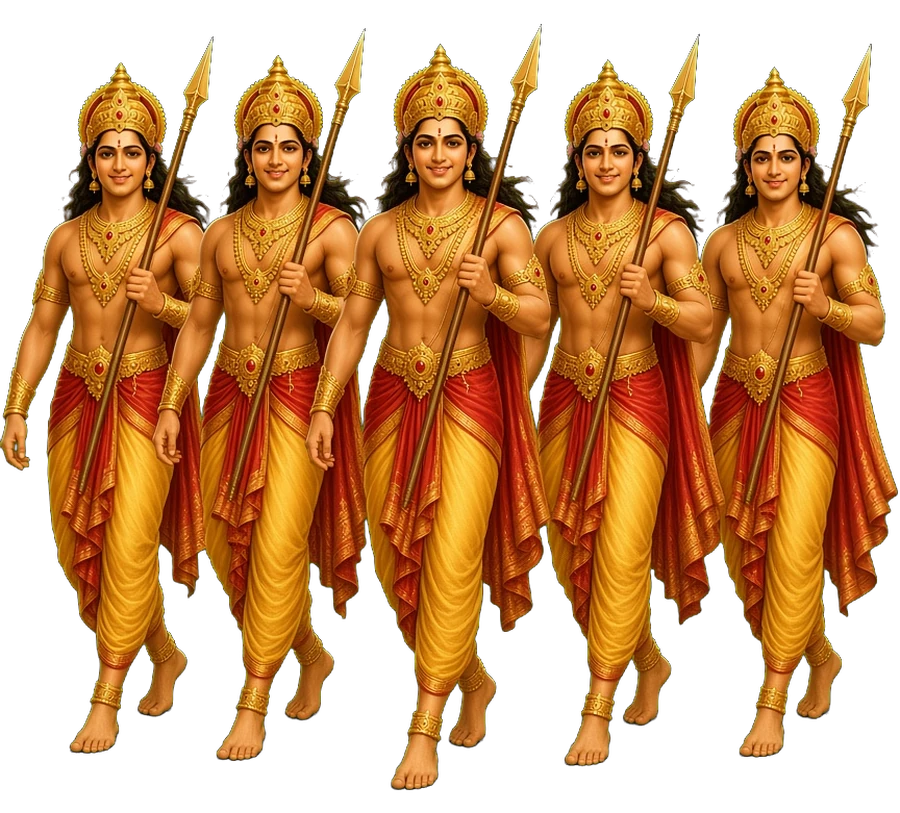
The Ashvins did not turn into anyone else. They are still the Ashvini Kumaras, the two physicians of heaven, in the epics and the Puranas, and Ashvini, the first of the twenty-seven lunar stars, is theirs. What changed is their rank, and the texts explain how they got it.
Read what became of The Ashvins
In the Puranas
The AshvinsThe same god, in a smaller place
→
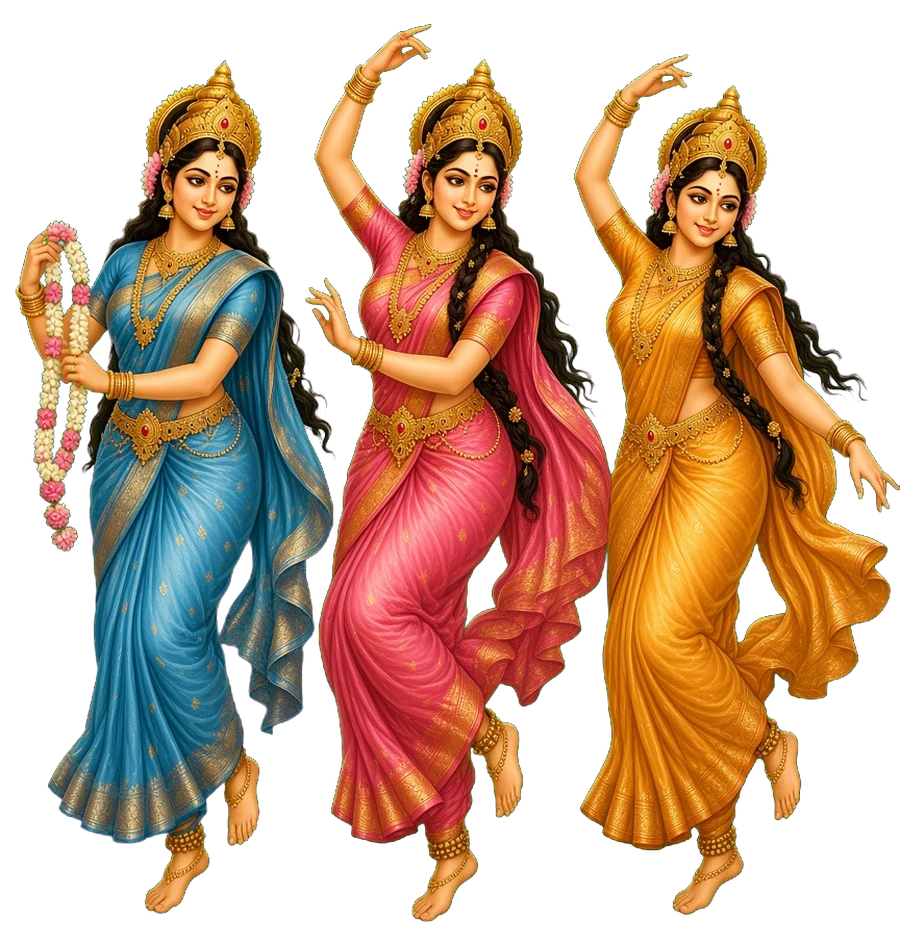
The Gandharvas became the musicians of heaven. The single bright guardian of the Rigveda turned, in the epics and Puranas, into a whole people with kings, wives, forests and horses, who sing in Indra's court while the Apsarases dance.
Read what became of The Gandharvas and Apsarases
In the Puranas
The Gandharvas and ApsarasesThe same god, in a smaller place
→
The Maruts keep their name in the later texts and lose nearly everything else. The Rigveda's sons of Rudra become, in the Ramayana and the Puranas, the sons of Diti and Kashyapa, and in the end the word marut comes to mean simply the wind.
Read what became of The Maruts
In the Puranas
The MarutsThe same god, in a smaller place
→
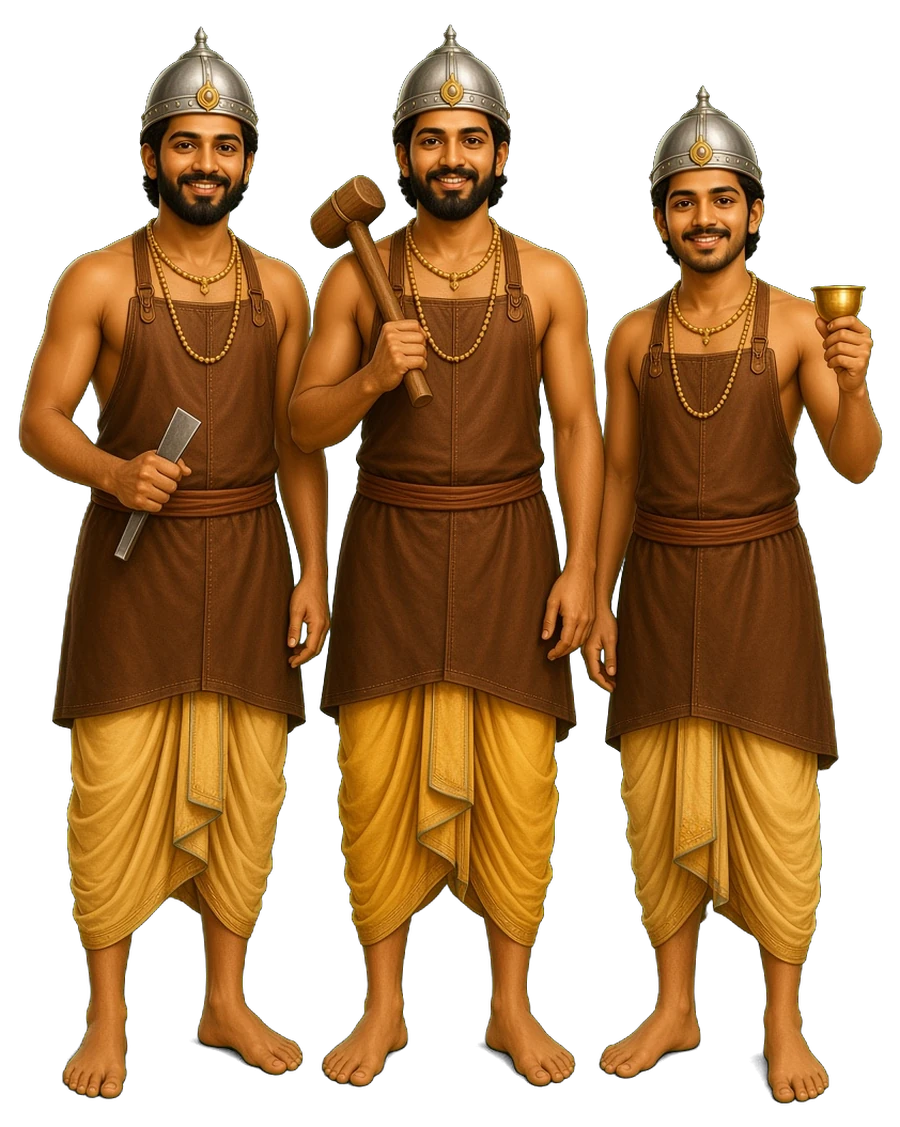
The Ribhus do not cross into the Puranas. No Purana tells their story, no temple is theirs, and by the time of the epics the craftsman's work in heaven belongs to one figure, Vishvakarma. What remains of the three brothers is a share in a ritual and a name.
Read what became of The Ribhus
In the Puranas
The RibhusThe same god, in a smaller place
→
Trita did not become a god of the Puranas. Indra took over his battles, and by the time of the Mahabharata Trita is a human sage, remembered for a well on the bank of the Sarasvati and for two brothers who left him in it.
Read what became of Trita Aptya
In the Puranas
Trita AptyaThe same god, in a smaller place
→
Tvashtri does not survive into the Puranas as a great god. His work is taken over by Vishvakarma, the architect of the gods, and his own name is kept mainly in one story, as the father who lost a son to Indra and made a monster to avenge him.
Read what became of Tvashtri
In the Puranas
TvashtriThe same god, in a smaller place
→
After the Rigveda, Ushas slowly leaves the stage. No Purana gives her a story of her own, and she has no temples. What survives is her hour: the dawn is still the time for prayer, and the Chhath festival of Bihar ends with an offering named for her, Usha Arghya.
Read what became of Ushas
In the Puranas
UshasThe same god, in a smaller place
→
Vac did not keep a separate name in later Hinduism. She merged into Saraswati. The Brahmanas already say that Saraswati is speech, and by the time of the epics and Puranas the goddess of the word and the goddess of the river are one figure, the Saraswati who is worshipped today.
Read what became of Vac
In the Puranas
VacThe same god, in a smaller place
→
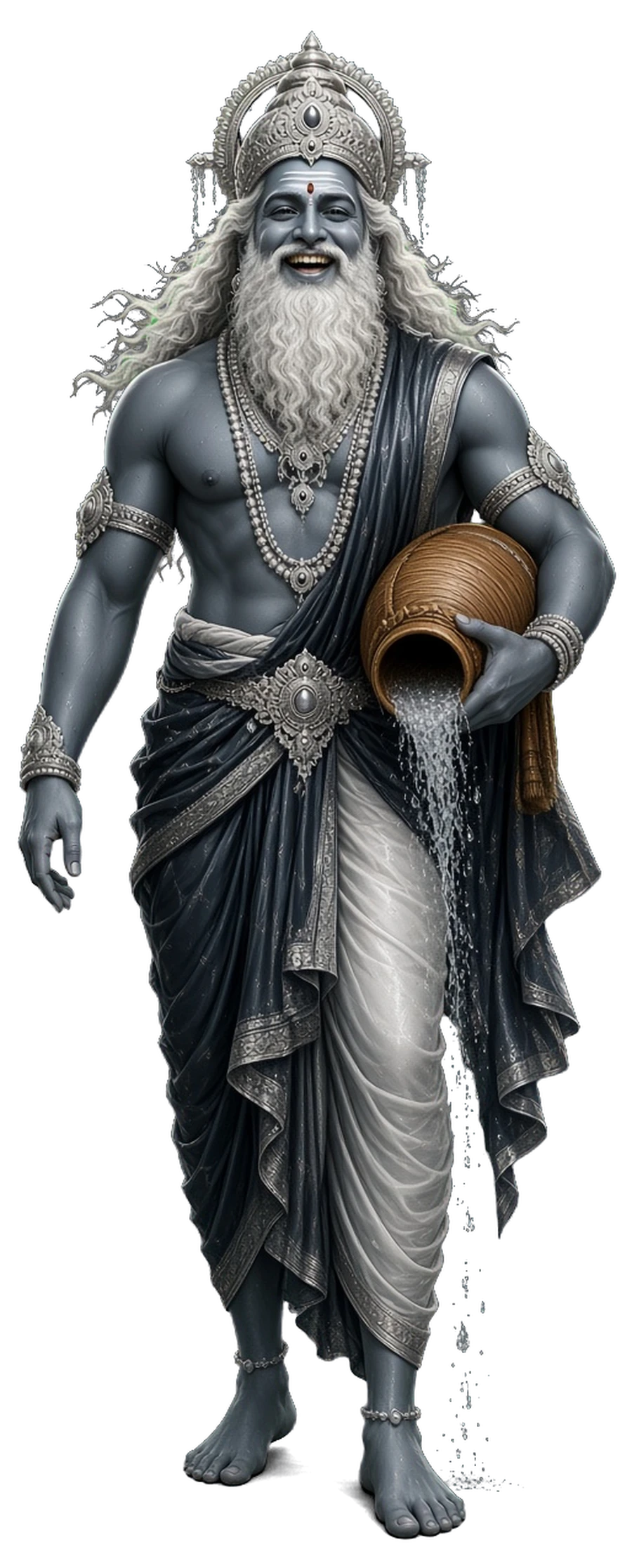
Varuna is still Varuna in the Puranas, but his kingdom has shrunk from the whole order of the world to the waters alone. The king who watched every deed in the Rigveda becomes the lord of the sea and the guardian of the west, and the care of right and wrong passes to Yama and to the great gods of the later age.
Read what became of Varuna
In the Puranas
VarunaThe same god, in a smaller place
→
Vayu keeps his name and his nature in every later age. He never became a great god with temples of his own, and he never faded either. What happened to him is quieter: the wind outside became the breath inside, and the god became the father of heroes.
Read what became of Vayu
In the Puranas
VayuThe same god, in a smaller place
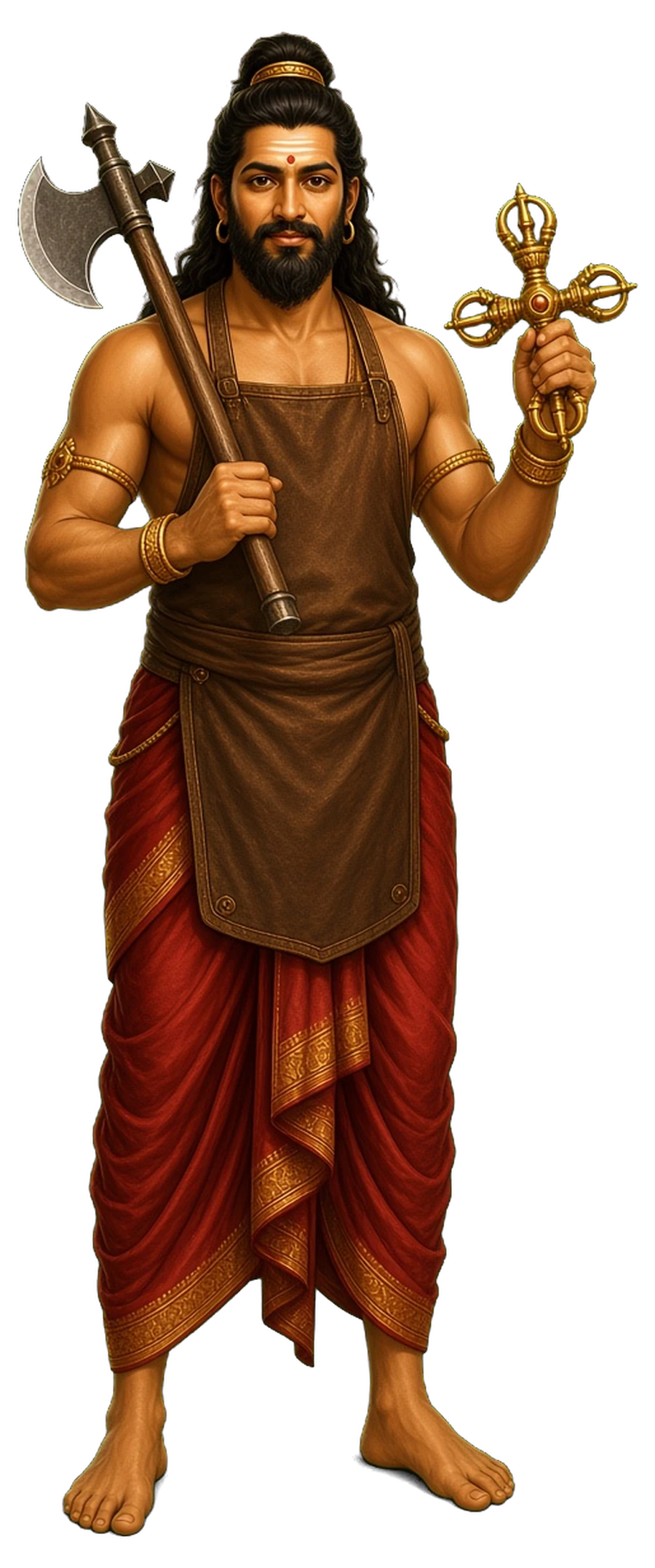
In the Puranas
VishvakarmaThe same god, in a smaller place
→
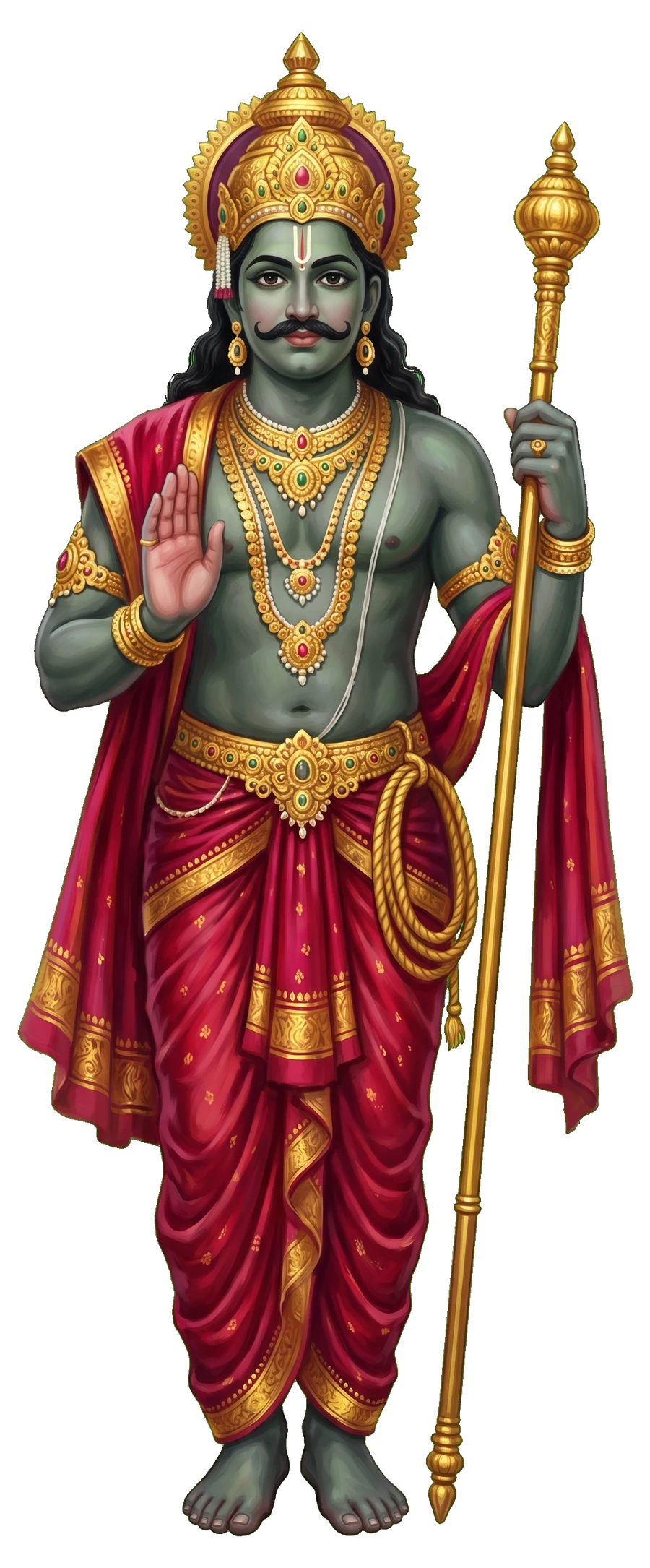
Yama is still Yama in the Puranas, with the same name and the same kingdom. What changes is his work. The gentle host of the dead becomes their judge.
Read what became of Yama
In the Puranas
YamaThe same god, in a smaller place
Gods the Vedas barely know
Some of the best-loved gods have no hymn of their own in the Vedas. Their pages say where they came from.
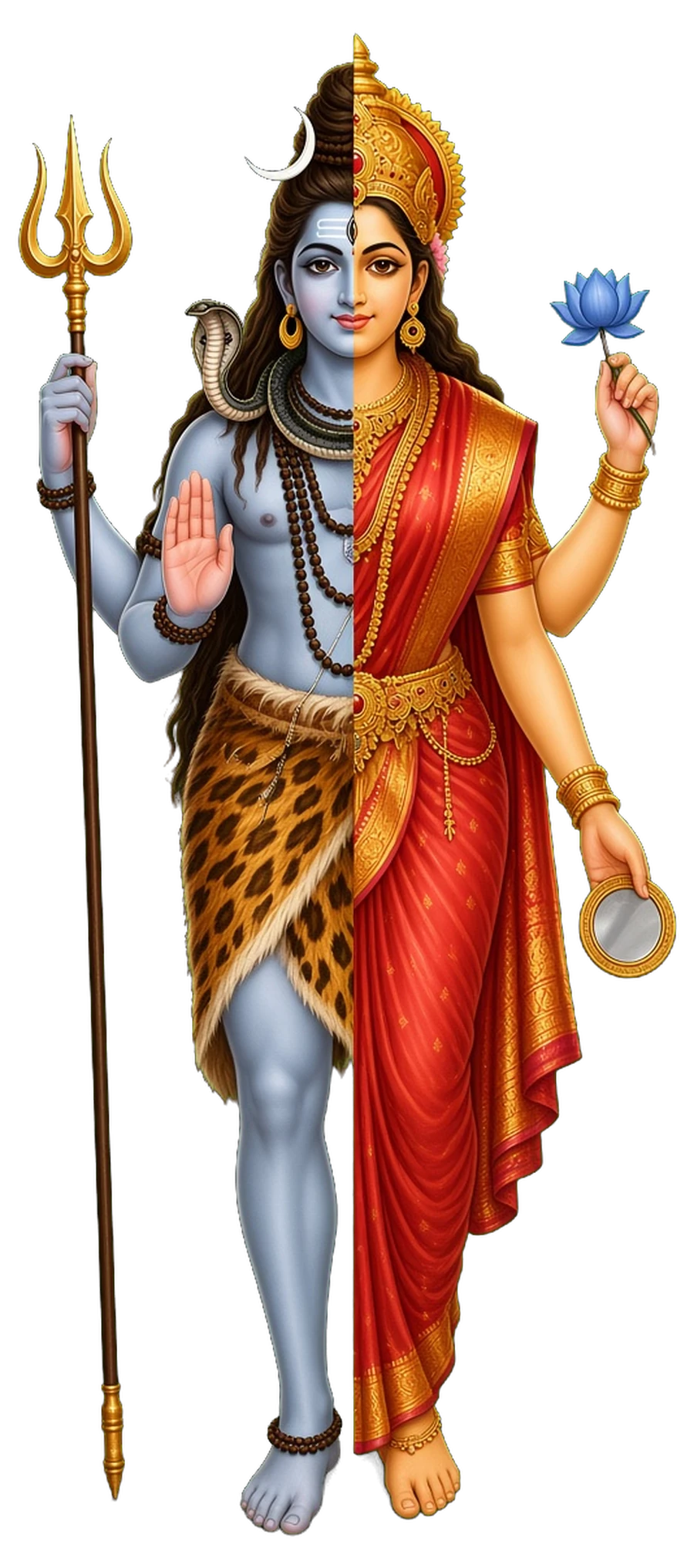
The Vedas do not know Ardhanarishvara. The Rigveda's Rudra is a fierce archer and the father of the Maruts, a god of storm and healing, and no hymn gives him a wife inside his body or a woman's half.
Read the Vedic roots of Ardhanarishvara
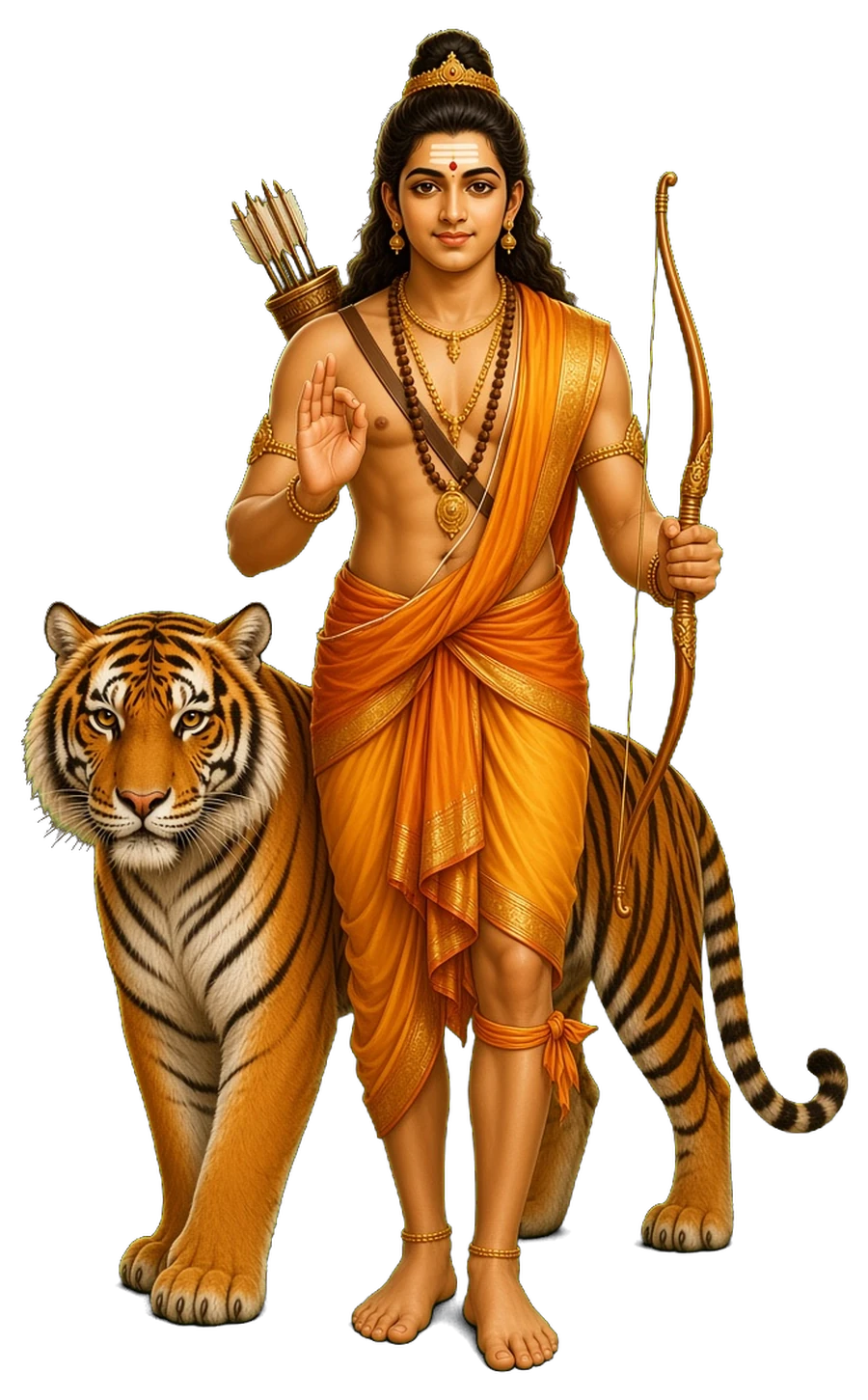
Ayyappa grew from more than one root. In the Puranas there is a god called Shasta, the ruler, a son of Shiva born of his meeting with Mohini; the Bhagavata tells of Shiva's chase after Mohini, though not of a child.
Read the Vedic roots of Ayyappa
Bagalamukhi is not in the Vedas. No hymn names her, and the ten Mahavidyas are found as a group only after the tenth century, as David Kinsley shows. Her rule over speech recalls the Vedic goddess Vac, and S. Shankaranarayanan explains her stilling power with a Vedic line that the Word gave birth to all the worlds.
Read the Vedic roots of Bagalamukhi
Balarama is not in the Vedas. He begins as Sankarshana, one of the Vrishni heroes worshipped around Mathura, and he is older in stone than most of the avatars.
Read the Vedic roots of Balarama
Brahma grew out of the Vedic creator. The Rigveda has several hymns that wonder how the world began: one asks who the golden embryo, Hiranyagarbha, was, the god who arose in the beginning; another wonders whether even the highest god knows.
Read the Vedic roots of Brahma
The Rigveda does not know Budha as a planet or as a god. The one old trace of him is a ritual text: the Panchavimsha Brahmana of the Samaveda (24.18) tells of a sixty-one-day rite held by the Vratyas, followers of the one they called the God, with Budha as their leader.
Read the Vedic roots of Budha
The Rigveda has a moon but hardly a moon god. Its word for the moon is chandramas, and in the hymn of the cosmic Person (10.90.13) the moon is born from that being's mind, as the sun is from his eye.
Read the Vedic roots of Chandra
Chhinnamasta is not in the Vedas. Elisabeth Benard says plainly that she has no Vedic antecedents, and David Kinsley found no early references to her and no sign of an early cult. Some writers have pointed to the Vedic goddess Nirriti, or to the dawn Ushas, but these are comparisons, not ancestors.
Read the Vedic roots of Chhinnamasta
Daksha is older than the Puranas. In the Rigveda he is a small god whose name means skill, one of the Adityas, the sons of Aditi: the hymn 2.27 names six of them, Mitra, Aryaman, Bhaga, Varuna, Daksha and Amsha, the only place the Veda lists them by name.
Read the Vedic roots of Daksha
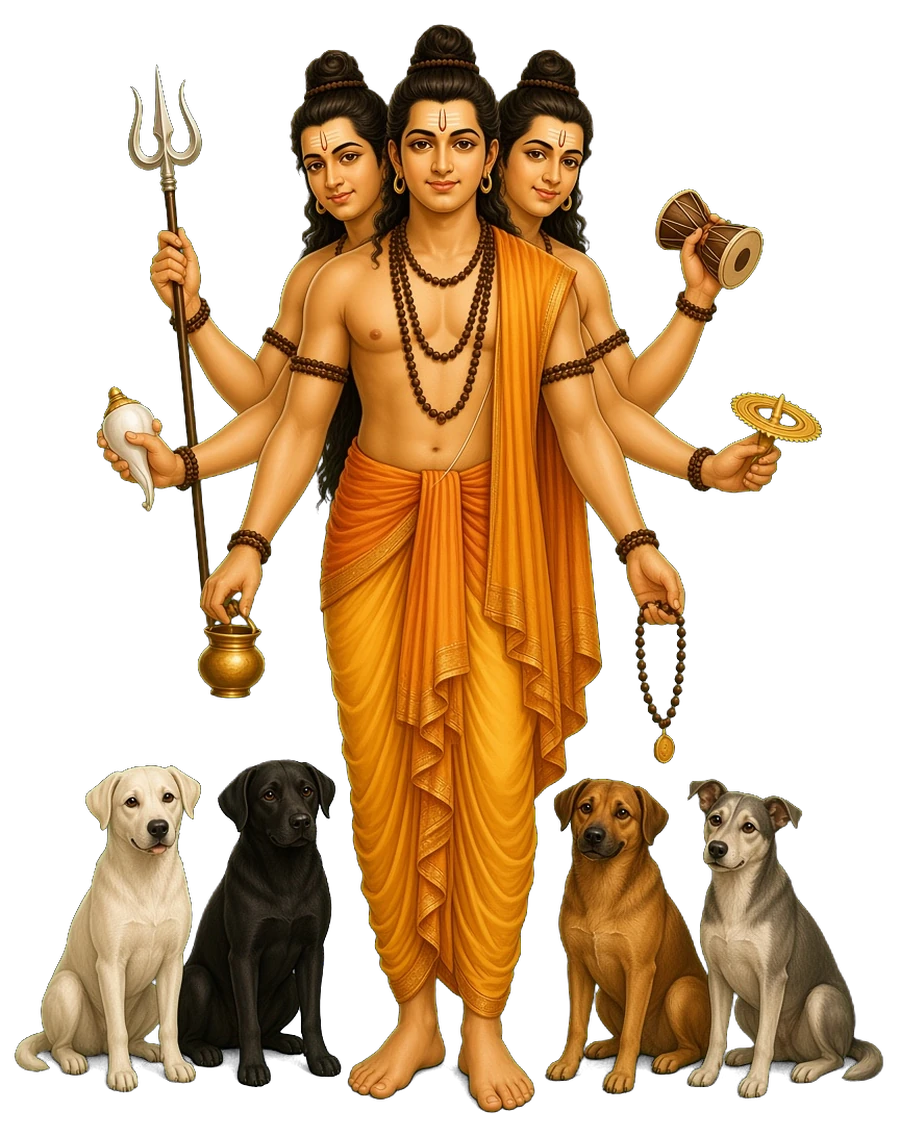
In the older Puranas Dattatreya is a sage and one of Vishnu's avatars. The Bhagavata names him in its list of incarnations, and tells that Atri prayed for a son and that the three gods came and promised three sons, each a portion of one of them: Soma from Brahma, Dattatreya from Vishnu, Durvasa from Shiva.
Read the Vedic roots of Dattatreya
The Vedas do not know Dhanvantari. The physicians of the Rigveda are the Ashvins, the twin horsemen who heal the blind and the lame, and Rudra, whom a hymn calls the best of physicians. No hymn names a god who rises from the sea with medicine.
Read the Vedic roots of Dhanvantari
The Vedas do not know Dhumavati. No hymn names her, and the scholar David Kinsley knew nothing of her outside the ten Mahavidyas, no cult of her own before she joined them; even the Mahakala Samhita, which may hold the oldest list of the group, names nine of them and leaves her out.
Read the Vedic roots of Dhumavati
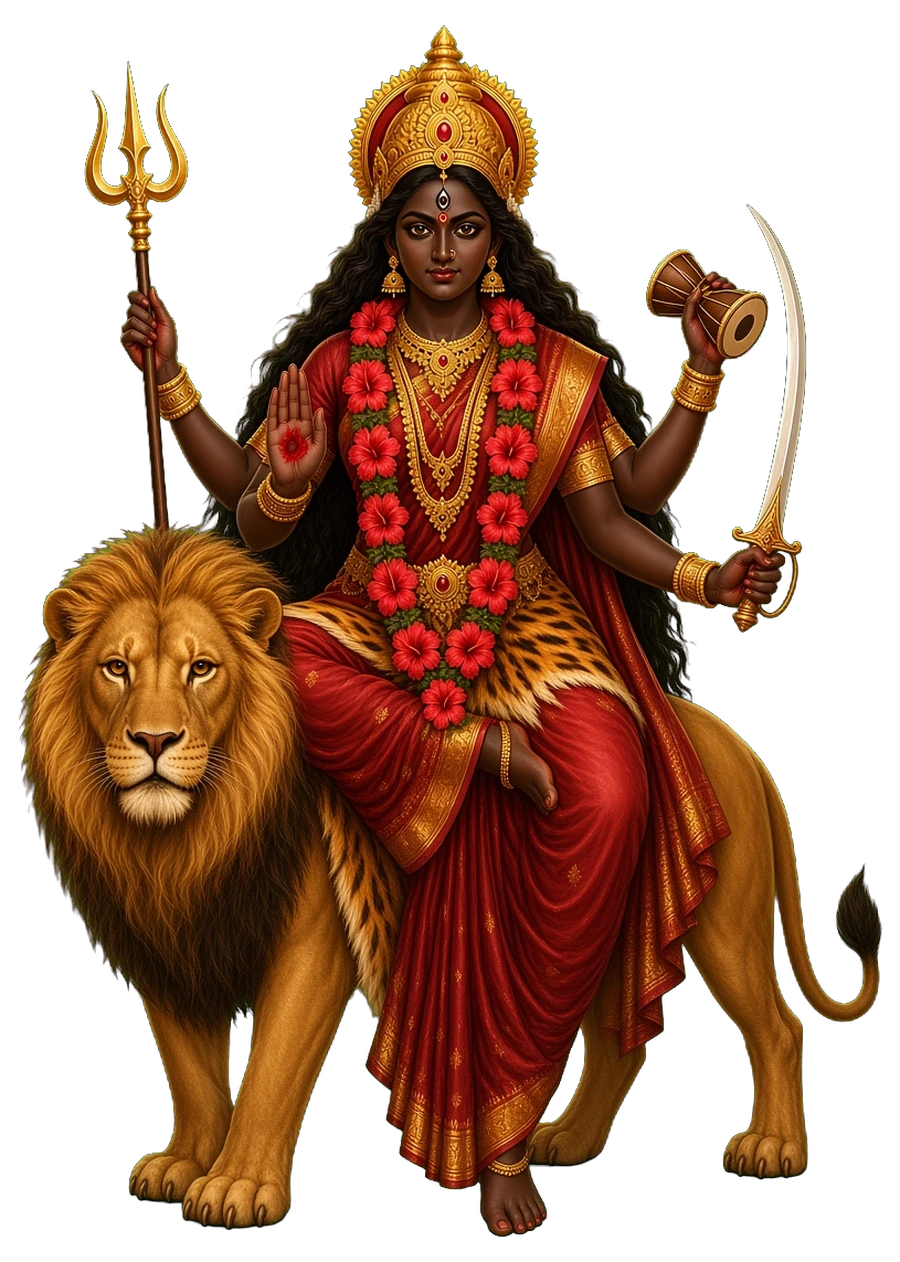
A goddess called Durga is invoked in the late Vedic texts. The Durga Suktam of the Taittiriya Aranyaka asks her, fire-coloured and blazing with ascetic heat, to carry the worshipper across difficulties like a boat across the sea, and a Gayatri verse in the same text names her with Katyayani and Kanyakumari.
Read the Vedic roots of Durga
The Vedas do not know Dwarka or its king. The god of this temple begins in the epic: the Mahabharata and its appendix, the Harivamsha, make Dvaraka the walled city by the western sea to which Krishna led the Yadavas from Mathura, and the Mahabharata's Mausala Parva tells how the sea took it after his death.
Read the Vedic roots of Dwarkadhish
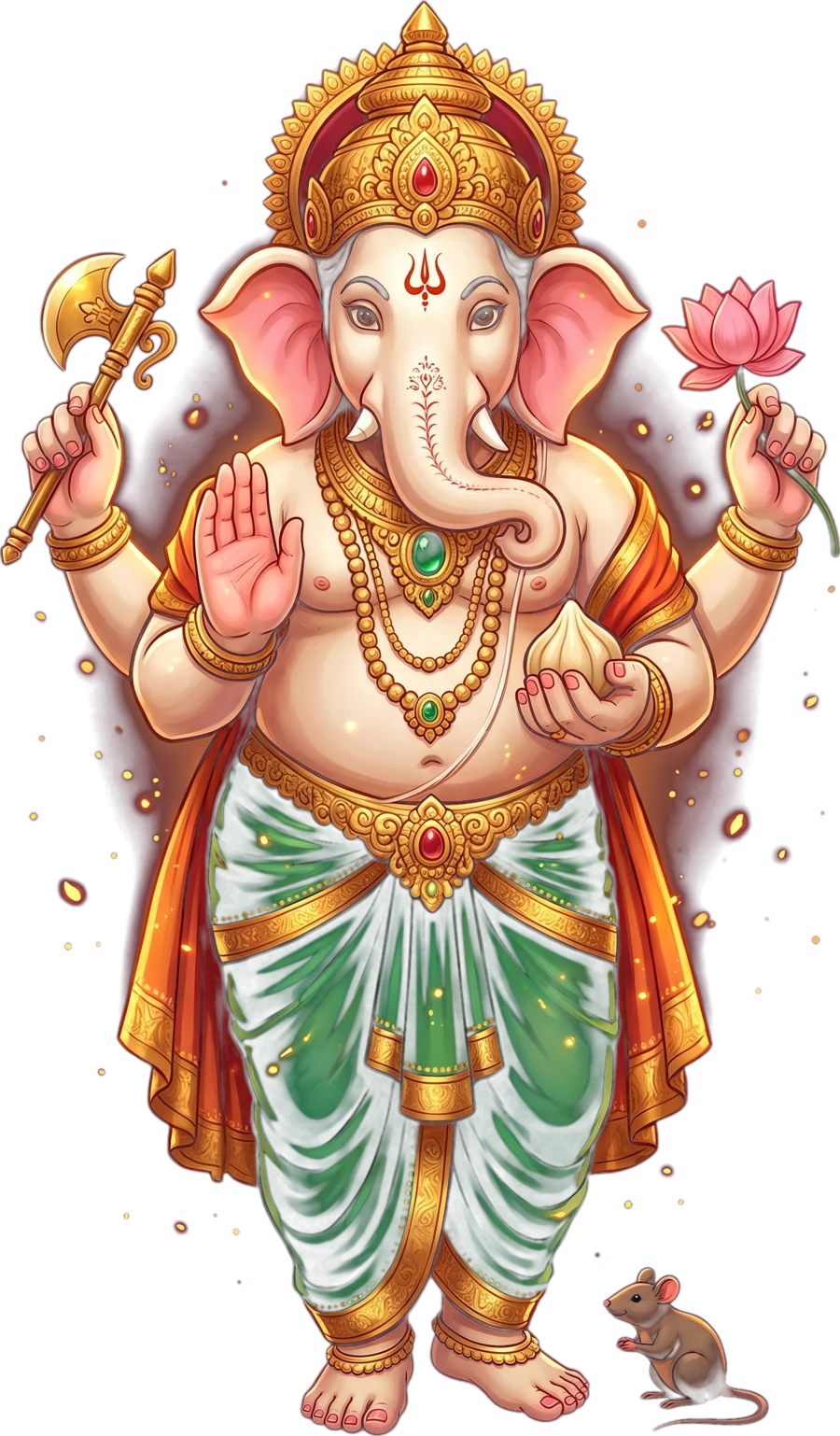
The Vedas do not know Ganesha. He has no hymn there and no story, and the elephant-headed god who is worshipped first today appears many centuries after the last Vedic book was composed.
Read the Vedic roots of Ganesha
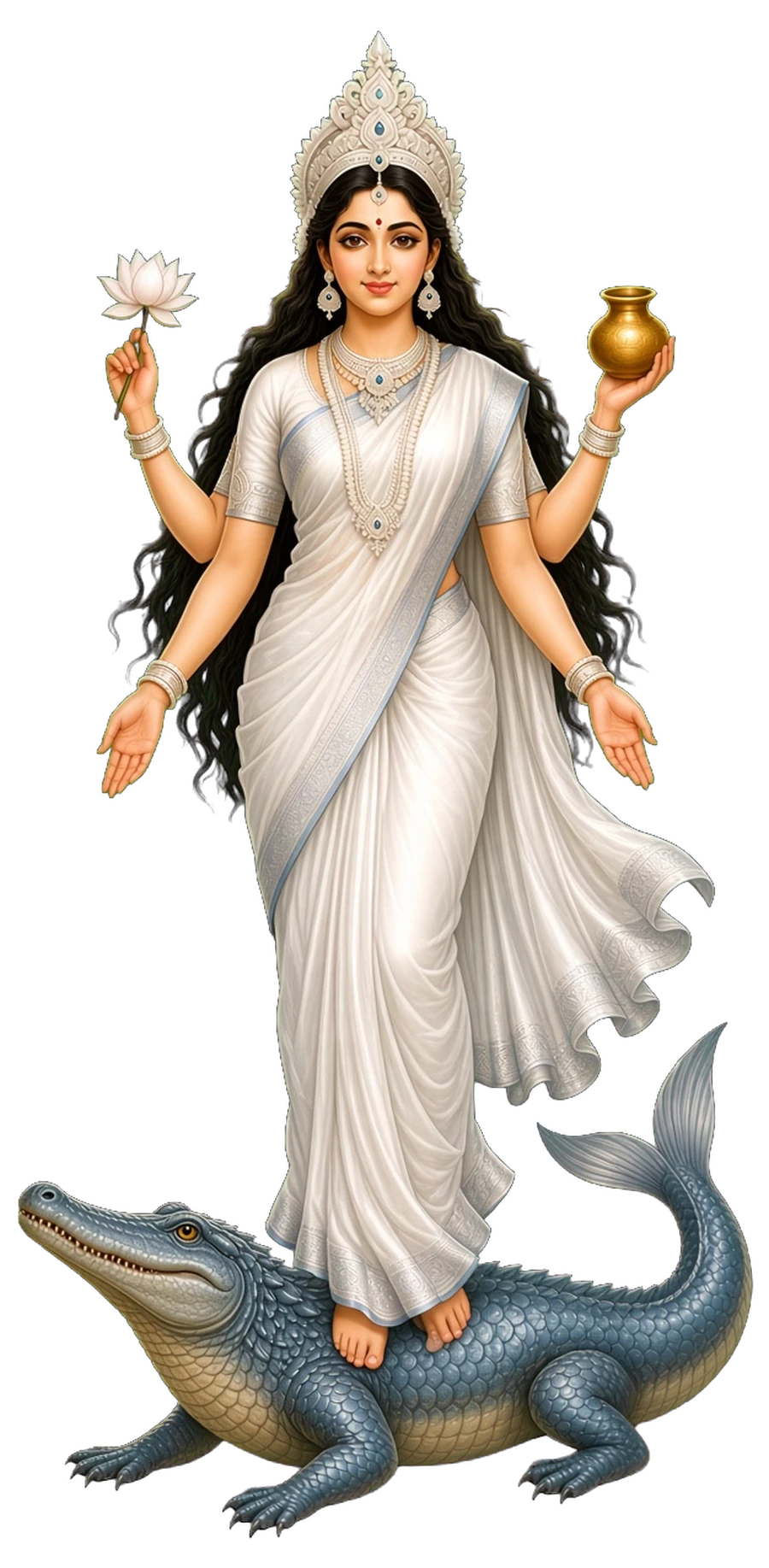
Ganga is in the Rigveda, but only by name. The river hymn of the tenth book (10.75) praises the Sindhu, the Indus, and in its fifth verse calls on the rivers one by one from east to west, and the first name it calls is Ganga.
Read the Vedic roots of Ganga
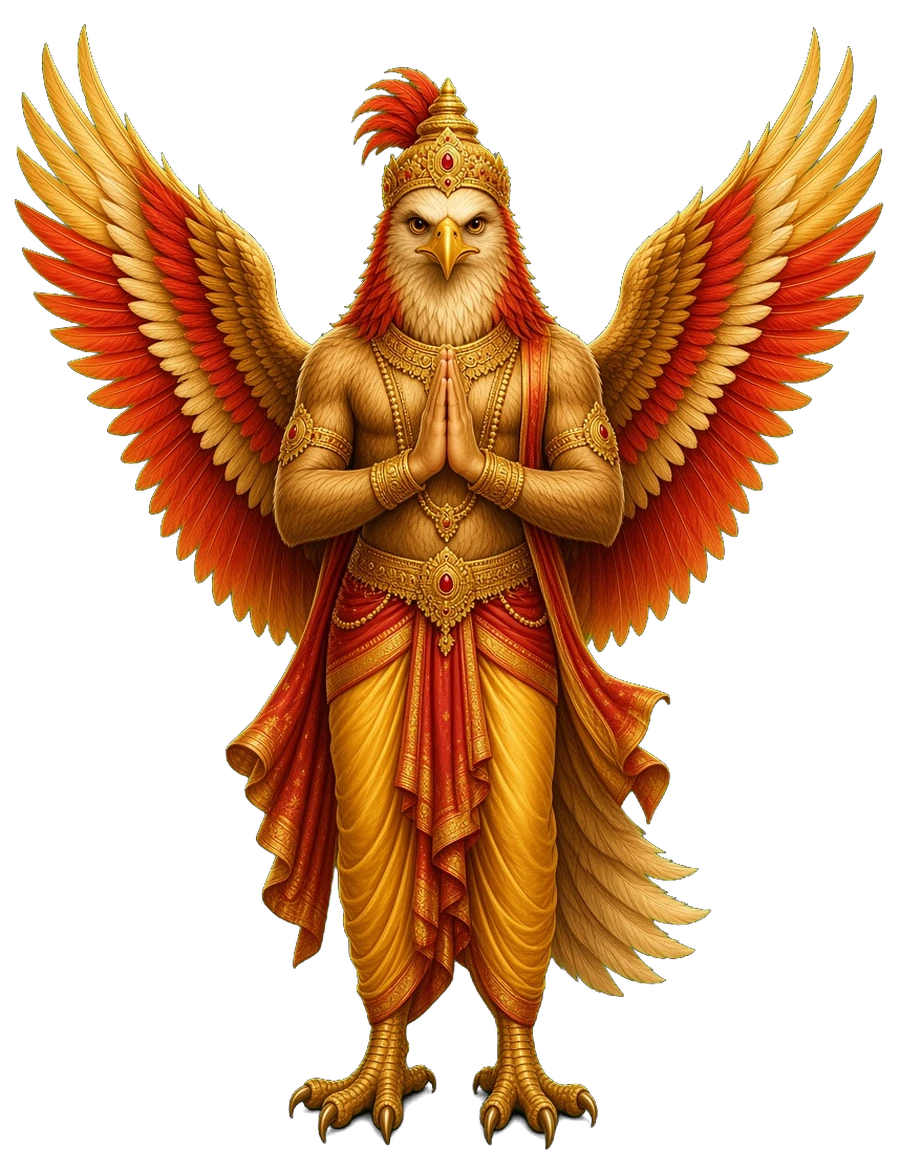
The Rigveda knows a heavenly bird, Garutman, the beautiful-winged, and one hymn says that the wise call the one truth by many names, Indra, Mitra, Varuna, Agni, and the heavenly bird Garutman. Suparna, the fair-winged, brings Soma down from heaven in other hymns. The epic Garuda grew from these birds.
Read the Vedic roots of Garuda
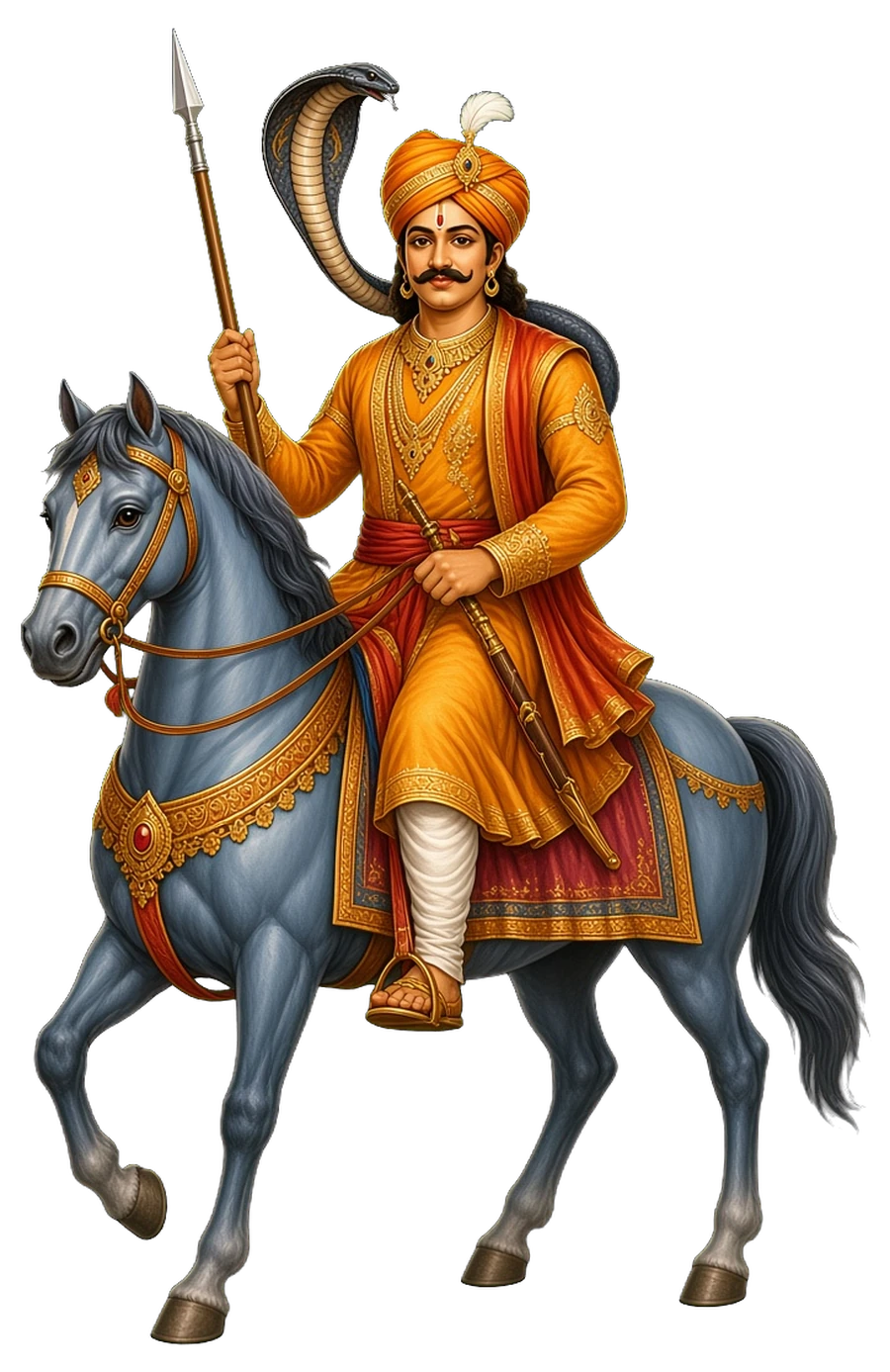
The Vedas do not know Gogaji, and no Purana names him. He belongs to the folk religion of the north-western plains, and everything known of him comes from ballads, plays, shrine traditions and the notes of nineteenth-century collectors.
Read the Vedic roots of Gogaji
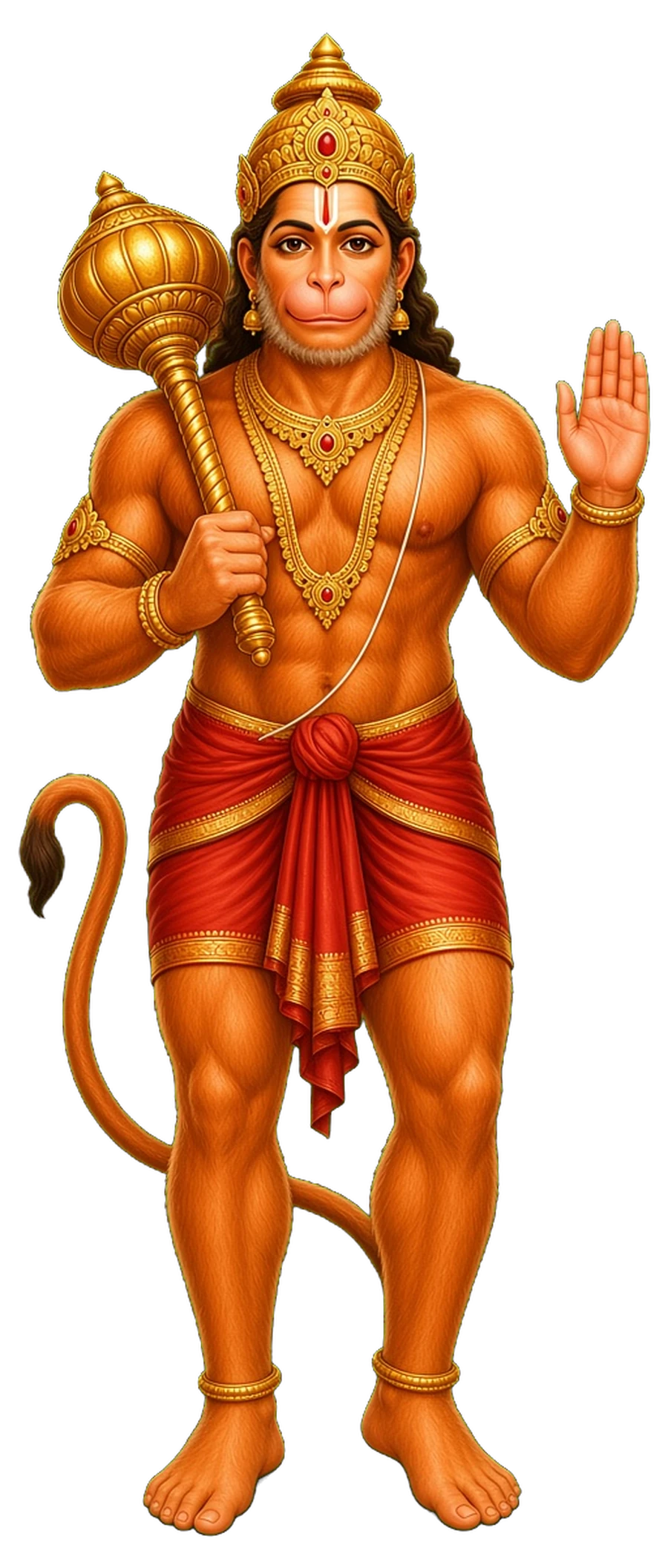
Hanuman first appears in the Ramayana of Valmiki, where he is the minister of the monkey king Sugriva, a learned speaker, and the hero of the whole fifth book, the Sundara Kanda. He is strong and fast and brave, but in Valmiki he is not yet a god; he is the best of Rama's servants.
Read the Vedic roots of Hanuman
The Vedas do not know Hinglaj. She belongs to the later world of the Shakti Peethas, the seats of the goddess that grew from the story of Sati's body, and her name first appears in the tantric lists of those seats.
Read the Vedic roots of Hinglaj Mata
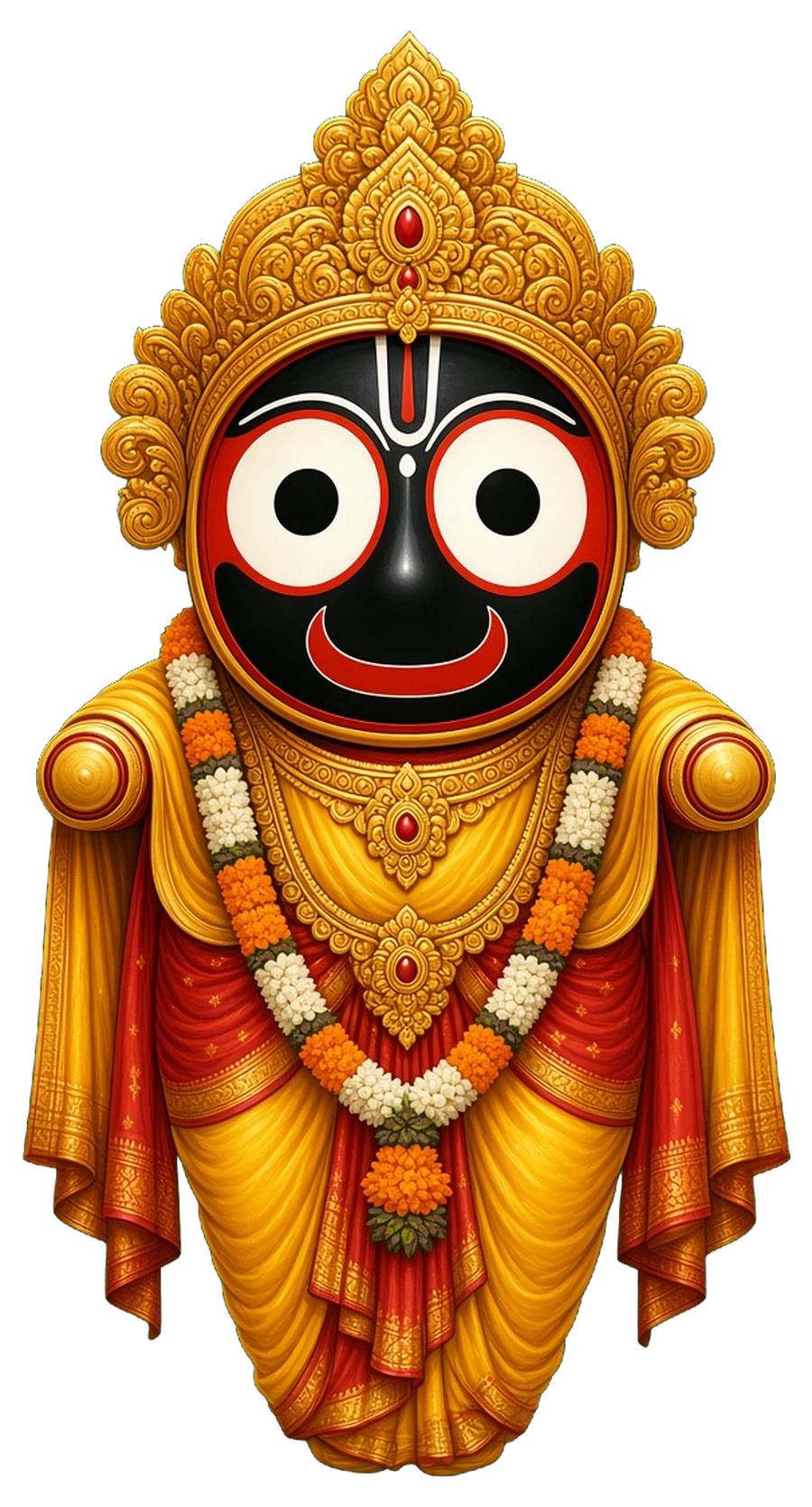
The temple of Puri was begun by the Eastern Ganga king Anantavarman Chodaganga, whose inscriptions of around 1134 to 1135 mention it, and completed by Anangabhima Deva.
Read the Vedic roots of Jagannath
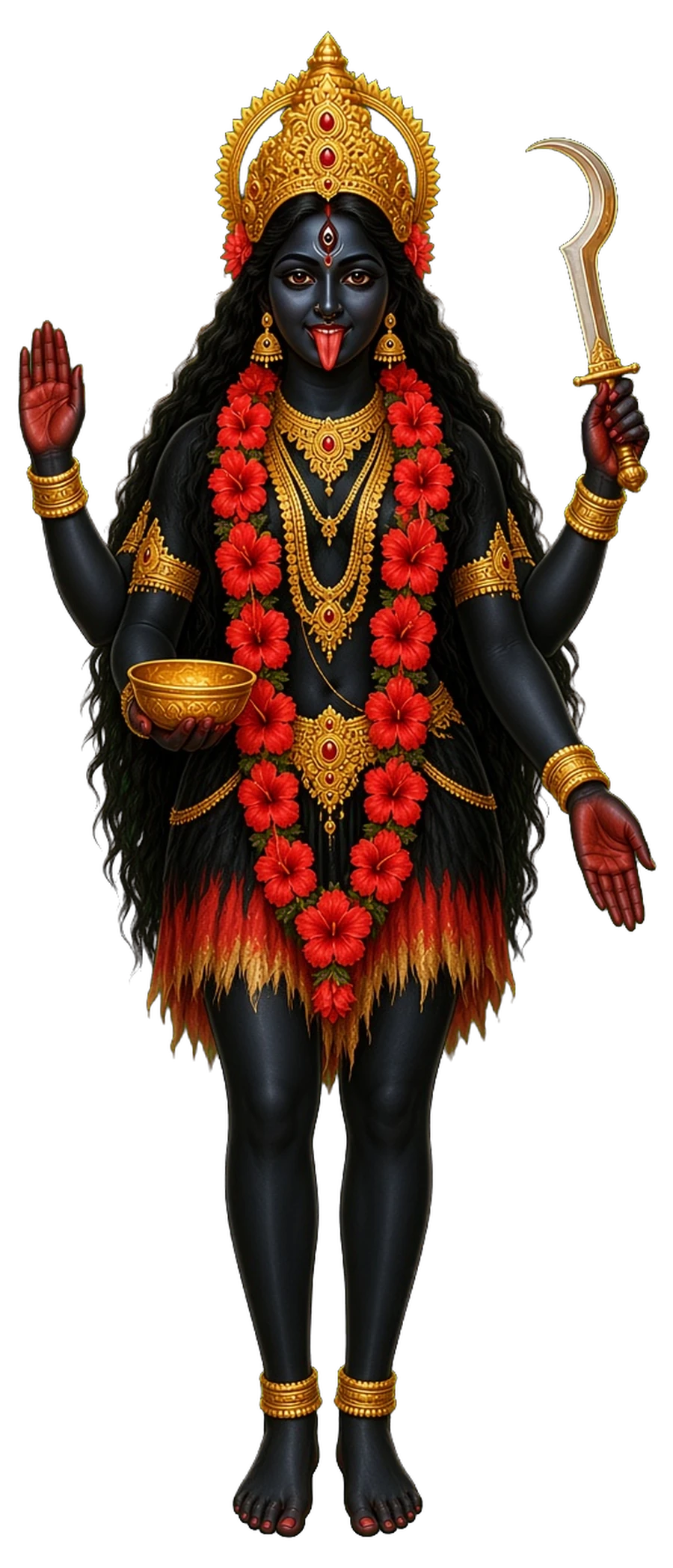
The name Kali appears early, but not as a goddess. The Mundaka Upanishad names Kali and Karali, the black one and the terrible one, among the seven flickering tongues of the sacrificial fire. The Vedic hymn to Ratri, the night, already pictures a dark goddess, but a gentle one.
Read the Vedic roots of Kali
The idea of a last avatar is older than the name. The Mahabharata's Vana Parva has the sage Markandeya describe the end of the age and a brahmin named Kalki Vishnuyasha, born at Shambhala, who will set the world right.
Read the Vedic roots of Kalki
The Vedas know Kama, but not as a god of love. In the Rigveda's hymn of creation (10.129), kama is desire itself, the first thing that stirred in the dark before there were any gods, the first seed of mind. The Atharvaveda makes that desire a god.
Read the Vedic roots of Kamadeva
The Vedas do not know Kamakhya. No hymn names her, and the Kamarupa country that she gives her name to is not in the Vedic world at all. She belongs to the Puranas and the Tantras of the east, and to an older goddess of the Assam hills, whose worship the Sanskrit texts took in and gave a story.
Read the Vedic roots of Kamakhya
The Vedas do not know Kamakshi. No hymn names her or her city, and her name, the goddess of the loving eyes, belongs to a far later language of devotion.
Read the Vedic roots of Kamakshi
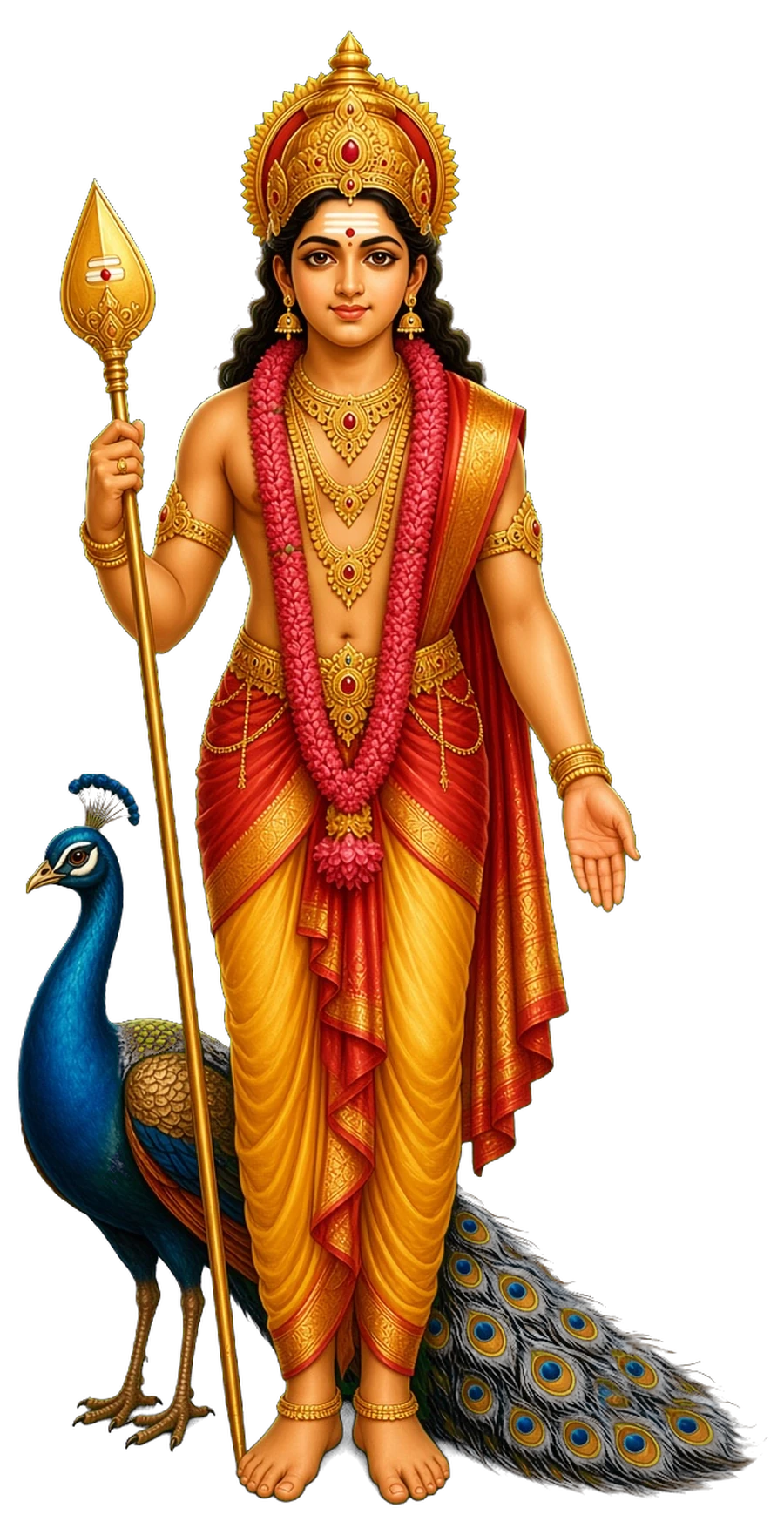
The Tamil Murugan and the Sanskrit Skanda were once two gods, and have long been one. Murugan, whose name means the young one, or the beautiful one, is the god of the kurinji, the hill country, in the oldest Tamil poetry, the Sangam anthologies.
Read the Vedic roots of Kartikeya
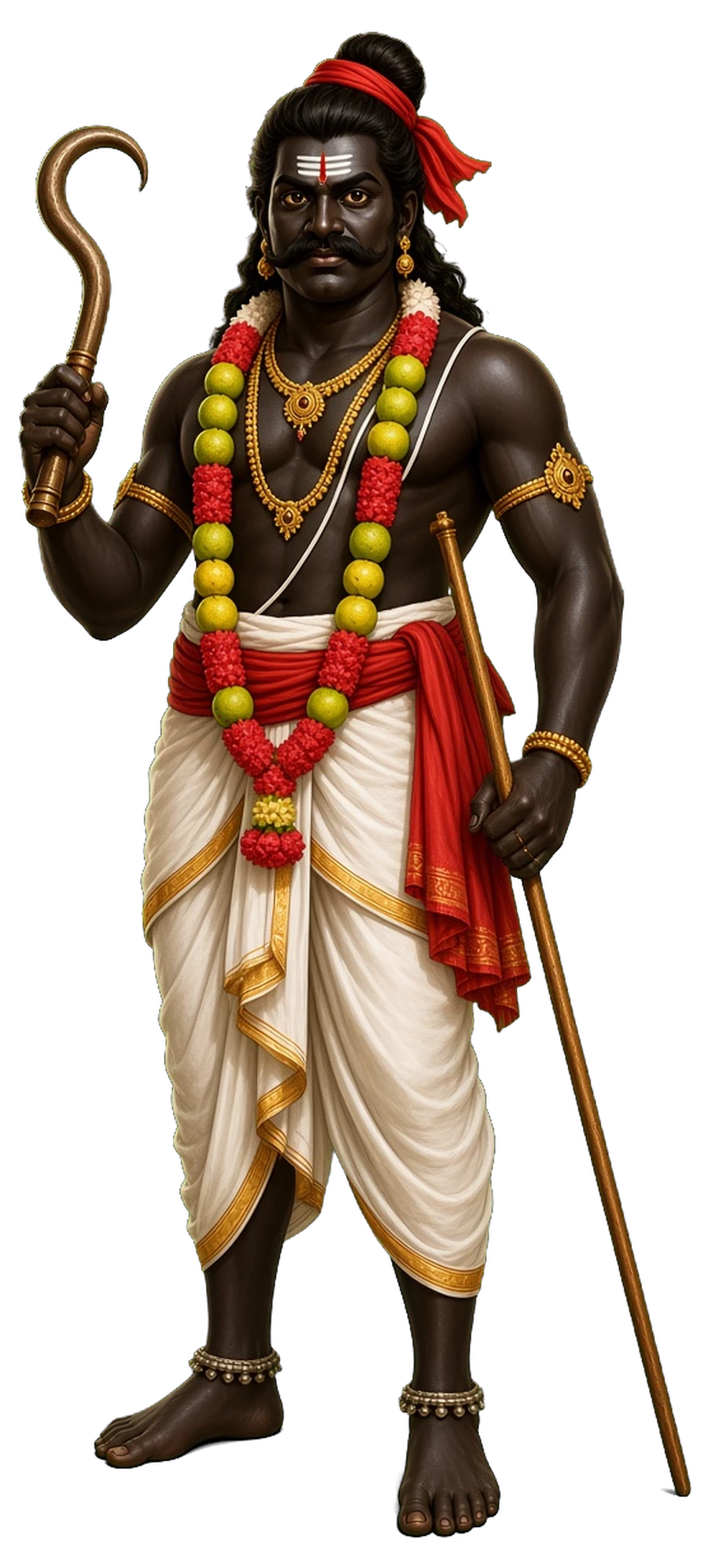
The Vedas do not know Karuppasamy. No hymn names a black guardian of the village and no Purana tells his birth. He belongs to the folk religion of the Tamil country, and his stories live in shrine traditions, in the songs of his priests and in the words he speaks through his oracles, not in Sanskrit books.
Read the Vedic roots of Karuppasamy
The Vedas know the word ketu but not the god. In the Rigveda a ketu is a banner, a ray of light, a sign by which something is known; one hymn (1.6.3) praises Indra, rising with the dawns, for giving a ketu to what had none. The Atharvaveda comes closest to the later figure.
Read the Vedic roots of Ketu
Khatu Shyam has no Vedic past, and the Mahabharata of Vyasa does not know him. The epic gives Ghatotkacha two sons, Anjanaparvan, who is killed by Ashvatthama, and Meghavarna, who lives on, but no Barbarika.
Read the Vedic roots of Khatu Shyam
The Krishna of the Puranas gathers several older figures into one, and each of them can still be seen in the texts if one reads them in order.
Read the Vedic roots of Krishna
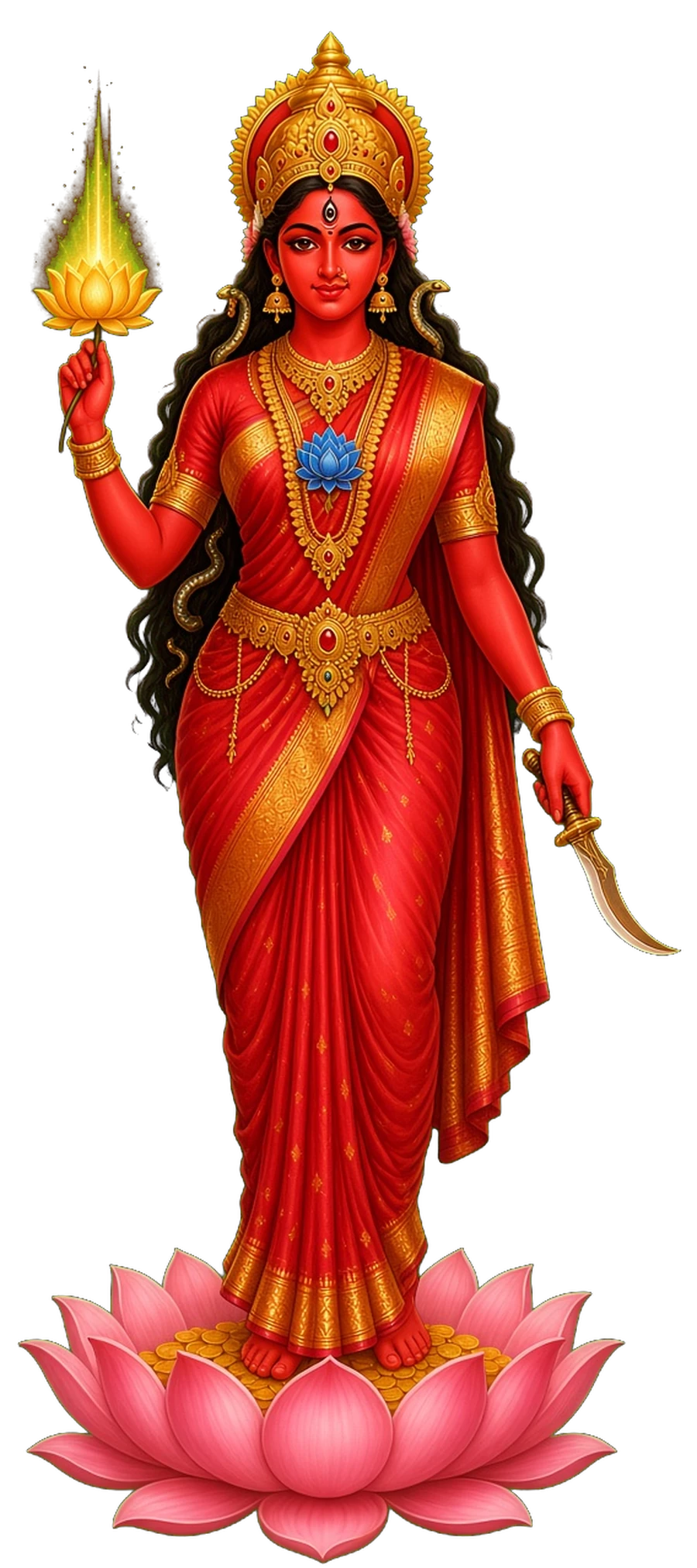
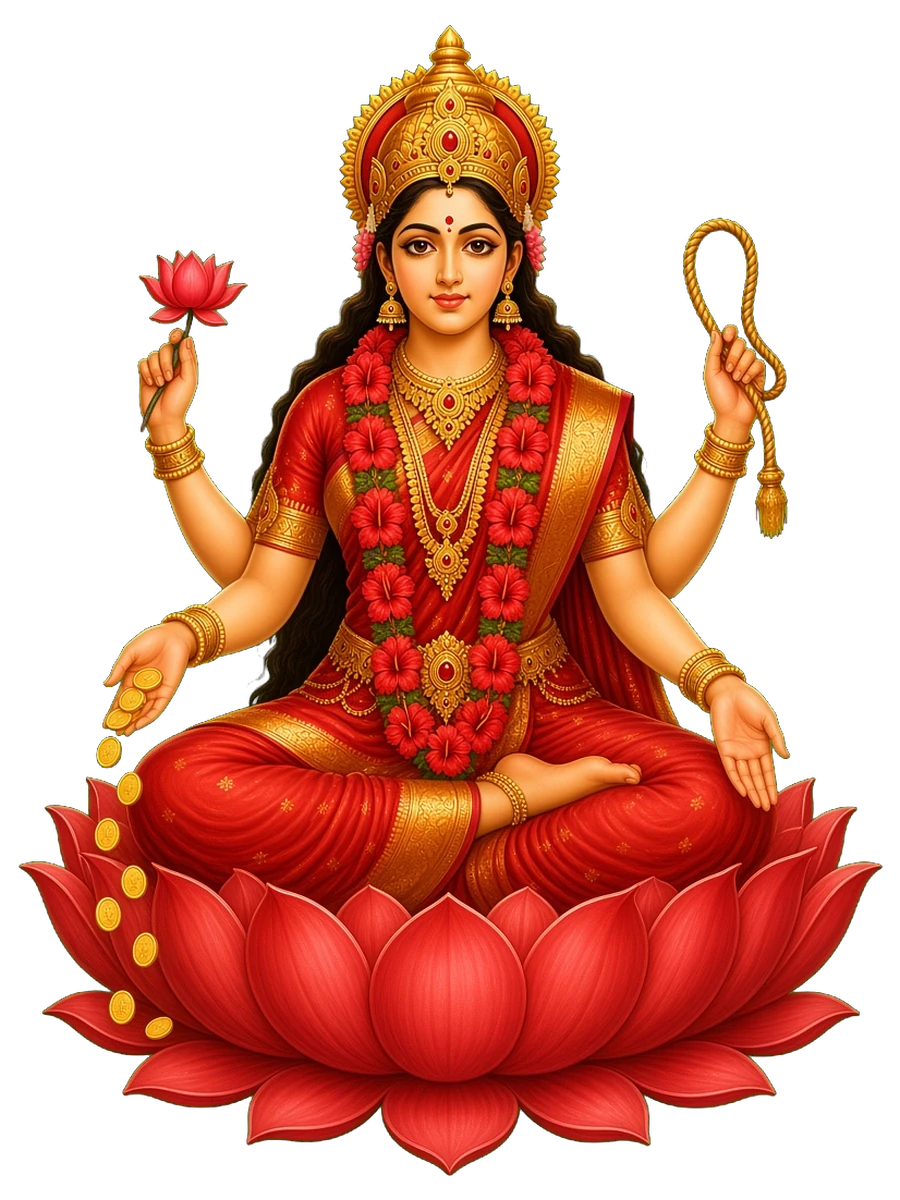
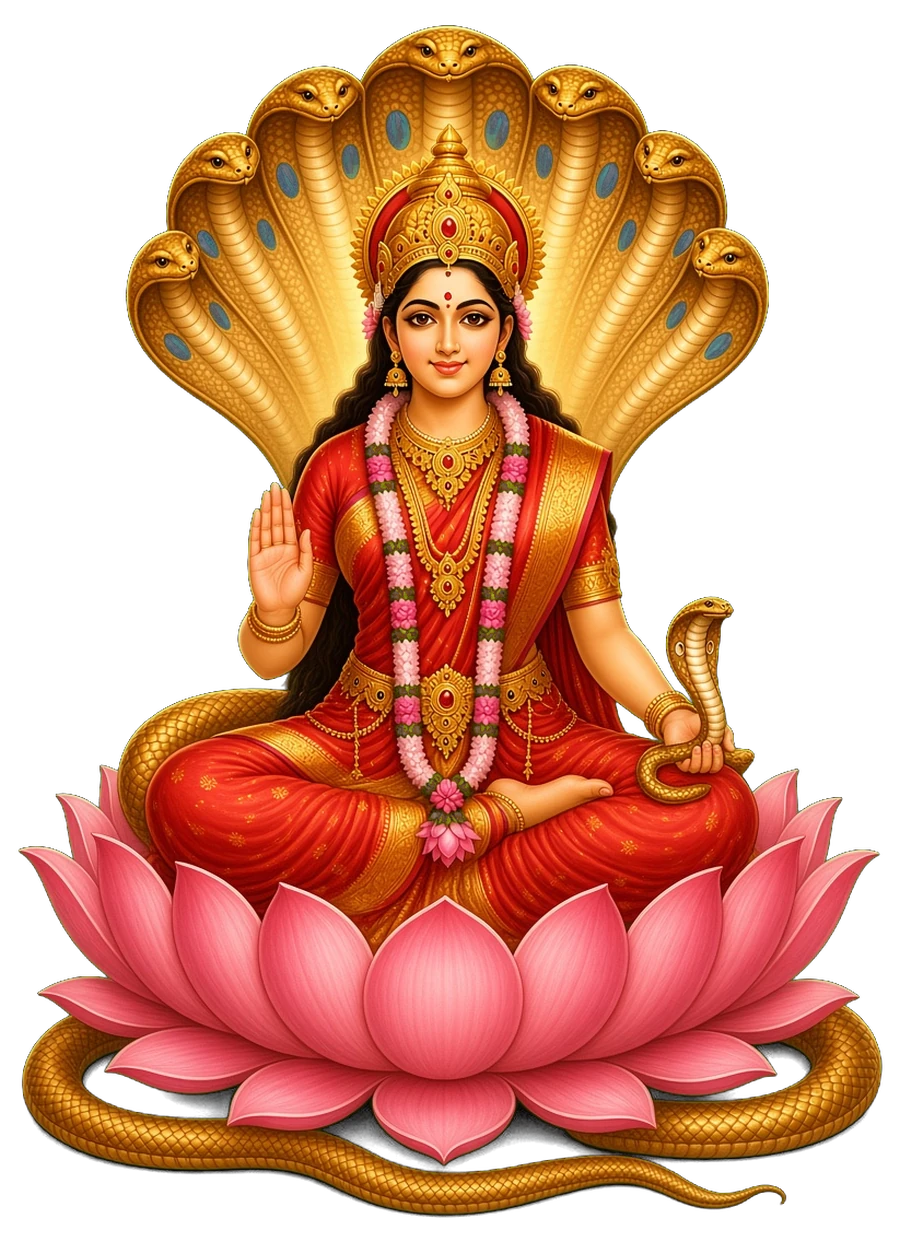
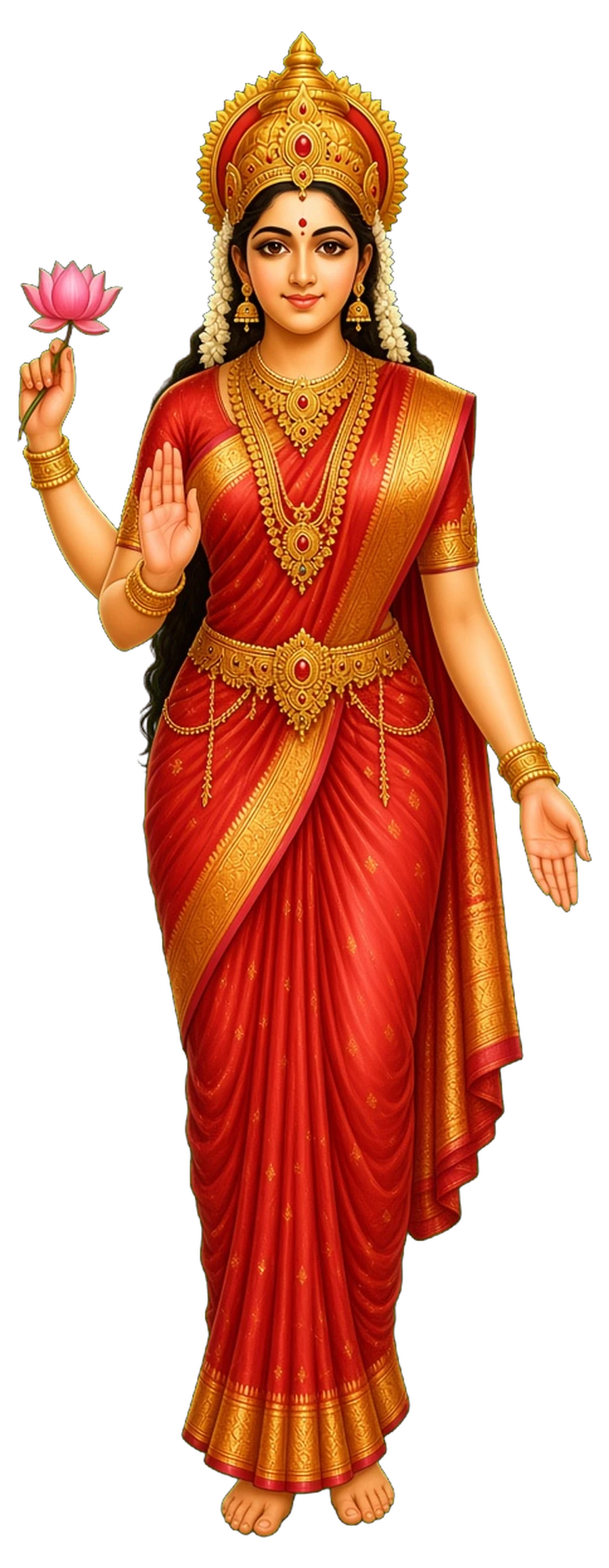
In the Rigveda, shri is not yet a goddess. It is a word, used more than a hundred times, for the shine on anything that is going well: a full house, a strong king, a face people turn towards.
Read the Vedic roots of Lakshmi
The Vedas do not know Lalita. There is no hymn to her and no goddess of that name. The Shri Vidya teachers find her there all the same: the eighteenth-century scholar Bhaskararaya reads a verse of the Rigveda (5.47.4) as hiding her sixteen-syllable mantra. That is their reading.
Read the Vedic roots of Lalita Tripura Sundari
The Vedas do not know Mahakala. They know Kala, Time, and they know Rudra, and Mahakala is what the later tradition made by joining the two.
Read the Vedic roots of Mahakala
The Vedas do not know Manasa. They know serpents, the dragon Ahi whom Indra kills, and charms against snakebite in the Atharvaveda, and the household sutras lay down an offering to the serpents, the sarpabali, mostly on the full moon of Shravana. But no Vedic hymn names a goddess of the snakes.
Read the Vedic roots of Manasa
Matangi is not in the Vedas. No hymn names her, and the ten Mahavidyas appear as a group only after the tenth century, as David Kinsley shows.
Read the Vedic roots of Matangi
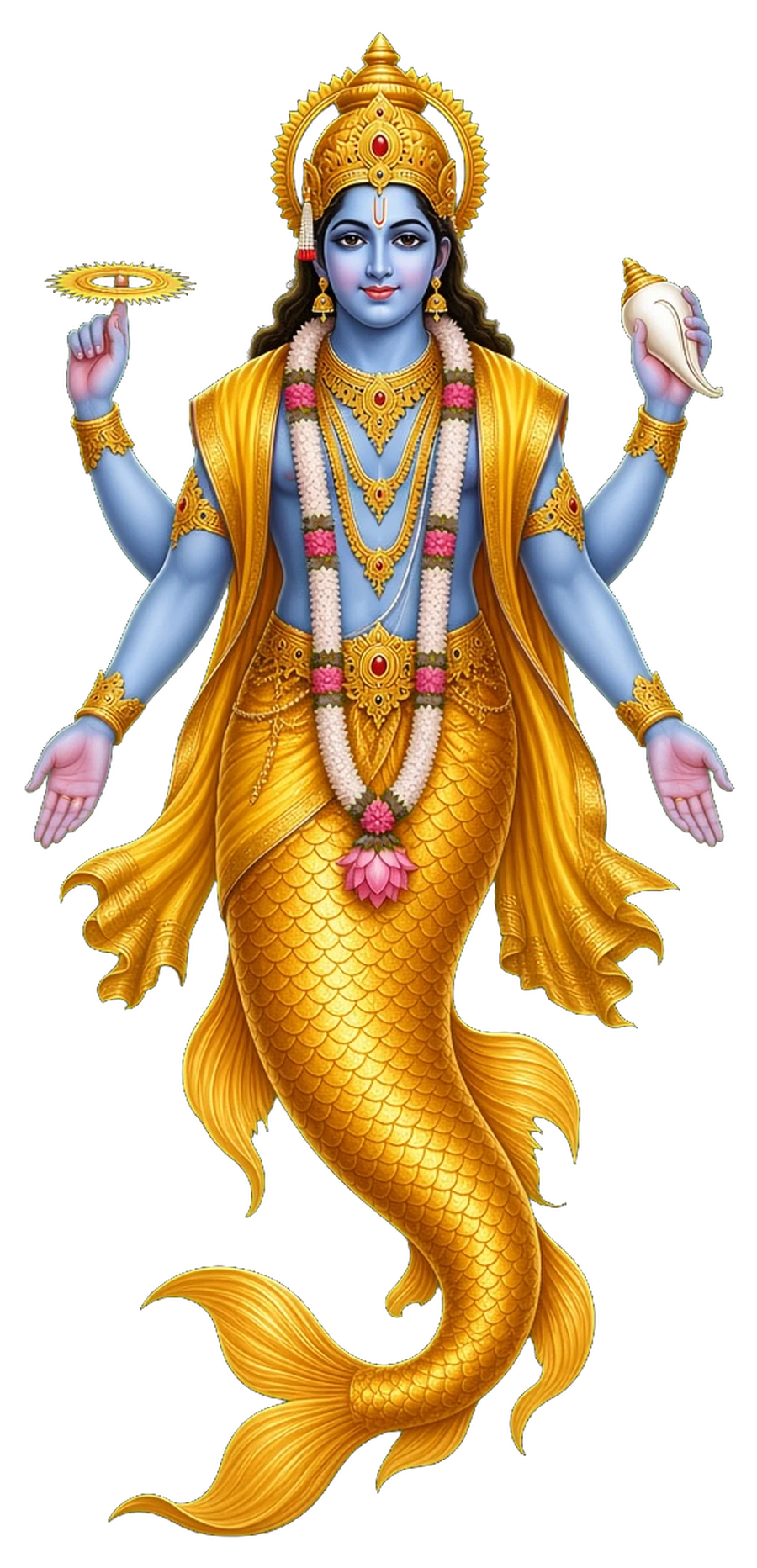
The Vedas know the fish, but not as Vishnu. The Shatapatha Brahmana (1.8.1), a prose book of the Yajurveda, tells how a small fish came into Manu's hands as he washed, asked to be kept safe from the bigger fish, warned him of a flood and towed his ship by its horn to the northern mountain.
Read the Vedic roots of Matsya
The Vedas do not know Mohini. They know Vishnu, the god of the three strides, and they know the gods' long contest with the asuras over the sacrifice and its drink, but no hymn has Vishnu take a woman's form.
Read the Vedic roots of Mohini
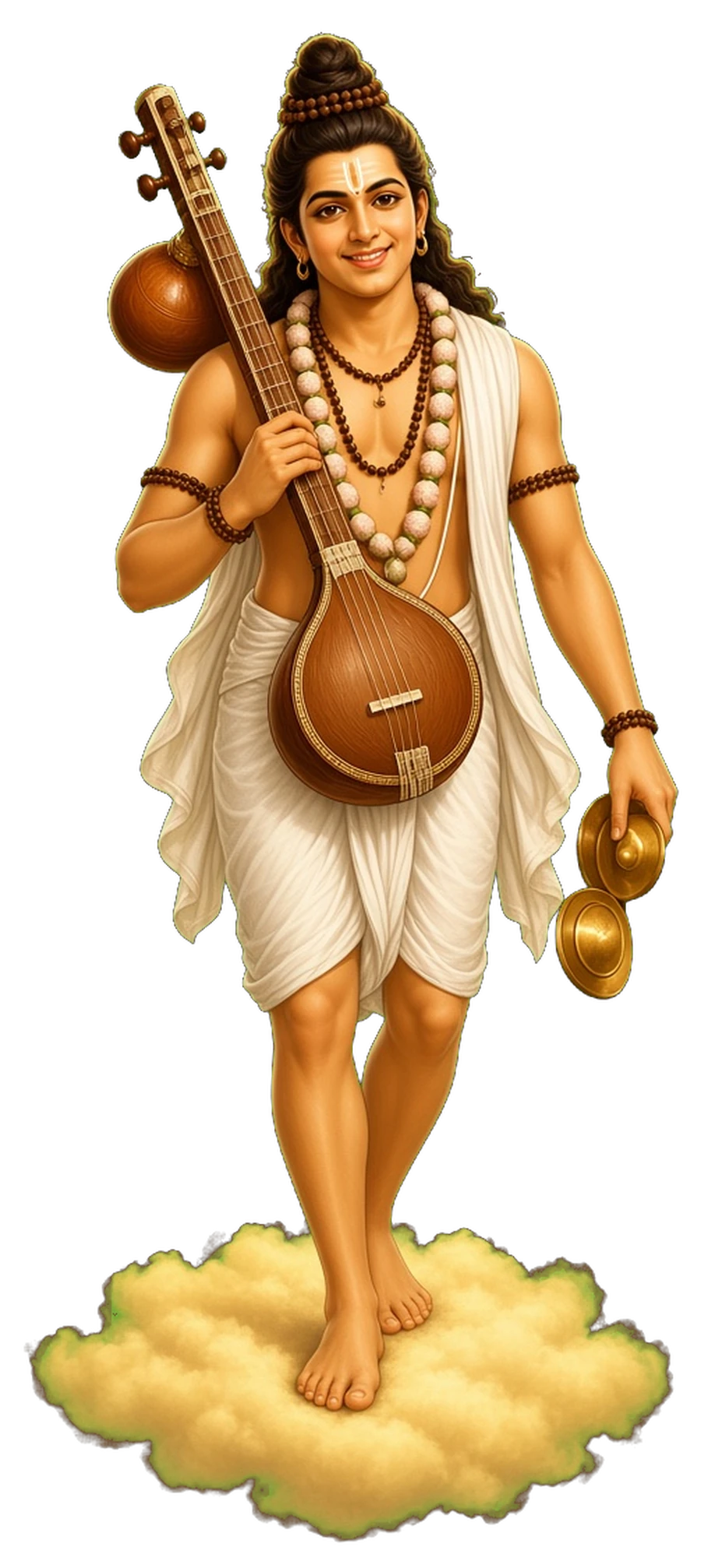
Narada stands right at the edge of the Vedas. No hymn tells his story, but the tradition's lists of Vedic seers name him, with Parvata, as one of the poets of the Soma hymns of the Rigveda's ninth book.
Read the Vedic roots of Narada
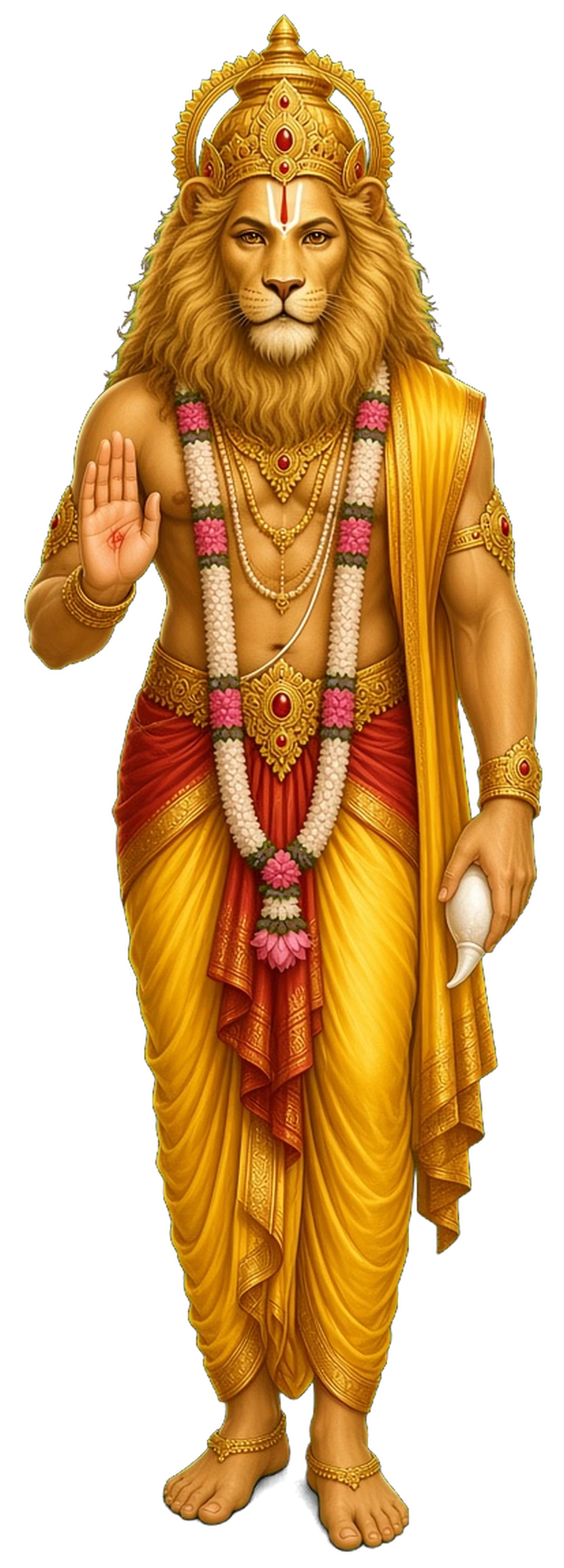
Narasimha is among the oldest of the avatars in stone. A relief from Kondamotu in Guntur district, of the fourth century, shows him with the Vrishni heroes, and the Gupta period has many images.
Read the Vedic roots of Narasimha
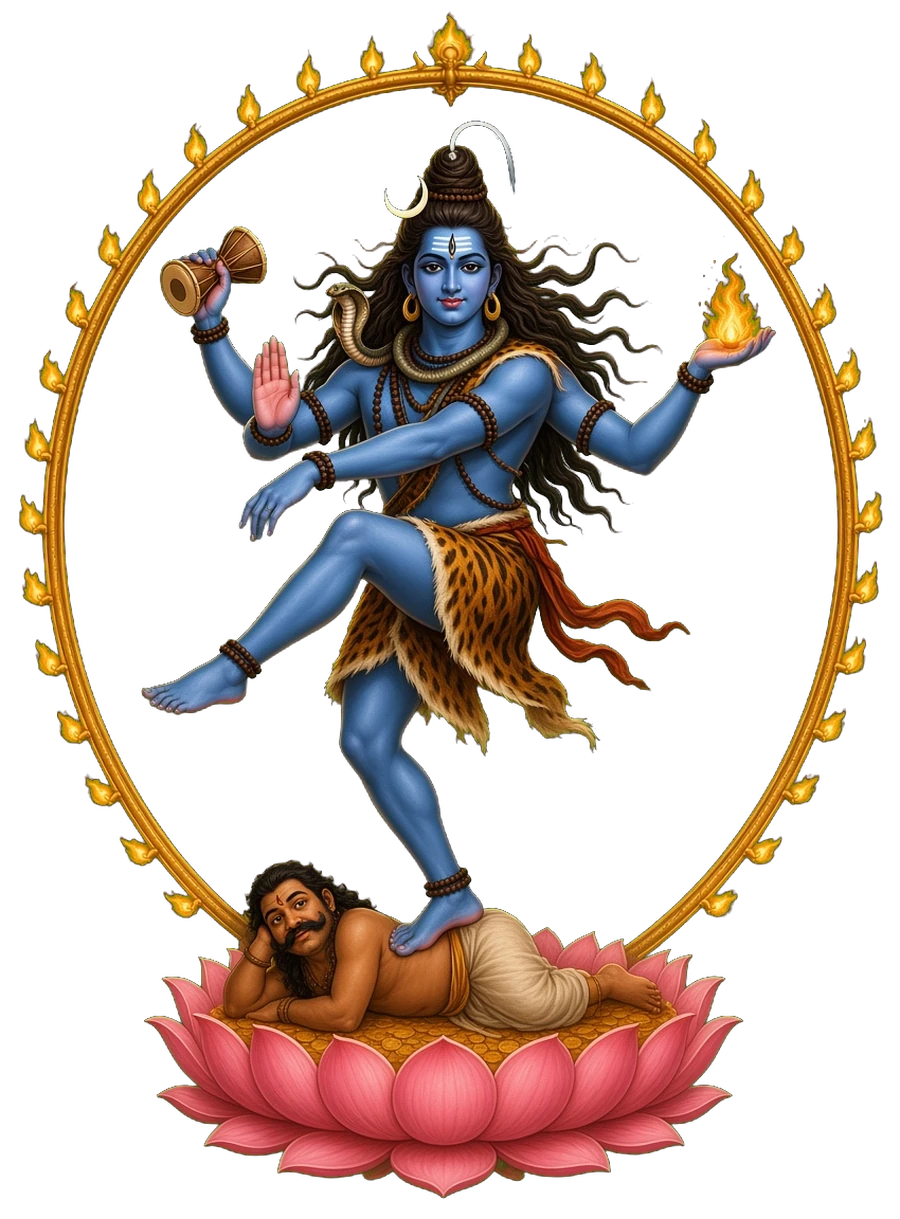
The Vedas do not know Shiva as a dancer. Rudra, the Vedic god from whom Shiva grew, is an archer, a healer and the father of the storm gods in the hymns of the Rigveda, and none of those hymns shows him dancing.
Read the Vedic roots of Nataraja
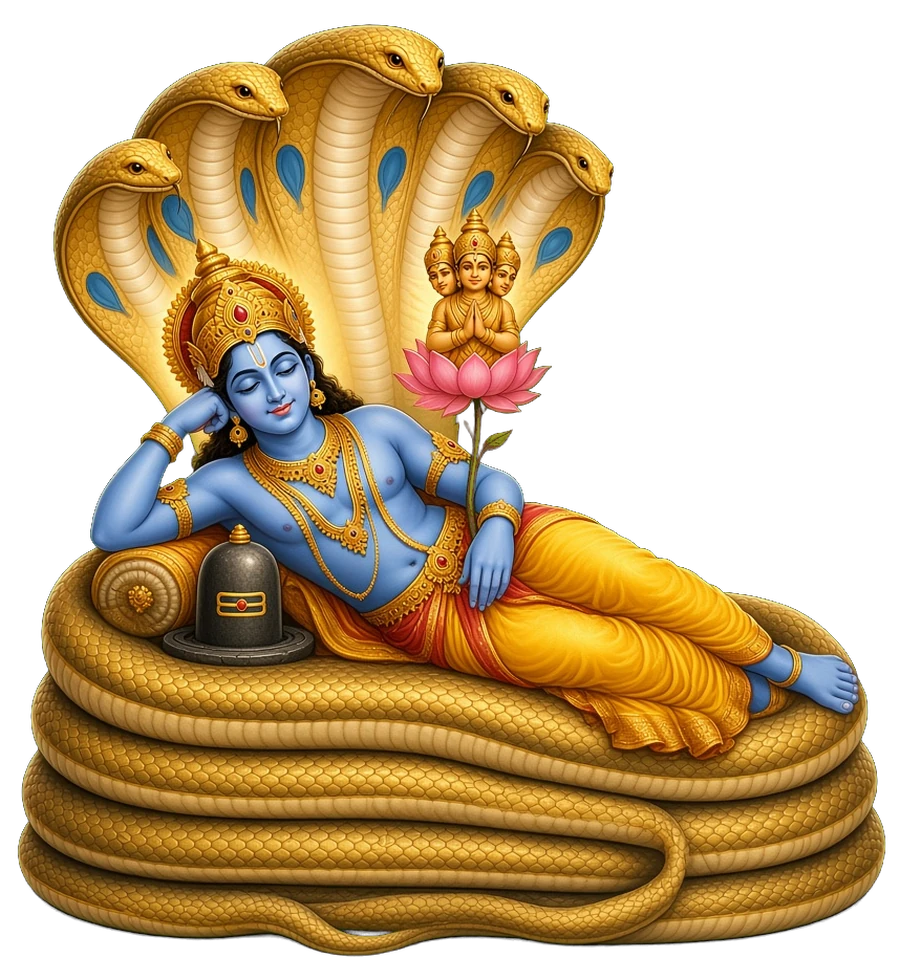
The temple is ancient, though how ancient no one can say. The Tamil Vaishnava poet-saint Nammalvar, of around the ninth century, sang of the lord of Anantapuram, and the temple is one of the hundred and eight Divya Desams, the holy places of Vishnu praised by the Alvars.
Read the Vedic roots of Padmanabhaswamy
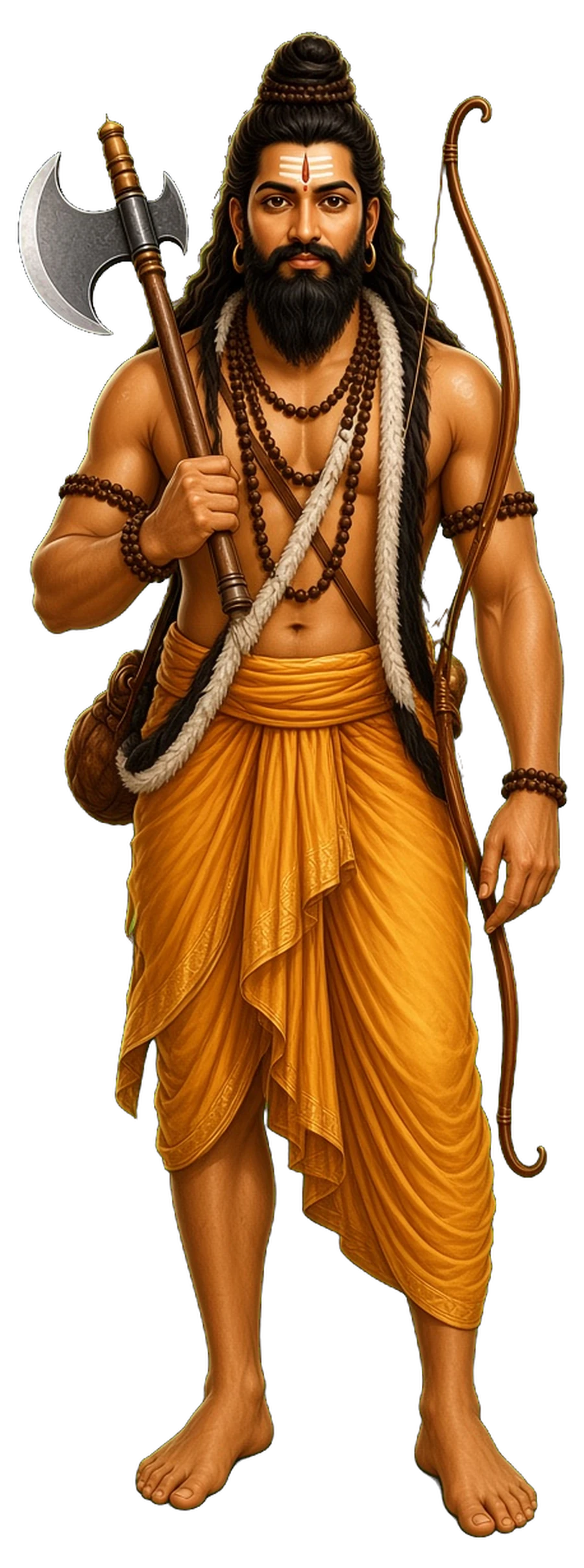
Parashurama is a brahmin hero of the family of Bhrigu, the Bhargavas, and his stories are full of their concerns. The Mahabharata tells them several times, in the Vana Parva, the Shanti Parva and elsewhere, and the scholar V. S.
Read the Vedic roots of Parashurama
The Vedas do not know Parvati. There is no hymn to her, no daughter of the mountain, no wife of Rudra by that name. What the Vedic texts hold is three smaller things that the later tradition gathered into her: a sister, a woman who knows, and a power.
Read the Vedic roots of Parvati
Radha's first certain appearance is in poetry, not scripture. A verse of the Gatha Saptashati, an anthology of Prakrit love poems compiled in the early centuries of the common era, speaks of Krishna blowing dust from Radha's eye, and the other girls noticing.
Read the Vedic roots of Radha
The Vedas know the eclipse demon but not yet by Rahu's name. In Rigveda 5.40 the darkener of the Sun is Svarbhanu, an Asura who pierces the Sun with darkness until Indra breaks his magic and the priest Atri finds the Sun again with a prayer.
Read the Vedic roots of Rahu
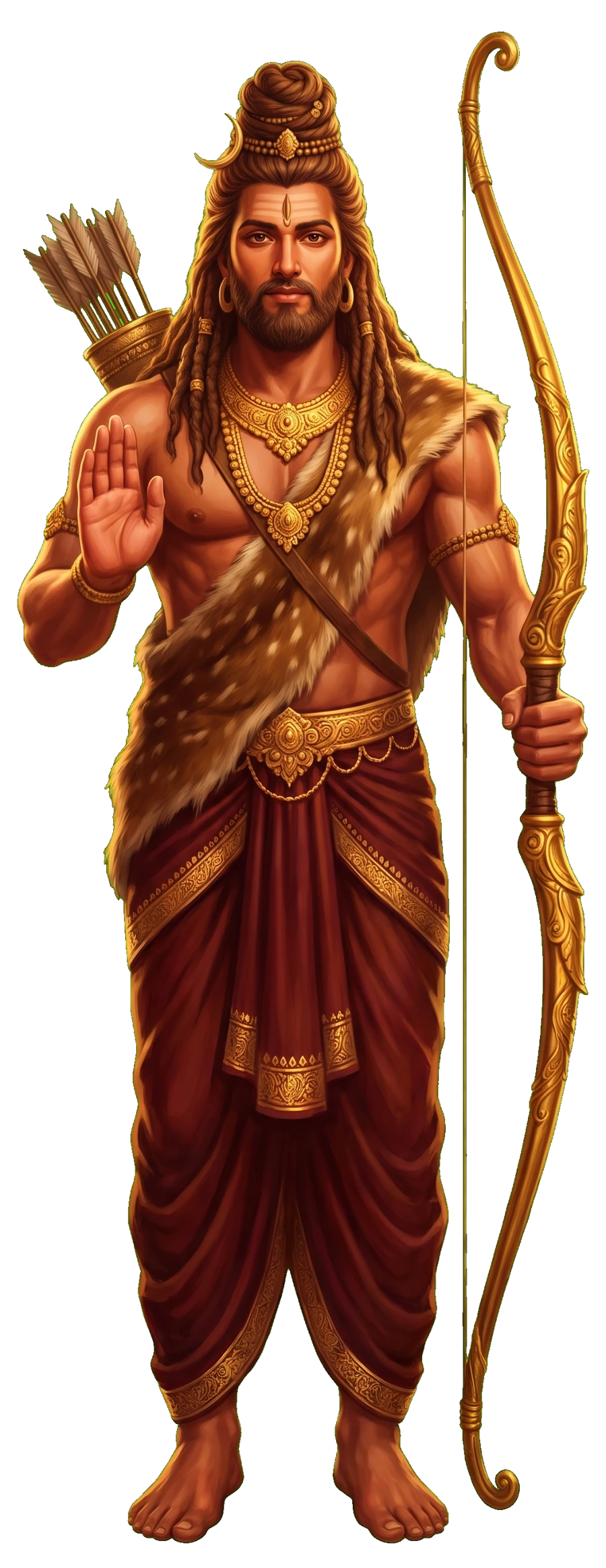
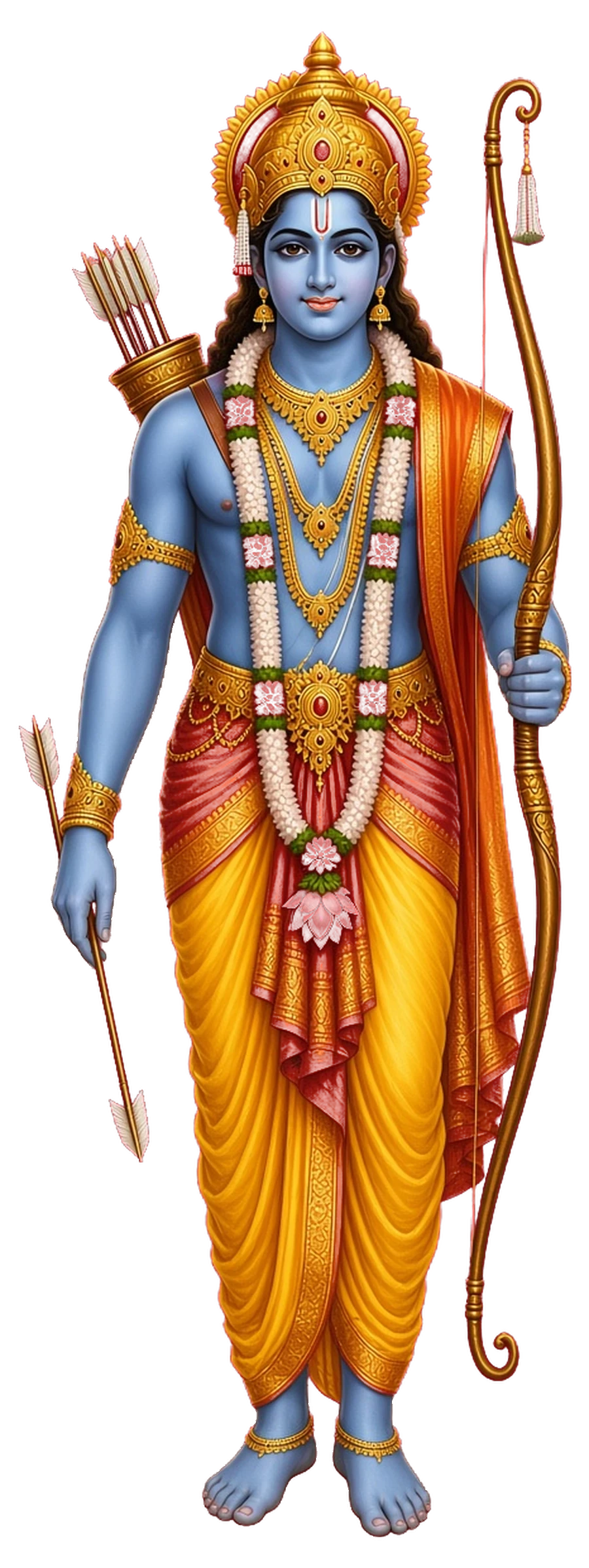
The Rama story is told first, and at most length, in the Ramayana of Valmiki, a Sanskrit epic in seven books. Scholars read it in layers. The five central books, from Ayodhya to the war, are thought to be the oldest, and their Rama is above all a hero and a model king.
Read the Vedic roots of Rama
The Vedas do not know Ramdev Pir. He belongs to the folk religion of the Thar desert in the late Middle Ages, and nothing written about him is older than the songs and stories of his followers.
Read the Vedic roots of Ramdev Pir
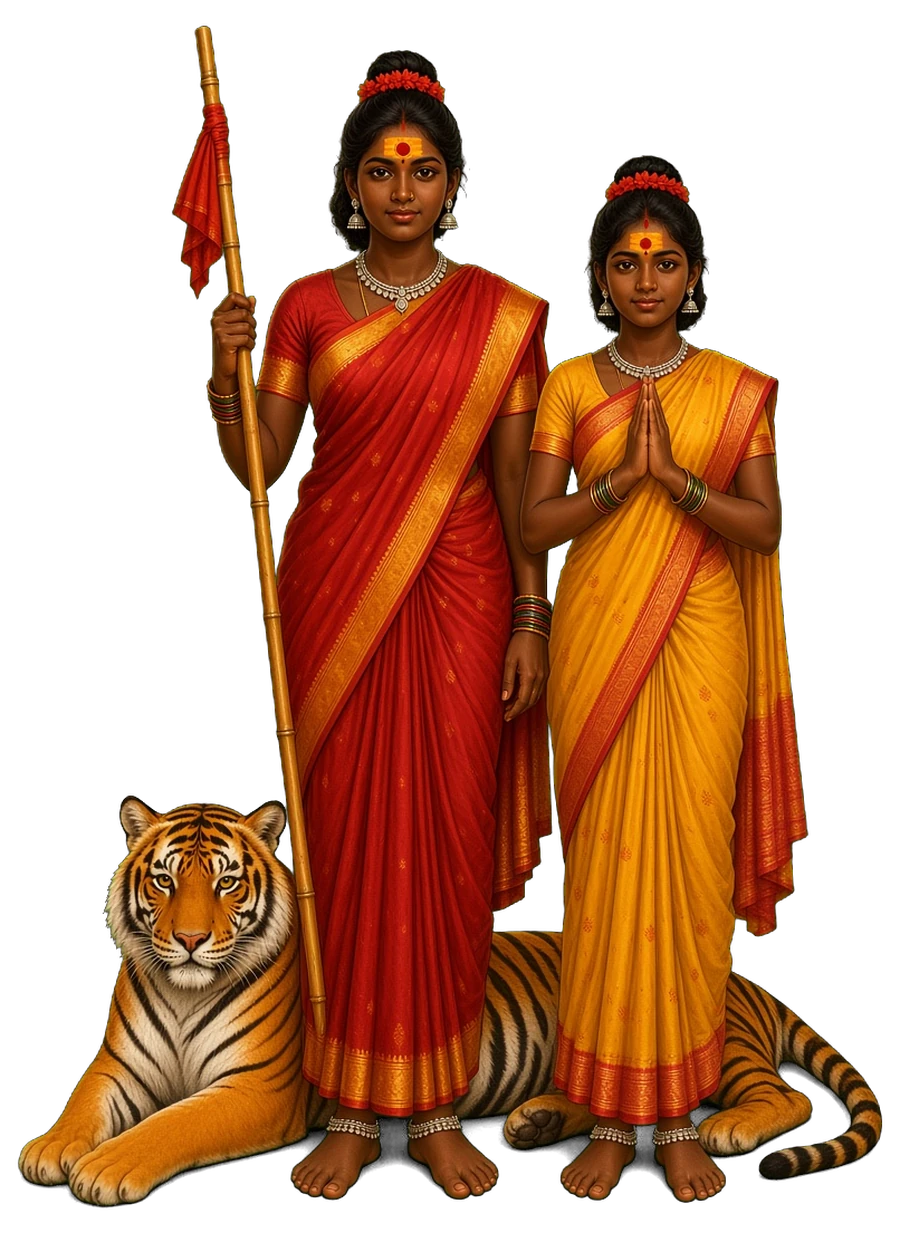
The Vedas do not know Sammakka and Saralamma, and no Purana tells their story. They belong to the Koya people, and their tradition is oral first: the songs of Koya singers, the words of the pujari families who alone may carry them, and the rites on Chilakalagutta that nobody else may see.
Read the Vedic roots of Sammakka and Saralamma
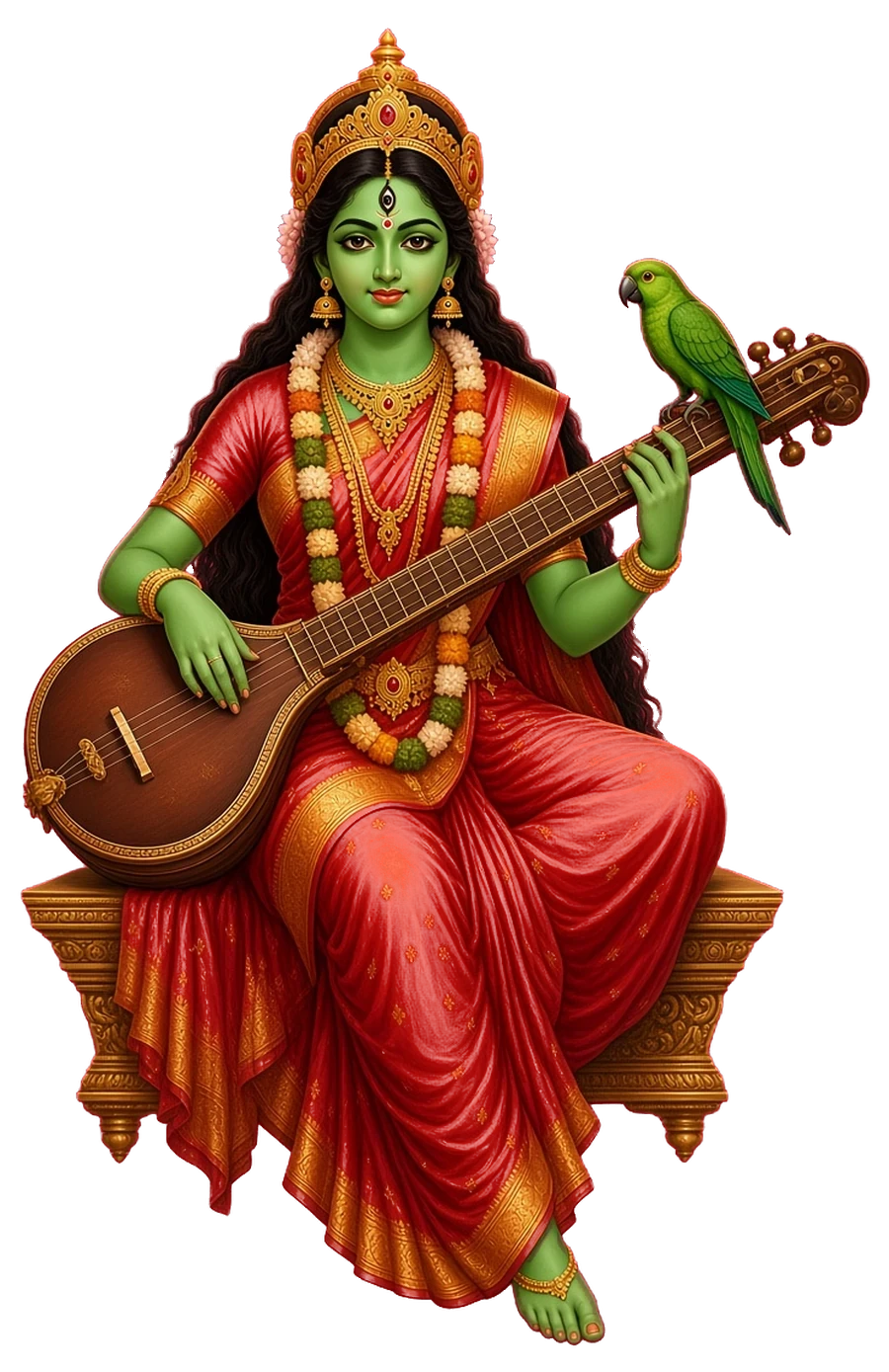
Saraswati is the one goddess of the Tridevi whom the Rigveda knows by name, and there she is a river. Three whole hymns are hers, 6.61, 7.95 and 7.96, and the poets who made them lived on her banks.
Read the Vedic roots of Saraswati
The Vedas do not know Sati. They know Rudra, the god left out of the sacrifice, and they know Daksha, but no hymn gives Rudra a wife who is Daksha's daughter.
Read the Vedic roots of Sati
The Vedas do not know Satyabhama. She belongs to the stories of Krishna's life at Dwaraka, which were told in the Mahabharata, in its appendix the Harivamsha, and in the Puranas.
Read the Vedic roots of Satyabhama
The Vedas do not know Shani. No hymn of the Rigveda is addressed to Saturn or to any other planet as a god; the slow dark wanderer enters the texts with Indian astronomy, and Shani the son of the Sun and his shadow wife is a figure of the epics and the Puranas. What the Veda does give him is a family.
Read the Vedic roots of Shani
The Vedas do not know Shesha. The serpent of the Rigveda is Ahi, the dragon Indra kills to free the waters, an enemy to be broken rather than a bearer of the world, and the word shesha means only what is left over.
Read the Vedic roots of Shesha
The Rigveda knows Shukra under his old name, Ushanas Kavya, and there he is a wise seer and a friend of Indra, not yet a teacher of the Asuras. Macdonell counts eleven mentions.
Read the Vedic roots of Shukra
Before she was a princess, Sita was a goddess of the field. A hymn of the Rigveda (4.57) calls on auspicious Sita, the furrow, to come near and give good harvests, with Indra and Pushan guiding her, and later ritual texts make her the wife of Indra or Parjanya.
Read the Vedic roots of Sita
Subhadra has no Vedic past, but the goddess who stands between Balarama and Krishna is among the oldest images of the Krishna cult.
Read the Vedic roots of Subhadra
The Apsarases are among the oldest beings in the Hindu stories, and the Rigveda already knows them as women of the waters. It names them only five times, as Arthur Macdonell counted, and gives only one of them a name, Urvashi.
Read the Vedic roots of The Apsarases
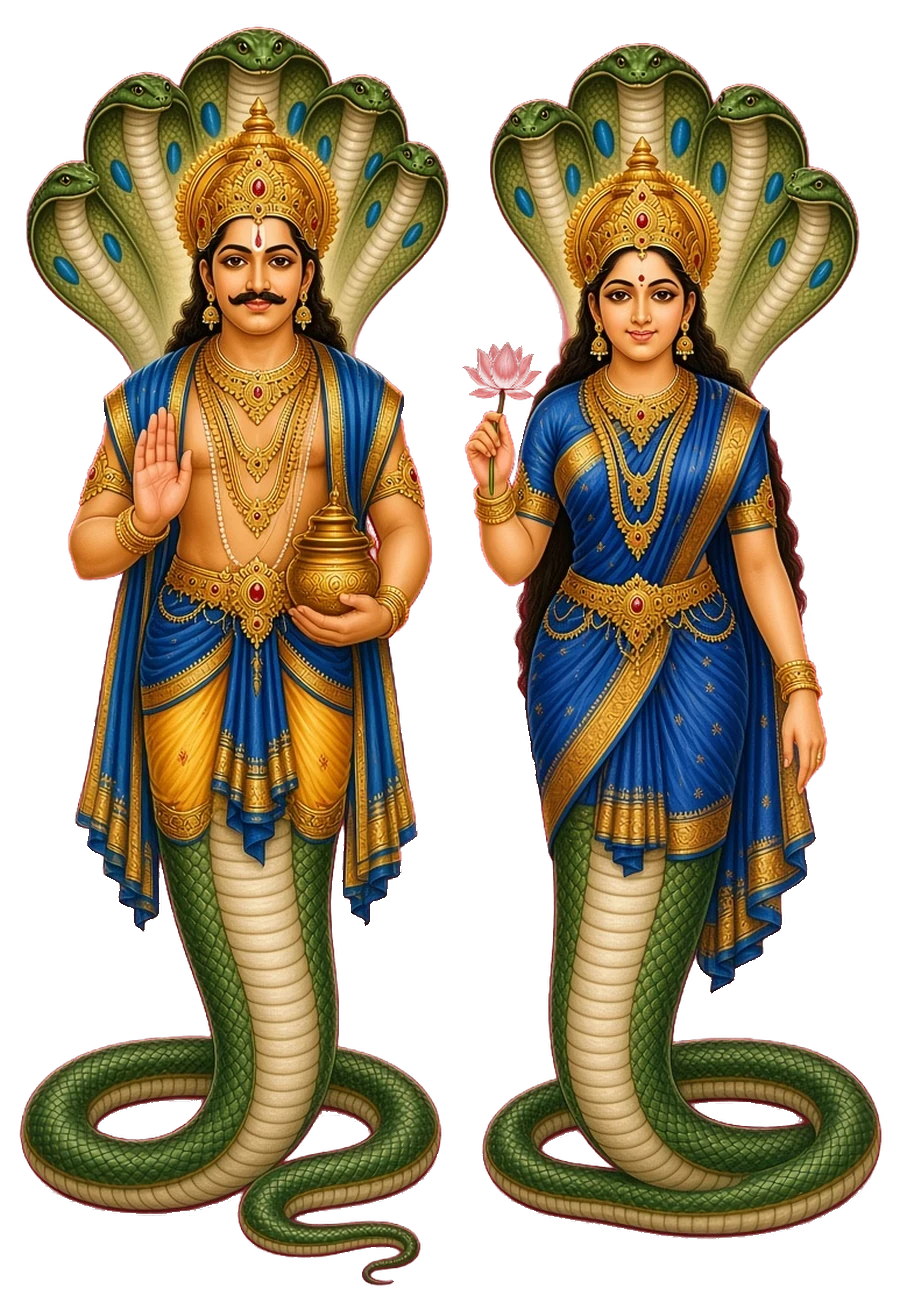
Serpents are in the Rigveda as Ahi, the dragon Indra kills to free the waters. The later Vedic texts already know the sarpas as a kind of being to be honoured, and the household rites of the sutras include offerings to them in the rainy season.
Read the Vedic roots of The Nagas
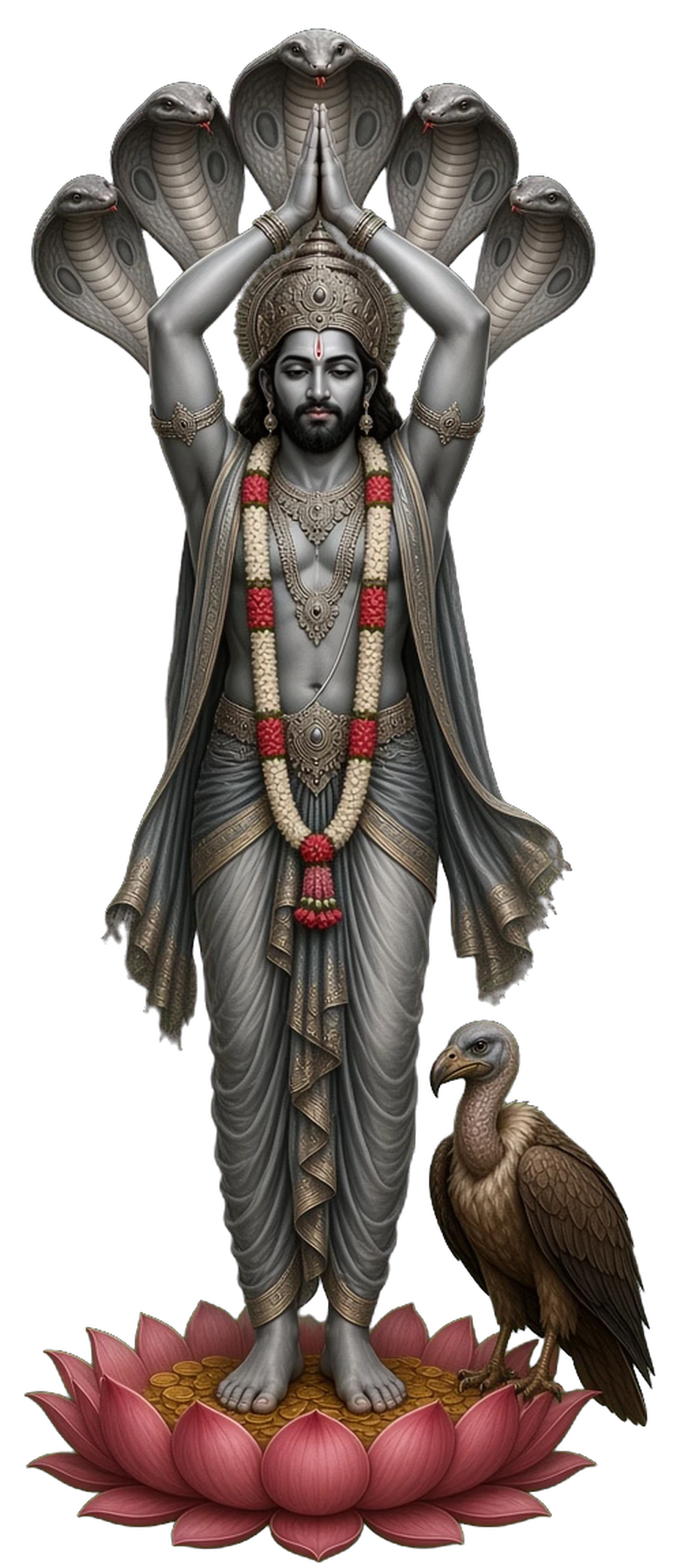
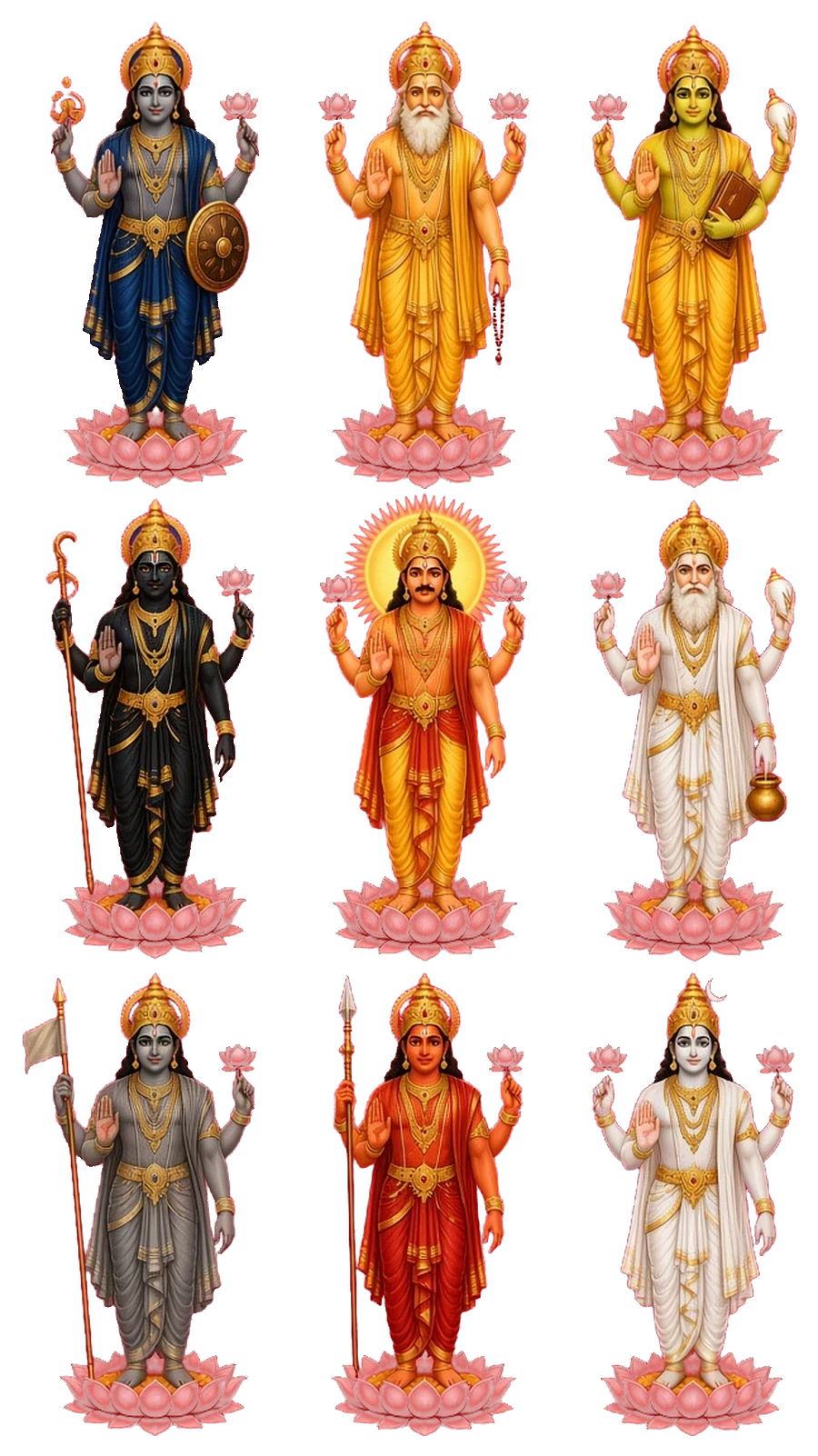
The Vedas know no set of nine. The Rigveda praises Surya the sun, and Soma, whom later ages made the moon, and it knows Brihaspati as the priest of the gods, not yet as a planet. A hymn of the Atharvaveda (19.9) asks the planets wandering in heaven, the powers that seize the moon, and Rahu with the sun to be kind.
Read the Vedic roots of The Navagraha
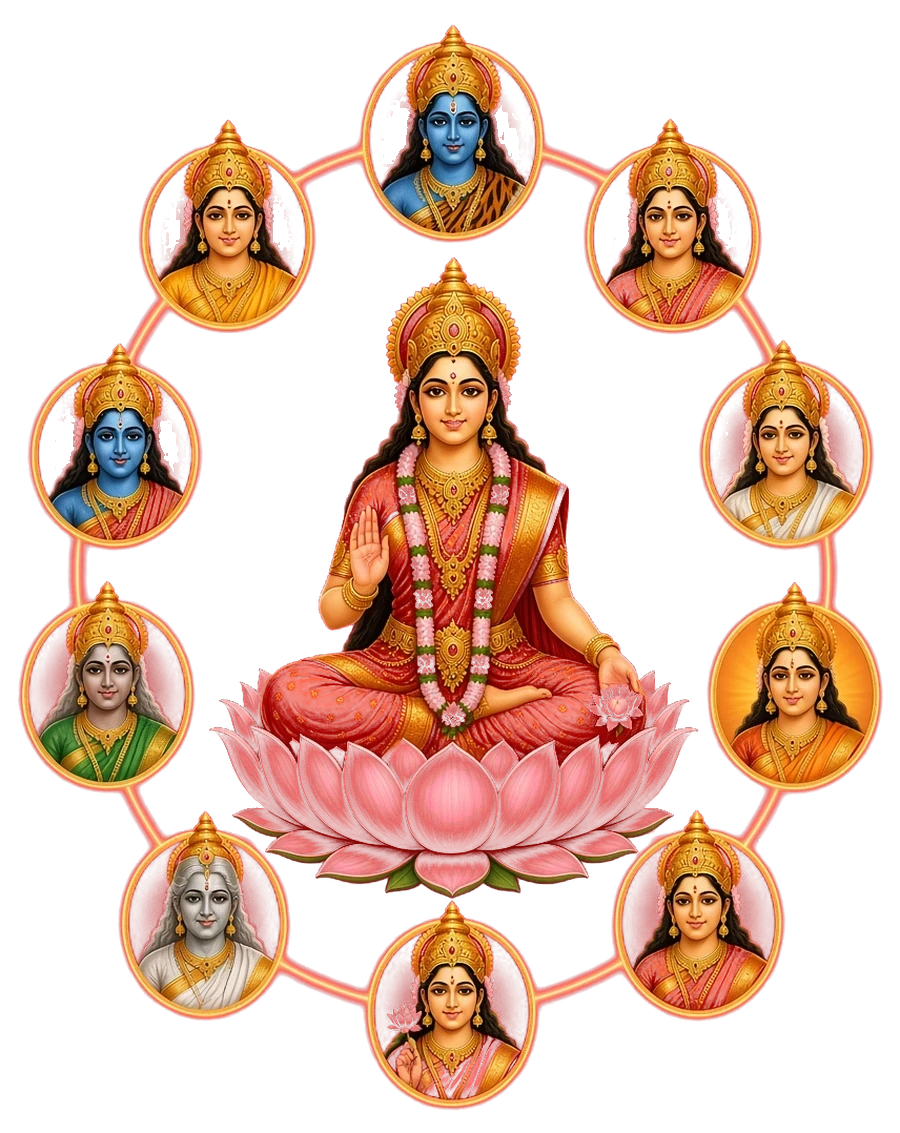
The ten Mahavidyas are not in the Vedas, and as a group they are young. The scholar David Kinsley dates the group to after the tenth century. The earliest list he found, in the Mahakala Samhita, names nine of the ten and leaves out Dhumavati. Some of the goddesses are much older than the group.
Read the Vedic roots of The ten Mahavidyas
The word yaksha is in the Vedas, but the spirits of trees and treasure are not. In the Rigveda, where the word comes only a few times, a yaksha is a marvel or a mystery: a hymn to Mitra and Varuna (7.61.5) sets it beside chitra, a wonder to be seen.
Read the Vedic roots of The Yakshas
The Vedas do not know Udupi Krishna, or Krishna the child at the butter churn. A Krishna son of Devaki is named once in the Chandogya Upanishad (3.17.6), as the pupil of the sage Ghora Angirasa, with no childhood at all.
Read the Vedic roots of Udupi Krishna
The Vedas do not know Vaishno Devi. Her name belongs to the later goddess texts: in the Devi Mahatmya, Vaishnavi is the power that comes out of Vishnu to fight beside the Goddess, one of the Seven Mothers, riding Garuda with his conch, discus and mace.
Read the Vedic roots of Vaishno Devi
The Rigveda knows the three strides but not the dwarf. Its Vishnu has one great deed: he paces out the earth, the air and the sky in three steps, the third too high for anyone to see, to make room for people to live. There is no Bali, no begging and no small body.
Read the Vedic roots of Vamana
The Vedas know a boar, but not this one. In the Rigveda (1.61.7 and 8.77.10) a fierce boar, emusha, keeps a hoard that Indra shoots it through a mountain to win and Vishnu carries off; the Taittiriya Samhita (6.2.4) puts that robber boar behind seven hills. A different boar raises the earth in the books of ritual.
Read the Vedic roots of Varaha
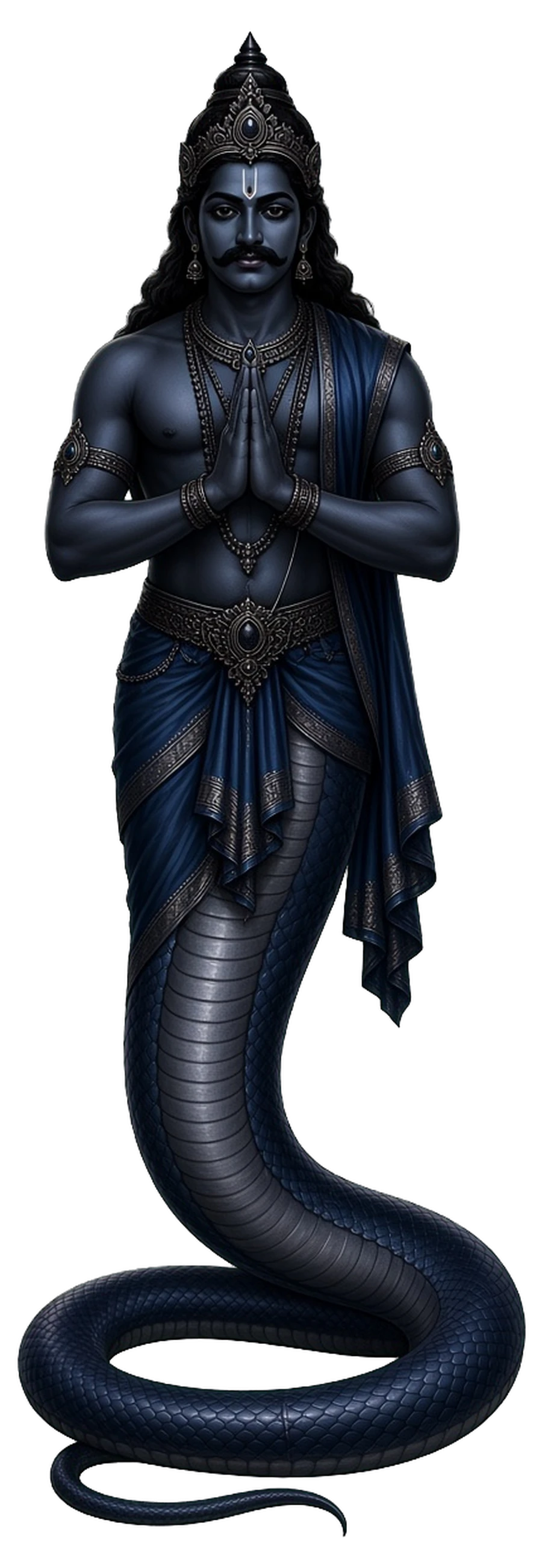
The Vedas do not know Vasuki. Their hymns have serpents, and the Atharvaveda names some of them, but as the scholar Rajendra Nanavati notes, the names it gives are Takshaka, Dhritarashtra and Airavata, and when the Tandya Brahmana describes a sacrifice performed by serpents, Vasuki is not among the priests.
Read the Vedic roots of Vasuki
The hill is older than the god's name. The early Tamil grammar, the Tolkappiyam, and the Sangam poems name Venkatam as the northern boundary of the Tamil country, a forest hill of hunters and elephants.
Read the Vedic roots of Venkateswara
The Rigveda knows Vishnu, but only just. By the count of hymns he is a minor god, praised in five whole hymns and part of a sixth, and named about a hundred times in a book of more than a thousand hymns. He has no serpent, no Lakshmi, no Garuda, no conch and no discus there.
Read the Vedic roots of Vishnu
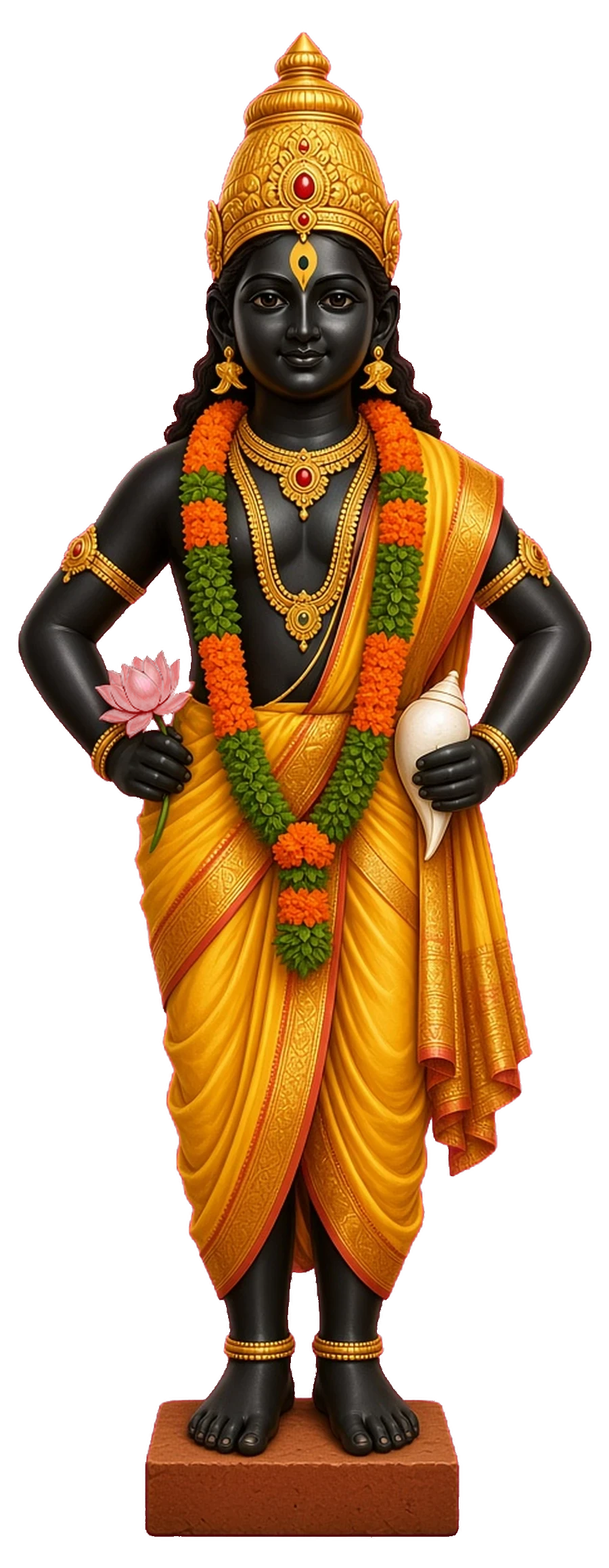
The Vedas do not know Vithoba. No hymn names a god on a brick, and none of the great Sanskrit Puranas tells his story. The texts that bring Krishna to the Bhima, the Pandurangamahatmyas attached to the Skanda and Padma Puranas and Sridhara's Marathi one, are late and regional.
Read the Vedic roots of Vithoba
The Vedas do not know Renuka or Yellamma. They know her husband: Jamadagni is a seer of the Rigveda, and a hymn to Mitra and Varuna (3.62) ends by calling them praised in Jamadagni's song. His wife has no hymn and no name there.
Read the Vedic roots of Yellamma