Devalok ← All gods
Also calledMohini AvatarJaganmohiniVishvamohinithe EnchantressKrishna-Mohini

In short

Who is Mohini?
The enchantress, the one form in which Vishnu appears as a woman. He took it at the churning of the ocean to win the pot of nectar back from the asuras and pour it for the gods.
Why did Vishnu become Mohini?
Because the asuras had snatched the nectar of immortality and no weapon could take it back without a war. They handed the pot to a lovely woman who offered to share it fairly, and she served the gods first.
What other stories is Mohini in?
She tricks the demon Bhasmasura into burning himself in the dancers' telling, and Shiva himself is enchanted by her; in Kerala she is the mother, with Shiva, of Ayyappa. In Tamil Nadu Krishna becomes Mohini to marry Aravan on the night before his death.
What is Mohini Ekadashi?
The eleventh day of the bright half of Vaishakha, in April or May, a fast for Vishnu named after her. Households say it is the day he took her form.

Artwork ›

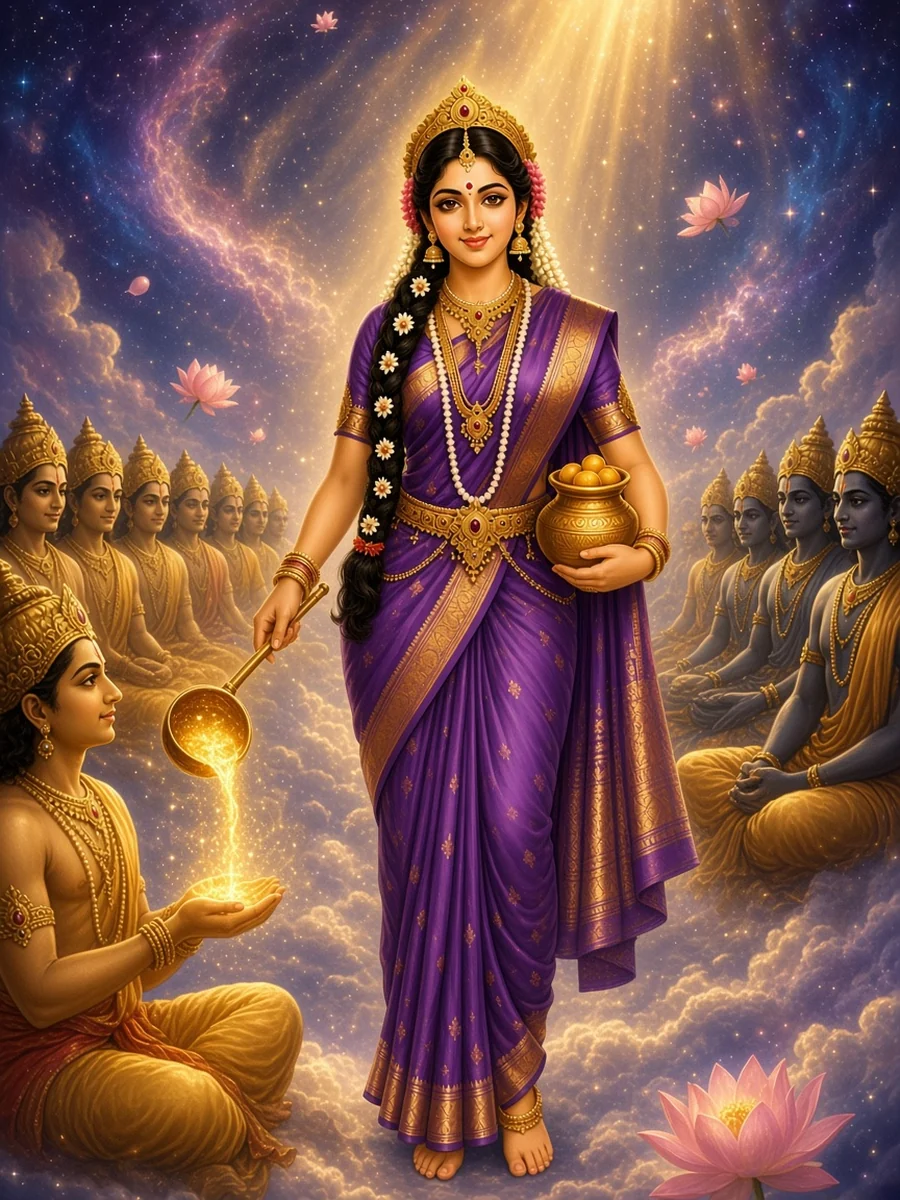
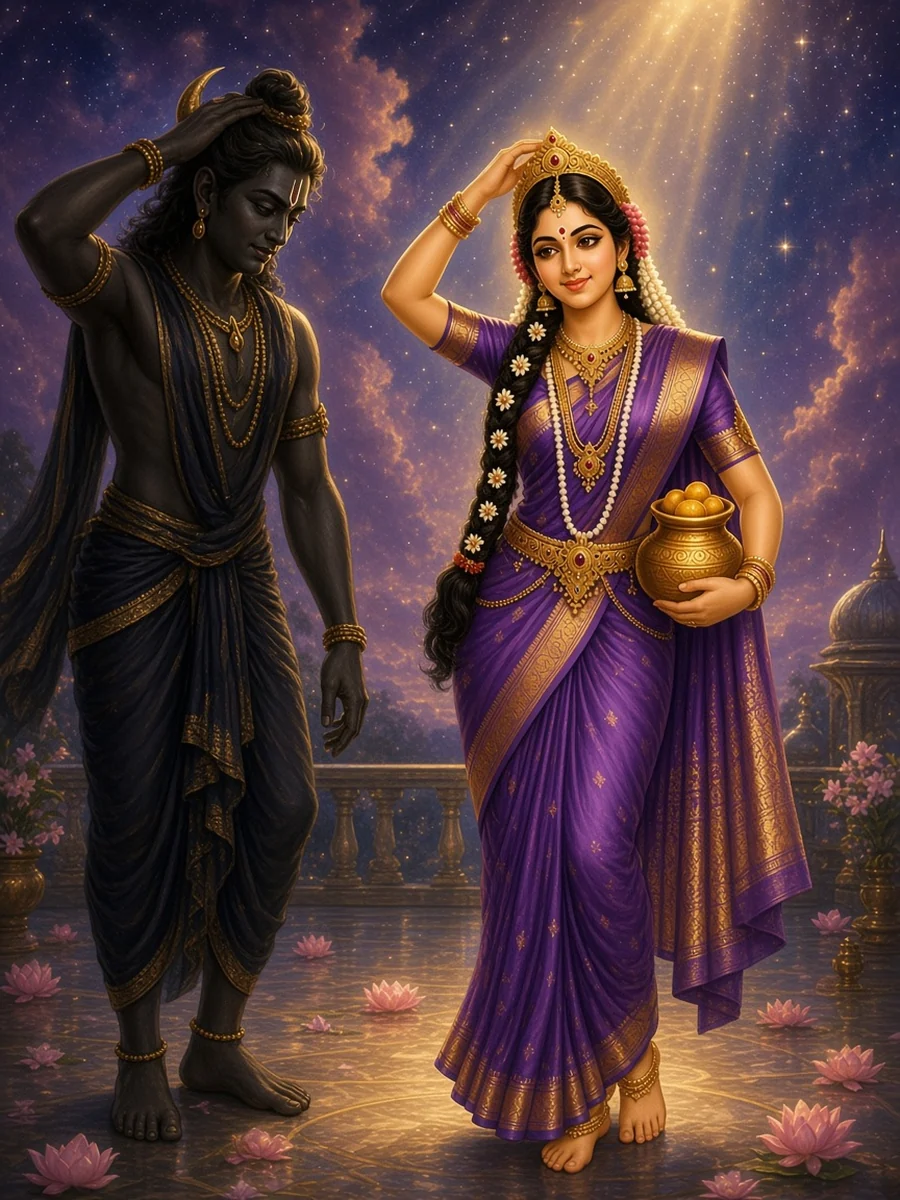
Pouring the nectar for the gods The dance that undid Bhasmasura

For kids

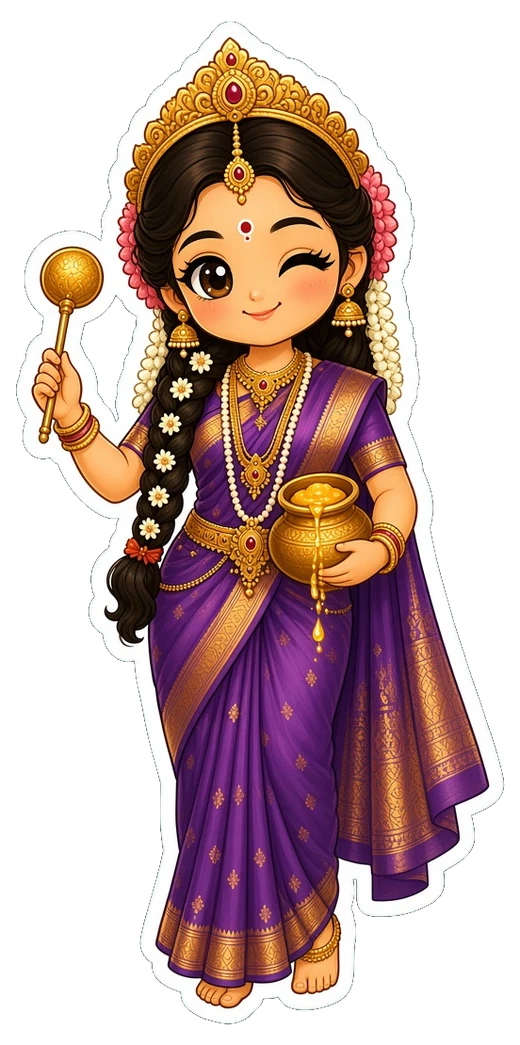
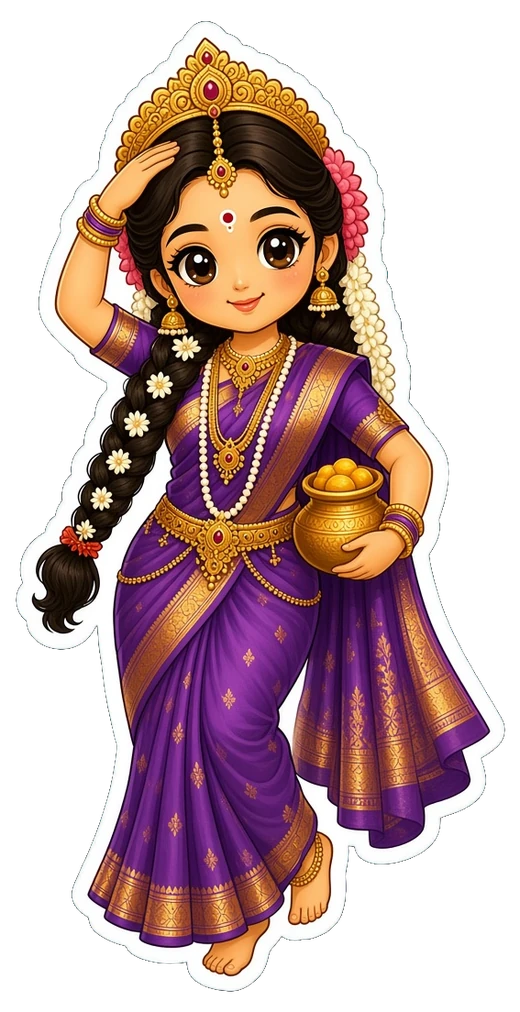
Nectar? Form a queue
Copy me if you can
Copy me if you can

At a glance

TraditionVaishnava
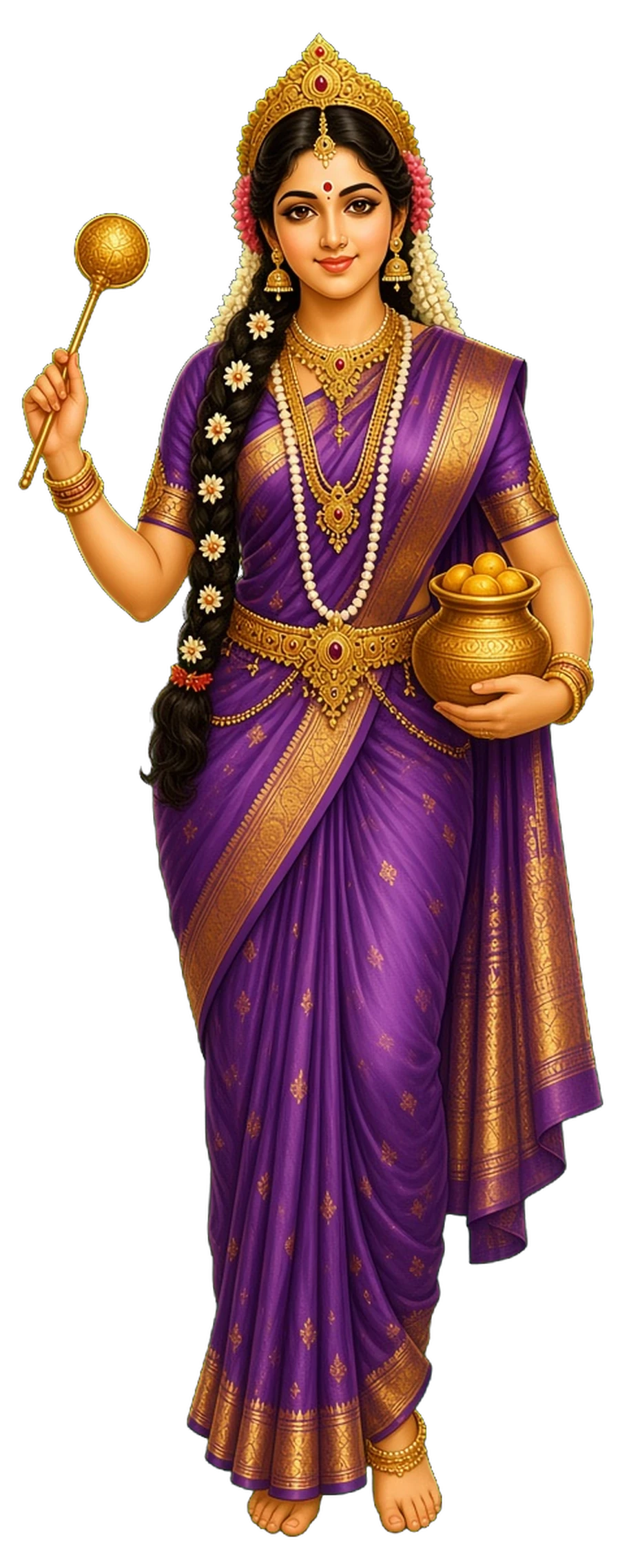
FormA young woman of great beauty

richly dressed and jewelled, her hair braided and wound with flowers

In her handsThe pot of nectar

or a ladle for pouring it; at Ariyannur in Kerala, the conch and discus as well

Who Mohini is

Mohini is the enchantress, the only form in which Vishnu comes as a woman. Her name means the one who bewilders, and the Puranas give her a short and clever career: she appears when strength has failed and a trick is needed, does what she came to do, and is Vishnu again.

Her first work was the nectar. The gods and the asuras had churned the ocean of milk together, and when the physician Dhanvantari came up with the pot of amrita, the asuras snatched it and ran. Vishnu became a woman so lovely that they handed her the pot and let her share it out, and she poured it for the gods while the asuras waited. The Bhagavata counts this among his appearances:

Dhanvantaram dvadashamam trayodashamam eva cha, apayayat suran anyan mohinya mohayan striya: the twelfth was Dhanvantari, and the thirteenth made the gods drink, bewildering the others as an enchanting woman (Bhagavata Purana 1.3.17).

The form did not stay with the churning. Shiva heard of it and asked to see it, and was caught by a single glance; in Kerala the son of that meeting is Ayyappa, Hariharaputra, the son of Hari and Hara. In the dancers' telling Mohini saves Shiva from the demon Bhasmasura by dancing until he copies her hand onto his own head. The Shakta Lalitopakhyana says Vishnu won her beauty by meditating on the goddess Lalita.

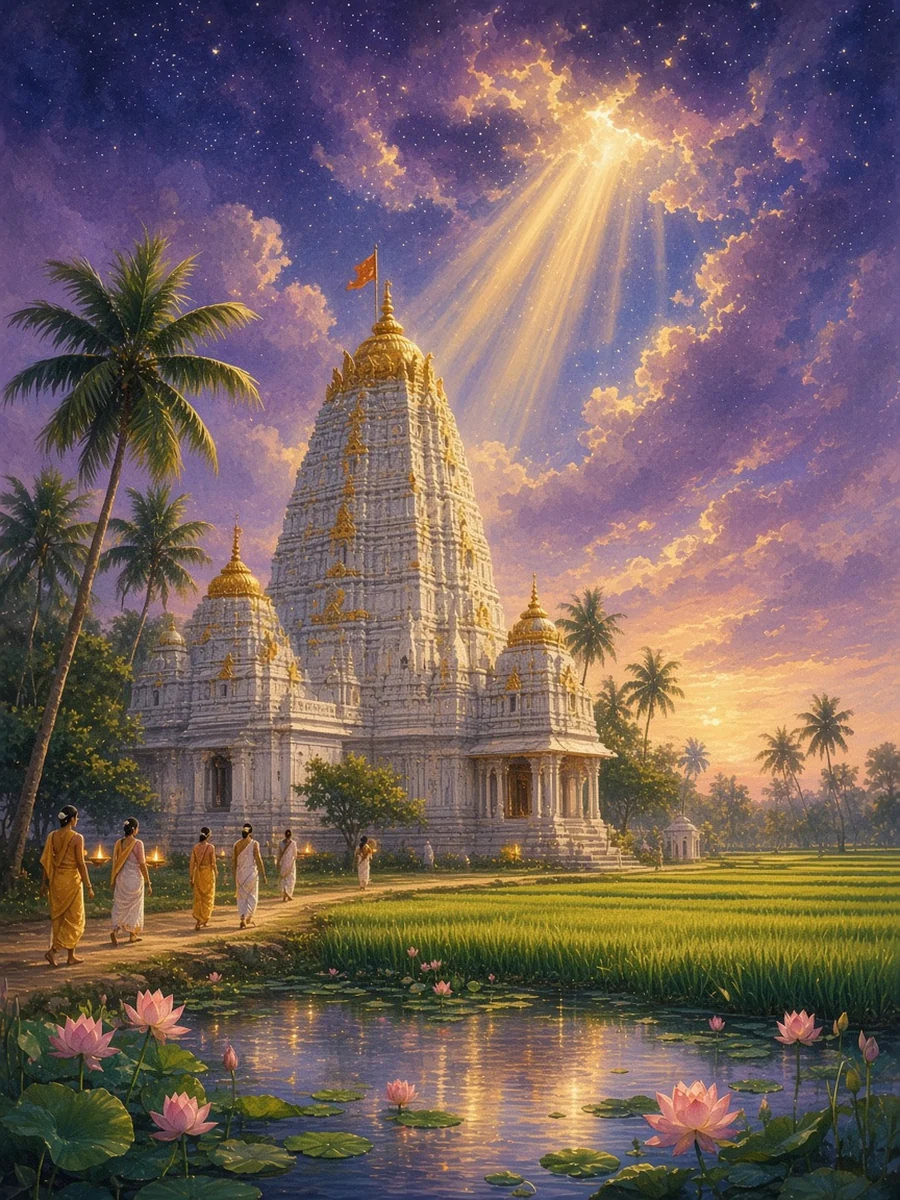
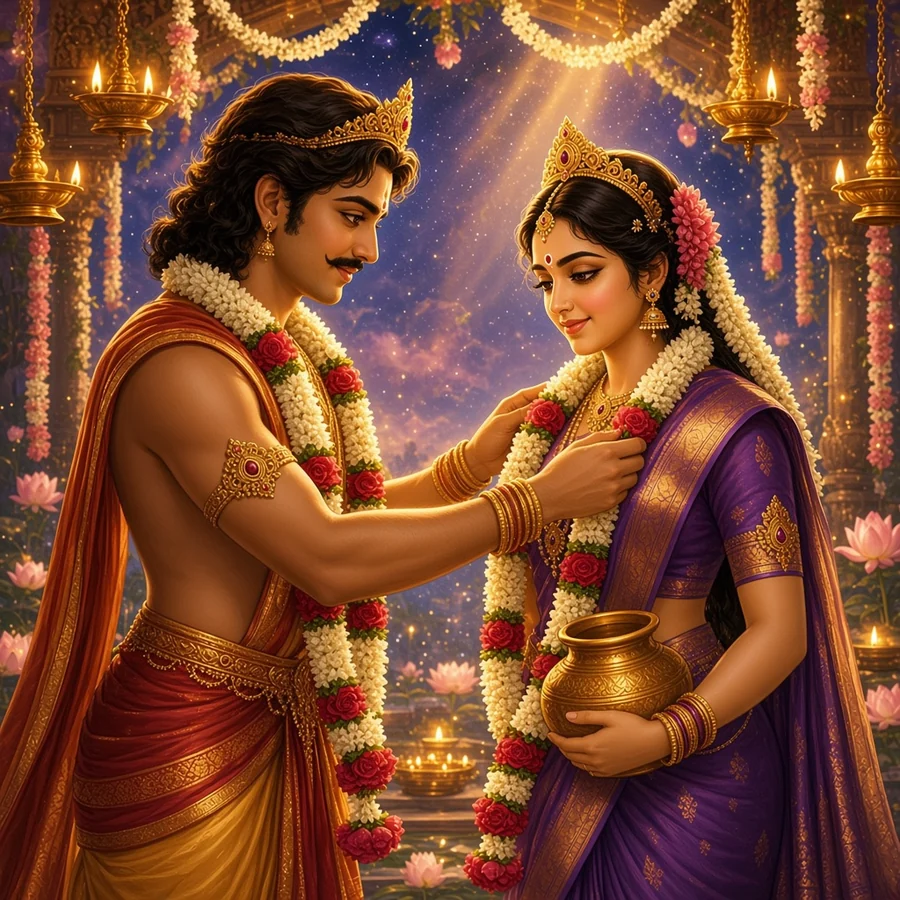
In the south she has places and days of her own. At Ryali in Andhra Pradesh a single black stone shows Kesava on its front and Mohini on its back. At Srirangam, on one day of the winter festival, the god himself is dressed as Mohini. In Tamil Nadu Krishna takes her form to marry Aravan, who must die before the war, and at Koovagam every Chithirai the wedding and the widowhood are kept again. Across India the Ekadashi of bright Vaishakha carries her name.

Her stories on this site: The Bride of One Night, The Merchant's Fifth Son and The Flower That Fell at Ryali; with Vishnu, Mohini and the Pot of Nectar and The Head That Became a Planet; with Shiva, The Demon with the Burning Touch, The Sages Who Sent a Tiger and The Eleventh Rudra; with Ayyappa, The Boy Who Rode Home on a Tiger; and at dawn on the Vaigai, the last of Alagar's forms in The Brother Who Came Too Late.
Before the Puranas

The Vedic roots of Mohini

The Vedas do not know Mohini. They know Vishnu, the god of the three strides, and they know the gods' long contest with the asuras over the sacrifice and its drink, but no hymn has Vishnu take a woman's form. Mohini belongs to the epics and the Puranas, and she begins without a name, as a trick in the story of the churning of the ocean.

The earliest telling is in the Mahabharata's first book. In the Adi Parva, as Ganguli translates it, Narayana calls on his power of illusion, takes the form of an enticing woman, and the Danavas, charmed, place the amrita in her hands; when Rahu has lost his head, Narayana quits his enchanting female form and the battle begins. The scholar Teun Goudriaan, cited on Wikipedia, takes this as the first reference to a Mohini-type figure. The Vishnu Purana (1.9) says only that Vishnu, assuming a female form, took the nectar's pot from the Daityas.

The Bhagavata Purana gives her the name and a place in the list. It counts her as the thirteenth appearance of the Lord (1.3.17), tells the nectar scene at length in its eighth book, and adds the chapter (8.12) in which Shiva asks to see the form and is bewildered by it. The Brahmanda Purana's Lalitopakhyana carries that meeting on to the birth of Mahashasta, and in Kerala Shasta is Ayyappa.

The rest grew outside the Sanskrit books. The dance with Bhasmasura lives in Yakshagana, Kathakali and the village stages, and no Purana has it. The Tamil Aravan drama and the Kuttantavar temples give Mohini a wedding that the Mahabharata does not know, and Alf Hiltebeitel, who recorded the play, reads the bride as the story behind the Koovagam vow. Temples from Ryali to Tirumohur claim the ground where she walked, and the calendar gave her an Ekadashi.

See how the Vedic gods became the Puranic ones →

Related gods