As the Tamil plays and Koovagam tell it
Terukkuttu drama and the Koothandavar temple · Tamil Nadu · 3 min read
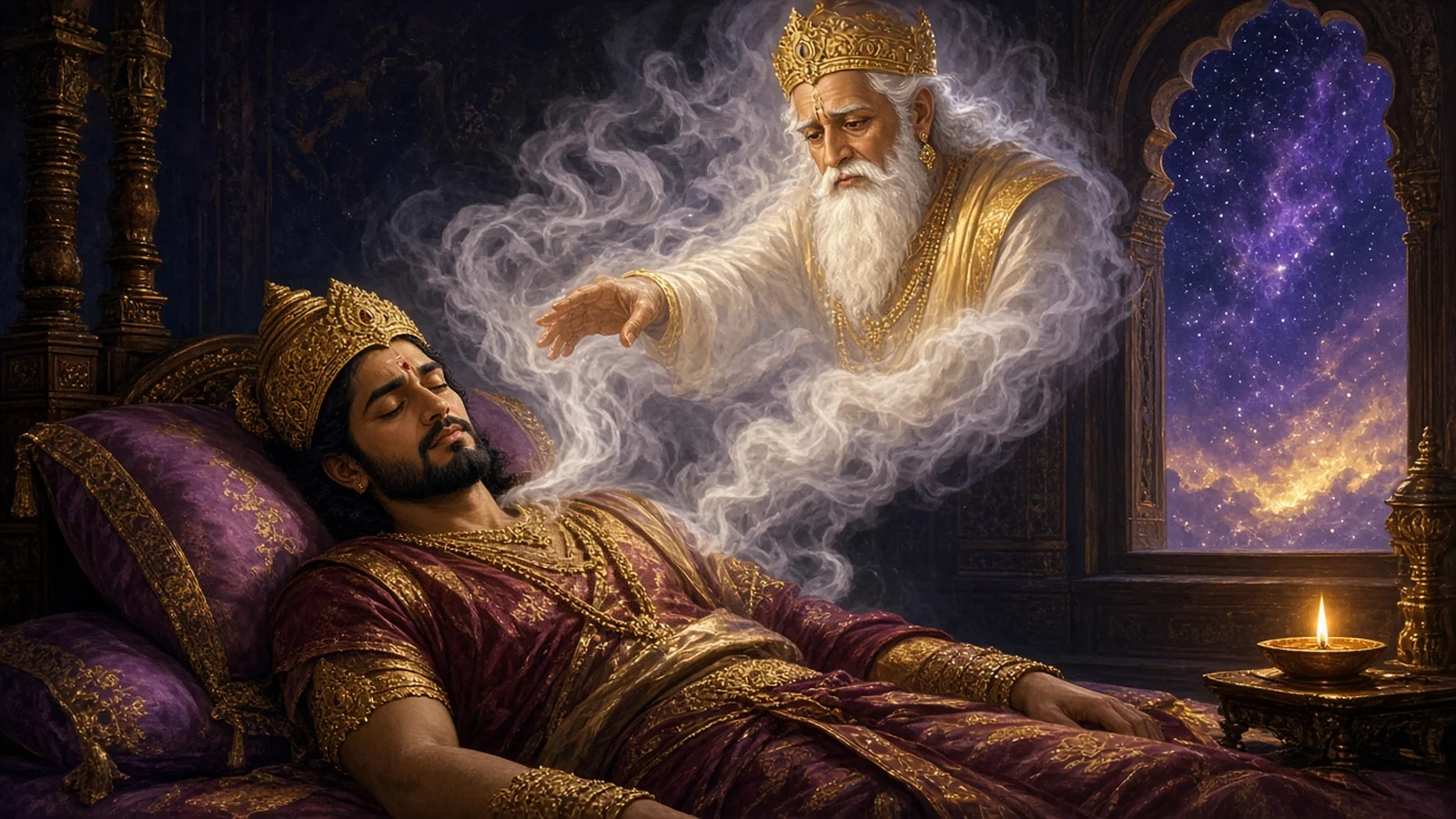
The war had not yet begun, and in Duryodhana's court his uncle Shakuni was counting the days.
"Before a war like this," he said, "a king offers a sacrifice on the battlefield to Kali. A life given freely. Then the goddess gives him the victory."
"Whose life?" asked Duryodhana.
Old Bhishma answered. "Aravan's. Arjuna's son by the serpent princess. There is no one finer."
So Duryodhana went to the Pandavas' camp, to Sahadeva, who read the stars and would not lie about them even to an enemy.
"Midnight," said Sahadeva, "on the night of the new moon. The sacrifice made then will win the war."
Then Duryodhana went to Aravan, and Aravan, who honoured his father's cousin as a father, promised to come to the battlefield on the new-moon night.
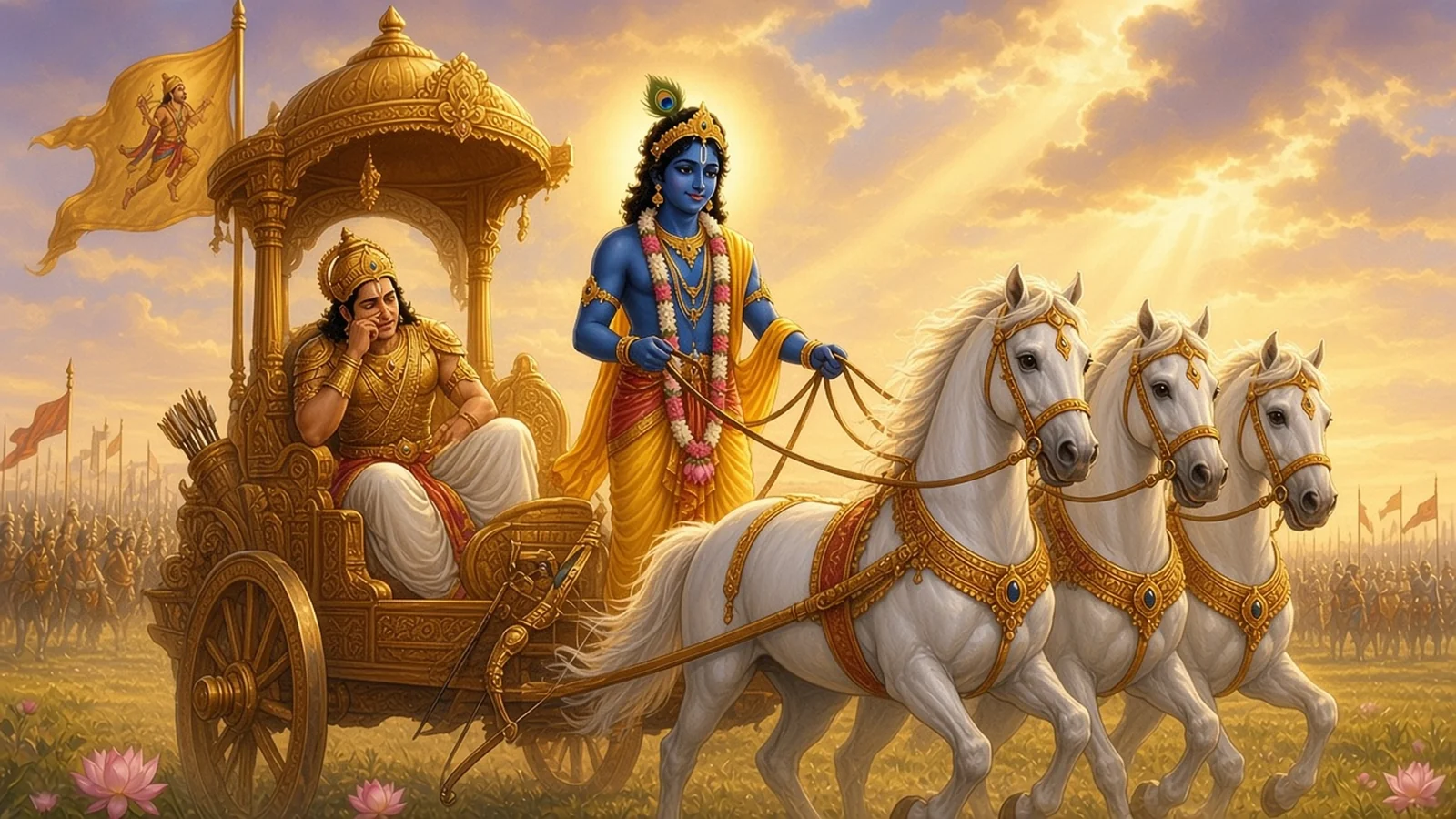
Krishna heard of it before the lamps were out.
"We must offer the sacrifice first," he told Yudhishthira. "And there are only four who could be offered. Shalya, who has gone over to Duryodhana. Arjuna, whom we cannot lose. Aravan. And me."
"Then let it be no one," said Yudhishthira. "I would rather go back to the forest."
Aravan stood up.
"I will do it," he said, "for you, for my own people. Only I have given my word to Duryodhana, for the night of the new moon."
Krishna smiled. "Leave the moon to me."
Then Aravan's mother, Ulupi of the serpent world, came to him, and she wept and begged. Krishna, Yudhishthira, her son: she pleaded with all of them.
"I am not your son now," Aravan told her gently. "I belong to the goddess."
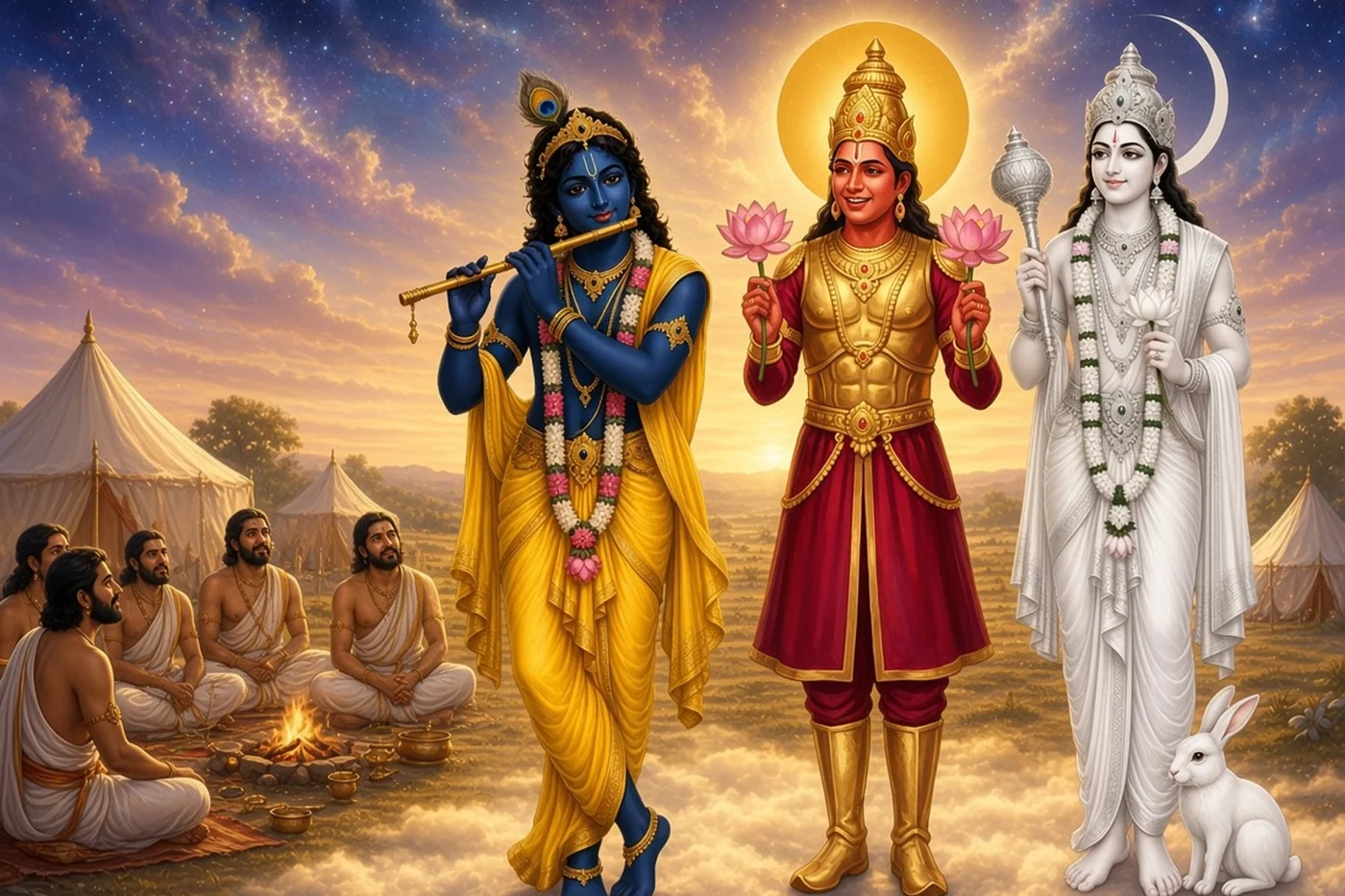
At dawn Krishna called the priests and showed them their almanacs, and they agreed with him that the new moon fell today, not tomorrow. They began the new-moon offerings to the ancestors. In the sky the Sun and the Moon saw the offerings made a day early and came down together to ask why.
"What is the new moon," said Krishna, "but the day the Sun and the Moon meet? You have met. It is today."
The Sun and the Moon laughed and went back to their places.
That evening Aravan came before Krishna.
"I will not flinch," he said. "But give me three things. Let me die in the war itself, at the hands of a great hero. Let me see the war. And let me be married first. A boy who dies unmarried is buried in the ground with no one to make the offerings for him. I want to go like a man, with a wife to mourn me."
Krishna granted the first two at once. The third was harder.
"Who will give his daughter," he asked, "to a man who will be dead before morning?"
No one answered him. Krishna went out.
A moment later a woman came in, dancing, her jewels flashing, bright as a crore of suns. It was Mohini, the enchantress, the form Vishnu had worn once before to carry the nectar to the gods. She danced before Aravan, and he could not look anywhere else.
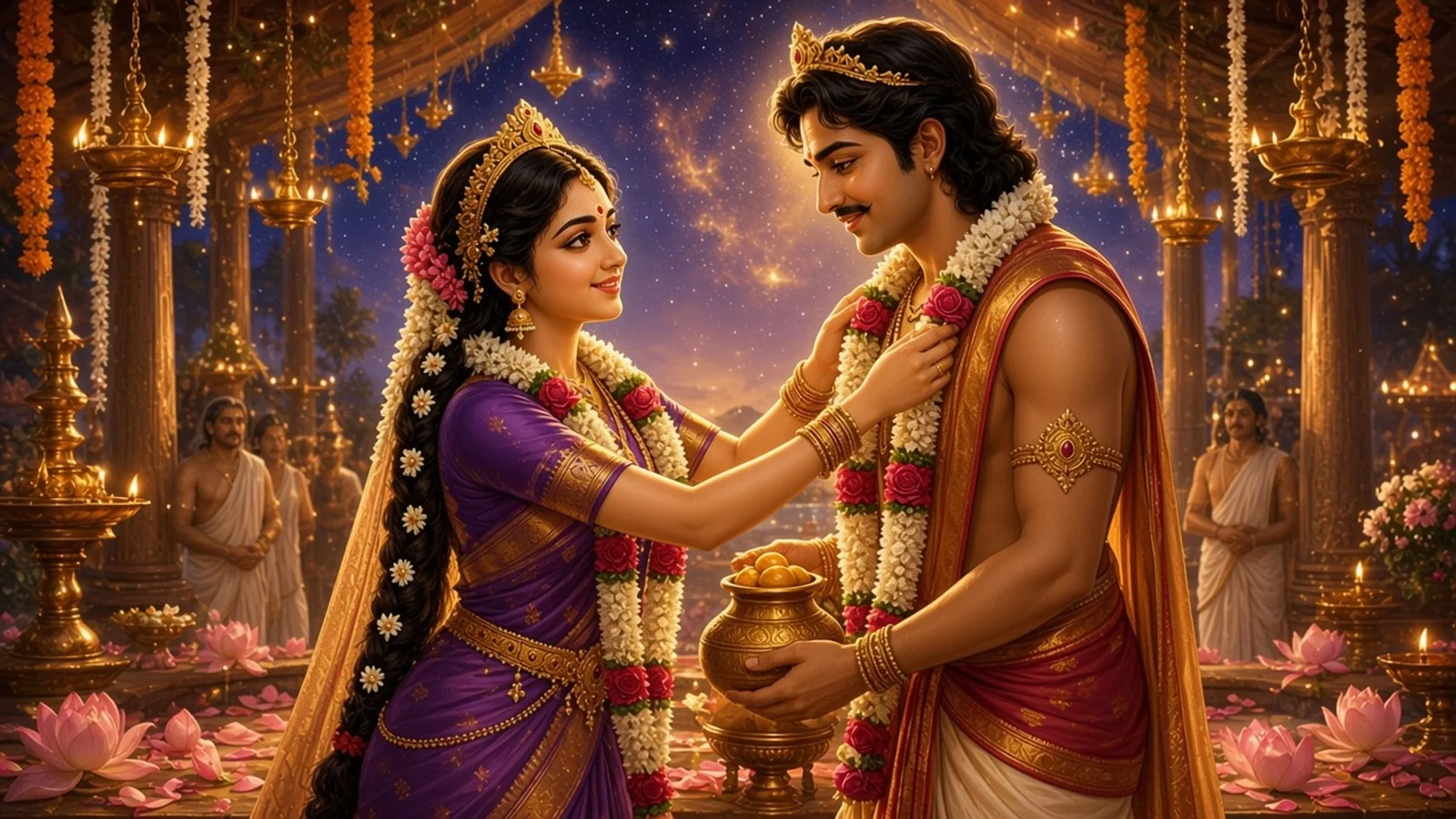
He tied the tali round her neck, and they were married that night.
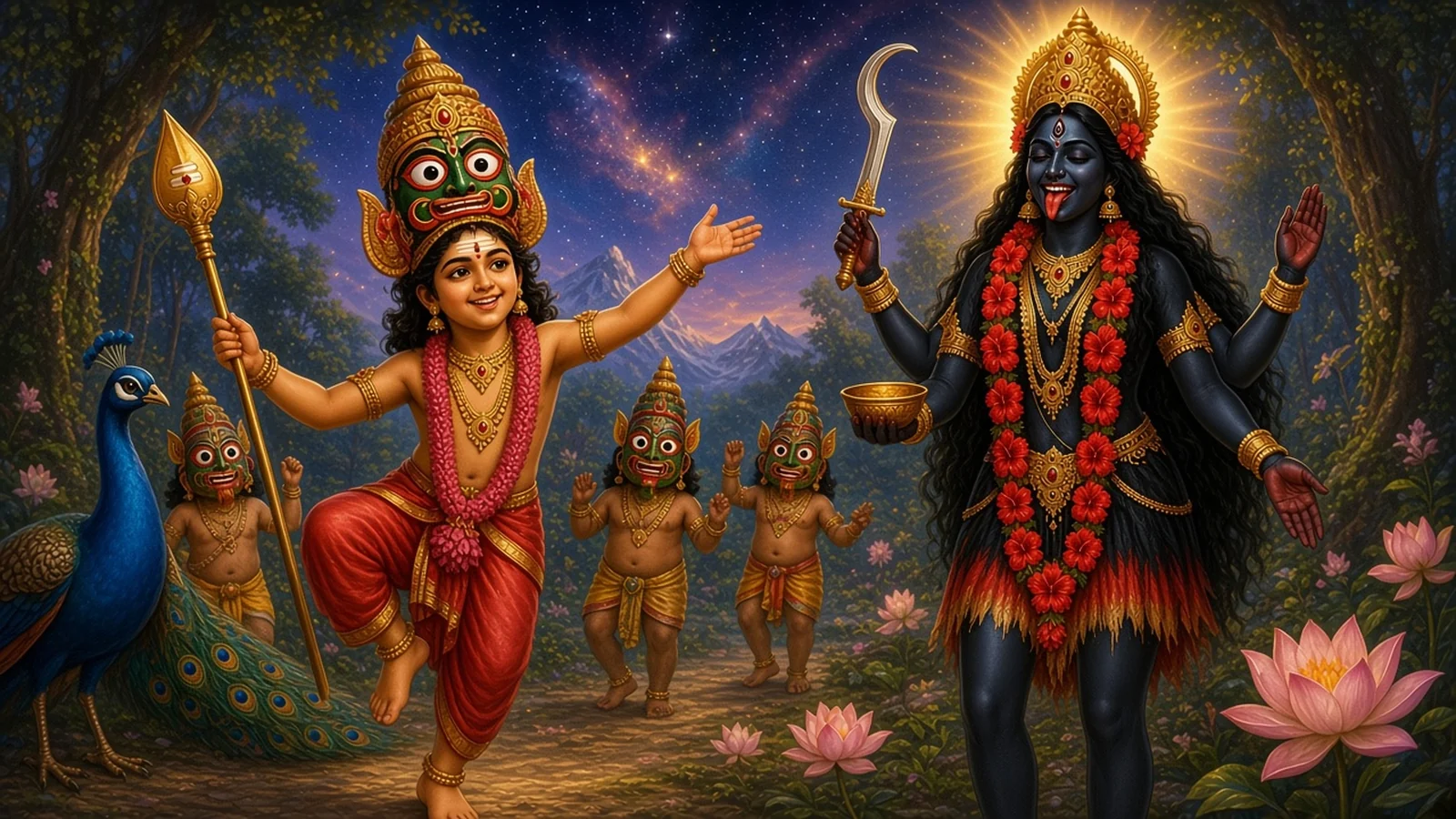
At midnight he went out to the battlefield and gave himself to Kali.
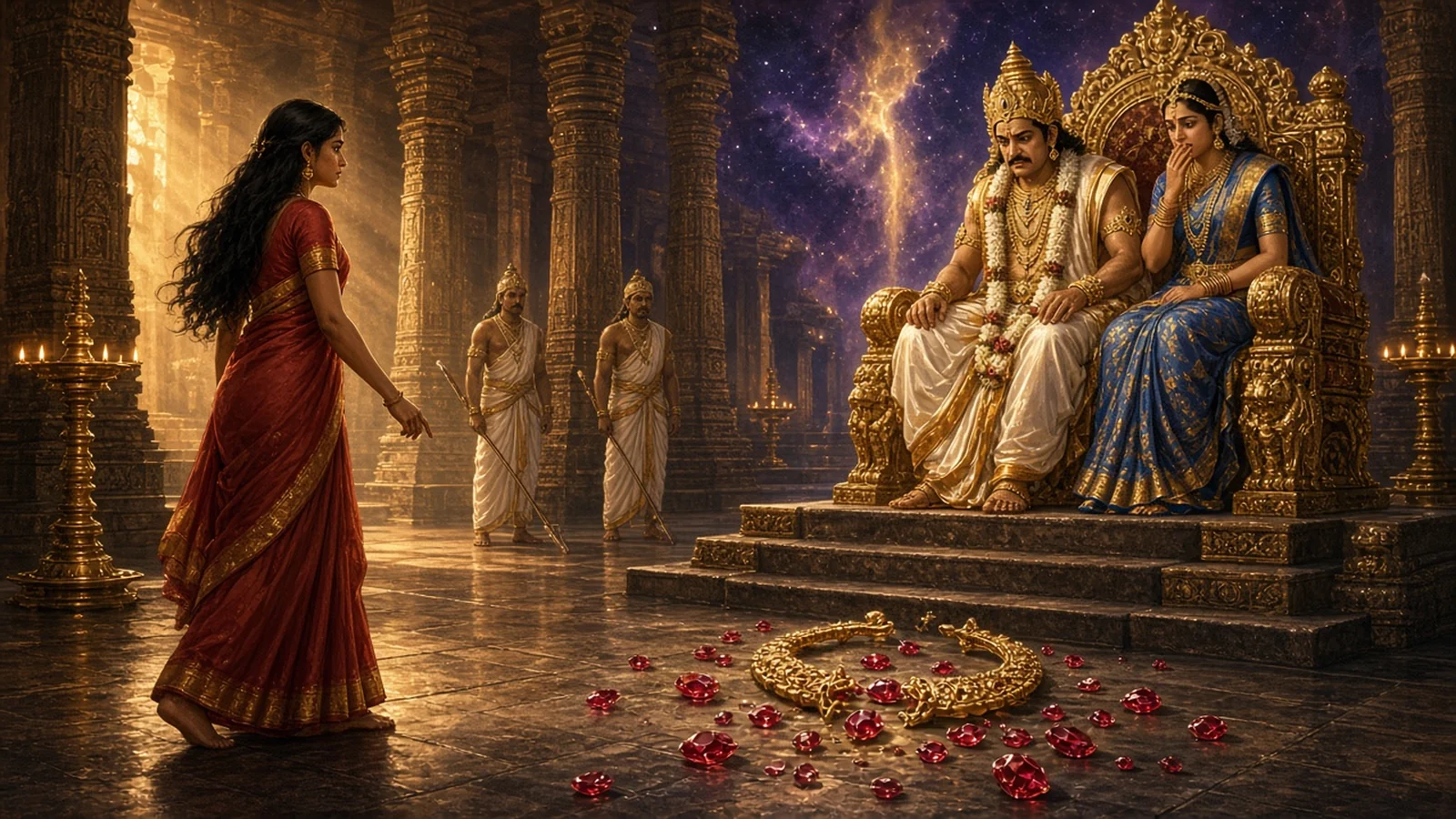
The next day, in Koovagam, they say, Mohini broke her bangles and put away her bridal jewels, and she wept for her husband as a widow weeps. Then she was Krishna again.
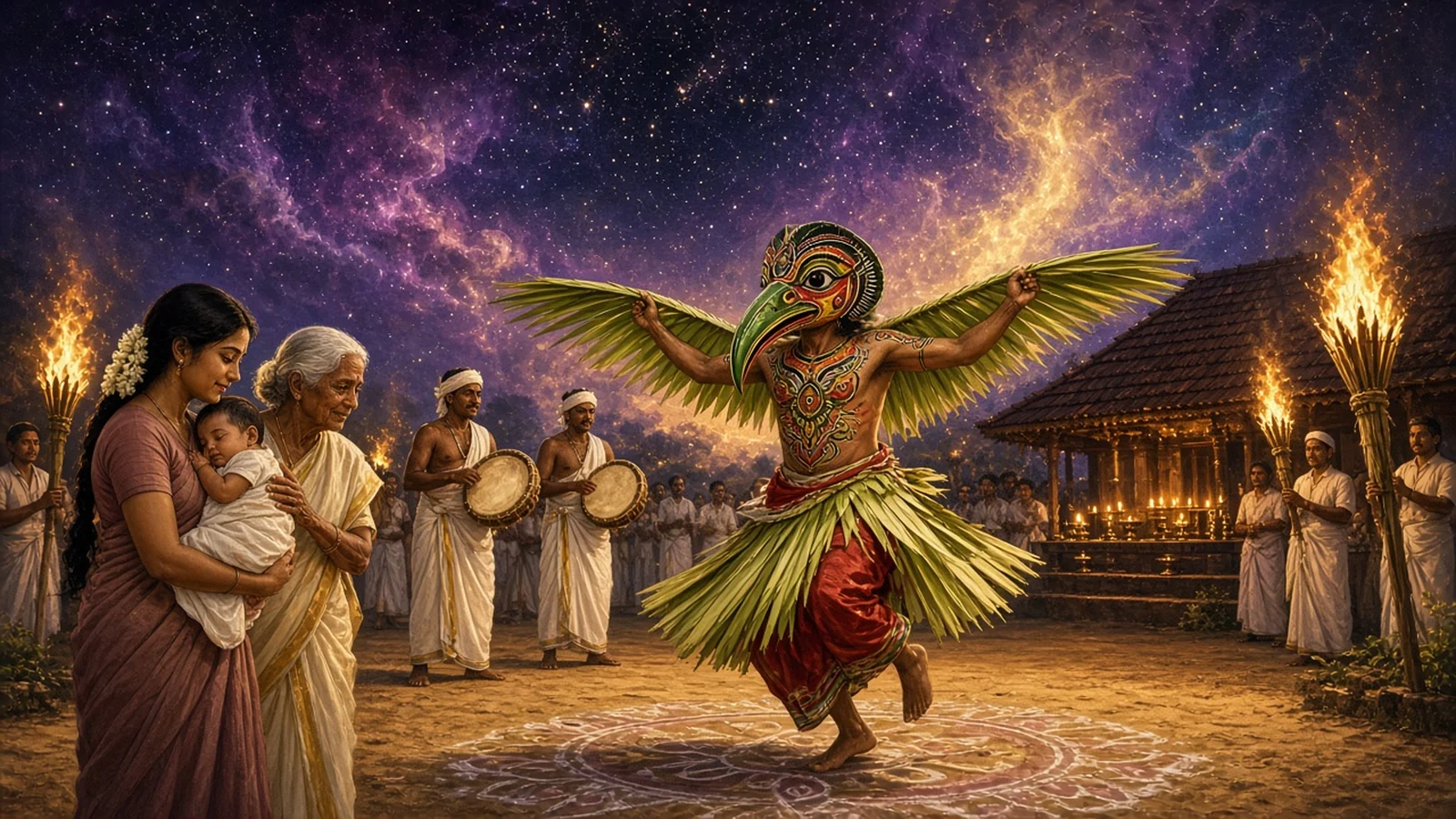
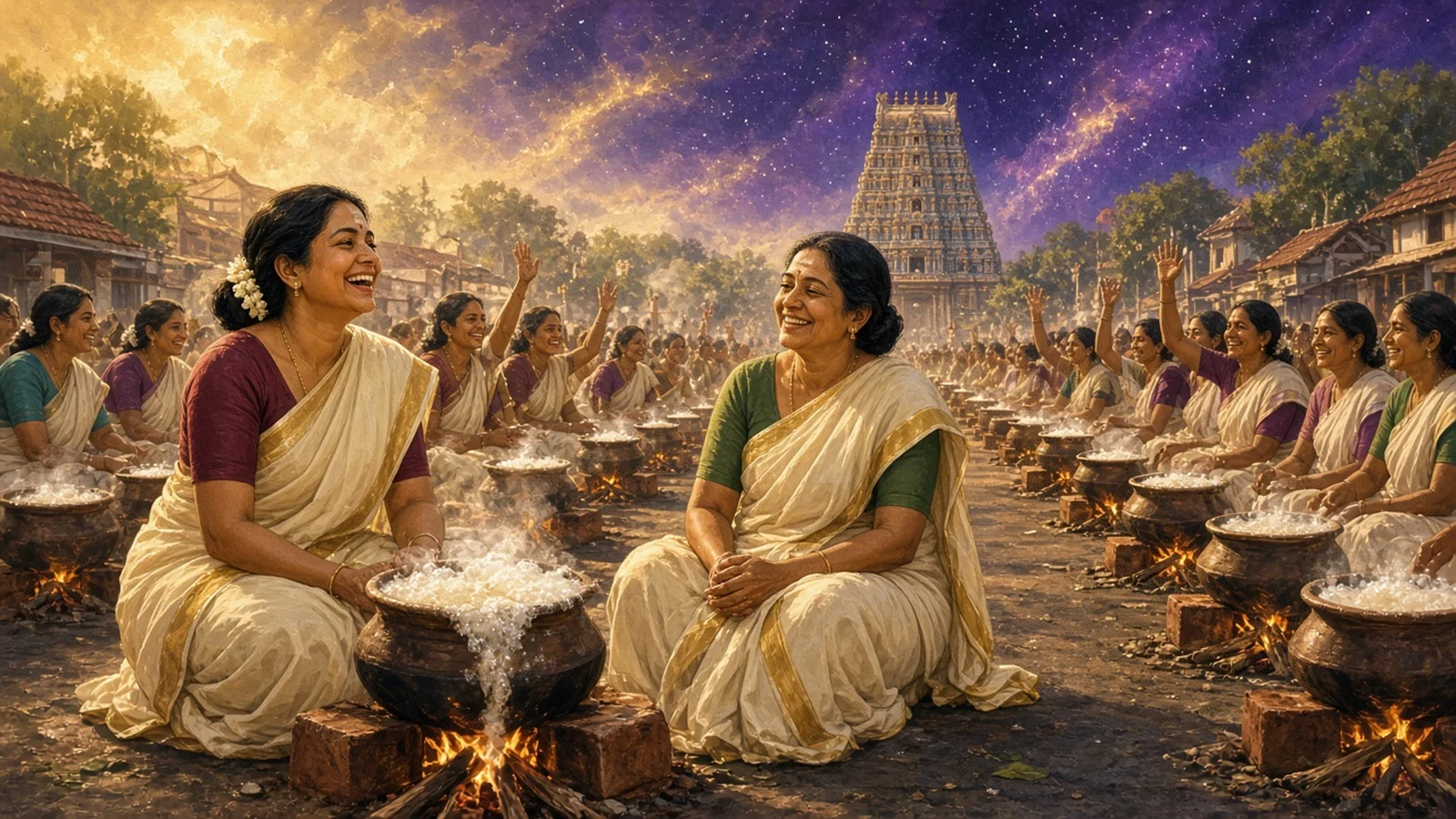
Every year in the Tamil month of Chithirai the village keeps the wedding. Transgender women come to the Koothandavar temple dressed as brides, and the temple priests tie the tali on each of them for Aravan. Ordinary village men who have made a vow wear the tali too. The next day his great painted head is carried to the mourning ground, and the brides break their bangles and put on white, and weep for him.
As the Mahabharata tells it
Bhishma Parva 91 and 97 · the field of Kurukshetra · 1 min read
The Sanskrit epic knows Aravan as Iravat, and it gives him a battle, not a wedding.
His mother was the daughter of a serpent king. Garuda had killed her husband, and she was left childless and grieving, until the serpent lord Airavata gave her to Arjuna as his wife. Iravat was born in the serpent world and grew up there with her, for his uncle hated Arjuna and would not have the boy.
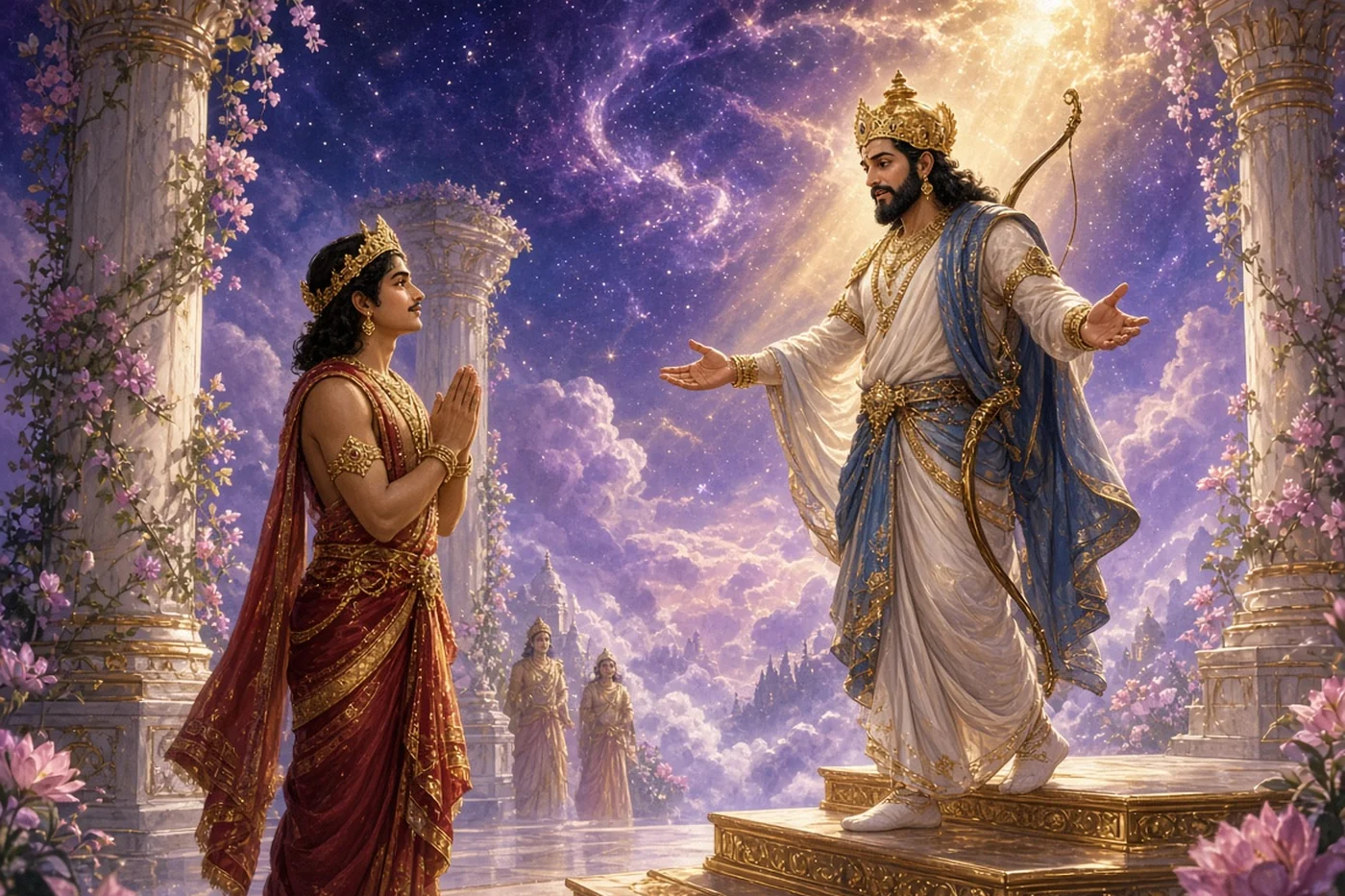
When he was grown he heard that his father had gone up to Indra's heaven, and he went there too, stood before Arjuna with joined hands and said, "I am Iravat, your son." He reminded Arjuna how he had met his mother, and Arjuna remembered and embraced him. "When the war comes, help us," he said, and Iravat promised.
He kept the promise. In the war he rode in with a host of swift horses decked in gold. Shakuni's six brothers came at him together and he fought them on foot with a sword, and only one of them escaped. Then Duryodhana sent the Rakshasa Alambusha, a master of illusions, against him.
They rose into the sky and fought with magic. Iravat cut the Rakshasa down again and again, and each time he grew whole. Then a great serpent of Iravat's mother's line came to his help with a host of serpents, and Alambusha took the form of Garuda, the serpents' enemy, and swallowed them. Iravat stood bewildered, and in that moment Alambusha struck off his head. It fell to the earth with its earrings and its crown, as lovely, says the epic, as a lotus or the moon.
When Arjuna heard, he grieved, and cursed the wealth for which kinsmen kill each other. Then he told Krishna to drive on.