As the Ekadashi book tells it
from the Brahmanda Purana, as Krishna tells it to Yudhishthira · 2 min read
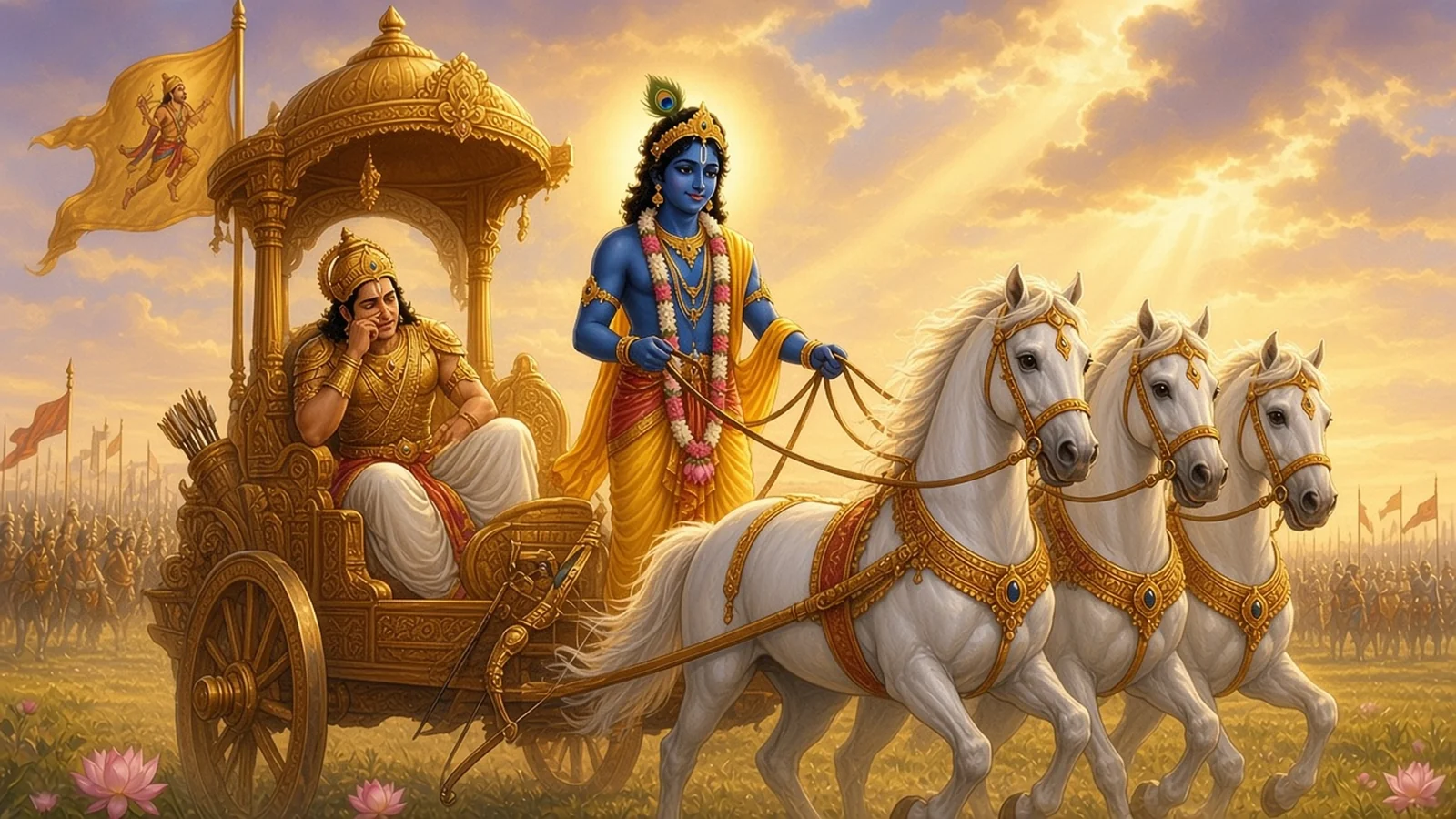
"Tell me about the Ekadashi of the bright half of Margashirsha," Yudhishthira said to Krishna. "What is its name, how is it kept, and which god is worshipped on it?"
"It is called Mokshada, the giver of release," Krishna said. "On it Damodara is worshipped with incense, a lamp of ghee, flowers and the buds of tulasi. Listen to what it did for one king."
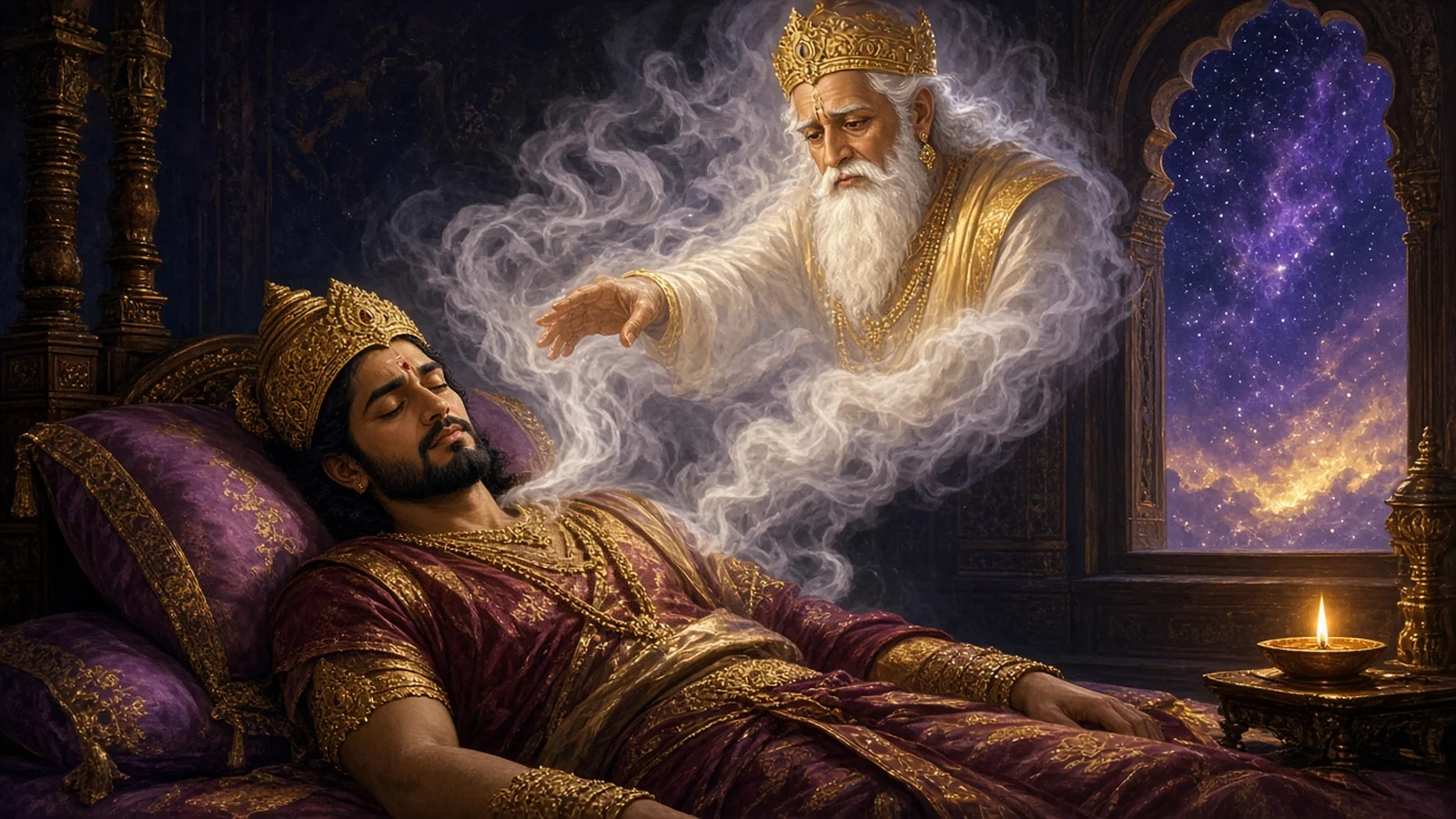
In the city of Champaka, where Vishnu's devotees lived, ruled a king named Vaikhanasa, who looked after his people as if they were his own children. His Brahmins knew all four Vedas. One night he dreamed of his father in one of the hells of Yama, suffering and calling out to him.
"My son, save me from this torment!"
The king woke shaking. In the morning he called his Brahmins and told them the dream. "I have no peace," he said. "My horses, my elephants, my chariots, my treasury, even my wife and my sons give me no joy. What use is a strong son, if his father is suffering in hell? Tell me what to do."
"Not far from here, in the forest on the mountain, lives Parvata Muni," they said. "He knows the past, the present and what is to come. Go to him."
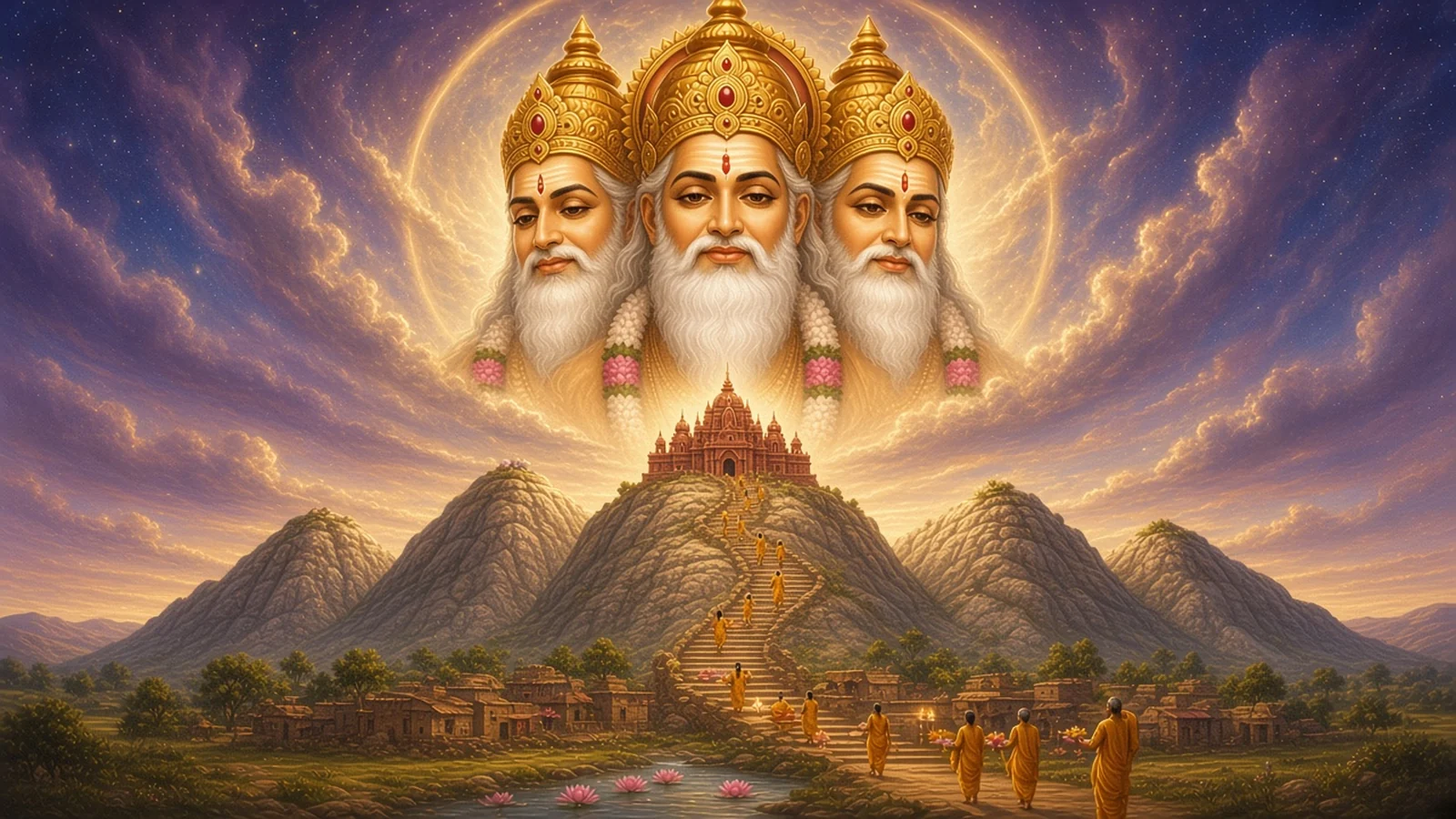
So the king went to the sage's hermitage, where many sages sat chanting the four Vedas. Among them Parvata looked like a second Brahma, or like Vyasa. The king bowed to the ground before him. The sage asked after the seven limbs of the kingdom: the ministers, the treasury, the army, the allies, the Brahmins, the sacrifices and the needs of the people.
"All seven are well," the king said. "But a trouble has come to me that I cannot bear," and he told the sage his dream.
Parvata closed his eyes and sat in meditation for a while. Then he opened them. "Your father did a grave wrong in his last life," he said. "He quarrelled with his wife and lay with her against her will in the days of her monthly course. That is why he has fallen into hell."
"Is there anything I can do to free him?" the king asked.
"Keep the Ekadashi of the bright half of Margashirsha, which is called Mokshada," said the sage. "Fast completely on it, and give the merit of the fast to your father."
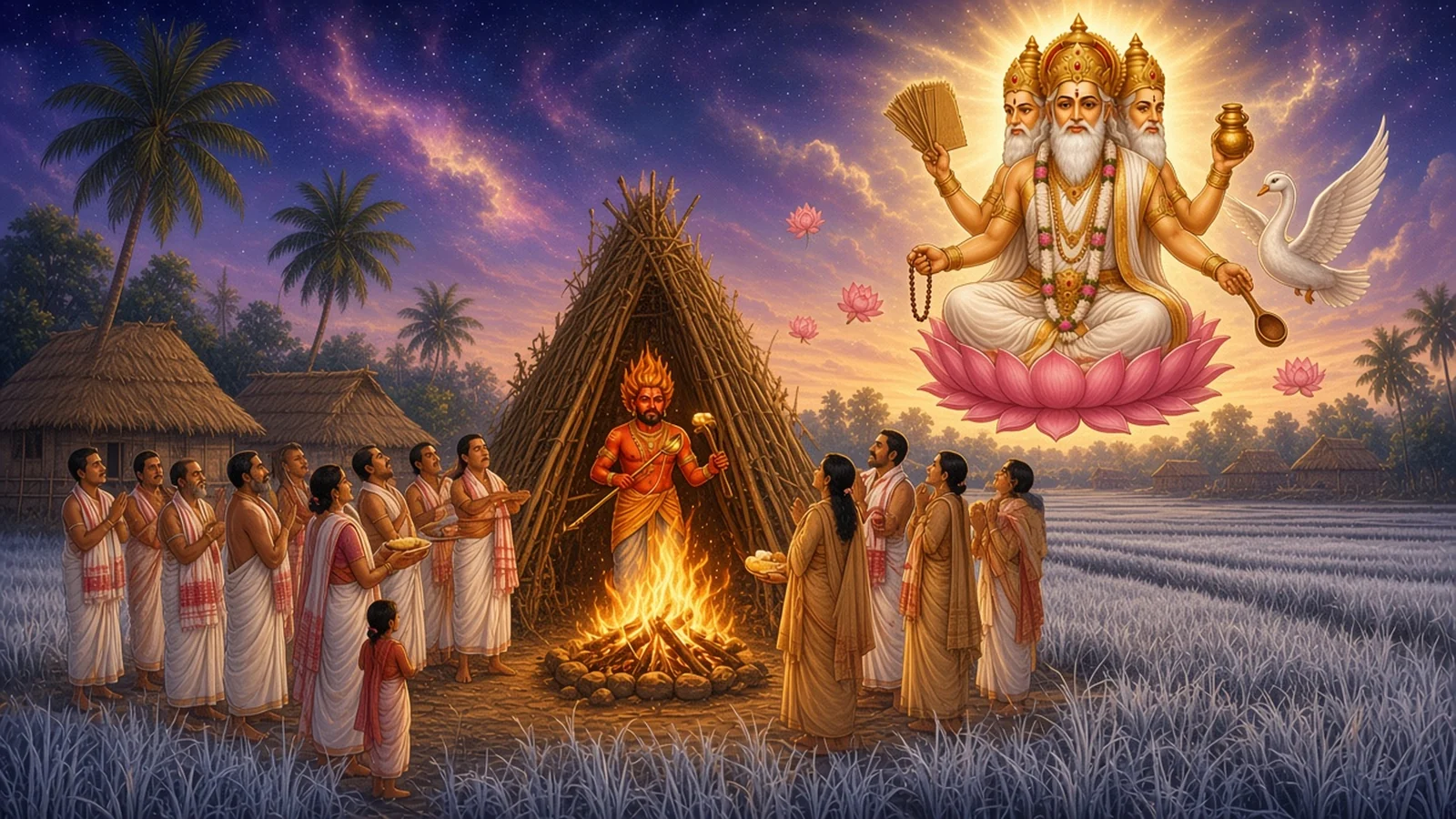
The king went home and waited for the day. When it came he fasted with his wife, his children and his kin, and at the end he gave the whole merit of it to his father. At once flowers began to fall from the gods watching behind the clouds. The gods' messengers came for his father and led him upward, and as he passed he called down to his son.
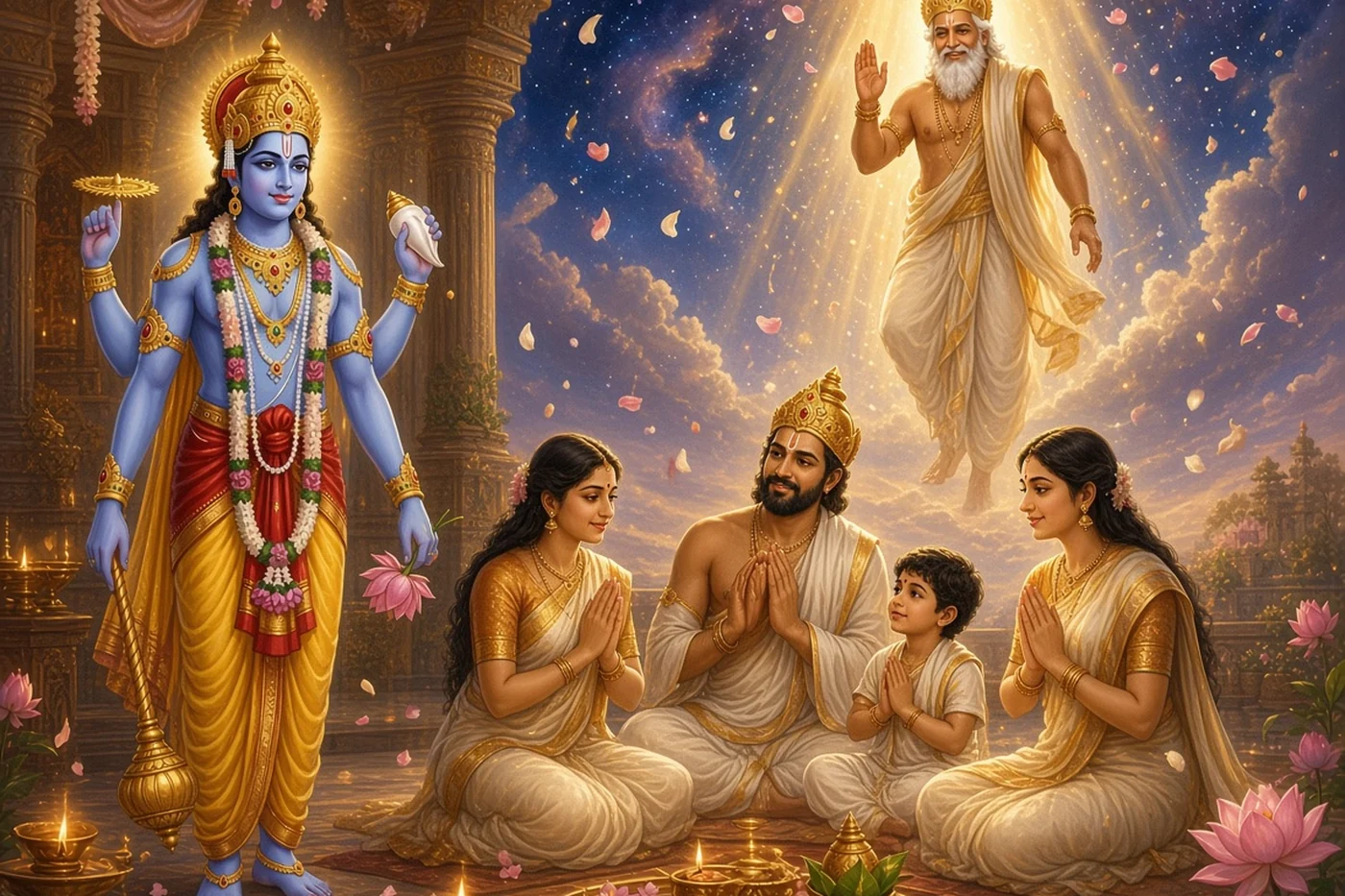
"My dear son, may all good things be yours!"
"No fast is better than this one," Krishna told Yudhishthira. "It is like the wishing gem that grants whatever is asked."
As the Padma Purana tells it
Uttara Khanda, chapter 39, Krishna to Yudhishthira · 2 min read
The Padma Purana tells the same story with some changes. Its Krishna asks that Damodara be worshipped with sprouts of tulasi and that the night be kept awake with dancing, songs and hymns, and he says that hearing the story brings the fruit of a Vajapeya sacrifice.
In this telling the king of Campaka sees in his dream not his father alone but all his forefathers in hell. They weep and beg the one born of their bodies to lift them out of that ocean of suffering. After that nothing pleases him, not his horses, not his elephants, not his wife or his sons.
His Brahmins send him to the nearby hermitage of the sage Parvata, who knows what has been and what will be. The king sets out surrounded by Brahmins and with other kings beside him. He finds the sage among seers versed in the Rig, Yajur and Sama Vedas, and falls at his feet like a stick. When Parvata asks after the seven parts of his kingdom, the king answers that he cannot see how trouble could come to those devoted to Vishnu and to the Brahmins, and yet he has seen his ancestors in hell.
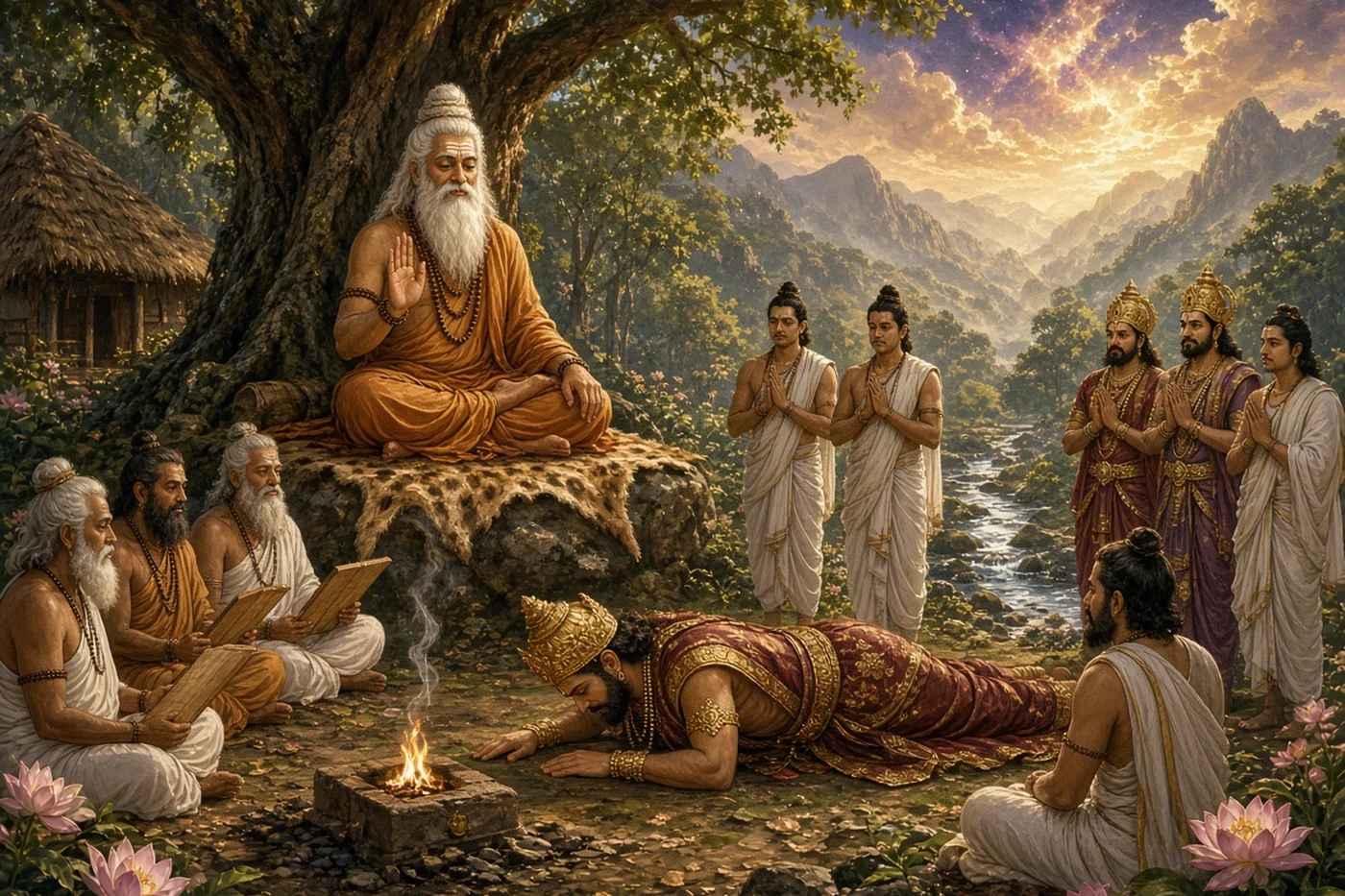
The sage looks into the past and finds a different fault. The king's father had been a kshatriya proud of his kingdom. When his wife was in her fertile season he left her and went off to a village, and did not give her what was her due. For that he and the forefathers had fallen.
Parvata tells him to keep the Mokshada vow and give away its merit, and he adds that this is true because it is Brahma's own word. The king keeps the vow along with all his people and gives the merit to his father. Flowers fall from the sky, the father and all the ancestors are set free, and twice the father's voice comes down from heaven to wish his son well before he goes.