As Barsana keeps it: the dawn abhishek
Braj · Barsana, the Ladliji temple on Bhanugarh · 3 min read
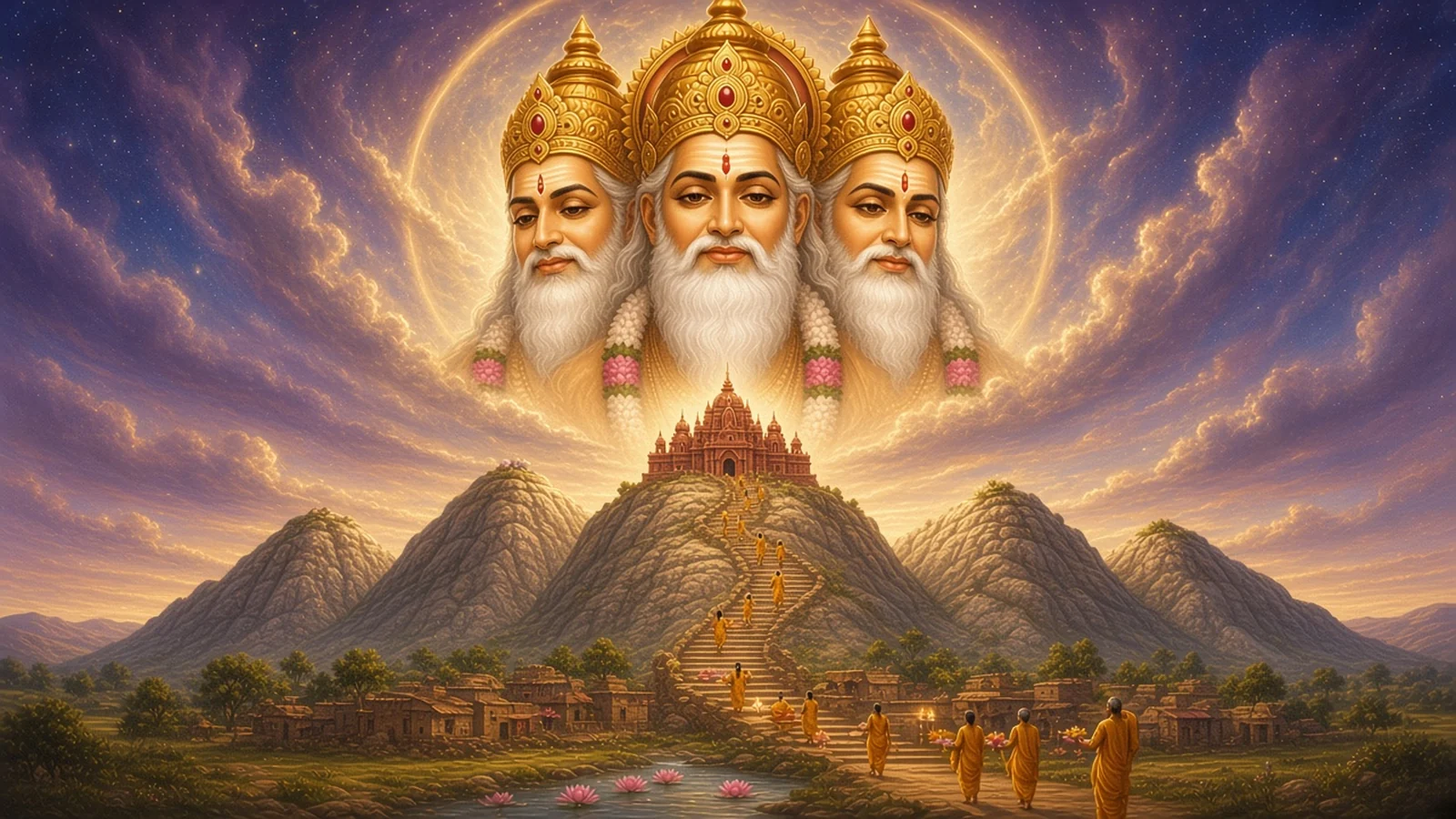
The bus from Agra put them down short of Barsana in the afternoon, because the police had closed the road at the barriers, and they walked the last of it with everyone else. Kamla's knees had not liked the plan from the start.
"You could have watched it on the phone," said her son Rakesh. "They show it live now."
"On the phone," said Kamla. "Her birthday. On the phone."
The lanes were already full. Women had come dressed as Radha's friends, the sakhis, and people carried fruit and sweets and folded clothes up the hill as presents for the baby. The Goswamis of Nandgaon, Krishna's village, had come over the day before with sweets, the way Krishna's people answer Radha's. Nobody meant to sleep. They sat on the steps of the hill and waited.
At two in the morning the singing began inside the Ladliji temple. The Goswamis of Barsana sang the badhai, the songs sung at a birth: the midwife arriving, the baby's sulk, the barber woman, the naming.
"What are they saying?" said Neha, who was nine and had fallen asleep against her father and woken again.
"That a girl is born in Vrishabhanu's house," said Kamla. "That is all any of these songs say. They just say it a hundred ways."
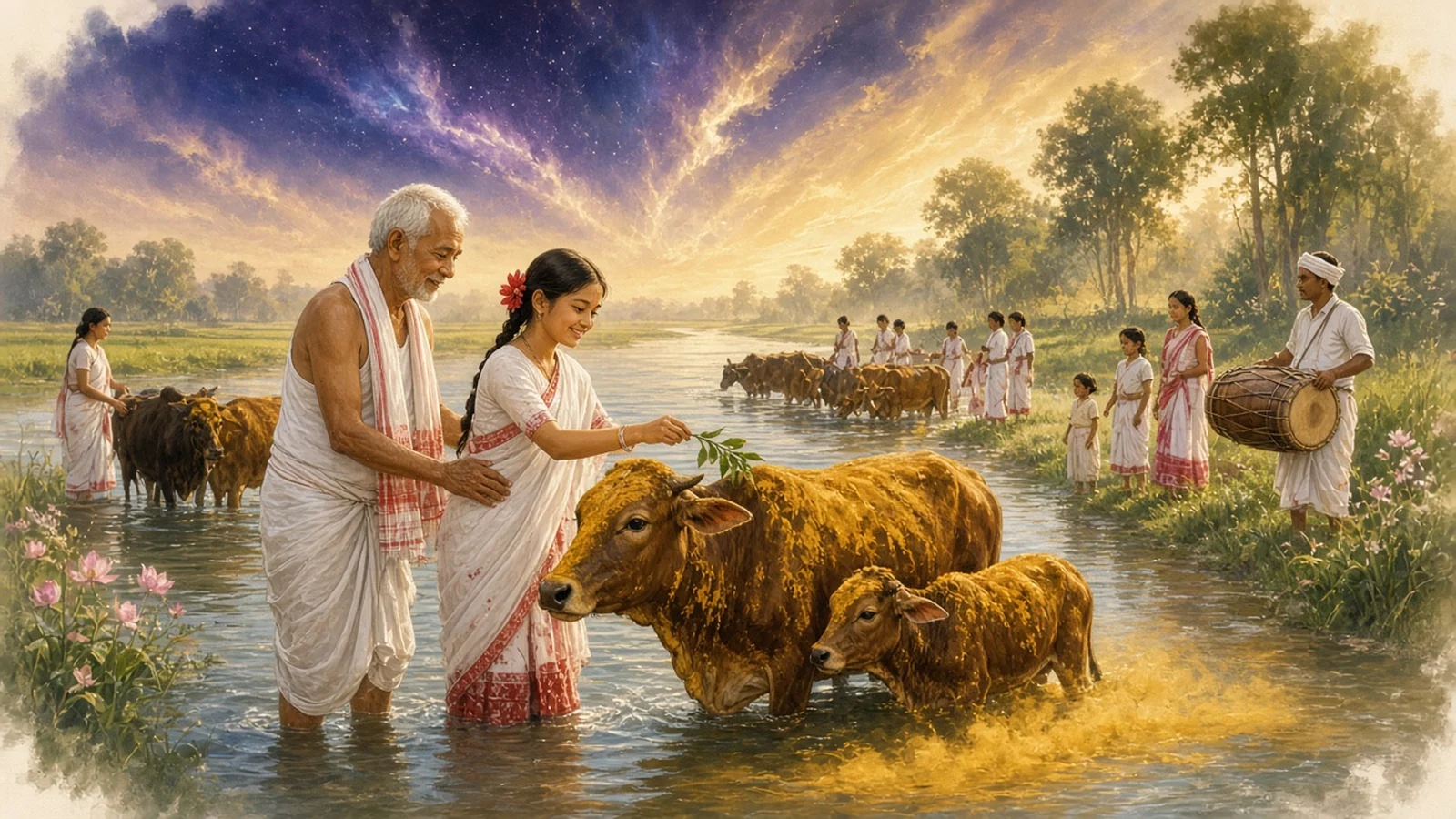
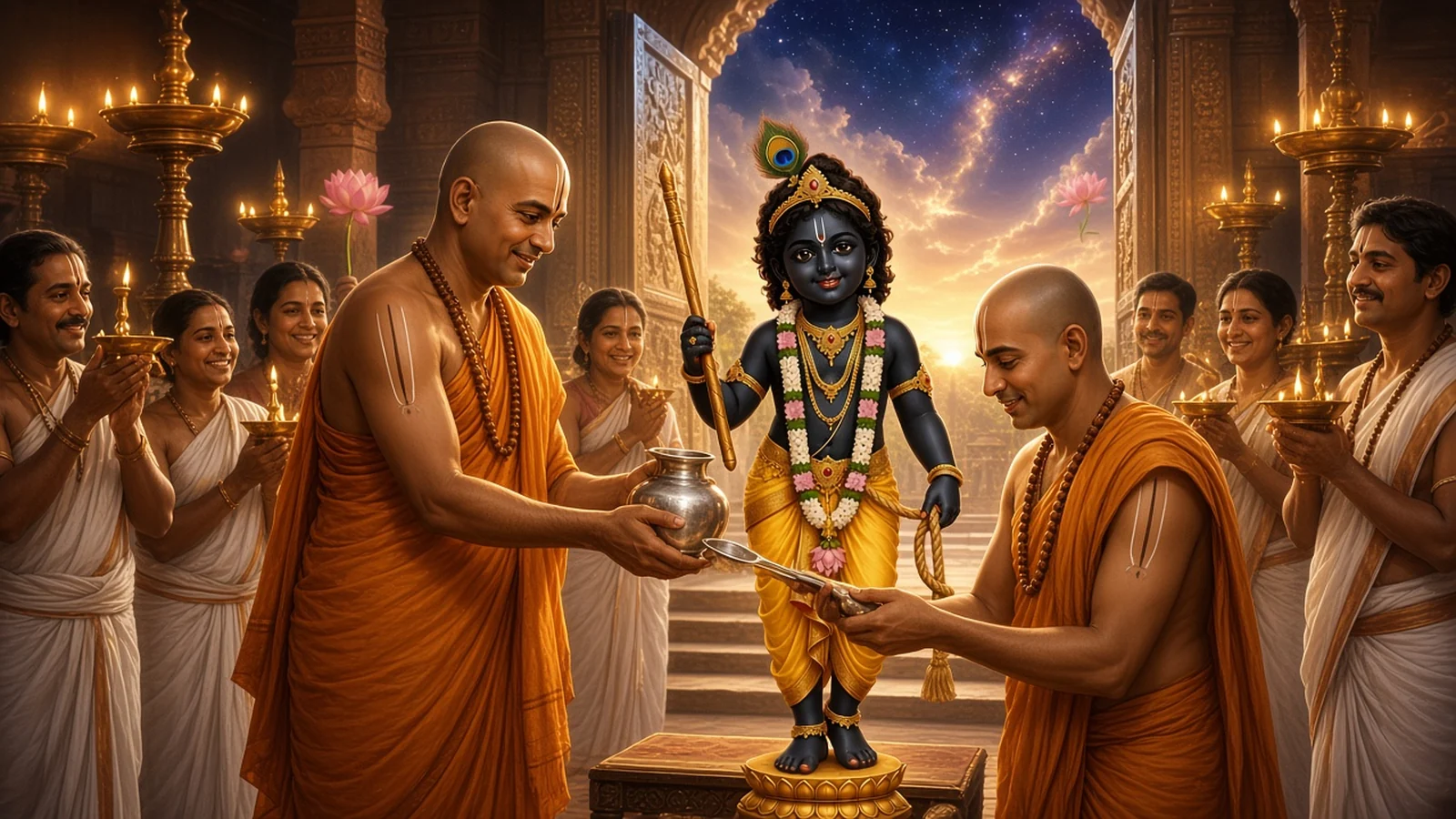
At four the sevayats brought out the image that Narayan Bhatt had found, set her on a silver stand, and bathed her for an hour. Milk first, and curd, honey, cow's ghee, perfume and boora sugar. Then the leaves of twenty-seven trees, earth from twenty-seven places, water from twenty-seven wells, seven kinds of grain, nuts and fruit, and the water of seven rivers with the Yamuna among them. The last of the milk was poured from an earthen pot, and as it ran the priests threw flowers over her.
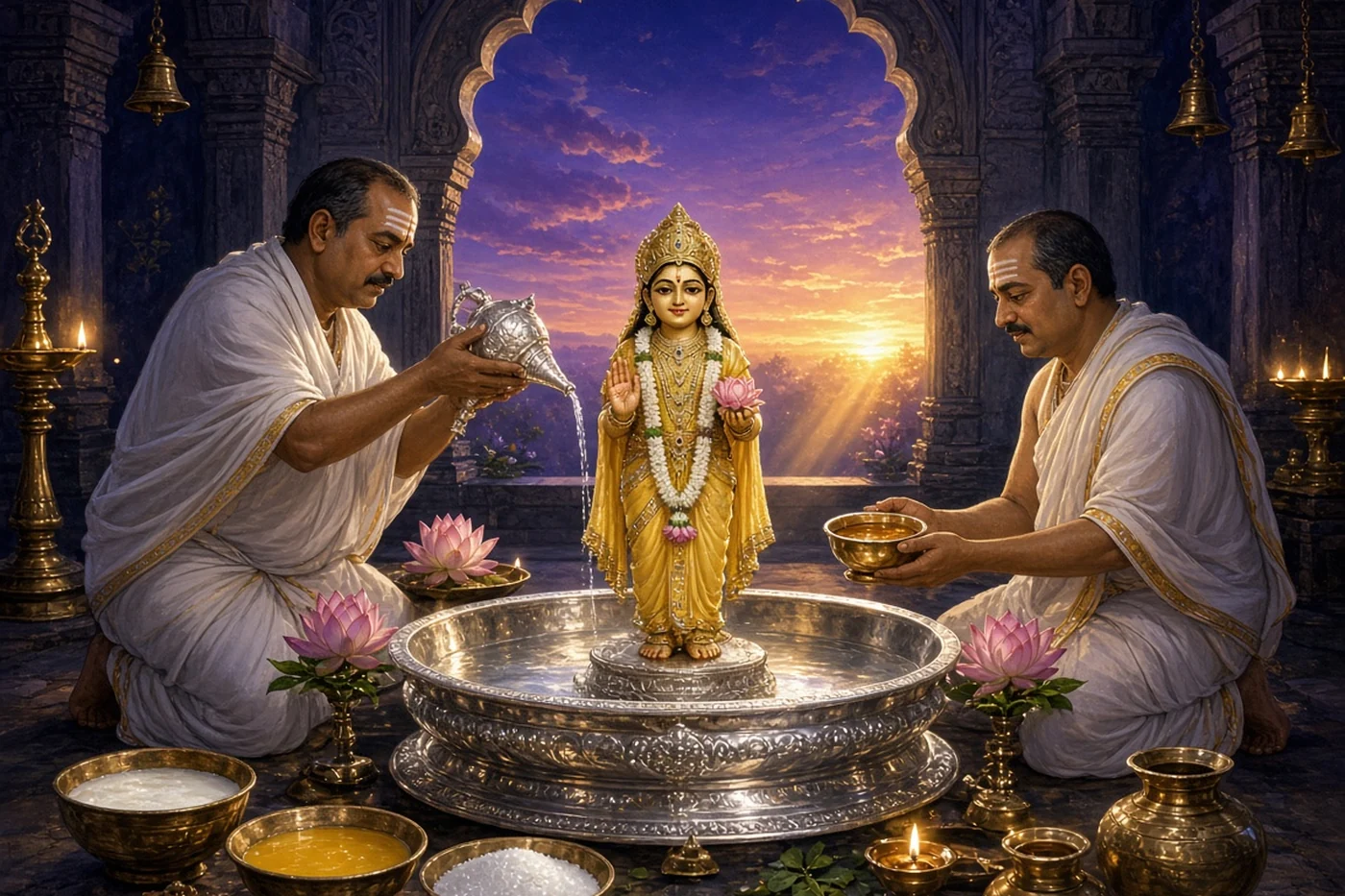
Just before it began, it rained. The crowd on the steps did not move. An old man beside Rakesh turned his face up to it.
"Indra could not wait," he said. "He wants to wash her feet before the priests do."
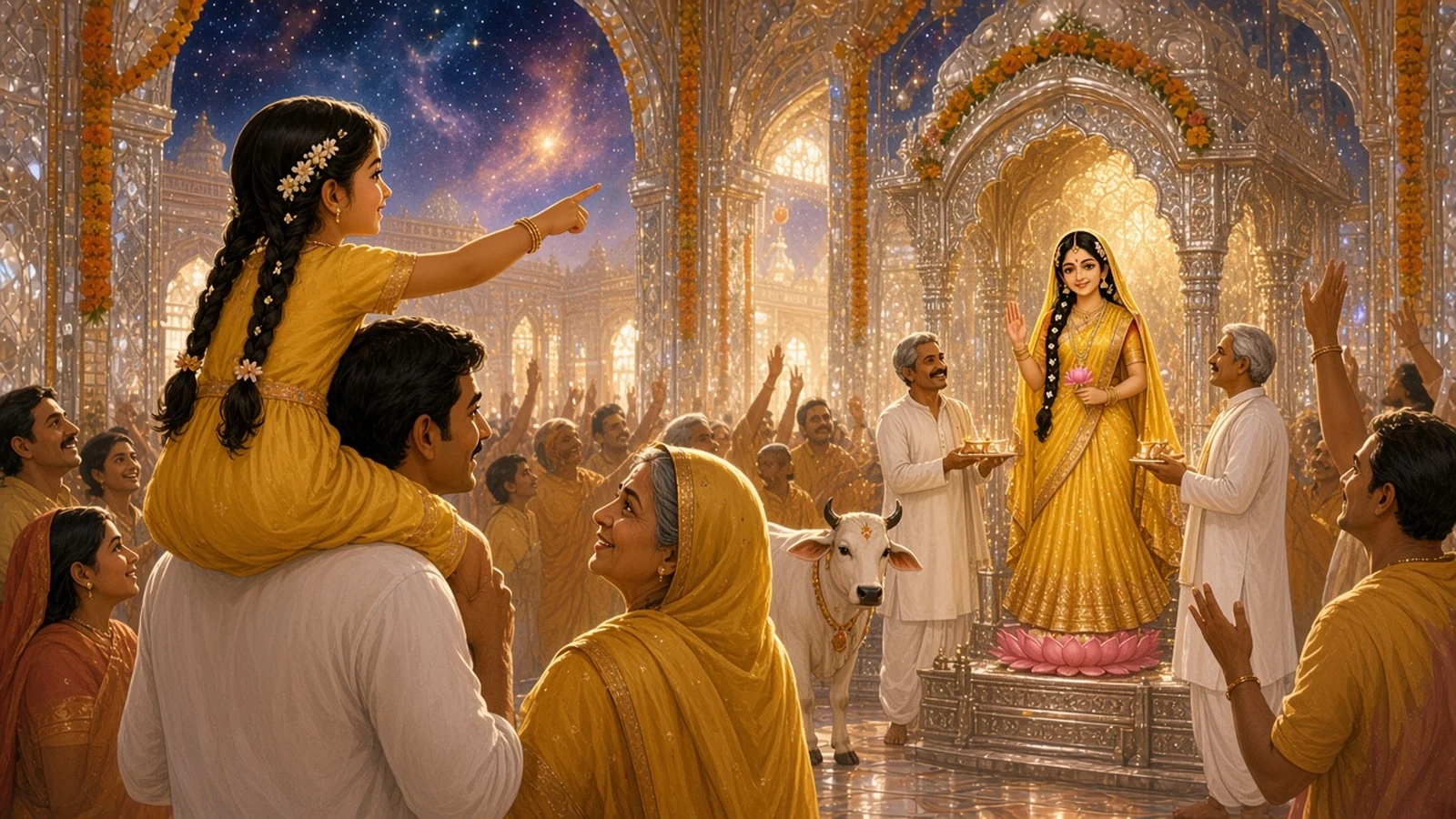
At half past five she was dressed in yellow. From the steps they saw none of it, only heard the bells and felt the press of people ahead. At about eight the Shish Mahal, the hall of mirrors, was opened, and Radha was shown to her town.
Kamla had come for one thing. All year Radha's feet are covered at Barsana, and on this day they are uncovered. Devotees count nineteen marks on them. Kamla had been told she would never see them in the crush, and had come anyway.
It took them two hours to reach the front. Neha went up on her father's shoulders. For a moment, between a priest's arm and somebody's raised hands, there were the two small feet, bare.
"I saw them," said Neha. "Dadi, I saw them."
"Then I saw them too," said Kamla, who had not, and was pushed on down the far steps smiling.
In the evening the baby is brought out on her dola to the white marble chhatri, the way Queen Kirti once carried her daughter out to the courtyard for the town to see, and the daughters of the Goswami families wave the lamps before her. By then the family from Agra was on the bus home.
As the Gaudiyas keep it: fasting till noon
Bengal · Mayapur, and Bhaktivedanta Manor near Watford · 2 min read
At Mayapur in Bengal, where Chaitanya was born beside the Ganga, the Gaudiya Vaishnavas keep the same birthday at noon rather than at dawn, and they keep it hungry.
The day before, the Radha Premdan kirtan runs from morning, and in the evening Radha Madhava receive the adhivas, the honouring that comes before a great rite, with twenty-seven auspicious things. On the day the darshan opens an hour late, because the deities are being dressed new, and senior devotees give the Bhagavatam class on Radha's glories.
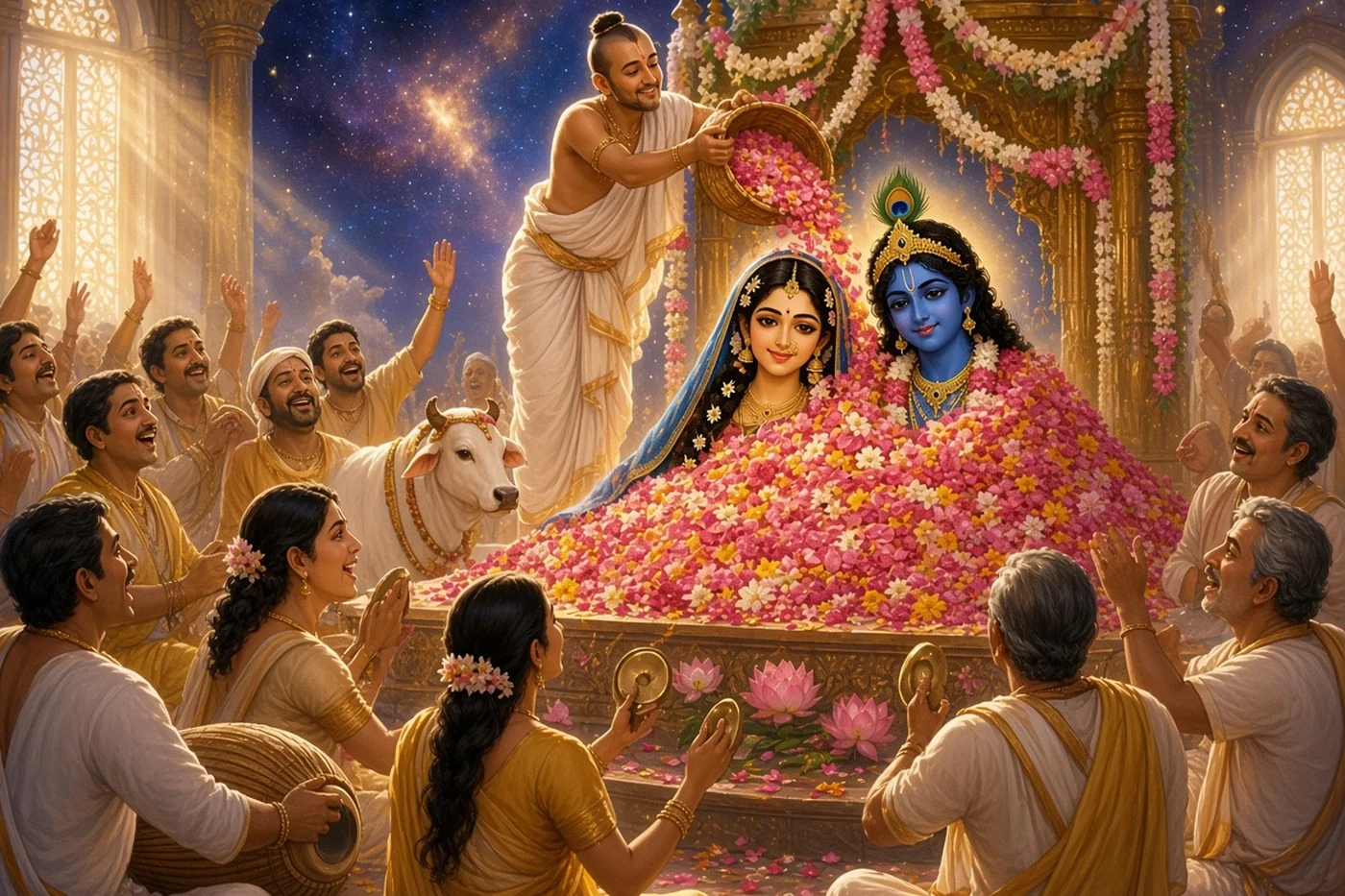
At noon comes the maha-abhisheka. Pancha gavya and panchamrita, the five gifts of the cow and the five nectars; fruit juices, sugar syrups and flower waters; two herbal showers; sandal paste, washed off at last in a stream of Ganga water. Then petals are poured over them until only their faces show. More than a hundred dishes are offered, and birthday cakes as tall as a door, and the arati is waved. Only then does the temple eat. Most devotees fast till noon and break it at the feast in the afternoon; some fast the whole day. The eight sakhis are remembered beside her, Lalita and Vishakha and the rest, because Radha is never kept alone.
The same fast reaches England. At Bhaktivedanta Manor near Watford the day runs from the early arati through a class and an abhishek to a lunch feast at half past one for everyone who has gone without since morning, with a singing party out into Watford town centre. In the evening there is cake. In 2021 the Manor's cooks made one of the Shriji temple at Barsana with its steps climbing the hill, and another of Radha's two feet with their marks, so that people who would never stand on that hill could see what the crowd there had queued for.