Devalok ← All gods
Also calledRadhikaRadharaniShri RadhaKishoriVrishabhanu NandiniShyama

Artwork ›

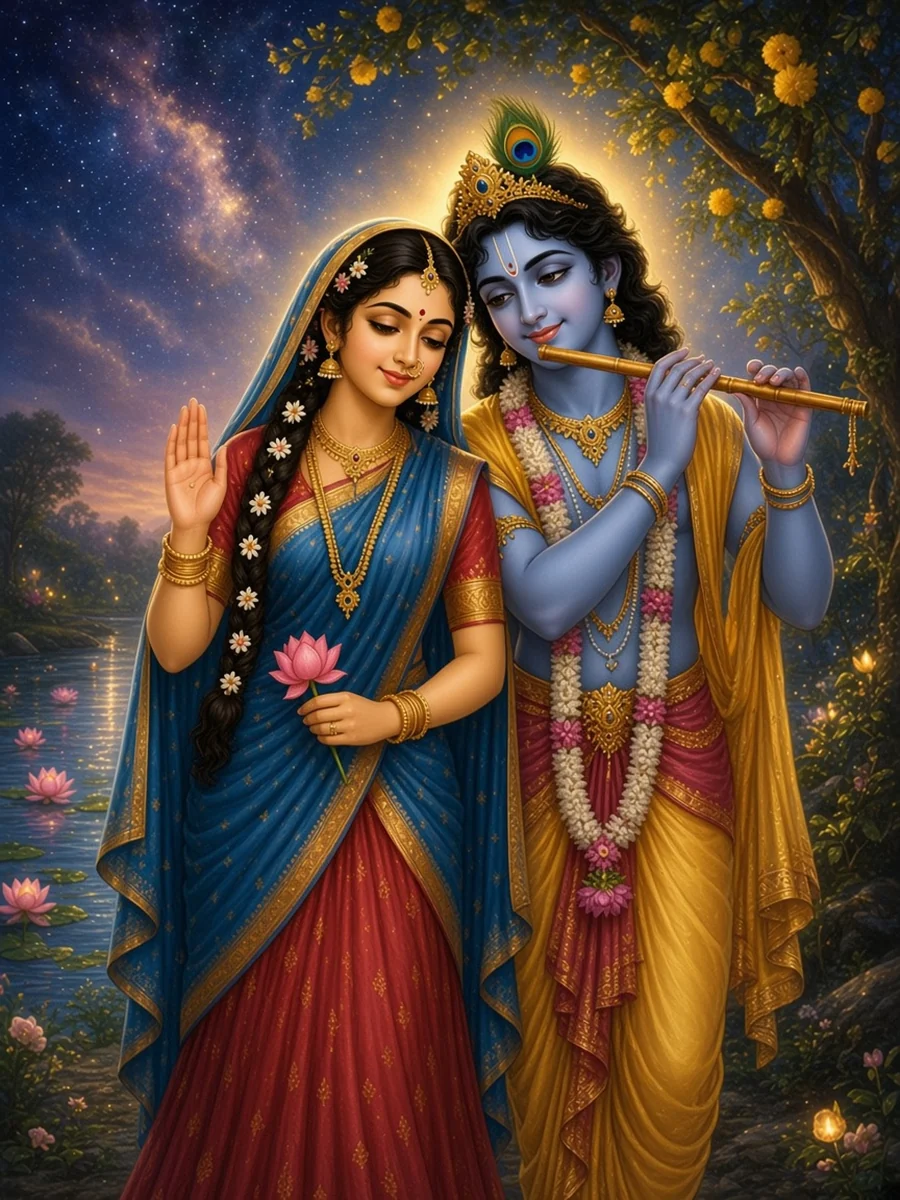
Radha listens beside Krishna as he plays his flute under the kadamba tree by the Yamuna In the Gita Govinda Radha waits at the edge of the spring woods for Krishna

For kids

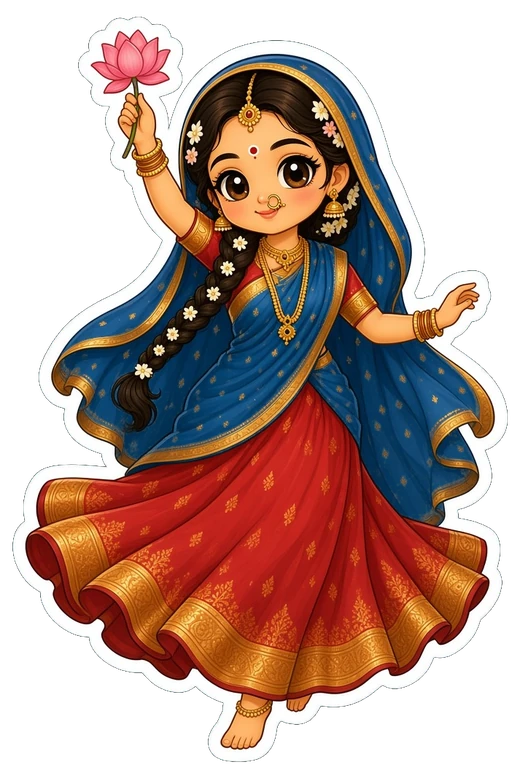
Little Radha twirls in a happy dance with her lotus
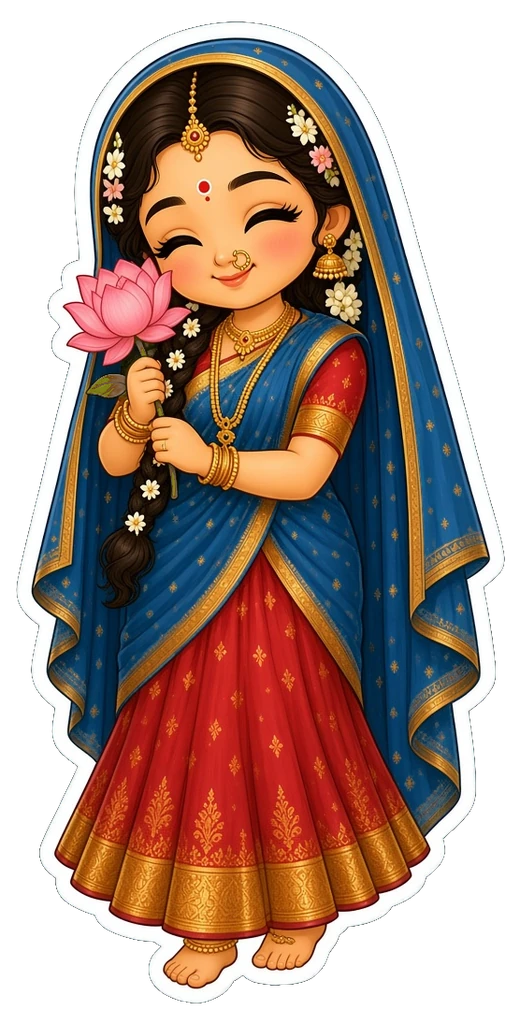
Little Radha hugs a big pink lotus and smiles

At a glance

TraditionVaishnava
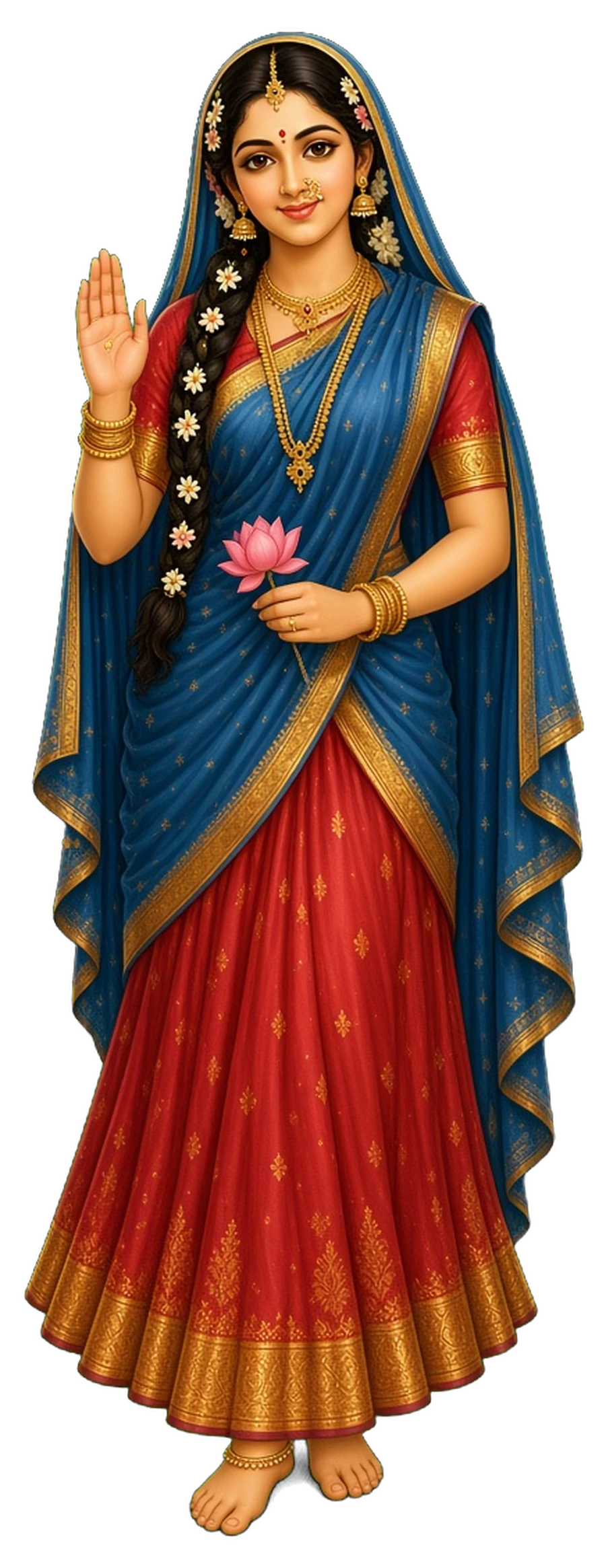
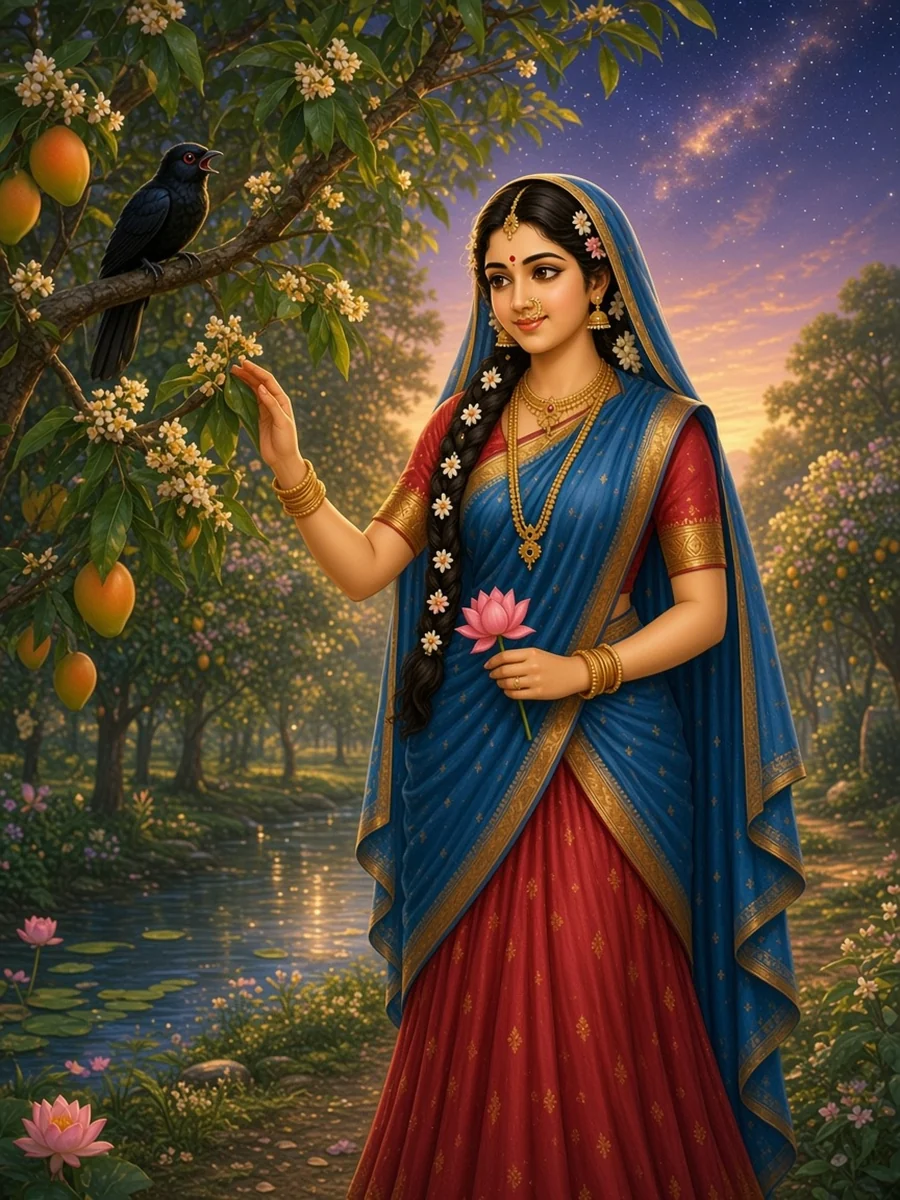
FormA young woman of Braj

golden-skinned, standing at Krishna's left

DressA blue or red skirt and veil

a nose ring, flowers in her hair

Who Radha is

Radha is the cowherd girl of Braj whom Krishna loved. She grew up at Barsana, near his village, and the poets of the north have sung their meetings in the forest by the Yamuna, their quarrels and reconciliations, and her grief when he left for Mathura and did not come back, for more than eight hundred years.

She was not his wife. That is the heart of it. In the devotional traditions of Braj, her love is the highest love there is, because it asked nothing and was given in spite of everything.

Radhe Radhe: the greeting of Braj, where people say her name to each other in place of hello.

Over time Radha grew from a figure in a poem into a goddess. In the Brahma Vaivarta Purana she is Krishna's own left half, divided from him in heaven so that he would have someone to love. To the Gaudiya Vaishnavas of Bengal, she is Krishna's own power of joy, and Chaitanya was Krishna and Radha in one body. In the Radha Vallabh tradition of Vrindavan she is honoured even above him.

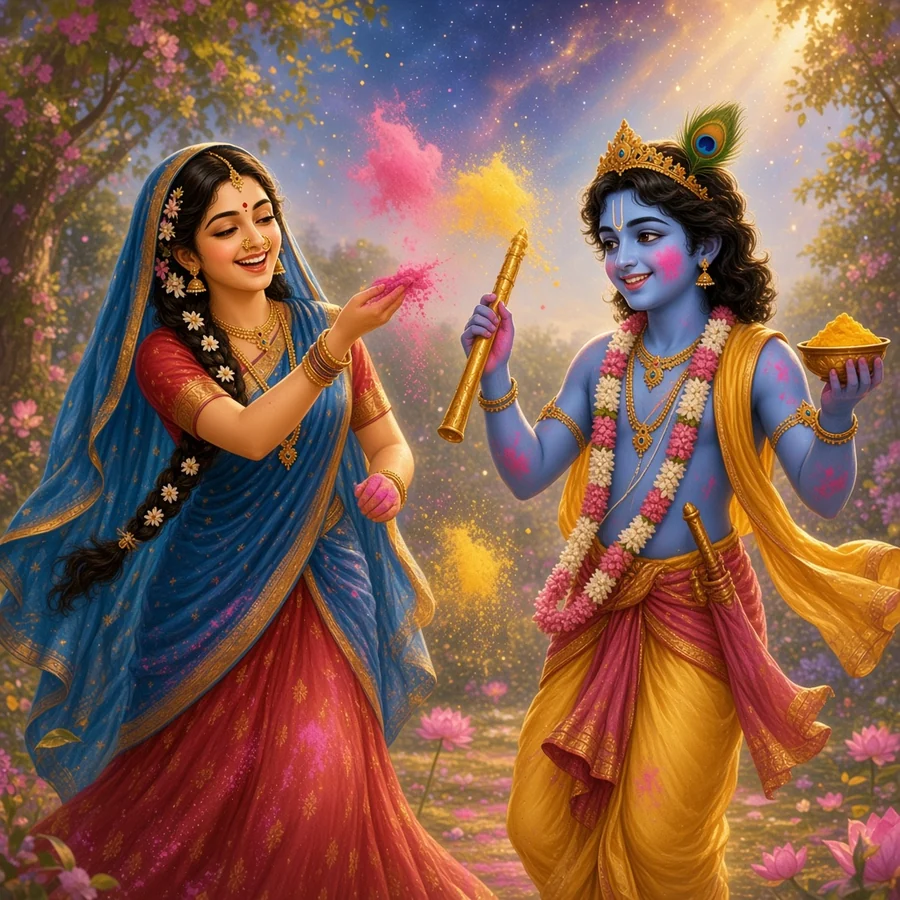
In Braj she is everywhere. People greet each other with her name. Her temple at Barsana stands on top of the hill, and every spring the women of Barsana meet the men of Krishna's village with sticks, in the Lathmar Holi, to settle an old score on her behalf.

Before the Puranas

The Vedic roots of Radha

Radha's first certain appearance is in poetry, not scripture. A verse of the Gatha Saptashati, an anthology of Prakrit love poems compiled in the early centuries of the common era, speaks of Krishna blowing dust from Radha's eye, and the other girls noticing. After that she appears here and there in Sanskrit poetry and anthologies.

The Bhagavata Purana, the great book of Krishna's life, never names her. It tells of one gopi whom Krishna takes away from the others during the rasa dance, and later commentators read that gopi as Radha.

Everything changed with Jayadeva's Gita Govinda in the twelfth century, a long poem of songs about Radha and Krishna's love, quarrel and reunion. It was sung in the Jagannath temple at Puri and spread across India, and Radha became the centre of Krishna devotion.

From the fifteenth and sixteenth centuries the great devotional movements of the north made her a goddess. Nimbarka's tradition worshipped Radha and Krishna together; Chaitanya's Gaudiya followers in Bengal made her Krishna's own energy of delight; Vallabha's Pushti Marg and the poets of Braj, Surdas above all, sang her; and the Radha Vallabh sampradaya of Vrindavan placed her first.

The Brahma Vaivarta Purana, in its later form, gives her a full theology and a birth story, and makes her the source of all the gopis.

Braj itself became her map. Barsana claims her childhood and her temple on the hill, Raval by the Yamuna claims her birth, and Radhashtami, on the eighth of the bright half of Bhadrapada, is kept as her birthday.

See how the Vedic gods became the Puranic ones →

Related gods