As Braj tells it
Raval and Barsana · 2 min read
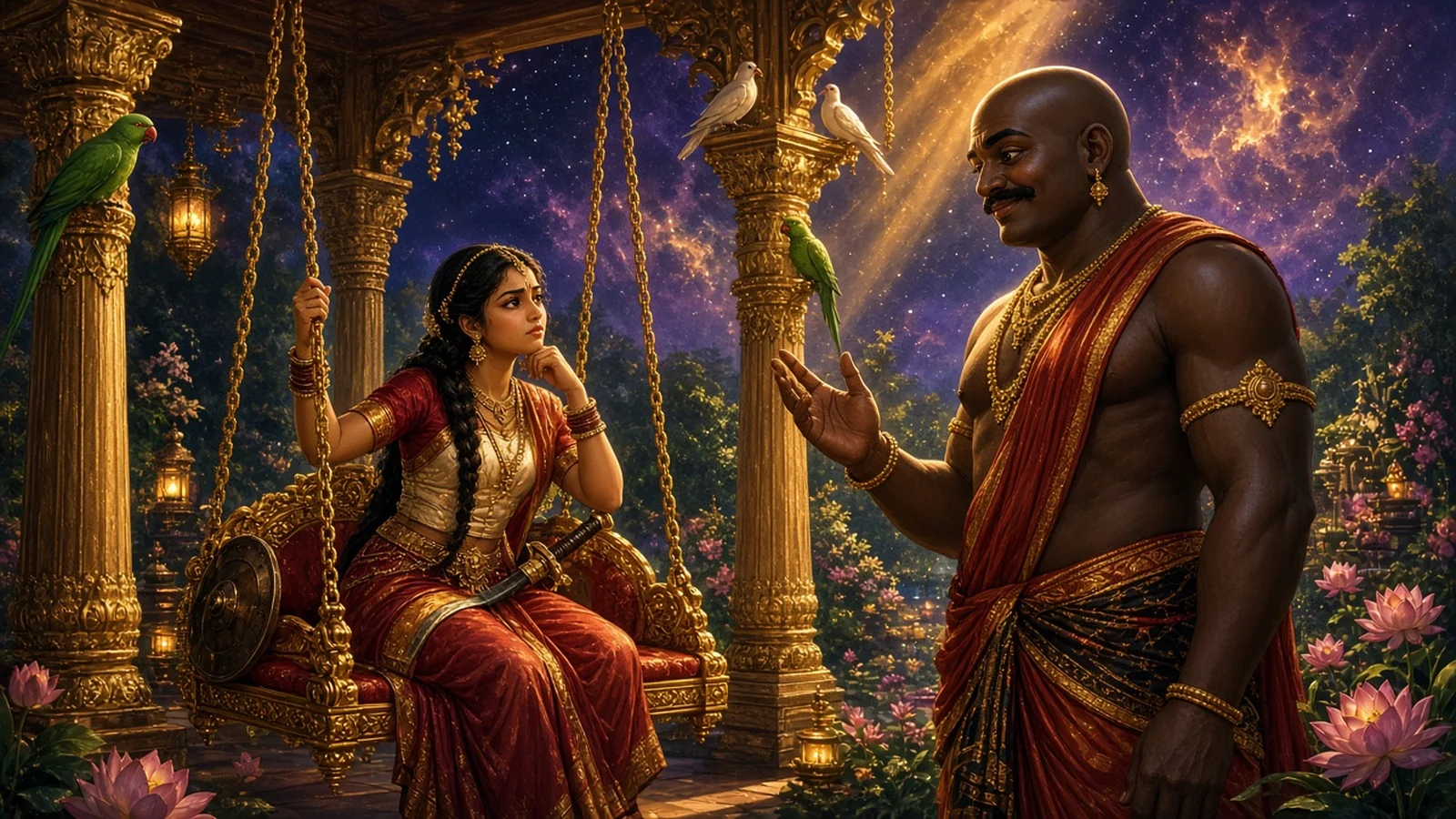
Vrishabhanu was a chief of the cowherds of Braj, a good man with many cows and no children. Every morning he went down to the Yamuna to bathe, at the village of Raval near Gokul.
One morning, in the month of Bhadrapada, he saw something shining on the water. It was a lotus, larger than any lotus he had ever seen, with a golden light in its petals, and lying in the middle of it was a baby girl.
He waded out and lifted her up. She was not crying. She lay in his arms as if she had been waiting for him.
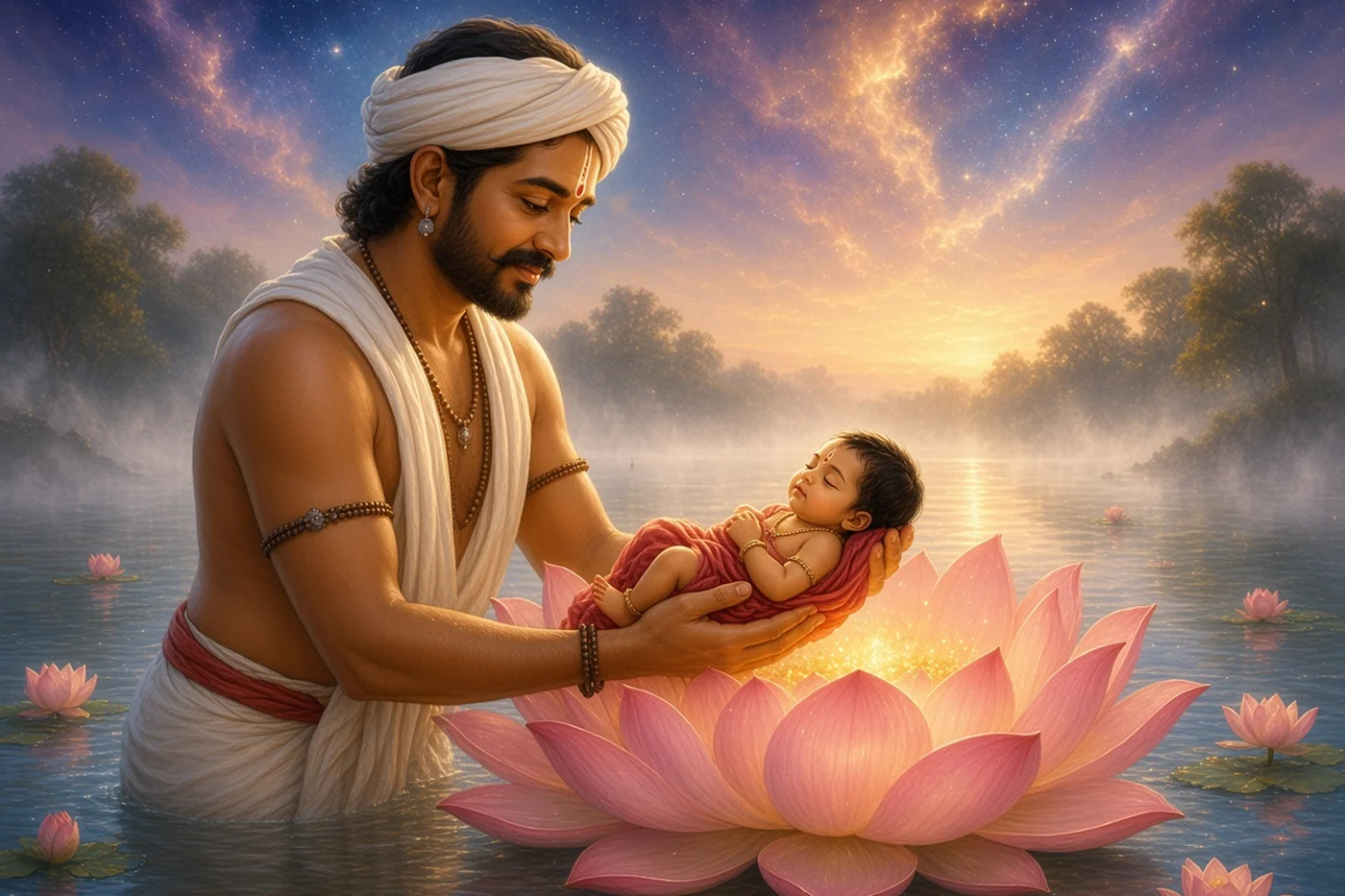
He carried her home to his wife.
"Look," he said. "The river has given us a daughter."
His wife took the baby and wept with happiness, and they called her Radha.
She was the most beautiful child anyone in the village had seen. She fed well and slept well and grew strong. But there was one thing wrong. She never opened her eyes.
Days went by, then weeks. Her mother sat by her and sang to her and touched her eyelids, and still they stayed shut.
"She is blind," said the women of the village, as kindly as they could.
"She is not blind," said her mother. "She is waiting."
"Waiting for what?"
Her mother did not know.
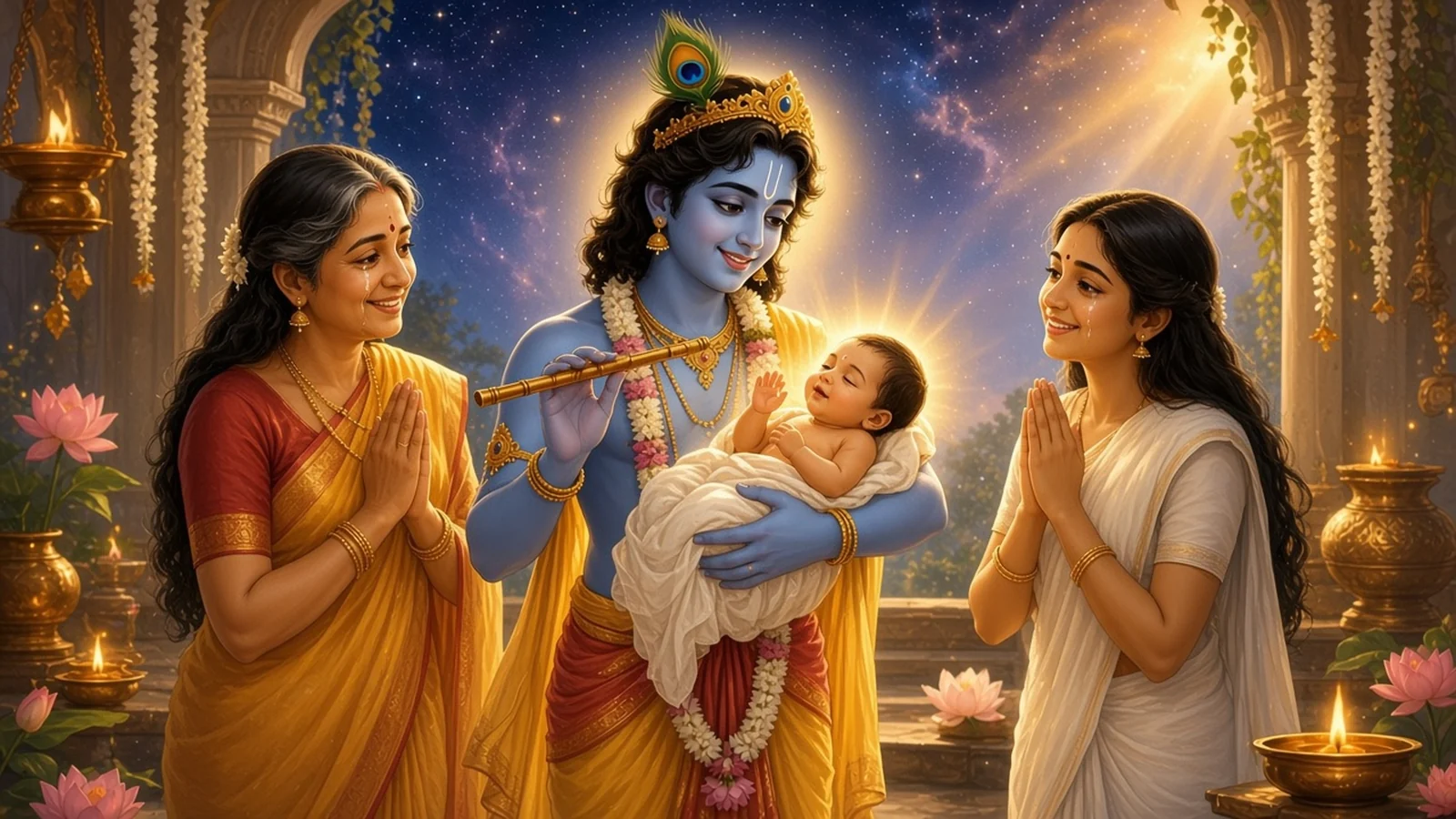
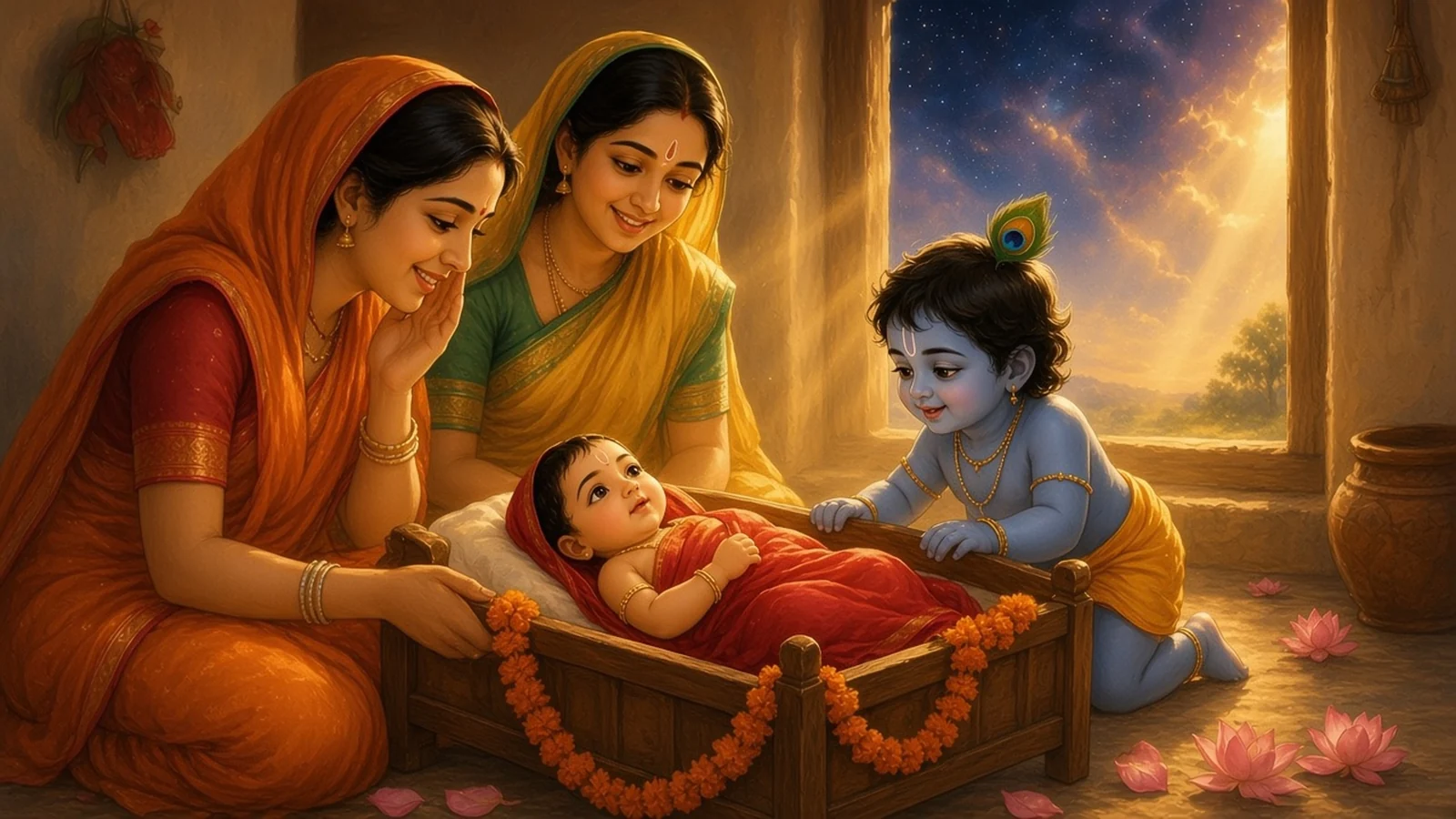
Not far away, in Gokul, the cowherd chief Nanda and his wife Yashoda had a baby boy of their own, a dark child with a laugh that made everyone around him laugh too. When word came of Vrishabhanu's daughter, Yashoda came to visit, and she brought the boy with her.
She set him down on the floor next to Radha's cradle.
The little boy pulled himself up by the edge of the cradle and looked in.
And Radha opened her eyes.
She looked up at him, and he looked down at her, and neither of them made a sound. Her mother put her hand over her mouth.
"There," she whispered. "That is what she was waiting for."
The first thing Radha saw in the world was Krishna. Braj says that she never in her life looked at anything with the same joy.
Later the family moved to Barsana, a little way off, where the hill is, and that is where she grew up. Her temple stands on the top of the hill now. Every year on the eighth day of the bright half of Bhadrapada, fifteen days after Krishna's birthday, Barsana keeps hers.
As the Brahma Vaivarta Purana tells it
Prakriti Khanda 48 to 49 · 2 min read
The Brahma Vaivarta Purana begins her story long before Braj, in Goloka, Krishna's own heaven, beyond all the other worlds.
There, it says, Krishna wished for someone to love. So he divided himself in two. The right side remained Krishna. The left side became Radhika. And from Radha, as her own companions, came all the cowherd women.
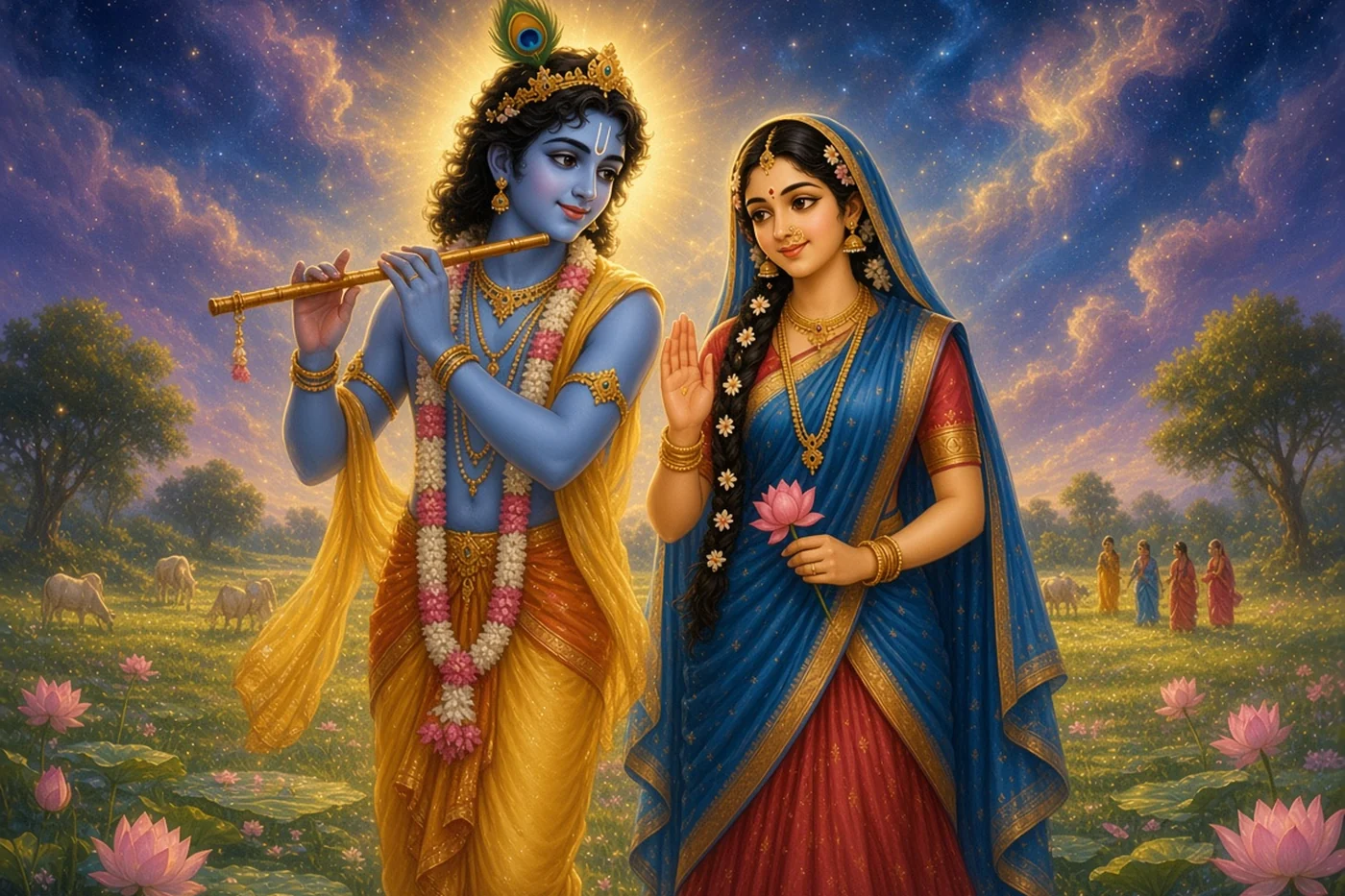
Goloka was a happy place, but even there quarrels happened. Krishna's companion Sridama took Krishna's side in some argument with Radha, and spoke to her rudely.
Radha was angry, and she cursed him.
"Go and be born a demon," she said.
Sridama cursed her back.
"Then you go and be born on earth," he said, "as a cowherd's daughter. And be parted from Krishna for a hundred years."
Both curses came true. Sridama was born as the demon Shankhachuda. And Radha came down to earth, to Braj, into the house of Vrishabhanu and his wife Kalavati.
She was not born in the ordinary way, the Purana says. Her mother carried only wind in her womb. When the time came, the wind gave way to the child, and Radha was simply there.
Sridama's life as a demon is a story of its own in the same Purana. As Shankhachuda he became a great king of the danavas, and his wife was the faithful Tulasi, and in the end Shiva killed him in battle.
For Radha, the curse explains everything that happens afterwards in Braj. The girl by the Yamuna does not know she is a goddess. She grows up among the cowherds, loves the dark boy from the next village, and loses him when he goes away to Mathura. In the Purana's eyes, all the grief of that parting, which the poets of Braj sing about for centuries, is the hundred years of Sridama's curse running its course.