As the Gaudiya Vaishnavas tell it
Bengal and Puri · a story of Dwaraka · 2 min read
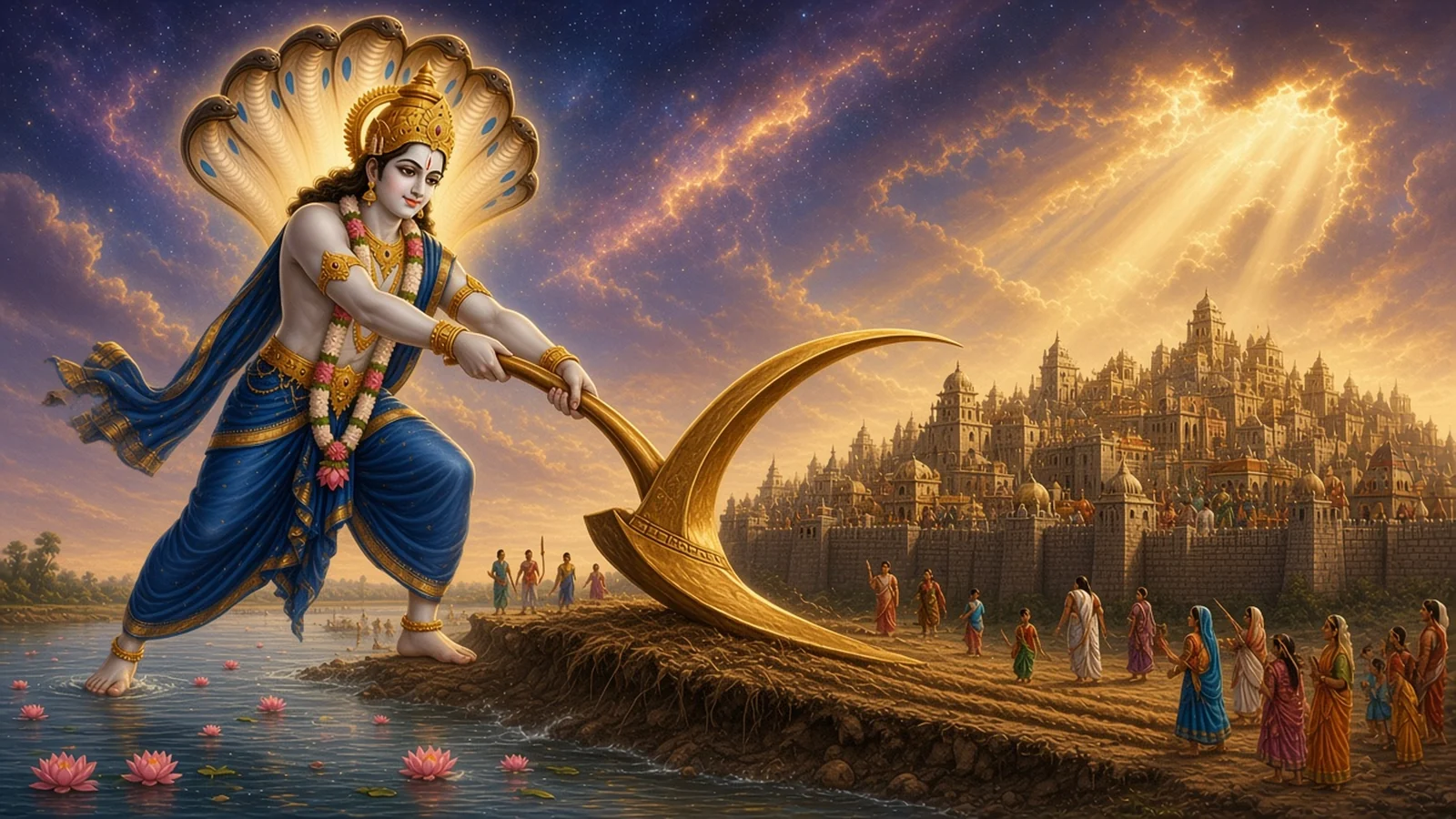
Krishna had left the cowherds' country long ago. He was a king now, in Dwaraka by the western sea, with a palace full of queens. And still, the queens noticed, his mind was somewhere else. Sometimes in his sleep he called out the names of the cowherd girls of Vrindavan.
"What happened to him there?" they asked each other. "What were those days, that he cannot forget them?"
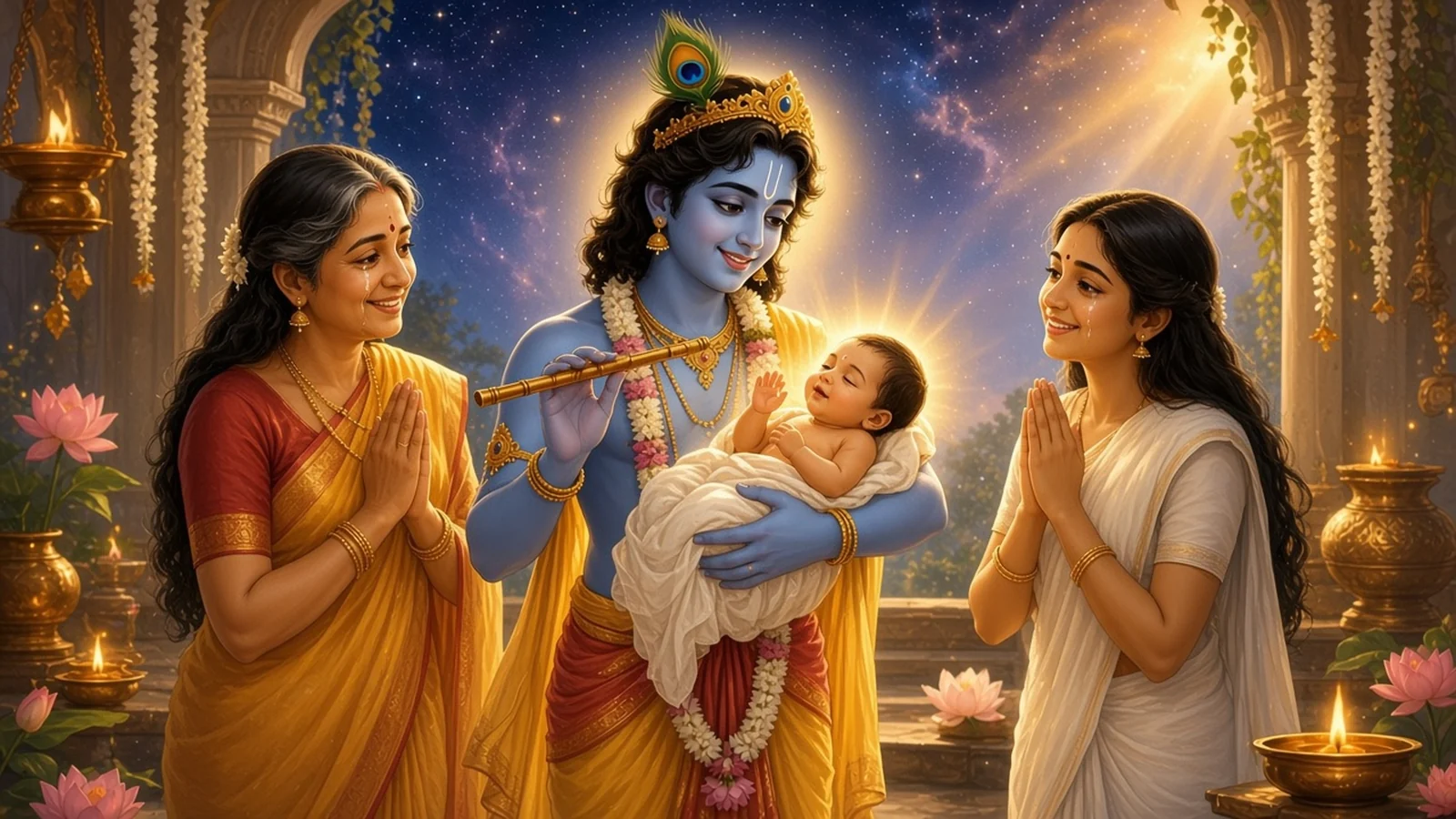
Somebody in the palace knew. Rohini, Balarama's mother, had lived in Vrindavan through all of Krishna's childhood. So the queens went to her.
"Tell us about Vrindavan," they begged. "Tell us everything."
Rohini hesitated.
"I will tell you," she said at last. "But Krishna and Balarama must not hear it. If those two hear the stories of Vrindavan, there is no knowing what will become of them."
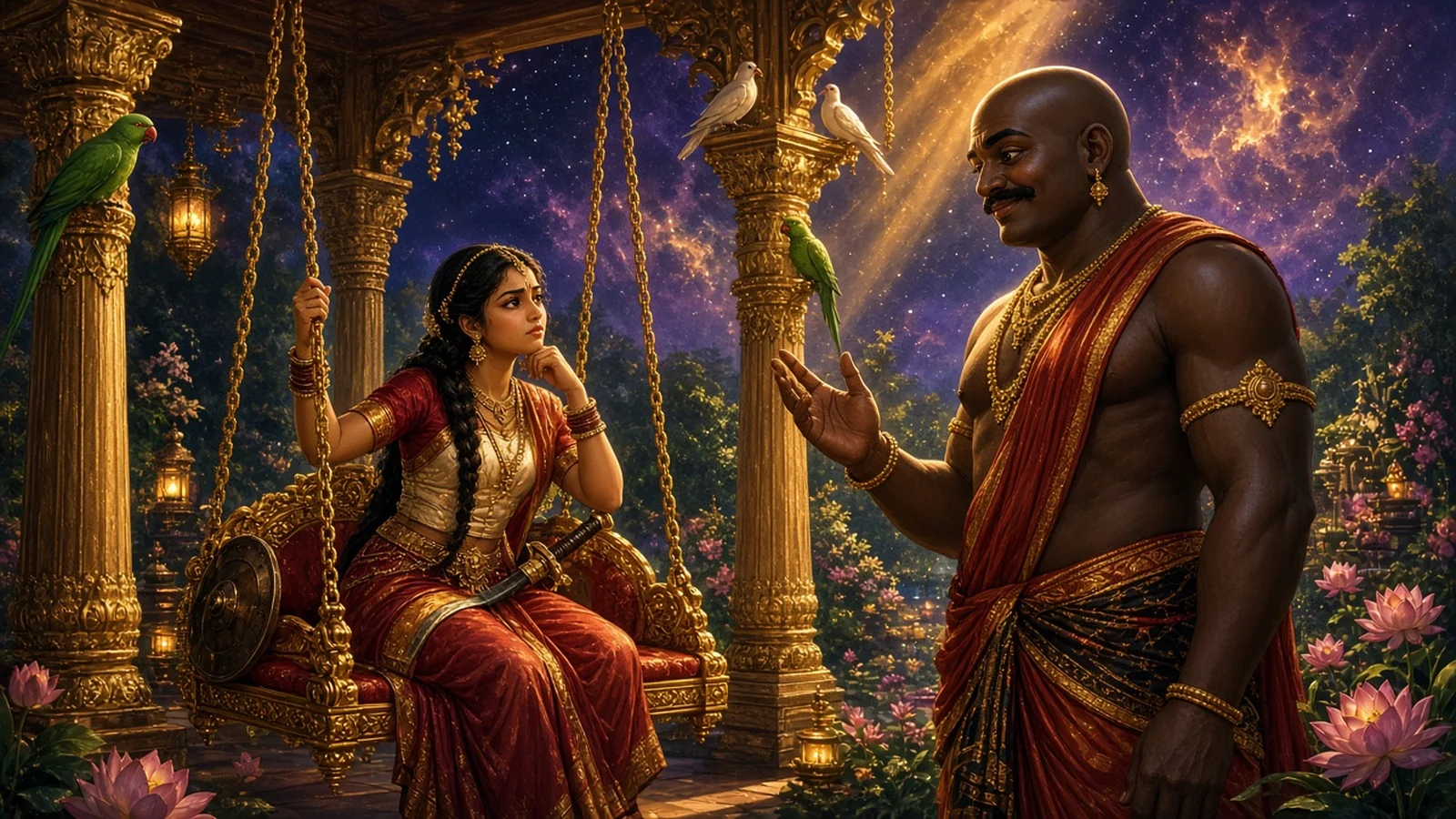
The brothers were away in the council hall, Sudharma. Still, someone had to keep watch, and Rohini chose Subhadra, their little sister.
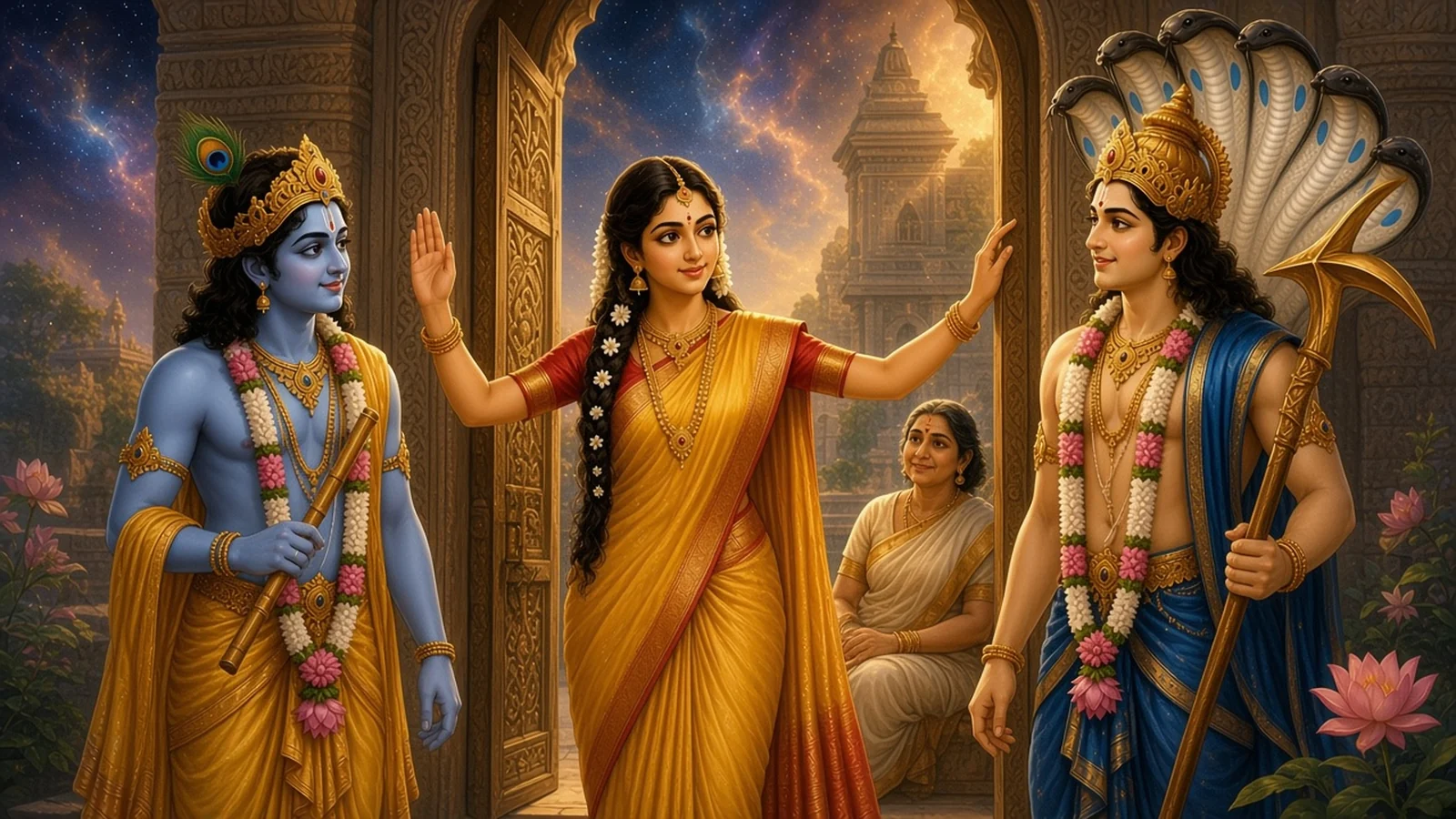
"Stand at the door," she told her. "If your brothers come, do not let them in, and call out to us at once."
Subhadra took her place in the doorway and spread her arms across it. Behind her, Rohini began.
She told of Krishna when he was small, among the cowherds and the cowherd girls of Vrindavan, and of all that he did there. The queens listened without a sound. And Subhadra, at the door, listened too, and forgot that she was there to keep watch.
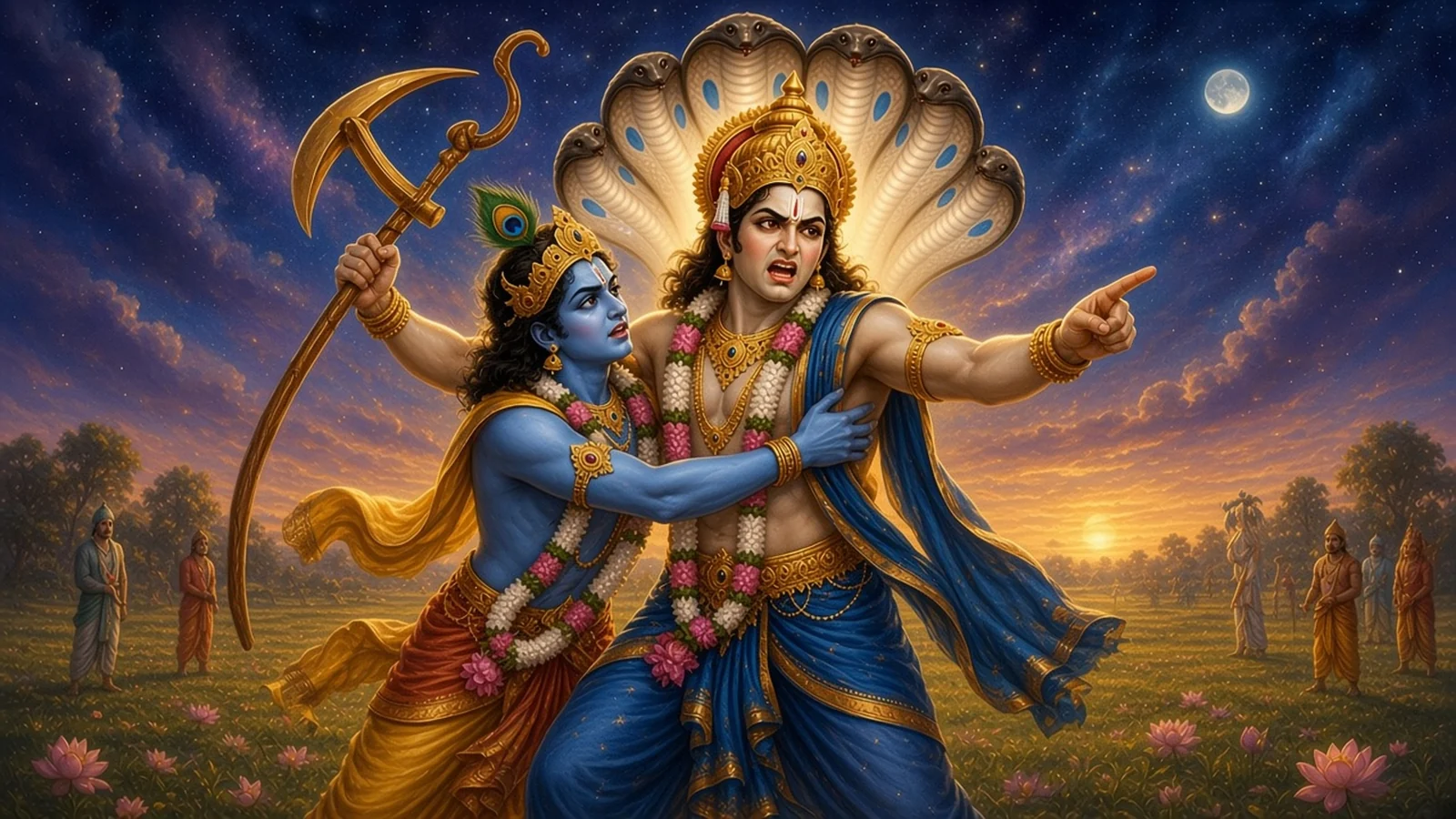
In the council hall Krishna and Balarama could not keep their minds on the council. Something was pulling them home. They came through the palace, and found the door, and their sister standing in it with her arms out.
She did not see them. They did not see that she did not see them. They stood one on each side of her and heard the stories of their own childhood.
And as they listened, all three of them changed. Their eyes grew wide and round. Their faces broadened. Their hands and feet drew in, as a tortoise draws in its limbs, until there were only three still figures in the doorway with great shining eyes.
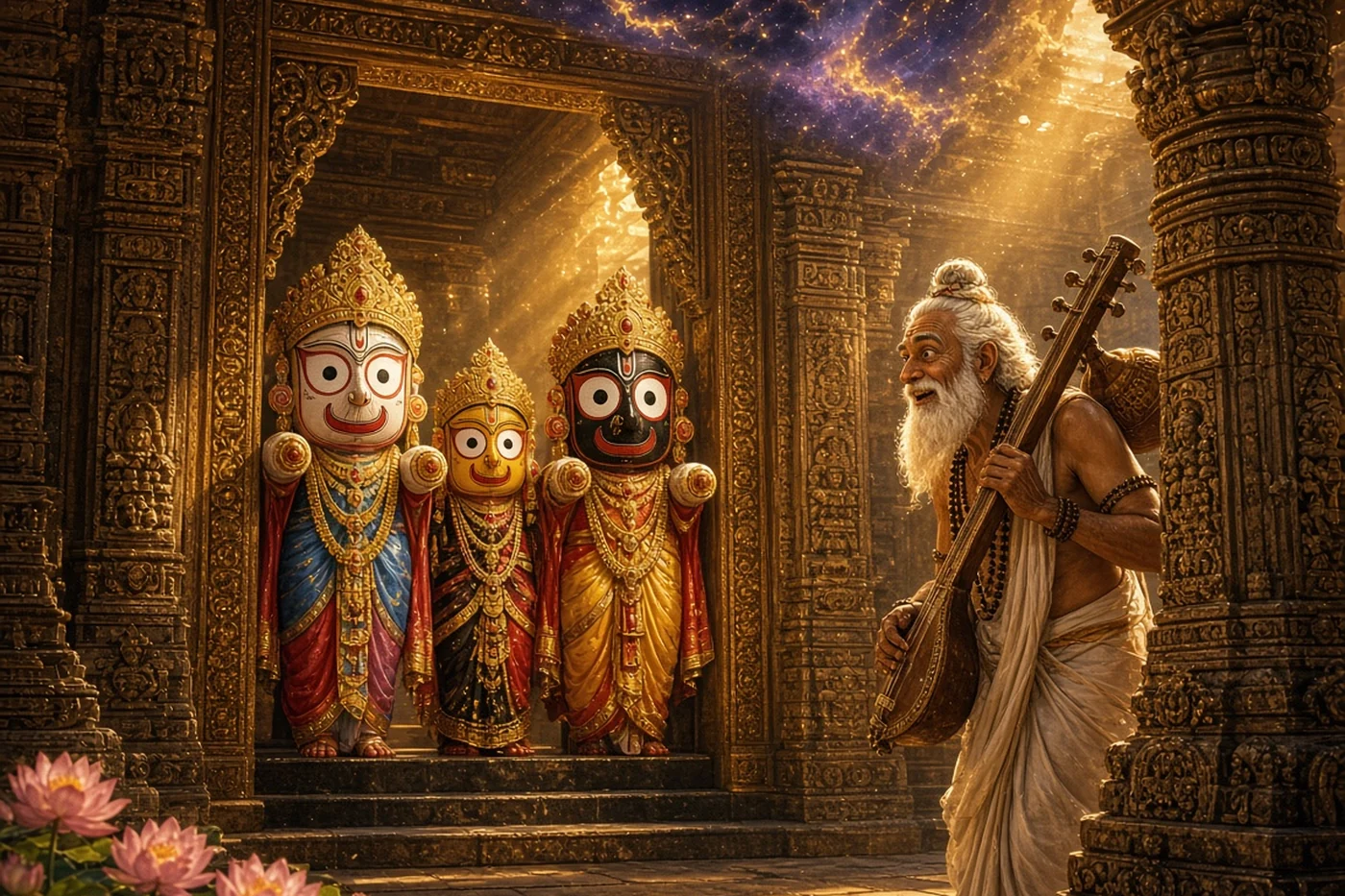
That was how Narada the wandering sage found them. As he came near, the three came to themselves, and their bodies were as they had always been.
But Narada had seen.
"Lord, I saw you," he said, and he was dancing with joy. "You cannot hide it from me now. Show that form to the world, so that everyone can see what I have seen."
"I will," said Krishna. "That is how we shall stand, the three of us, in Puri by the sea."
And that is how they stand there still, the people who tell this story say: the dark brother and the fair brother, with great round eyes and no hands, and between them their sister, who was meant to keep them out.
As Puri keeps it
Odisha · Puri, the chariot festival of Ashadha · 2 min read
In Puri the three stand together on one altar all year, and once a year they come out.
On the morning of the chariot festival the servitors bring them out of the temple one by one, in a slow swaying procession called the Pahandi. First comes Sudarshana, the discus, in the form of a wooden post. Then Balabhadra. Then Subhadra. Last of all Jagannath.
Subhadra is carried in her own way. Her procession is called the Sunya Pahandi, and she is carried to her chariot with her face turned up to the sky.
Her chariot is called Darpadalana, the trampler of pride. It has twelve wheels and stands over forty feet high, and its canopy is red and black, black being the colour of the Goddess. Four red horses draw it, and their names are Rochika, Mochika, Jita and Aparajita. The rope by which the crowd pulls it is Swarnachuda, the serpent with the golden crest. Nine goddesses ride on its sides, among them Chamunda, Varahi, Katyayani and Vimala, the goddess of the temple itself, and Jayadurga guards it.
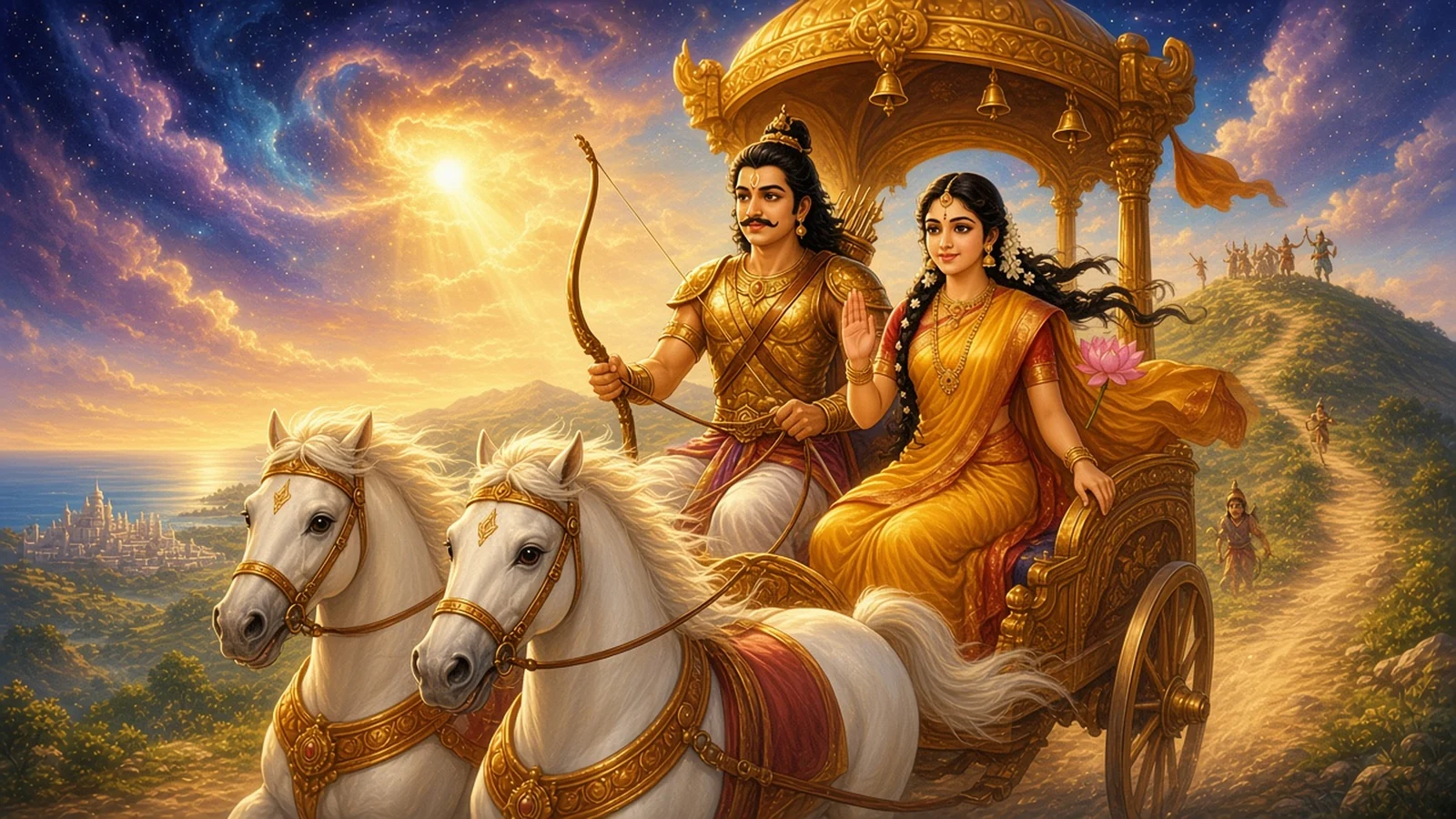
Sudarshana rides with her. And the charioteer carved on her chariot is Arjuna, the husband who once carried her off from Raivataka hill.
When the king of Puri has swept the three chariots with a golden broom, the ropes go taut. Balabhadra's chariot rolls first, then Subhadra's, then Jagannath's, and hundreds of thousands of hands haul them up the road to the Gundicha temple, where they stay a week before the journey home.
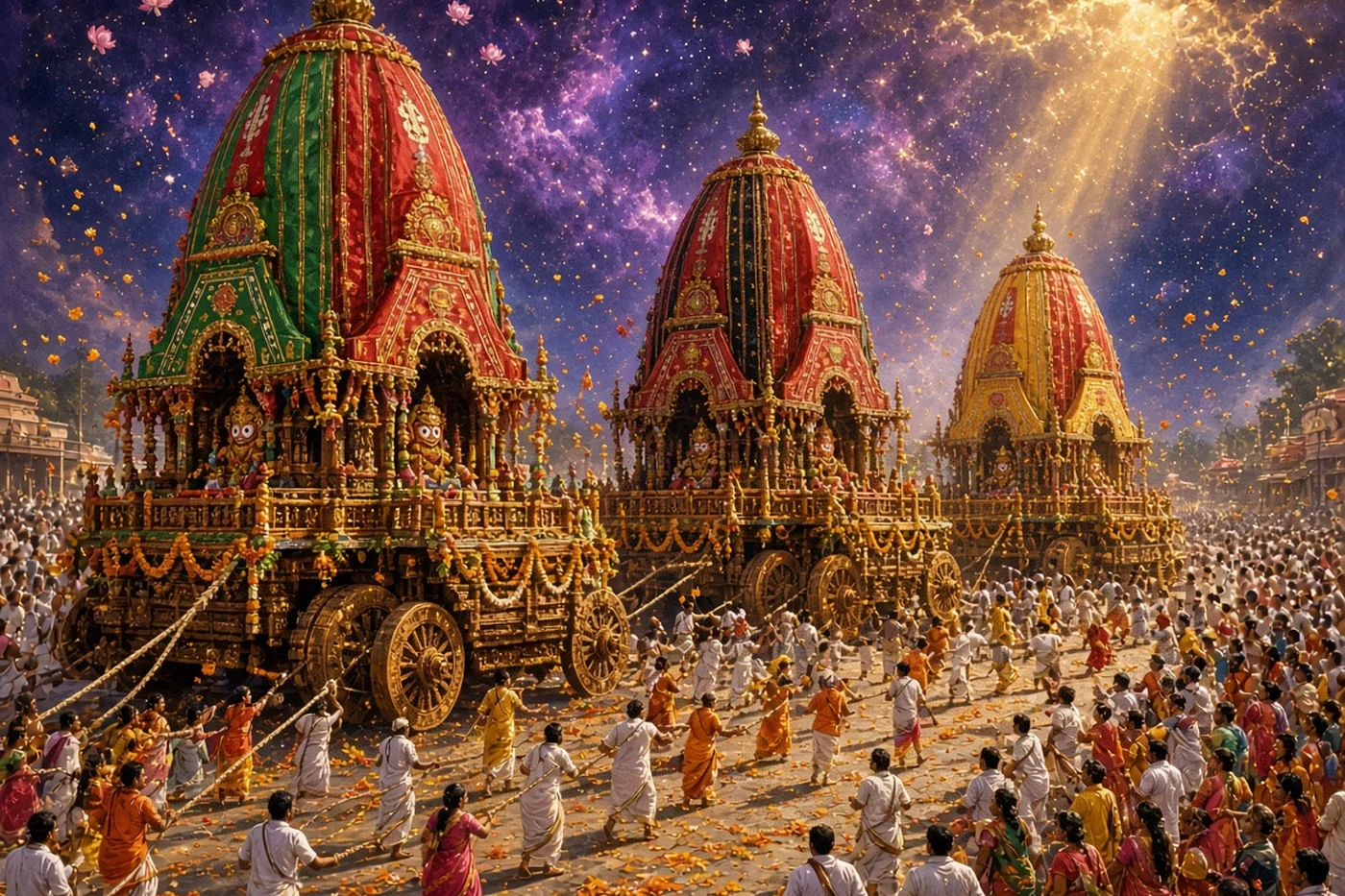
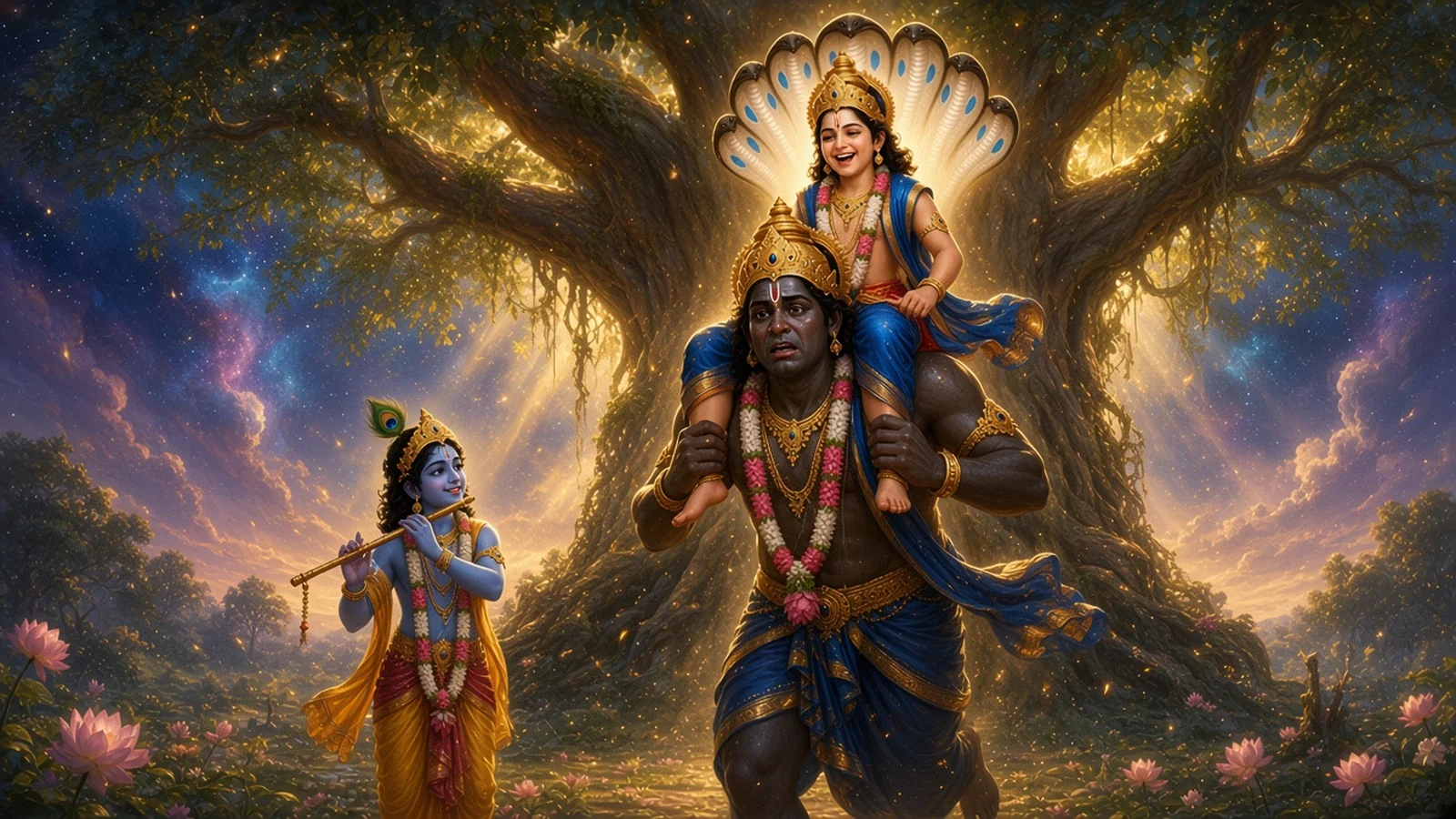
Why do they go? Puri gives many answers. Some say it began with Subhadra, who once wished to see the city outside the temple walls, so her brothers took her out to show it to her. The Swaminarayan temples tell a story very like it, of the day Krishna and Balarama took their sister for a ride through the streets of Dwaraka to show her the city. In both, a sister goes out to see the world with a brother on either side.