Devalok ← All gods
Also calledJagannathaJagganathLord of the UniversePurushottamaKaliaDarubrahma

Artwork ›

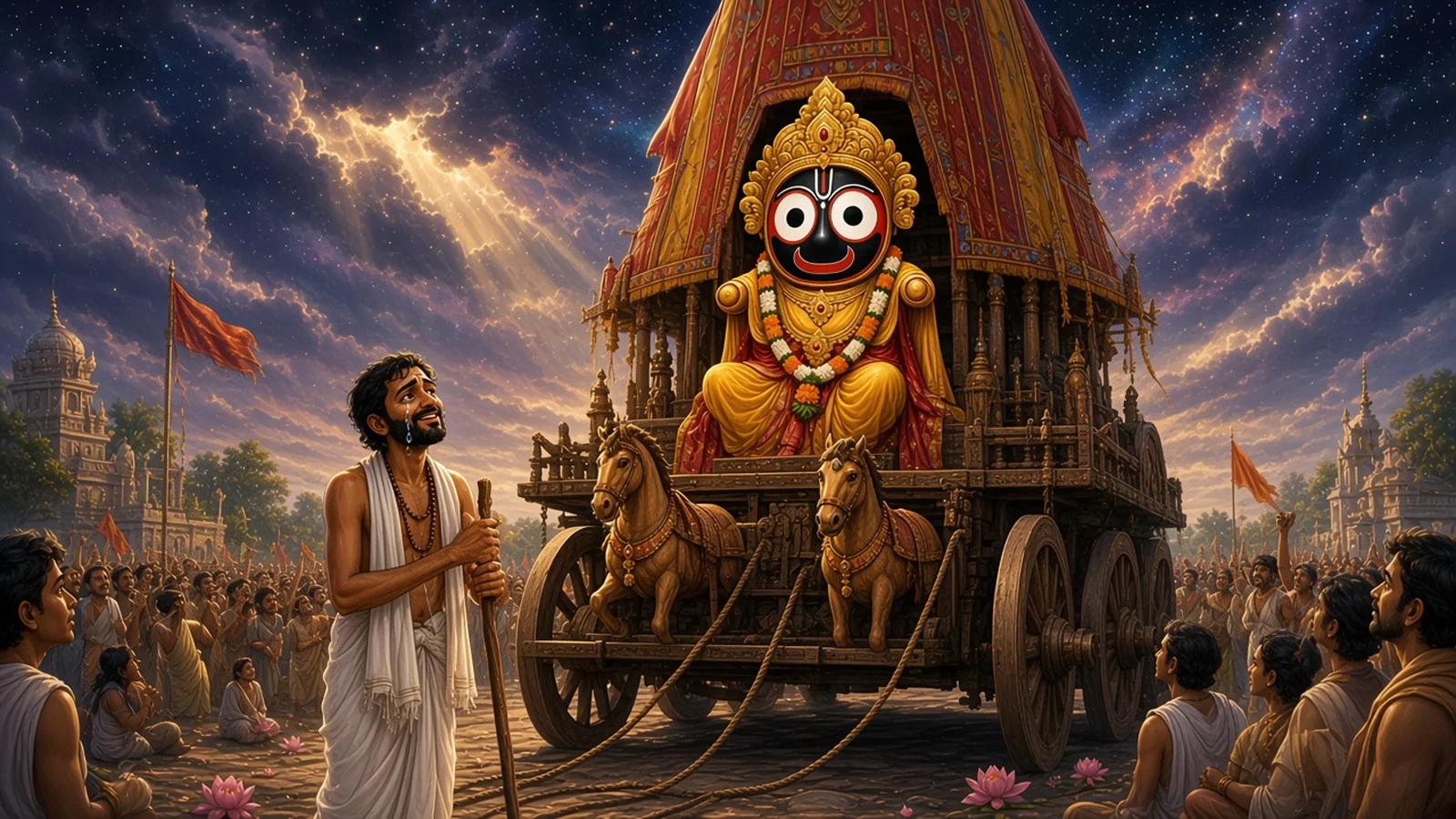
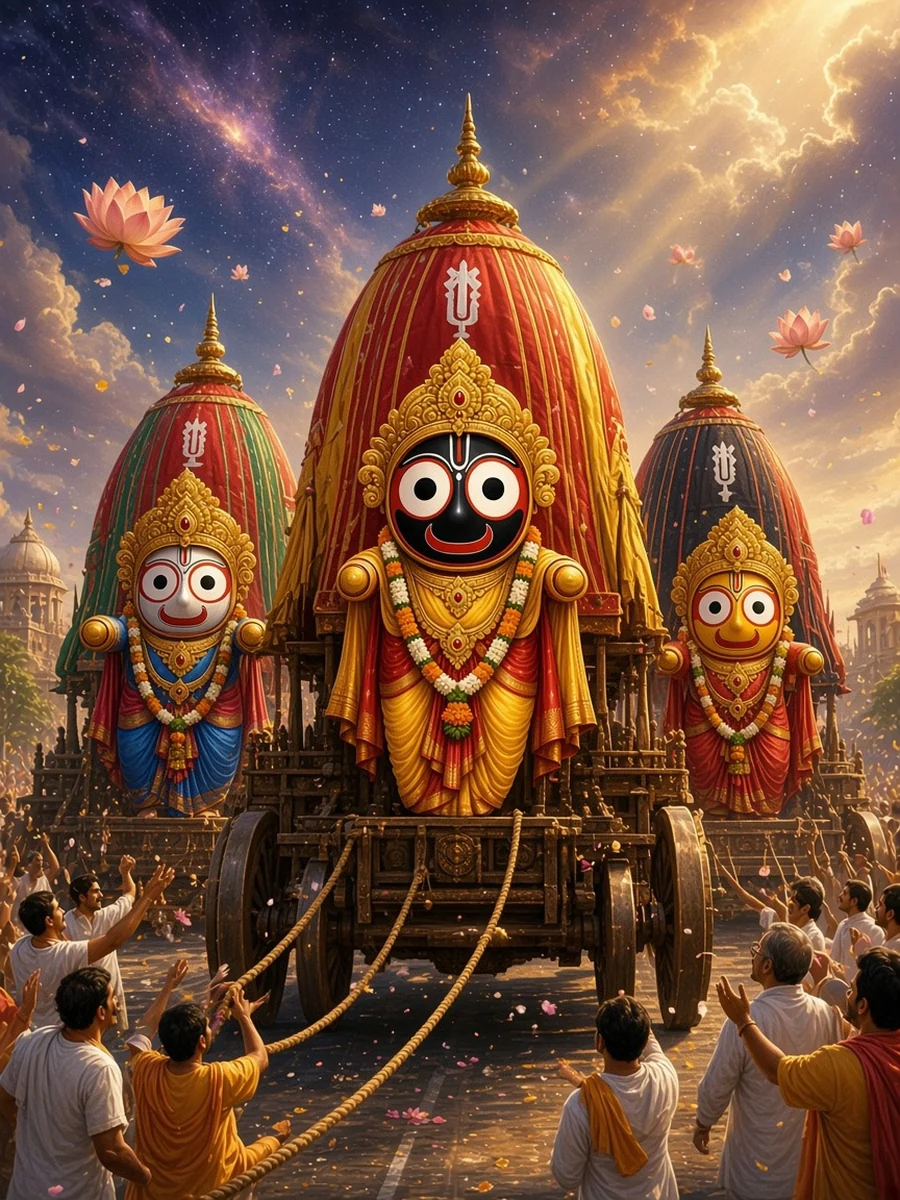
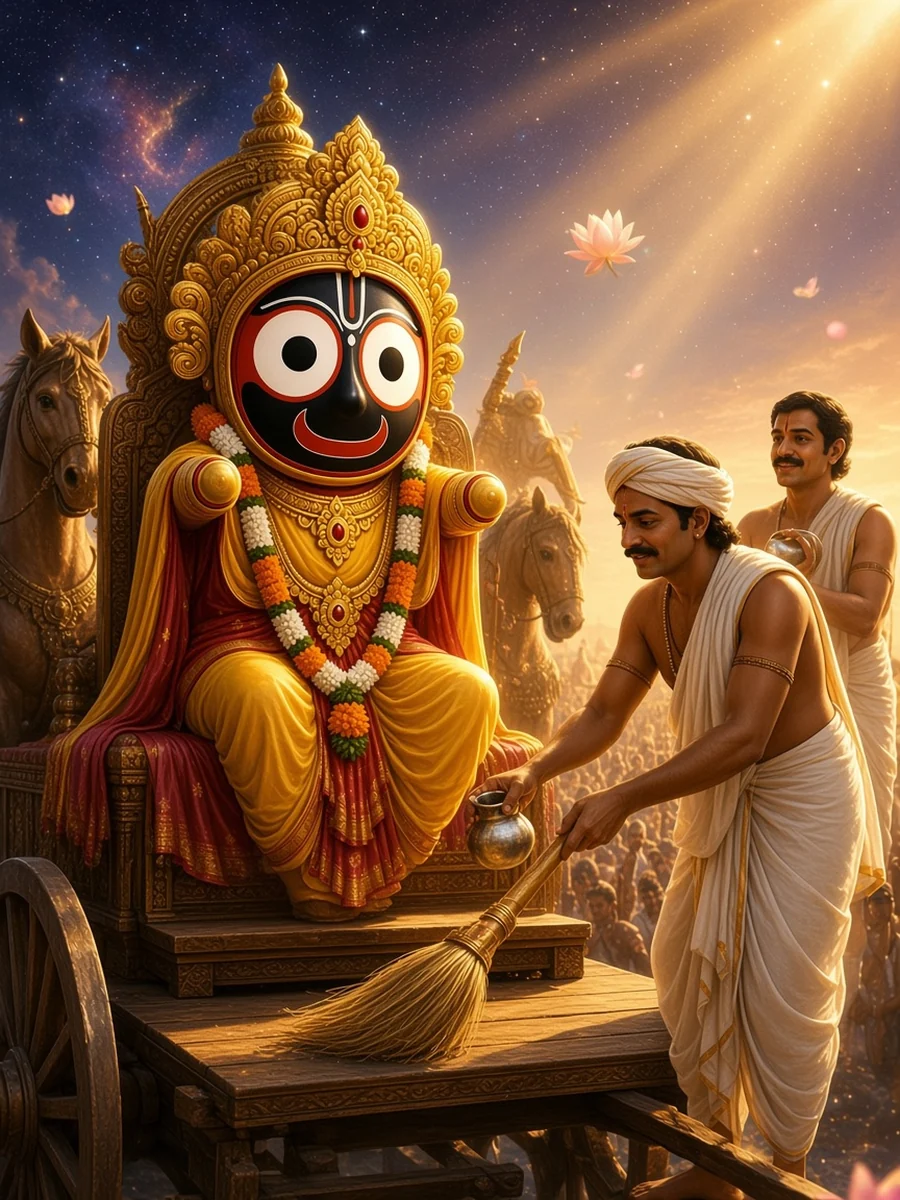
Jagannath rides his red and yellow chariot down the Grand Road at the Rath Yatra The king of Puri sweeps the chariot with a golden broom before Jagannath

For kids

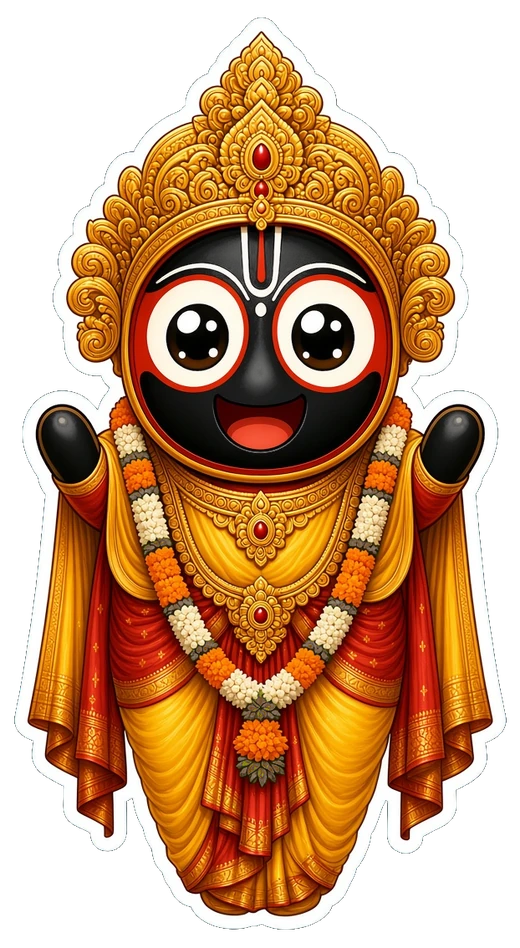
A tiny Jagannath waves his little stump arms with a huge happy smile
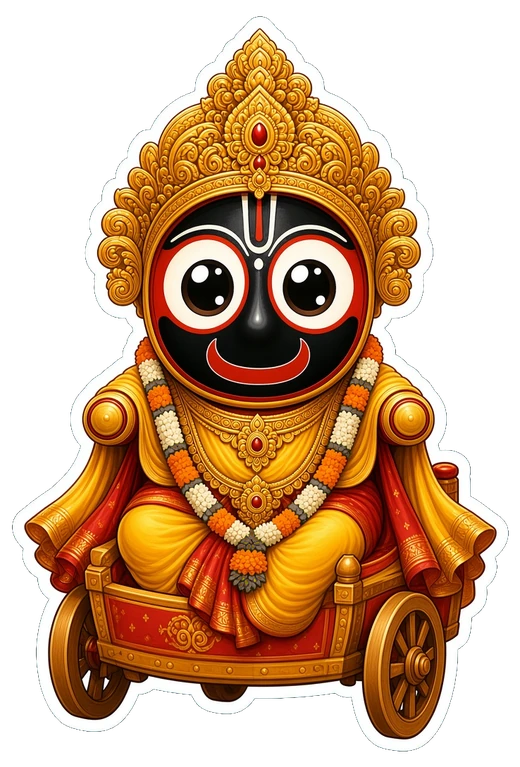
A tiny Jagannath rides a little red and yellow chariot

At a glance

TraditionVaishnava
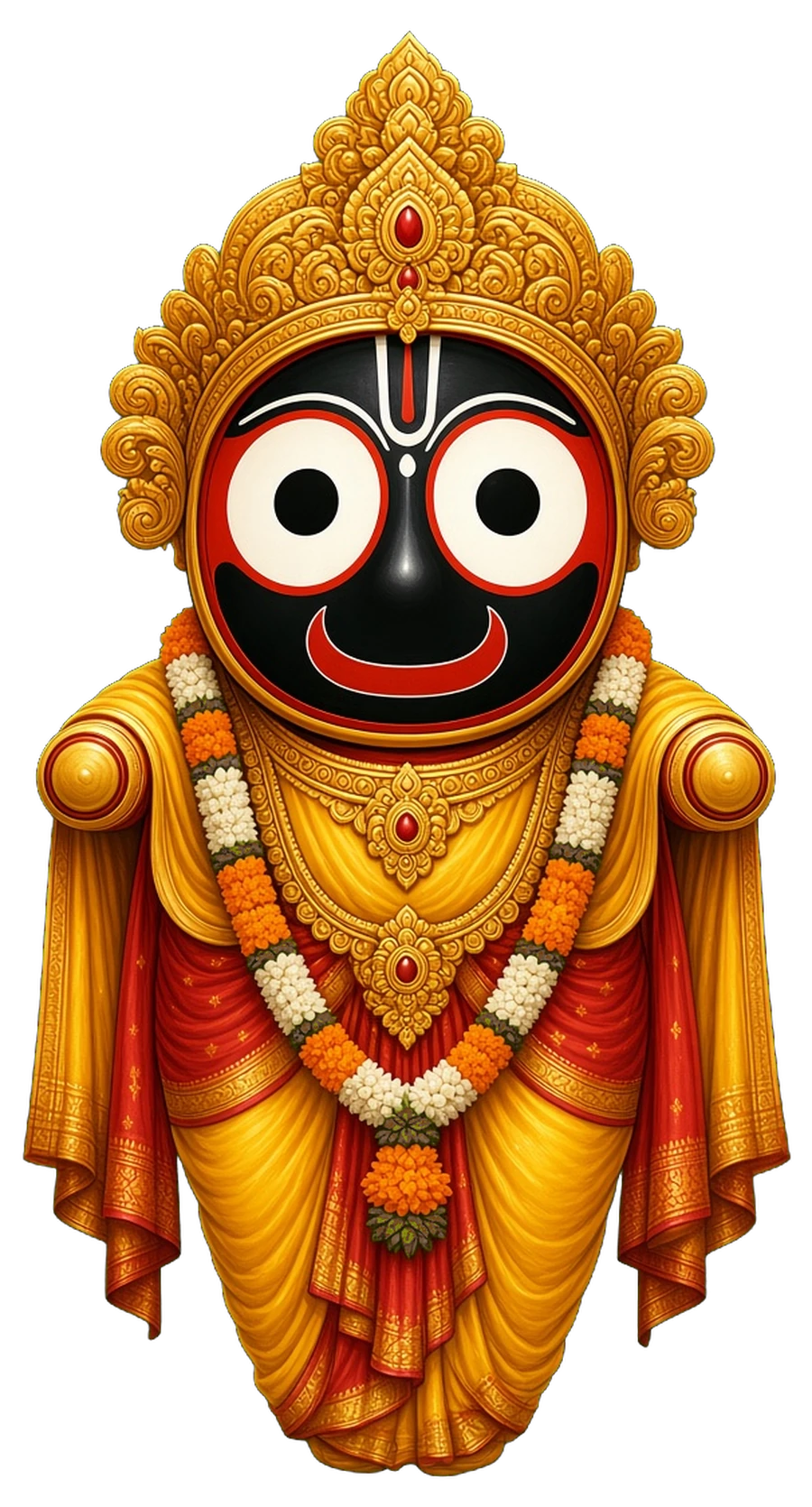
FormA carved wooden figure

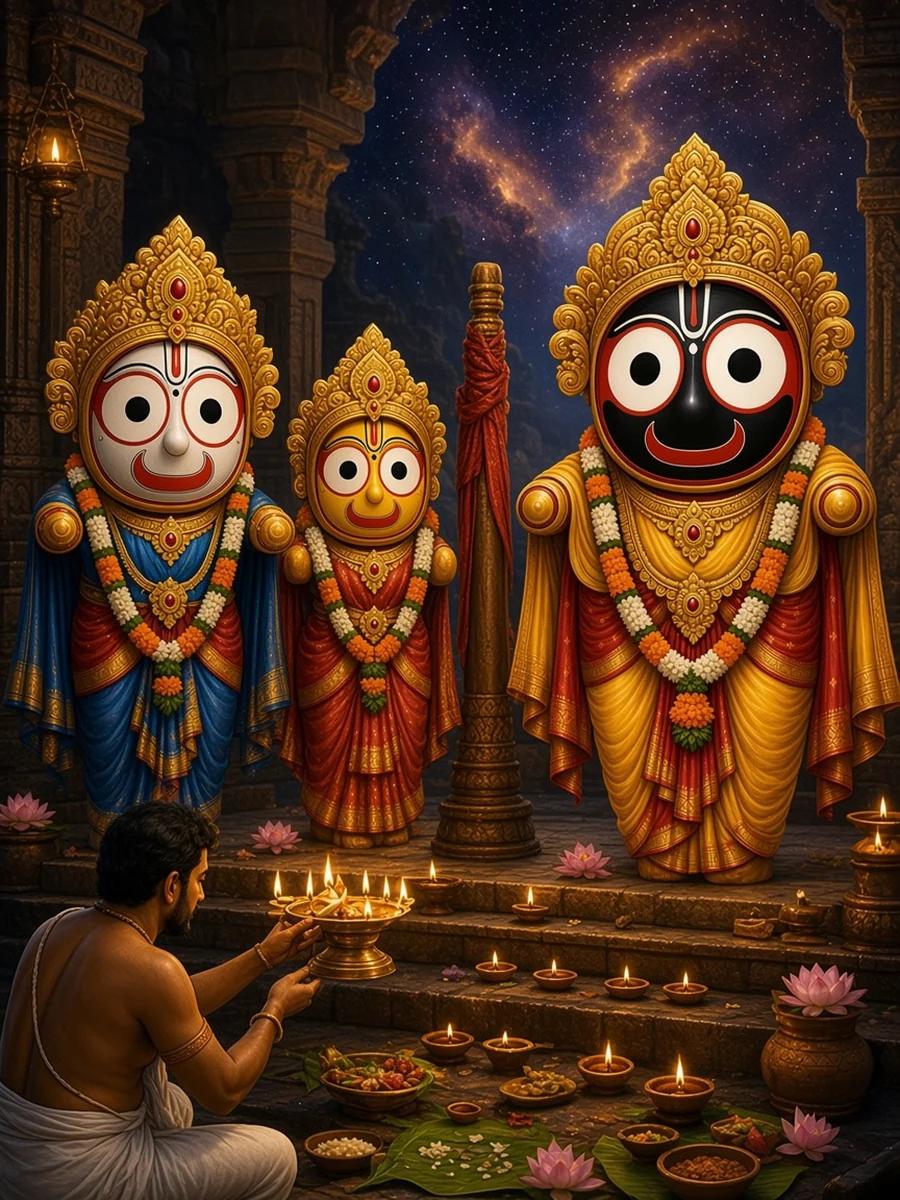
black, with huge round eyes, a broad smile and stumps for arms, without hands or feet

WithHis elder brother Balabhadra

white, and his sister Subhadra, yellow, and the post called Sudarshana

Who Jagannath is

Jagannath is the lord of the universe, the god of Puri on the coast of Odisha, and one of the most loved forms of Krishna in India.

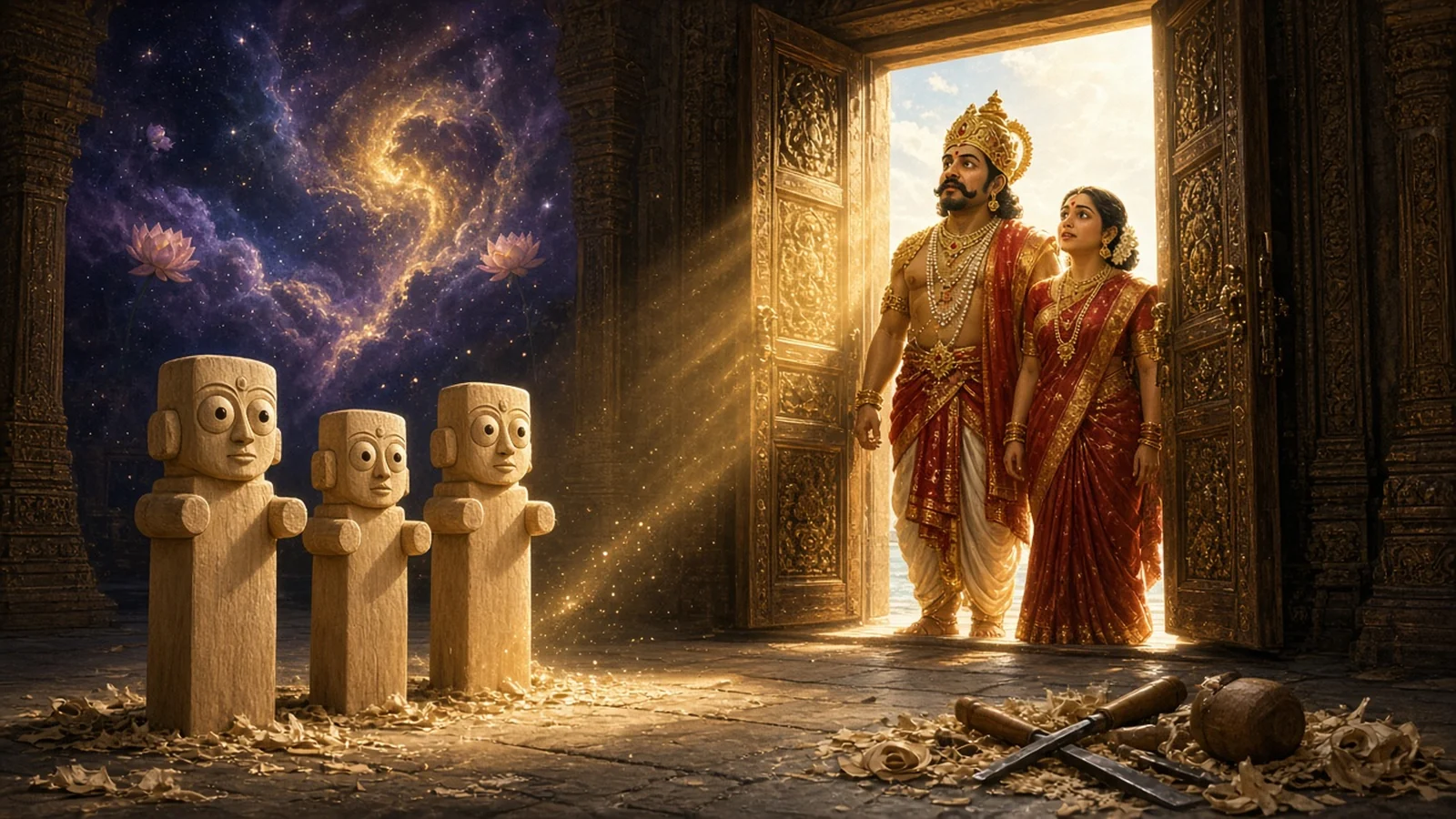
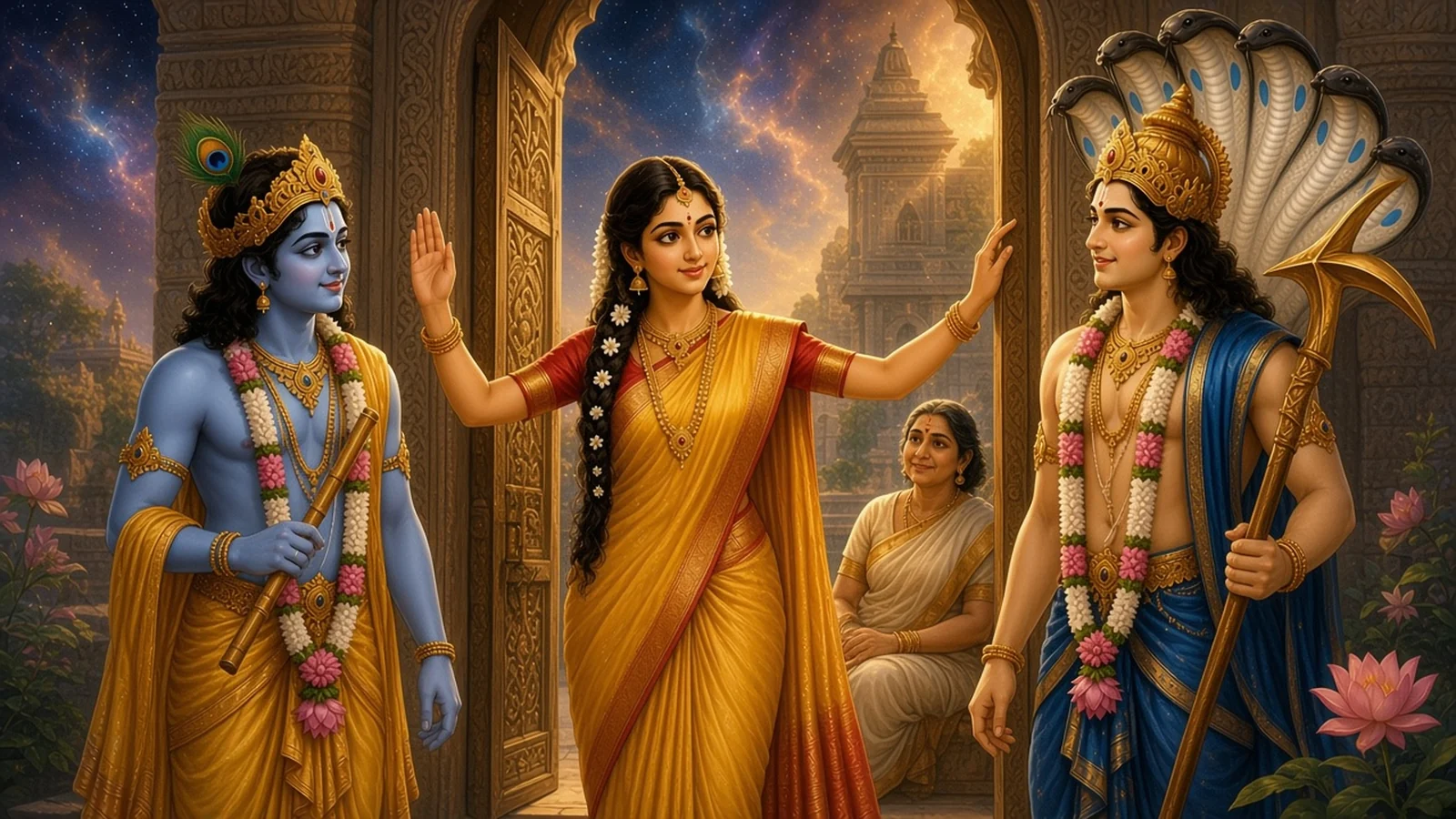
He does not look like any other god. He is carved from wood, black, with a great round face, enormous eyes and a wide smile, and arms that end before they reach hands. Beside him on the altar stand his brother Balabhadra and his sister Subhadra, carved the same way. The temple says an old carpenter, Vishvakarma himself, was making them behind a closed door when a worried king or queen opened it too soon, and so they were left unfinished.

Jagannathah svami nayanapathagami bhavatu me: the refrain of the Jagannathashtakam, may the lord of the universe come within the path of my eyes.

Once a year, in the month of Ashadha, the three gods leave the temple. They are carried out and set on three huge wooden chariots, and hundreds of thousands of people pull them along the Grand Road to the Gundicha temple, the home of their aunt, they say, where they spend a week before the return. Before the chariots move, the king of Puri sweeps them with a golden broom.

Jagannath's food, the Mahaprasad, is cooked in the temple's kitchen and shared by everyone, whatever their caste. His image at the Lion Gate, Patita Pavana, the saviour of the fallen, is there for those who may not enter. And once in eight to nineteen years he gets a new wooden body.
Before the Puranas

The Vedic roots of Jagannath

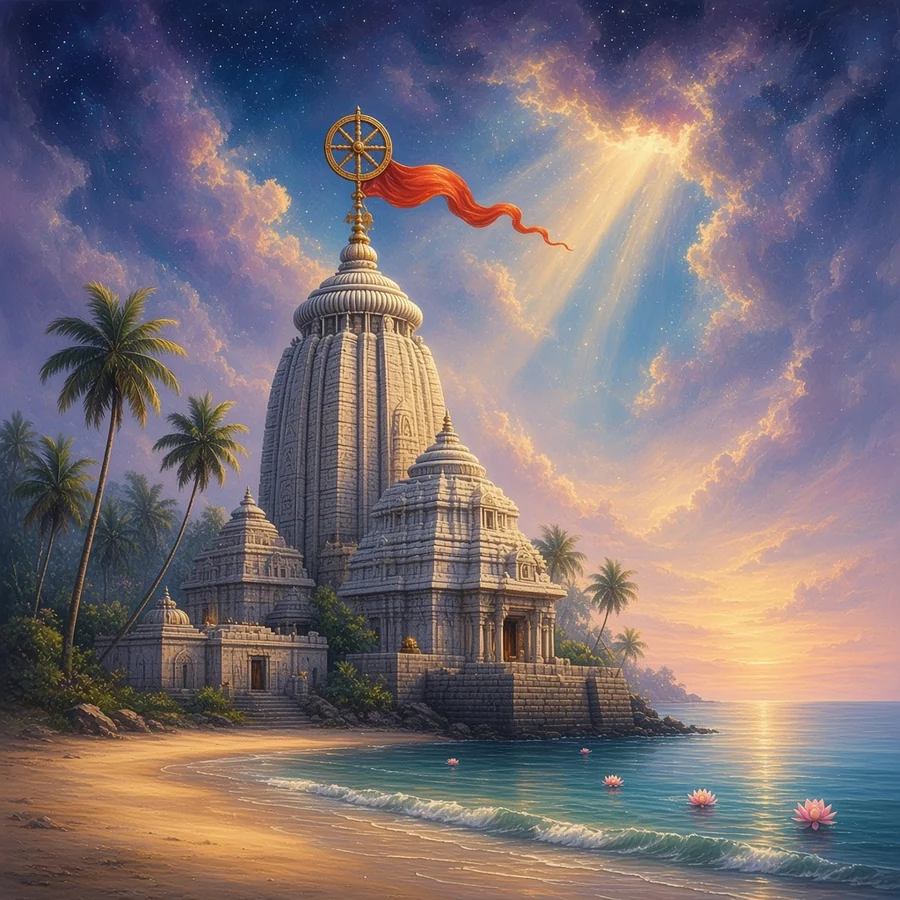
The temple of Puri was begun by the Eastern Ganga king Anantavarman Chodaganga, whose inscriptions of around 1134 to 1135 mention it, and completed by Anangabhima Deva. The temple's own chronicle, the Madala Panji, records its kings, its rituals and its troubles, among them invasions in which the images were hidden or damaged.

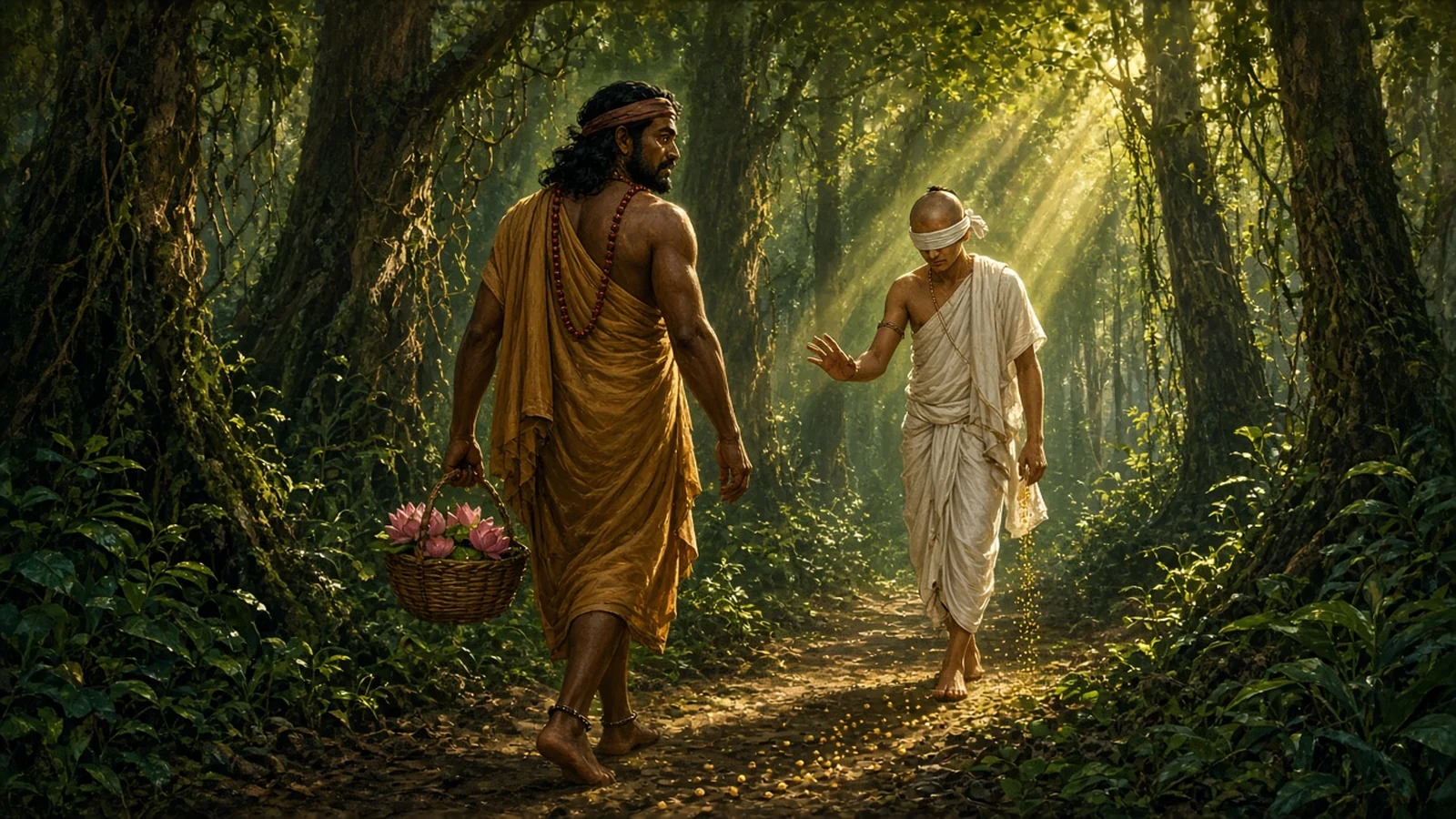
The god himself is older than the building and harder to place. The Skanda Purana tells of King Indradyumna, who sent his priest to find a blue god worshipped secretly by a Sabara forest chief. In 1978 Anncharlott Eschmann, Hermann Kulke and G. C. Tripathi argued that Jagannath began as a tribal god of wooden posts, and that the Daitapati servitors, who count themselves the Sabara chief's descendants, remember that past; later scholars have asked how far that thesis reflects colonial history writing.

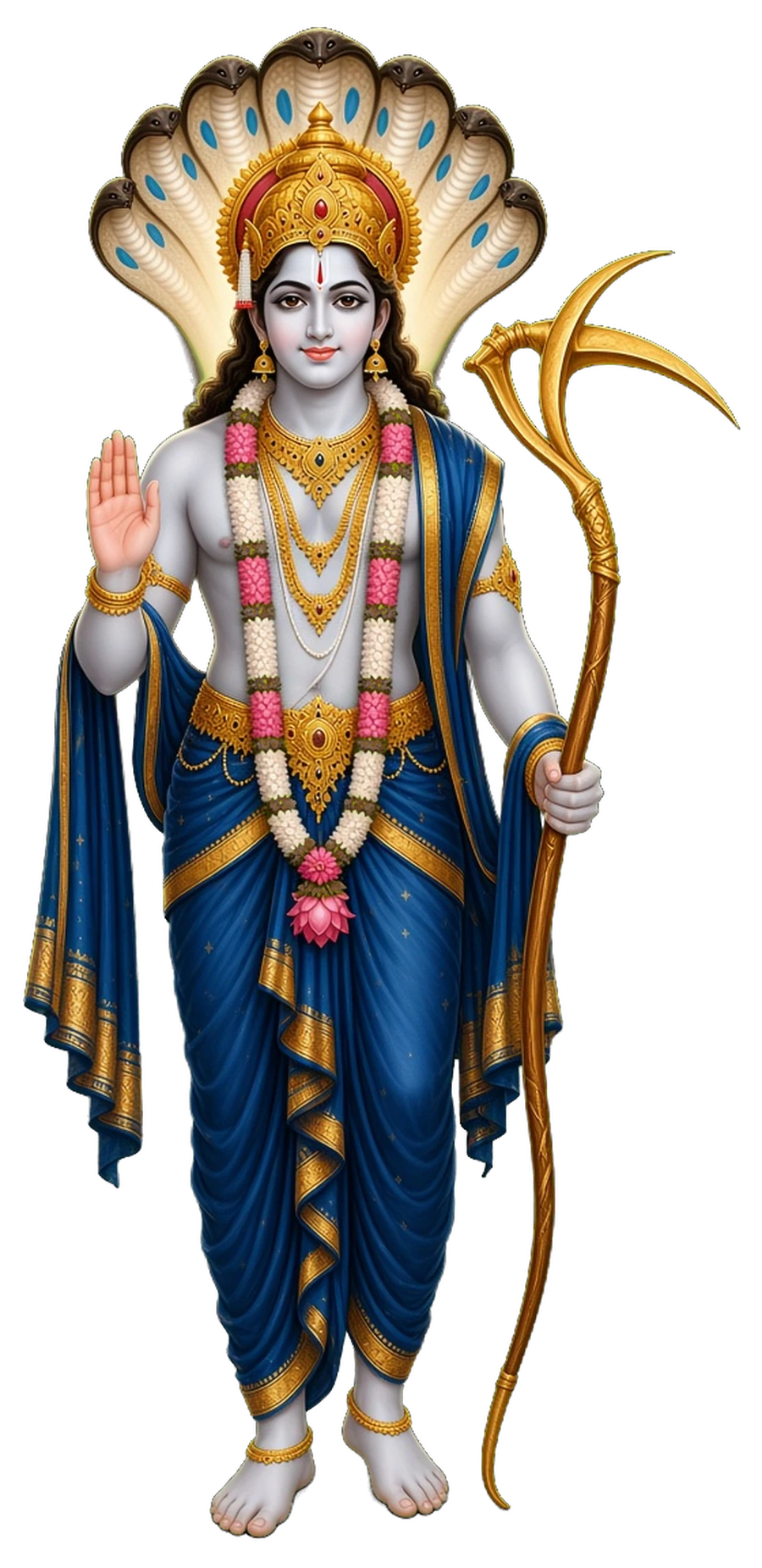
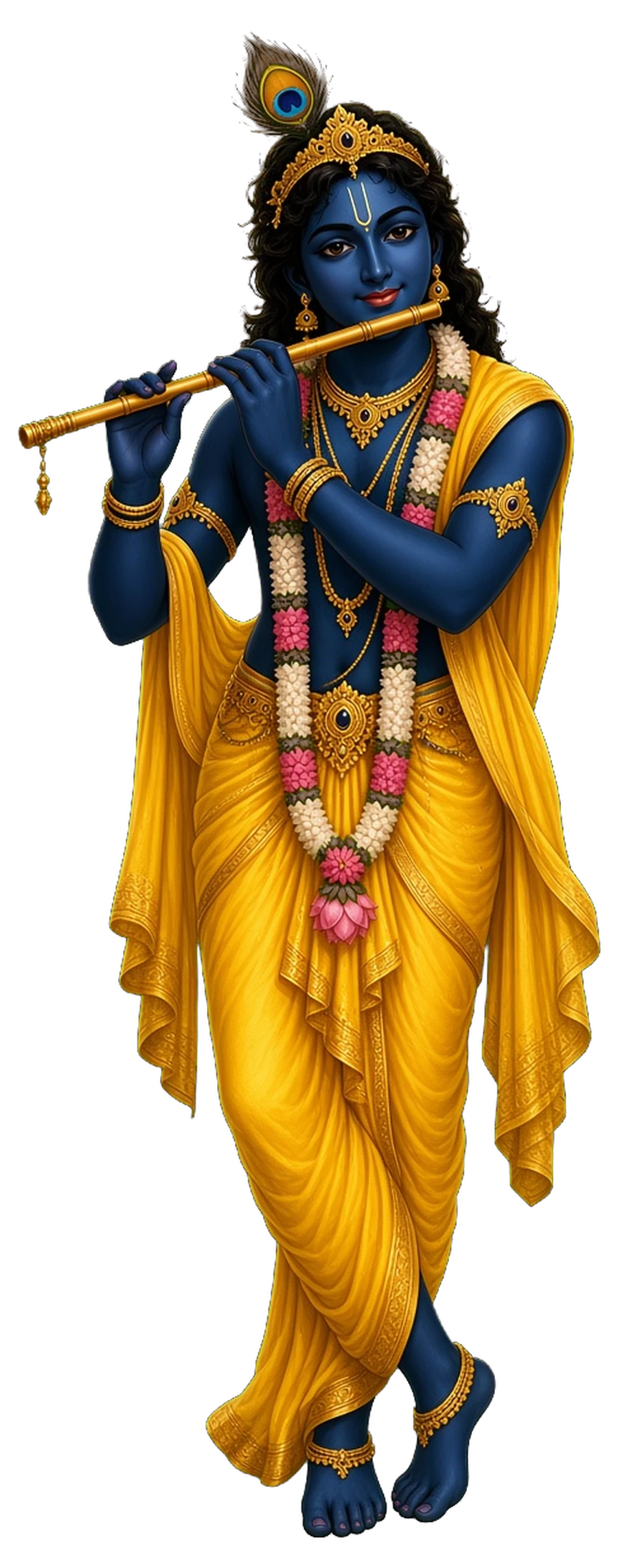
He has been read as Krishna, as Vishnu, as Narasimha and, by Shaiva and Shakta worshippers, in their own ways; Mahaprasad is first offered to the goddess Vimala inside the temple.

The rituals of the chariot festival are old and exact. Jagannath rides Nandighosha, of sixteen wheels; Balabhadra rides Taladhwaja, of fourteen, with the palm on its flag; Subhadra rides Darpadalana, of twelve. The king sweeps the chariots in the Chhera Pahanra. On the way back the gods are dressed in gold, the Suna Besha, a custom said to go back to Kapilendra Deva in 1460.

The Nabakalebara, the renewal of the bodies, falls in a year with two months of Ashadha, eight to nineteen years apart; recent ones were in 1969, 1977, 1996 and 2015. The chariot festival grew famous far beyond India, and gave English the word juggernaut.

See how the Vedic gods became the Puranic ones →

Every story about Jagannath

Related gods