As the Skanda Purana tells it
Purushottama Kshetra Mahatmya · 2 min read
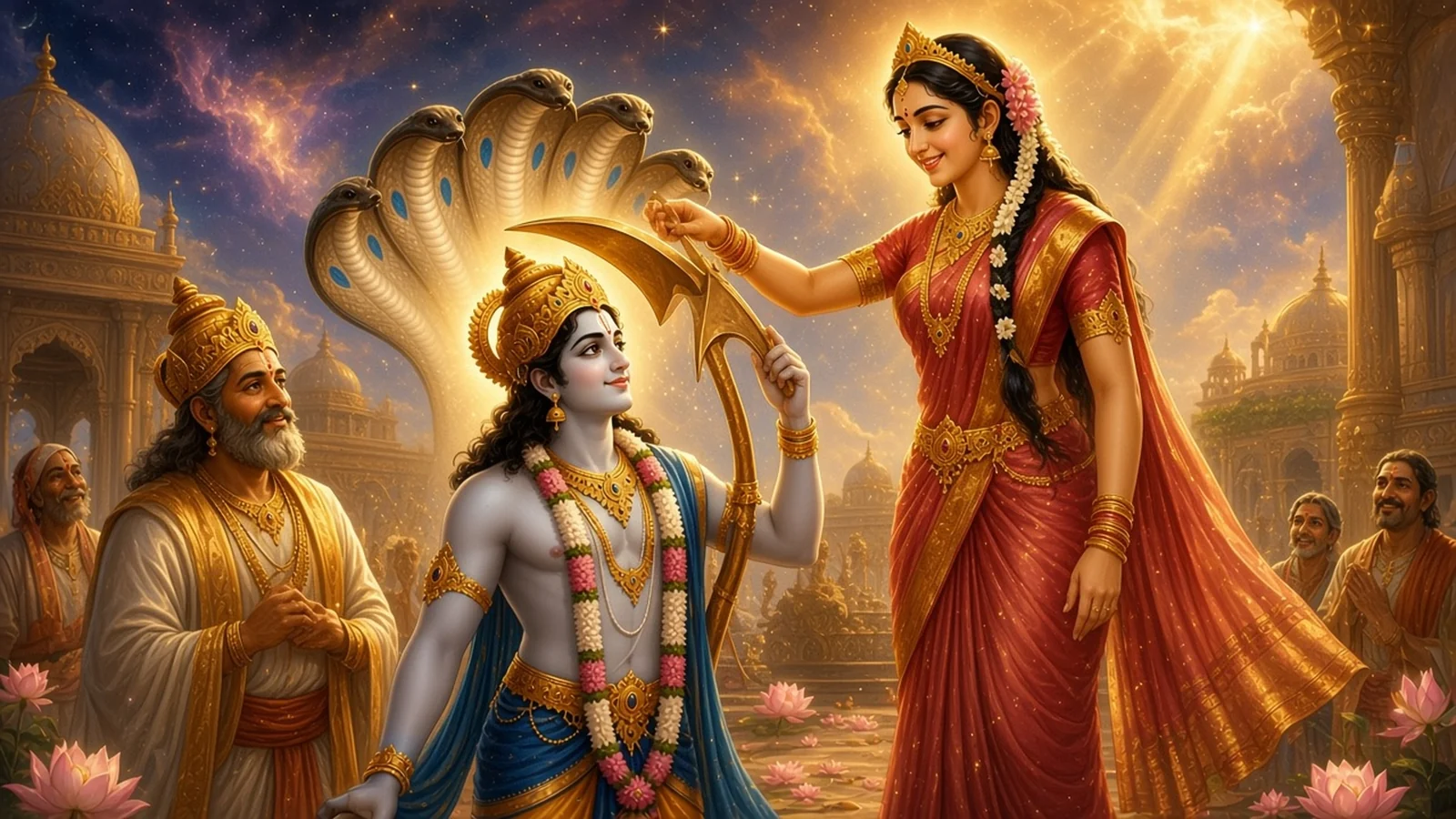
Indradyumna, king of Avanti, was a devout man, and one day a traveller at his court spoke of a god he had never heard of.
"In the forests of the east," the traveller said, "there is a god the colour of a blue sapphire. They call him Nila Madhava. The forest people worship him in secret, and no one from outside has ever seen him."
The king could think of nothing else. He called his priest, Vidyapati, a young and clever brahmin.
"Go east," he said. "Find this god. Do not come back until you have seen him."
Vidyapati travelled for a long time, and came at last to the country of the Sabaras, a forest people. Their chief was Vishvavasu. Every day Vishvavasu went off alone into the forest, and came back smelling of flowers and camphor, and would not say where he had been.
The priest stayed. He came to know the chief's daughter, Lalita, and they fell in love, and he married her. Then, when the time was right, he asked her.
"Where does your father go every day?"
"To worship our god," said Lalita. "No outsider may see him."
"I am not an outsider now," said Vidyapati. "I am his son-in-law."
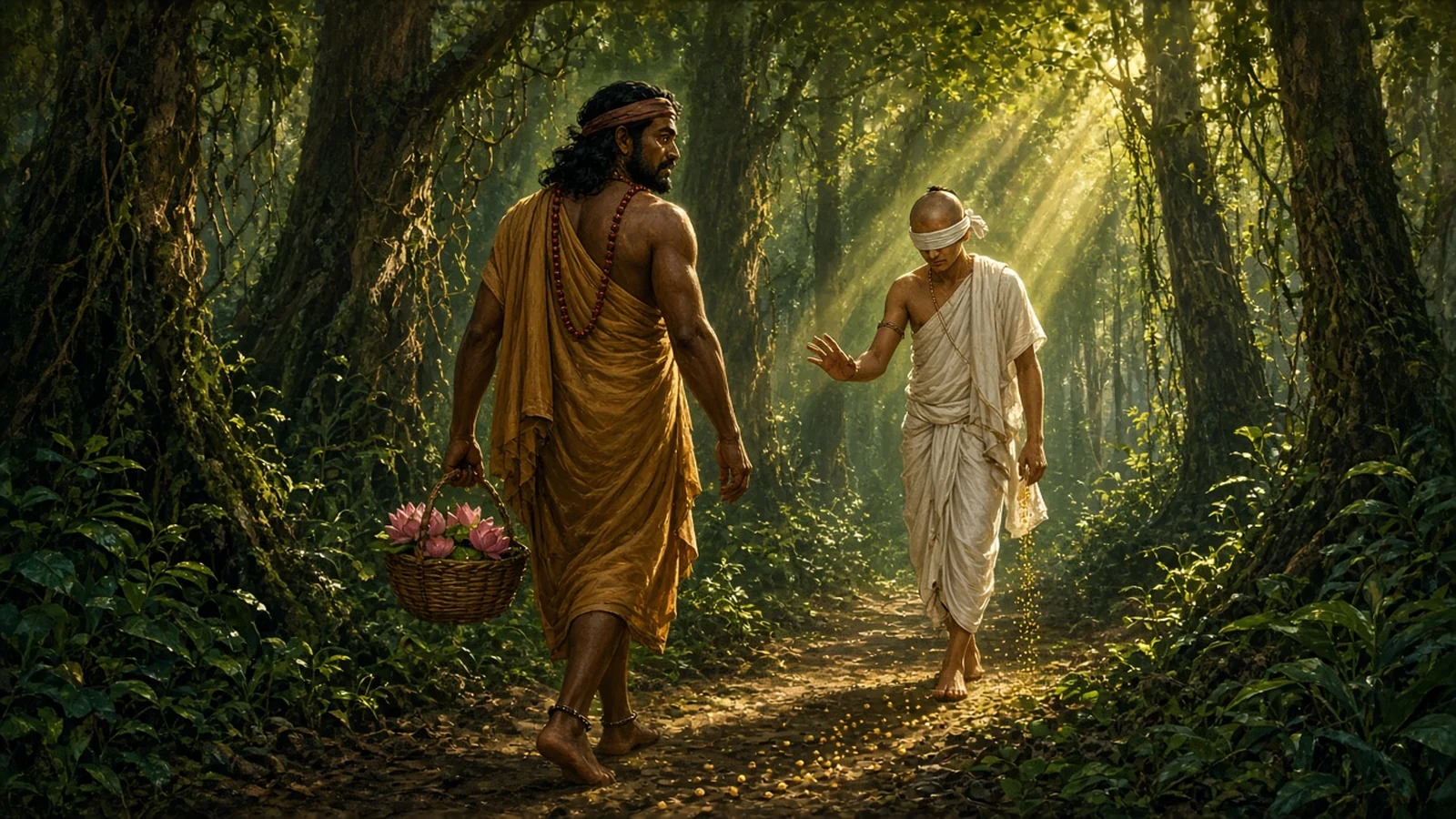
Lalita pleaded with her father, and at last Vishvavasu agreed, on one condition. The priest would go with his eyes covered, so that he could never find the way again.
So they went, the chief leading and the priest blindfolded behind him. But Vidyapati had a handful of mustard seeds tied in his cloth, and as he walked he let them fall, one by one, along the path.
In a cave deep in the forest, the blindfold came off, and he saw Nila Madhava, blue and shining, and fell on his face.
He went home to Avanti and told the king. Indradyumna set out at once with an army, and by the time they reached the forest, the mustard had sprouted. A line of small green plants led them straight through the trees to the place.
The shrine was empty. The god had gone, buried in the sand, some said, or simply withdrawn, and no searching would find him.
The king was in despair. He fasted, and the sage Narada came to him.
"Build him a temple by the sea," said Narada, "and wait. He will come to you in another form."
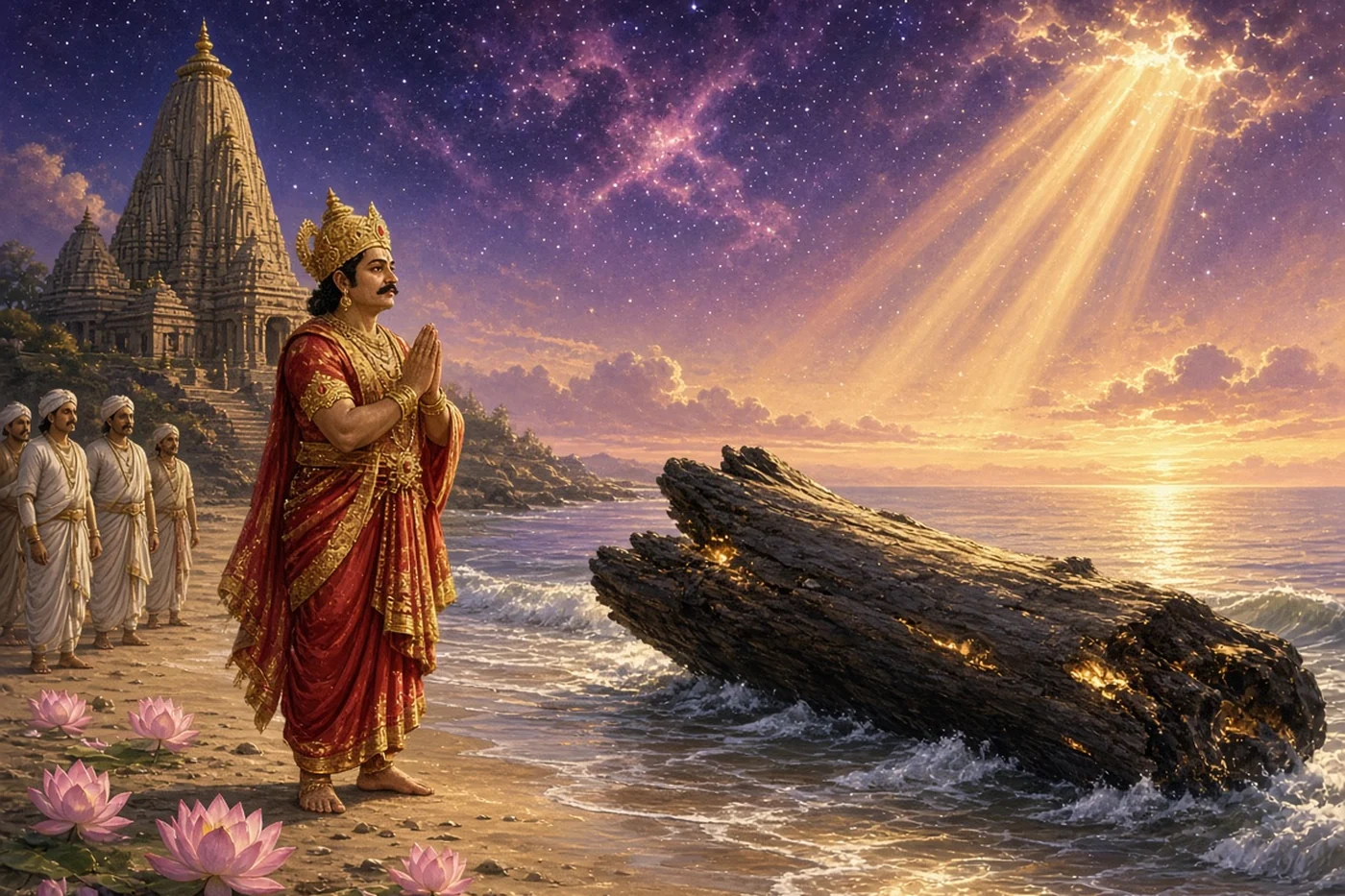
So Indradyumna built a temple on the shore, and waited, and one morning a great log came floating in on the waves, and the king knew it was the god. What happened to that log in the hands of an old carpenter is another story.
As the pilgrims tell it
the heart in the wood · 1 min read
The pilgrims at Puri tell what the log really was.
When Krishna died, they say, shot in the foot by a hunter, his body was burned on the shore, and all of it turned to ash except the heart. The heart would not burn. It was given to the sea, and the sea carried it east, and it became a log of wood. That is what came floating in to King Indradyumna.
Once in eight to nineteen years, in a year with two months of Ashadha, the gods of Puri are given new bodies. This is the Nabakalebara, the new embodiment. Neem trees are searched out in the forest by signs only the priests know, and new images are carved from them in secret.
Then, at midnight, something is taken out of each old image and put into the new one. The temple calls it the Brahma Padartha, the substance of Brahman, and has never said what it is. The men who move it are the Daitapatis, servitors who count themselves descendants of the Sabara chief Vishvavasu and the priest Vidyapati. They do it in the dark, blindfolded, their hands wrapped in cloth, so that no one sees it and no one touches it.
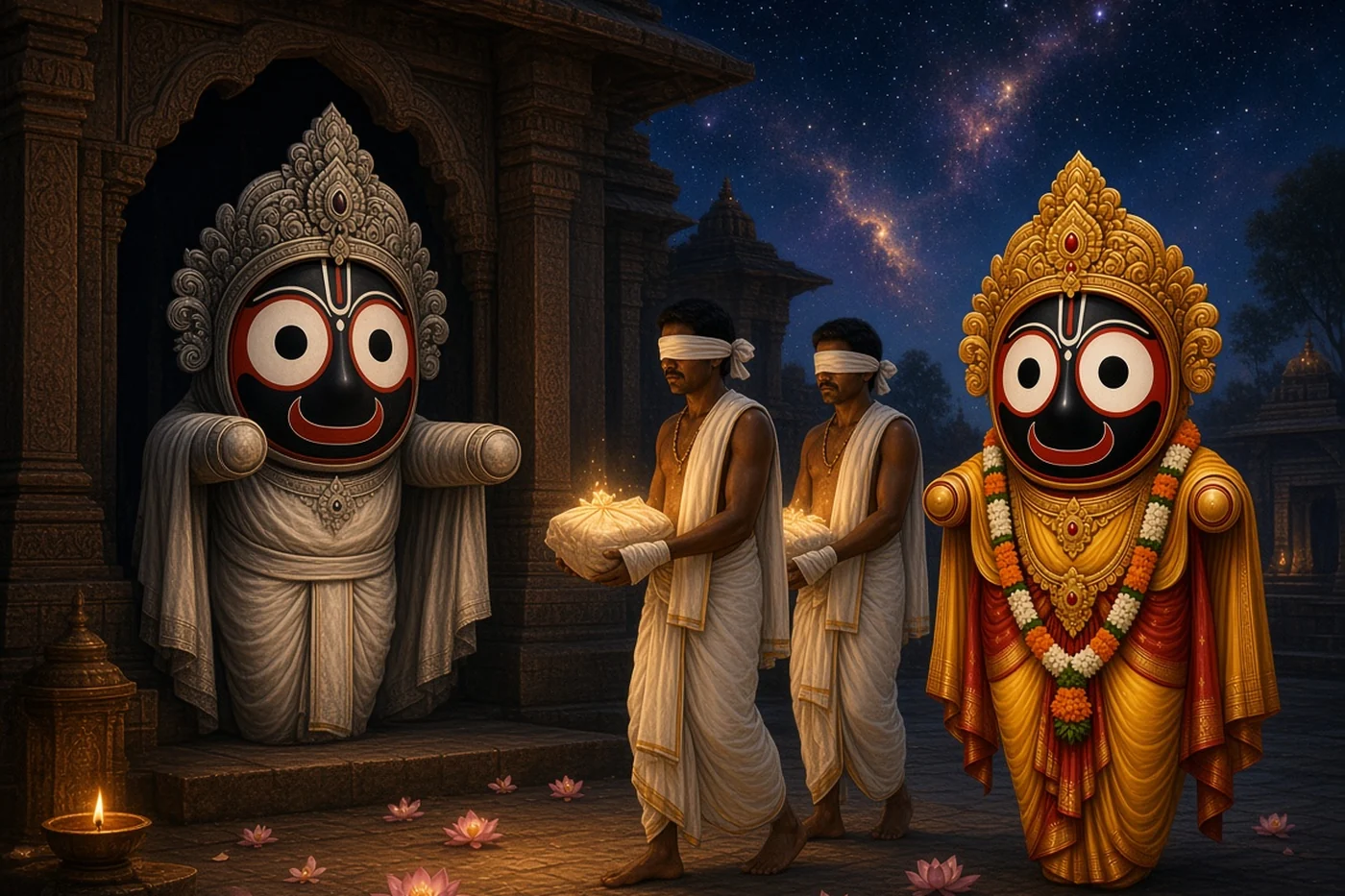
The last Nabakalebara was in 2015. The new gods were carved, the substance was moved in the night, and on 30 July the new images took their places on the jewelled platform in the sanctum, the ceremony called Niladri Bije. The old images were laid to rest in the ground within the temple.
The pilgrims have their own answer. It is his heart, they say, the heart that would not burn, passing from one body of wood to the next.