Devalok ← All gods
Also calledBaladevaBalabhadraHaladharaHalayudhaSankarshanaDaujithe Plough-bearer

Artwork ›

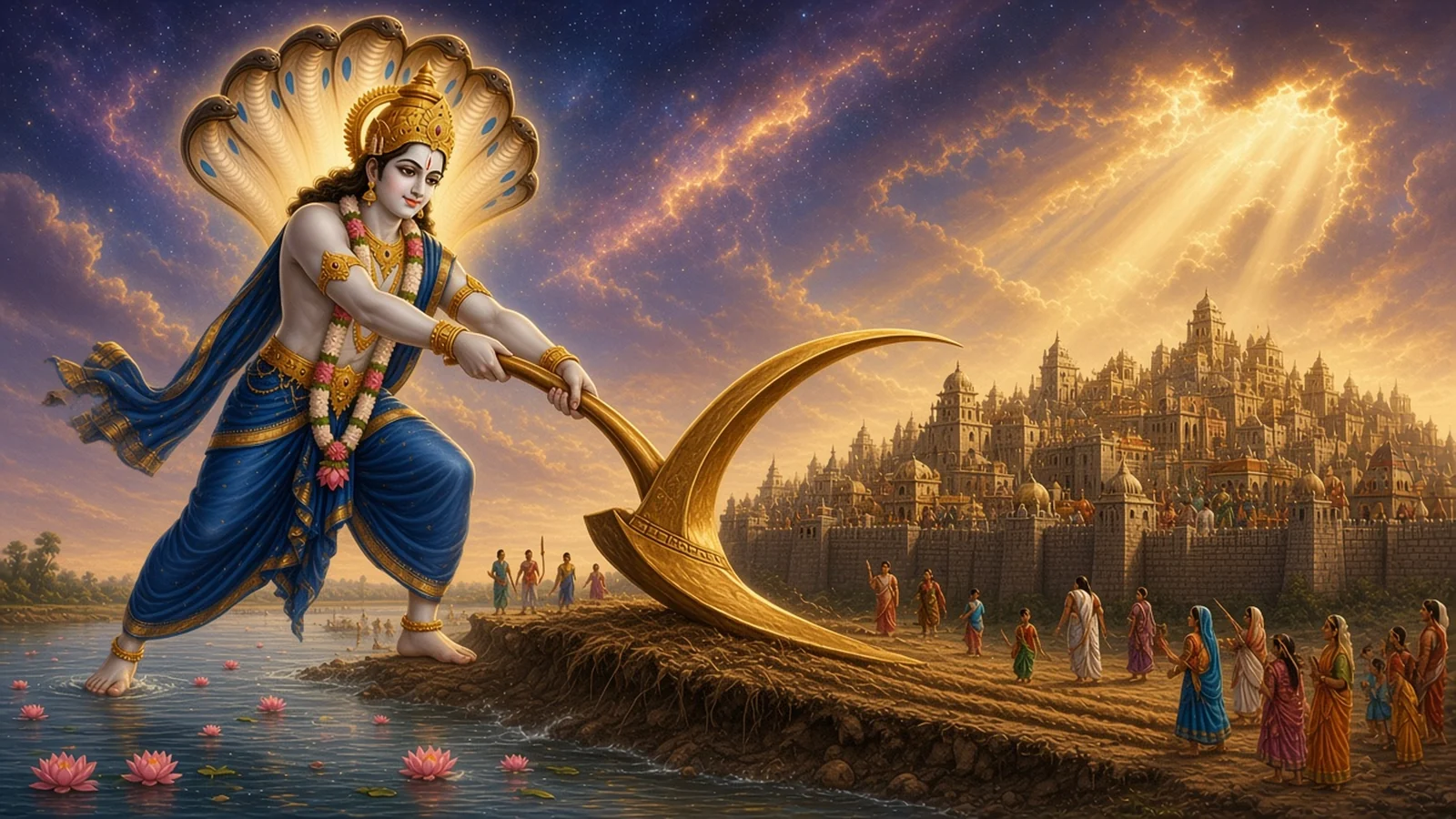
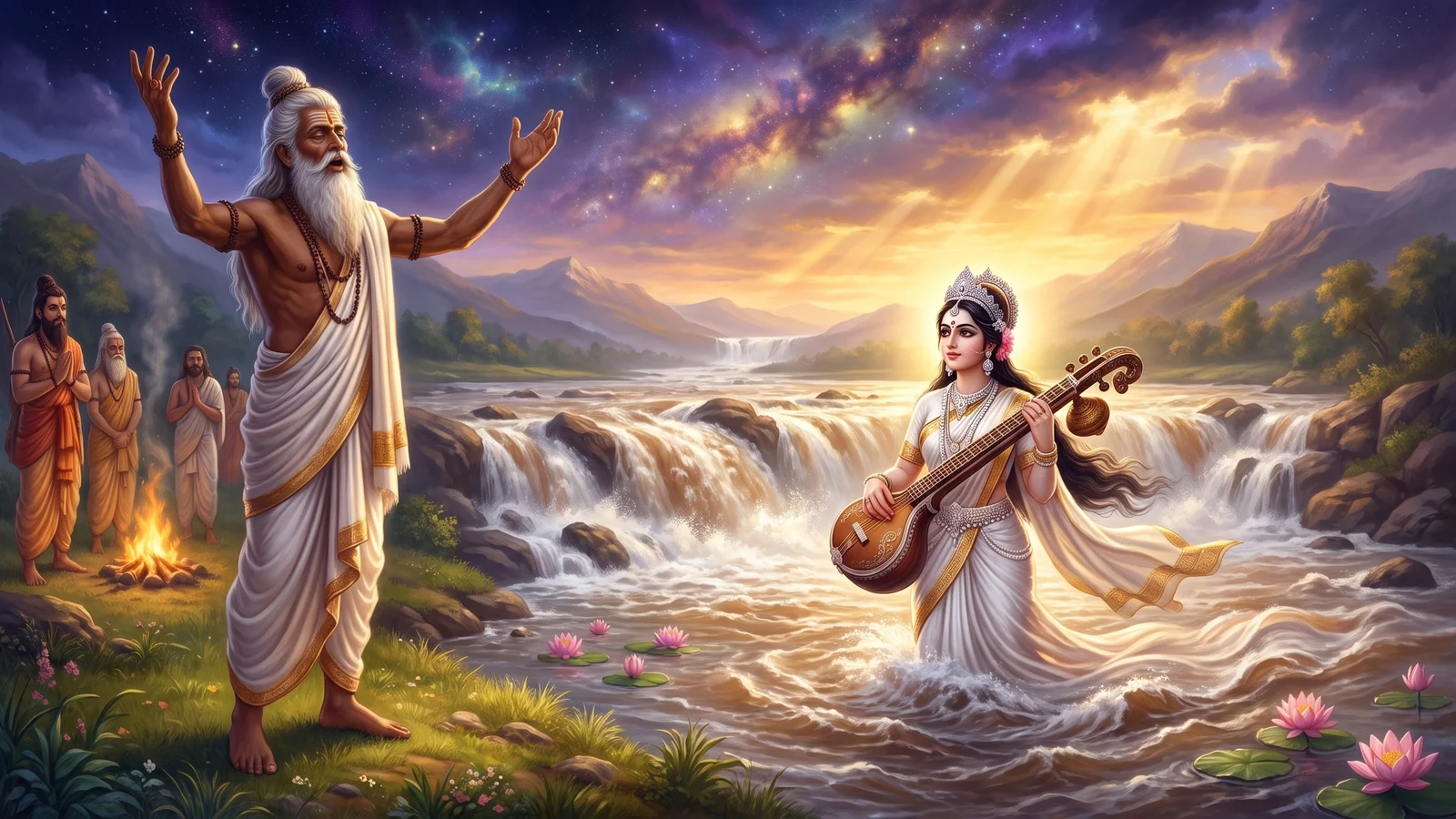
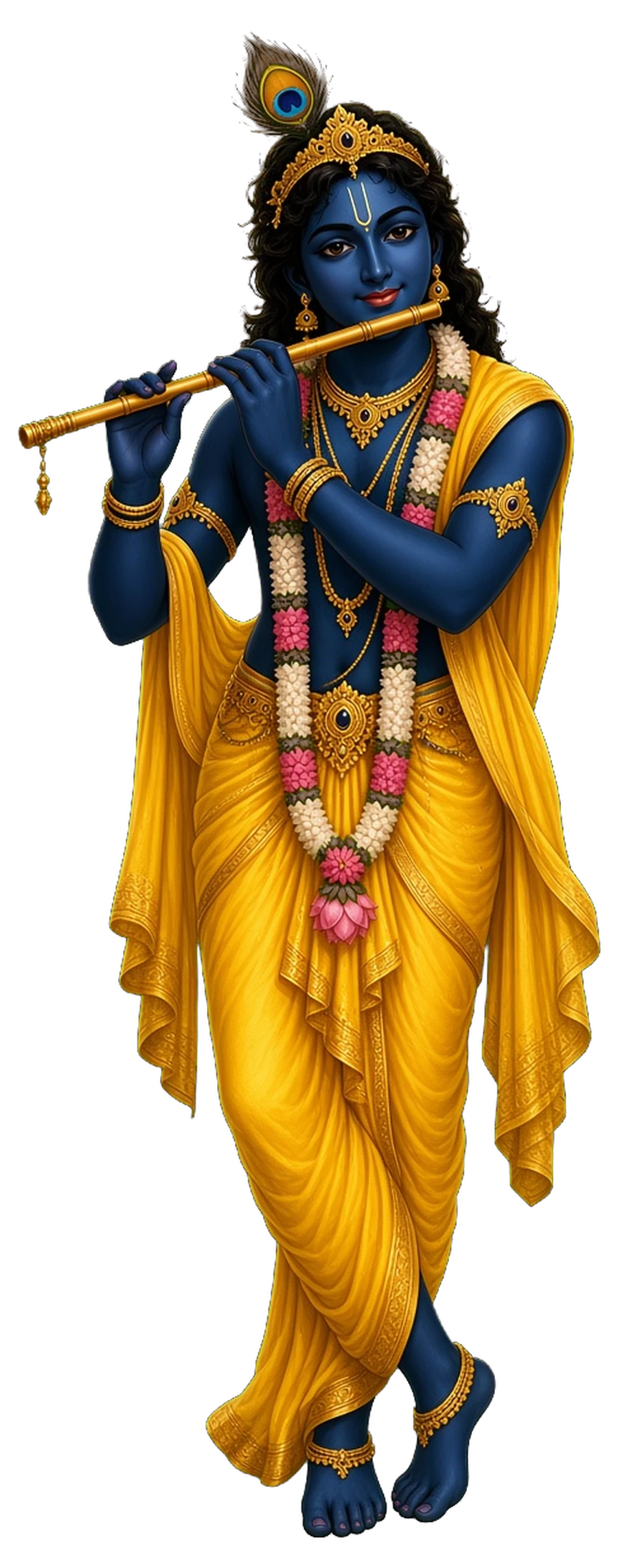
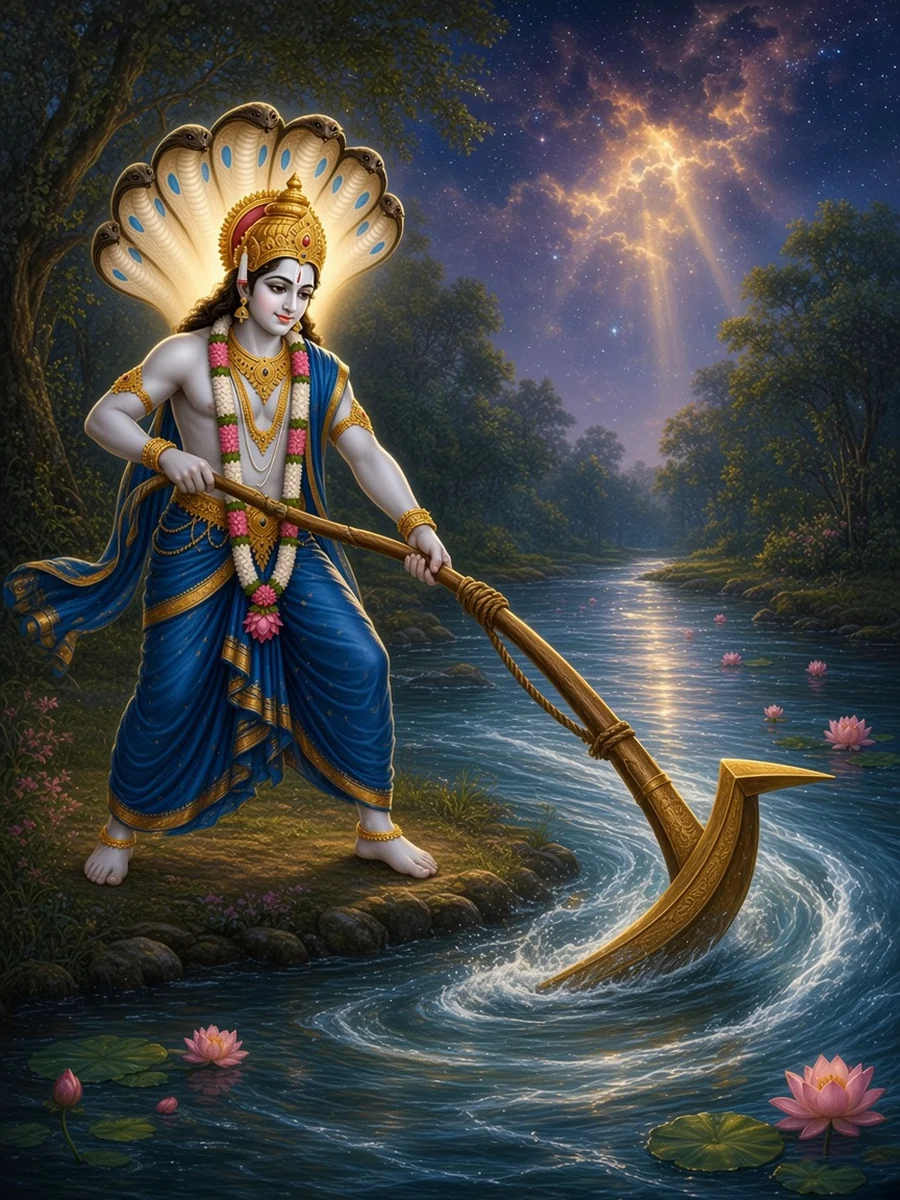
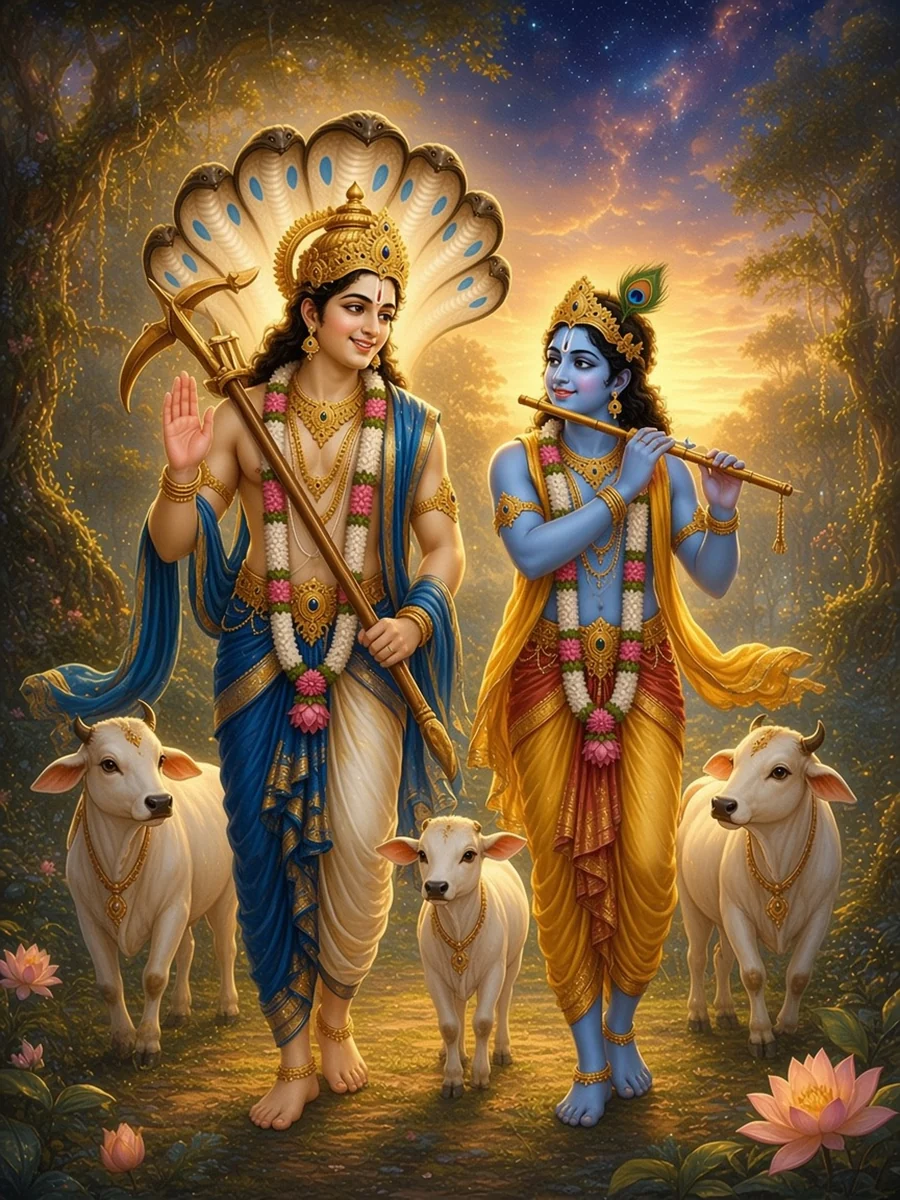
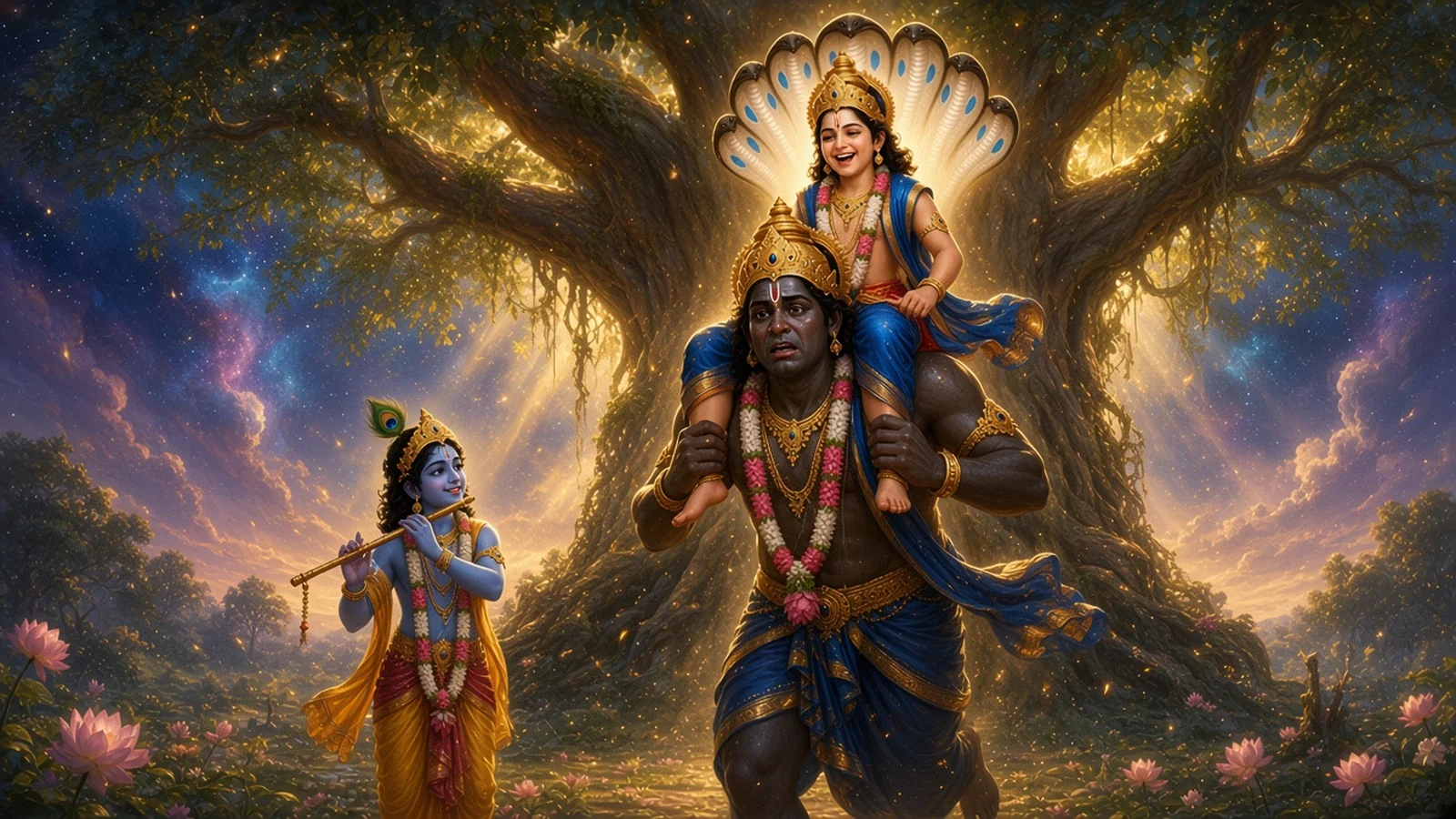
Balarama hooks his plough into the Yamuna and the river bends towards him The fair brother and the dark brother walk home behind the cows of Vrindavan

For kids

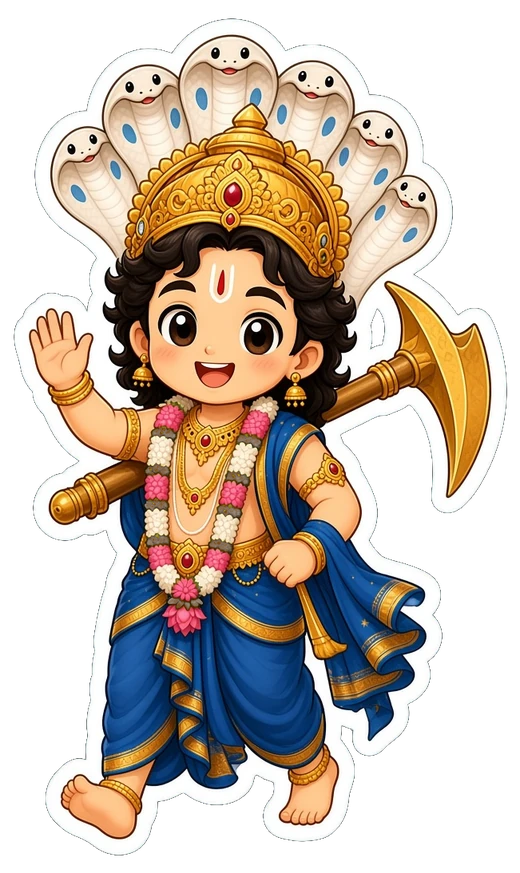
A little Balarama marches along with his plough on his shoulder
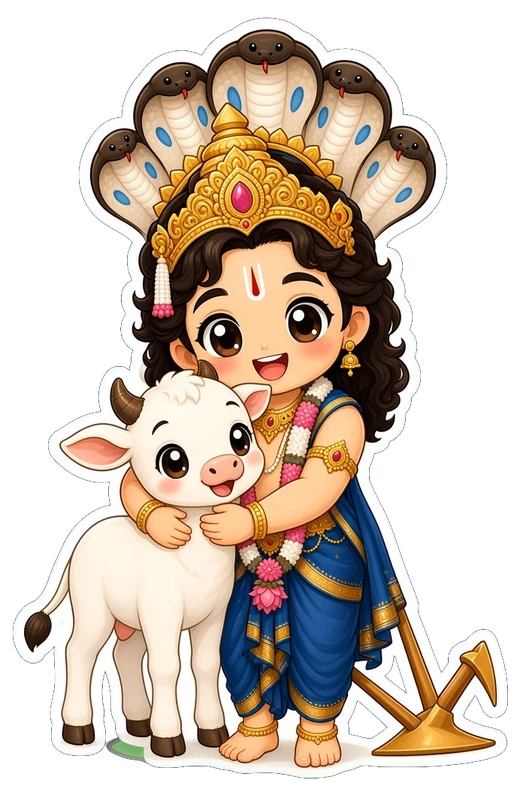
A little Balarama hugs a white calf and laughs

At a glance

TraditionVaishnava
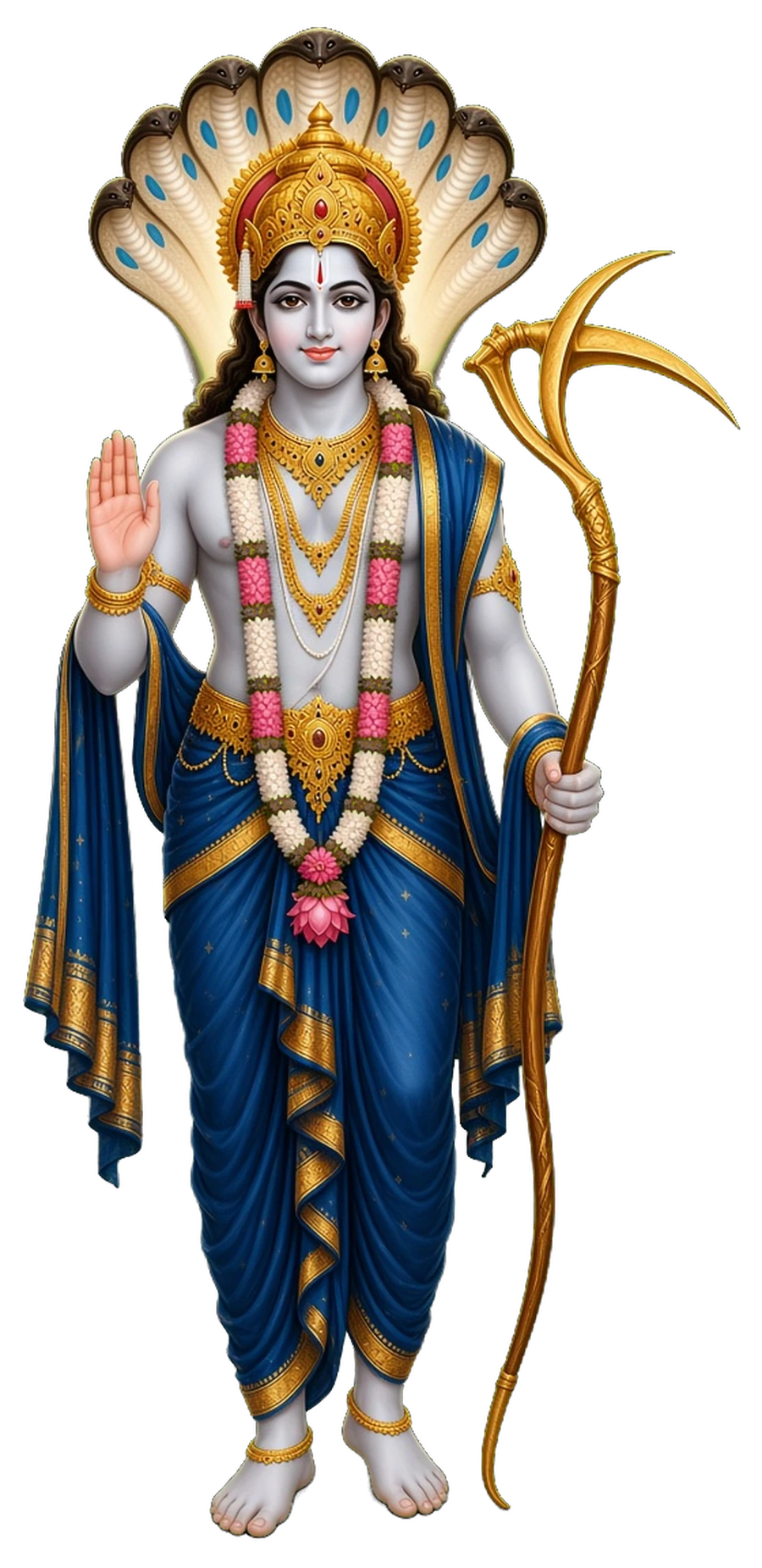
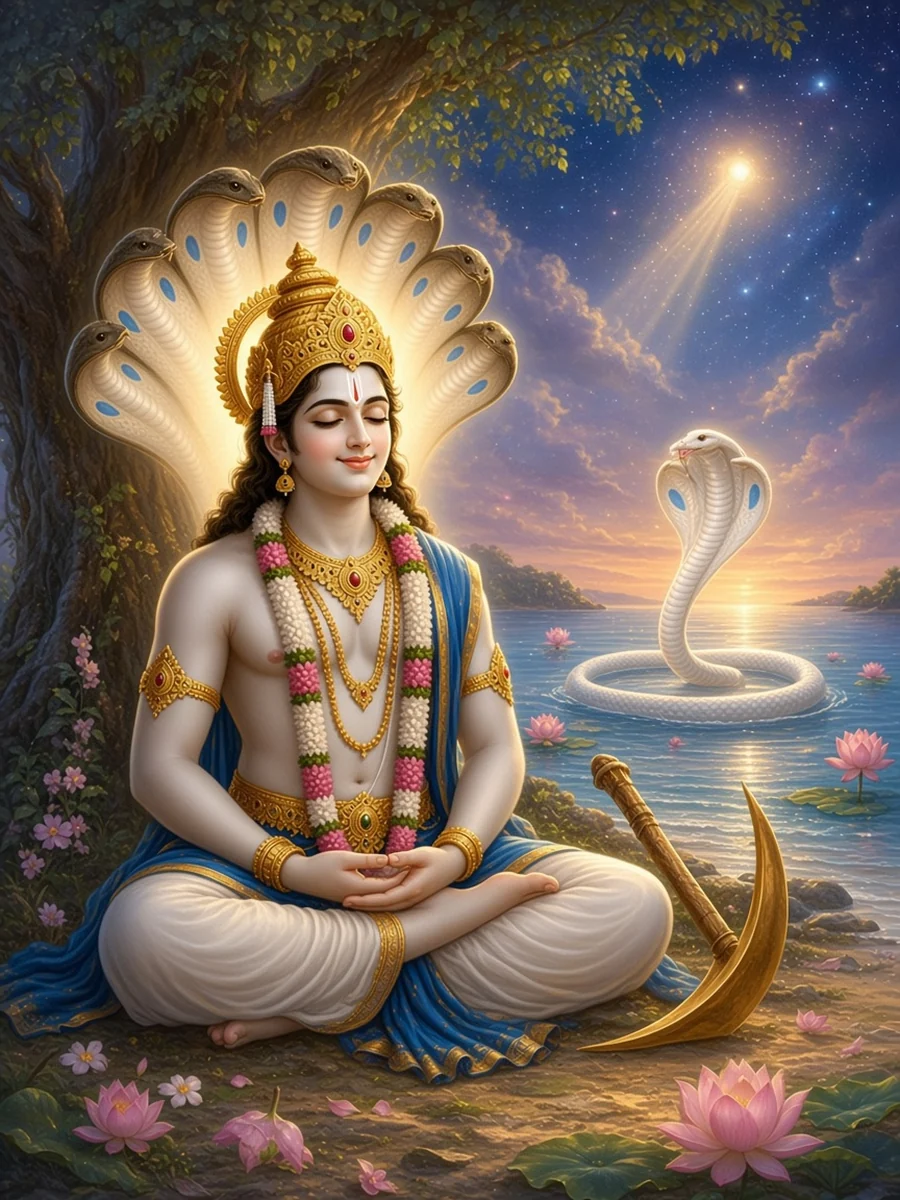
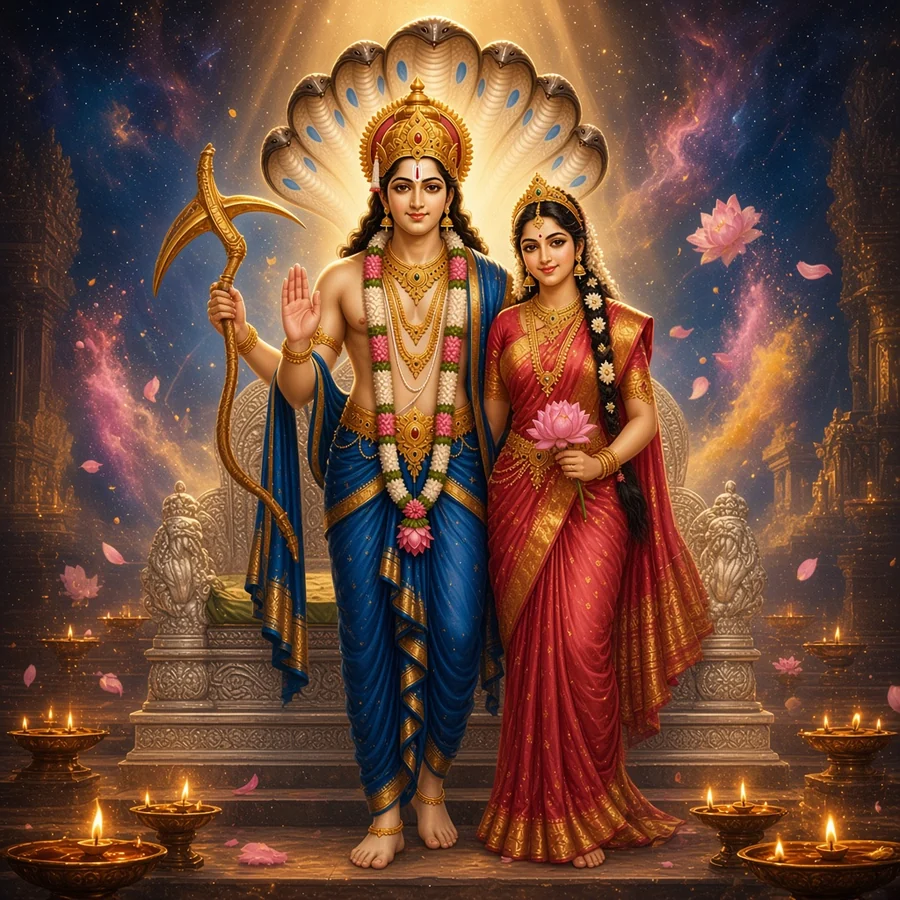
FormA tall young man

fair as a conch or the moon, in blue garments, with a garland of forest flowers

In his handsThe plough and the pestle in the oldest images; the plough and the mace in later ones

Who Balarama is

Balarama is Krishna's elder brother, and the strongest man in the stories of Braj.

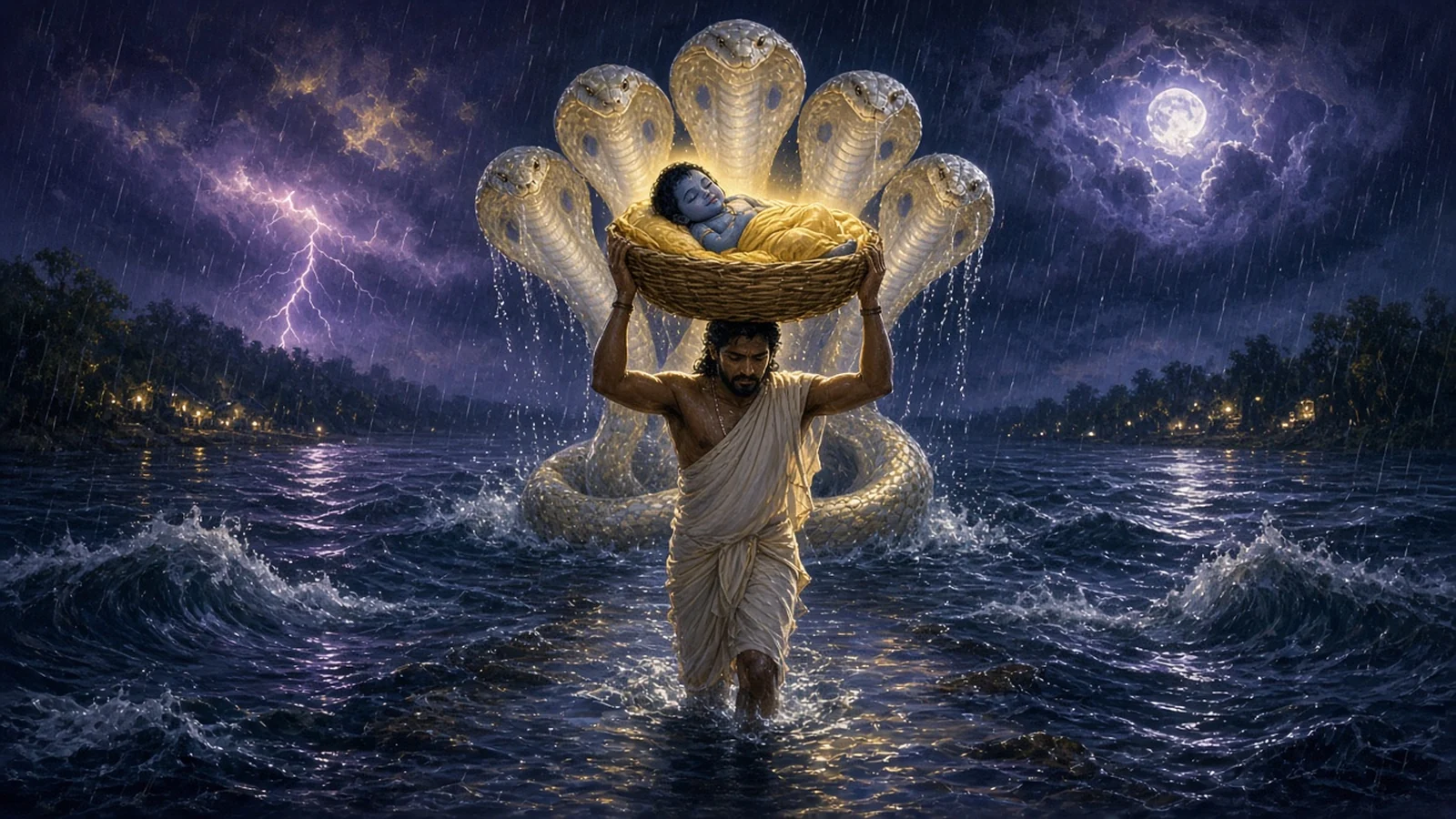
He was Devaki's seventh child. To keep him from King Kamsa, Vishnu's power drew him out of her womb and into the womb of Rohini, another wife of Vasudeva, who lived safe among the cowherds of Gokul. The Bhagavata says that is why he is called Sankarshana, the one drawn away. The sage Garga named him twice more: Rama, because he brings joy to his people, and Bala, for his strength.

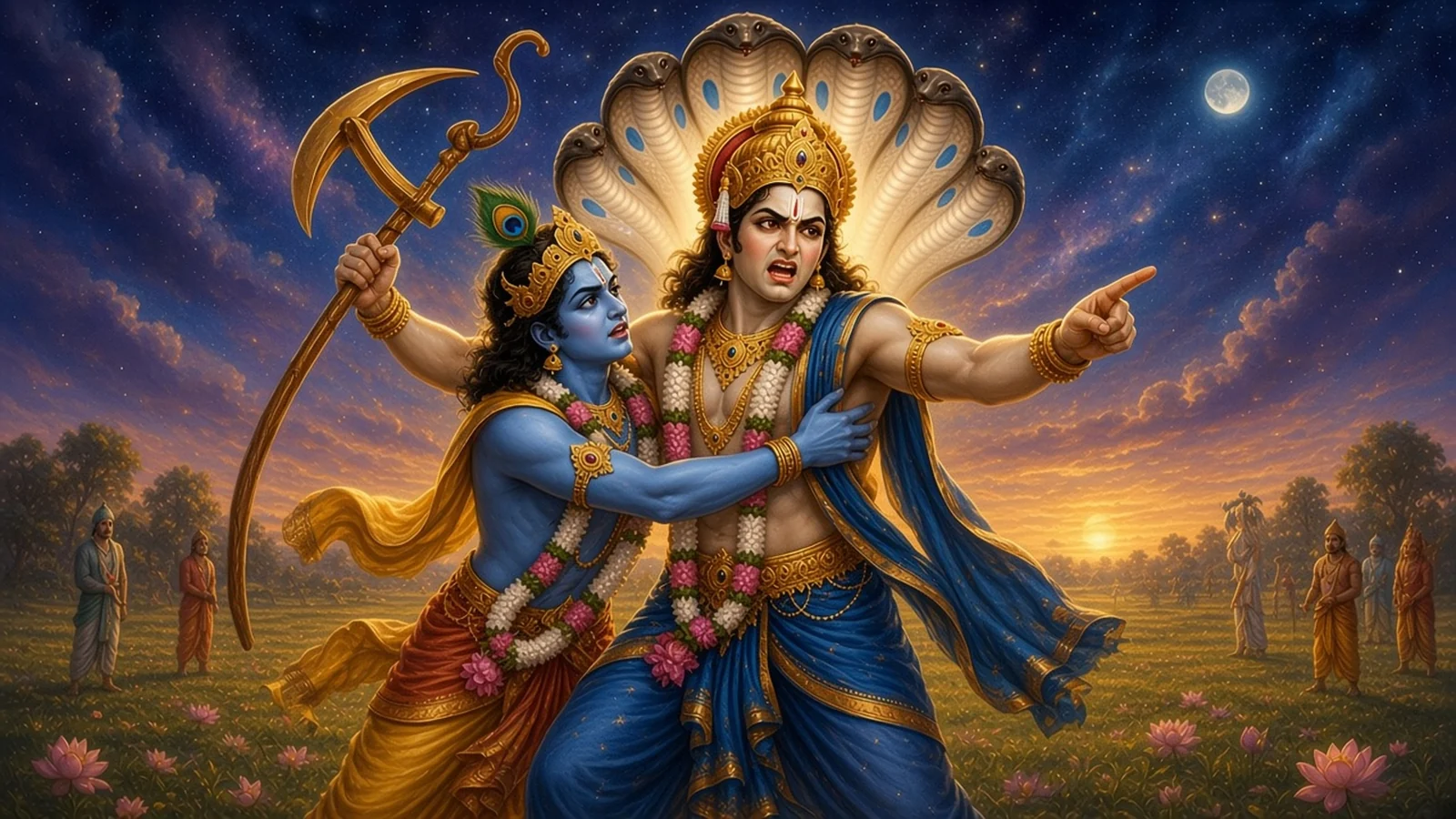
He grew up beside Krishna in the woods of Vrindavan, herding cattle, the fair brother beside the dark one. He carries a plough, and so he is Haladhara, the plough-bearer. With it he dragged the Yamuna out of her bed when she would not come to him, and dragged the city of Hastinapura towards the Ganga when its princes insulted him.

Vahasi vapushi vishade vasanam jaladabham, halahati-bhiti-milita-yamunabham, keshava dhrita-haladhara-rupa jaya jagadisha hare: On your fair body you wear a cloth the colour of a rain cloud, like the Yamuna that came to you in fear of your plough. Keshava, who took the plough-bearer's form, victory to you, Hari, lord of the world.

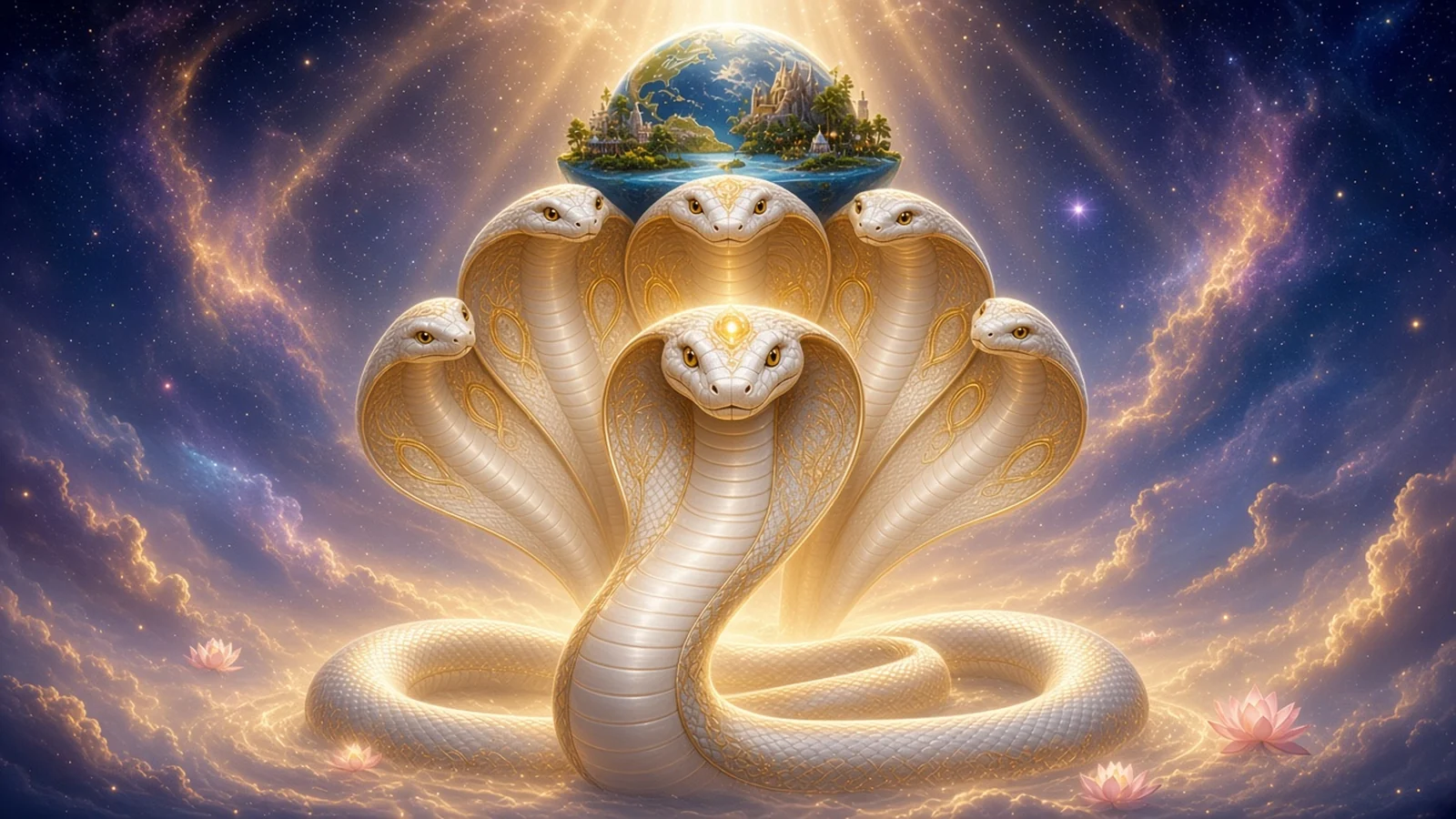
The epics and the Puranas say he was Shesha, the thousand-headed serpent who holds up the earth and on whom Vishnu sleeps, and the Mahabharata ends his life with a white serpent slipping out of his mouth and going home to the sea. Jayadeva's song of the ten avatars puts him eighth, after Rama and before the Buddha, and many southern lists count him in the Buddha's place.

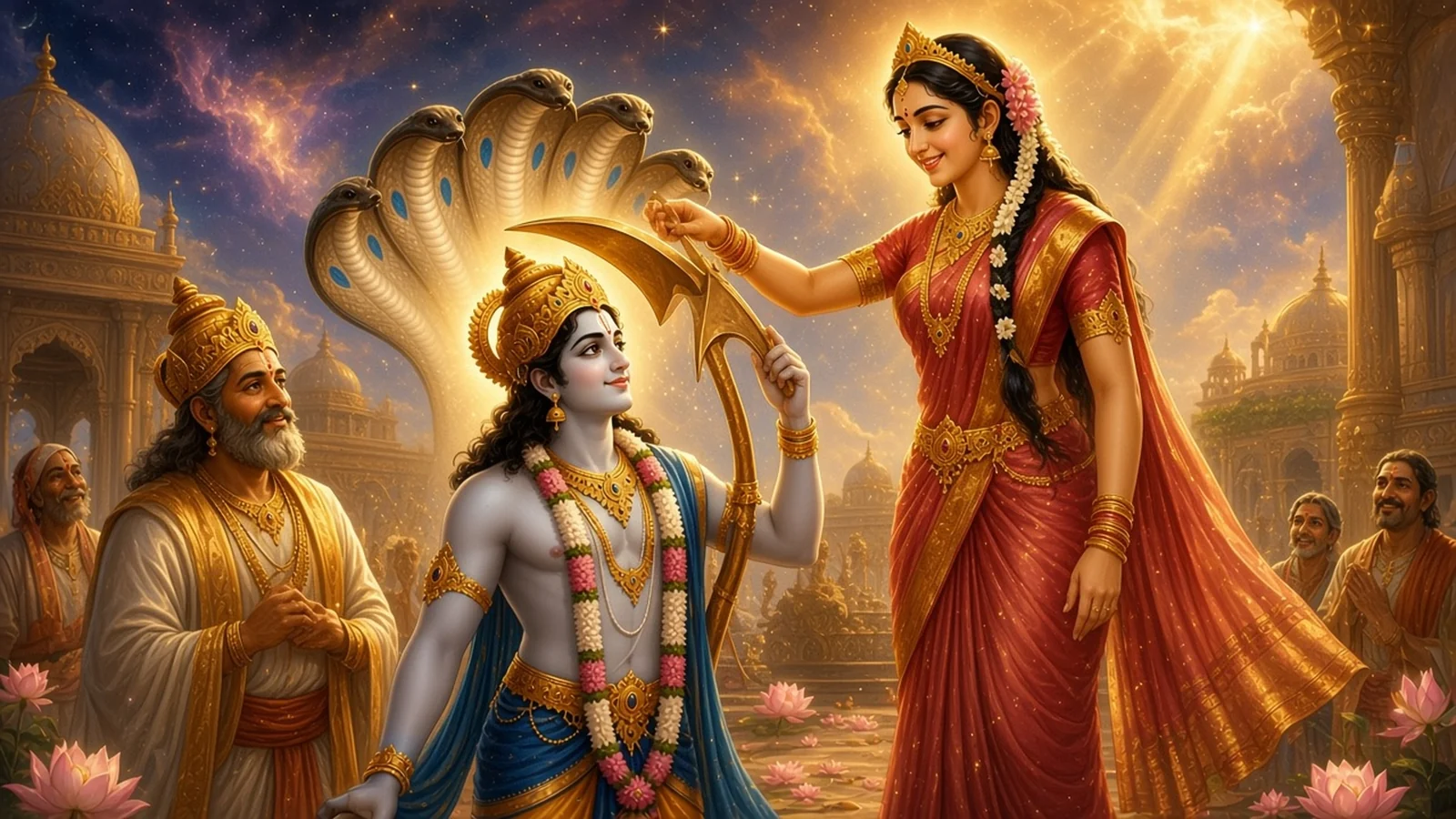
He is quick to anger and quick to calm. He married Revati, a princess from an age long past. He taught the mace to both Bhima and Duryodhana, and when the cousins went to war he would fight for neither.

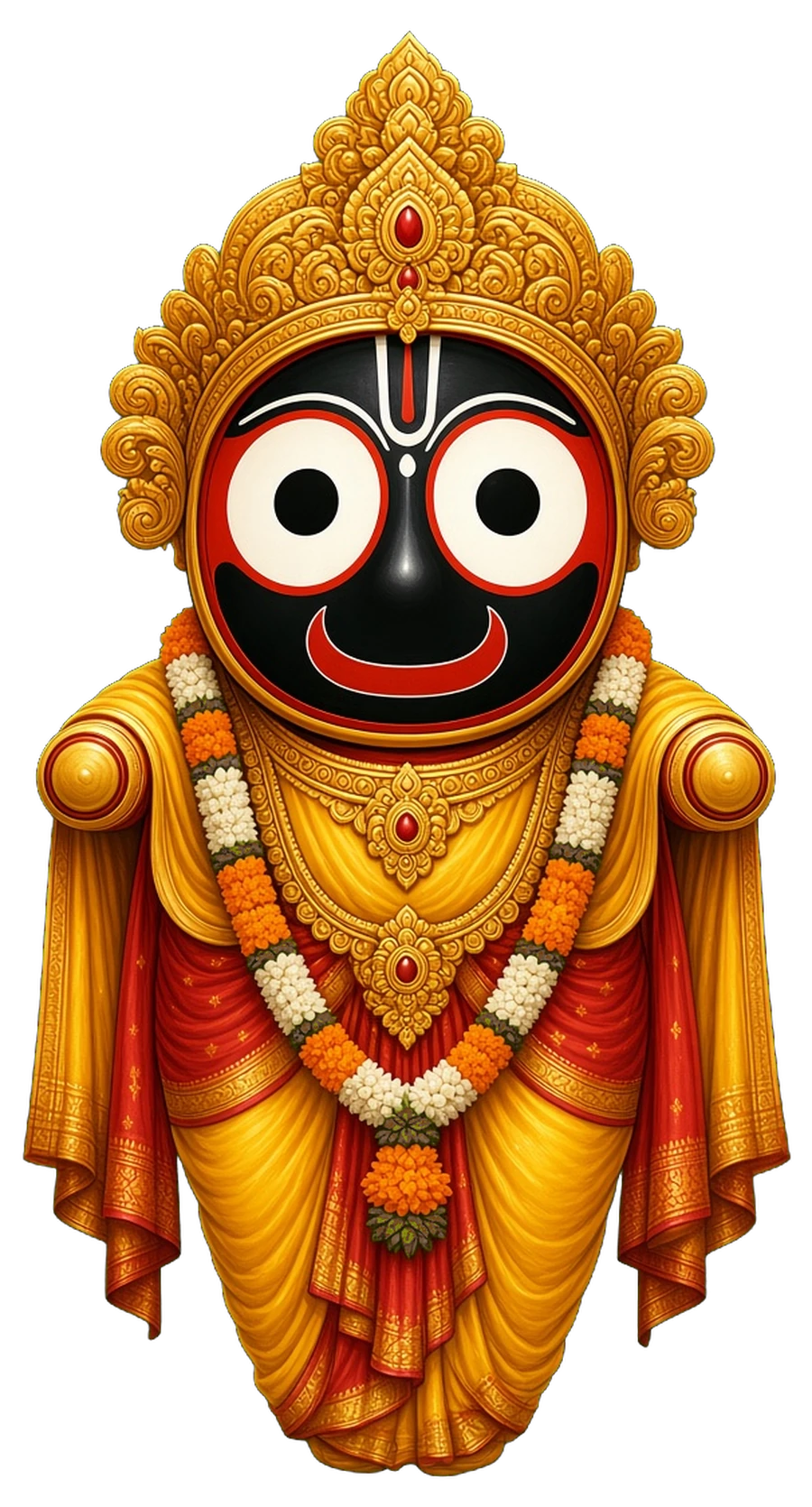
Farmers keep his day. On Hal Shashthi women fast for their children and eat nothing grown in a ploughed field. At Puri he is Balabhadra, the white elder brother on the altar beside Jagannath. Braj calls him Dauji, elder brother, and keeps a rough Holi of its own at his temple in Baldeo.
Before the Puranas

The Vedic roots of Balarama

Balarama is not in the Vedas. He begins as Sankarshana, one of the Vrishni heroes worshipped around Mathura, and he is older in stone than most of the avatars. The Indo-Greek king Agathocles of Bactria struck coins, about 190 to 180 BCE, with a figure holding a plough on one side and Vasudeva-Krishna on the other, which Doris Srinivasan called the earliest unambiguous image of the pair.

Inscriptions of the next two centuries name the two together, the elder first. The Ghosundi and Hathibada stones near Chittorgarh, of the second or first century BCE, record that a King Sarvatata built a stone enclosure for the worship of Samkarshana and Vasudeva. The cave at Naneghat, cut for the Satavahana queen Naganika, most likely early in the first century BCE, opens with an invocation to the same two. Images of him with the plough and the pestle come from Jansuti near Mathura, of the second or first century BCE. A Mathura sculpture of the second century CE already gives him a serpent hood and a drinking cup.

The Mahabharata, the Harivamsha and the Puranas tell his life: his birth from Rohini, his boyhood exploits in Braj, the plough, the war he refused, and his going home as Shesha. As Vishnu became the god of the avatars, Balarama took his place among them, and since the twelfth century Jayadeva's Gita Govinda has sung him among the ten.

The Jains have their own Balarama. Their texts count nine Baladevas, each an elder brother to a Vasudeva, and he is the ninth, a cousin of the Tirthankara Neminatha. Paul Dundas notes how many images of him survive in early Jain art.

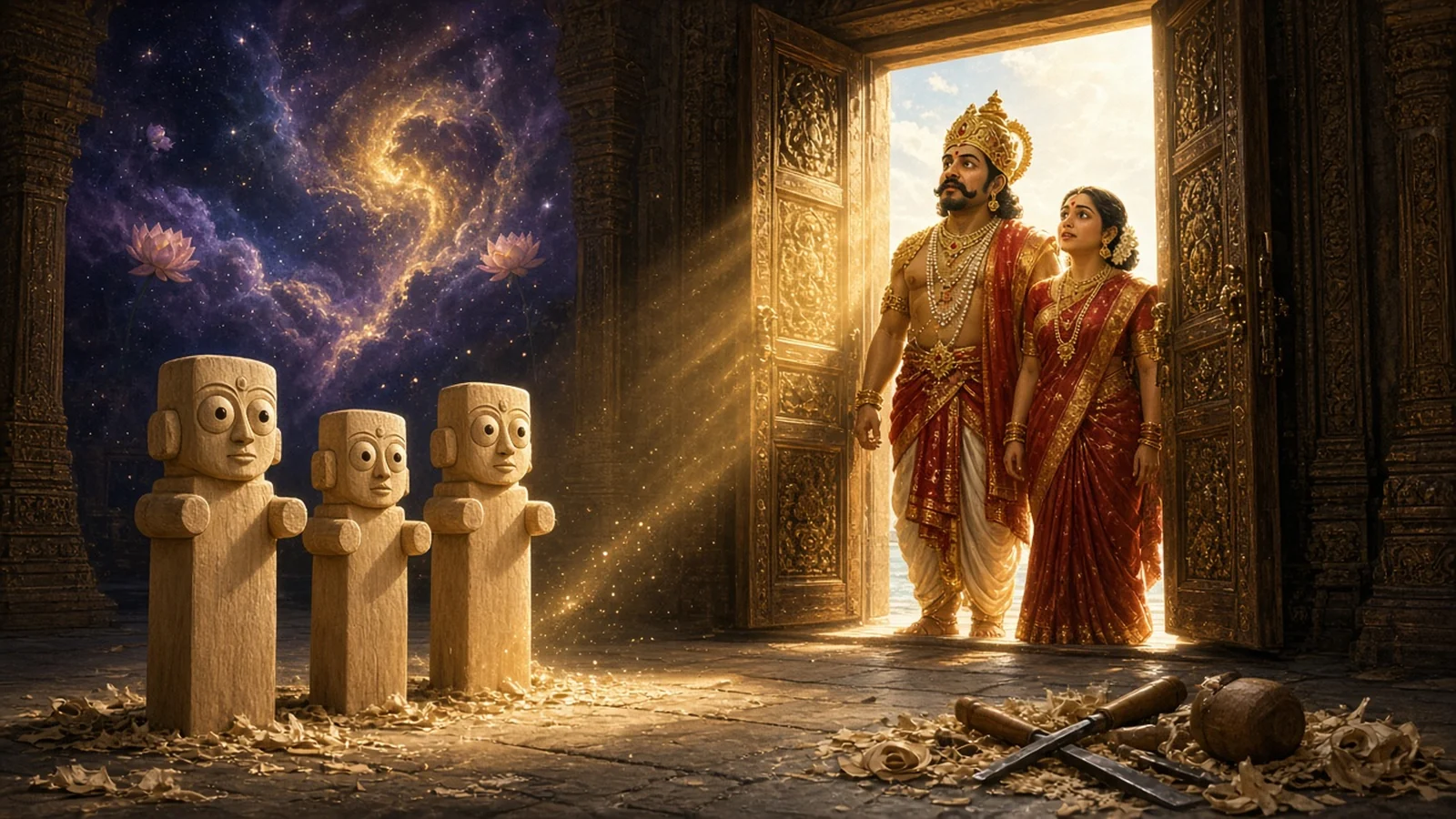
At Baldeo in Mathura district the Dauji temple keeps him with Revati. Its first image is said to have been set up by Krishna's descendant Vajranabha, and the present one was re-installed by Goswami Gokulnath of the Vallabha line in the sixteenth century; accounts differ on the year. At Puri he is Balabhadra, carved in wood with Jagannath and Subhadra and pulled each year on his own chariot, Taladhwaja.

See how the Vedic gods became the Puranic ones →

Every story about Balarama

Related gods