As Jayadeva tells it
Gita Govinda (in Edwin Arnold's paraphrase) · 2 min read
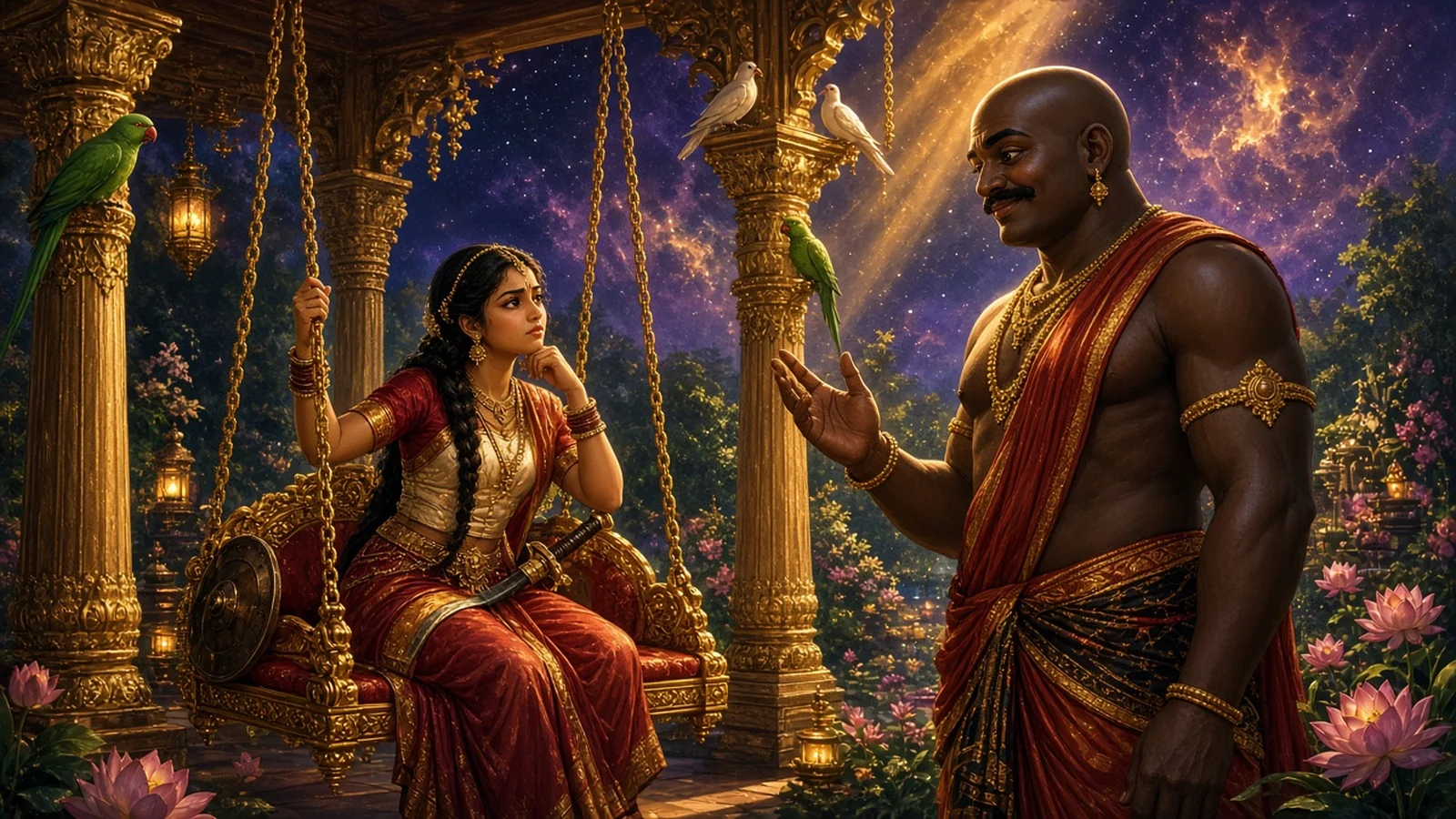
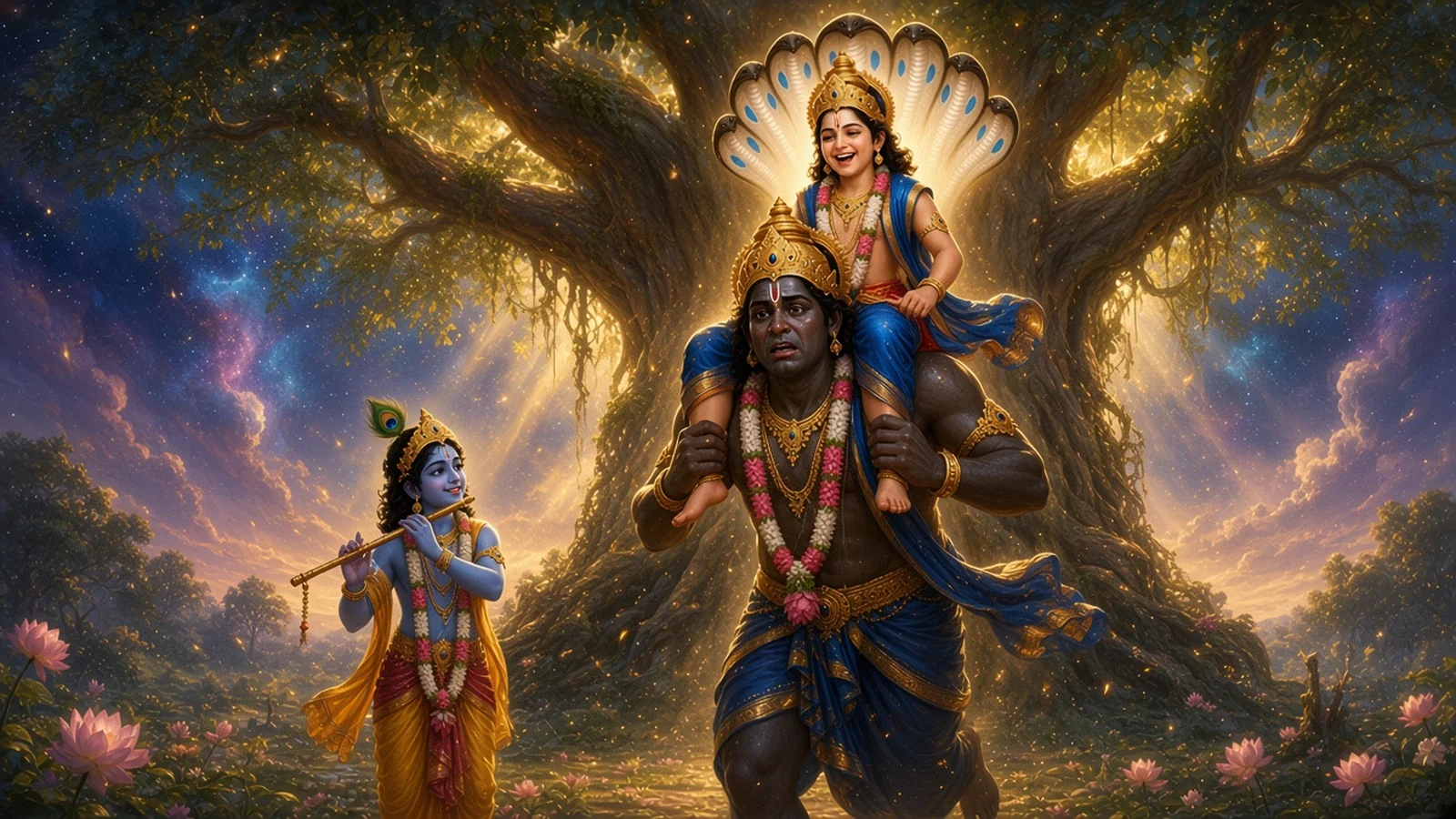
The poem begins on a dark evening, with the cowherd Nanda looking up at the sky.
"The clouds are thick," he says to Radha, "and the forest is black with tamala trees. The boy is afraid of the night. Take him home."
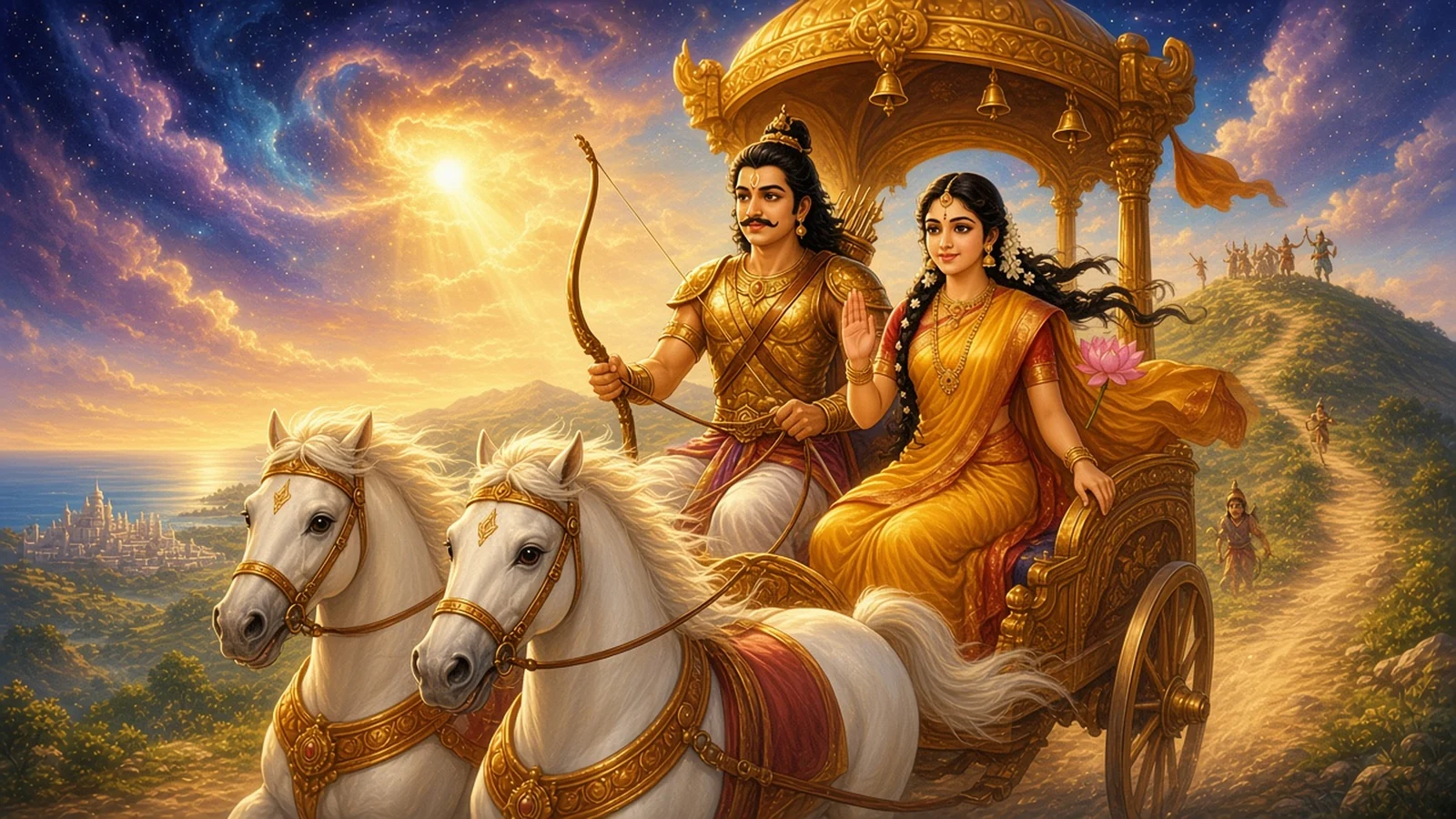
So Radha took Krishna by the hand and led him home through the trees, and on the way, by the river, the two of them stopped. That is how it began.
Then the poem moves on to another season. It was spring in the woods by the Yamuna. The mango trees were in flower, the bees were drunk on them, and the koel was calling from every branch. Radha had come to the edge of the forest to wait for Krishna.
Her friend came running to her, out of breath.
"I know where Krishna is," she said. "He is in the grove, dancing with the cowherd women. He has his arms round one and his eyes on another, and he is laughing."
Radha said nothing. She turned and went away into a thicket of creepers and sat there alone.
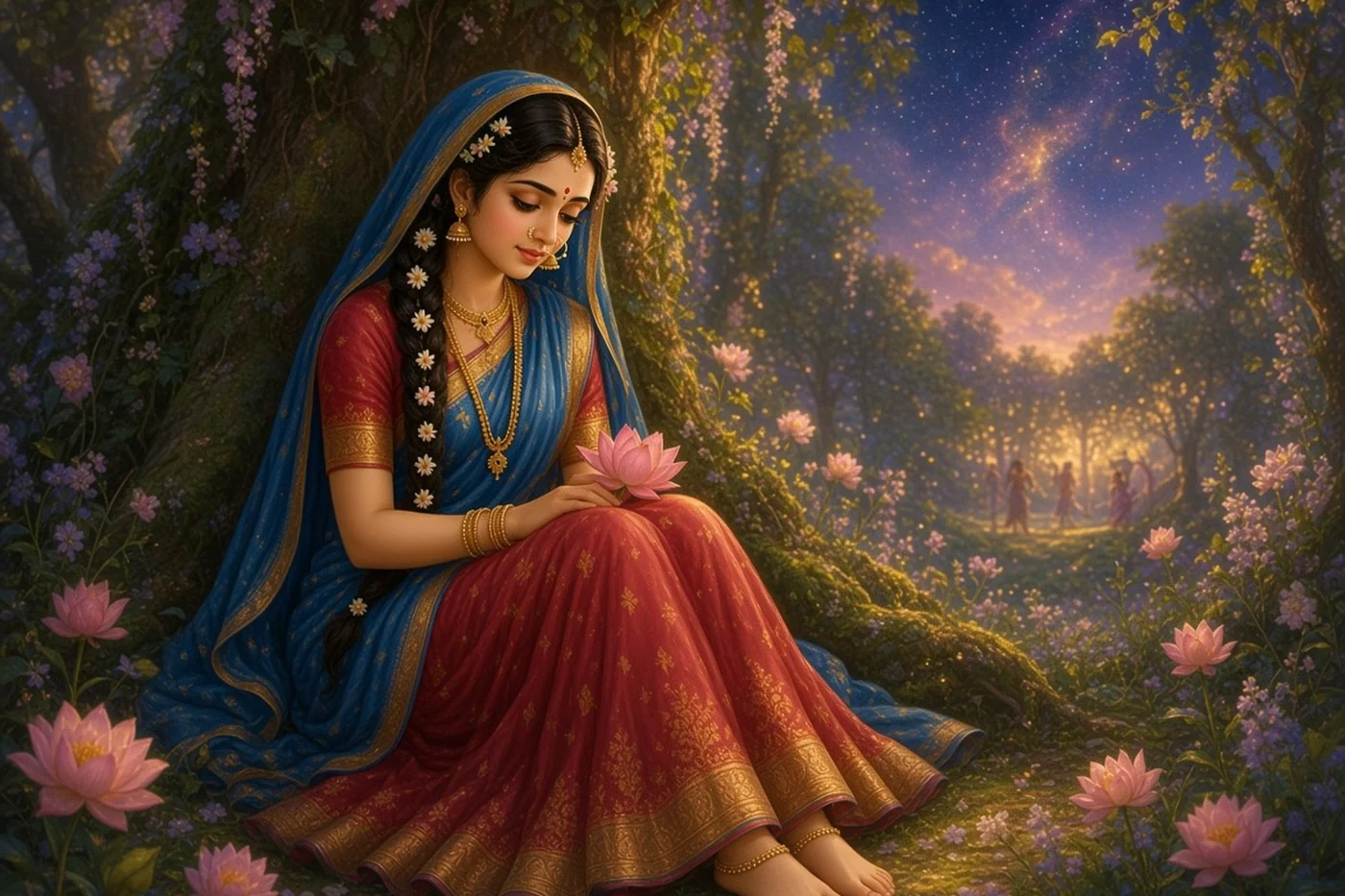
Krishna danced until the dance ended. Then, standing among the women, he remembered Radha, and he could not think why she was not there. He looked for her and could not find her, and he sat down by the river, ashamed.
"She saw me with them," he said to himself. "She has gone, and she was right to go."
Radha's friend found him there, and came back to Radha.
"He is sitting by the water, alone," she said. "He calls your name. He says he is sorry."
"Let him be sorry," said Radha.
The friend went to Krishna and told him how Radha was. "She lies on a bed of leaves," she said, "and the leaves burn under her. She draws your picture and then cries over it."
But all night she lay awake and thought of him, and in the morning she sent her friend to see if he was still there. He was. So the friend went back and forth between them, carrying words, telling each one how much the other suffered, until neither of them could bear it any longer.
At last Krishna came to Radha himself. She would not look at him.
"You have been with someone else," she said. "Go back to her."
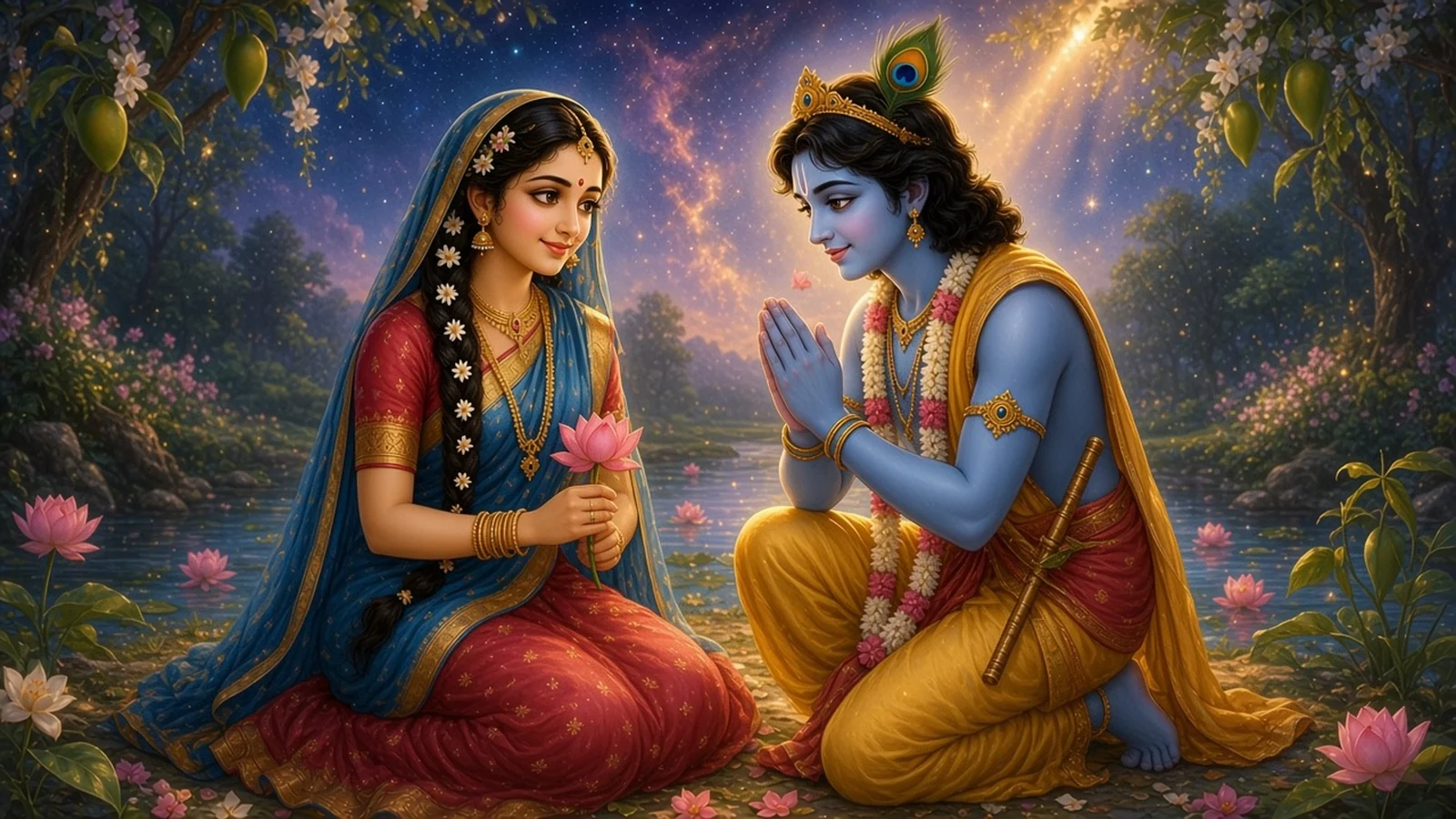
He knelt in front of her.
"Your anger is a poison in me," he said, "and only you can cure it. Put your tender foot on my head. Let that be my ornament."
Radha looked at him then. And the poem, which began with her waiting at the edge of the wood, ends with the two of them together in the grove, at night, and the poet asking the god to let his song be sung forever.
As Puri tells it
the legend of the verse · 1 min read
The poet Jayadeva wrote the Gita Govinda, they say, in a small house, with his wife Padmavati looking after him.
He had come to the place in the poem where Krishna kneels before Radha and asks her to put her foot on his head. And he stopped. He could not write it. How could he make the lord of the universe ask a cowherd girl to set her foot on him?
He put down the palm leaf and the stylus.
"I am going to bathe," he told Padmavati, "and think about it."
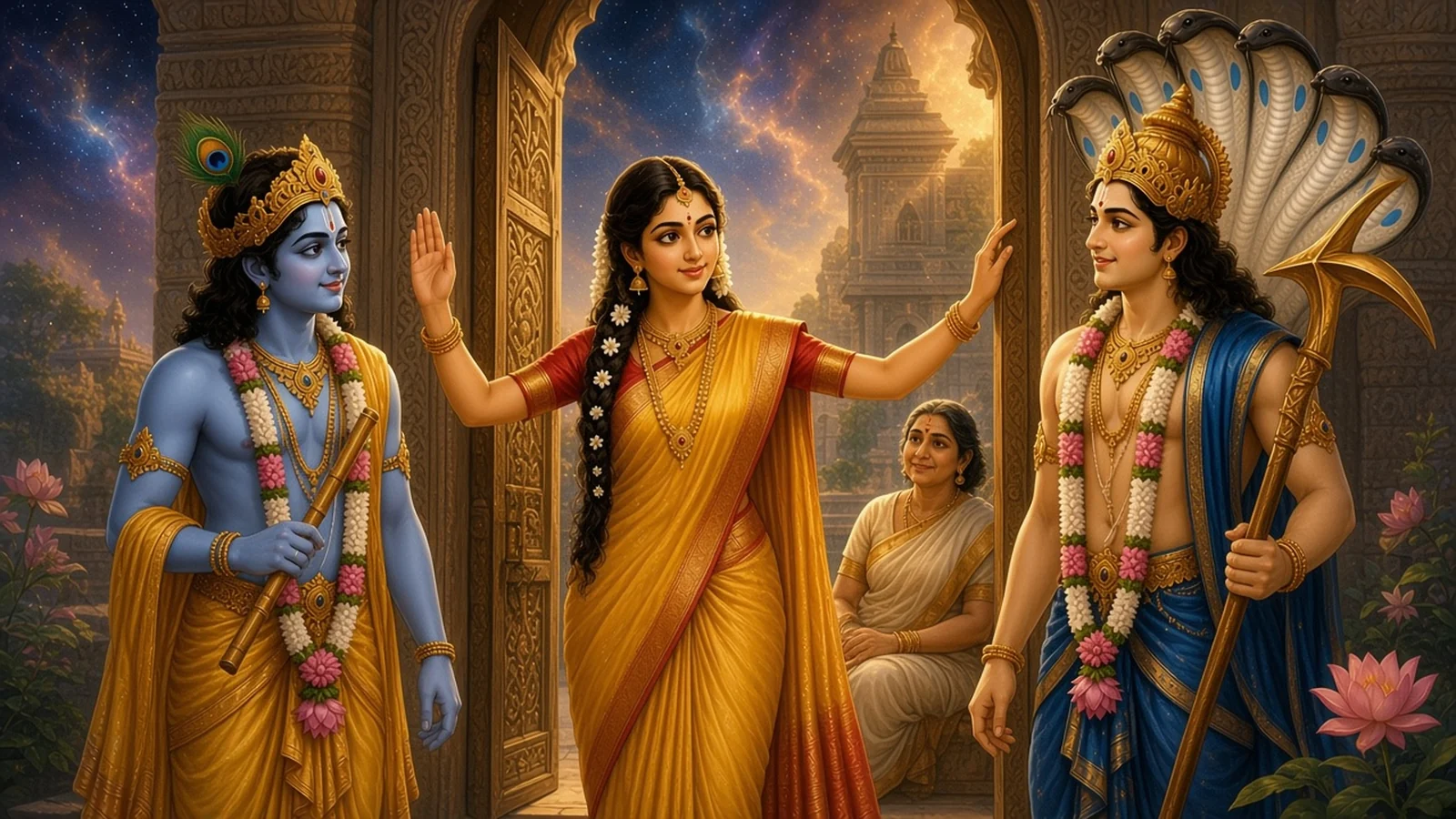
He went down to the river. A little while later, Jayadeva came back into the house. He sat down, picked up the leaf, wrote something on it quickly, and then asked his wife for his meal. She served him, and he ate, and went out again.
Then Jayadeva came back into the house, wet from his bath, and asked for his meal.
"But you have just eaten," said Padmavati. "You came back and wrote, and I gave you your food."
Jayadeva went to the palm leaf. The line he had not dared to write was there, in the place where he had stopped, written in a hand he knew was not his own.
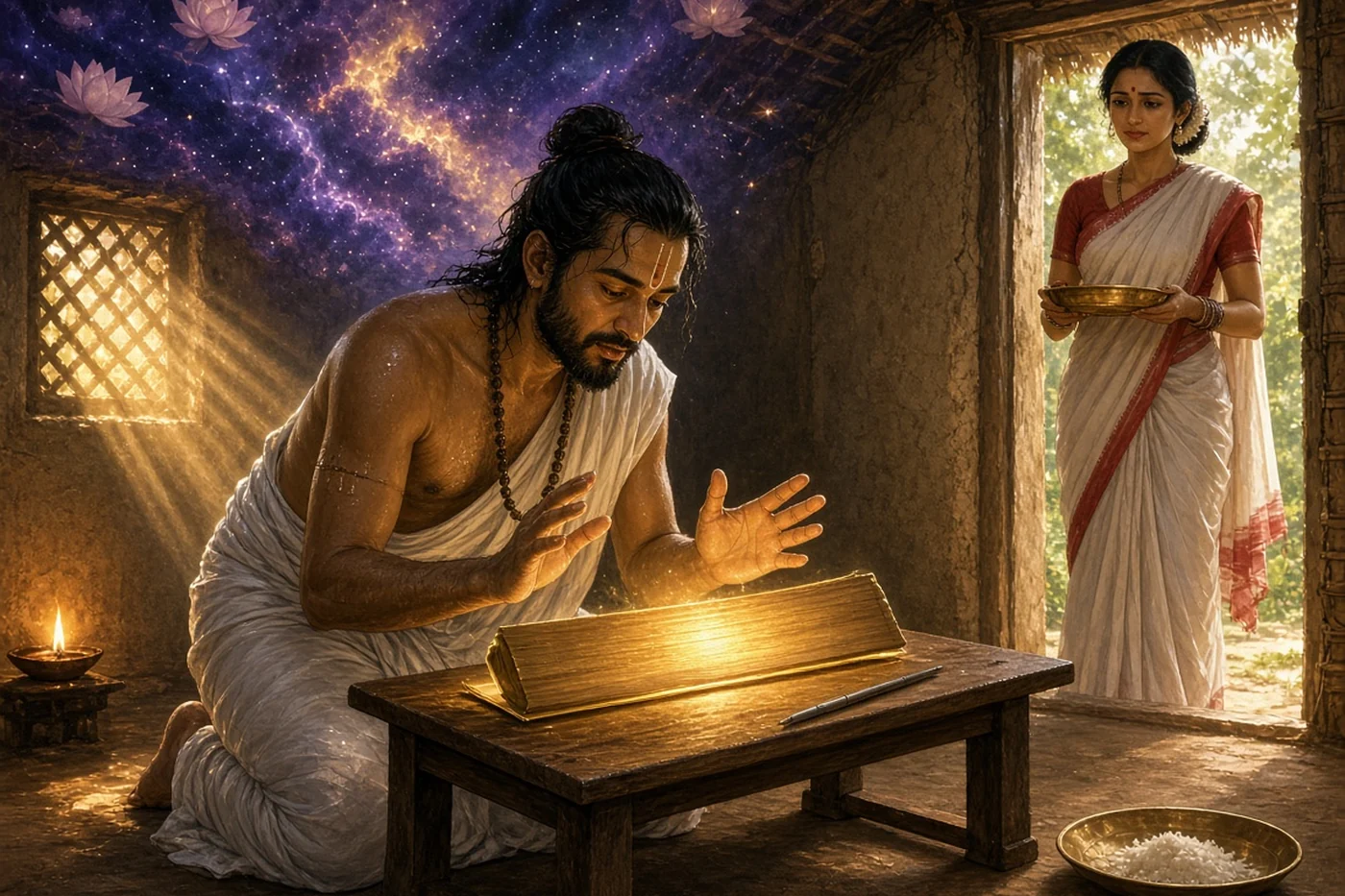
He understood who had come to the house while he was at the river. He went to the plate that his visitor had eaten from, and ate what was left on it, crying.