As the Mahabharata tells it
Drona and Ashvamedhika Parvas · Kurukshetra and Hastinapura · 3 min read
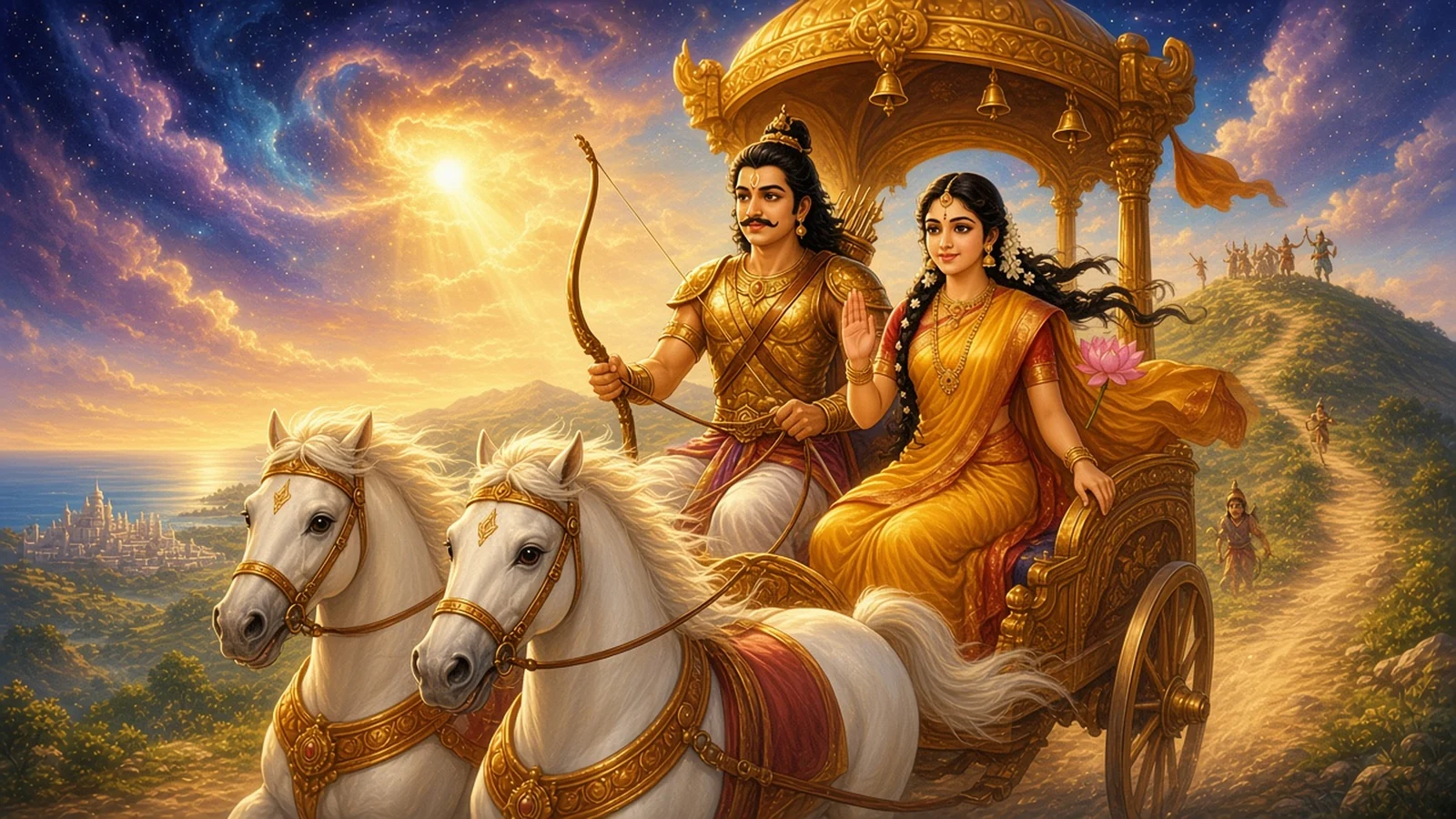
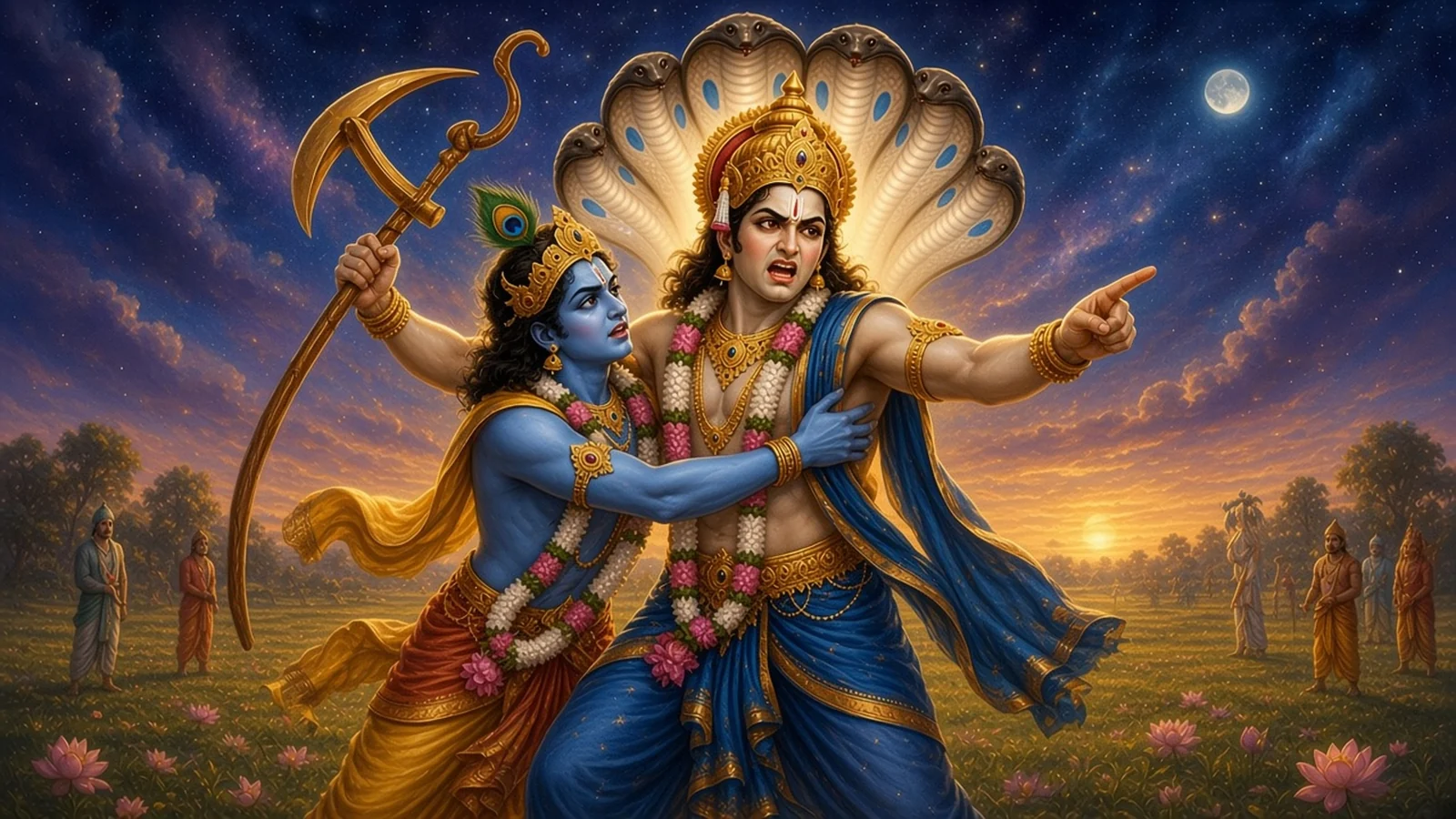
On the thirteenth day of the great war, Drona drew up his army in the shape of a great wheel, and Arjuna was fighting far away on another part of the field.
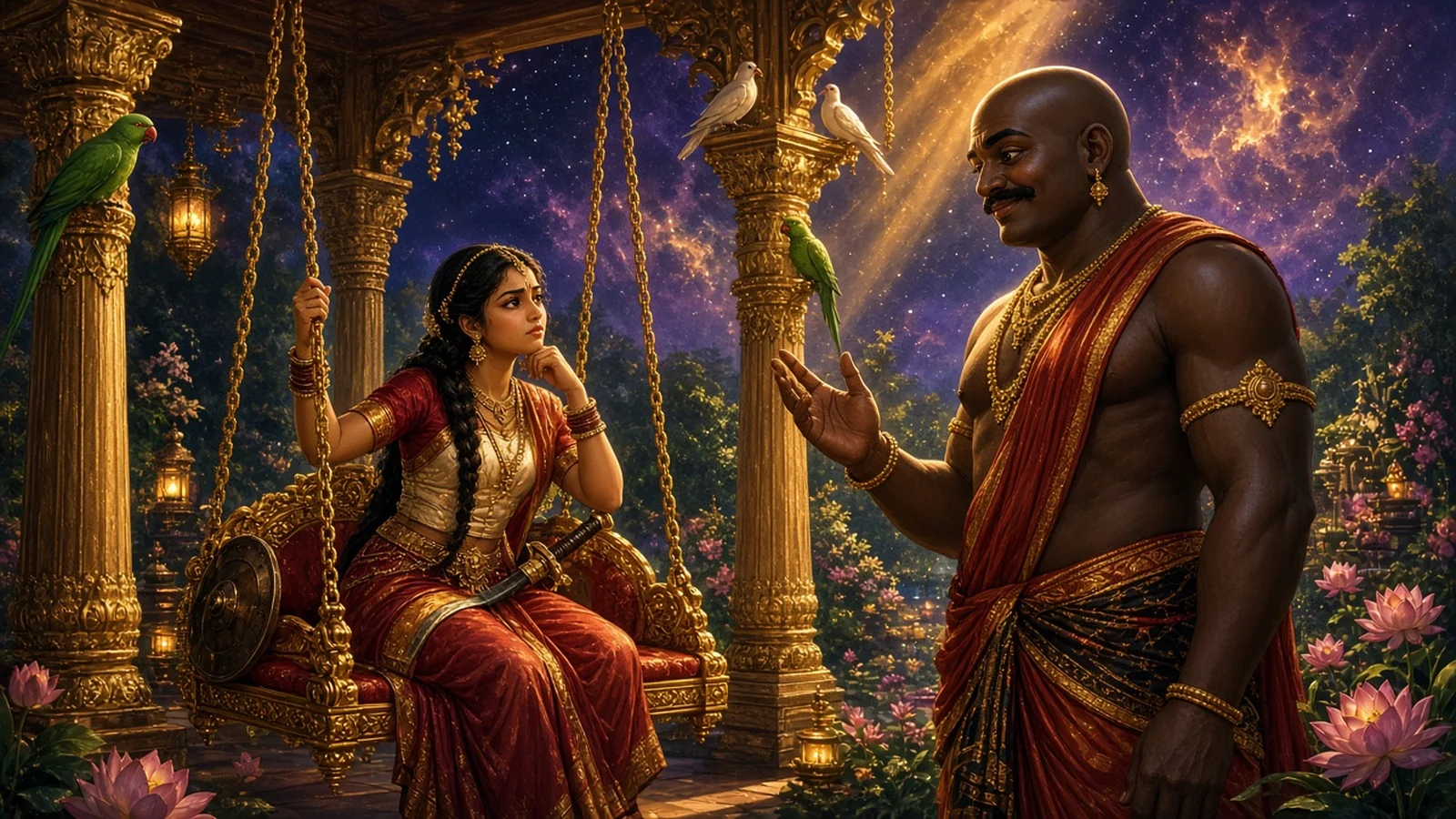
Yudhishthira turned to Arjuna's son. Abhimanyu was sixteen, Subhadra's boy, brought up among his uncles in Dwaraka.
"Your father is far away on the other side of the field," said the king. "Can you break into that wheel?"
"My father taught me how to break into this array," said Abhimanyu. "But if trouble comes, I will not be able to get out again."
"Break it open, and we will all follow you in," said Yudhishthira, and Bhima promised the same.
"Then watch me," said the boy. "If I fail, I am no son of Subhadra."
He broke in. But the gap closed behind him, the others could not follow, and he fought on alone until six great warriors came at him together. By evening he lay dead on the field.
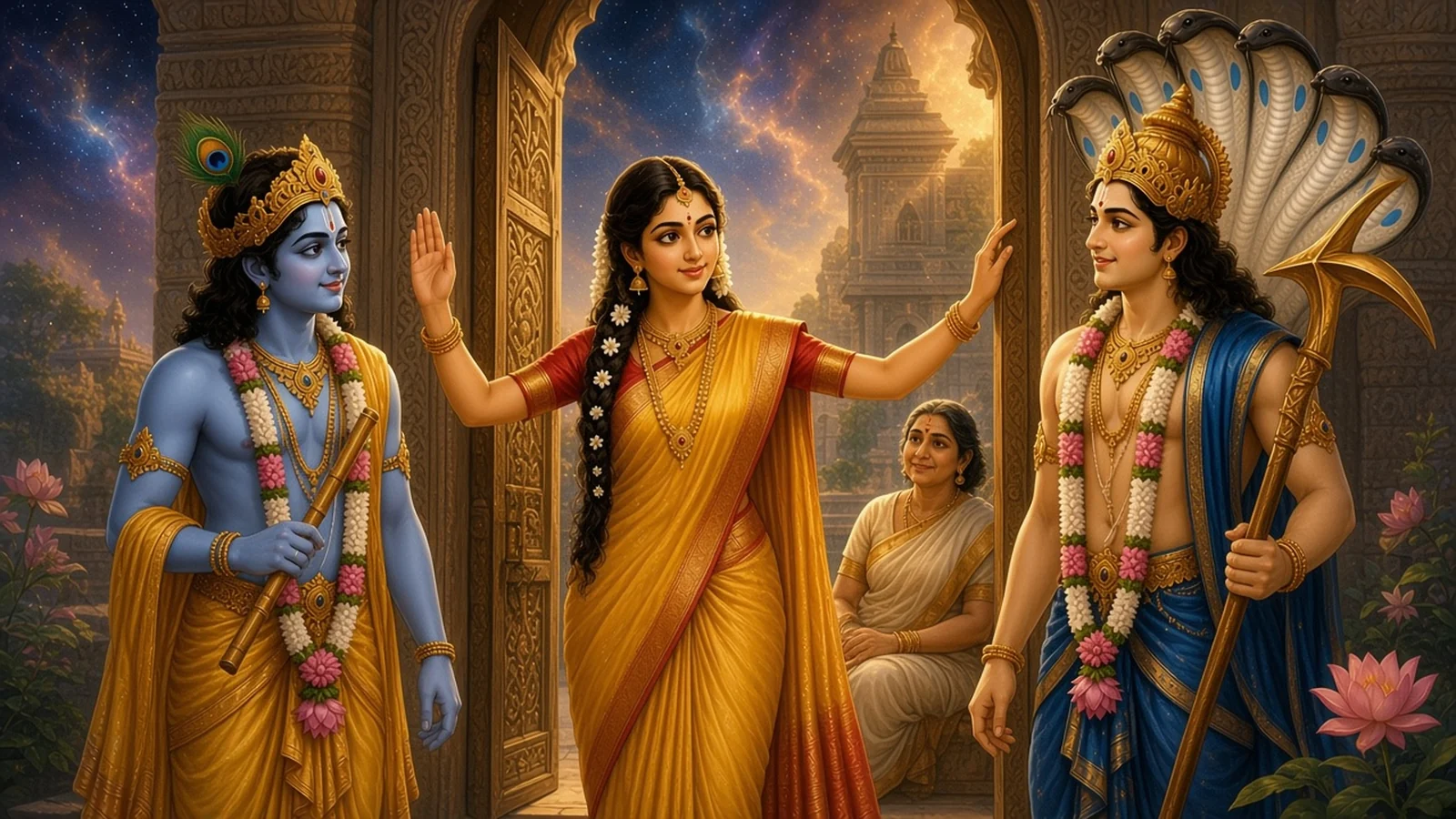
That night Krishna went to his sister.
Subhadra heard him out, and then she wept.
"His face was like a blue lotus, and it is covered in the dust of the battle," she said. "He slept on soft sheets, and now he sleeps on the bare ground. And Uttara, his young wife, is like a cow that has lost her calf. Who will comfort her?"
Then she prayed for him, over and over. Wherever the givers go, and the truthful, and the brave who die facing the enemy, and the kind, and the self-controlled, let that be where he goes. Let that end be his.
"Do not grieve," said Krishna gently. "He has gone where every warrior hopes to go."
Draupadi and Uttara came in, and the three women wept together until they fainted. Krishna sprinkled water on his sister's face and comforted her, and asked Draupadi to look after Uttara. Then he went back to Arjuna.
The war ended. Uttara's time came, and the whole city waited for the child.
He was born still. Ashvatthama, Drona's son, had loosed a terrible weapon at the Pandava women's wombs when the war was ending, and the baby lay without a breath.
Krishna came running to the women's rooms. Kunti caught at him first. Then Subhadra saw her brother and cried aloud.
"Drona's son's weapon struck Uttara, and it struck me," she said. "It is still in me, Krishna, like a blade that nobody has pulled out. You promised you would bring Abhimanyu's son to life. I bow my head to you. Keep your word. Let my son's son live."
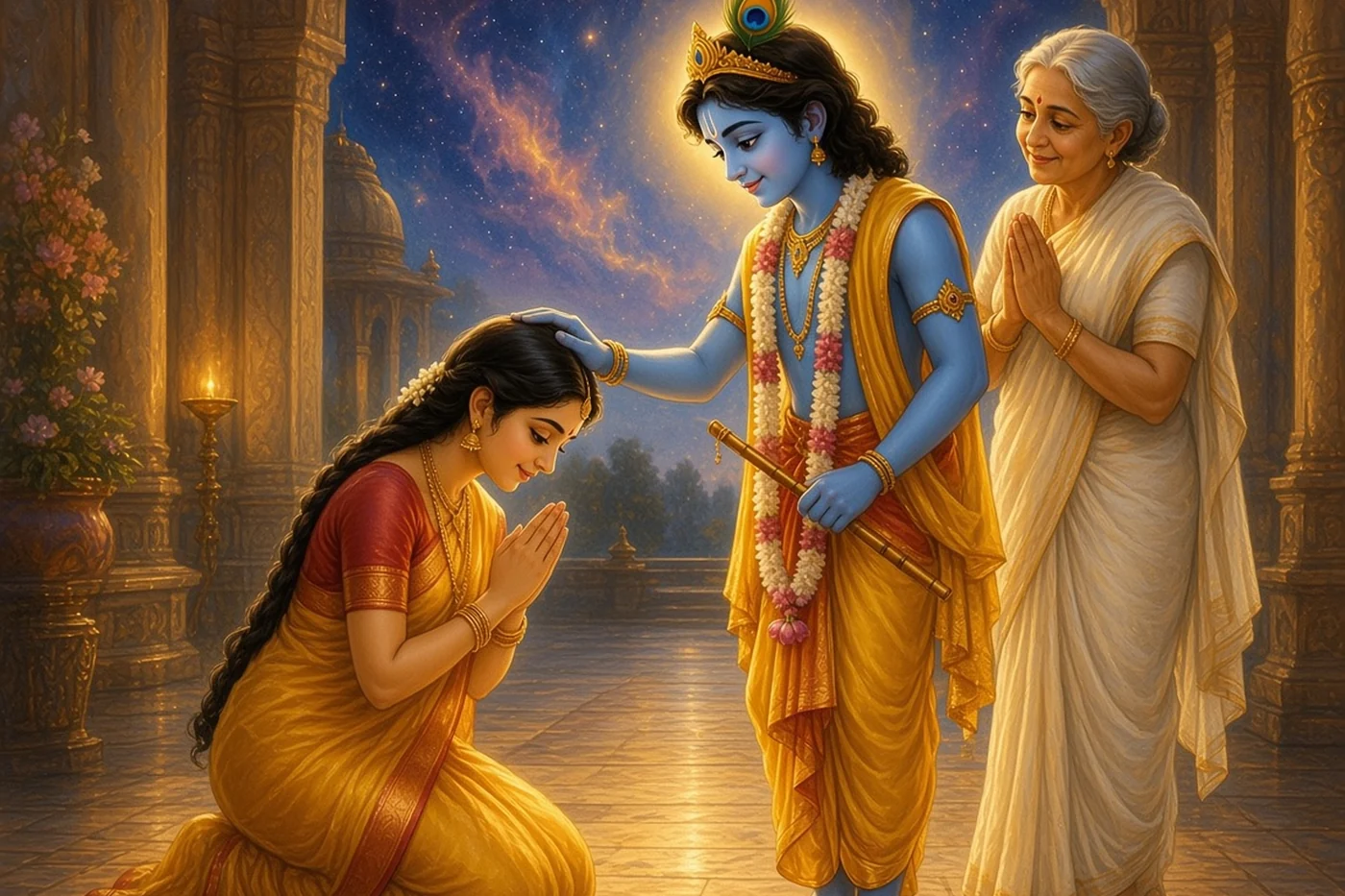
"So be it," said Krishna.
He went into the birth room. It was hung with white flowers, with pots of water and mustard seed and fires burning all round, and Uttara was begging the little body to wake.
Krishna touched water. He drew the weapon's power back into himself, and then he spoke so that everyone heard.
"I have never told a lie. I have never turned my back in battle. I have never once quarrelled with Arjuna, my friend. If that is true, let this child live."
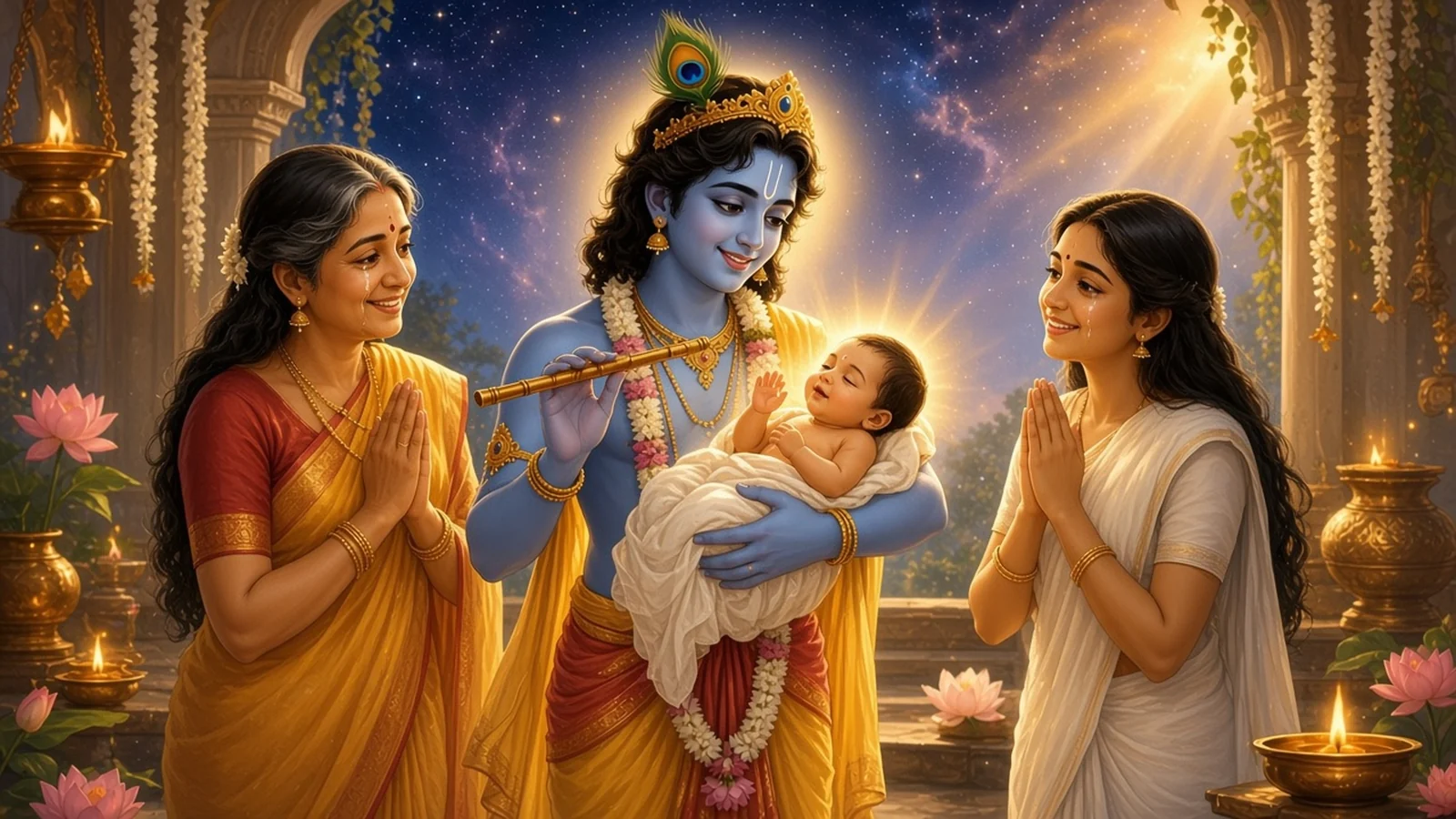
The child stirred, and then he moved, and the room broke into tears of another kind.
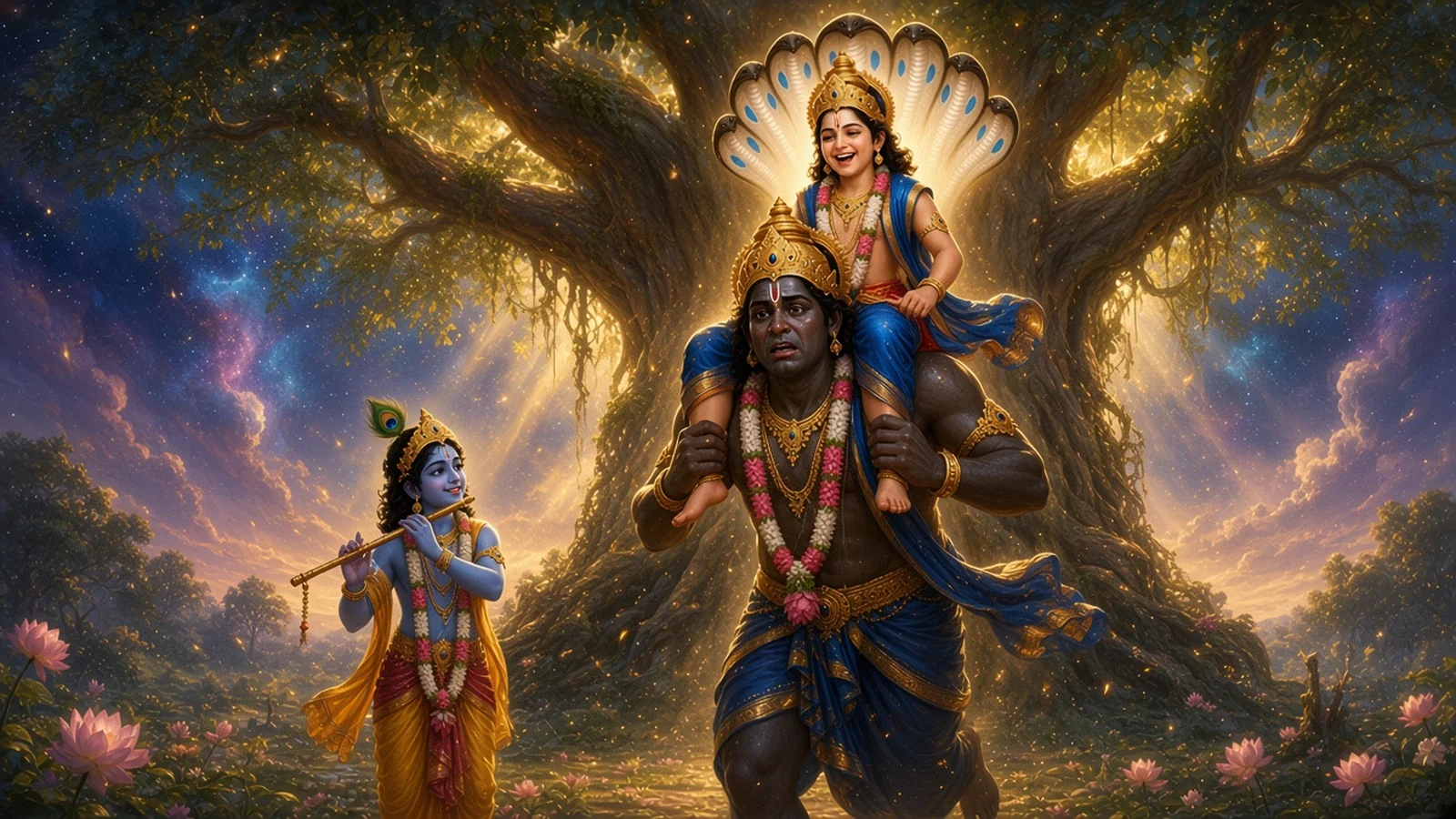
Krishna named him Parikshit, because he was born when the family had all but come to an end. Years later, when the Pandavas left the world, it was Subhadra they asked to watch over the two boys who were left to rule: Parikshit at Hastinapura, and Vajra, Krishna's great-grandson, at Indraprastha.
As the Bhagavata tells it
Bhagavata Purana 1.8 and 1.12 · 1 min read
The Bhagavata Purana tells the same rescue from the other side of the womb, and it starts sooner.
The war was over and Krishna was getting into his chariot to go home to Dwaraka when Uttara came running to him.
"Save me, save me," she cried. "A burning arrow is coming for me. Let it burn me if it must, but do not let it kill my child."
Krishna knew at once what it was. Ashvatthama had thrown the weapon of Brahma to end the Pandava line, and it was aimed at the last life left in it. The Pandavas saw the glare and seized their own weapons, but there was nothing they could do. Krishna took up his discus, and with his own power he wrapped the unborn child round and kept the weapon out.
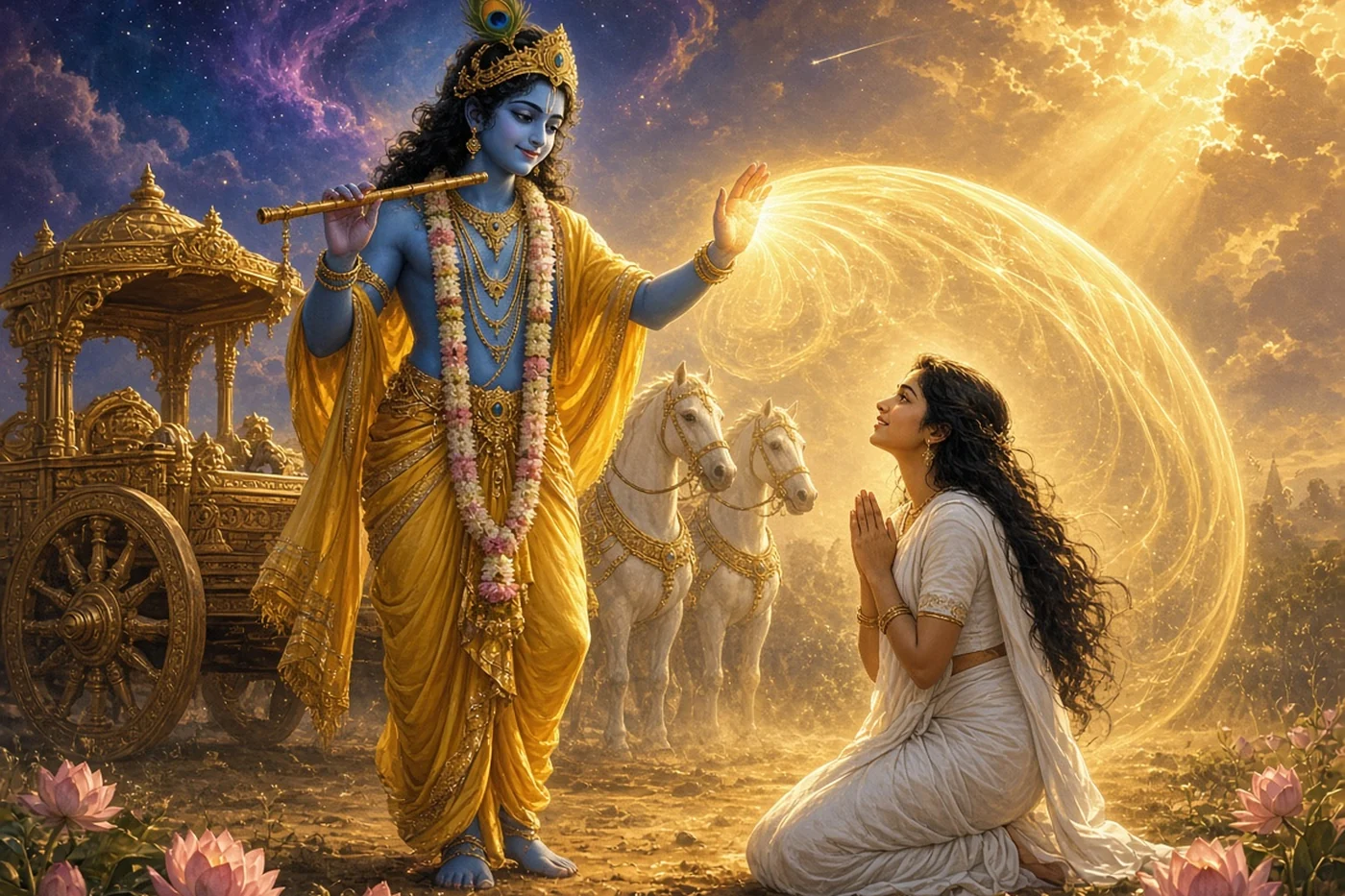
Inside the womb, the baby was burning in the weapon's heat. Then he saw someone coming towards him.
It was a person no bigger than a thumb, dark-skinned, in clothes as yellow as lightning, with a golden helmet and four arms. In one hand was a club, and he whirled it round and round the child like a shooting star. The heat dried up before him as dew dries before the sun. The child watched him and wondered who he was, and then he was gone.
The baby was born safely. The brahmins said he would be known as the one the Lord had protected. And they gave the reason for the name he grew up with. All his life he would examine everyone he met, searching for the person he had seen before he was born. So they called him Parikshit, the examiner.