As the Skanda Purana tells it
Skanda Purana, Kaumarika Khanda 59 to 61 · Indraprastha and Pragjyotisha · 3 min read
One day Ghatotkacha, the son of Bhima and the rakshasi Hidimbi, came to the hall of the Pandavas at Indraprastha. Yudhishthira asked after him and after his mother, and before long the talk turned to a wife for him.
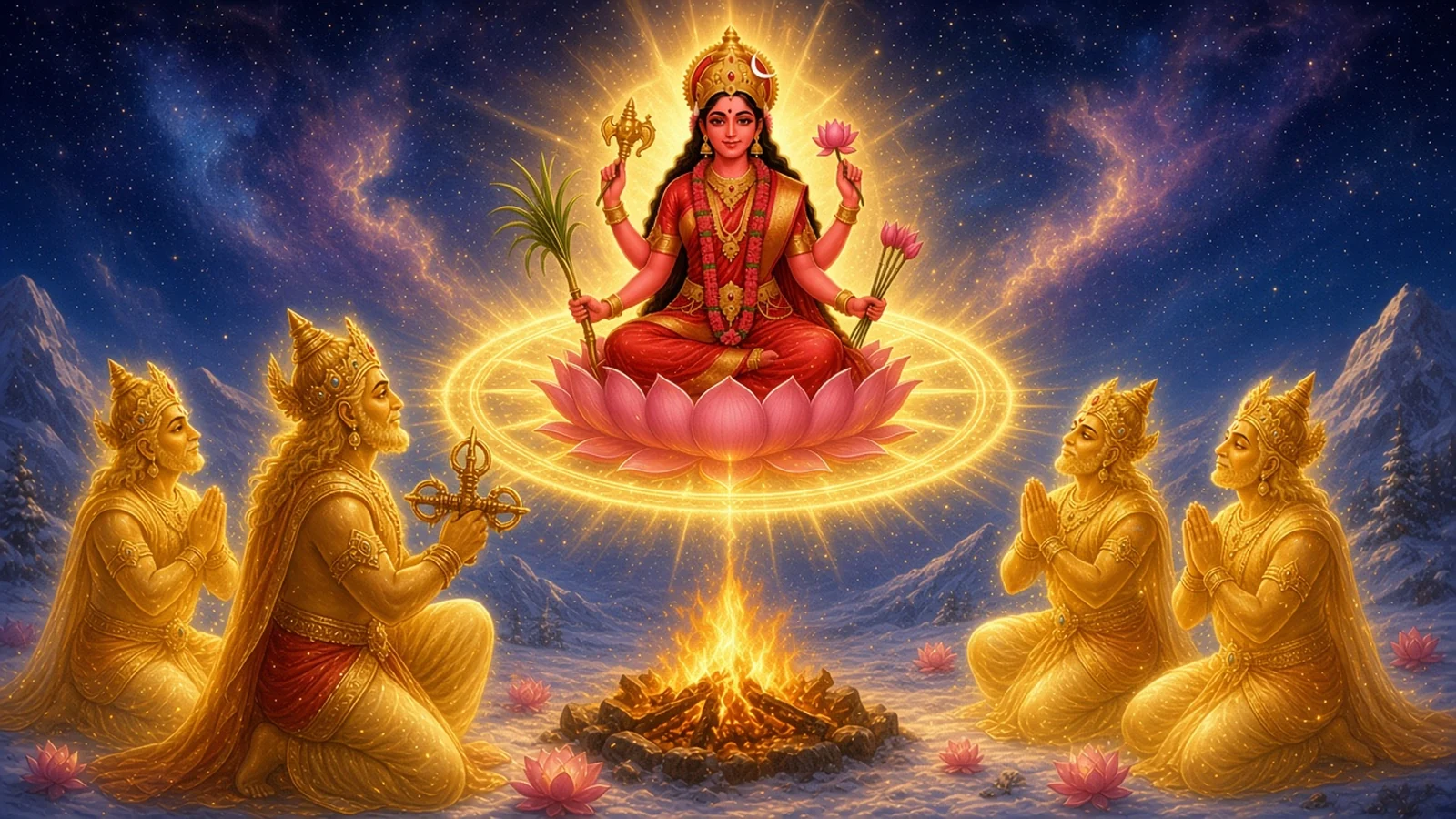
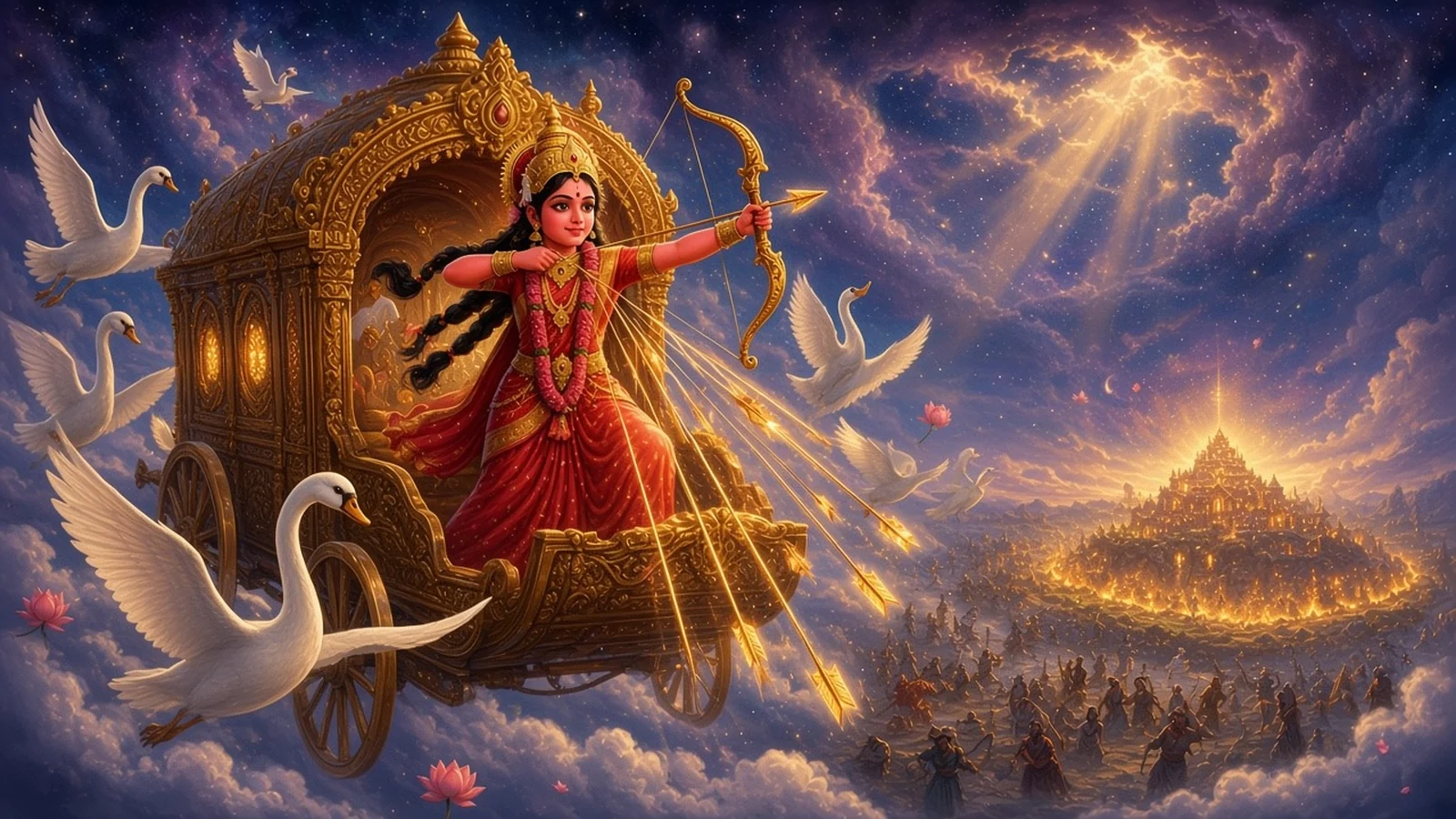
Krishna had a bride in mind. "There is a girl in Pragjyotisha," he said, "the daughter of the demon Mura. When I killed her father, she came at me with a sword and a shield. She cut my arrows out of the air and struck Garuda senseless. I raised my discus, and the goddess Kamakhya stood in front of her. The girl is her devotee. Kamakhya gave her that sword and shield, a mind no one can match, and strength no one can beat."
"Her name is Kamakantakata," he went on. "She will marry only the man who leaves her without an answer in debate and beats her in battle. Many demons have tried. Not one came back."
Yudhishthira did not like it at all. "That is milk with poison stirred into it," he said. "Find the boy a bride somewhere else."
But Bhima said a warrior is proved by hard tasks, and Arjuna reminded them that Kamakhya never speaks falsely, and she had foretold that Bhima's son would win this girl. Krishna agreed with them both. "Go at once," he told Ghatotkacha. "And when she asks you her questions, think of me."
Ghatotkacha flew east with three companions. Outside the city he found a golden mansion a thousand storeys high, full of the music of flutes and drums. At the door one of the princess's companions, Karnapravarana, looked him over. "Many men have died for her," she warned him.
"Then I will win her or die," said Ghatotkacha. "Tell her I am here."
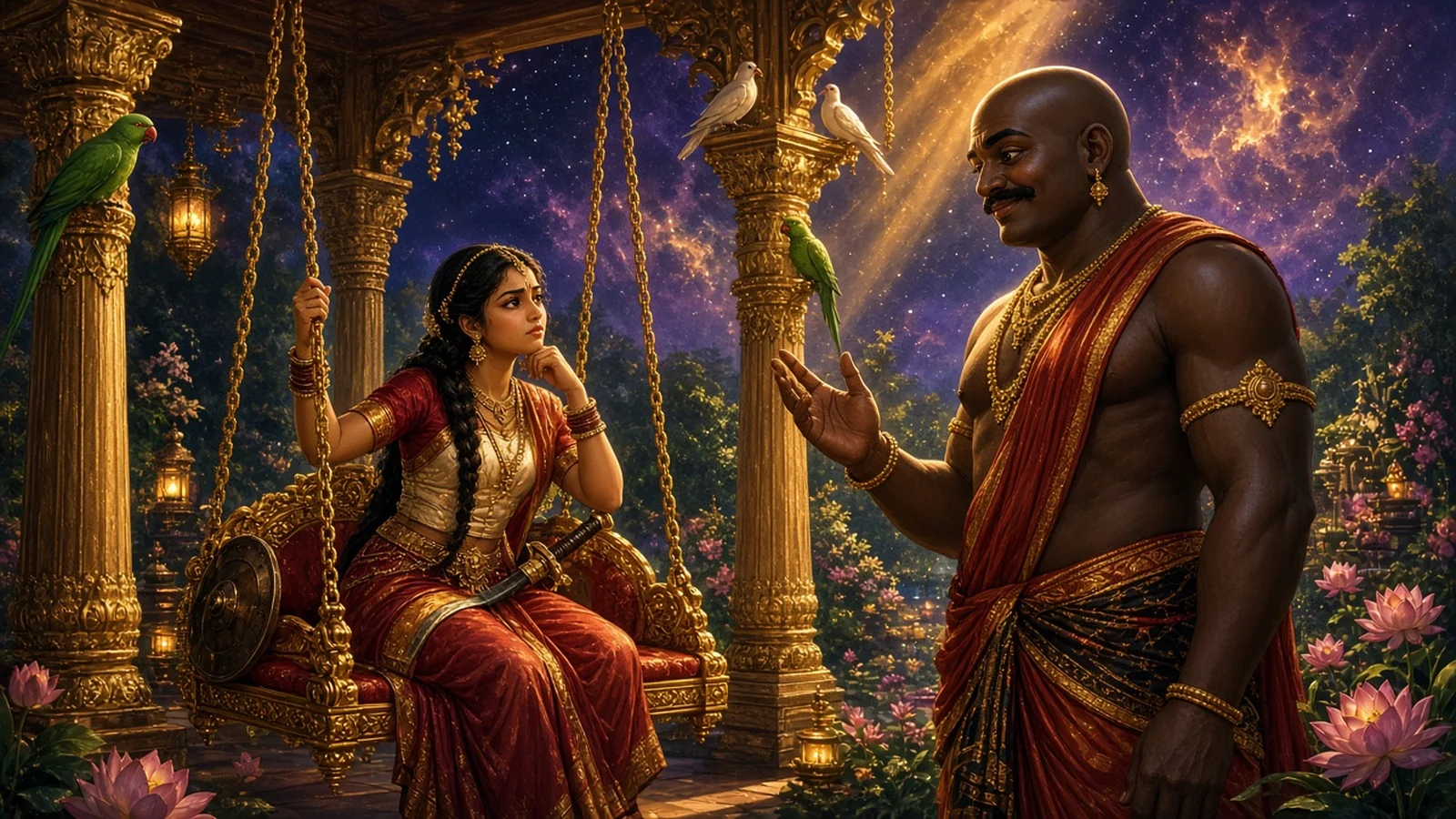
He found Kamakantakata on a swing, among parrots and doves. She looked at him for a long moment, and for the first time she was sorry she had ever made her rule. But a rule is a rule.
"Tell me a story I cannot untangle," she said, "or go away. If you fail, I will kill you."
Ghatotkacha thought of Krishna, and told her a riddle about a family so twisted that no one could say whether its newest child was a man's daughter or his granddaughter. She thought, and thought again, and had no answer.
In a rage she struck the golden chain of the swing, and out of it poured rakshasas by the million, with lions, tigers, boars and leopards. Ghatotkacha snapped his fingers, and twice as many rakshasas sprang up and swallowed her creatures whole. She leapt down for her sword. He caught her by the hair, threw her down and held her there.
"You have beaten me three times," she said, "with words, with magic and with strength. I am yours. Tell me what to do."
He let her up. "A man with parents and elders does not marry in secret," he said. "And in my family the wife carries the husband. Carry me to Indraprastha."
So she said goodbye to King Bhagadatta, in whose care she had lived, and carried Ghatotkacha on her back all the way to the Pandavas, with her attendants and her treasure behind them. The wedding was held before the Pandavas and Krishna, by the customs of the Kurus and of the rakshasas both, and Kunti and Draupadi blessed the bride.
In the forest of Hidimba a son was born to them, shining like the rising sun. He grew into a young man in a moment, dark as a rain cloud, with long eyes, and hair that stood straight up on his head. He bowed to his parents. "You are my first teachers," he said. "Give me a name."
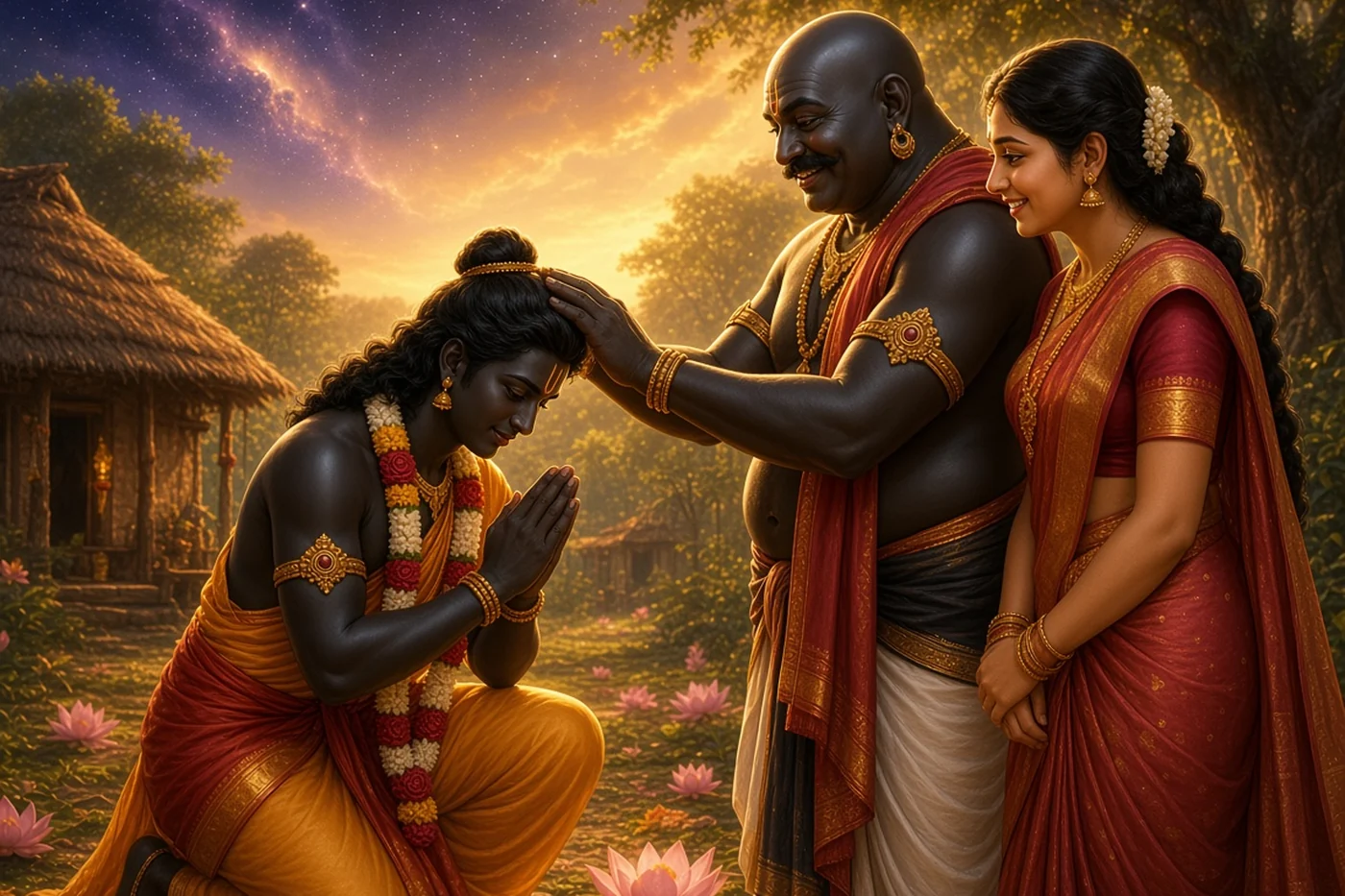
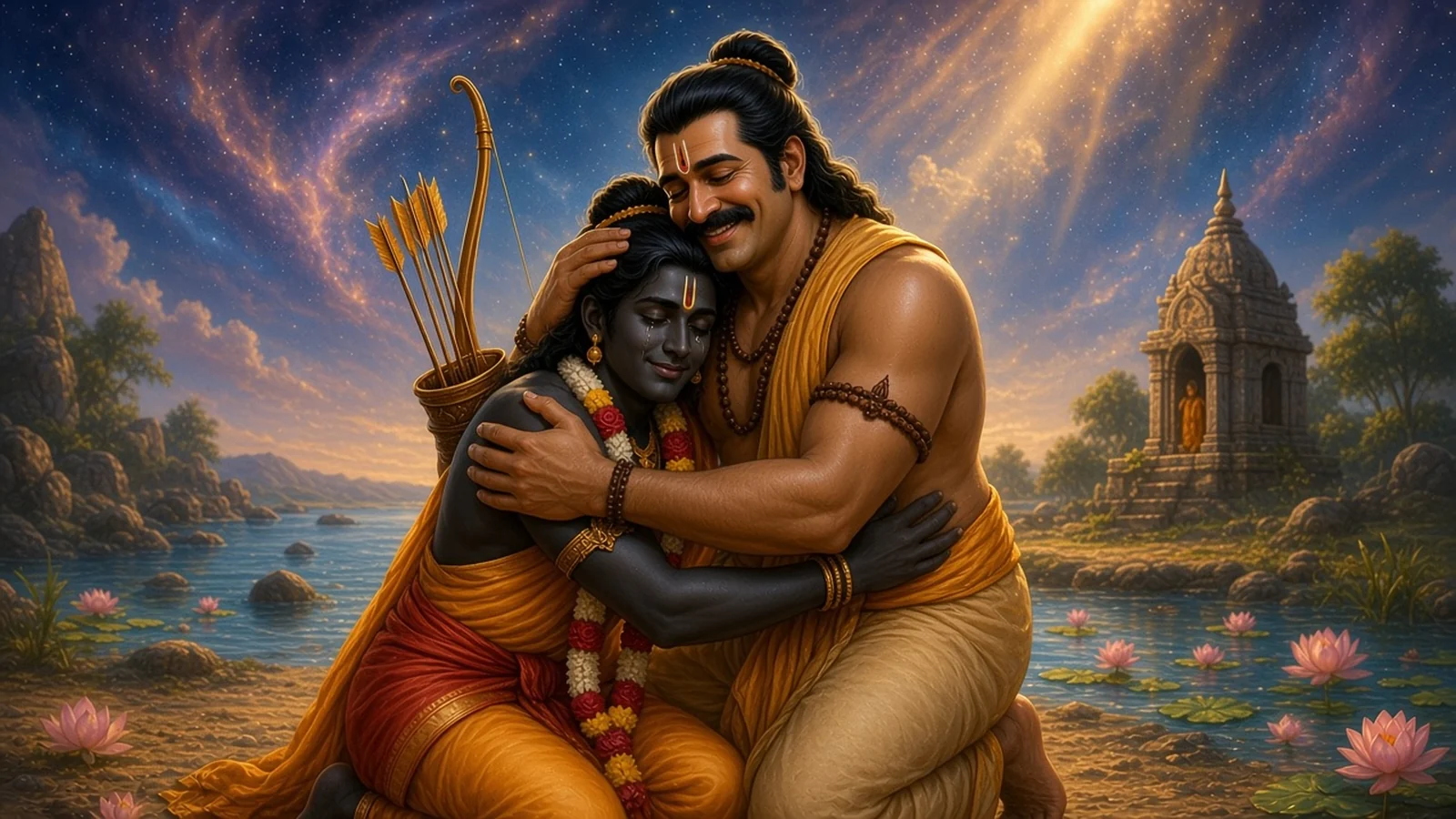
Ghatotkacha held him close and called him Barbarika, for that wild hair. Then he took him to Dvaraka, and Krishna gave the boy a second name, Suhridaya, the good heart, and sent him west to the place where the river Mahi meets the sea, to win the favour of the goddesses there.
As Khatu tells it
West India · Khatu, Rajasthan, and the Shyam temples · 1 min read
At Khatu, and in the Shyam temples that Marwari families have carried across India, the god has a name that keeps his mother in it: Morvinandan, the son of Morvi. The temple's own katha gives her another name, Ahilavati, and makes her a princess of the Nagas, the serpent people. Either way, Ghatotkacha's wife was a warrior, and it was she, not any guru, who taught their son to fight.
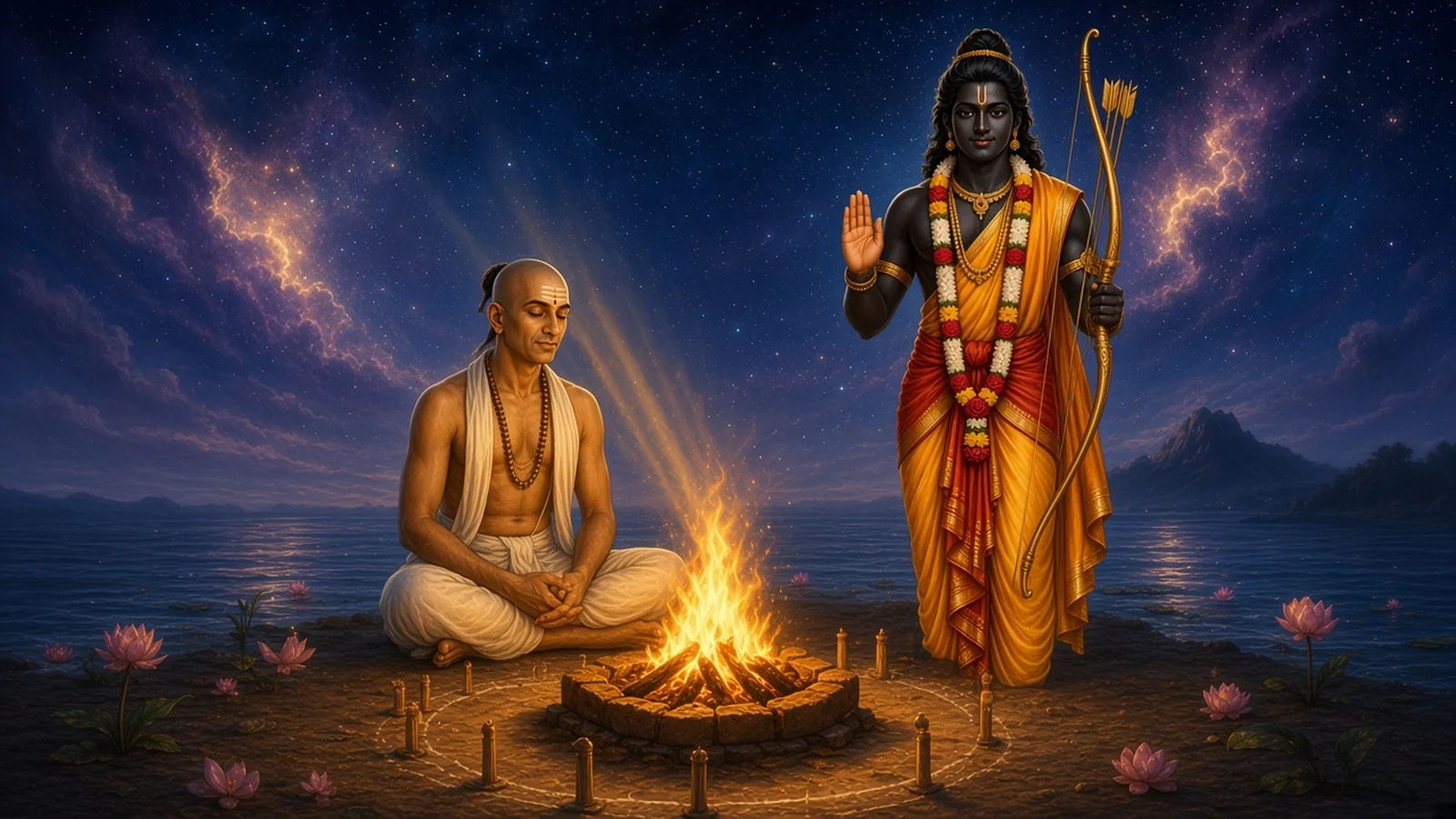
He learned everything she knew. Then he went away to do tapas to Shiva. He kept at it long and hard, until Shiva was pleased with him and came, and gave him three arrows that could not fail.
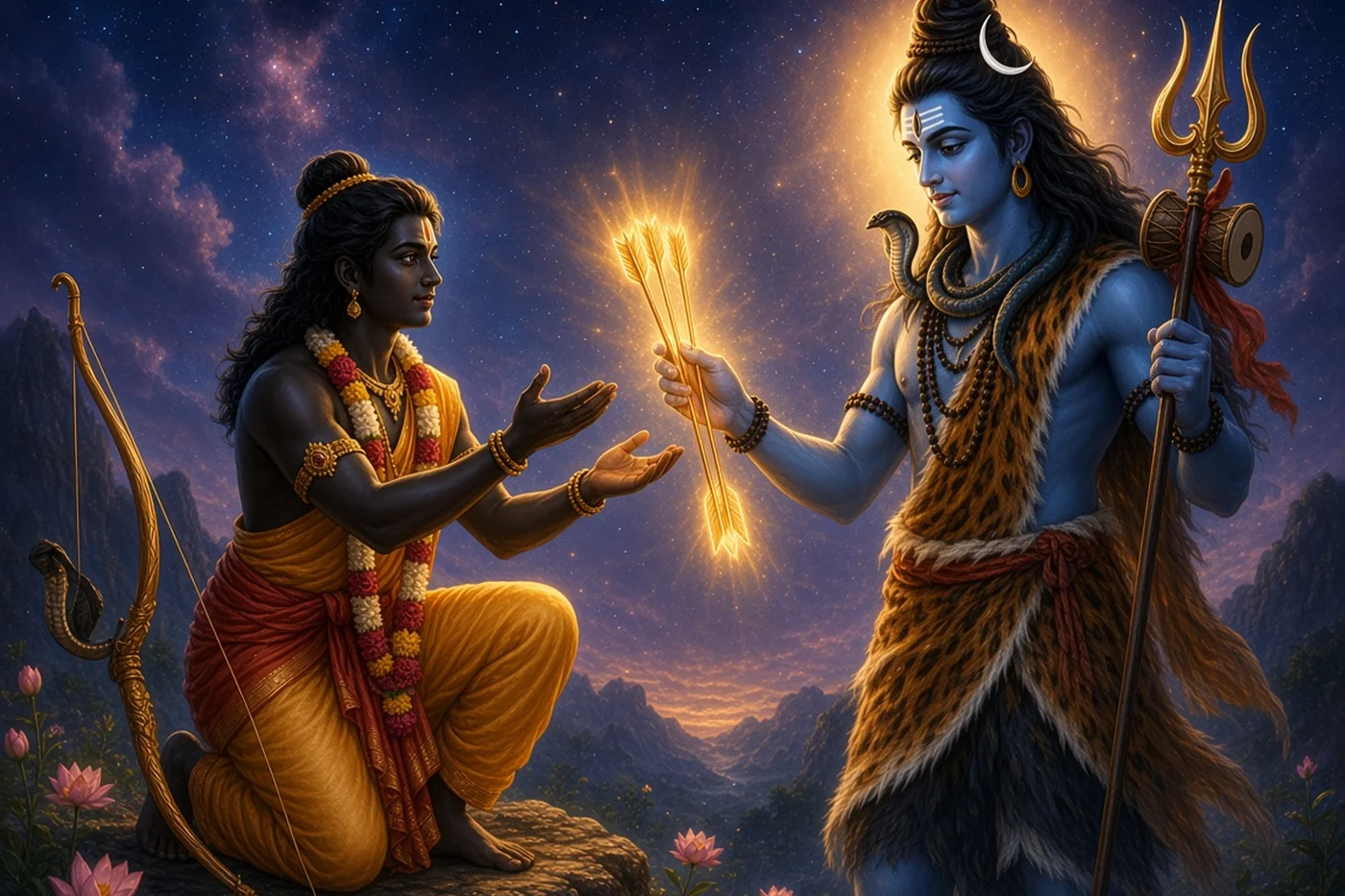
The arrows are what Khatu remembers him by. One marks every target he means to strike. One marks every life he means to spare. The last destroys all that has been marked, and comes home again. That is why he is called Teen Baan Dhari, the bearer of three arrows. Agni, the god of fire, gave him the bow to shoot them with, a bow that could win the three worlds.
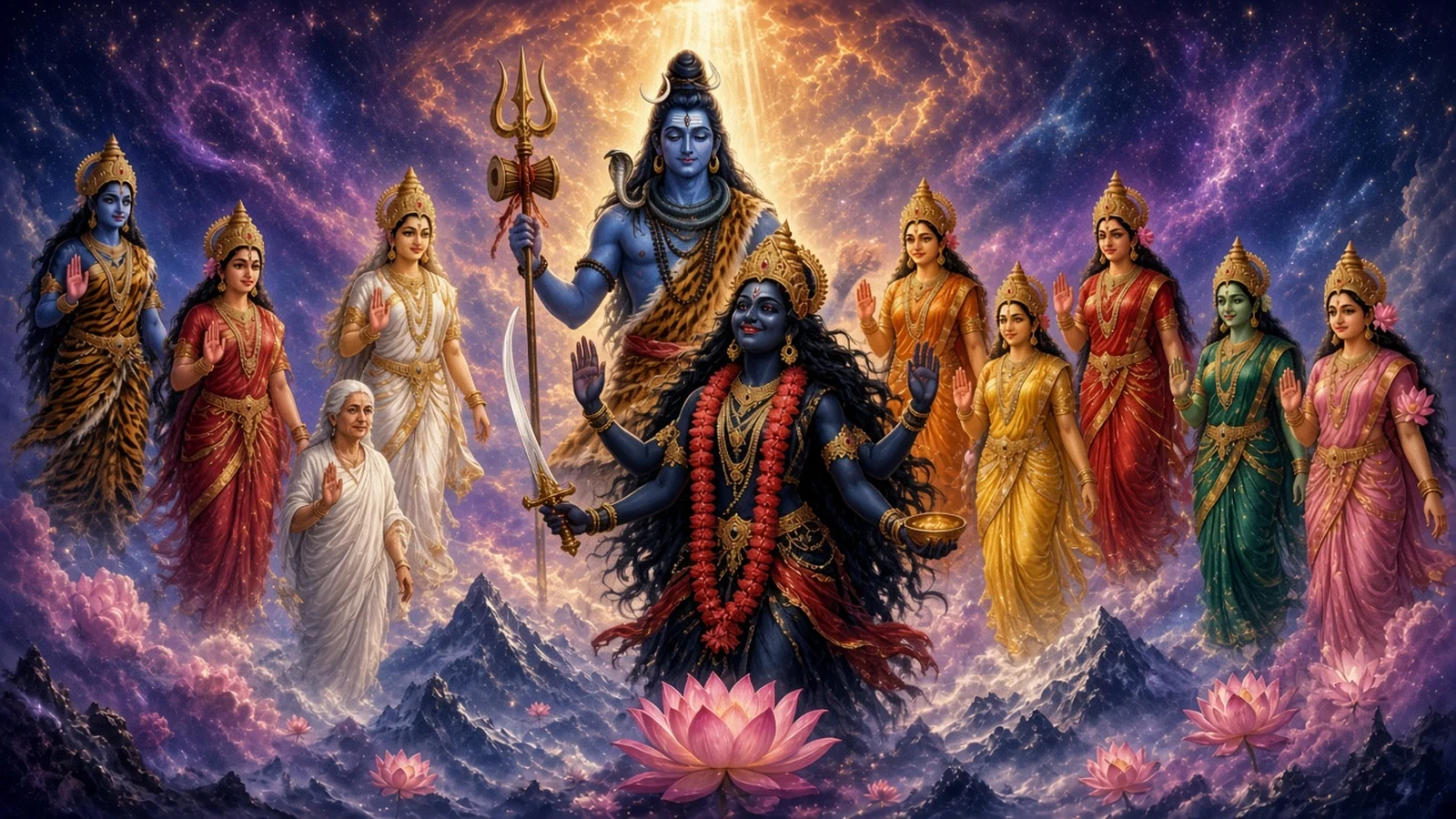
Ask at Khatu who gave him those arrows, though, and you will hear more than one answer. Some say Shiva, as above. Some say the goddess Durga, or the goddess Vijaya. And many tellings add that Krishna sent him, as the Purana says, to a hidden holy place where the Mahi runs into the sea, and that there he worshipped the nine Durgas, asking for nothing, until they gave him his strength.
When at last he set out for Kurukshetra, he went to his mother first, for her blessing. What she asked of him that day, and what it cost him, is the story of the head that watched the war.