As the Skanda Purana tells it
Skanda Purana, Kaumarika Khanda 61 and 63 · Guptakshetra, Gujarat · 3 min read
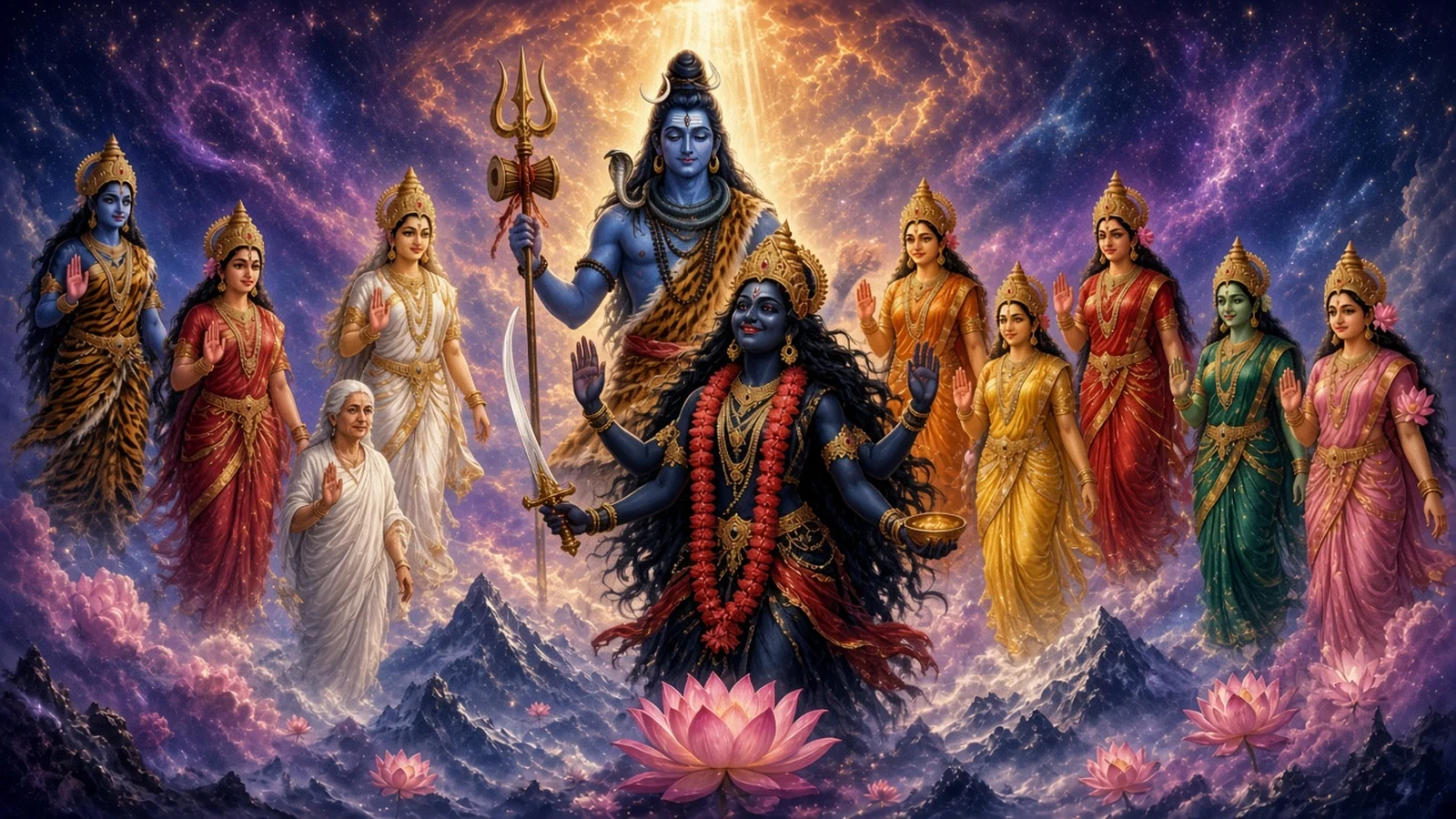
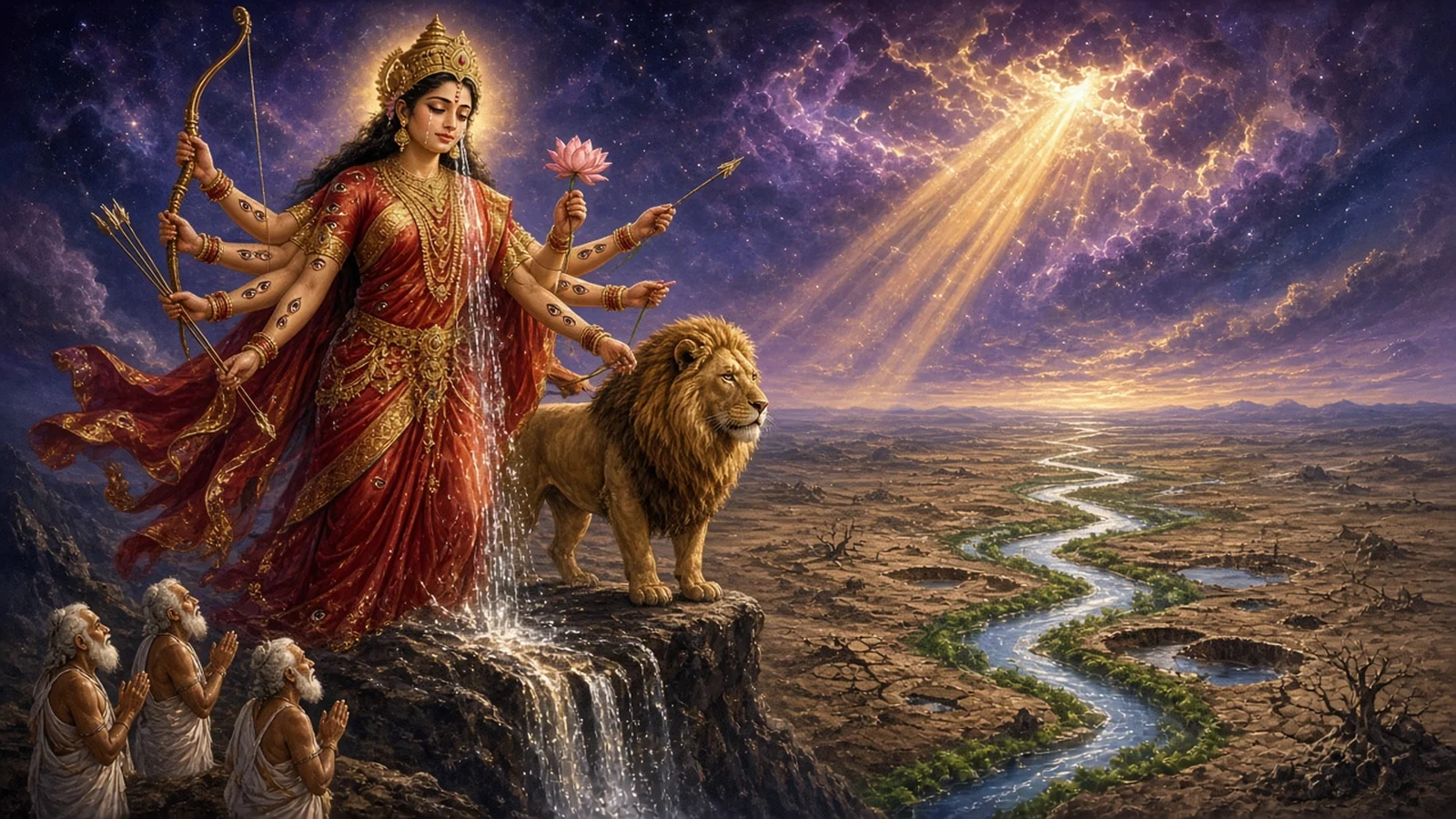
For three years Barbarika, whom Krishna had named Suhridaya, worshipped the goddesses at Guptakshetra, where the river Mahi runs into the sea. Three times a day he brought them flowers, incense and hymns. At the end of three years they were pleased, and gave him a strength that no one else in the three worlds had.
"Stay here a little longer," they told him. "A man named Vijaya is coming. Helping him will do you good."
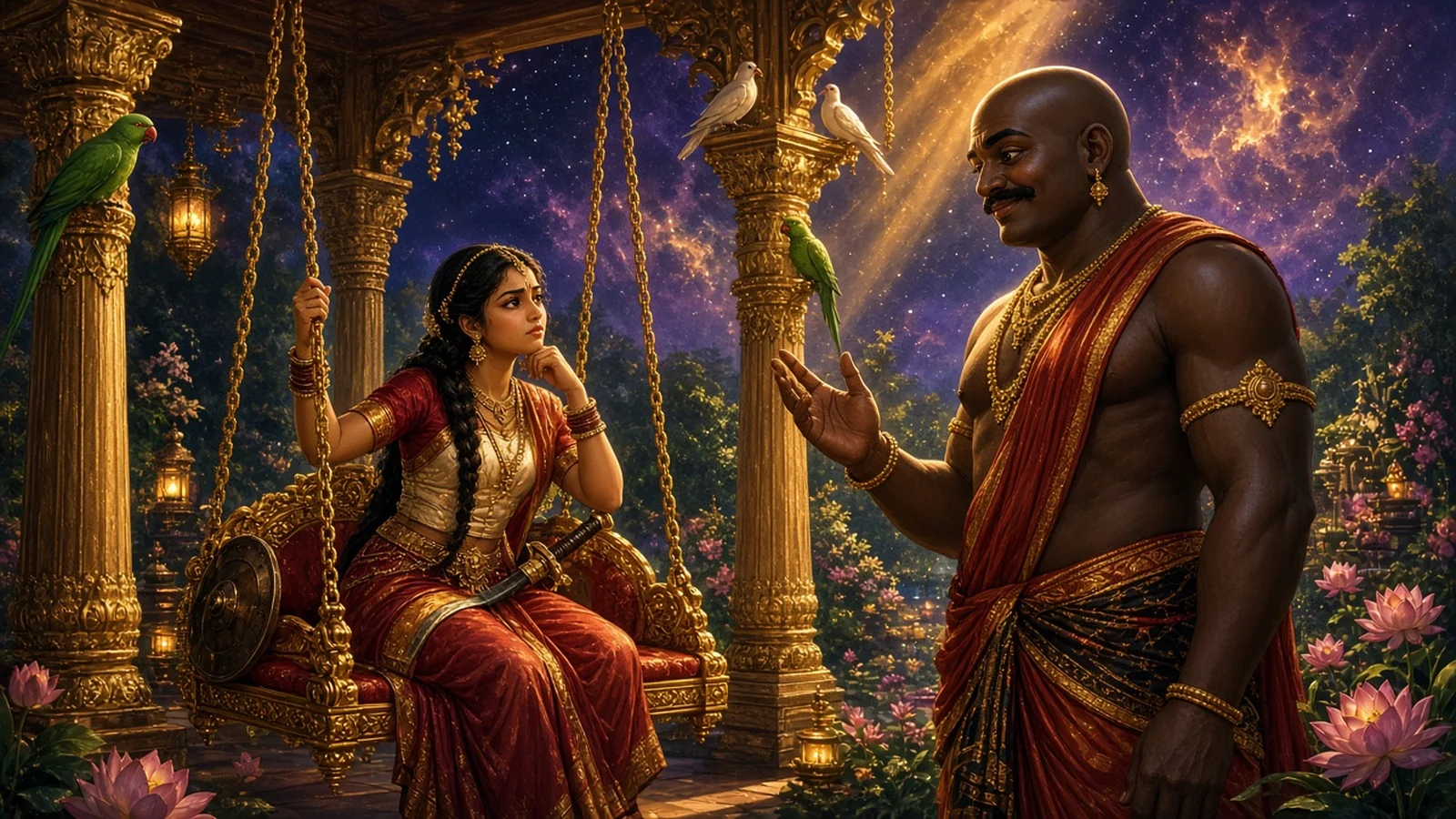
Vijaya was a Brahmin from Magadha who had won his learning at Kashi. The goddesses came to him in a dream. "Perform your rite before the Siddha Mother," they said, "and let Suhridaya be your helper."
Vijaya found the young warrior, and Barbarika agreed.
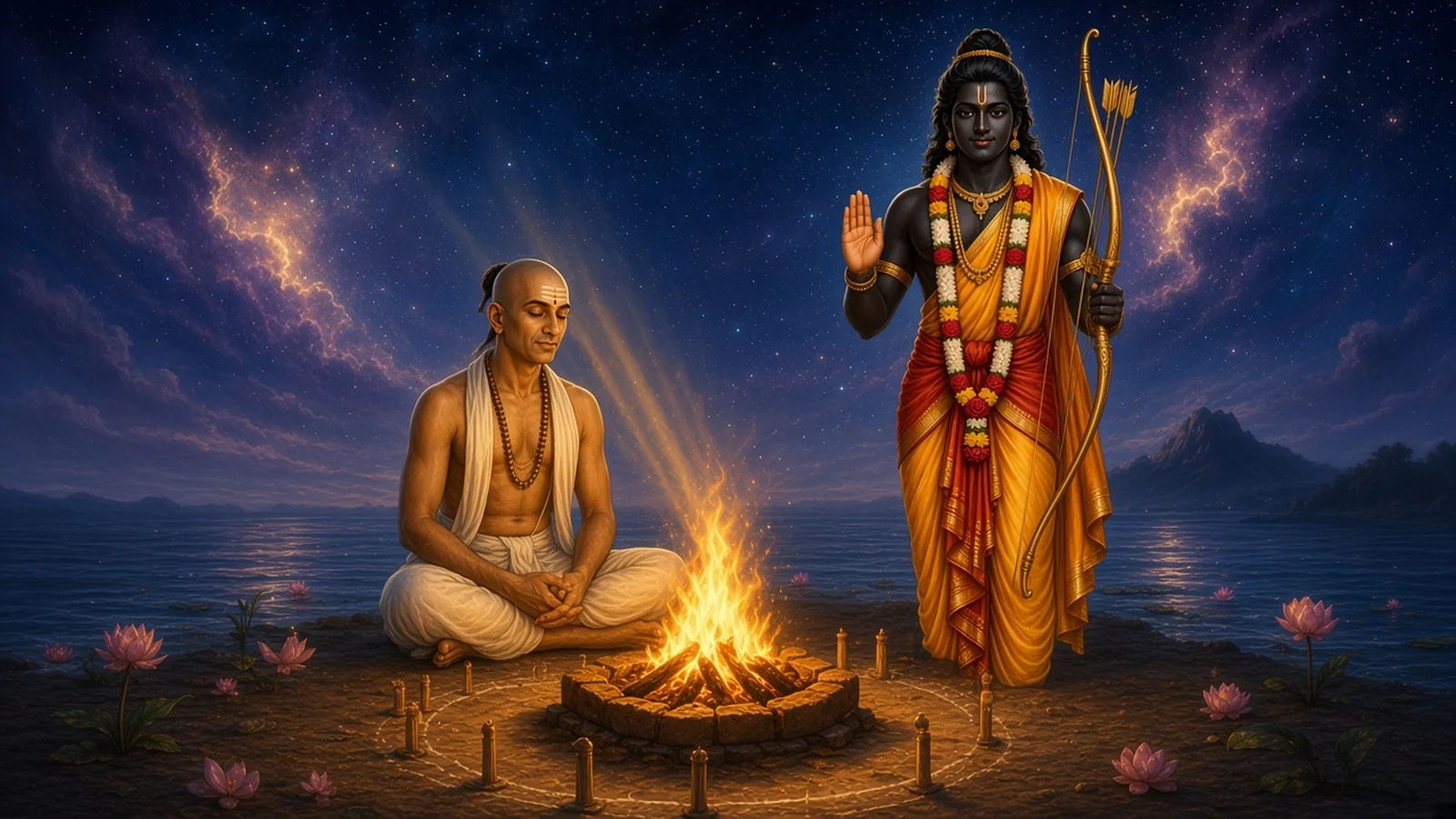
On the fourteenth night of the dark fortnight Vijaya fasted, bathed and worshipped. He drew his diagram on the ground, drove in pegs to close the eight directions, and lit his fire of holy fig wood. Then he began his mantras, and Barbarika stood guard.
In the first watch of the night a woman came out of the dark, roaring, her hair on end and her clothes soaked red. Vijaya shook with fear. Barbarika caught her by the throat.
"Who are you?" he said.
"Mahajihva," she gasped. "I live in the burning ground of Kashi, and I can take any shape I like."
He made her swear to let every creature live without fear of her, and let her go.
At midnight, in the dark and a rain of blood, a mountain with a hundred peaks rose over the fire. Barbarika made himself into a bigger mountain and kicked it to pieces. Out of the rubble came the demon Repalendra, a yojana long, with a hundred heads. They fought with bows, then swords, then fists, until Barbarika swung him round and round and flung him far across the water. The Purana says a village called Repalendra stands to this day where he fell.
In the third watch a she-mule the size of a mountain came charging from the west. This was Duhadruha, queen of the night spirits. Barbarika jumped on her back, struck her snout, caught her by the legs and threw her down, and she did not get up again.
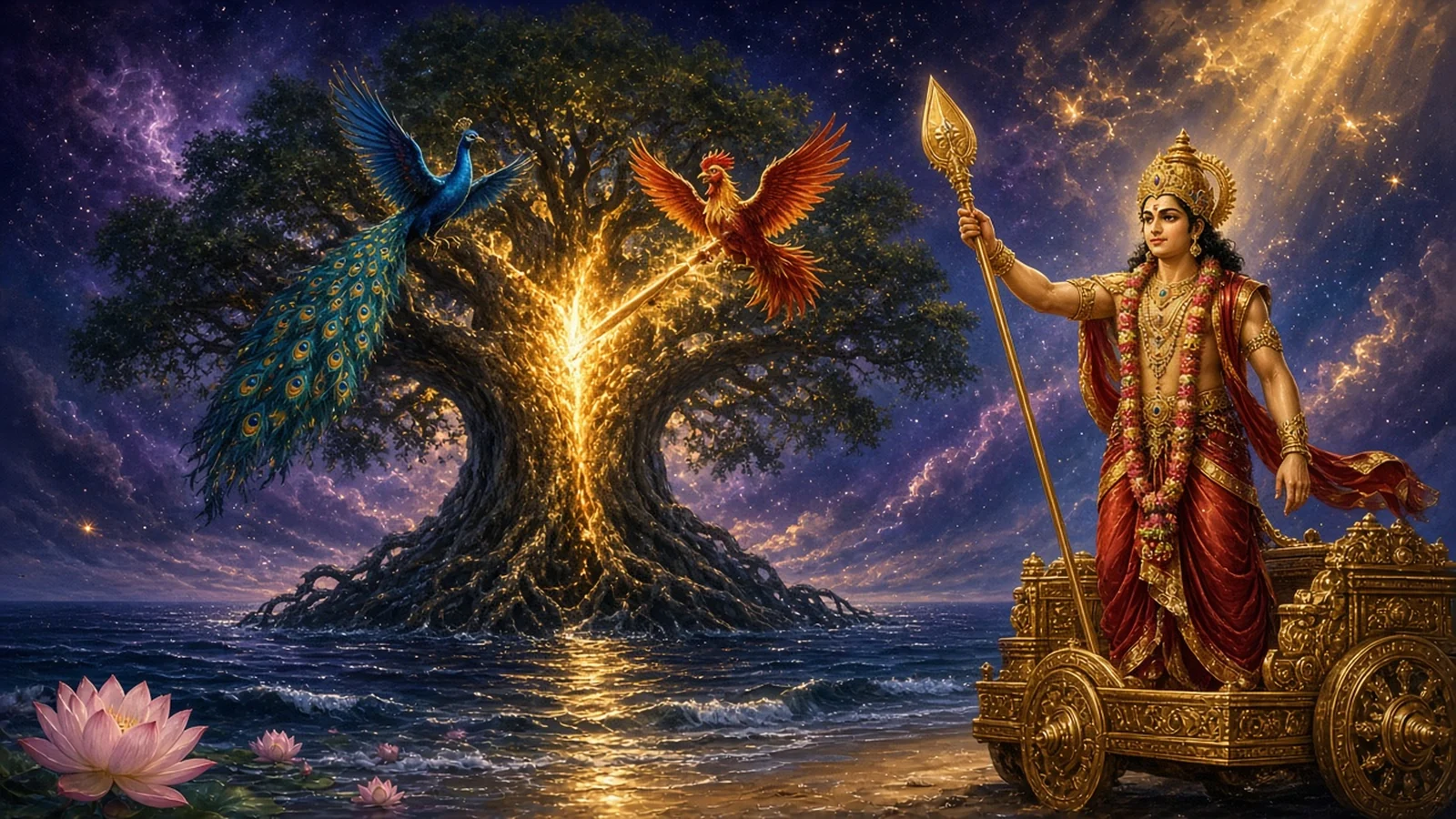
In the last watch came a stranger dressed as a wandering monk, with a shaved head and a whisk of peacock feathers.
"Put out that fire," he said. "It kills the little creatures that fly into it."
"The fire is the mouth of the gods," said Barbarika, and struck him to the ground.
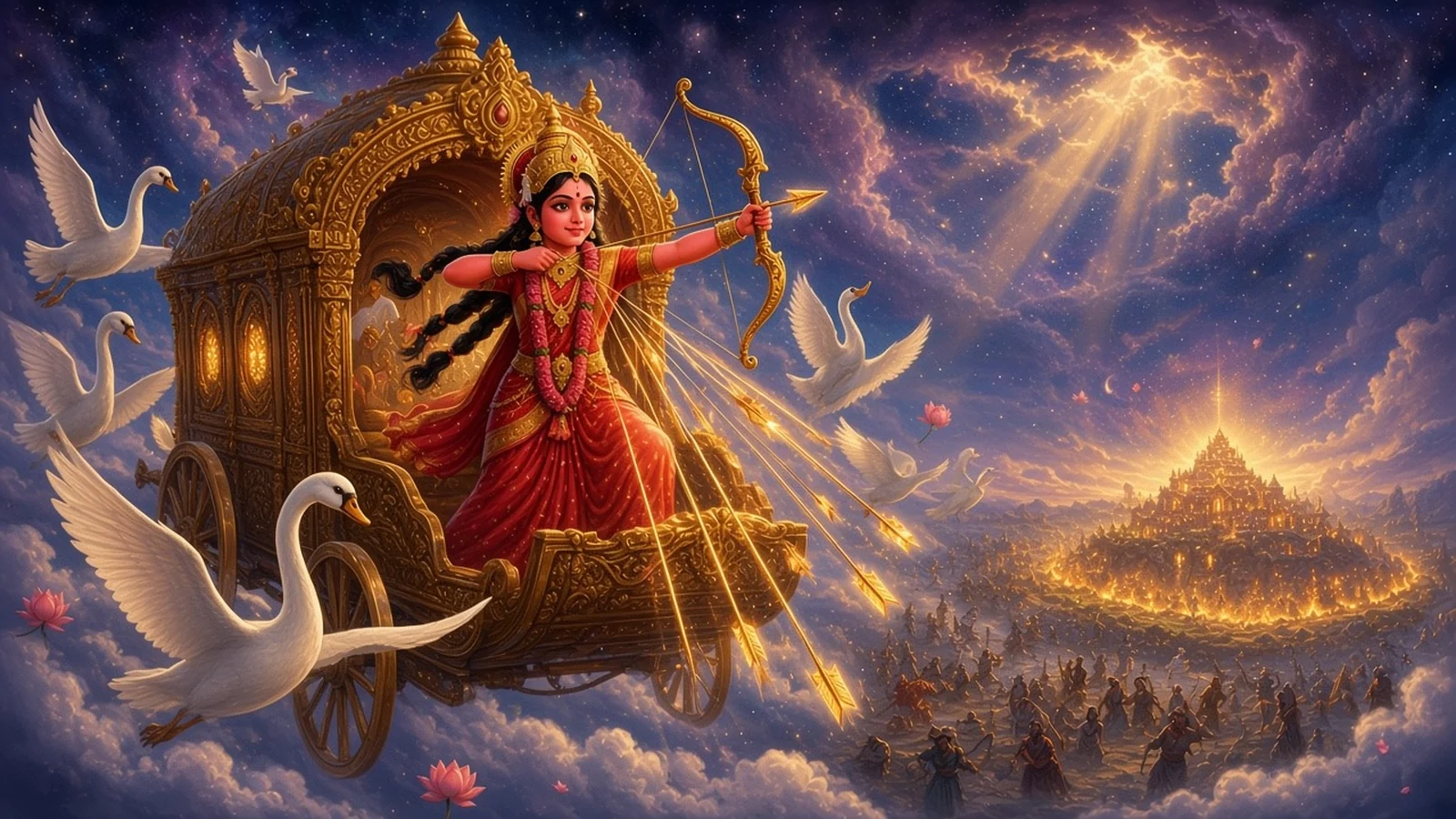
He got up a demon, not a monk, and ran for a cave. Barbarika went after him, down and down, into a city sixty yojanas long called Bahuprabha. Nine crore demons came at him at once. He shut his eyes and charged into them, and when he opened them, not one was left, and their leader was gone with them.
Then the Nagas came, Vasuki at their head.
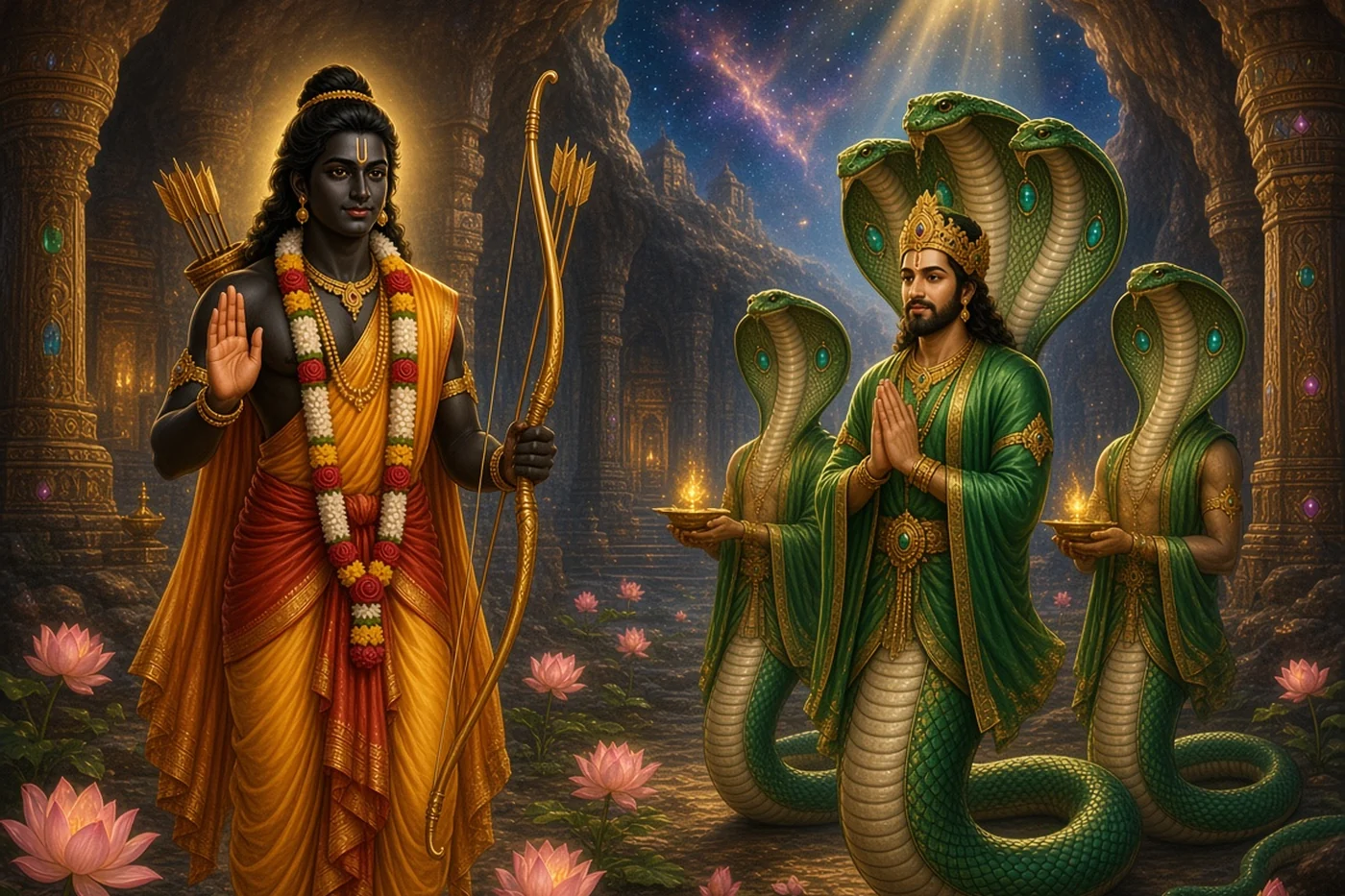
"That was the demon Palashi," they said. "He has tormented us for ages. Ask us for anything you want."
"Then let Vijaya finish his rite with nothing in his way," said Barbarika.
The serpent maidens begged him to stay with them. He told them he had vowed not to marry, and climbed back up into the light.
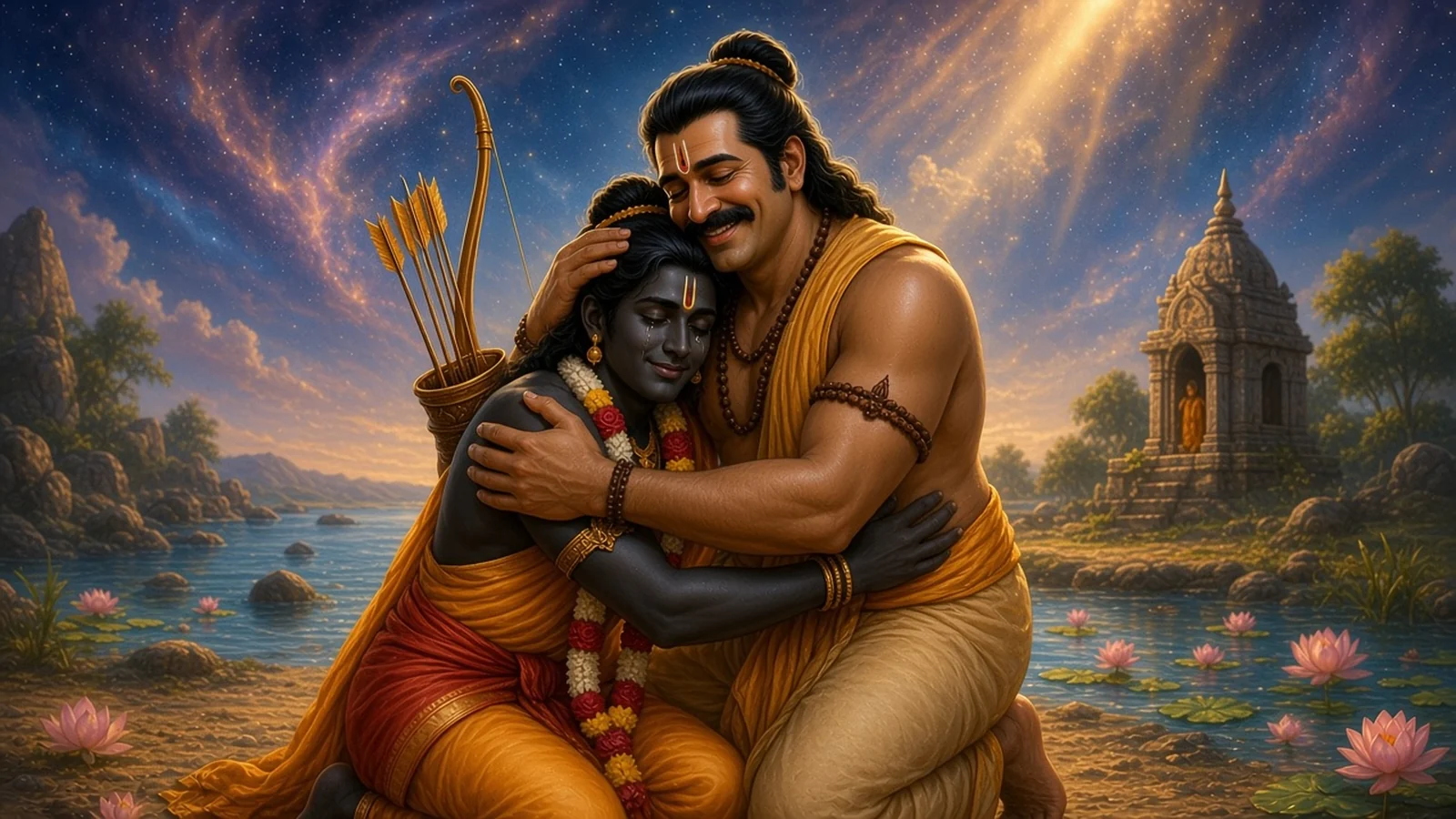
Vijaya was rising from his fire as he came, shining, his rite complete. Flowers fell from the sky. Vijaya took a handful of ash from the fire, bright as saffron, and held it out.
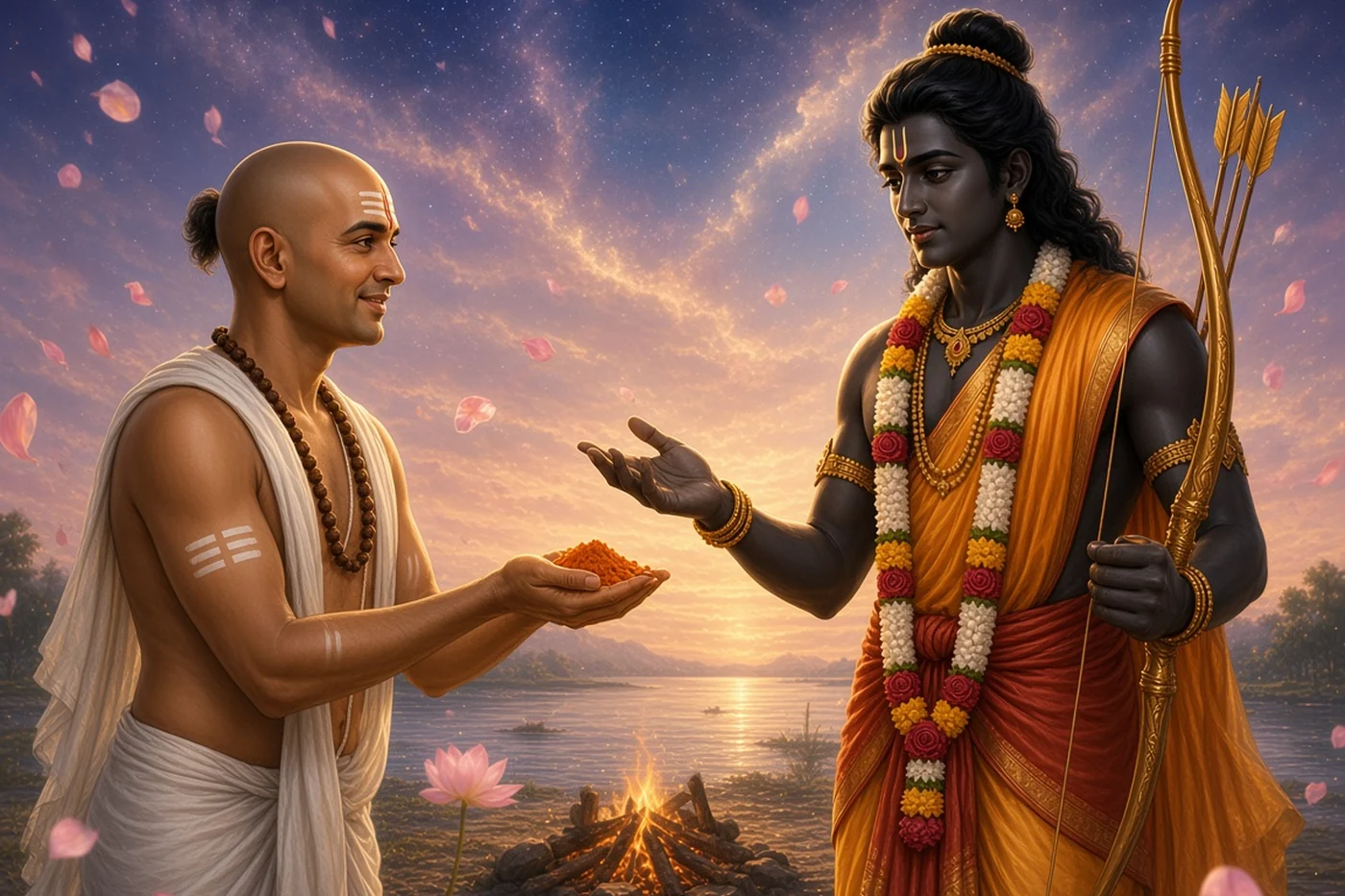
"This is yours," he said. "It soothes pain and heals wounds. Thrown at the start of a battle, it destroys every enemy."
"I did not help you to be paid," said Barbarika. "Goodness that wants something back is not goodness."
But the gods spoke from the sky. "Take it. A great war is coming between the Kurus and the Pandavas, and this ash must never fall into the hands of the Kauravas."
So he took it. And the gods gave Vijaya a new name, Siddhasena, for the one who had succeeded.