As the Bhagavata tells it
Bhagavata Purana 10.46 to 10.47 · 2 min read
Krishna had left Vraja for Mathura. He had killed the tyrant Kamsa, freed his parents, and become a prince. He did not come back.
In Mathura he called his friend Uddhava, the wisest man at court, a student of all the scriptures.
"Go to Vraja," he said. "Go to my foster parents, Nanda and Yashoda, and to the cowherd women. Tell them I am not far away. Tell them they can find me whenever they look within. They are suffering, and you know how to explain these things."
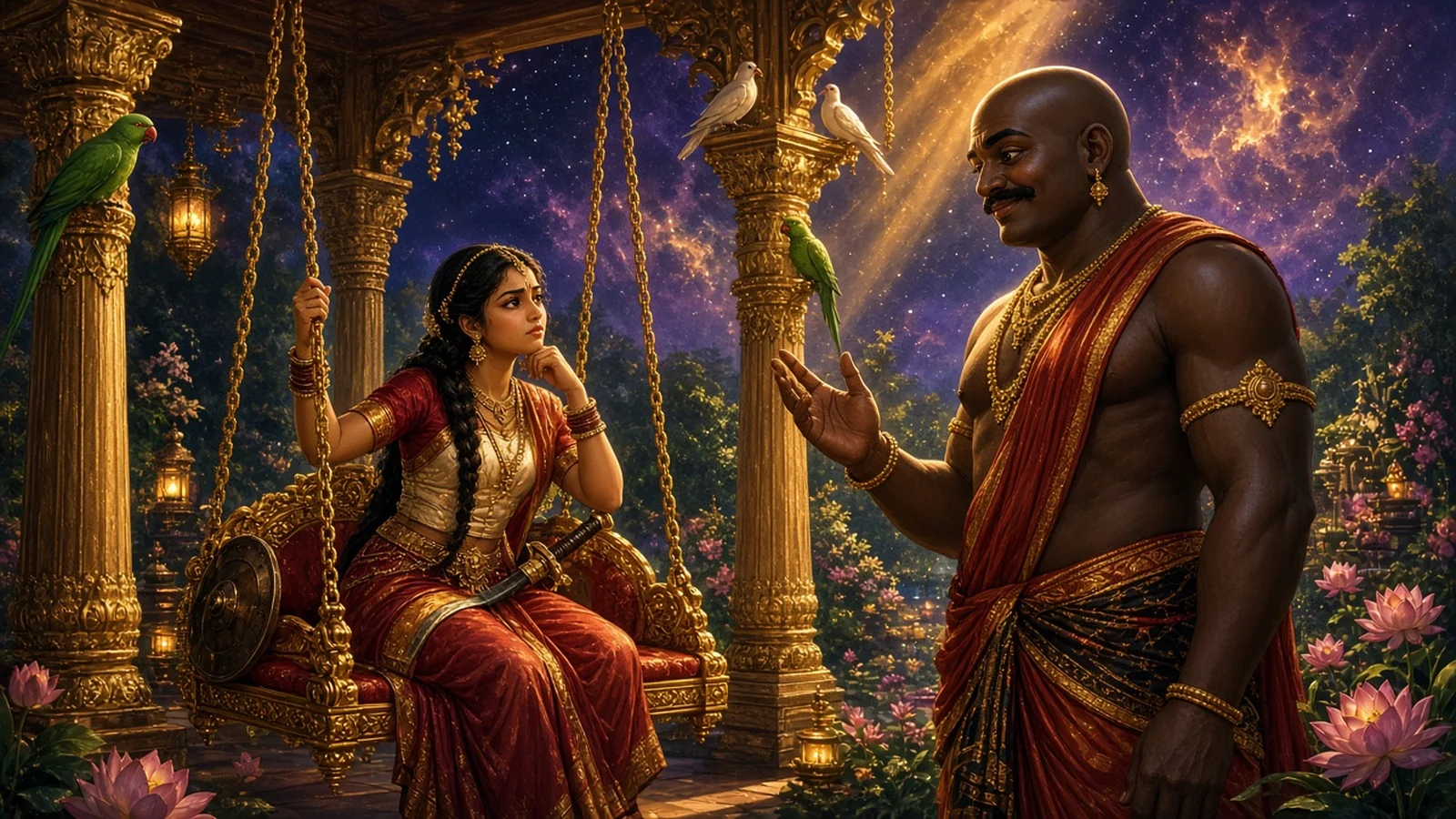
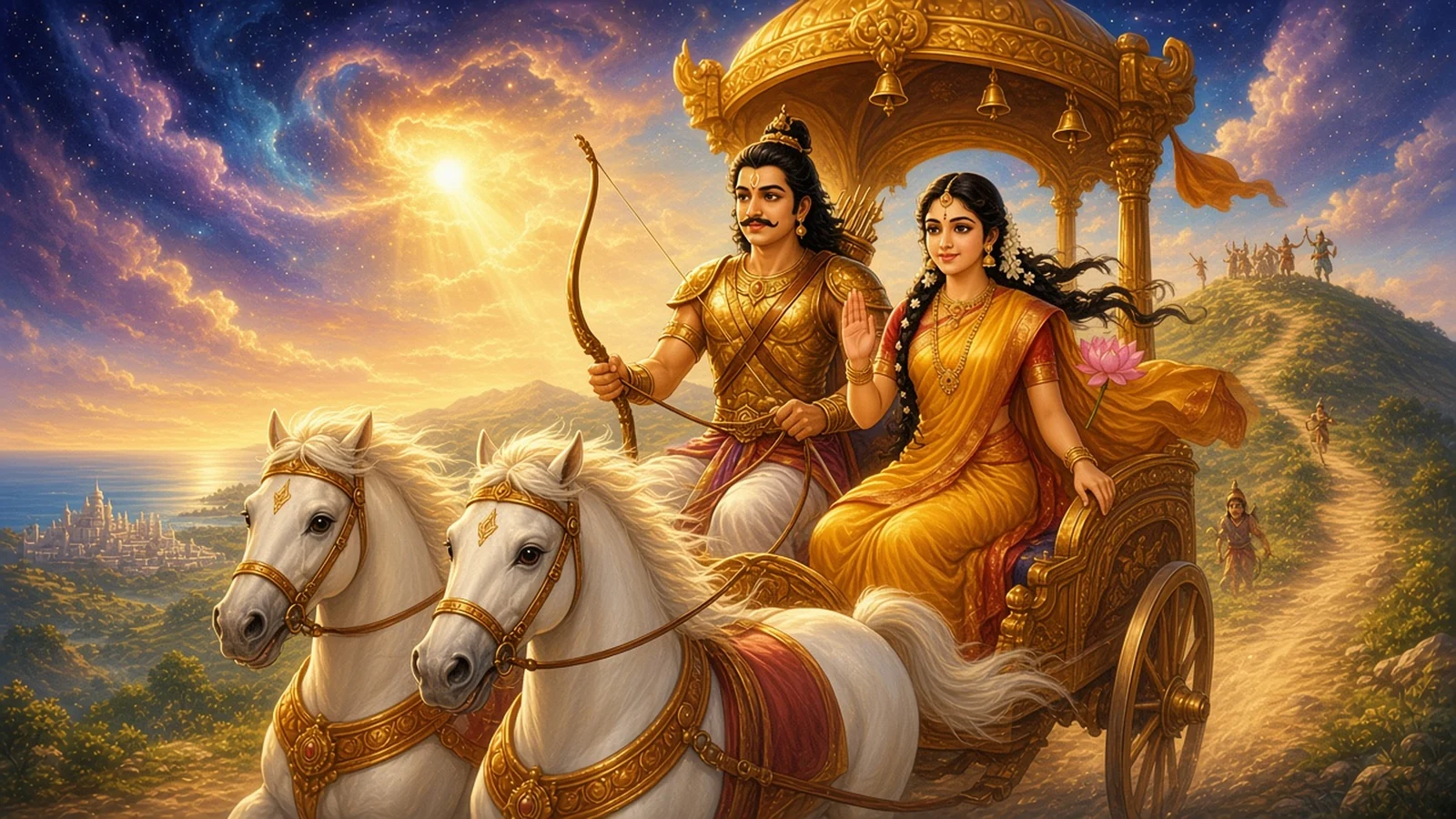
Uddhava drove out in a chariot to the village where Krishna had grown up. It was evening, and the cows were coming home. Nanda welcomed him and they talked all night of Krishna, and wept.
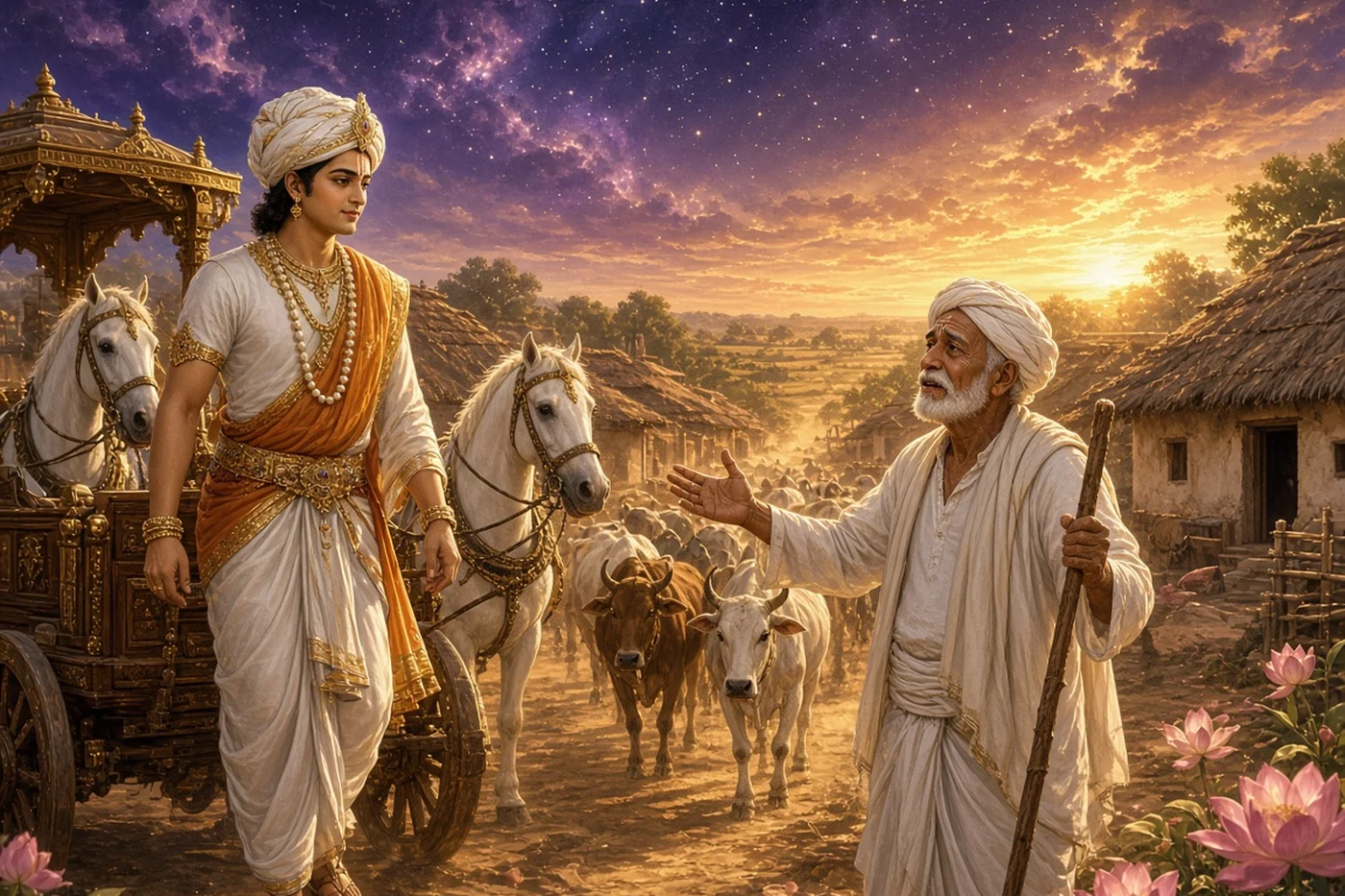
In the morning the cowherd women saw the chariot outside Nanda's house, and came to see who had come. When they heard he was from Krishna, they gathered round him.
"Has he sent for us?" one of them asked.
"He has sent a message," said Uddhava. "He says he is everywhere, in everything, in you. You need only meditate on him."
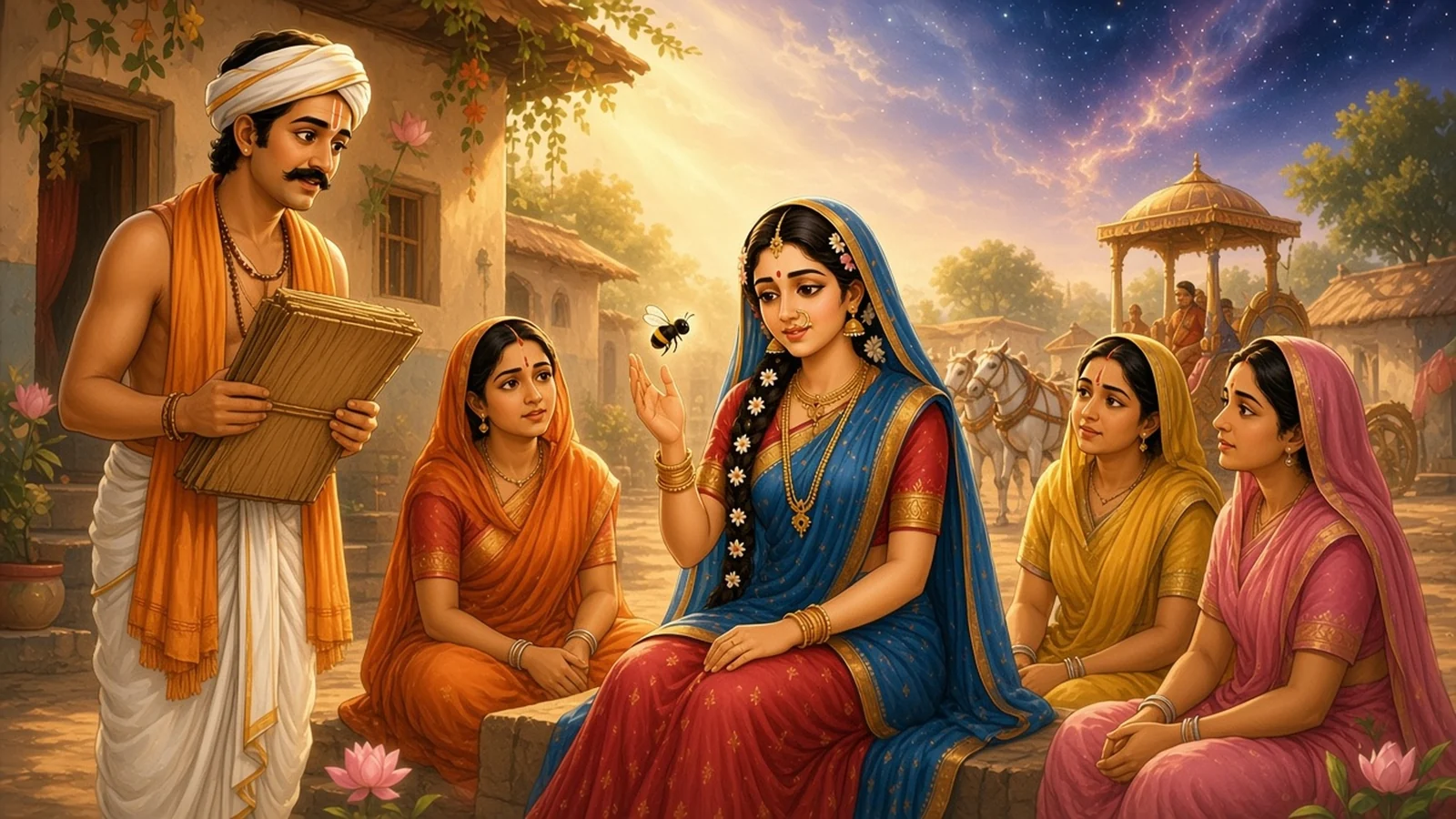
As he spoke, a bee flew by and settled near one of them. She looked at it, and her mind went somewhere else entirely. She began to speak to the bee.
"Messenger," she said, "are you his messenger too? Don't touch my feet. You are the friend of a cheat."
The other women fell silent and listened.
"You are just like him," she said to the bee. "Black, and going from flower to flower. You drink the honey and fly away. He drank our hearts like that, and flew to Mathura."
"Why has he sent you?" she asked. "What does he want from us now? We have nothing left to give him."
And then, all at once, she said, "Is he well? Does he ever speak of us? Will he ever come back?"
Uddhava stood there with his message about meditation, and found he had nothing to say. He stayed in Vraja for months, and every day he heard them talk about Krishna, and he saw that they did not need to be taught to think of him. They could think of nothing else.
When he went back to Mathura, he told Krishna that he had gone to teach them, and had been taught.
The Bhagavata never names the woman who spoke to the bee. It says only that she was one of them.
As Surdas sings it
the Bhramar Geet · 1 min read
Surdas, the blind poet of Braj, sang this scene again and again, in hundreds of songs, and in his songs the women do not take Uddhava's message at all.
"So your Krishna has no form," they say to him. "No face, no flute, no peacock feather? Then whom did we love by the river? Who stole our butter?"
They laugh at his yoga. They tell him to take his formless god back to Mathura, since there is no room for him in Vraja. Their hearts are full already, they say, of a dark boy with a flute, and there is no space left for anything else.
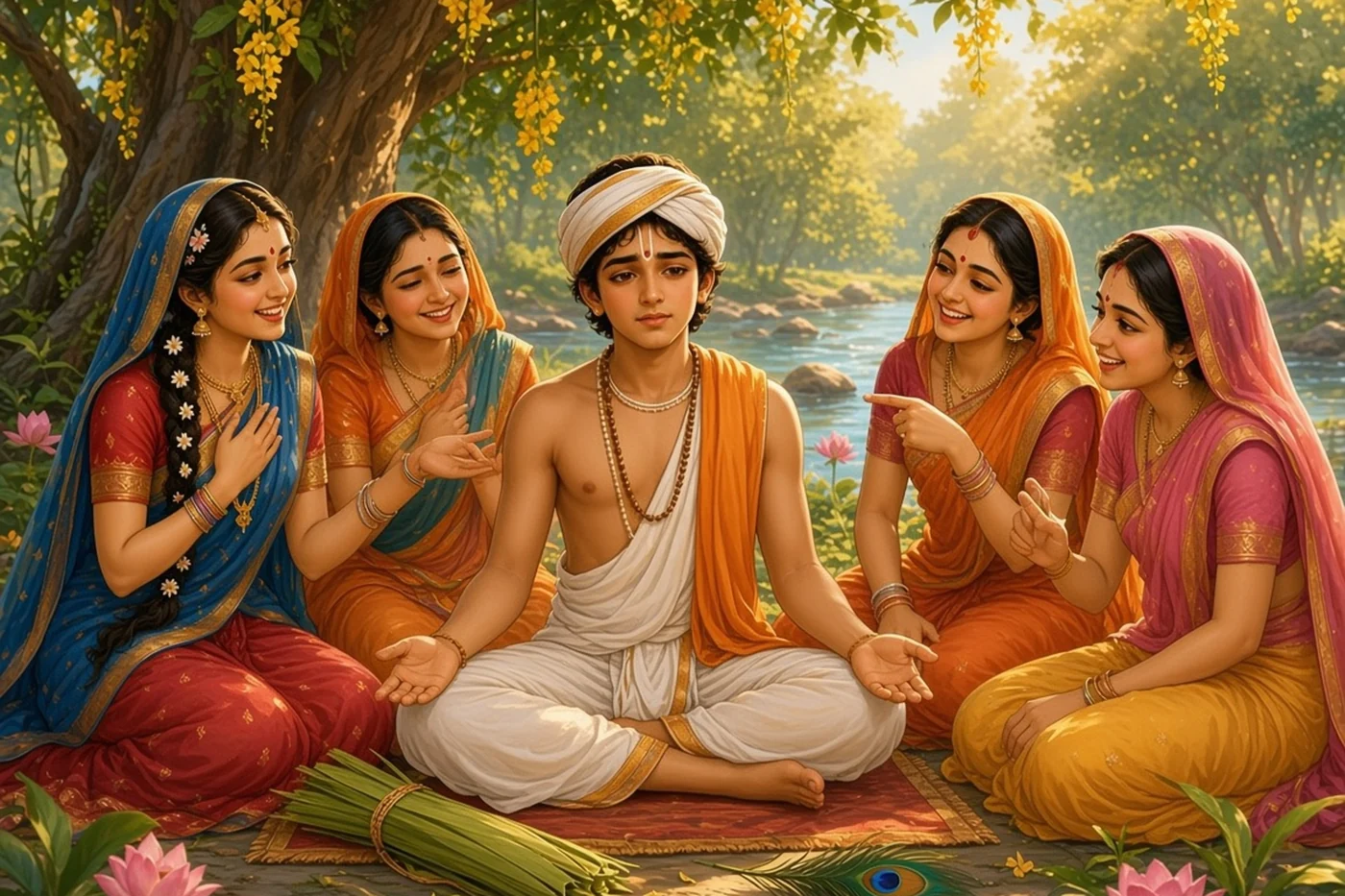
"Tell us," they ask him, "in which country does your formless one live? Who is his father, and who is his mother? Who is his wife, and who is his servant? What colour is he, what does he wear, what does he like to eat?" Uddhava, who knows the answer to every question in the scriptures, has no answer to these.
In one of the best known of the songs, they explain their trouble to him patiently, as if to a child.
"Uddhava," they say, "we do not have ten minds, or twenty. We had one mind, and it went away with Shyam. Whom would you have us worship your god with?"
The bee in Surdas is Uddhava himself, black and buzzing, and it is Krishna too, who went from flower to flower and left. The women scold it, mock it and plead with it, all in the same breath.
The Bhagavata's women are comforted in the end. Surdas's women are not. They will not be talked out of their grief, because their grief is the shape their love has taken, and they will not give it up for any wisdom.