Devalok ← All gods
Also calledBalajiSrinivasaVenkatachalapatiGovindaTirupati TimmappaEzhumalaiyanVenkataramanaPerumal

Artwork ›

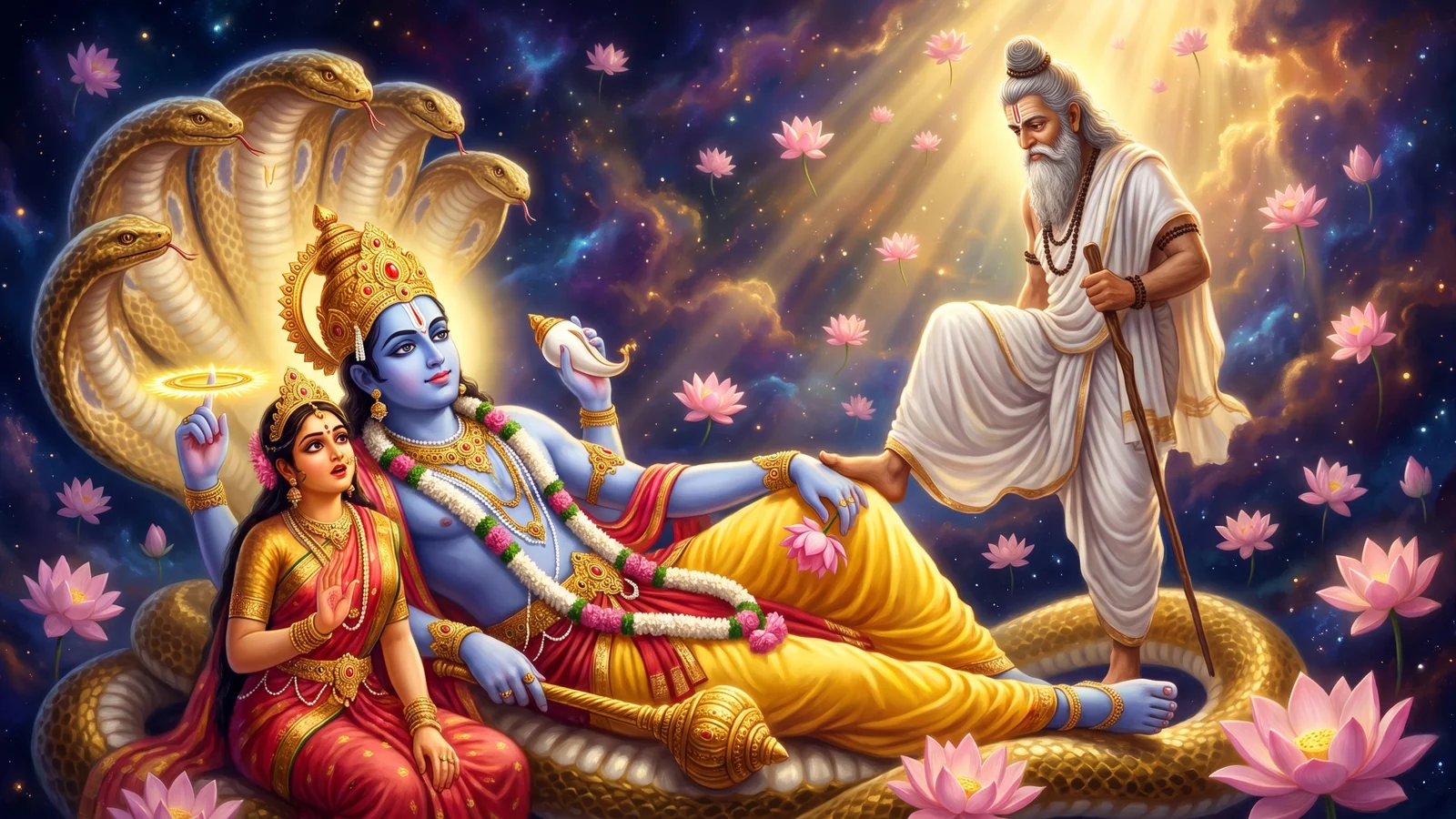
Bhrigu's Kick

At a glance

TraditionVaishnava
ColourDark stone

almost black, standing about two metres tall

FaceThe eyes covered by a broad white mark of camphor, the namam, so that his gaze does not overwhelm those who see him

Who Venkateswara is

Venkateswara is the lord of the Venkata hill, the god of the temple at Tirumala above the town of Tirupati, which is visited by more pilgrims than almost any other place of worship in the world. North India calls him Balaji, and the south Srinivasa, Govinda, or the lord of the seven hills.

He is Vishnu, come down to earth in the present age. The temple's story says he came after Lakshmi, who had left him when the sage Bhrigu kicked his chest, and that he lived for a time in an anthill on the hill, fed by a cow, until he met and married the princess Padmavati. He borrowed the cost of the wedding from Kubera, the god of wealth, and has stayed on the hill ever since, paying the interest out of what his pilgrims give him.

That is why people give. They bring him money and gold and their own hair, and climb the hill on foot, some of them on their knees, and wait for hours in the queue for a glimpse that lasts a few seconds. His lower right hand points at his feet: come to these, it says, and the left, at his hip, says the ocean of the world is only this deep.

He wears a broad white mark across his eyes, because his gaze, the priests say, is too strong to meet.

Kausalya supraja Rama purva sandhya pravartate: the first line of the Suprabhatam, sung at his door before dawn every day to wake him.

Before the Puranas

The Vedic roots of Venkateswara

The hill is older than the god's name. The early Tamil grammar, the Tolkappiyam, and the Sangam poems name Venkatam as the northern boundary of the Tamil country, a forest hill of hunters and elephants. The Tamil epic Silappatikaram, from the early centuries CE, already describes Vishnu standing on the peak of Venkatam with the discus and the conch, between the sun and the moon.

The Alvars, the Tamil poet saints of Vishnu between the sixth and ninth centuries, sang of him as the lord of Tiruvenkatam, and several of their hymns in the Divya Prabandham are to him. The oldest dated inscriptions on the hill are from the Pallava age; one records that a queen, Samavai, gave a silver image of the god in 966 CE, the image still carried in procession.

Tradition credits the philosopher Ramanuja, in the eleventh or twelfth century, with settling the temple's worship in the Vaishnava form, after a quarrel over whether the image was Shiva's or Vishnu's. The Vijayanagara kings were its great patrons; Krishnadevaraya came to the hill several times in the sixteenth century, and his statue with his two queens still stands inside, with folded hands.

The long temple legend, the Venkatachala Mahatmya, gathered from sections attributed to several Puranas, gave the god his story of Bhrigu, the anthill, Padmavati and the loan. The poet Annamacharya, in the fifteenth century, wrote thousands of songs to him in Telugu that are still sung at the temple.

See how the Vedic gods became the Puranic ones →

Related gods