As the Ekadashi katha tells it
Told across India · Vyasa and Bhima · 3 min read
The house of the Pandavas kept the eleventh day twice a month, and on each of those days the kitchen was cold.
Yudhishthira did not eat. Kunti did not eat, nor Draupadi, nor Arjuna, nor the twins. Bhima ate, and ate alone, and every one of them told him he should not.
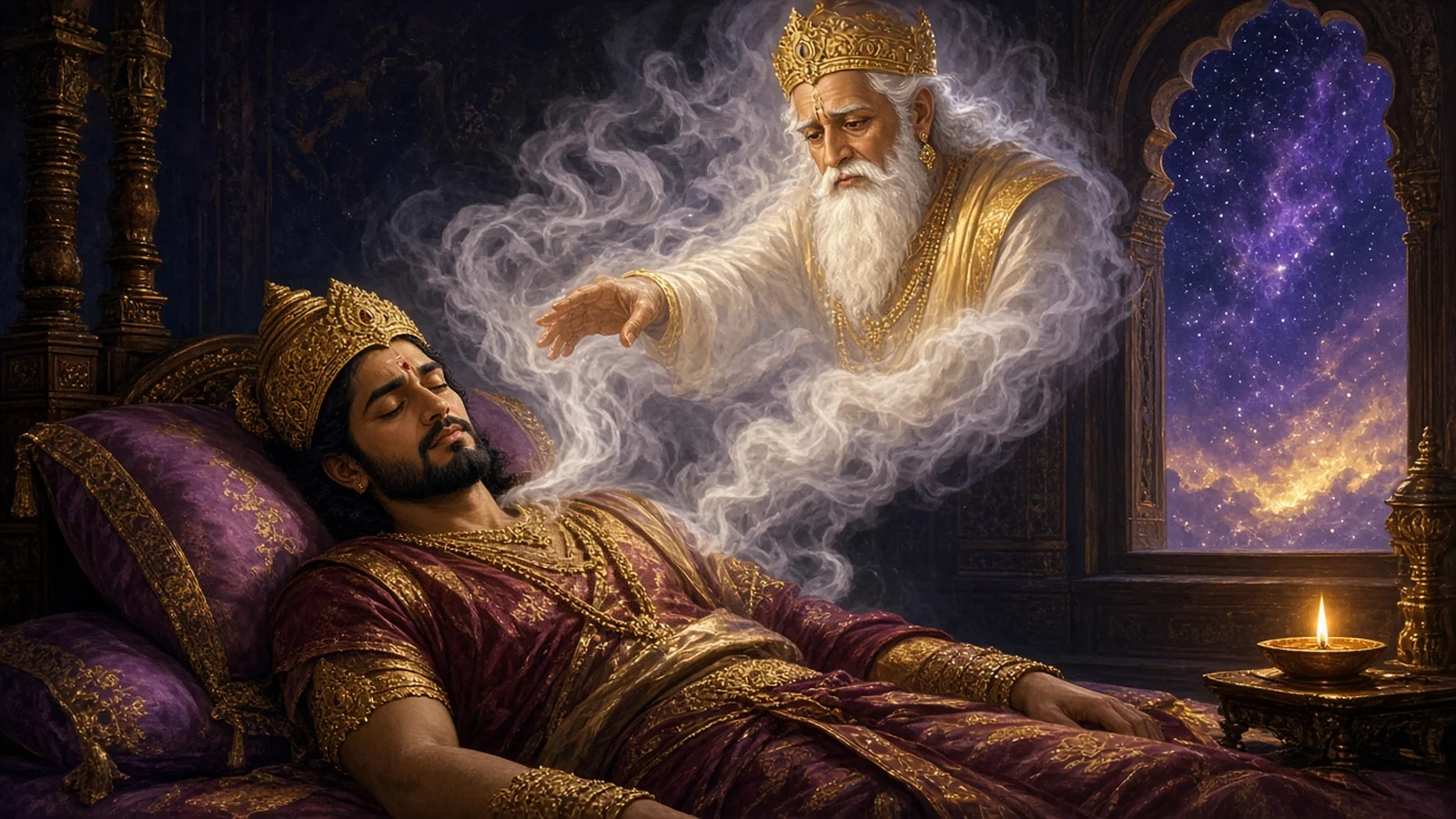
So when Vyasa came, the grandfather who had seen the whole family's fortunes before they happened, Bhima was waiting for him.
"Grandfather," he said, "I give in charity. I worship Keshava as well as any of them. I will give whatever you tell me to give. But I cannot go without food. Is there no road to heaven for a man like me?"
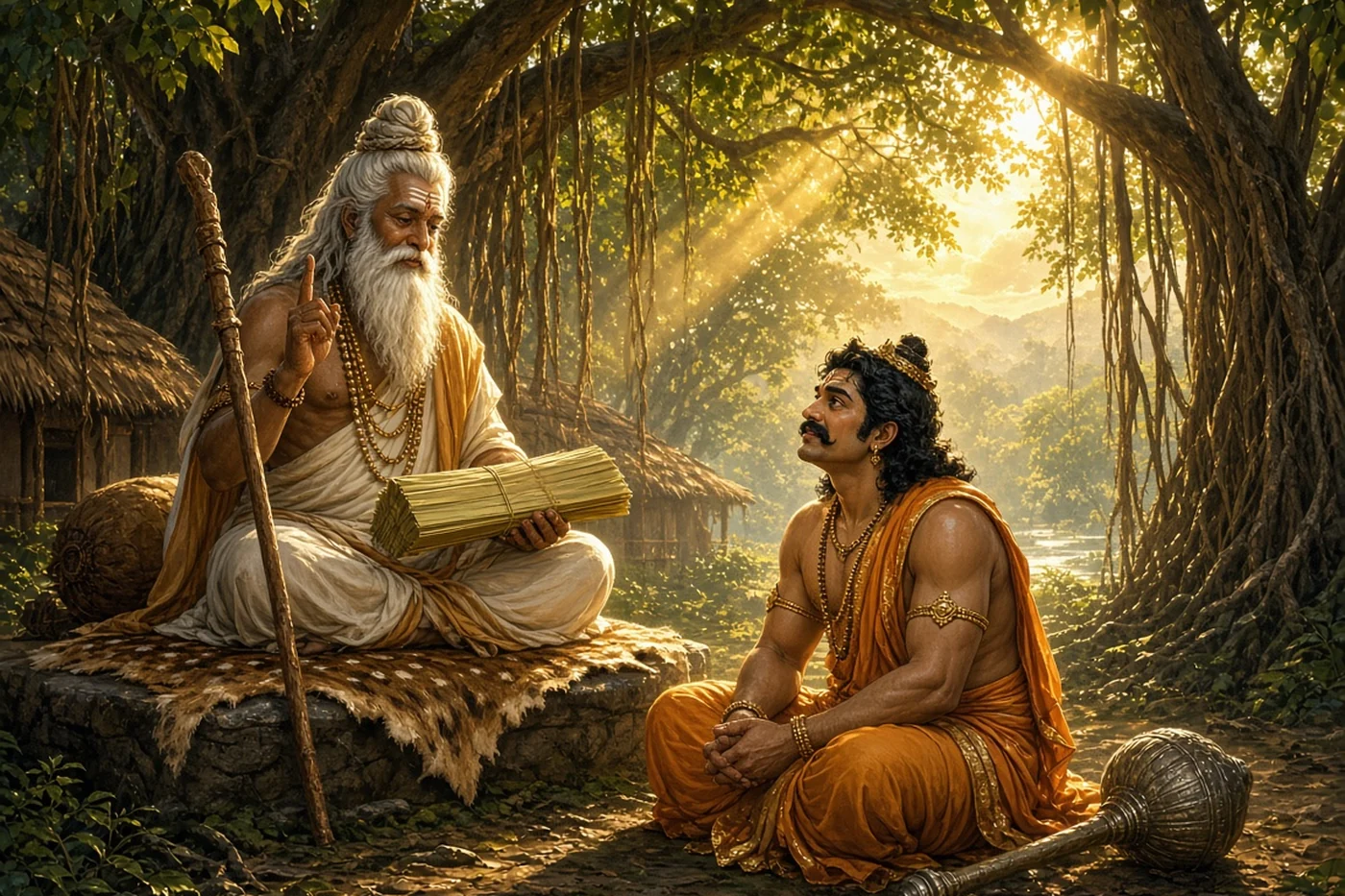
"There is a road," said Vyasa, "and it is the fast. If you want heaven and fear the other place, do not eat on the eleventh day of either fortnight. In this age the great Vedic rites are beyond most men. This is what is left, and it costs nothing."
Bhima began to shake. The tellers say he shook like a leaf on a banyan in a high wind, and he was the strongest man alive.
"You do not understand," he said. "I cannot keep even one meal a day. I am the son of the Wind, and there is a fire in my belly. Its name is Vrika. It goes quiet only when I eat, and eat again, and eat once more. Give me one day. One day in the year, and I will try."
They called him Vrikodara for that fire, the wolf-bellied one, and there was no one in the family who had not watched him empty a pot meant for five.
Vyasa thought about it. Then he named the day.
"In Jyeshtha," he said, "when the sun stands in Taurus or in Gemini, the earth is at its hottest. On the eleventh day of the bright half of that month, take nothing. Not food. Not water. When the rites need you to sip, take no more than would cover a single mustard seed, in your right palm cupped like a cow's ear. Anything more is as bad as wine. Hold it from one sunrise to the next."
"And for that one day?" said Bhima.
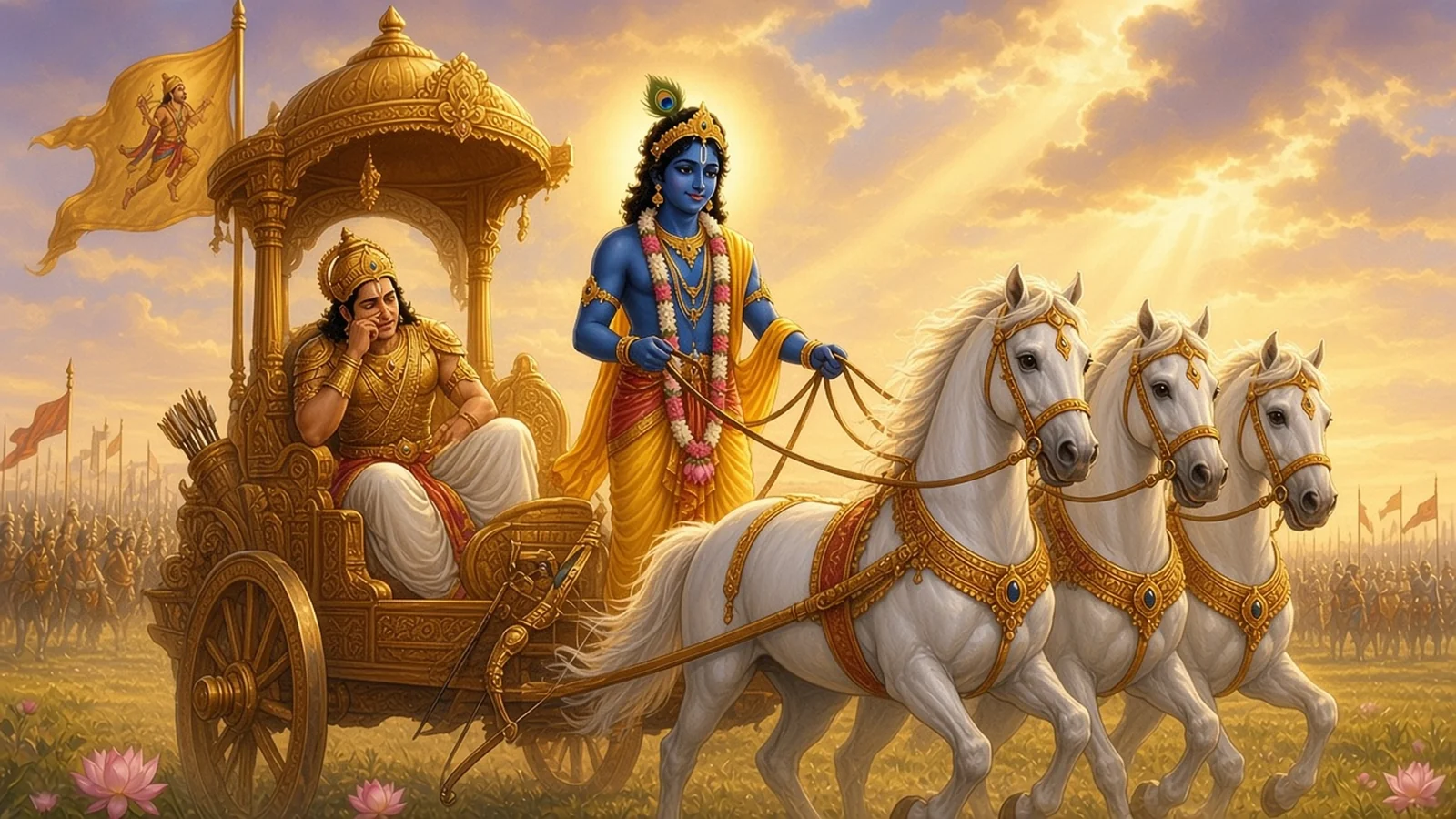
"For that one day, the fruit of all twenty-four. Keshava told me so himself, with the conch and the discus in his hands. When your time comes, Yama's messengers will not come for you. Vishnu's people will, dressed in yellow. On the twelfth morning, bathe, give water and gold to the Brahmins, and eat with them."
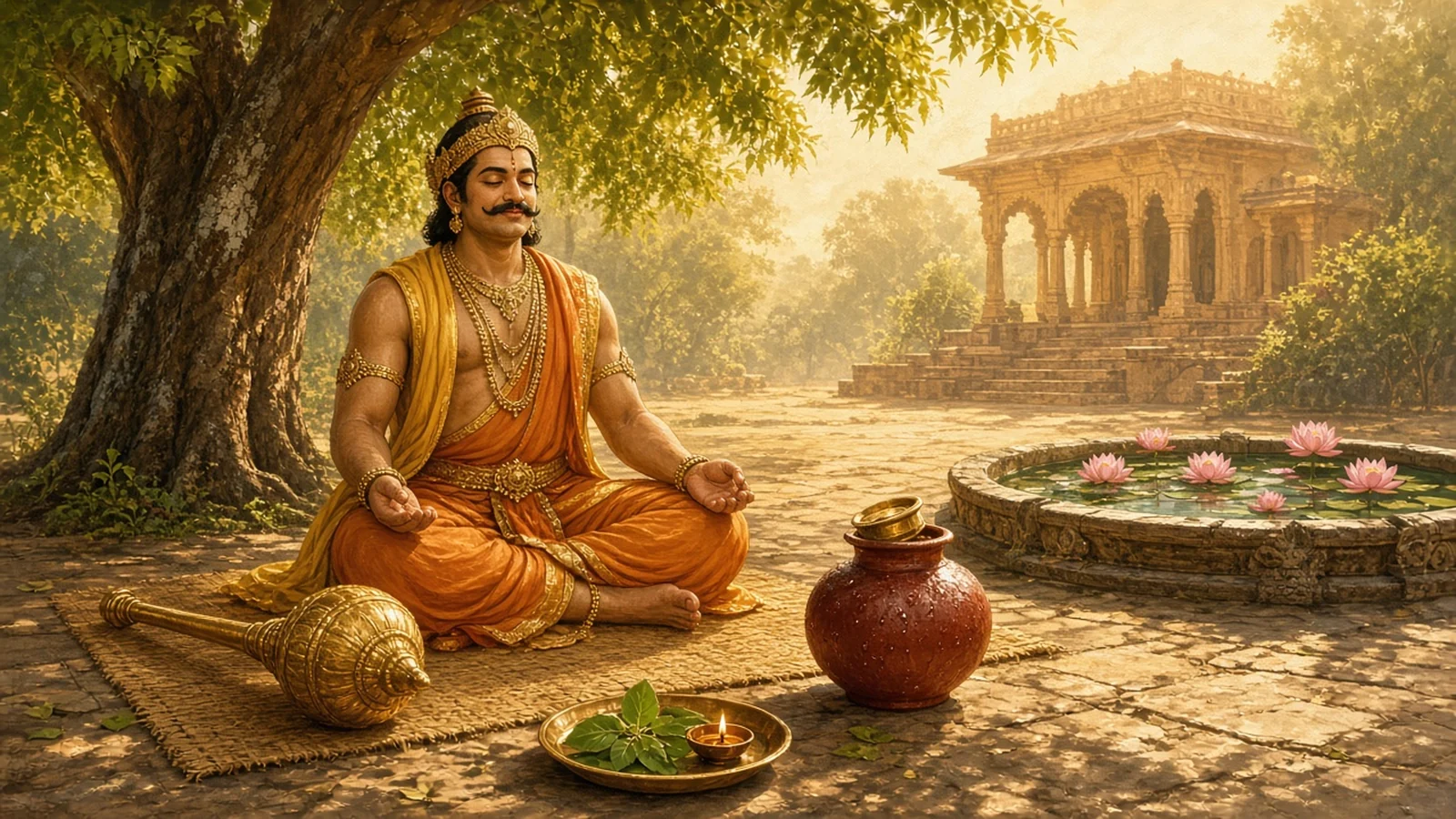
Bhima kept it. That was the hard part of the story and the tellers pass over it quickly: the long white afternoon of Jyeshtha with no water in it, and the night with the fire awake.
When his brothers heard what Vyasa had promised, they kept it too, and the day took their name. Pandava Nirjala, people call it still, the waterless one of the Pandavas.
In the houses where the katha is read out on the day itself, there is one more scene, and it is the one the children remember.
At dawn on the twelfth day the family came looking for Bhima and found him on the ground, barely awake. The hunger and the thirst had done what no enemy ever managed. Someone ran for Ganga water. Someone put a tulsi leaf on his tongue. He opened his eyes.
"Is it sunrise?" he asked.
It was, and he ate.
As the Padma Purana tells it
Padma Purana, Uttara Khanda 51 · Krishna, Yudhishthira and Vyasa · 2 min read
Yudhishthira had just heard the story of Apara, the Ekadashi of the dark fortnight, and he wanted the next one.
"Janardana," he said to Krishna, "tell me about the Ekadashi of the bright half of Jyeshtha."
"Vyasa will tell it," said Krishna. "He is here, and it is his to tell."
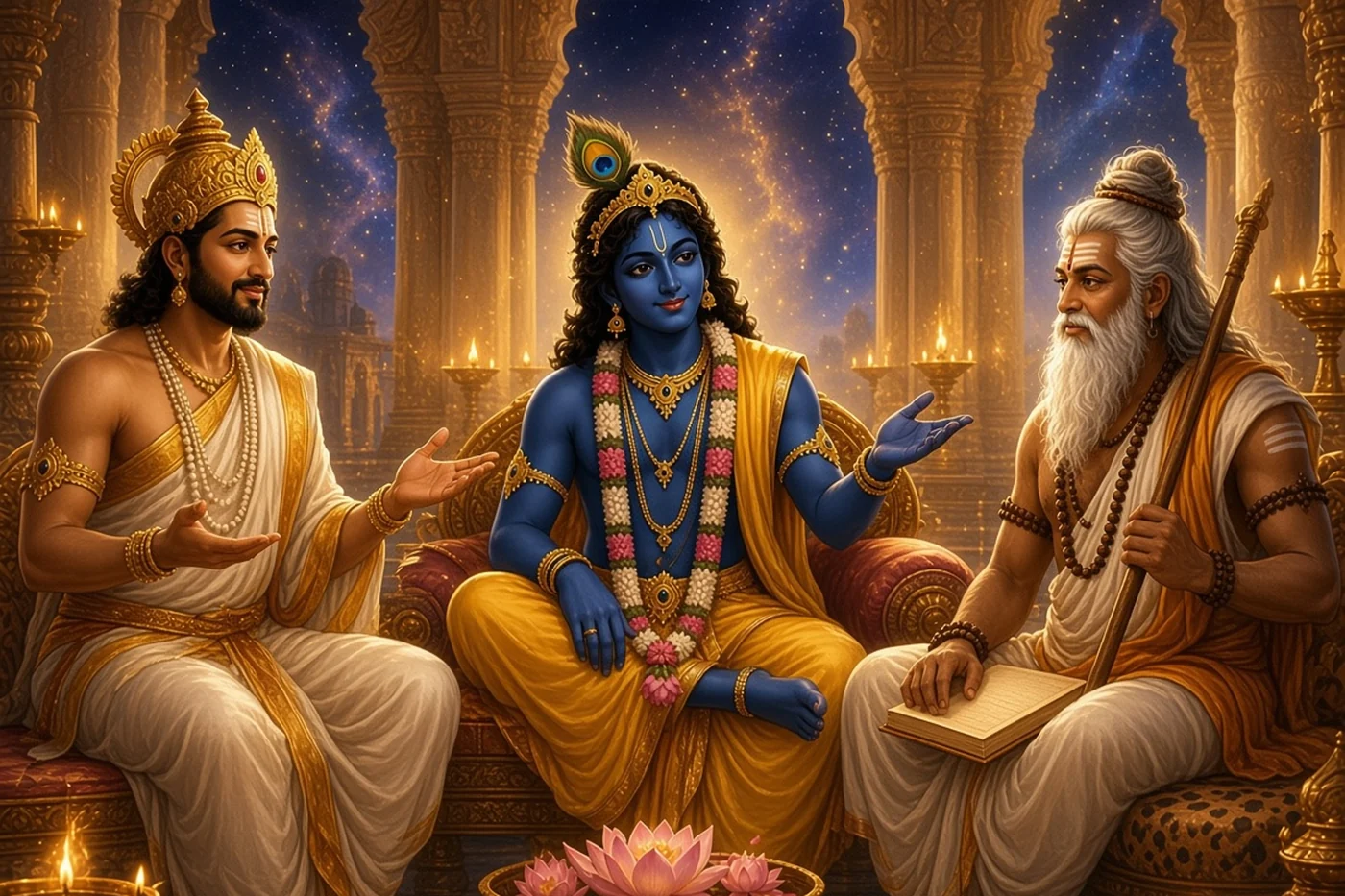
So the king turned to Satyavati's son. He had heard the duties laid down by Manu and by Vasishtha, he said, and now he wanted the duties of Vishnu's own people. Vyasa told him the old codes were too heavy for the Kali age. The vow of the eleventh day was the cream of all the Puranas, cheap to keep and simple: no food on either Ekadashi, worship on the Dvadashi, then a meal shared with a Brahmin. Only a birth or a death in the house sets it aside.
At that Bhima trembled like the leaf of an ashvattha tree. His mother and his brothers and his wife all kept it, he said, and all of them told him not to eat. He would give gifts and worship Vishnu gladly, but hunger was more than he could bear. Not even a single meal a day was possible for him, because Vrika lived in his belly and settled only when it had been fed many times over. "Tell me one," he said. "Just one."
Vyasa gave him the Ekadashi of Jyeshtha when the sun is in the second or third sign. Not a mouthful of water was to pass his lips between the two sunrises, and the reward would be the fruit of twelve Dvadashis. He was to make the vow aloud: "I shall eat on the day after Vishnu's day."
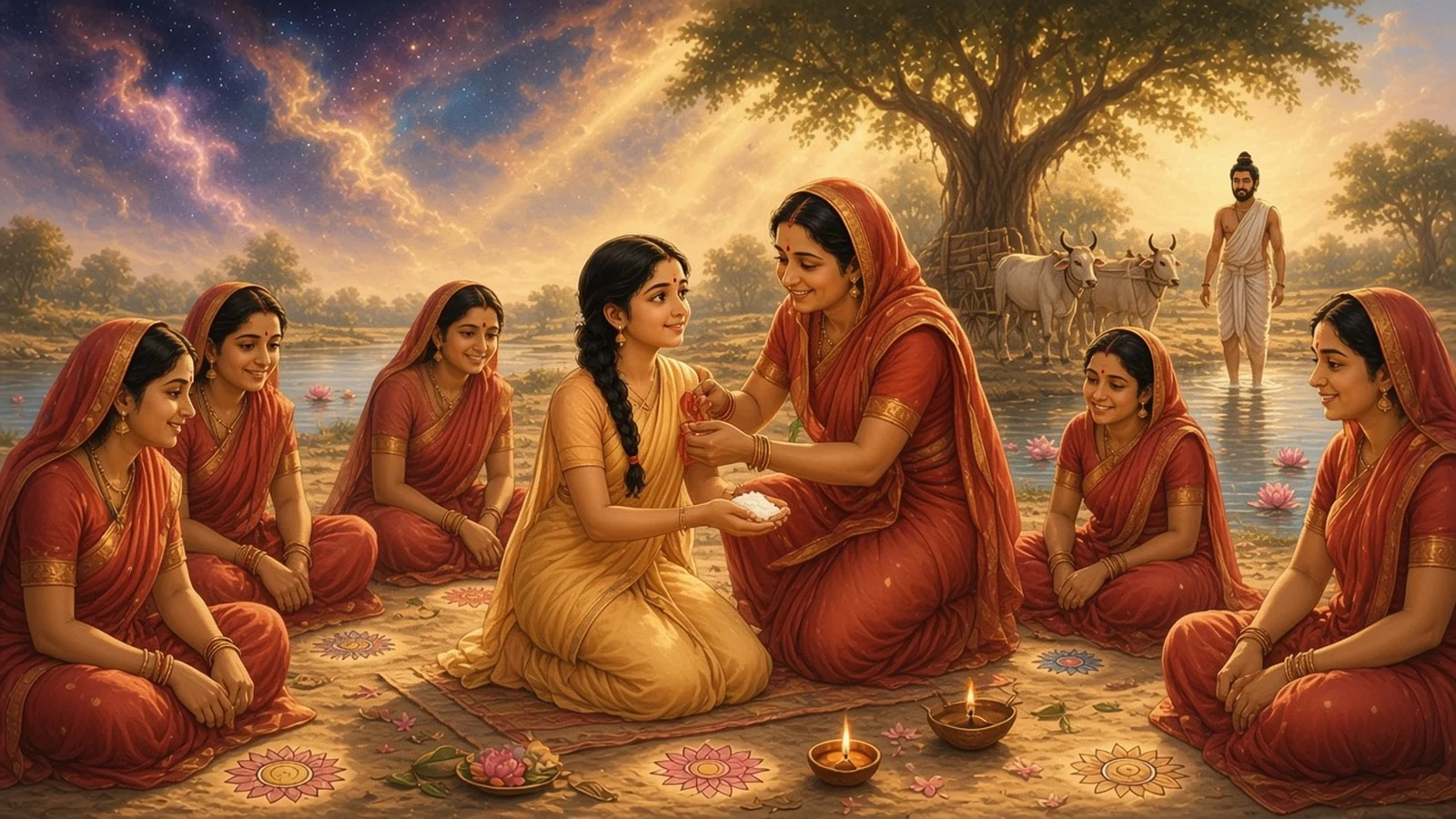
Those too poor for more could give a pitcher with gold and cloth in it. The gifts of that day never wear out: food and clothes, cows and water, a bed, a seat, an ascetic's water pot, an umbrella and a pair of shoes, and for the shoes, the text says, a golden chariot of the sky. On the Dvadashi the keeper prays to Hrishikesha holding a pitcher of water, and gives pitchers of water sweetened with sugar to the best of the Brahmins.
Bhima kept it from then on. In the world the twelfth day after it came to be called the Pandava Dvadashi.