Anant Chaturdashi in Girgaon
Girgaon, Mumbai · the tenth day, and the Raja of Lalbaug's walk to the sea · 3 min read
Ajoba had been up since five, sitting cross-legged in front of the little clay Ganpati who had lived on the front room shelf for ten days among the marigolds. The idol came up to Ishaan's knee.
"Today he goes," Ajoba said. "Wash, and come and do the uttarpuja with me."
The whole family sat down on the floor for it: turmeric and kumkum, rice grains, a red hibiscus, a fistful of durva grass, a plate of modaks. Then the last aarti, the bell going hard and Ishaan's mother singing half a beat ahead of everybody else.
Afterwards she tied a small cloth bundle with curd rice, a lump of jaggery and some coconut inside.
"What's that for?"
"Shidori," she said. "Food for the road. He has a long way to go to get home to Kailasa."
"Does he eat it?"
"We never let anyone leave this house hungry," said Ajoba. "Not even him." He put his hand on the idol and shifted it a little on its seat, toward the east. That was the beginning of the going.
At four they carried him downstairs, Ishaan holding the lamp, the building's boys beating a dhol and a tasha. "Ganpati Bappa Morya!" they shouted, and from the windows the neighbours shouted back, "Pudhchya varshi lavkar ya!" Come back soon next year.
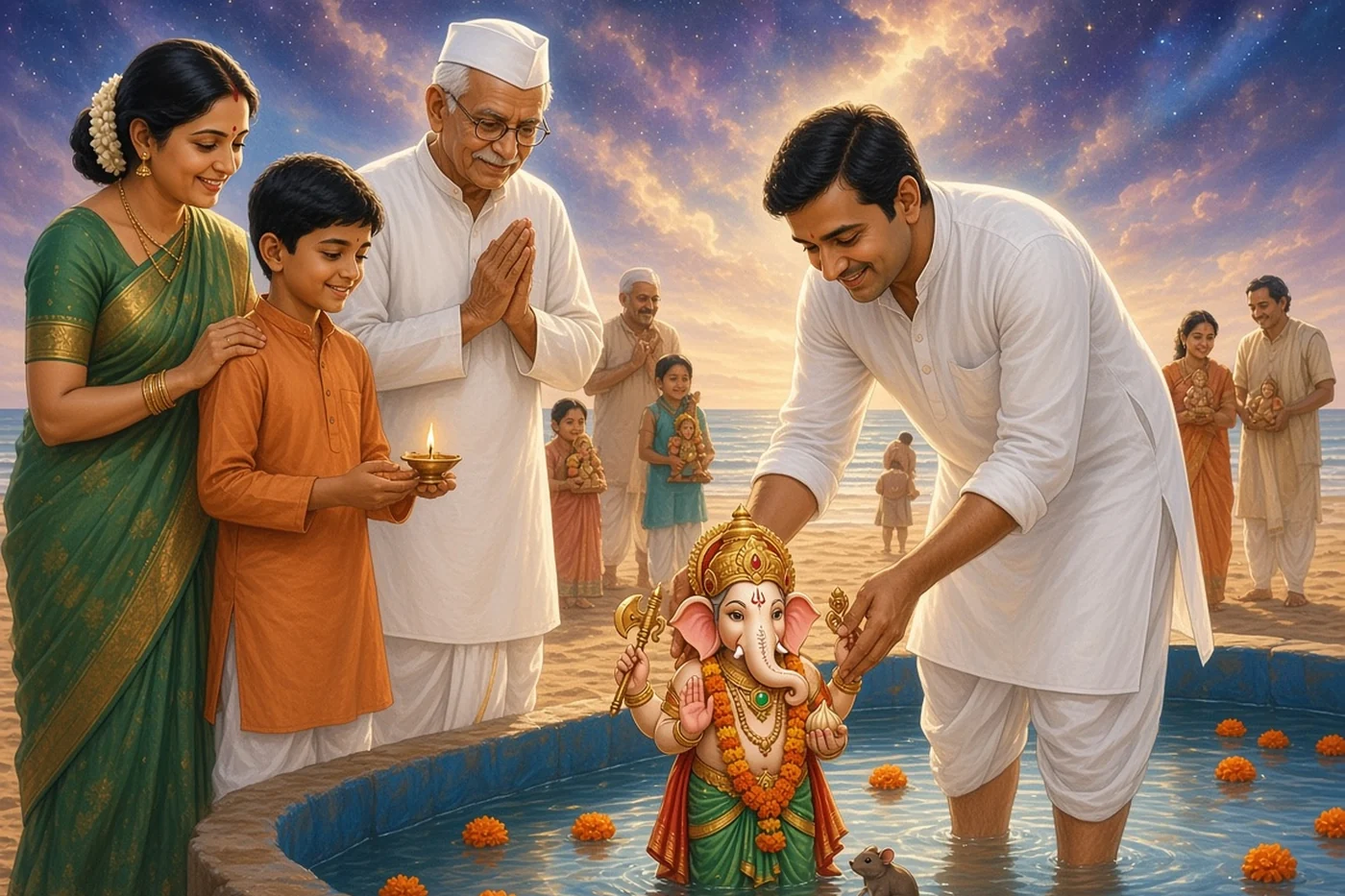
They walked him to Girgaon Chowpatty, though not into the sea. The High Court had ruled that idols up to six feet tall must go into artificial ponds, and the city had built a dozen on that beach alone. Ishaan's father waded into a blue tank with the idol in his arms and lowered him under. Ishaan watched the clay go soft.
"He's melting."
"He's going back to being earth," his mother said. "That's what clay does."
That night Ajoba took him out again. The Raja of Lalbaug, the great Ganpati of the market, had left his pandal at one in the afternoon and would spend the whole night crossing the city: Bharatmata, Curry Road, Byculla, Nagpada, the Two Tanks. Ajoba had watched him pass every year since he was a boy, and they stood near Opera House in the dark with thousands of others.
"Why does he go so slowly?"
"Because everyone wants to see him one more time. The fishermen and the market people of Lalbaug had lost their market, and they made a vow for a new one. They got it, and in 1934 they set him up. He has come every year since."
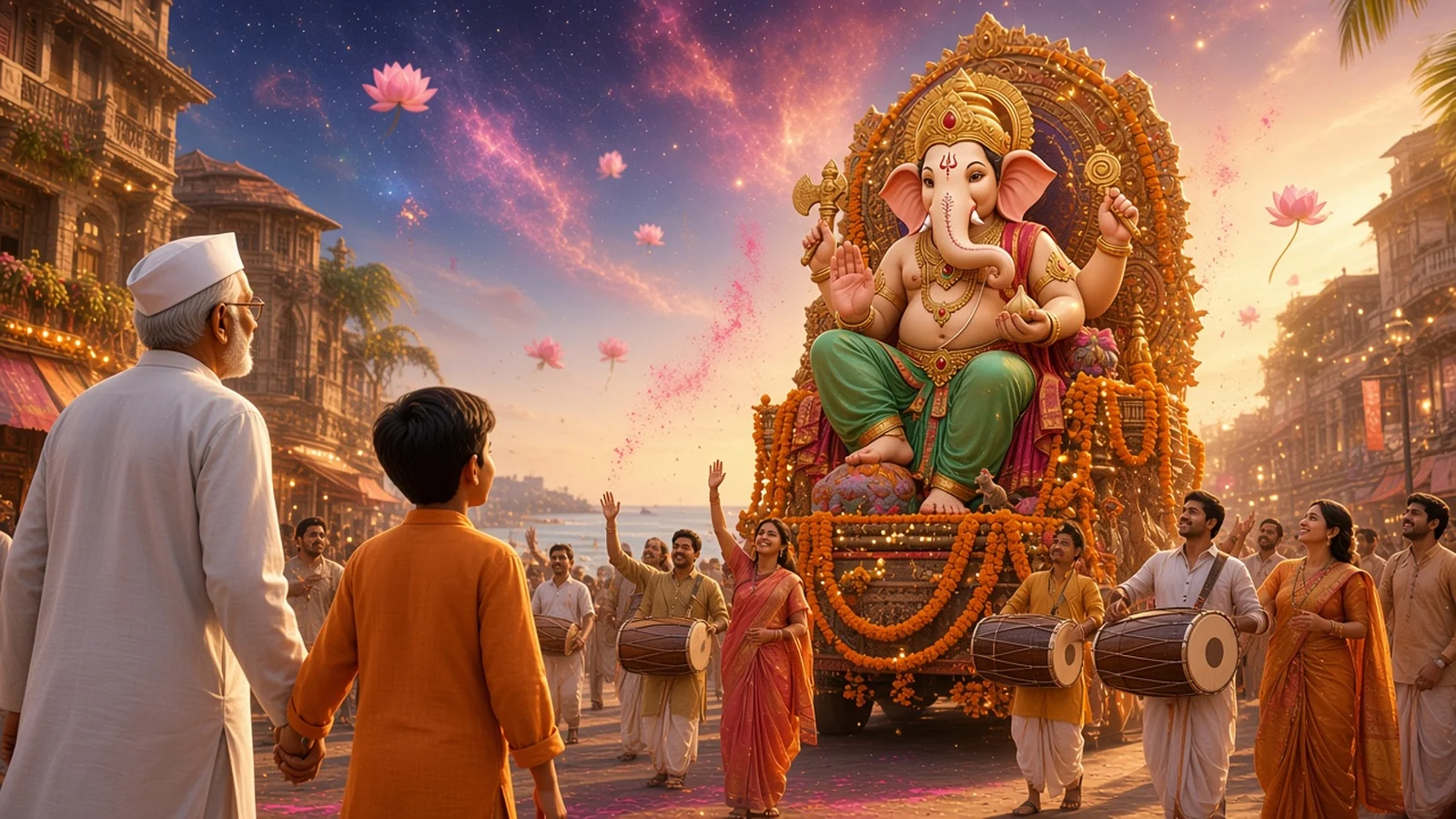
He came at last, enormous, the drums ahead of him and pink gulal in the air, and the street breathed in. They followed him down to the beach. He reached the beach at about seven in the morning. There was a great aarti on the sand, and then men climbed up and took off his gold and silver ornaments.
"Now the Kolis," Ajoba said.
Koli fishermen ran the Raja out on a raft into deep water. They were racing the tide. At a quarter to eleven he went under, three quarters of an hour before high water, and the whole beach shouted at once.
Ishaan's phone buzzed. It was his cousin in Pune. "Ours aren't finished!" The five honoured Ganpatis of Pune, Kasba first, had gone into the river the evening before, but the rest of the city was still walking.
Ajoba was very quiet on the way home. At the gate he stopped and looked back toward the sea.
"Pudhchya varshi lavkar ya," he said, to no one in particular.
The same morning in Darbhanga
Darbhanga, Bihar · the Anant puja of a Maithil household · 1 min read
In Darbhanga nobody was carrying Ganesha to the water that morning. It was Anant day, and the god was Vishnu, the endless one.
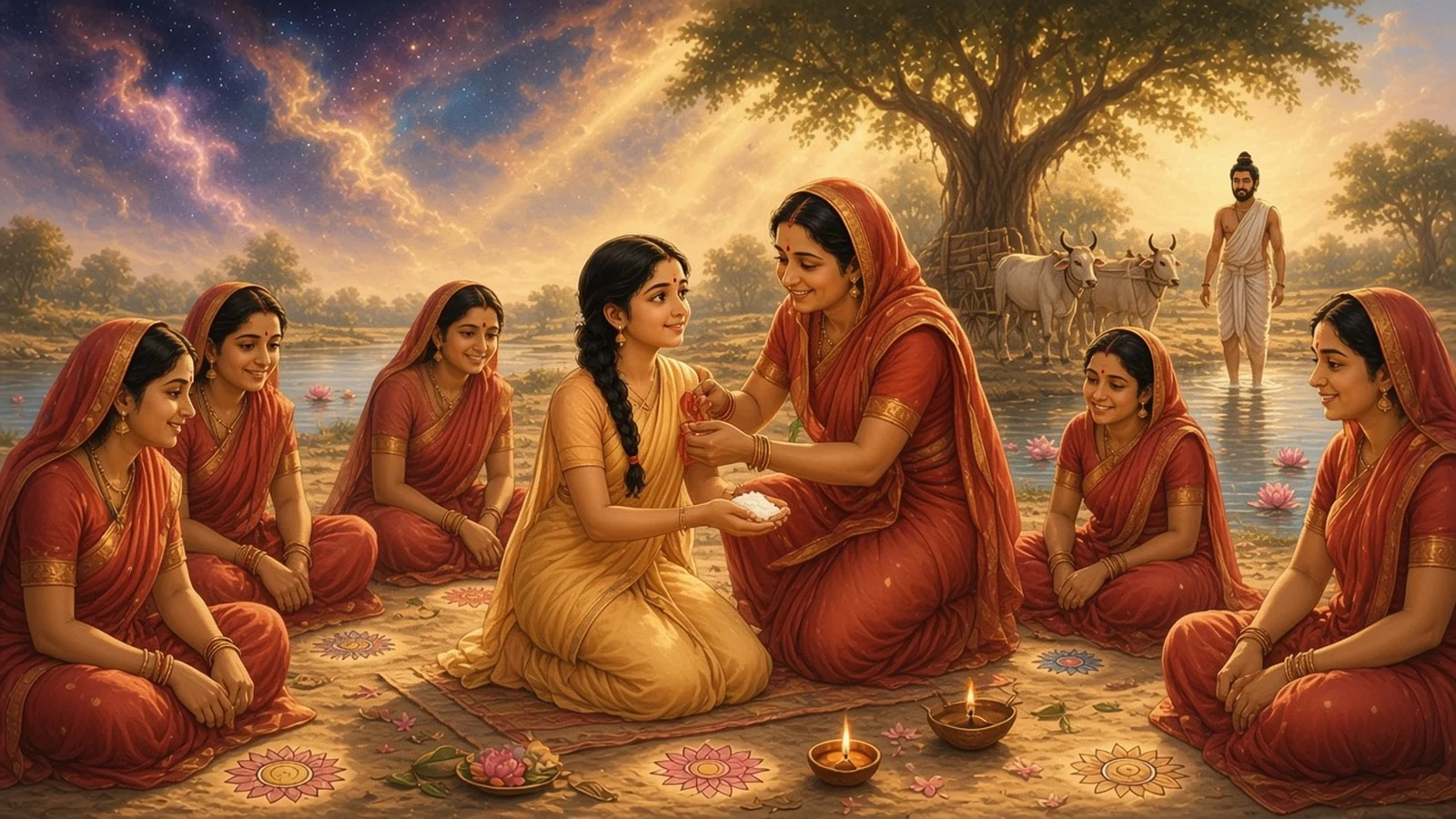
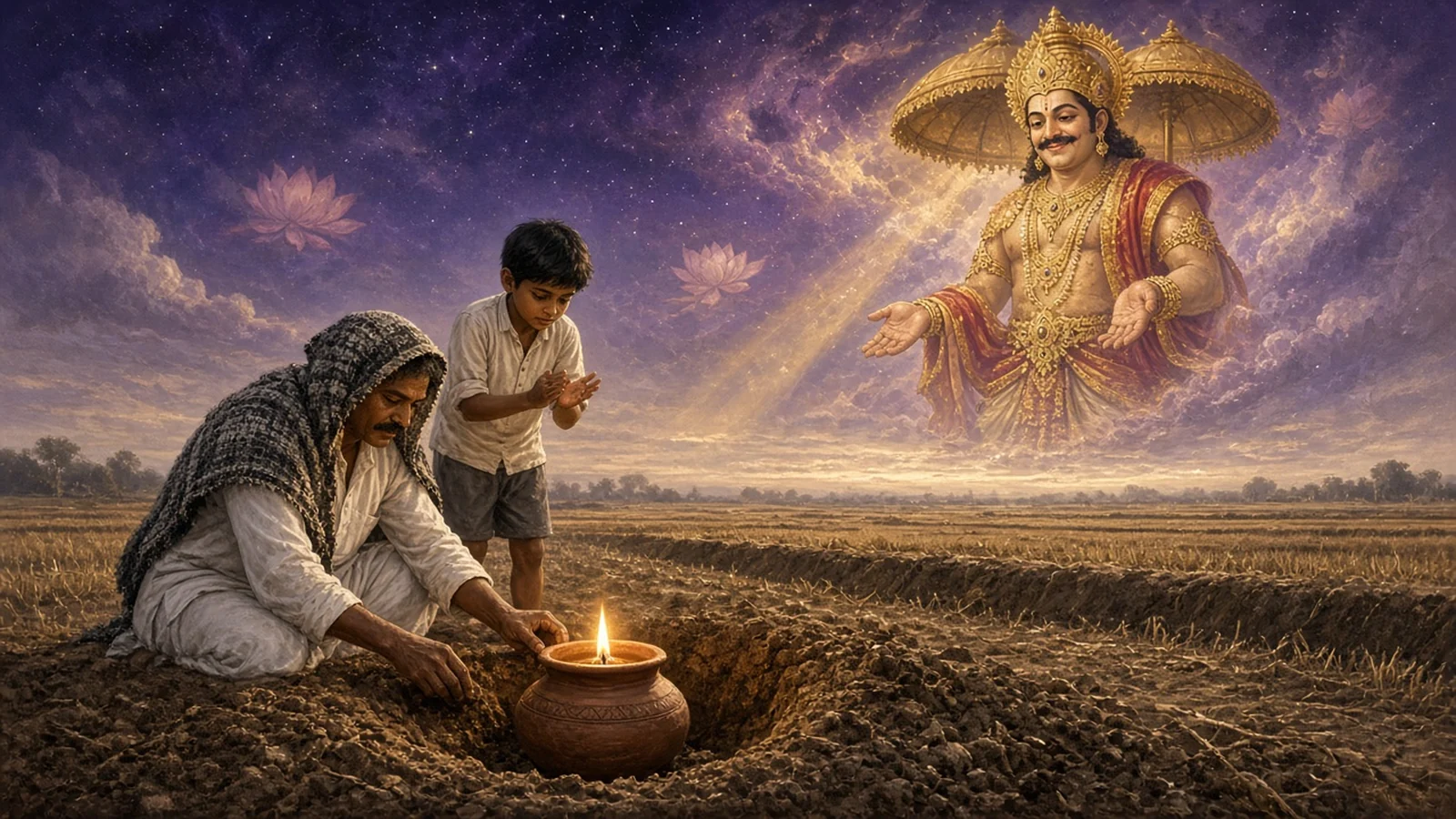
After her bath Dadi untied the old Anant from her left arm. She had worn the thread for a whole year and it had faded almost white. On the courtyard floor her daughter-in-law had drawn an eight-petalled lotus in rice paste, and on it stood the water pot, with a tiny Ananta of kusha grass wrapped in a sacred thread beside it. The women of the lane carried in their baskets, fourteen kinds of sweets and fourteen fruits each, and set them all together. In a brass plate lay the new threads, yellow with turmeric, with fourteen knots in every one.
The old threads were worshipped first, for the year they had kept. Then Dadi's son sat down before a bowl of cow's milk with the new threads wound around a cucumber, and began to stir.
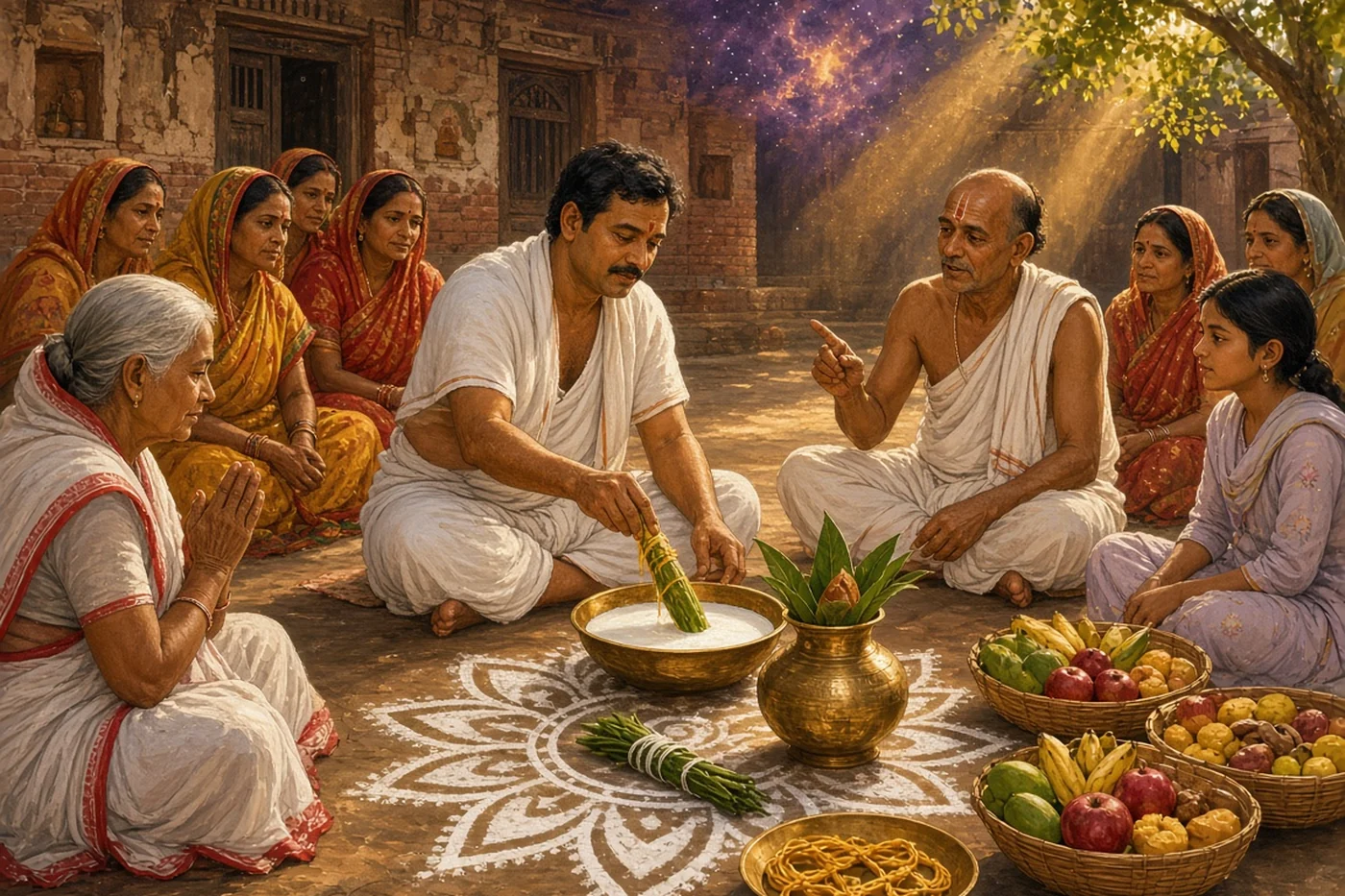
"Ki mathai chhi?" the priest asked. What is being churned?
"Kshir sagar." The ocean of milk.
"Kinka takai chhi?" And who is being looked for?
"Bhagwan Anant ke." The Lord Ananta.
"Bhetla?" Found?
"Han, bhetla." Yes, found.
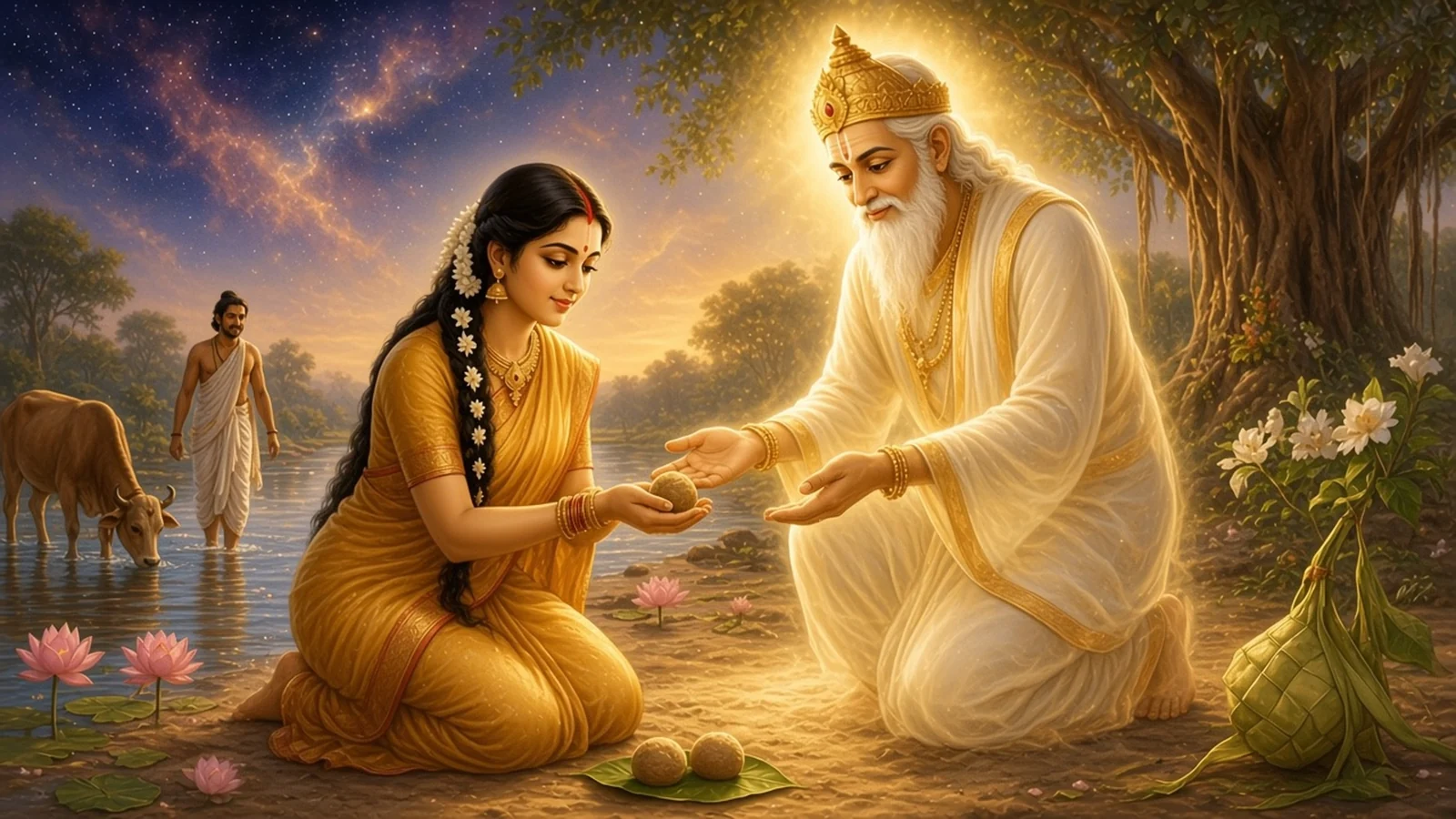
The women bowed, and each thread was lifted dripping from the milk and touched to a forehead. Then the priest read the katha: Sushila by the river, the cord, Kaundinya's anger and his long search. The men tied the new Anant on the right arm, the women on the left.
Dadi's granddaughter counted the knots on her own thread. "Fourteen years, then?"
"That was my promise," Dadi said. "I stopped counting a long time ago."
Then they broke the fast with the sweet puris made without salt.