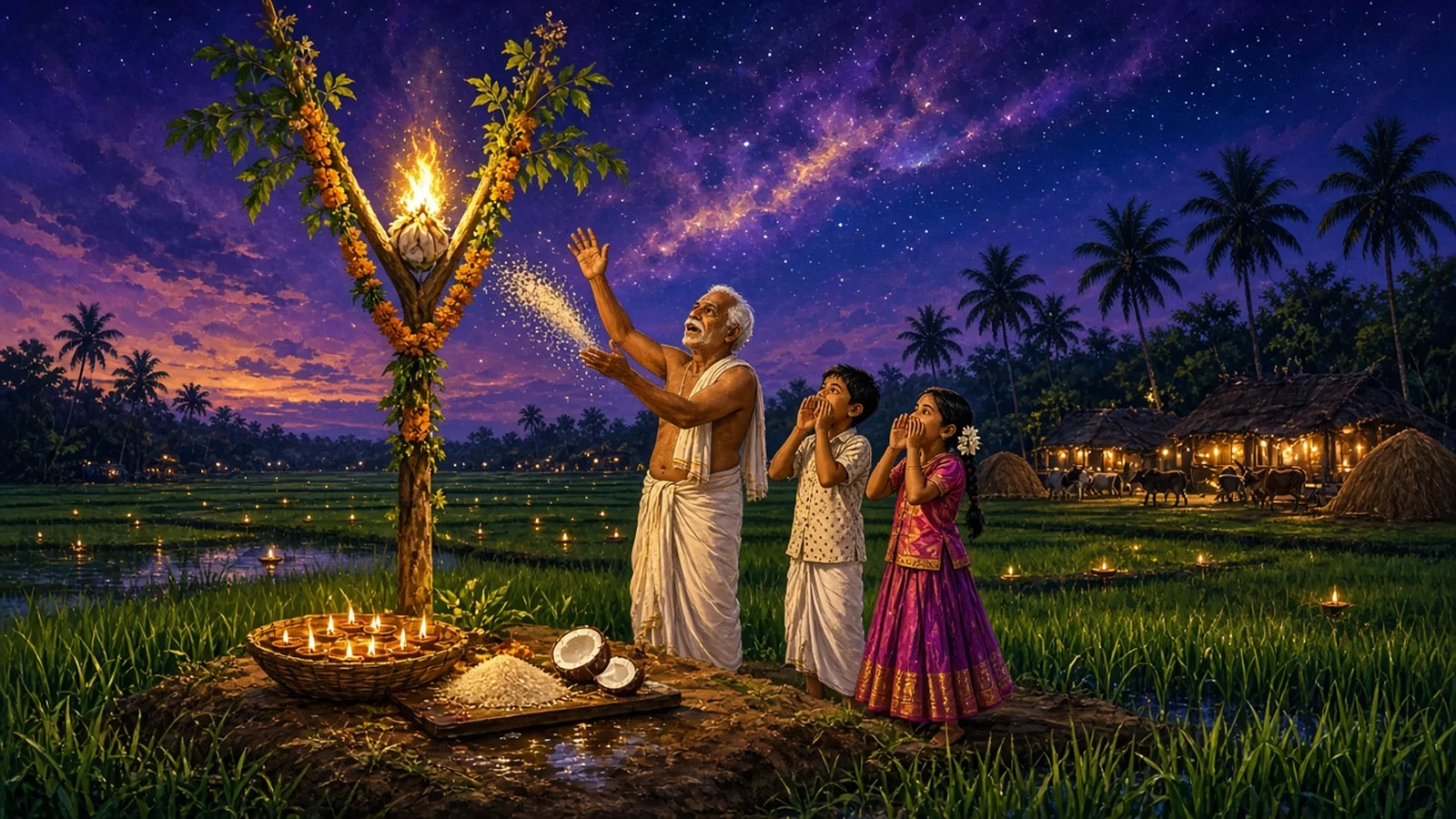
On Padwa in a farming house
Maharashtra · a village of the Deccan, from dawn to the evening lamp · 3 min read
It was still dark when Aaji woke the house for the bath. Oil on the scalp, hot water from the big copper pot, new clothes laid out the night before. Diwali had been going on for days, but this was Padwa, the first day of Kartika's bright half, and the old woman said the day had its own work.
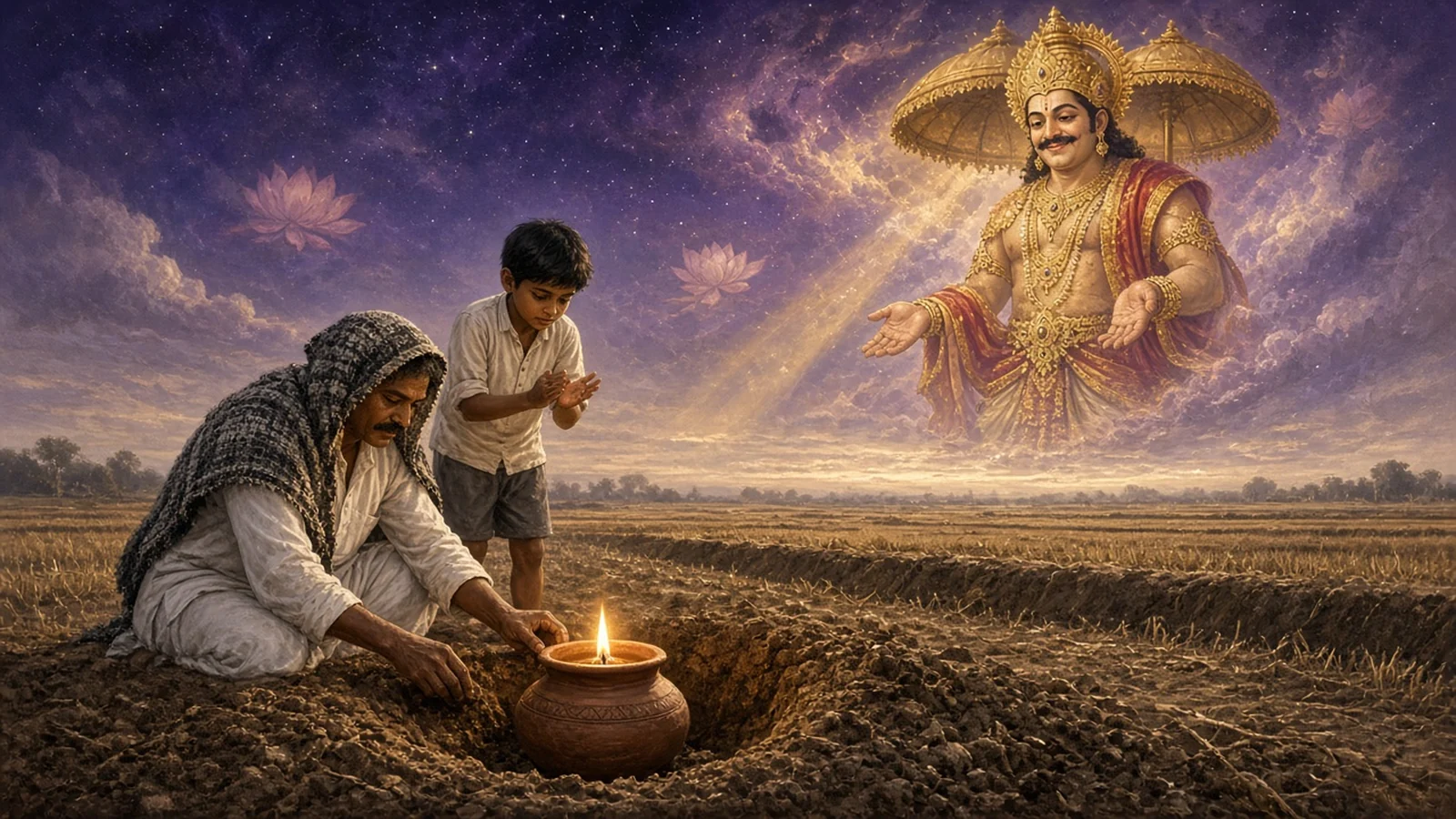
Shankar's father was already at the door with the old ghongadi folded over his head like a hood. In his hands he held an earthen pot, and inside it a lamp shaped from wheat dough, burning.
"Can I come?" said Shankar.
"Walk behind me and keep the wind off it," his father said.
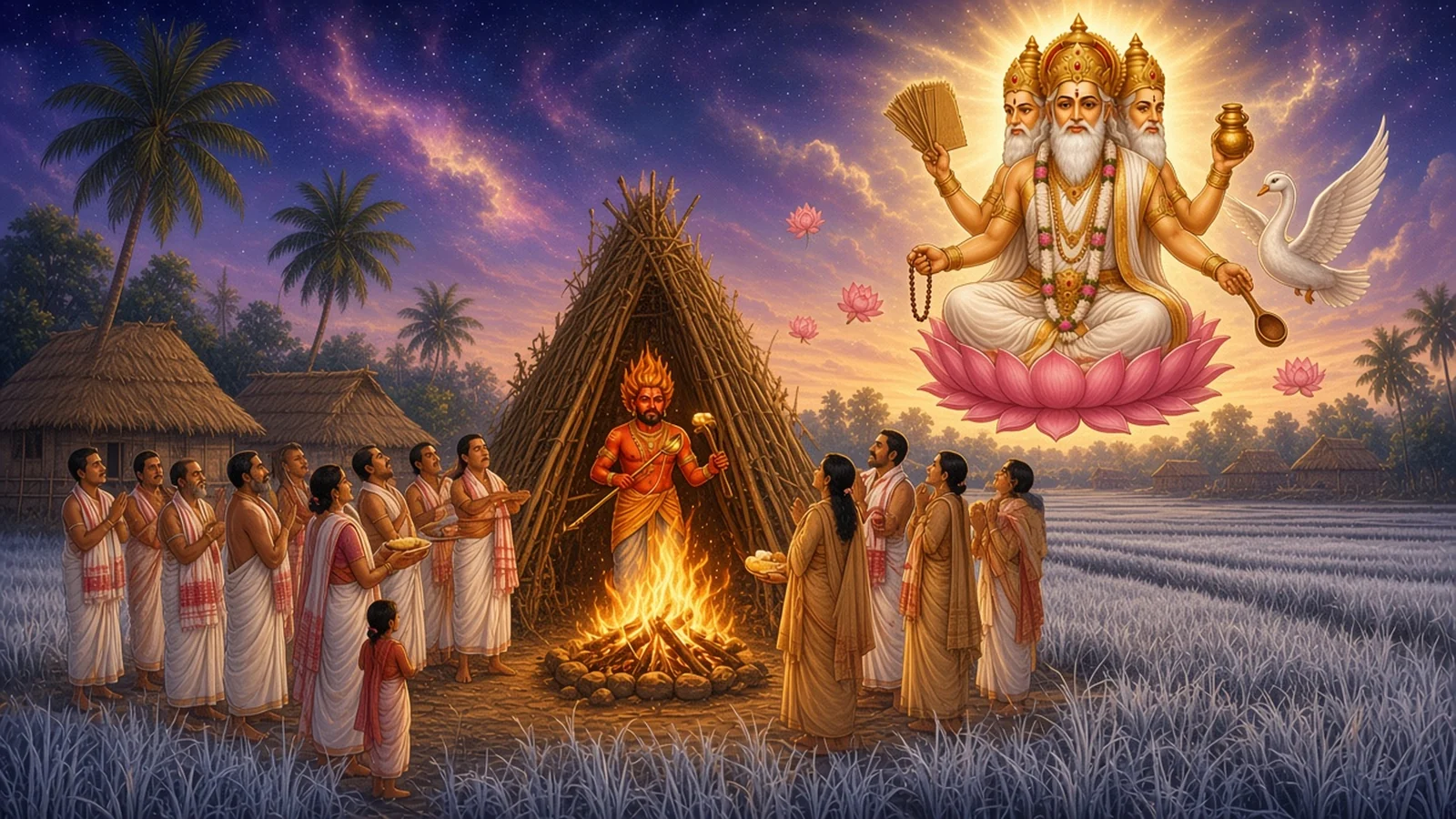
They went out along the bund in the grey light. The kharif crop had been cut and carried home, and the earth was waiting. At the edge of their own field his father knelt, scooped a pit in the bund with his hands, set the pot inside with the lamp still burning, and covered it over. He touched the soil and then his forehead.
"Who is that for?" Shankar asked on the way home.
"For the field. For the one who used to look after fields."
At home the ground before the door had been swept and washed. His mother and his aunt were on their knees with bowls of coloured powder, white and red and yellow and green and black. Under their fingers a king came up out of the floor, crowned and seated, with a queen beside him.
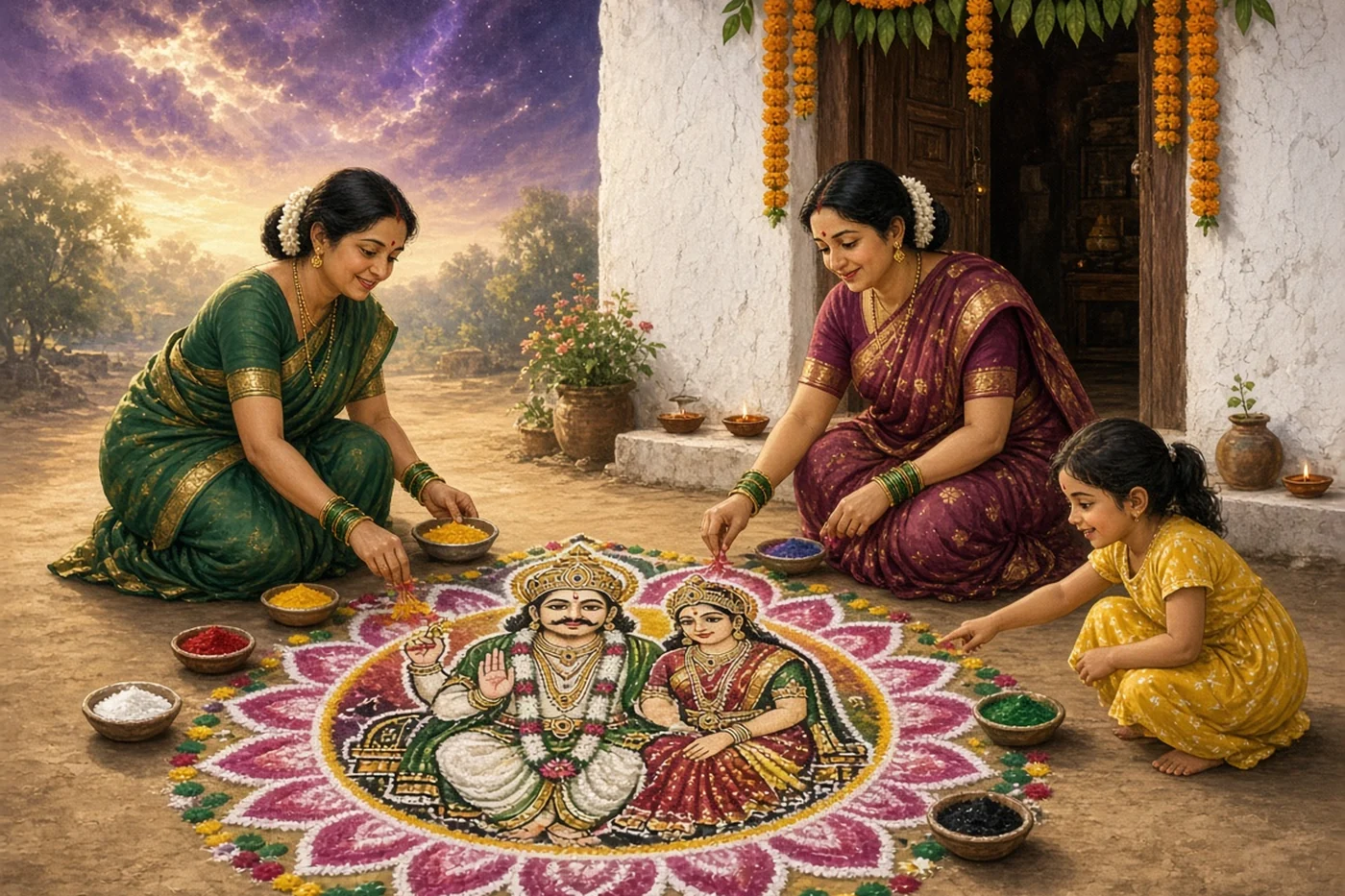
"Bali," said his sister Mangal, very pleased to know. "And Vindhyavali."
In the yard Aaji was shaping something else. A heap of fresh cow dung became a seated figure with a little crown pressed into it, and she stuck a marigold on its head. The neighbours made theirs on horseback, Shankar knew, but Aaji said a king who has come home may sit.
The bullocks had been washed at the well. His father painted their horns and threw the embroidered jhul over their backs, and they stood stamping and looking embarrassed. The plough leaned against the wall, scrubbed, with a dot of kunku on it.
When the puja was done the women said the line together, and Aaji said it loudest. "Ida pida talo, Baliche rajya yevo."
"What does it mean?" Mangal asked.
"Let the troubles and the sickness go," said Aaji, "and let Bali's kingdom come." She sat on the step and pulled the children close. "Long ago there was a king called Bali. Nobody went hungry in his time, and nobody who came to his door went away empty. One day a little brahmin boy came and asked him for three steps of land, and the boy was Vishnu himself, Vamana. Two steps and the world was gone. For the third, Bali bowed his head."
"And then?"
"Then he went below, and Vishnu keeps his door there, so they say. But once a year, on this day, he comes up to look at his people. So we give him a good house to look at." She tapped Shankar's nose. "Your father is a Baliraja too. Every farmer is."
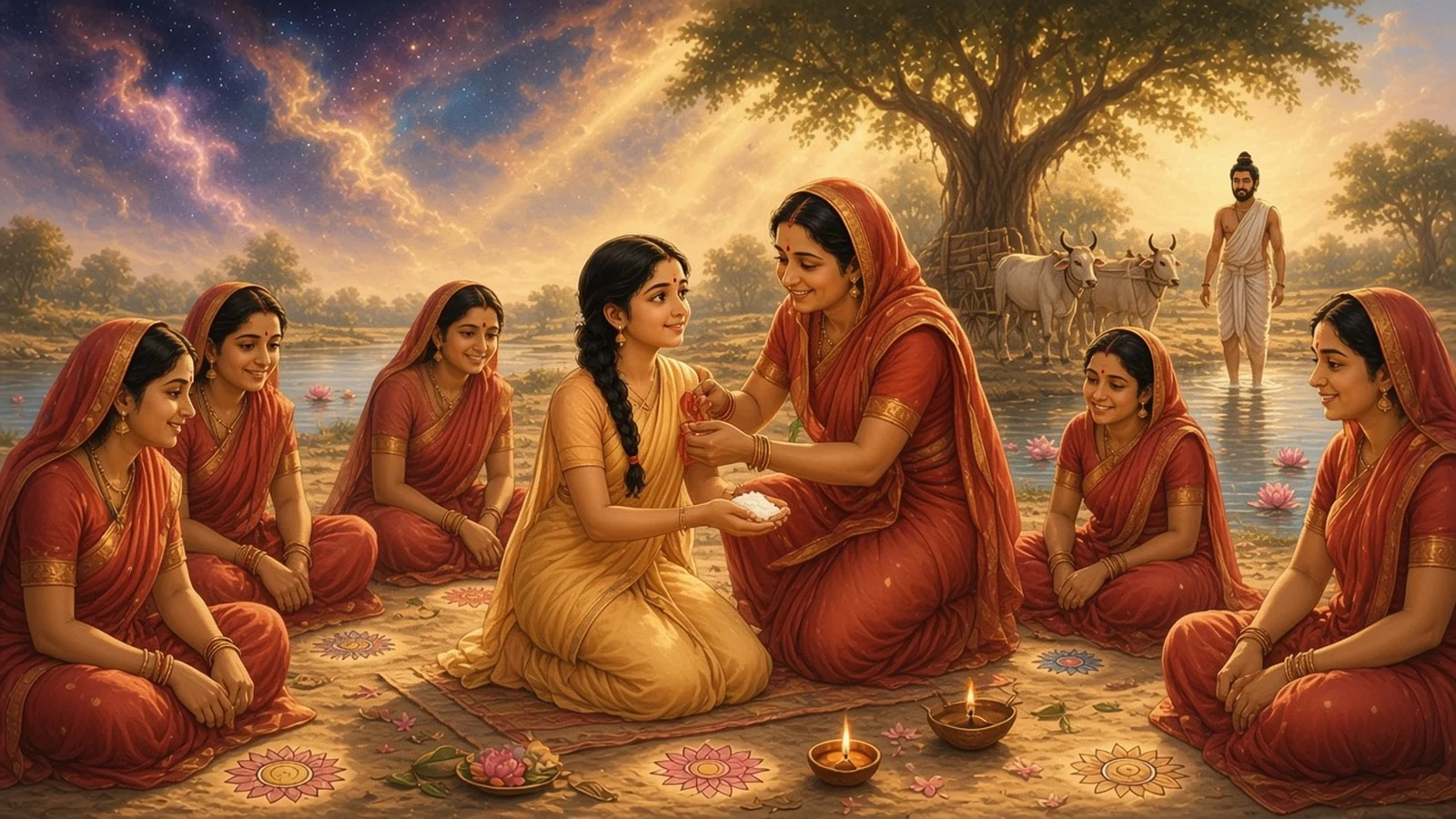
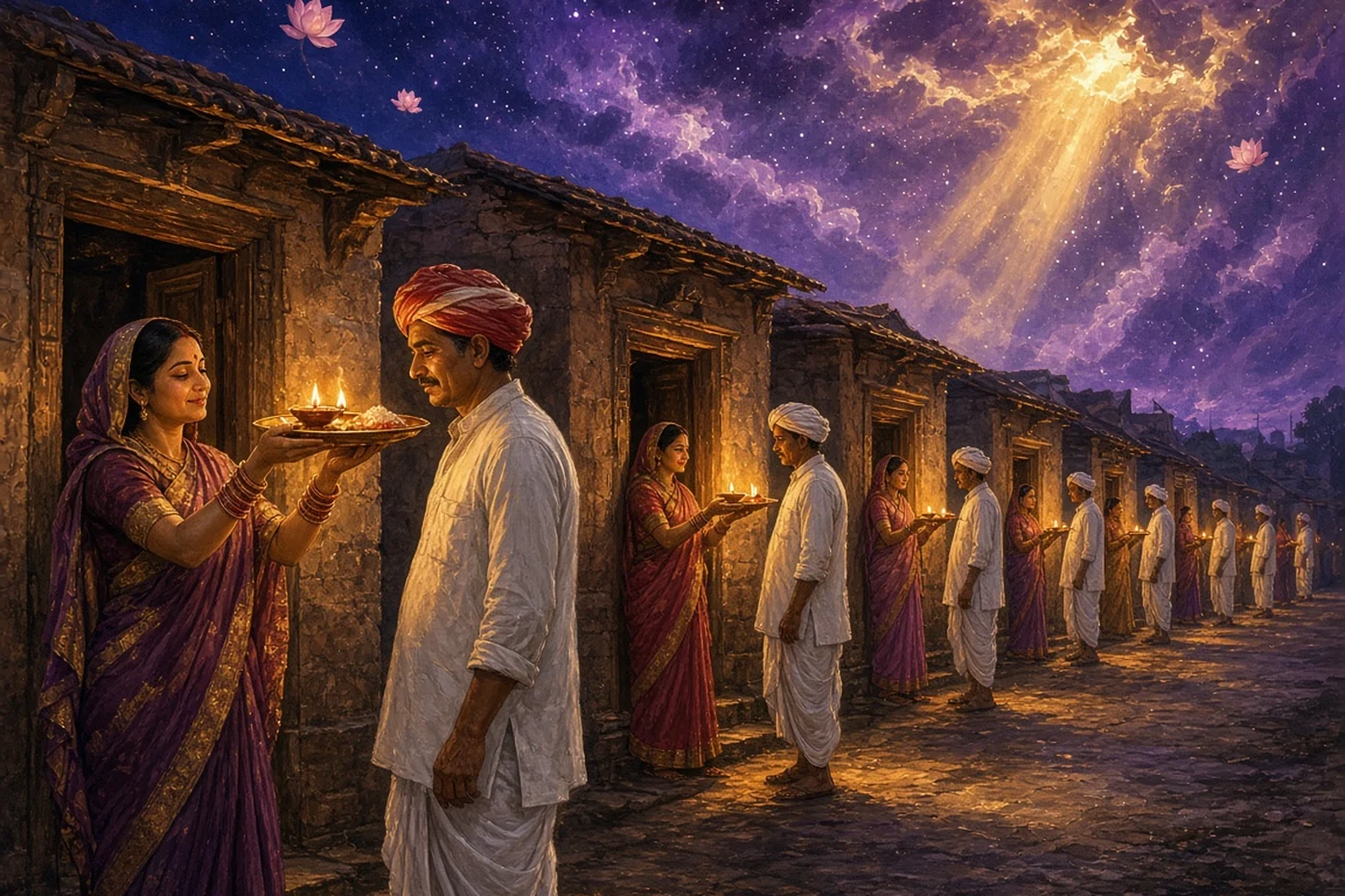
In the evening the lamps were lit all along the wall. Aaji drew a ring of rangoli round the low wooden stool, the paat, and Shankar's father sat down on it, feeling foolish in his new shirt. His mother came with the brass tray: a lamp, kunku, a few grains of rice, a sweet. She put the red mark on his forehead and waved the lamp round his face in slow circles, and then she waited.
"Well?" said Aaji from the door.
His father laughed, took out a small folded packet and laid it in the tray. The ovalni. His mother did not open it in front of them.
Then she waved the lamp over the aunt's husband too, and Aaji waved one over both her sons, and Mangal, not to be left out, waved a lamp of her own over Shankar, who stood very still.
As Jotirao Phule read it
Pune · Gulamgiri, 1873, and the farmers' movements after him · 2 min read
In 1873 a reformer of Pune, Jotirao Phule, born into the Mali caste of gardeners and growers, wrote a book called Gulamgiri, Slavery. He wrote it as a conversation. A younger man, Dhondiba, asks the questions and Jotirao answers them, and in the sixth part Dhondiba asks about Bali.
"Who was this Baliraja, whose kingdom our women keep asking for?"
Jotirao tells him of a king strong in war and fair in peace, whose land ran inland from the Konkan coast. It was shared among chiefs the people still remember, he says, though they now worship them: Jotiba in the hills by Kolhapur, a Khandoba over each of nine districts, and Mhasoba, who went round the fields to see that the tillers were treated fairly. That, says Jotirao, is why a farmer keeps a red stone of Mhasoba in a corner of his field and burns incense to it before sowing.
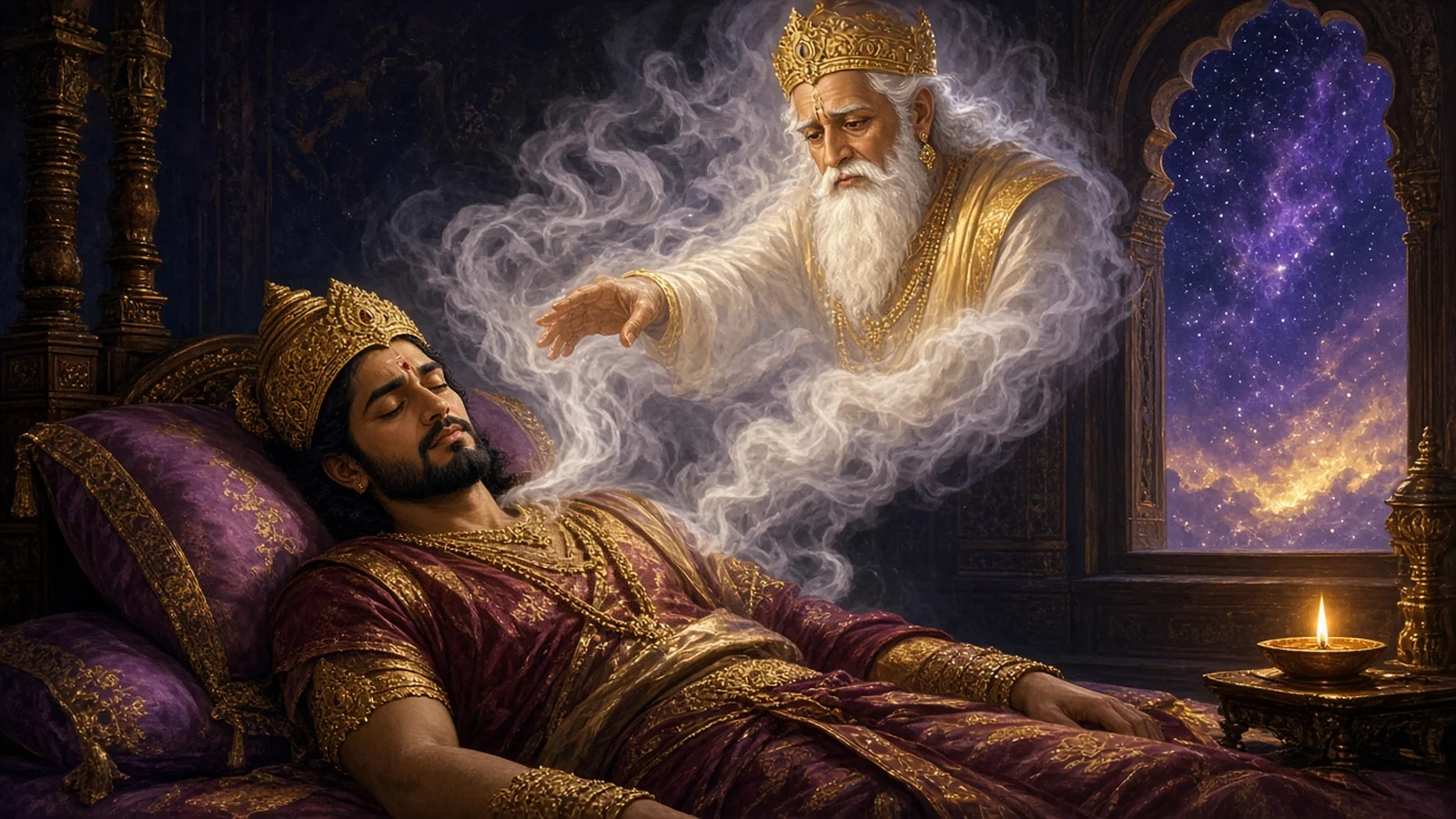
In Jotirao's telling Vamana came with an army. Bali met him, and the war went on through Bhadrapada and into Ashwin. His queen, Vindhyawati, fasted and waited for word, and when word came it was that the king had fallen. She did not outlive the news.
"And the women?" asks Dhondiba.
When the men who were left came home, Jotirao says, their wives and sisters met them at the doors with trays of two lamps, waved them round their faces and said: let the trouble go, and let Bali's kingdom come. On the first day of Kartika the sisters fed their brothers and said it again, waiting for a second Baliraja. The women, he says, have been saying it ever since.
In his preface Phule wrote the saying out in full and called it the prophecy of the old women. He read it as history, the memory of a farmers' kingdom, and he told it to farmers so they would hear their grandmothers in it. That same year he founded the Satyashodhak Samaj, the Society of Truth Seekers, which held its ceremonies without priests, and he called the country Balisthan, the land of Bali.
The name outlived him. Farmers' organisations in Maharashtra, the Shetkari Sanghatana among them, took up Bali Raja as their sign.