
Devalok ← All gods
Also calledTrivikramaUpendraUrukramaVamanamoorthyThrikkakarappanUlagalantha Perumalthe Dwarf

In short

Who is Vamana?
The dwarf, the fifth of Vishnu's ten avatars, born to Aditi as a small brahmin boy. He asked King Bali for three steps of ground and then grew until two steps covered the worlds.
Why did Vishnu become a dwarf?
To win back heaven for the gods without a war. Bali held the three worlds and refused no one who asked him for a gift, so Vishnu came to his sacrifice as a beggar.
What is Trivikrama?
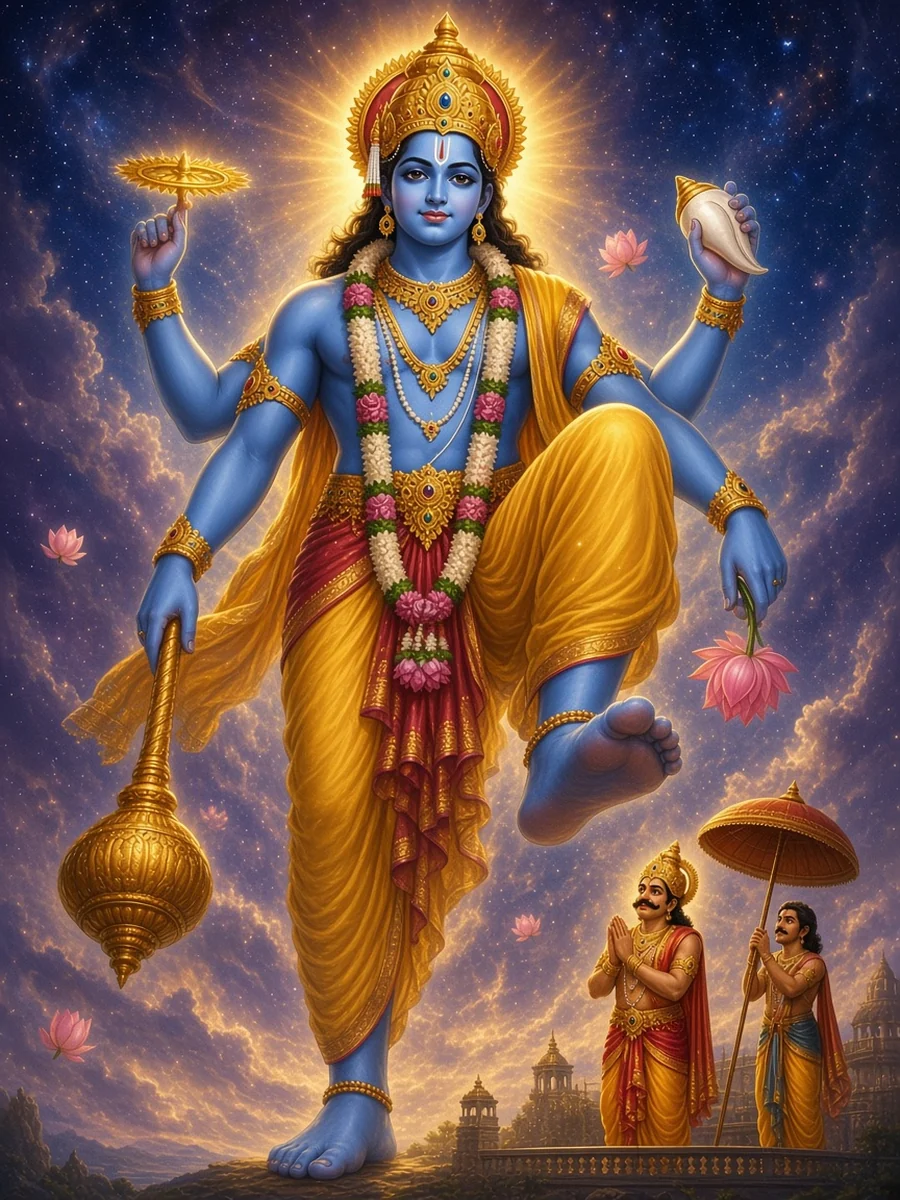
The same god in his giant form, the one who takes the three strides. In temples he stands with one leg raised high, the foot reaching for the sky.
Is Onam about Vamana?
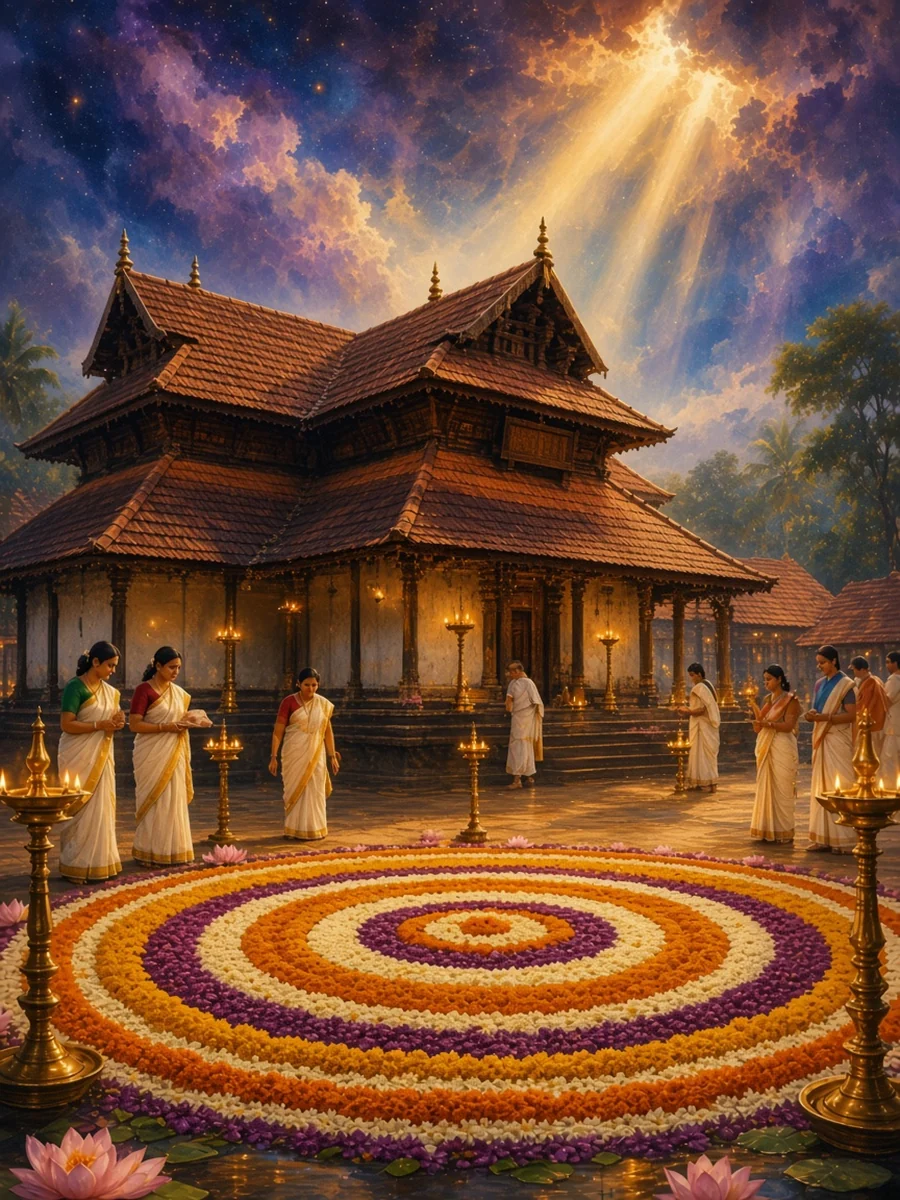
Onam is Kerala's welcome for King Mahabali, the king Vamana sent below the earth. The festival flag is raised at Thrikkakara, the temple of Vamana near Kochi.

Artwork ›

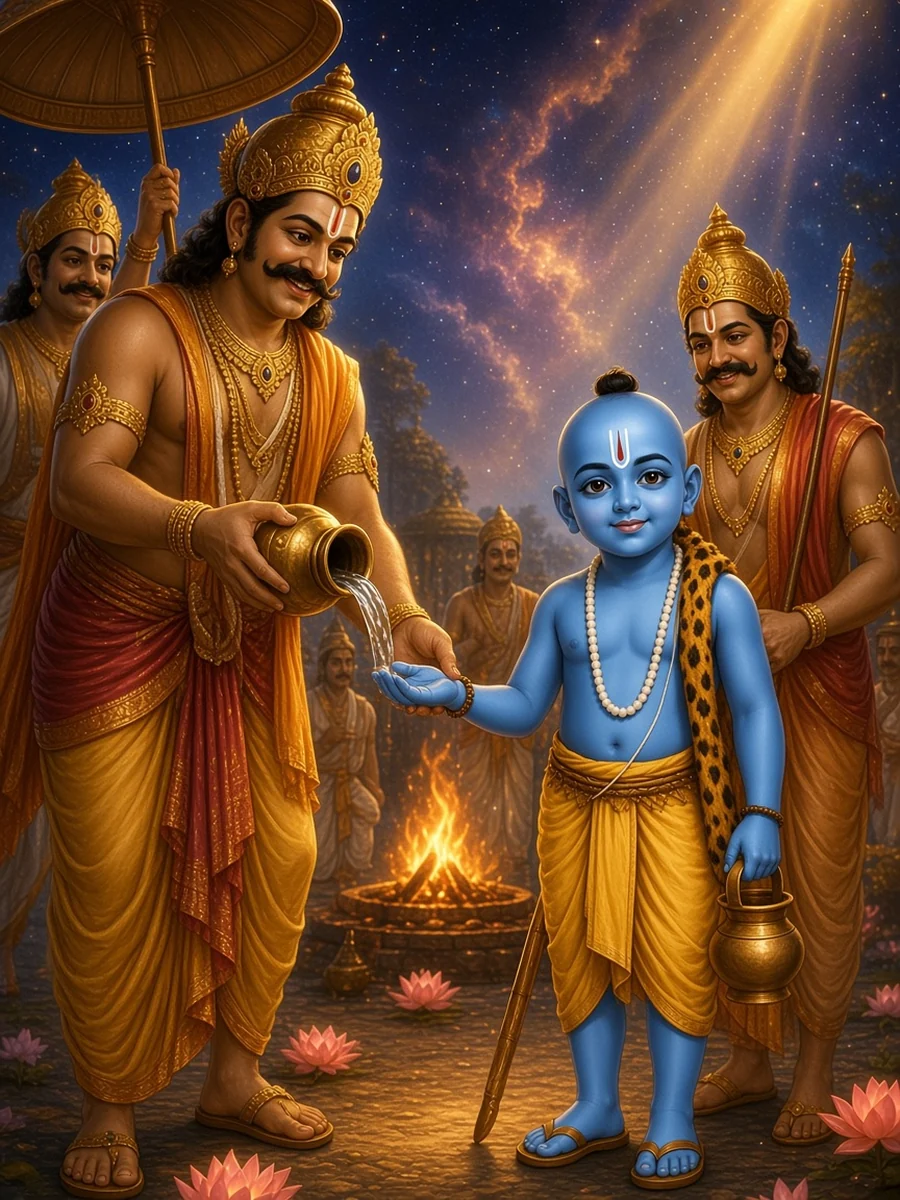
Trivikrama, who took the worlds in two strides King Bali pours the water of the gift

For kids

Just three steps, please
Big steps for a small guy

At a glance

TraditionVaishnava
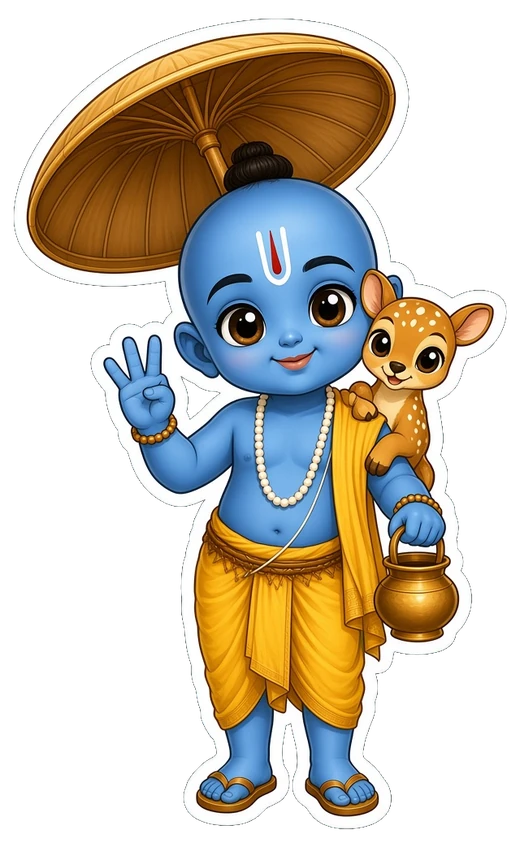
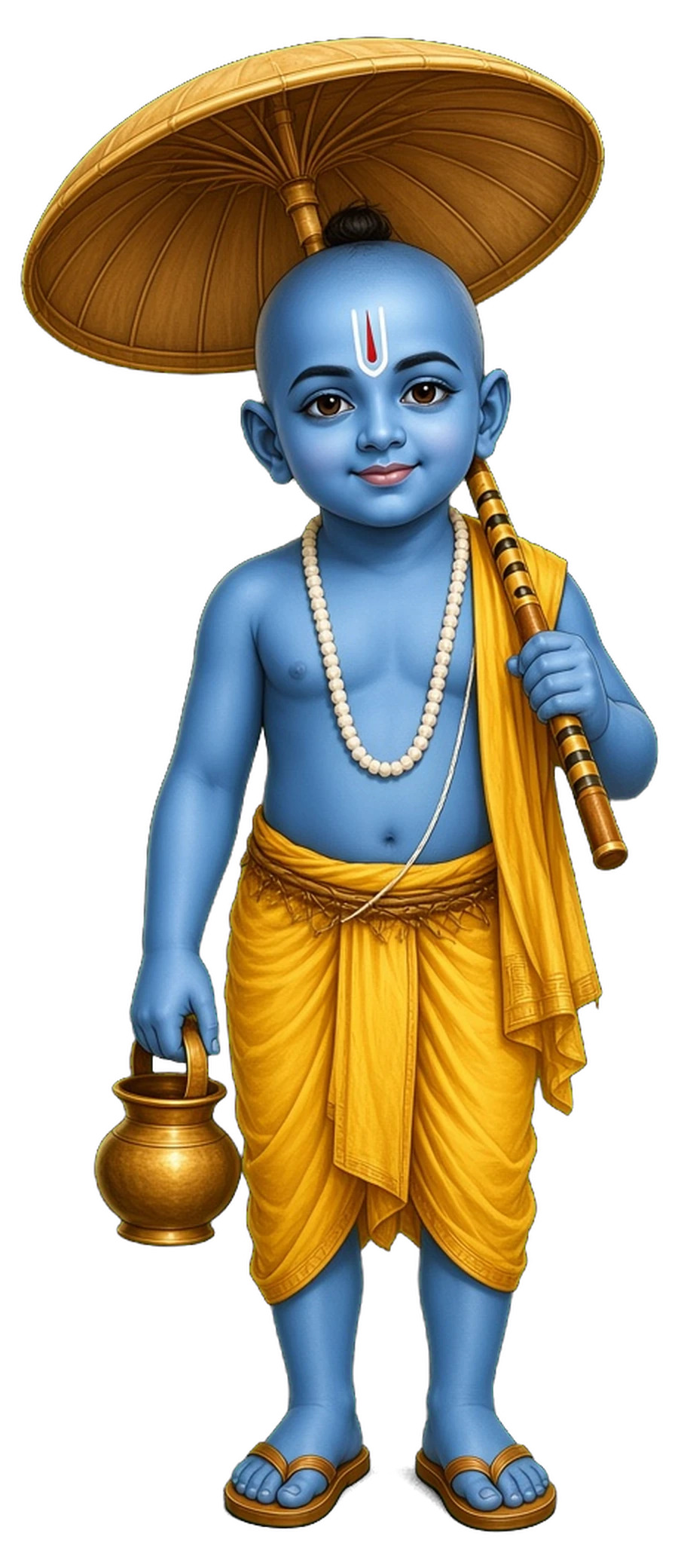
FormA small brahmin boy with a tuft of hair, a deerskin, a sacred thread and a belt of grass
In his handsAn umbrella

a water pot and a staff

Who Vamana is

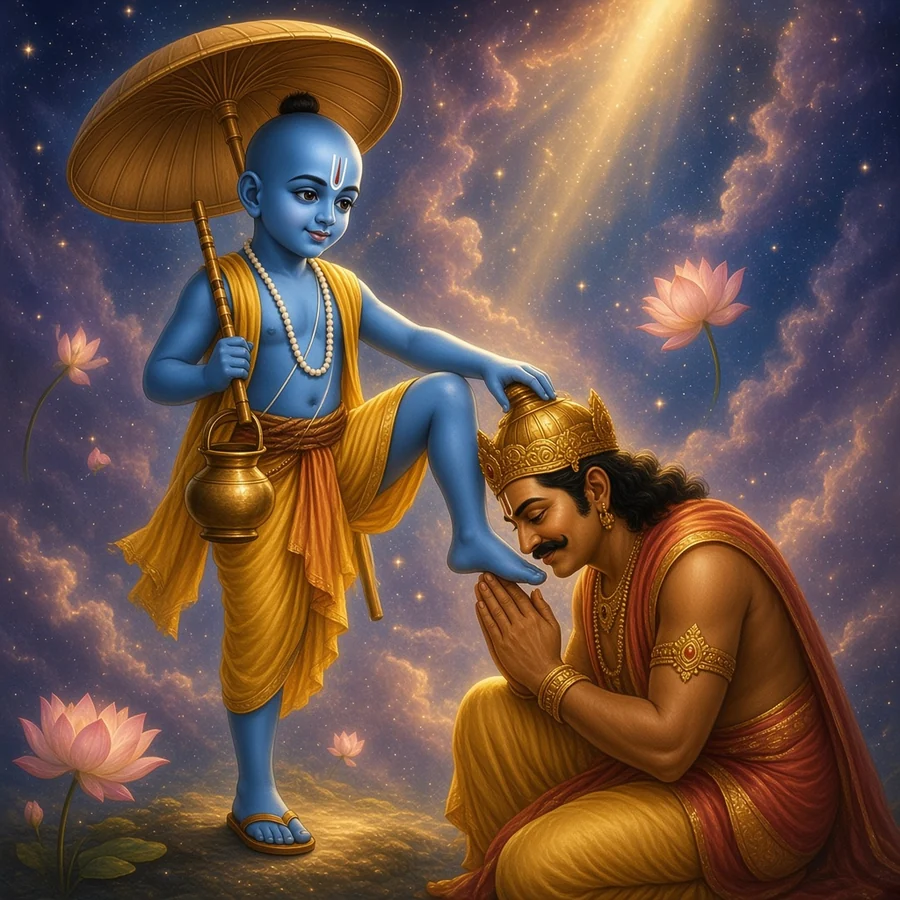
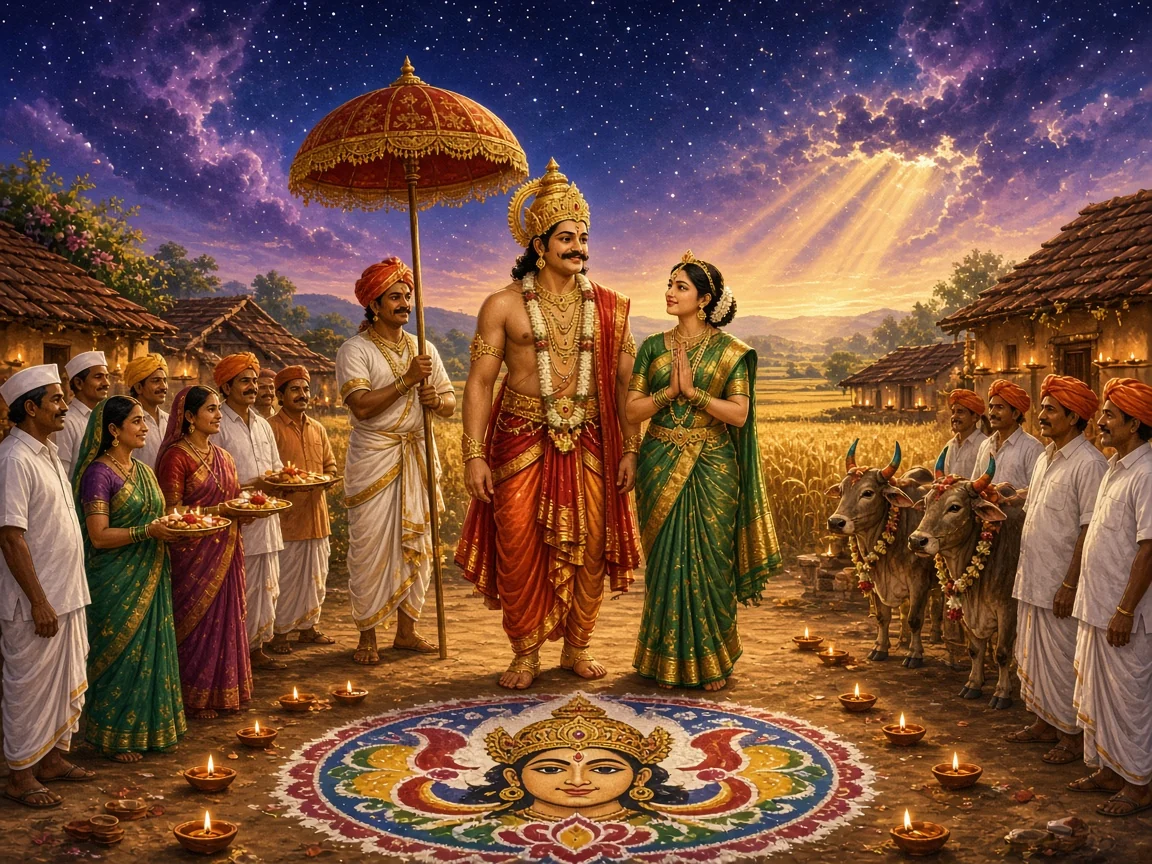
Vamana is the dwarf, the fifth of the ten avatars of Vishnu. When King Bali, the grandson of Prahlada, had taken heaven from the gods, Vishnu was born to their mother Aditi, became a small brahmin student with an umbrella and a water pot, and walked into Bali's sacrifice. He asked for three steps of ground, measured by his own feet. Bali gave them. The dwarf grew, took the earth with one step and the heavens with the second, and for the third Bali bowed his head.

That is how most people know him, and it is half of his story. The Puranas also tell how he was won: Aditi kept a vow for her beaten sons, in the Bhagavata twelve days on milk alone, and the gods brought gifts to the boy at his thread ceremony. They tell how the Asuras lost their light while he was still in the womb, and how Prahlada cursed his own grandson for laughing at him. The Vamana Purana even gives him an earlier set of three strides, against a Danava named Dhundhu.

Chalayasi vikramane balim adbhutavamana, padanakhaniirajanitajanapavana, keshava dhritavamanarupa jaya jagadisha hare: with your stride you outwit Bali, wondrous dwarf, and the water from your toenail makes the people pure; Keshava, who took the dwarf's form, victory to you, Hari, lord of the world.

So Jayadeva sang him in the Gita Govinda. The water is the river Ganga, which some Puranas say began at his raised foot.

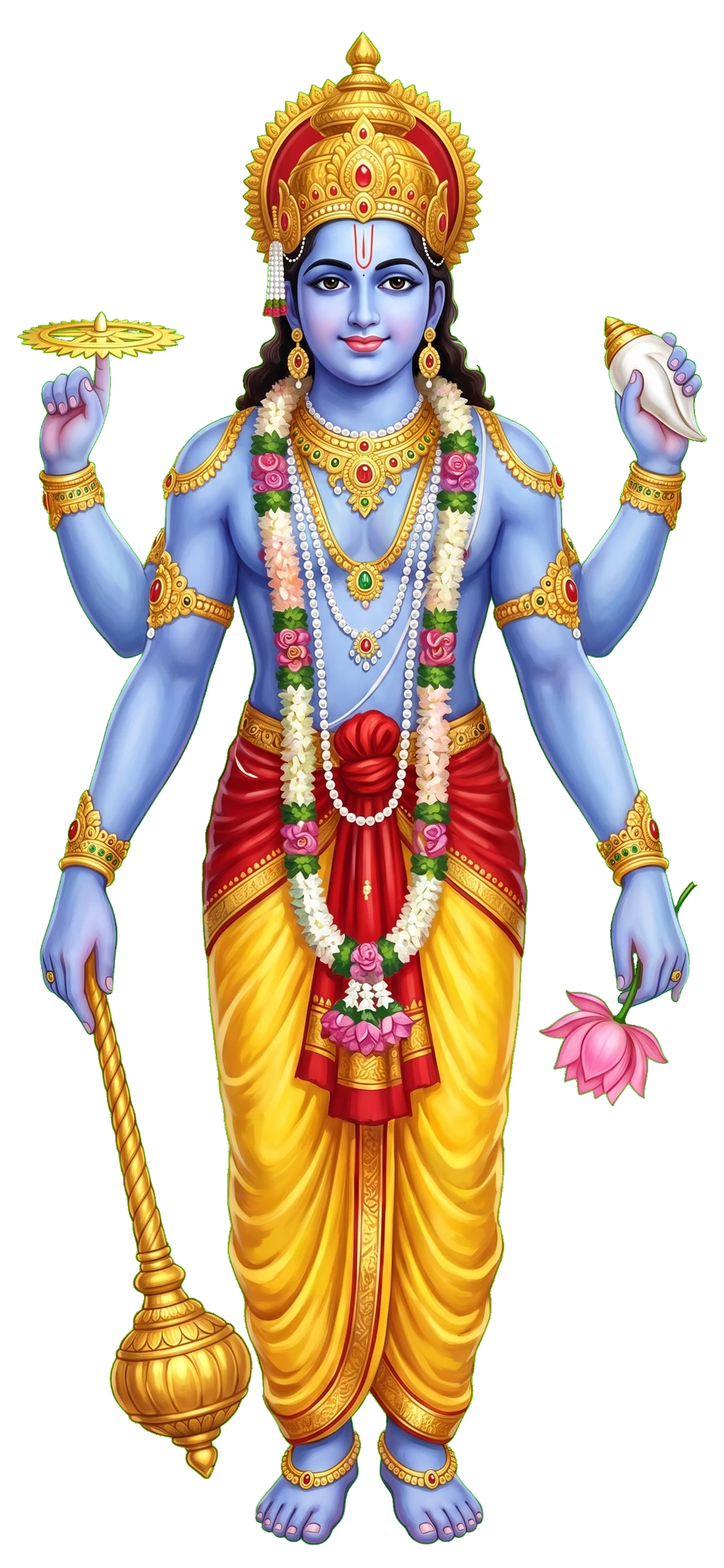
He is worshipped in two forms: the boy with the umbrella, and Trivikrama, the giant with one leg flung up towards the sky. In Kerala he is the god of Thrikkakara, the place of the holy foot, where the flag of Onam goes up; in Tamil Nadu he is Ulagalantha Perumal, the lord who measured the world, at Kanchipuram and Tirukkoyilur. The Bhagavata says he was born on the twelfth day of the bright half of Bhadrapada, and that day is kept as Vamana Jayanti.

His stories on this site: The Twelve Days of Milk, The Grandfather's Curse and The Dwarf in the River. The asking itself is told in The Dwarf Who Lay Down and The Teacher Who Said No; Bali's side, in The King Who Comes Home, The Three Nights Bali Asked For and The Song King Bali Sent; the Vedic strides, in The Three Strides.
Before the Puranas

The Vedic roots of Vamana

The Rigveda knows the three strides but not the dwarf. Its Vishnu has one great deed: he paces out the earth, the air and the sky in three steps, the third too high for anyone to see, to make room for people to live. There is no Bali, no begging and no small body. The dwarf appears first in the books of ritual, and the Puranas joined him to the strides and gave the god a mother, Aditi.

The Shatapatha Brahmana (1.2.5) has the turn. The Asuras are dividing the earth with ox-hides, and the gods, with Vishnu at their head, ask for a share. "As much as this Vishnu lies on," the Asuras say, and Vishnu is a dwarf, and he is the sacrifice itself; on that small plot the gods worship and win the whole earth. The Aitareya Brahmana (6.15) tells the bargain as three strides across the worlds, the Vedas and speech. The Dwarf Who Lay Down tells the first and names the second; the Rigveda's strides are in The Three Strides.

The epics make the dwarf a son of Aditi and Kashyapa, the younger brother of Indra, and set Bali against him. The Ramayana has Vishvamitra show Rama the hermitage where Vishnu lived before he went to Bali, the Mahabharata tells the asking, and the Harivamsha tells it twice. The Puranas tell it in full: the Bhagavata in its eighth book, the Matsya in three chapters, the Kurma, Padma, Skanda and others in their own ways, and the Vamana Purana, which carries his name, tells it twice and adds the Danava Dhundhu.

Stone shows how early he was worshipped. Images survive from the Gupta centuries, at Marhia near Jabalpur and at Deogarh, and the great Trivikrama reliefs of Badami and Mamallapuram show the giant with one leg flung to the sky. In the south he became a temple god in his own right: Ulagalantha Perumal at Kanchipuram and Tirukkoyilur, and at Thrikkakara in Kerala, whose records hold the earliest mention of Onam, from the ninth century.

See how the Vedic gods became the Puranic ones →

Festivals of Vamana

Related gods