Festival · The morning after Lakshmi Puja, when the king Vamana sent below comes home to see his fields
Bali Pratipada (Bali Padyami)
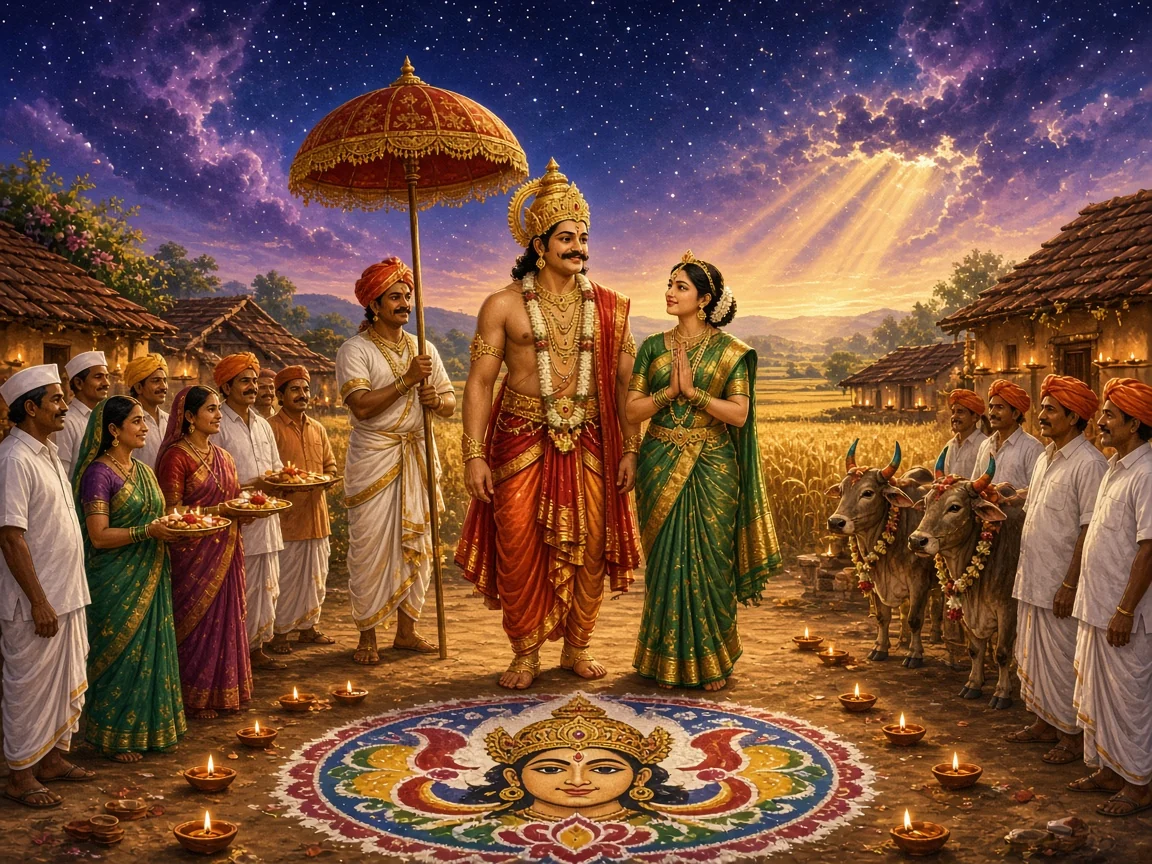
Bali Pratipada is the first day of Kartika's bright half, the morning after the Lakshmi Puja of Diwali, when King Bali, sent below the earth by Vamana, is welcomed back to the land he once ruled. Maharashtra keeps it as Diwali Padwa, with Bali drawn in five colours, the farmer's lamp buried in the field and the wife's lamp waved over her husband. Karnataka keeps it as Bali Padyami, with a cow-dung Bali in a cow-dung fort, the cattle worshipped, and on the Tulu coast a lit pole in the paddy from which Balindra is called home.
When is Bali Pratipada (Bali Padyami) in 2027? Bali Pratipada is Saturday 30 October 2027. In 2028: Wednesday 18 October 2028. The first day of the bright half of Kartika, the day after the Lakshmi Puja of Diwali, in October or November.
Also calledBali PadyamiBalipratipadaDiwali PadwaPadwaPadvaBali PadvaVirapratipadaDyutapratipadaBalindra PujeBaliraja Padwa
In short
What is Bali Pratipada?
The day after the Lakshmi Puja of Diwali, the first of Kartika's bright half, when King Bali, sent below the earth by Vamana, is welcomed back to the land he ruled. Maharashtra calls it Padwa, Karnataka Bali Padyami.
When is Bali Pratipada in 2027?
Saturday 30 October 2027, by Drik Panchang; in 2028 it falls on Wednesday 18 October. It is the same day as Govardhan Puja and the Gujarati new year.
What does "Ida pida talo, Baliche rajya yevo" mean?
May troubles and sickness go, and may Bali's kingdom come. Women in Maharashtra say it on Padwa as they wave the lamp over the men of the family.
What is Balindra Puje?
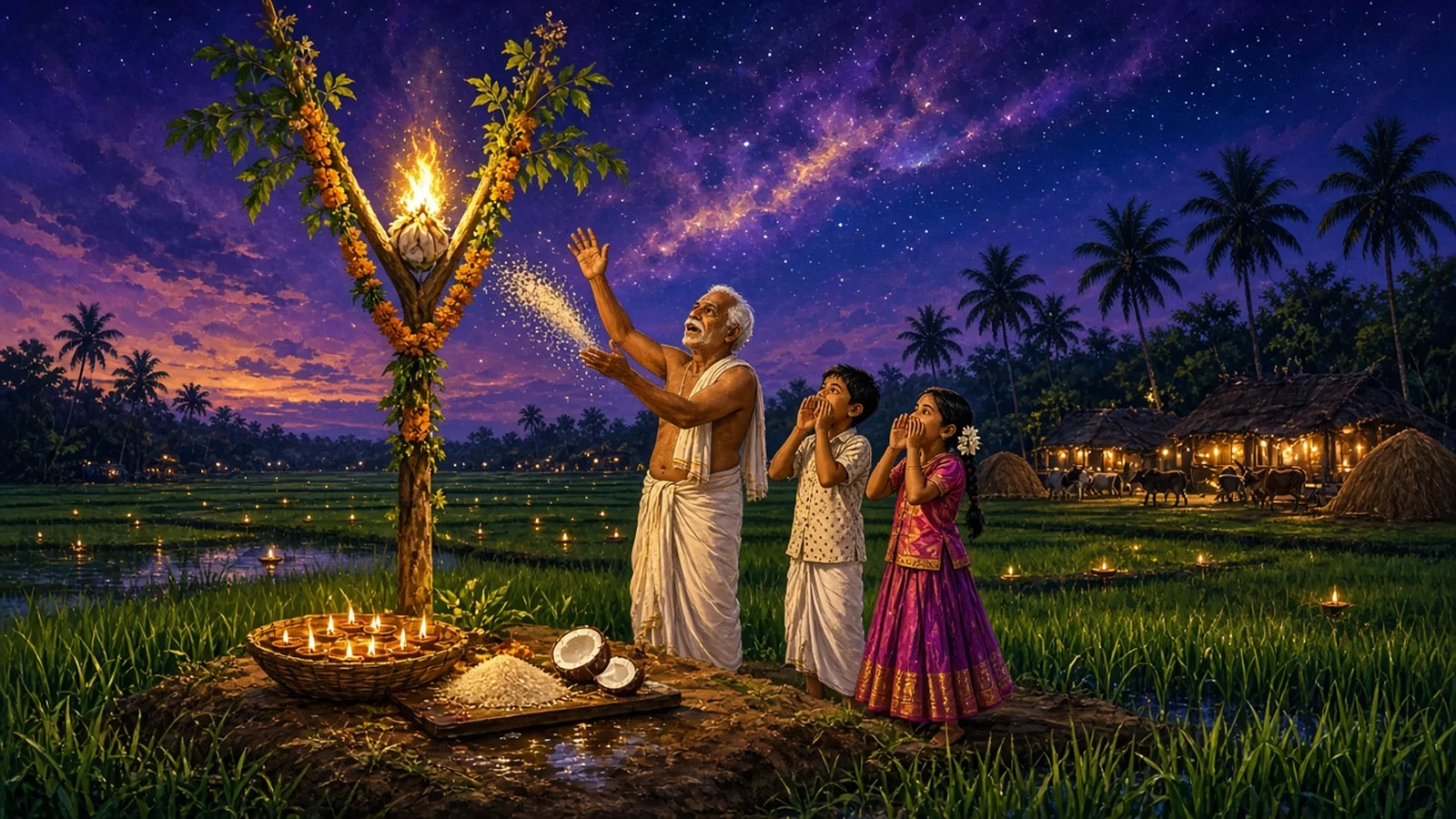
Bali's worship on the Tulu coast. A forked pole is planted in the paddy field and lit at dusk, and the head of the house calls Balindra home three times with rice and cries of koo.
What is the ovalni?
The husband's gift on Padwa. After the wife's aukshan, when she waves the lamp round his face, he puts it in her tray.
Next, in 2027Saturday 30 October 2027
Prime godVamana, the dwarf
with 4 more
WhereMaharashtra and Karnataka (the plains, the Malnad and the Tulu coast of Udupi and Dakshina Kannada); the same day is Govardhan Puja in the north and the new year in Gujarat
How longOne day, the fourth of Diwali's five; the Tulu coast's Tudar Parba runs three days and ends on it
The first day of the bright half of Kartika, the day after the Lakshmi Puja of Diwali, in October or November
Why it is kept
Bali Pratipada is the morning after the Lakshmi Puja of Diwali, the first day of Kartika's bright half, and it belongs to a king who lost. King Bali gave the dwarf Vamana three steps of ground, lost the three worlds in two of them and bowed his head for the third, and this is the day he is allowed back to the earth he ruled. Maharashtra calls it Padwa or Balipratipada, Karnataka calls it Bali Padyami, and the Tulu coast calls the king Balindra and lights him home from the paddy fields. In the north the same day is Govardhan Puja, and in Gujarat it is the new year.
Bali is welcomed as a guest, not mourned as an enemy. The Puranas say Vishnu, pleased with a king who kept his word when it cost him everything, sent him below instead of destroying him and gave him a day among his people; the Marathi tellings add that the god keeps Bali's door himself. The Diwali page and the Lore's The Three Nights Bali Asked For tell the bargain for his nights of lamps, The Dwarf Who Lay Down the asking, and The Three Strides the strides.
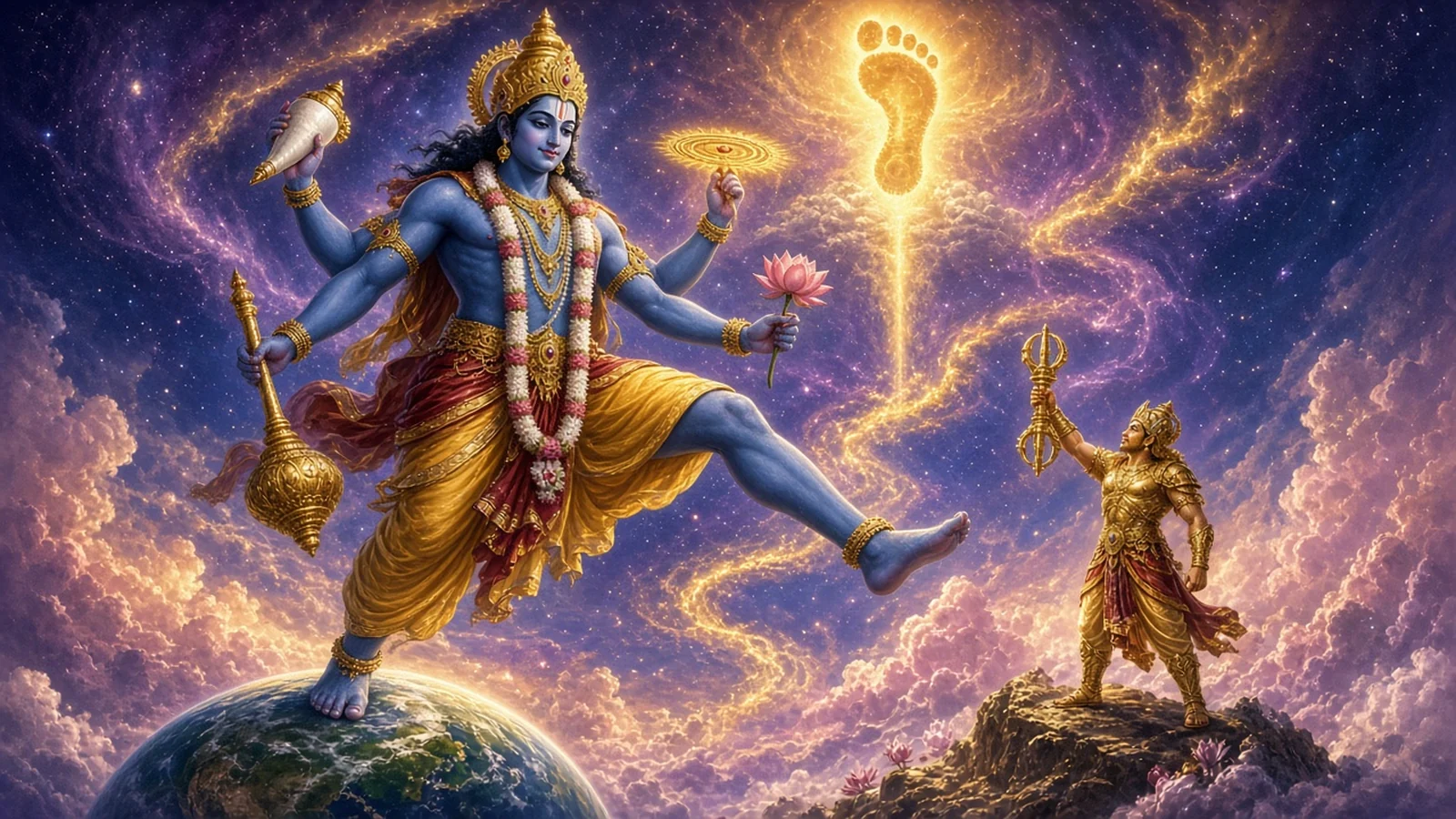
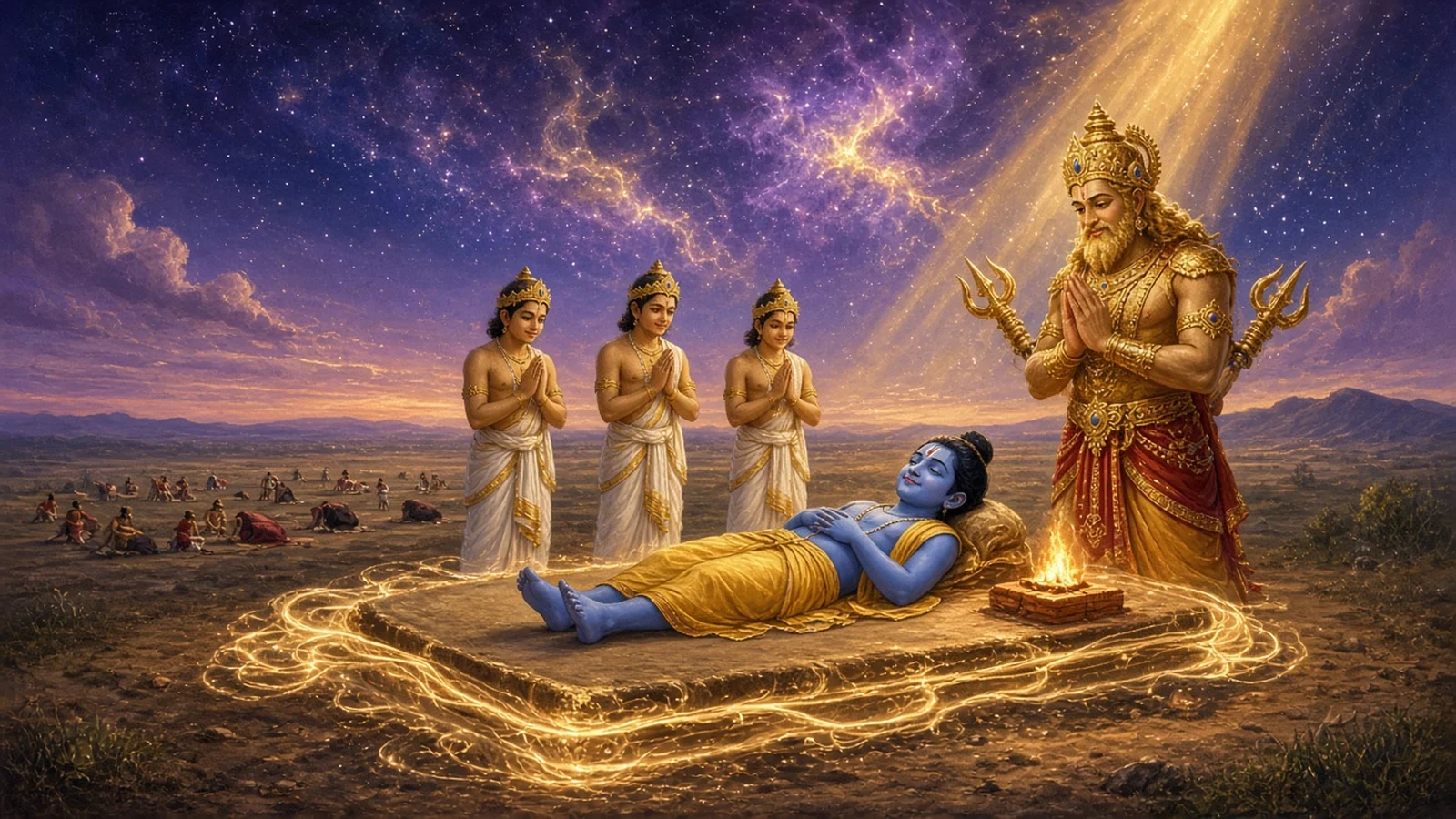
The third step: Vamana rests his small foot on the bowed head of King Bali as a blessing
The farming families remember him as a king of plenty, and in Marathi a farmer is still called Baliraja. The blessing the women say, "Ida pida talo, Baliche rajya yevo", asks for troubles and sickness to go and Bali's kingdom to come. In 1873 the reformer Jotirao Phule read that line as the memory of a farmers' kingdom and made it a call for justice, a reading the Lore tells beside the household's own in The King the Farmers Call Back. Maharashtra also counts the day as the half among its three and a half most auspicious days, the whole ones being Gudi Padwa, Akshaya Tritiya and Dussehra, and its merchants open their new books on it.
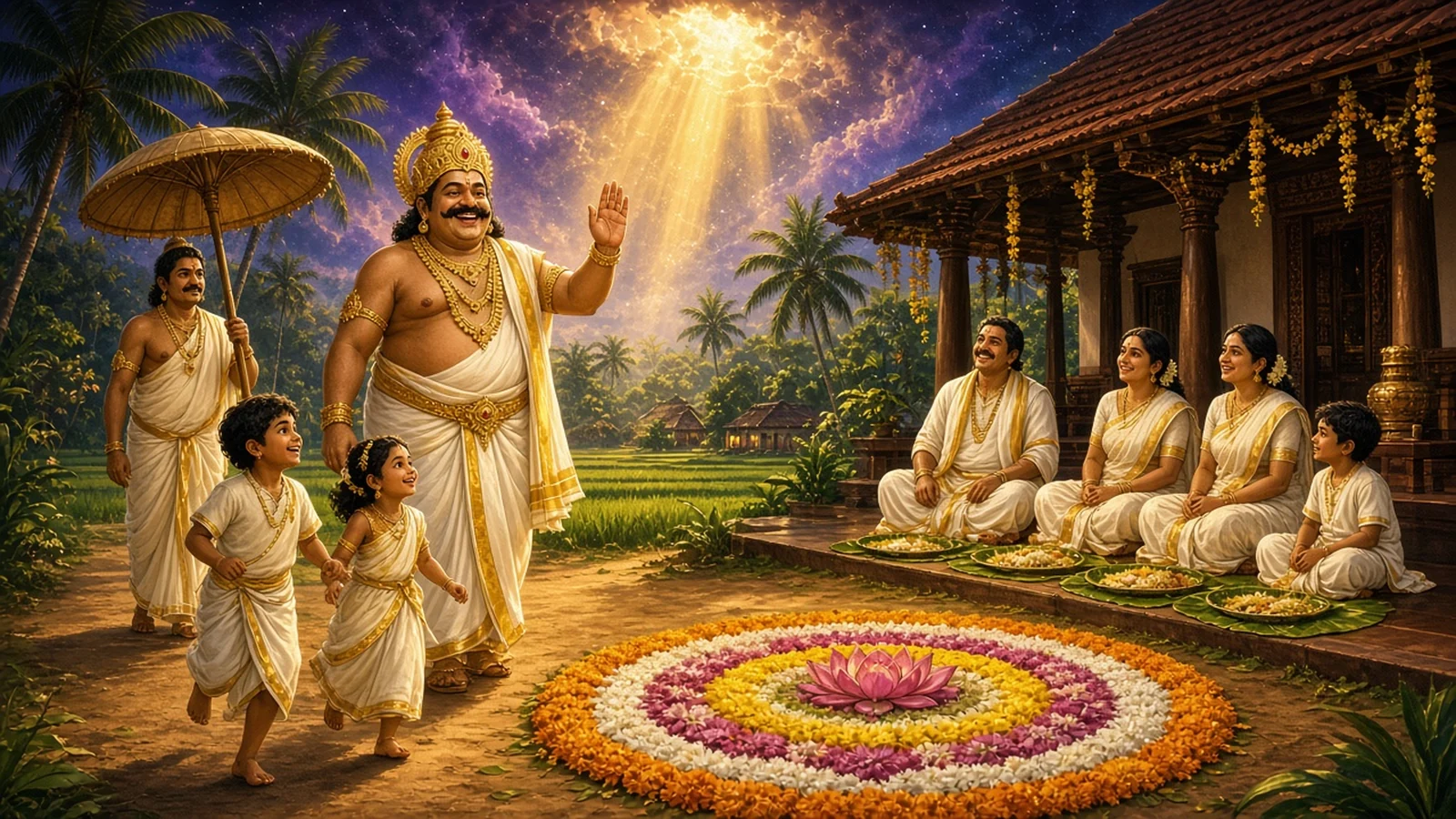
King Bali walks through ripe fields among the farmers who still call him Baliraja
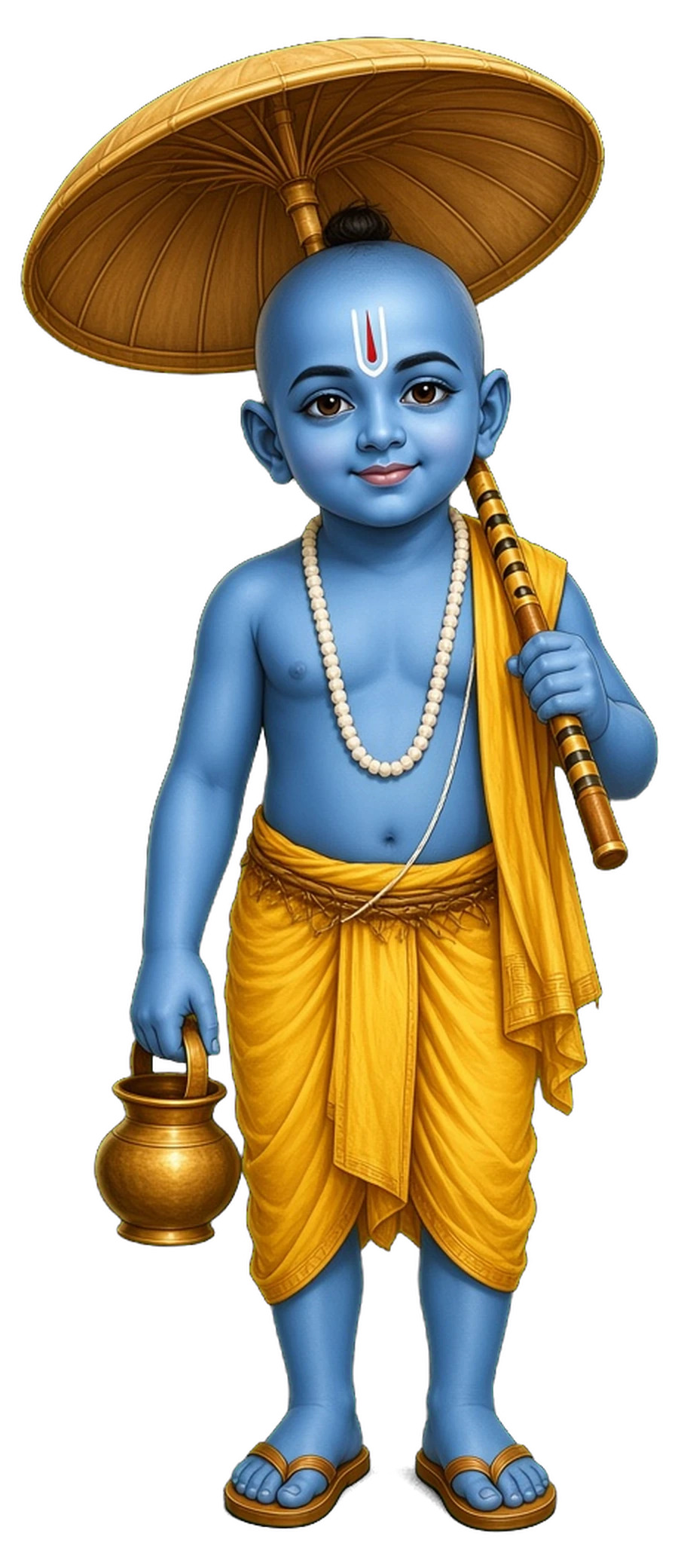
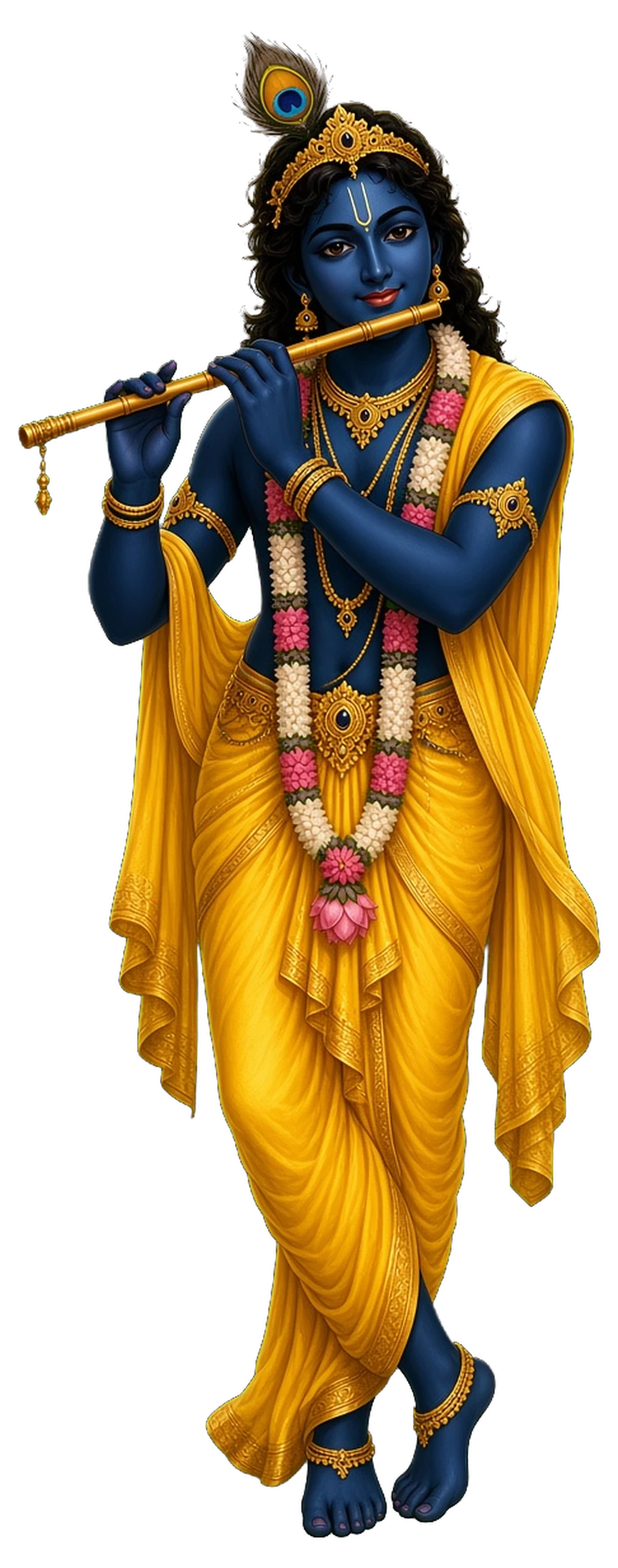
The brahmin boy, Vishnu's fifth avatar, who asked Bali for three steps of ground, took the worlds in two and set the third on the king's bowed head. The day is his gift to the king he sent below.
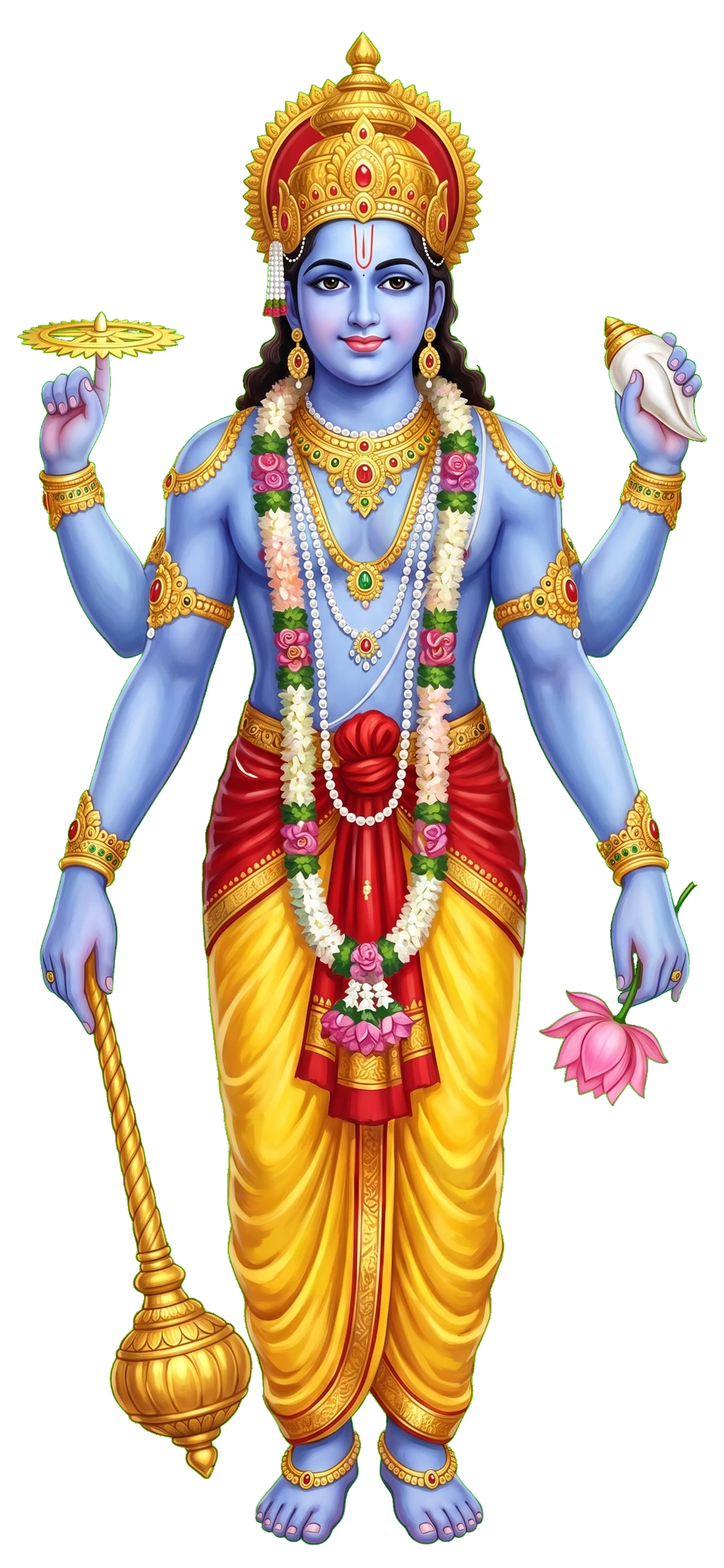
Pleased with a king who kept his word when it cost him everything, he gave Bali a kingdom below the earth and, the Marathi tellings say, stands at its door himself.
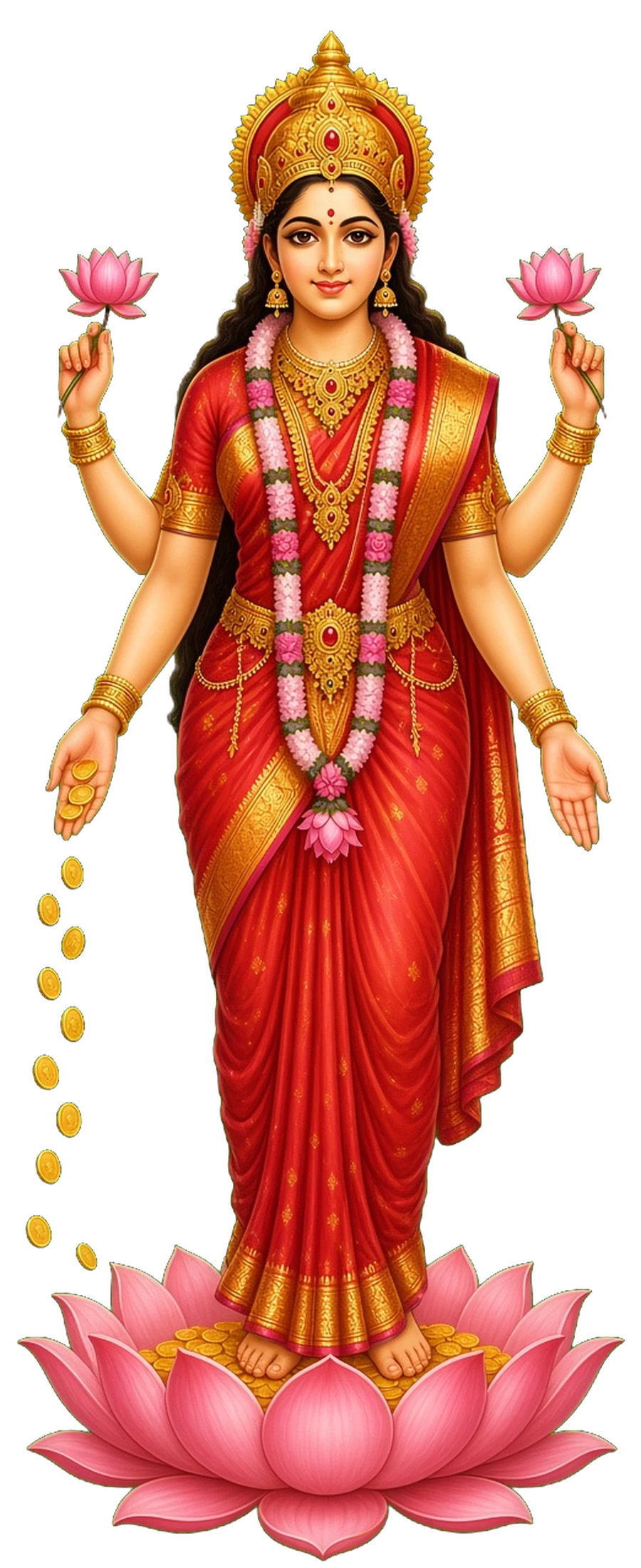
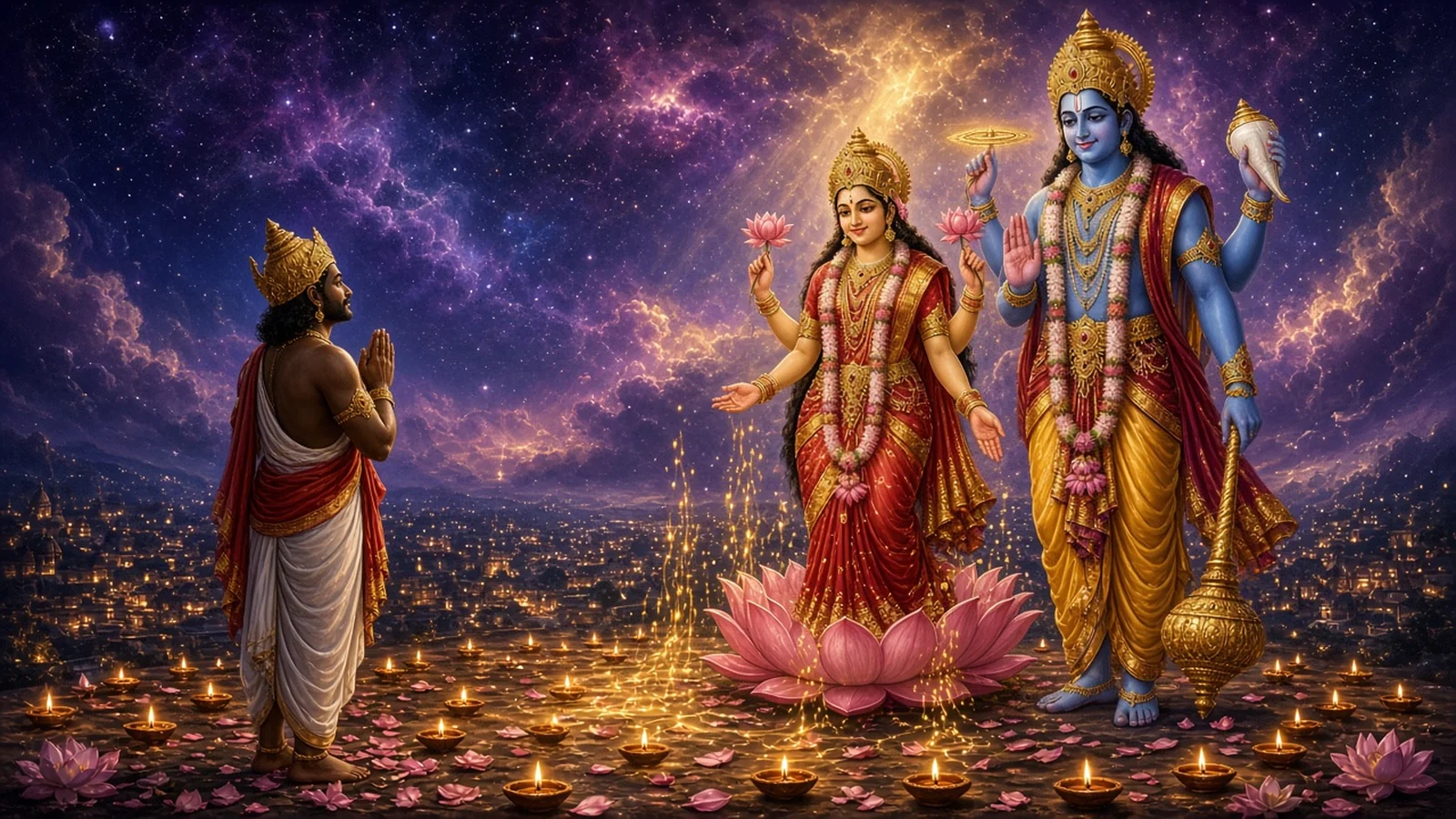
The goddess of the night before. Her new-moon puja opens the new account books the merchants worship this morning, and Bali's boon was that she would stay in the houses that lit lamps for him.
B
Bali (Mahabali)
The asura king, grandson of Prahlada, who comes home for the day. Maharashtra calls him Baliraja and Karnataka Balindra; he is drawn in five colours beside his queen Vindhyavali, shaped in cow dung, or called from a burning pole in the paddy.
The god of the same day in the north, where Govardhan Puja remembers him lifting the hill over the cowherds.
Padwa, from dawn to dusk
1
The morning
Kartika shukla pratipada, from dawn · Saturday 30 October 2027
Abhyanga snanBali pujaVahi pujanGopuje
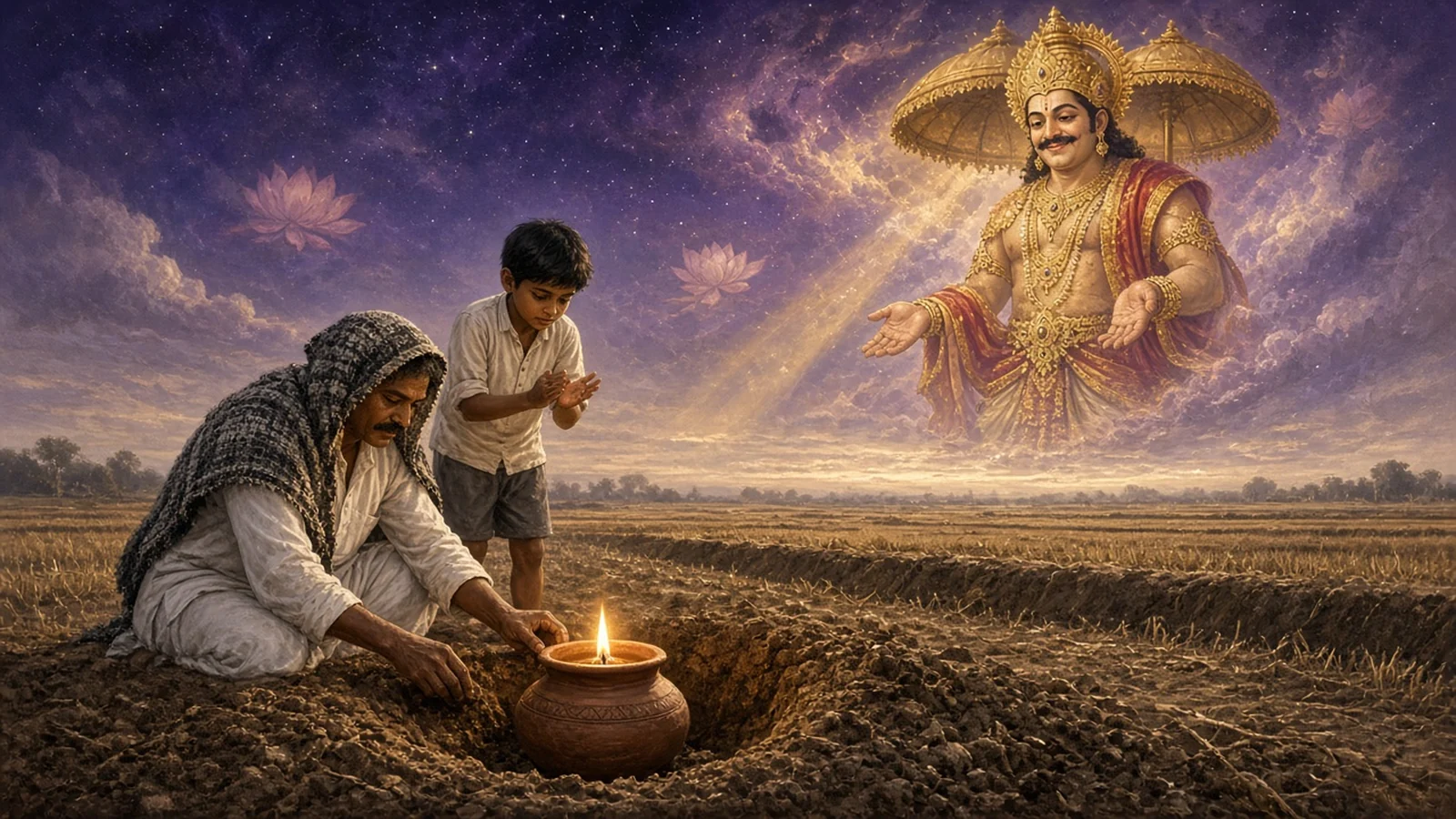
Before sunrise the oil bath, and in Maharashtra the farmer's dough lamp, carried burning in a pot and buried on the bund of his field. Bali and Vindhyavali are drawn in coloured powder or Bali is shaped in cow dung, worshipped, and blessed with the women's line. The bullocks and cows are bathed, their horns painted and their necks garlanded, the plough scrubbed and marked, and in the Malnad the cows are fed before the family eats. Merchants open and worship the year's new books. In the north the same morning belongs to Govardhan and the Annakut.
At dawn a farmer buries the burning dough lamp in its pot on the bund of his field
Kartika shukla pratipada, at dusk · Saturday 30 October 2027
AukshanOvalniBalindra PujeBalindra LeppuGodhuli
In Maharashtra the wife seats her husband inside a ring of rangoli for the aukshan, and he answers with his gift. In the Karnataka plains the cow-dung Bali in his fort is worshipped at godhuli, the hour the herds come home, and in the Malnad lamps are carried out to the fields. On the Tulu coast the pole on the paddy bund is lit and the head of each farming house calls Balindra home, then shows the cattle the lamps.
On the Tulu coast the lit pole on the paddy bund, and the head of the house calling Balindra home
The half day among the three and a half most auspicious days of the Marathi year. The farmer's dough lamp in the field, Bali and Vindhyavali in five colours or Bali in cow dung, sometimes on horseback, the blessing "Ida pida talo, Baliche rajya yevo", the wife's aukshan and the husband's ovalni, the merchants' new books, and a newly married couple's first Padwa at the bride's parents' home.
The Karnataka plains and the MalnadBali Padyami
A fort of fresh cow dung by the tulasi platform with Balindra inside and a dung Ganapati at its gate; the cows washed, garlanded and fed first; worship at godhuli; in the Malnad, lamps carried to the fields and the antige pintige singers at the doors for three nights.
The Tulu coastBalindra Puje, the last day of Tudar Parba
A forked pole of haale wood on the paddy bund, dressed with flowers and lit at the top; lamps on the threshold, the cowshed, the manure heap and the straw stacks; the head of the house calls Balindra three times with rice and cries of koo, then takes the lamps to the cattle. No priest takes part.
GujaratBestu Varas
The same day is the Gujarati new year, the first day of the Vikram Samvat year.
KeralaOnam, in another season
Kerala welcomes the same king, as Mahabali, at Onam in the month of Chingam rather than on this day; the Onam page tells it.
Farming familiesBaliraja's people
The day is theirs first. The lamp in the field, the cattle washed and painted, the tools scrubbed, the dung Bali at the door and, on the Tulu coast, the call over the paddy made by the head of the house. Jotirao Phule and the farmers' movements after him read Bali as the farmers' own king.
MerchantsThe new books
Traders in Maharashtra worship their new account books with turmeric, kunku, sandal paste, flowers and rice and begin the year's accounts; in Gujarat the new year itself begins.
Married couplesPadwa
The wife waves the lamp round her husband's face and he gives her the ovalni. The newly married keep their first Padwa at the bride's parents' home, where the son-in-law is given gifts.
How it is kept
In Maharashtra the day begins before dawn with an oil bath. The farmer, a coarse wool blanket over his head, carries a dough lamp burning in a pot to his field and buries it in the bund. At home the women draw Bali and his queen Vindhyavali in five colours on the floor, or shape Bali in cow dung, and the bullocks are washed and their horns painted. Merchants worship their new account books with turmeric, kunku and flowers. In the evening the wife seats her husband on a low stool ringed with rangoli and waves the lamp round his face, the aukshan, and he puts a gift, the ovalni, in her tray. A newly married couple keeps its first Padwa at the bride's parents' home.
Padwa evening: the wife waves the lamp round her husband's face inside a ring of rangoli
In the Karnataka plains Bali is built of fresh cow dung inside a cow-dung fort by the tulasi platform, with a little Ganapati of dung to guard the gate, and the family worships him at godhuli, when the cows come home. In the Malnad the cattle come first: the shed is washed, the cows bathed, garlanded and given a share of the festival food, and lamps go out to the fields at dusk. On the Tulu coast, at the end of Tudar Parba, each farming household plants a forked pole on the bund of its paddy field, lights it, sets lamps on the threshold, the cowshed and the straw stacks, and the head of the house calls Balindra home three times with rice and cries of koo. The Lore tells that evening in The Lamps on Balindra's Pole.
A cow-dung Bali in his little cow-dung fort by the tulasi, and the cattle garlanded at godhuli
In the old texts
The binding of Bali is old. The grammarian Patanjali, around the second century BCE, uses "Balim bandhayati", he has Bali bound, as an example in his Mahabhashya, which the historian P. V. Kane took as a sign the story was already acted. The Skanda and Padma Puranas give the day its meaning, the Skanda through Bali's boon of lamps and the Padma through the dice game of Shiva and Parvati and the painting of Bali in five colours; both are told in The Three Nights Bali Asked For. The Bhavishyottara Purana, as Kane sums it up, asks for fruit and food to be offered to Bali and for plays to be staged, and the later Dharmasindhu prescribes the oil bath and the painted Bali with his wife.
An old grammarian with a palm-leaf book while village players act the story of King Bali
Beside the books stand the songs: the Marathi women's blessing at the door, the Tulu paddana that calls Balindra with a list of things that cannot happen, and the Sanskrit verse Kannada households say to Bali as Virochana's son and the Indra to come. Kerala sings the same king home in another season, at Onam.
Where this page comes from. Written by Devalok from Bali Pratipada as the farming households, merchants and families of Maharashtra and Karnataka keep it and as Wikipedia, Marathi Wikipedia, Lokmat, the Maharashtra Times, Shubh Darshika, Tarini, The News Minute, News18 Kannada, News Karnataka, Tulunada Mahathme, Tirumala Tirupati Online, malenadu.com and Drik Panchang record it, with Jotirao Phule's Gulamgiri and Gail Omvedt's writing on it, as recorded in the Devalok Lore. Our own words throughout.