A house in Mathura
Mathura · from the Dashami meal to the Dvadashi parana · 3 min read
Amma began the fast the evening before, the way her mother had.
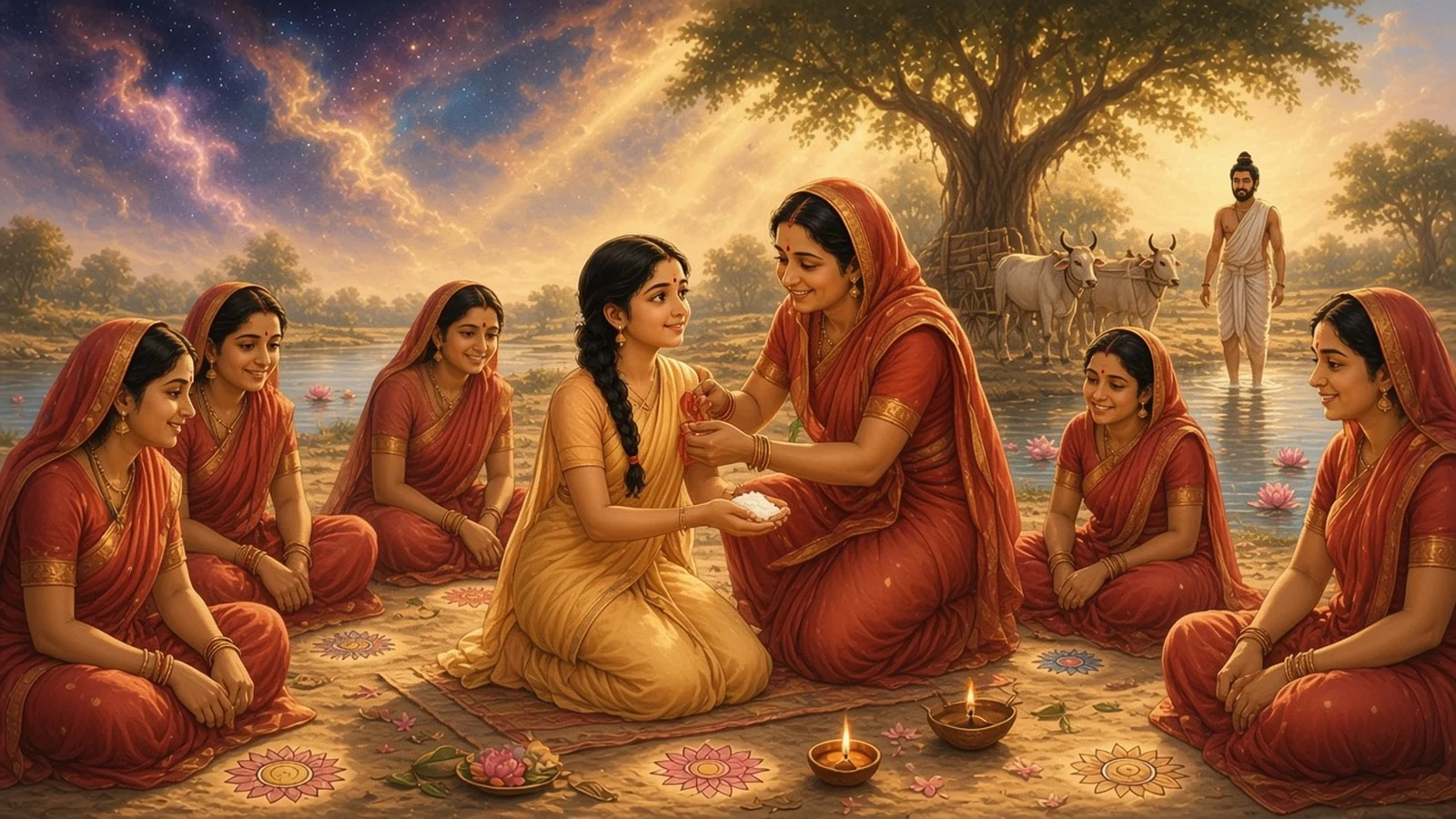
On the Dashami she ate early, before the light went, one plate of dal and roti and no rice, and when the plate was washed she said, "That is all until the day after tomorrow." Her son's wife, Sunita, who was keeping it for the second year, ate with her and said nothing, because the first year she had said a great deal and drunk a glass of water by four o'clock.
The matkas had come up from the potters' lane that afternoon, six of them, round and red and still smelling of the kiln. Amma had the boy fill them and set them in the courtyard under a wet cloth. Beside them stood a stack of palm-leaf fans, two umbrellas and a sack of wheat.
"Who are those for?" the boy asked.
"For whoever is thirsty tomorrow," said Amma. "Which in Mathura in Jyeshtha is everyone."
She woke before the sun. She bathed, and in the little shrine she bathed Thakurji too, in milk and curd and honey and ghee and sugar, the five nectars, and dried him and dressed him and put tulsi leaves at his feet. Then she set a small fan beside him, because it was going to be hot for him as well.
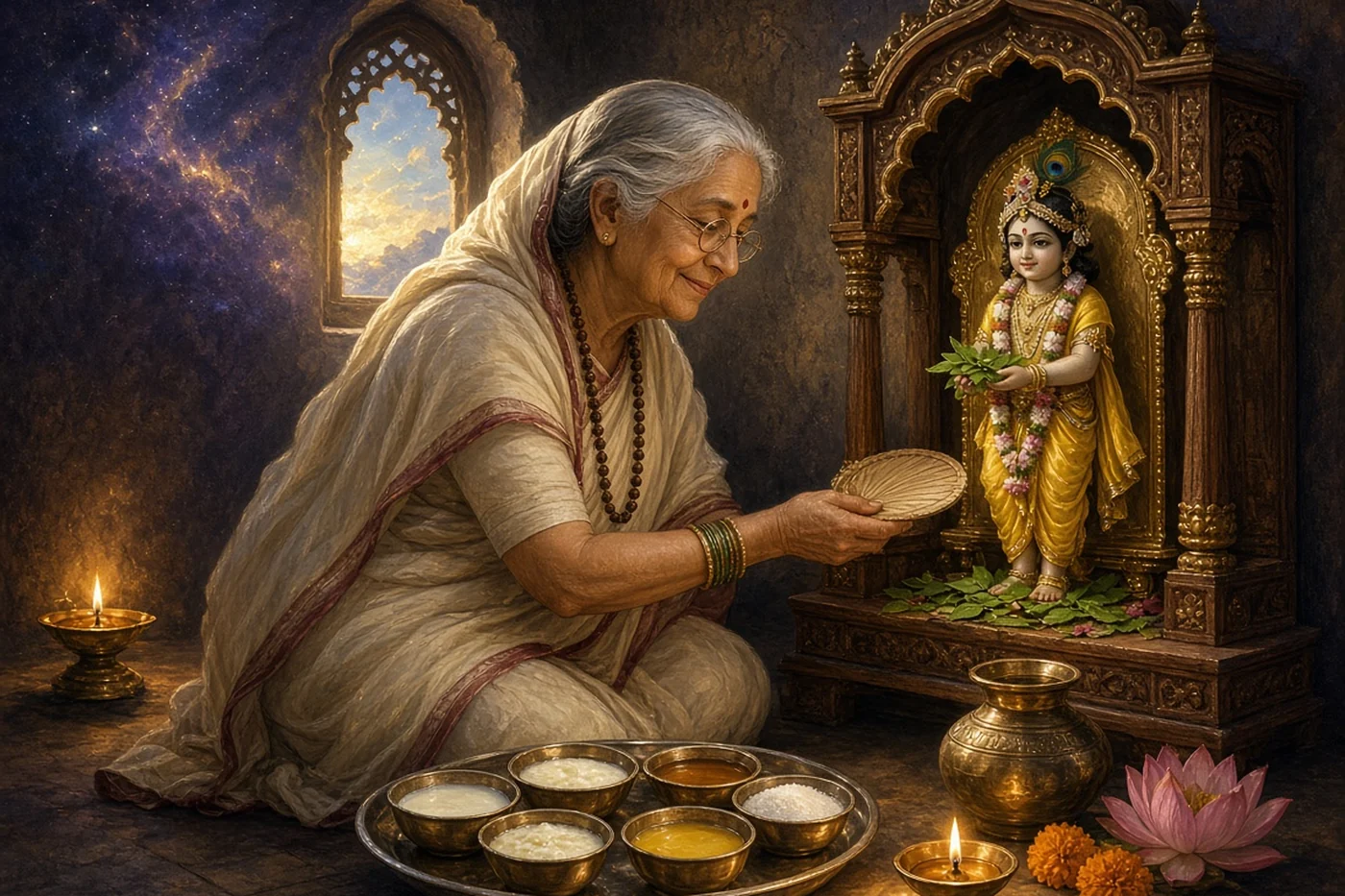
After that she did not drink. When the prayers asked her to sip she wet her palm and touched it to her lips, no more water than would hide a mustard seed, and that was all she took until the next day.
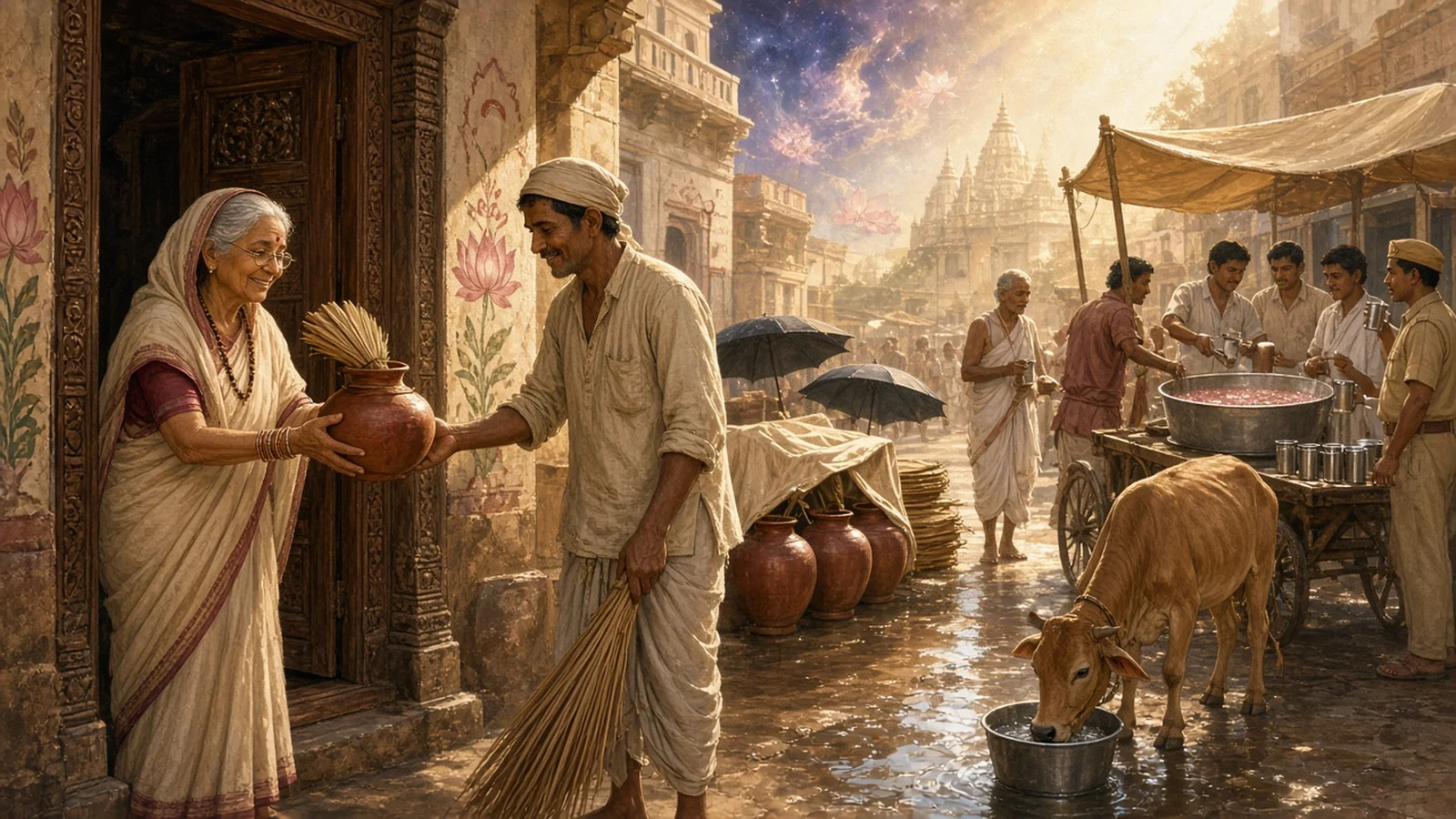
By nine the street outside was white with heat. On the corner, where the lane met the parikrama road, the young men from the temple committee had set up a chhabil: a trestle table, a drum of water with ice in it, sugar and rose syrup stirred in, and a row of steel tumblers. Anyone could stop. Rickshaw men stopped, and pilgrims walking the circuit, and a policeman, and a cow who was given a bucket of her own.
Amma sent the matkas out one by one. A matka to the sweeper, with a fan tied to its neck. A matka to the old watchman at the temple gate. An umbrella to the flower seller, who had none. The wheat went to the house behind the school where the father had been ill since winter.
"Doesn't it make it worse?" Sunita asked her in the afternoon, when they were lying in the dark room with the cooler going. "Handing out water all day when you can't have any?"
"It makes it easier," said Amma. "You stop thinking about your own mouth."
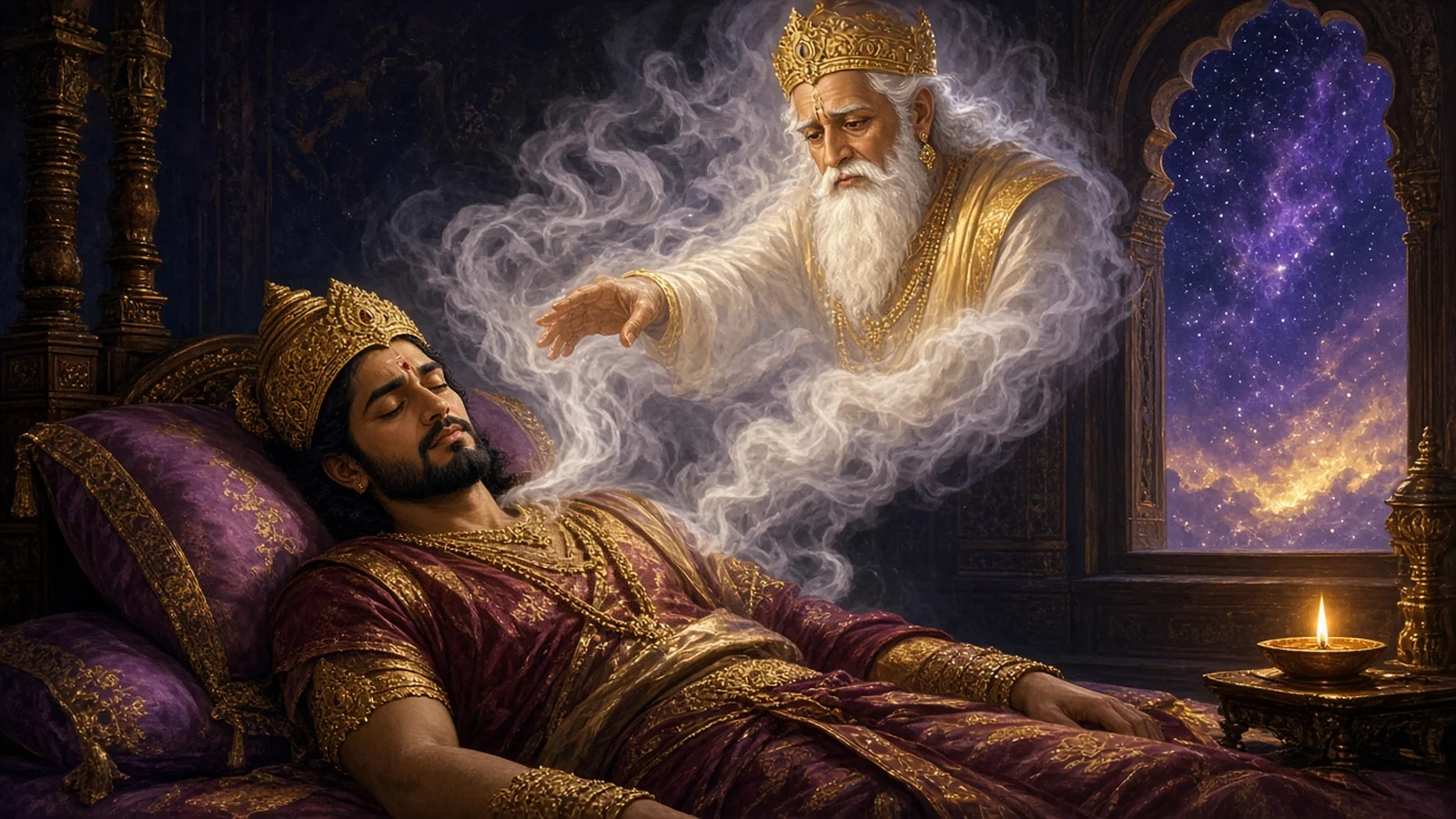
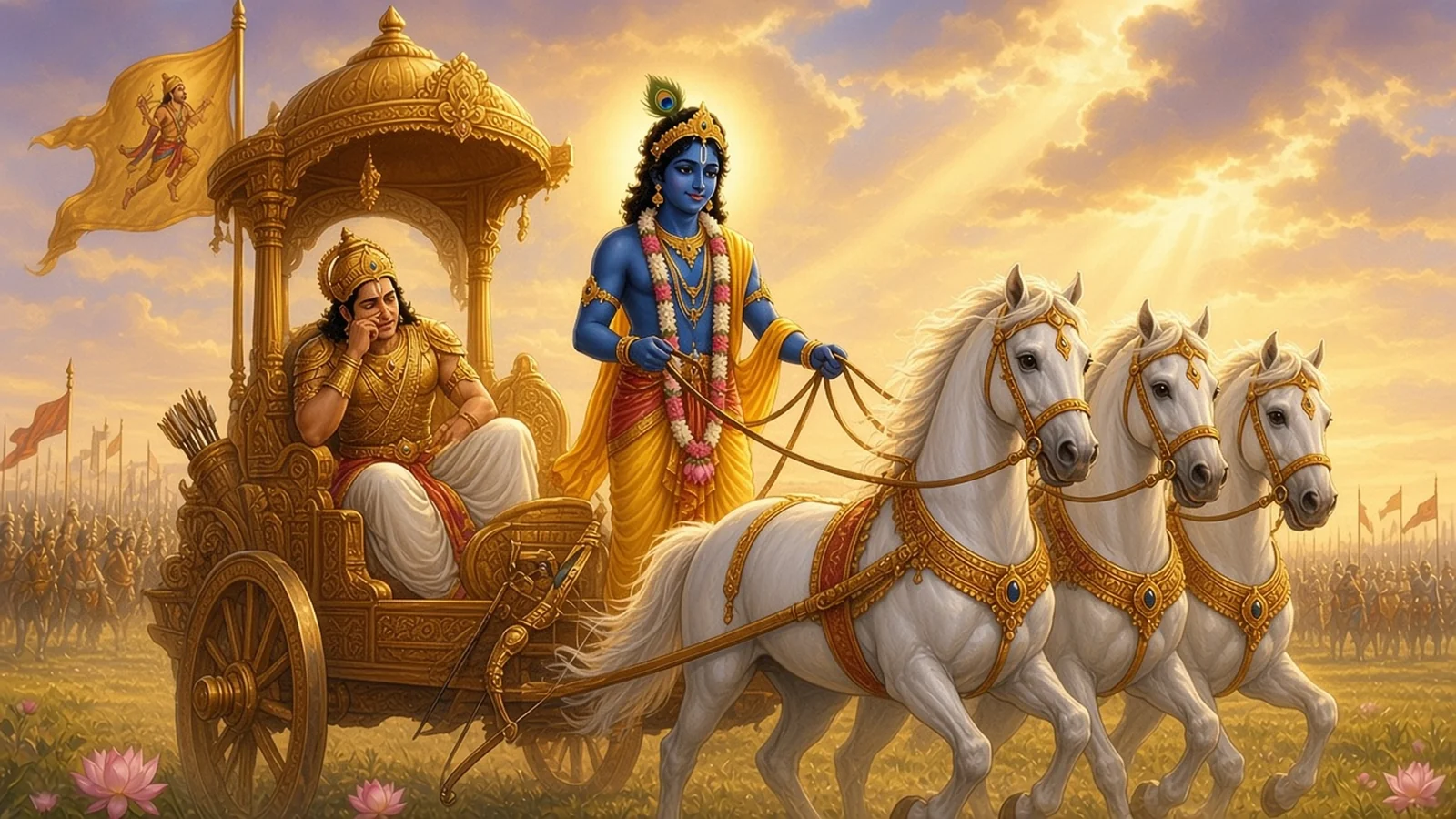
In the evening they went to Dwarkadhish. The temple was full, as it had been all day, and the aarti went up with the bells, and the crowd sang. At home Amma's sister read the Vishnu Sahasranama aloud while the rest of them sat in the courtyard where it was cooler. Amma did not sleep. She sat up with her beads and the radio turned low, and sometime after midnight the boy came out and sat with her, and she told him about Bhima.
On the twelfth day she bathed again and gave the last matka, filled, with a twist of sugar on the lid, to the priest. Then she sat down with the almanac and her glasses.
"Not yet," she said.
Some years the time for breaking the fast comes early, soon after dawn; some years the almanac holds it back until the afternoon. Amma waited for the minute it gave, and then she drank the first glass of water very slowly, and only after that the sharbat, and only after that the food.
Haridwar, the day after Ganga Dussehra
Haridwar and Roorkee · the Ganga ghats · 2 min read
The pilgrims who came to Haridwar for Ganga Dussehra did not all go home.
On the Dashami the river had taken the biggest crowd of the year, some twenty lakh people by the count in the papers, bathing at Har ki Pauri and along every ghat for a mile. The next morning was the Ekadashi, and many of them simply stayed. Families from Rajkot and Ahmedabad who had come for one festival found themselves keeping a second, standing waist deep in the cold green current at first light, then climbing the steps without swallowing a drop of it.
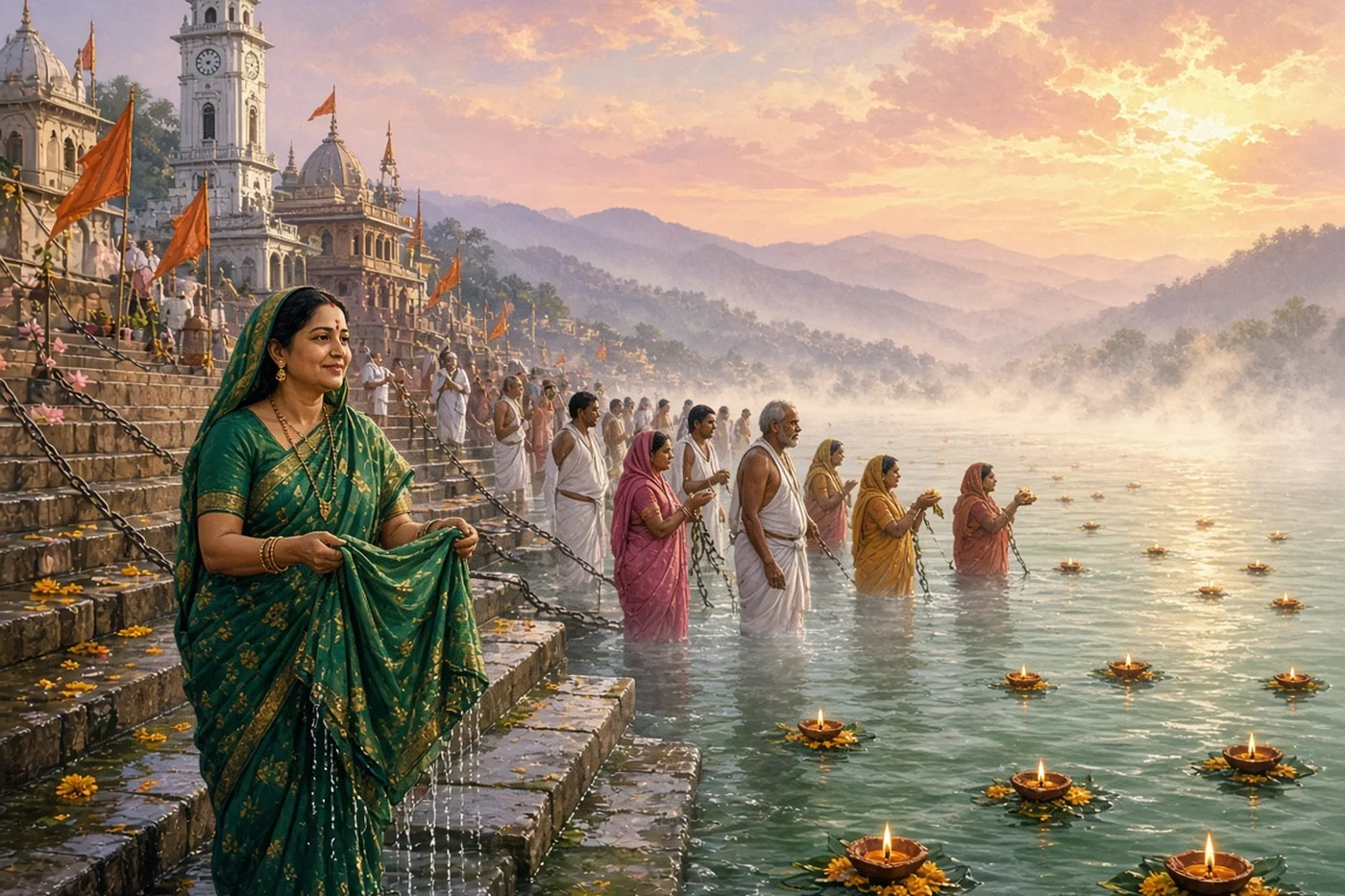
"The Ganga is the only water we take today," said a woman from Gujarat, wringing out the end of her sari, "and only on the outside."
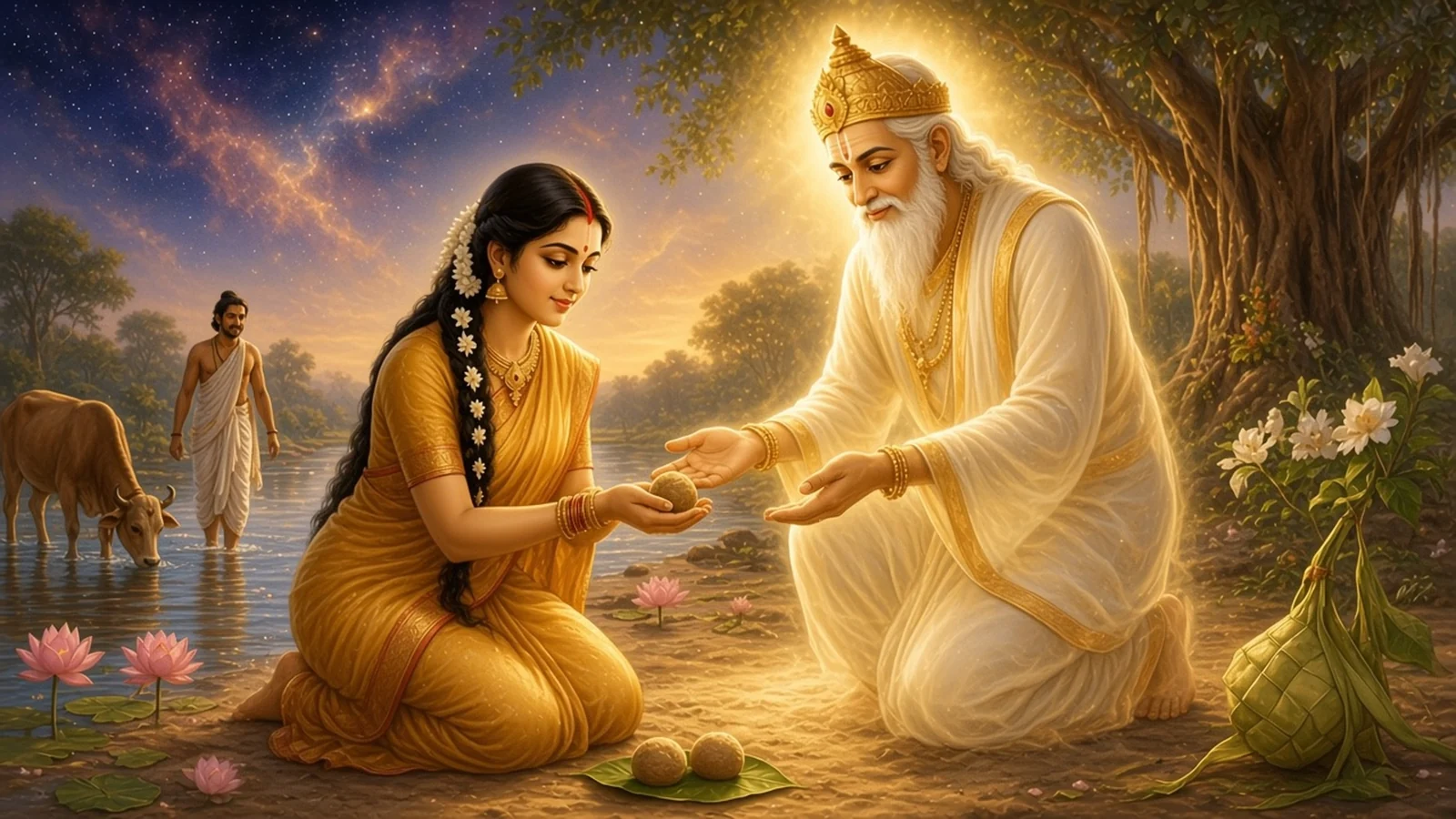
Here the fast runs into the rites for the dead. Along the ghats the priests sat under their umbrellas with their registers of families, and people made the offerings for their ancestors, the rice balls and the sesame and the water poured out, and gave gifts in their names. Tulsi went into every puja. The police kept the crowd moving on the steps, where it was thickest.
Downstream at Roorkee the Lakshmi Narayan temple on the ghat put out water and fruit from six in the morning till three in the afternoon, for anyone not fasting and for those who had to give up early. A trust ran a sharbat stall at a crossing in the town. Its men said they did it every year because their grandfathers had, giving water to the thirsty on the thirstiest day.
By evening the weekend had begun, the Char Dham pilgrims were pouring through on their way to the hills, and the highway out of Haridwar was jammed for miles with buses full of people, some of them still not drinking, waiting for the next sunrise.