As Gaya tells it
Gaya, Bihar · Sitakund on the Phalgu · 3 min read
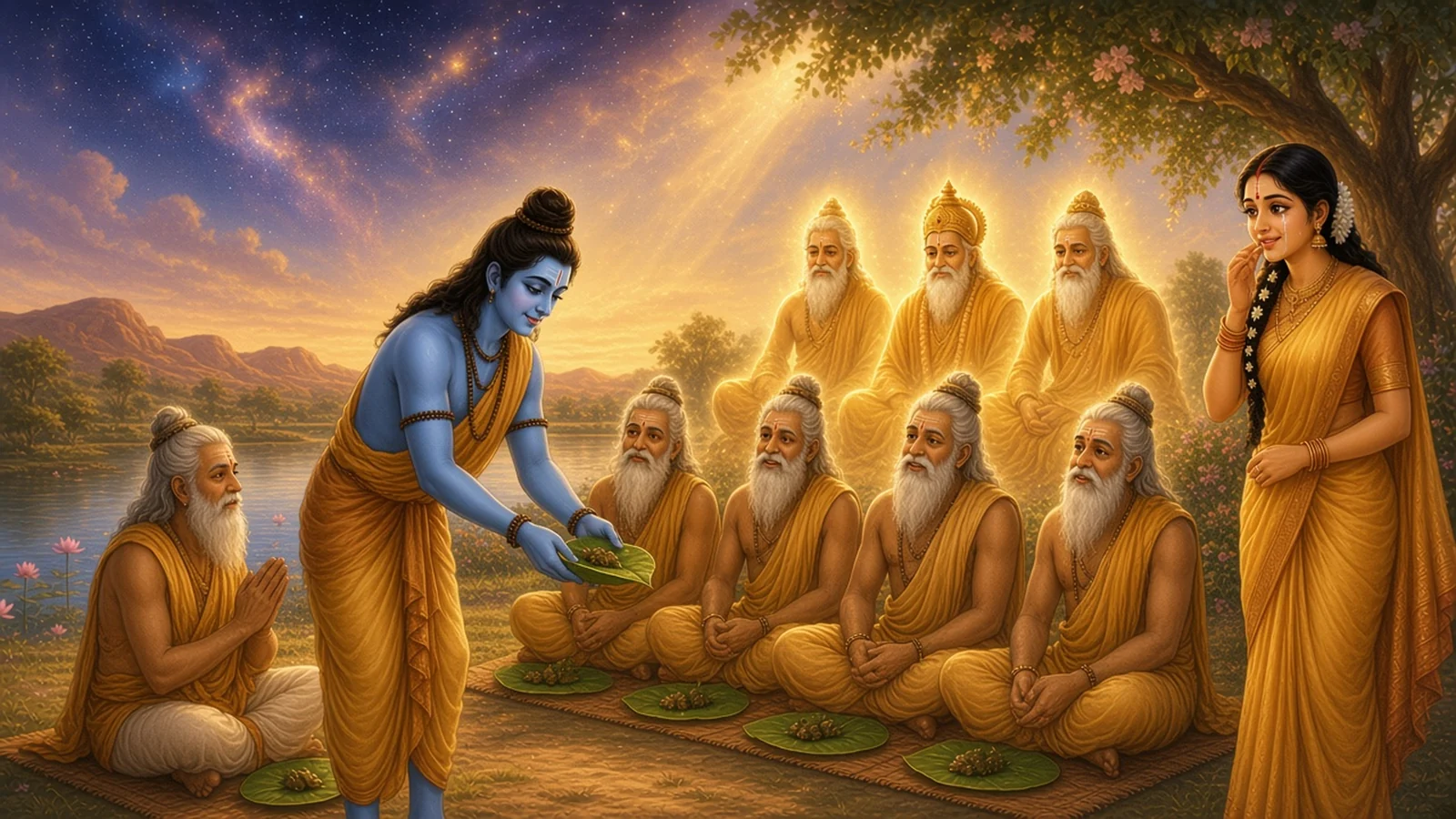
Rama came to Gaya with Lakshmana and Sita to do for his father what every son comes to Gaya to do. Dasharatha had died of grief while they were in the forest. At Gaya, on the bank of the Phalgu, a pinda reaches the fathers and stays with them for good.
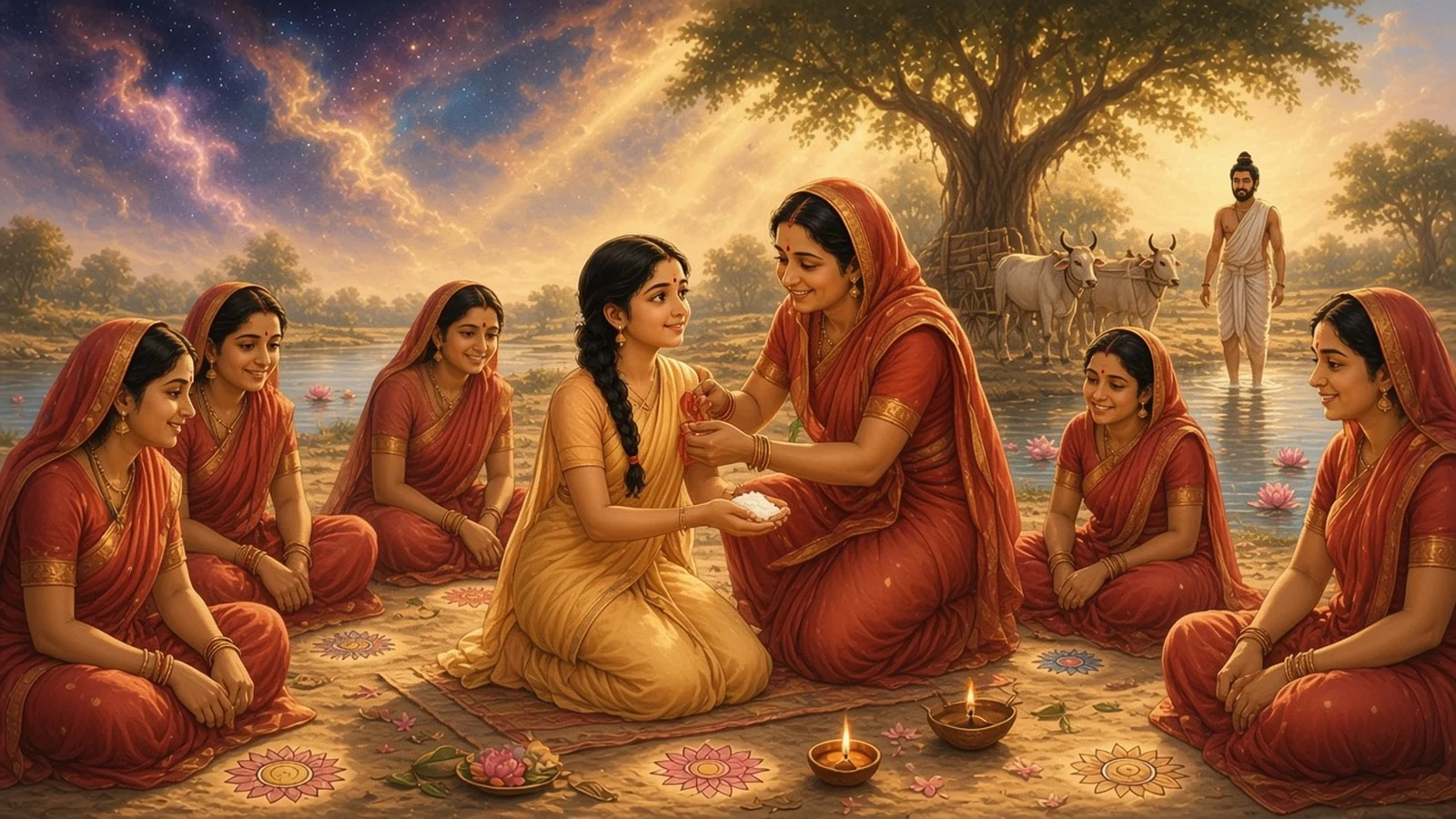
The brothers went into the town to fetch what the rite needs, the rice and the sesame and the kusha grass, and left Sita on the sand by the river. The morning went on. The hour for the offering came, and they did not.
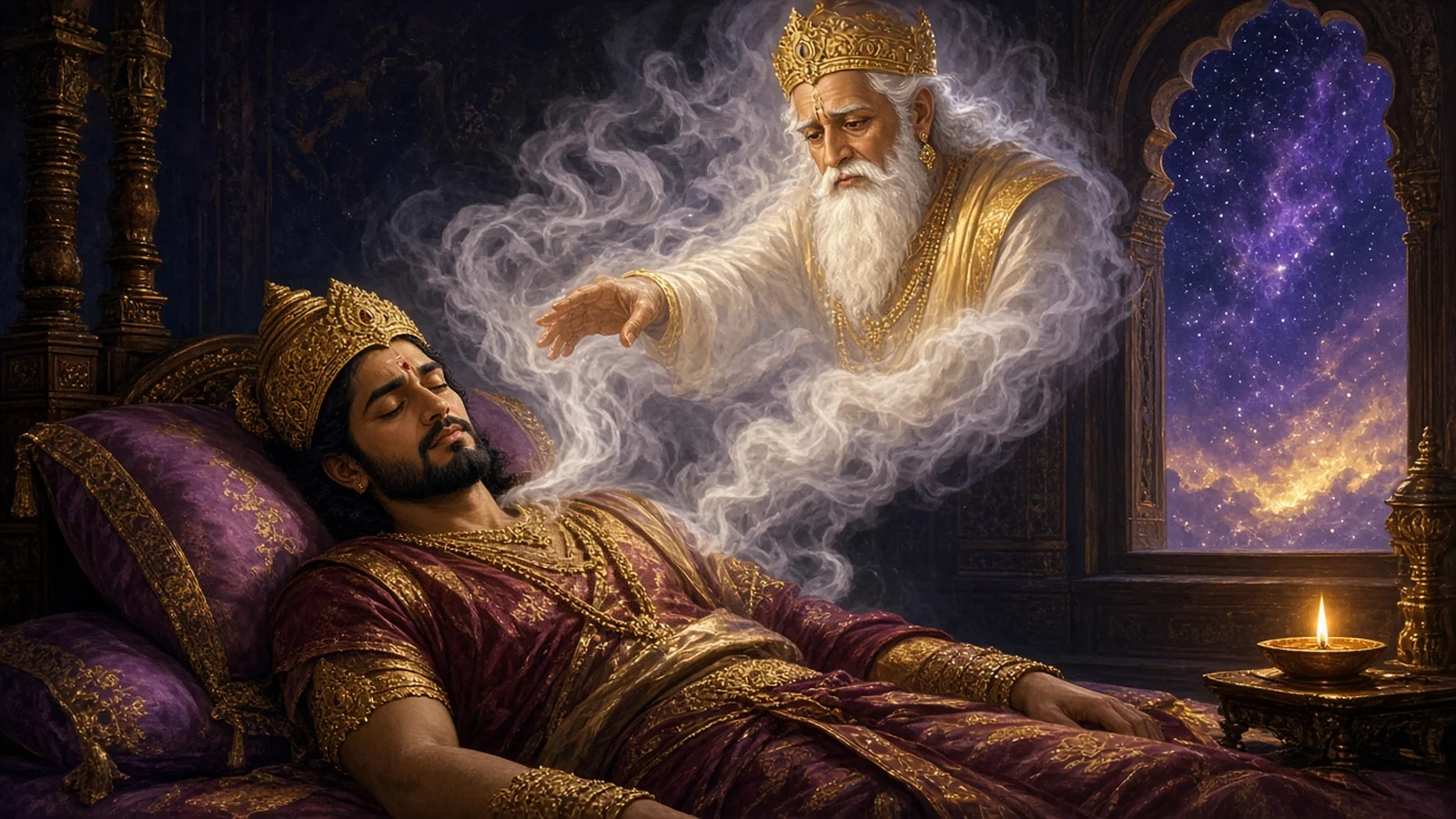
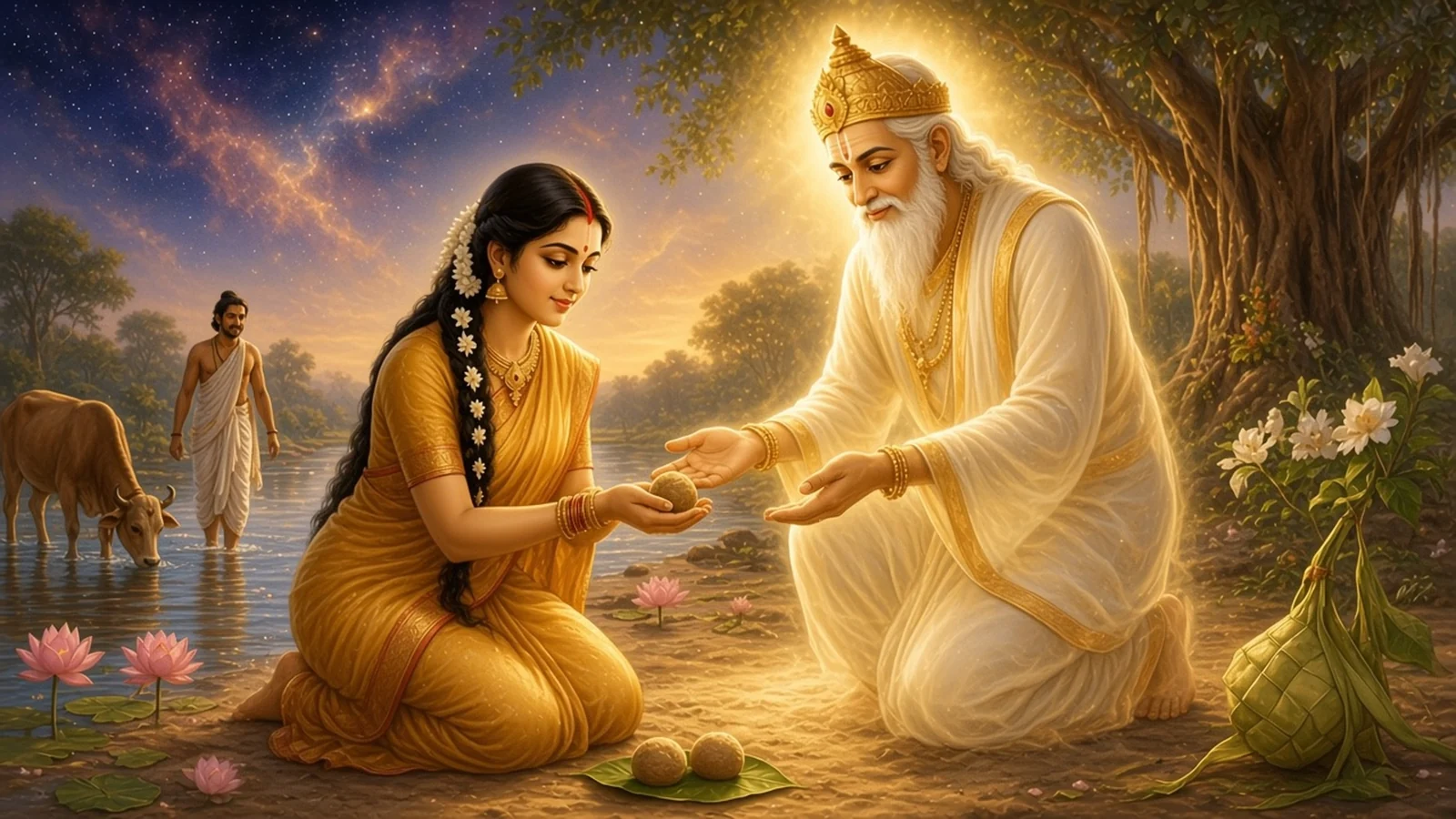
Then the sand in front of her moved, and a hand came up out of it, an old man's hand, open.
"Daughter," said a voice she knew. "I am hungry. The hour is passing. Give me my pinda."
"Your sons have gone for the rice," Sita said. "Wait a little, father. They will be back."
"I cannot wait. The hour will not wait."
There was nothing in reach but the river and its sand. So Sita wet the sand at the water's edge and pressed it into balls, the way she had seen the rice pressed, and laid them in her father-in-law's palm. The hand closed on them and went down into the ground.
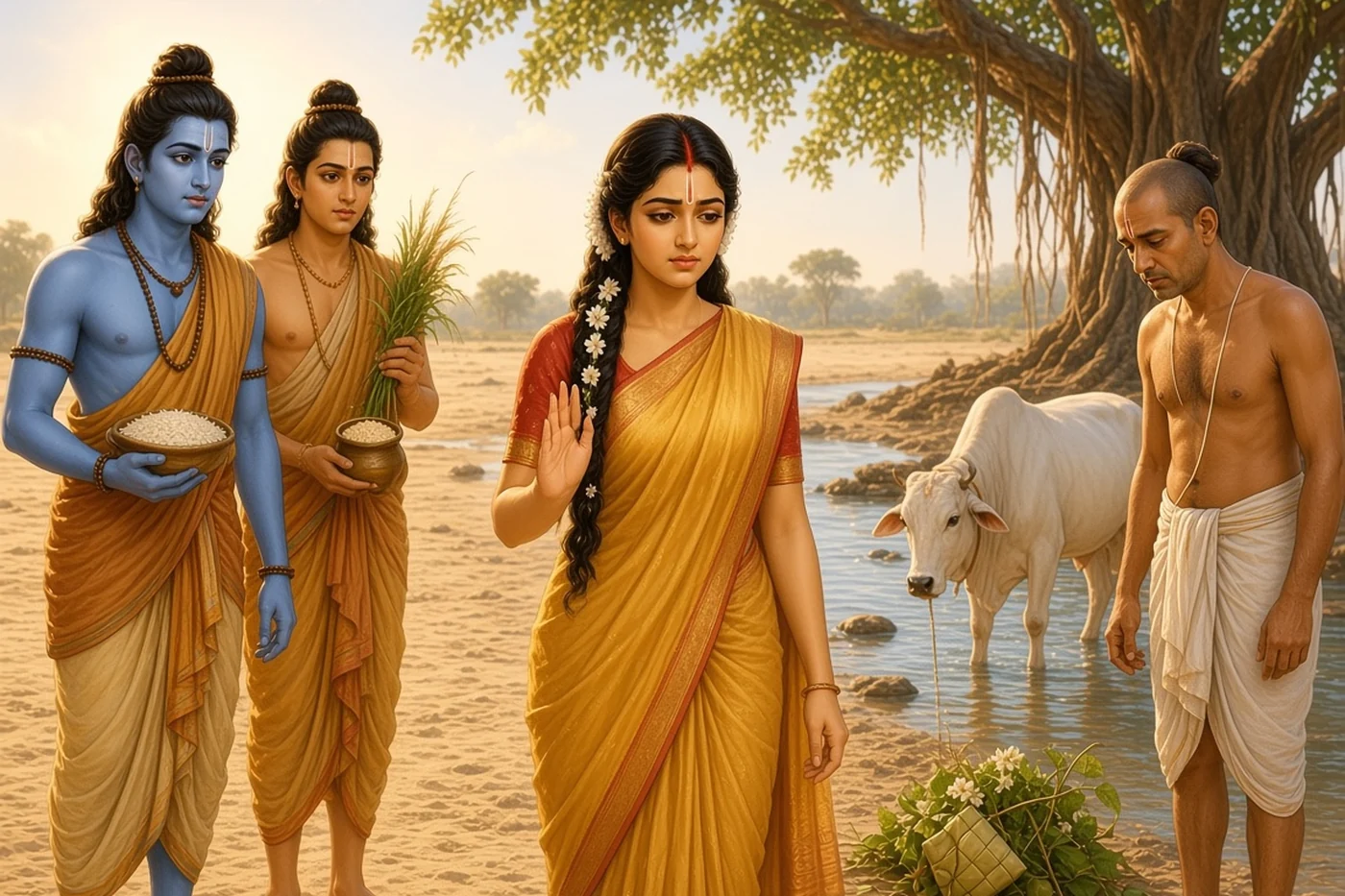
She knew how it would sound. She looked round for anyone who had seen, and found five: the river itself, a cow drinking at it, a ketaki bush in flower on the bank, a Brahmin who had been passing, and an old banyan tree.
"You saw it," she told them. "When they ask, say so."
When Rama and Lakshmana came back with the rice, she told them. Rama did not believe her. Nobody had ever fed the dead with sand, he said, and his father would take his pinda from no one but his son.
"Ask them," said Sita. "They were here."
He asked the river, and the Phalgu said nothing had happened. He asked the cow, and the cow said she had only been drinking. The ketaki shook its flowers and said it had seen nothing. The Brahmin said the lady must be mistaken. Only the banyan answered, "She gave him the pinda. I saw his hand take it."
Sita turned to the four who had lied, and she was not gentle.
"River, you will run under your own sand, and people will have to dig for your water. Cow, the mouth you lied with will be called unclean. Ketaki, the gods will not take your flowers. And the Brahmins of this place will never be satisfied, however much they are given."
Then she turned to the banyan. "You told the truth. You will not die, and whatever is offered under you will never run out."
Some say Dasharatha's own voice came up out of the ground then, to tell his son that the meal had been eaten. Rama did the rite again with rice all the same, as a son must.
The Phalgu at Gaya is a broad bed of pale sand for most of the year, and pilgrims scoop a hollow in it to reach the water. The place on the bank where Sita sat is called Sitakund, and on one day of Pitru Paksha the pindas offered there are made of sand. The banyan stands as the Akshayavat, and the last pinda of a Gaya pilgrimage is offered under it.
As the Vayu Purana tells it
The Gaya Mahatmya · the asura under the stone · 2 min read
The Gaya Mahatmya of the Vayu Purana tells why Gaya feeds the dead at all, and its story begins long before Sita.
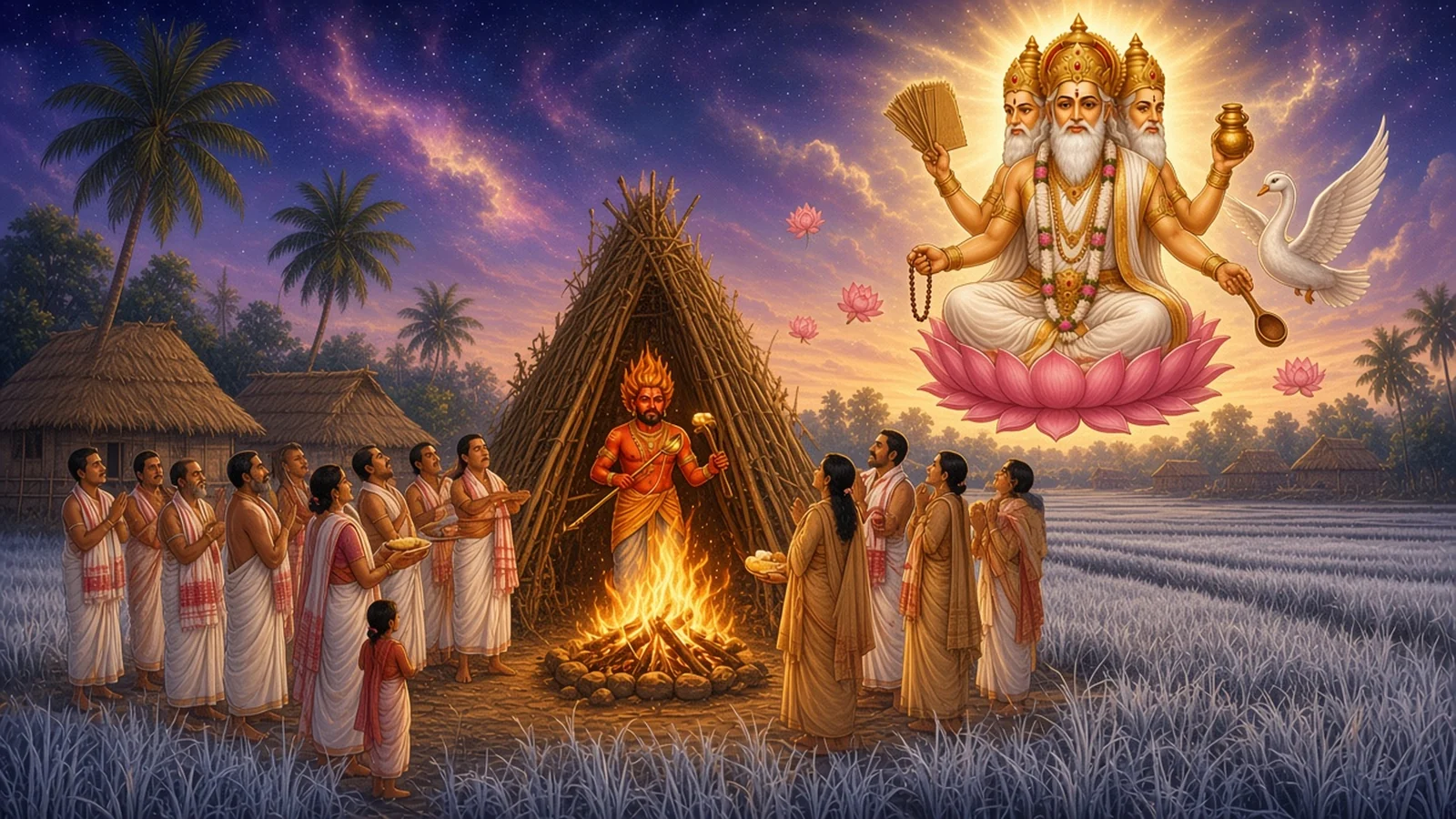
There was once an asura named Gaya, a hundred and twenty-five yojanas tall, and he was a devotee of Vishnu. On the mountain Kolahala he stood for thousands of years holding his breath, and the heat of it troubled the gods. They went to Brahma, Brahma led them to Shiva, and Shiva led them all to Vishnu, and together they went to the asura and asked what he wanted.
"Make me purer than every god and every holy place," Gaya said, "so that whoever sees me is made pure."
It was granted, and the hells began to empty. Sinners who set eyes on Gaya went straight to heaven, and Yama found his city deserted.
So Brahma came to Gaya with a request. He needed a clean place for a sacrifice, and nothing on earth was cleaner than the asura's body. Gaya lay down for him, and Brahma held the sacrifice on top of him.
When it was over the body still trembled. Dharma was told to set a great rock on the asura's head. The rock had once been a woman, Dharmavrata, turned to stone by the curse of her husband Marici, and her consolation was that the gods would one day stand on her. They stood on her now, and still the asura shook.
At last Vishnu came as Gadadhara, the bearer of the mace, and set the mace upon the stone. Then the body was still, and Vishnu stayed there as the first Gadadhara. The print of a foot on that rock is what pilgrims bow to in the Vishnupad temple.
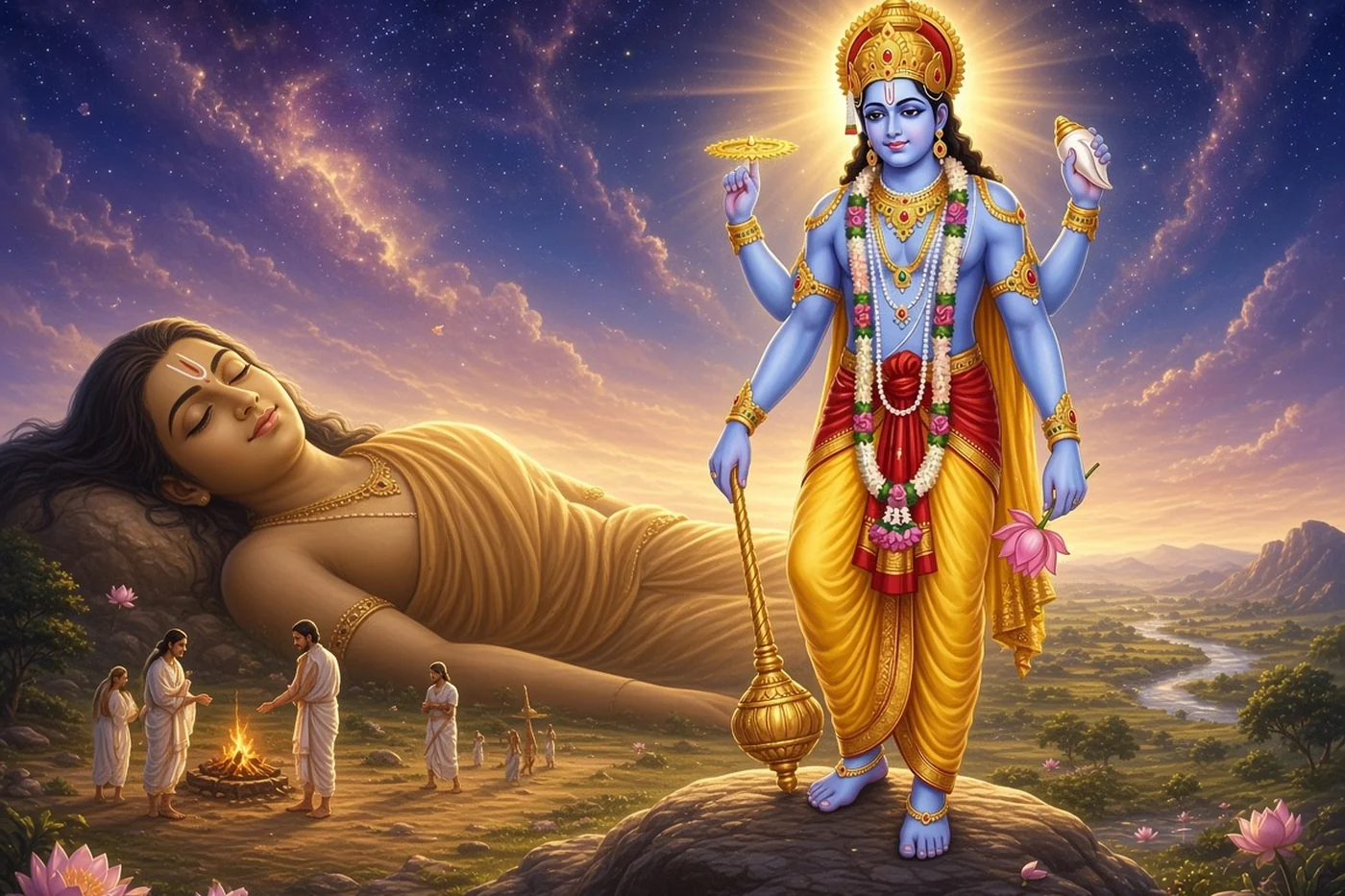
The asura asked one thing in return. "Let this place keep my name. And whoever offers a pinda here, let him go to Brahma's world with his fathers."
Vishnu granted it. The Purana adds that the Phalgu running past is the water from Vishnu's feet, which flows unseen, and that under the Akshayavata, the undying banyan, a man is freed of the three debts he is born owing.