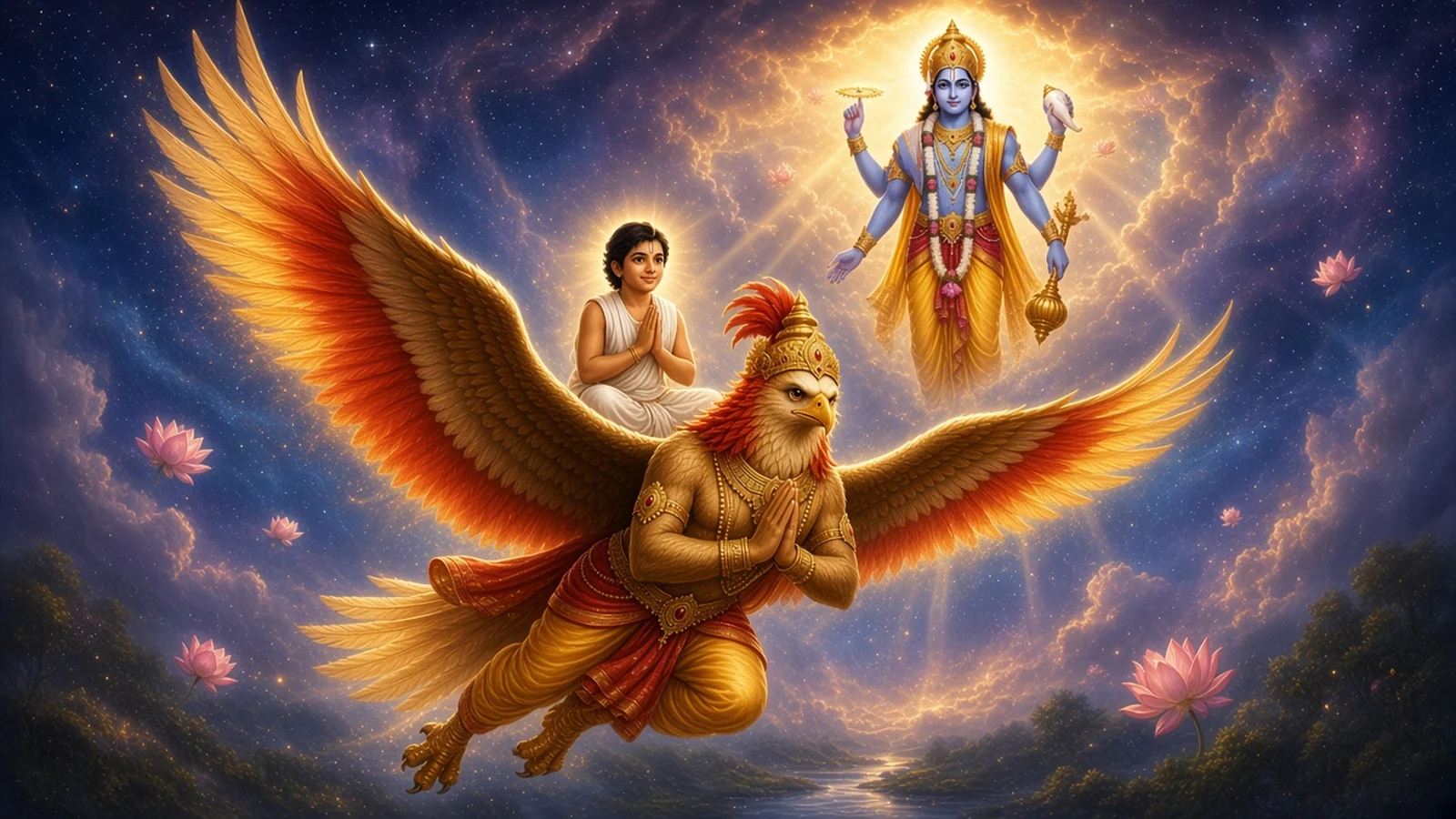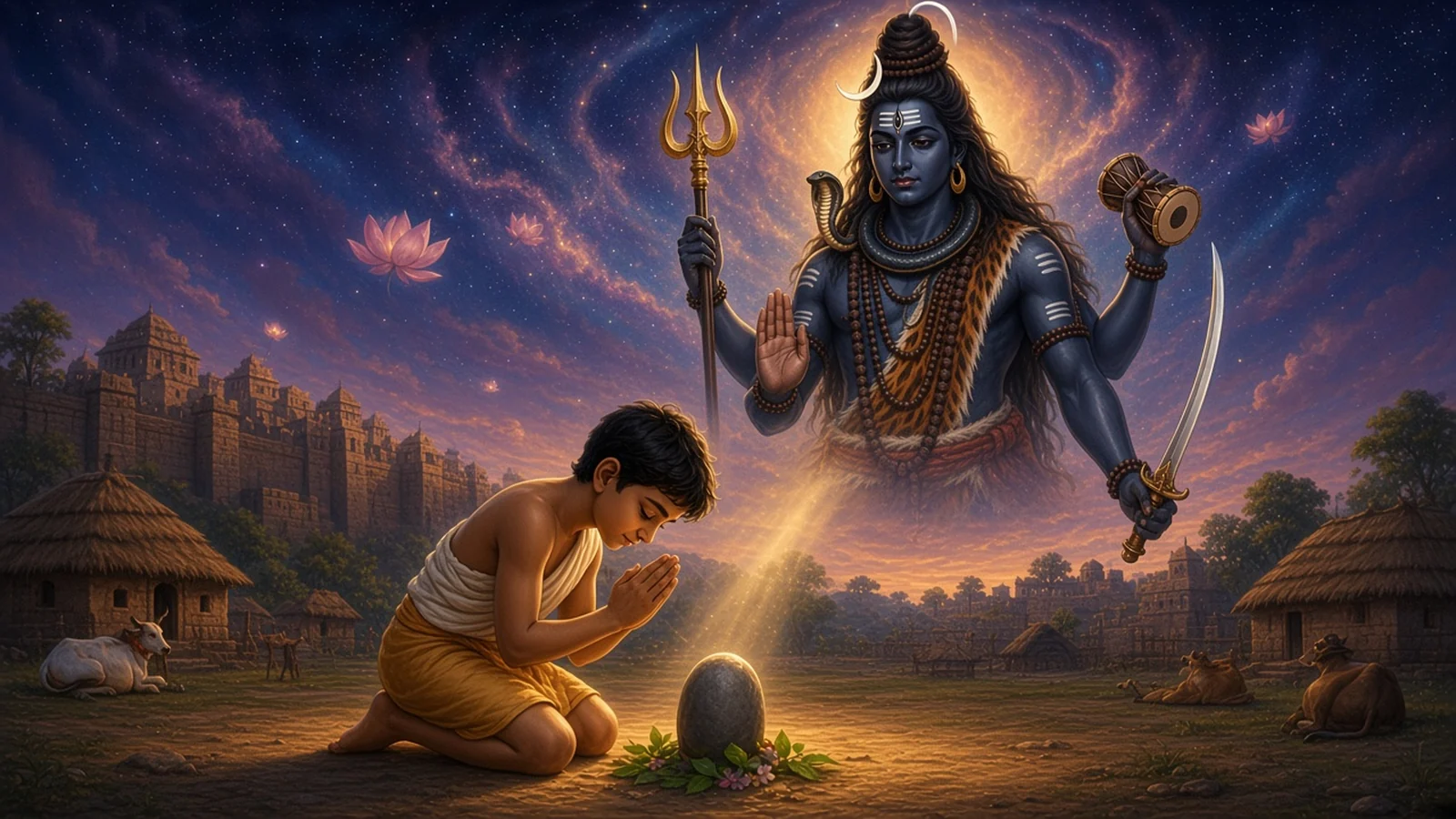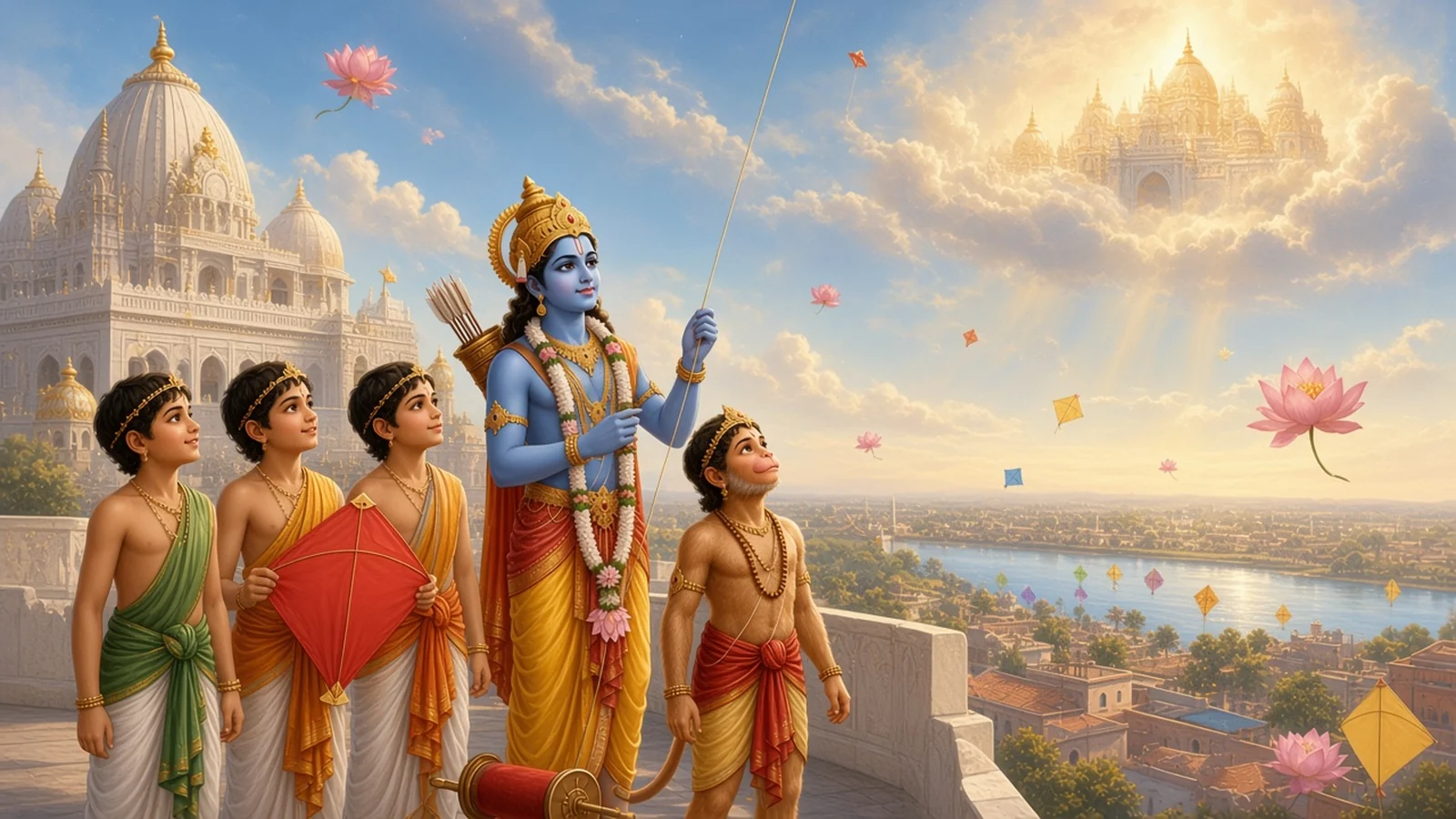
As the festival tells it: the boy Rama's kite
Ayodhya and Indra's city · the day the sun turns north · 3 min read
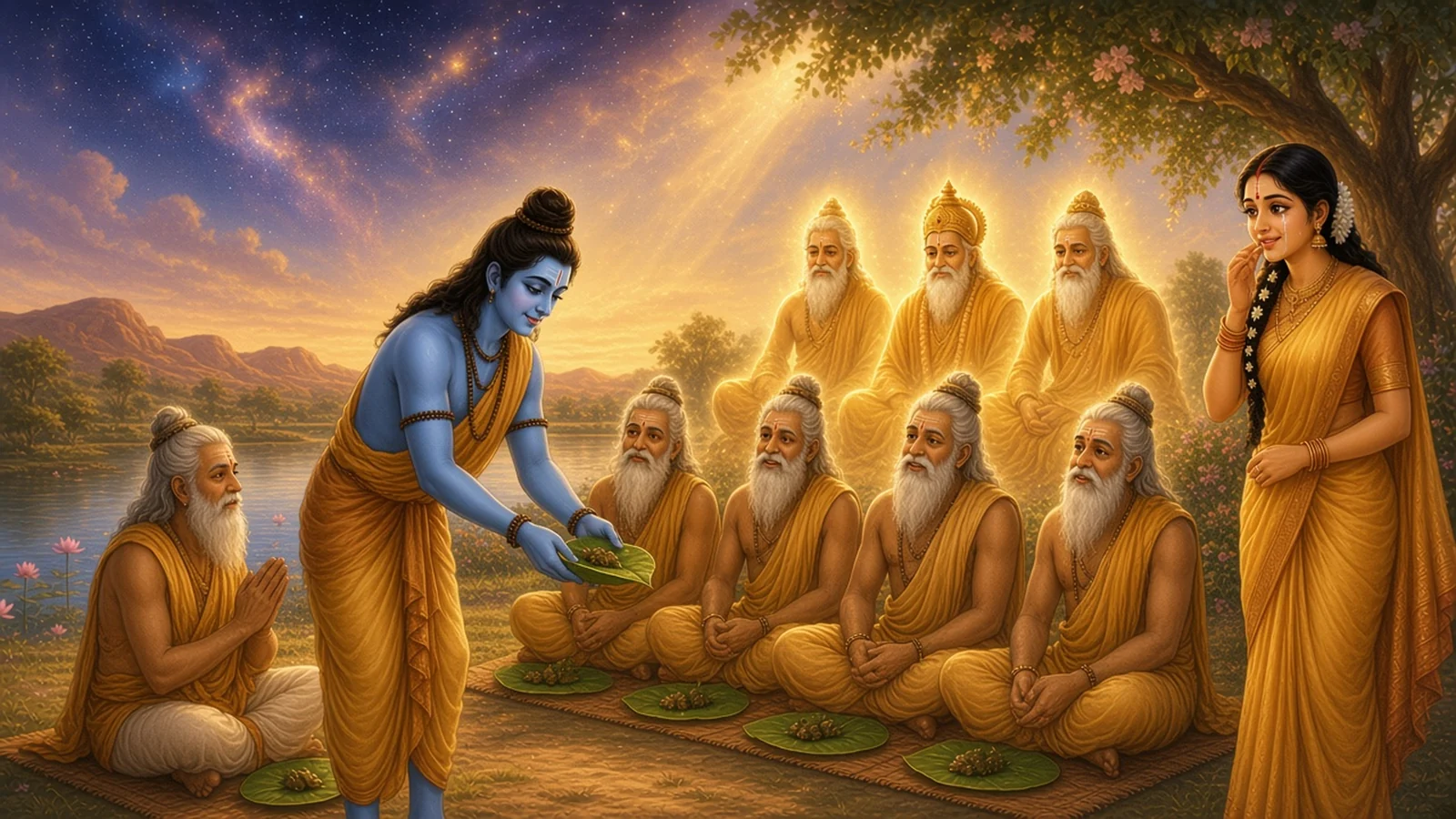
It was the day the sun turned north, and all of Ayodhya had gone up onto its roofs. The boy Hanuman had come from Pampapur for the festival. He was small then, small enough that nobody in the palace looked at him twice, and he followed the four princes wherever they went.
"Today it is kites," said Lakshmana, holding up a frame of split cane and red paper. "Bharata's is the best in the city. Shatrughna has given his a tail as long as a snake."
Rama said nothing about his own kite. He carried it to the highest terrace, waited for the wind that came up off the Sarayu, and let it go.
It rose past the temple flags. It rose past the other kites of the city, and one by one the boys pulled theirs in to watch. Rama let out more string, and more, until the kite was a speck, and then not even that, and only the pull against his fingers told him it was still up there.
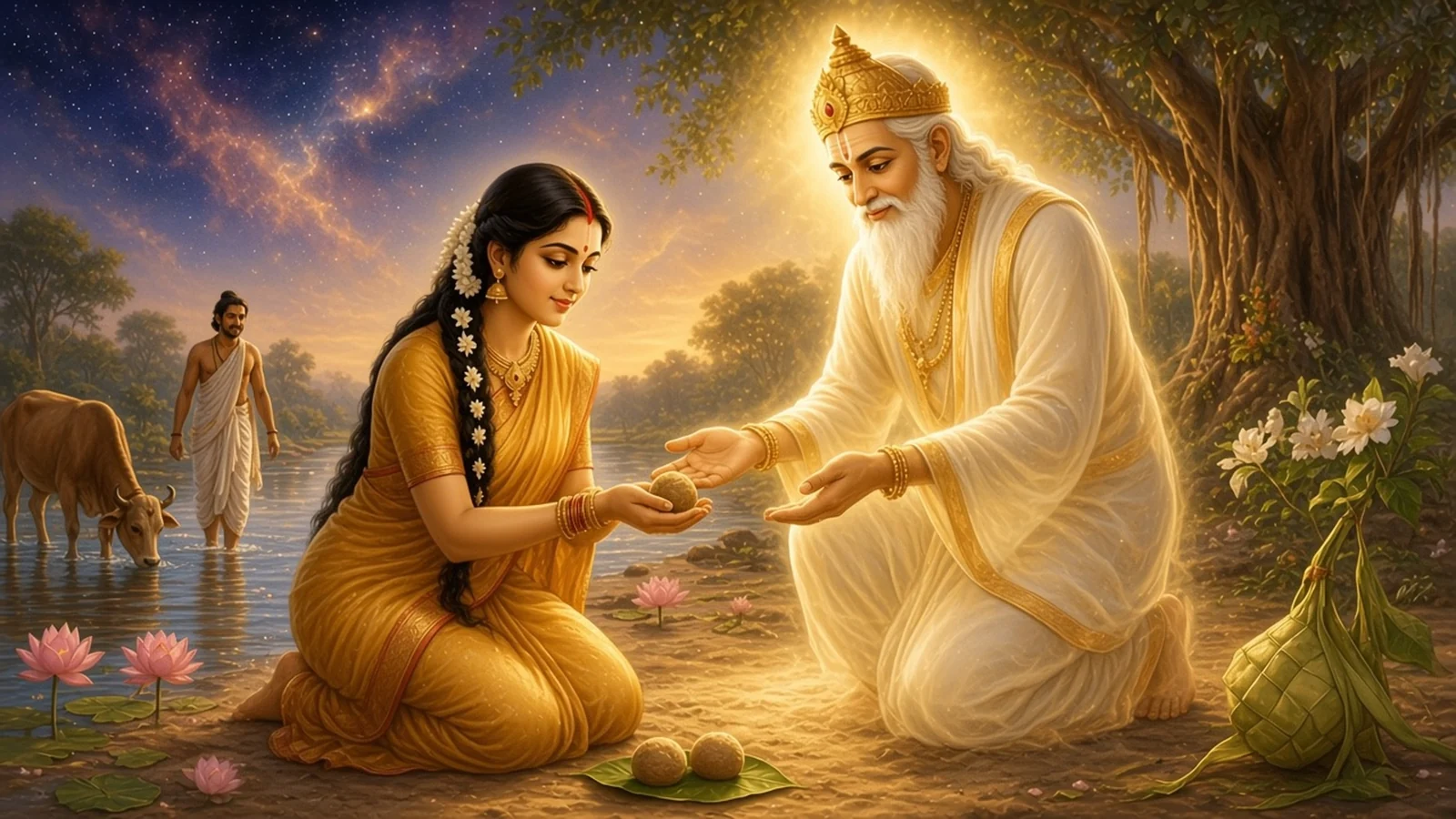
Above the clouds lay Indra's city. The wife of Jayanta, Indra's son, was walking on her terrace when a kite came drifting over the parapet, trailing a line that went down and down out of sight.
She caught the line and drew the kite to her. The paper was fine and the cane was cut true.
"Whoever made this has a good hand," she said to her women. "Whoever flies it must be lovelier still. Let him come up and fetch it himself."
On the roof in Ayodhya the string went dead and heavy.
"It has caught on something," Bharata said. "Cut it loose and fly another."
"No," said Rama. He turned to the small boy at his side. "Hanuman, go and see who holds it. Ask for it back, and ask kindly."
The Hindi tellings say Hanuman flew. One says he went up the string itself, hand over hand, through the clouds. Either way he came to Indra's city, and on a terrace of white stone he found a woman sitting with the kite in her lap.
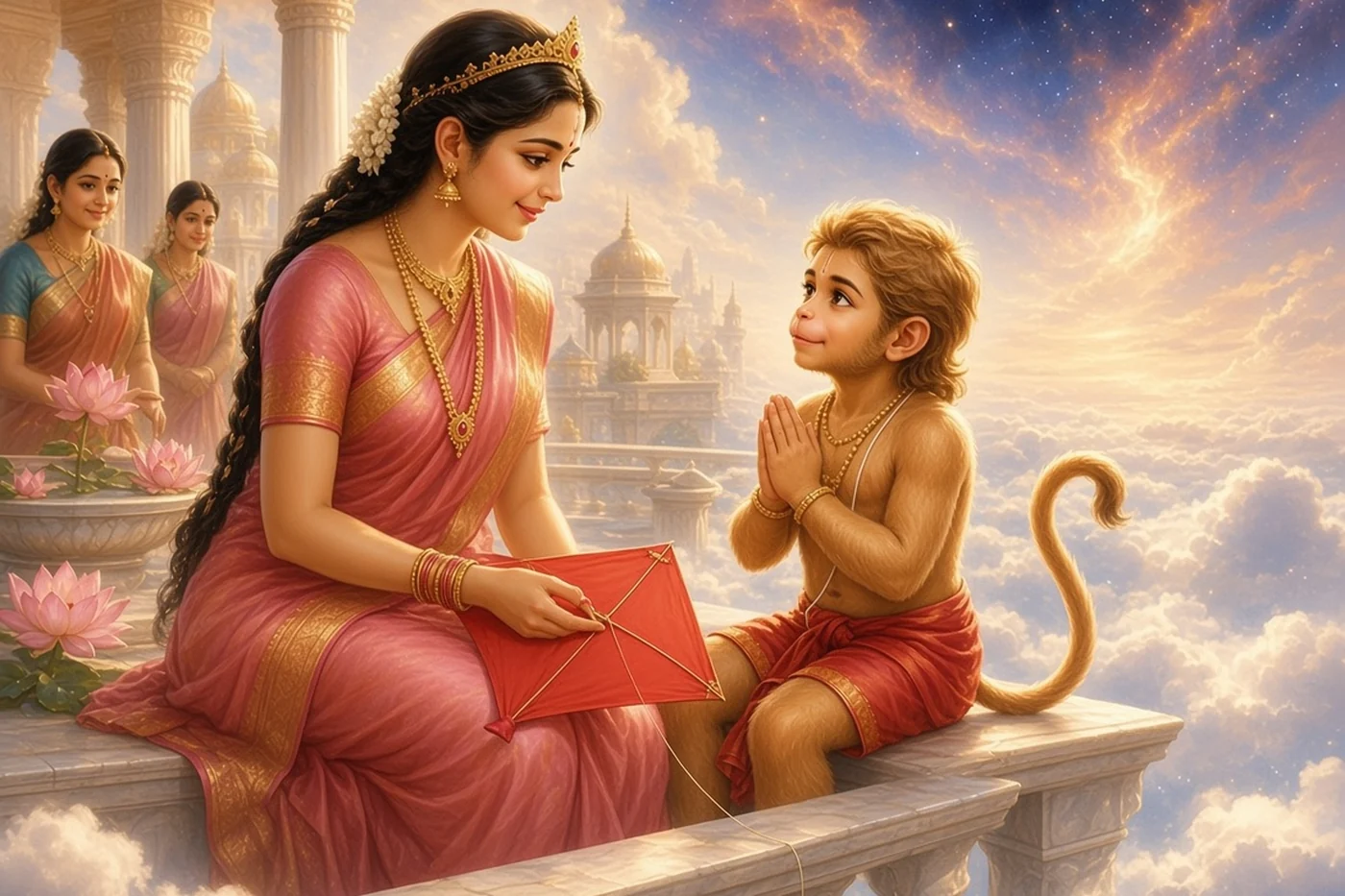
"That kite belongs to a boy in Ayodhya," he said. "He asks for it back."
"Which boy?"
"Rama, the son of Dasharatha."
She was quiet for a long time, turning the kite over in her hands. "Then I will keep it until I have seen him with my own eyes," she said. "Go and tell him so."
Hanuman went down and told Rama all of it. The brothers laughed. Rama did not laugh. He looked up at the empty sky where his string disappeared.
"Go back once more," he said. "Tell her she will see me at Chitrakoot. Tell her it is a promise."
Hanuman carried the words up. The woman heard them, and without another word she opened her fingers.
In Ayodhya the string came alive again. Rama drew it in, hand over hand, until the kite dropped out of the clouds and came down onto the terrace, its paper unharmed. Then he gave it to the wind again, and the boys went on playing until the light was gone.
None of them asked what Chitrakoot was. To the boys it was only the name of a hill somewhere in the southern forest.
As the poets and the courts record it: the kite in history
Maharashtra, Amer and Jaipur, Lucknow, Ahmedabad · 2 min read
No old scripture has a kite in it. The record of the kite comes from poets and account books, and it starts late.
Kites probably reached India from China. One account says Buddhist pilgrims brought them, and Gujarat Tourism says Muslim traders brought them by way of Persia. The first Indian mention that scholars point to is in the songs of Namdev, the thirteenth-century saint of Pandharpur. He calls the kite a gudi and says it is made of kaagad, paper. Three centuries later Dasopant and Eknath call it a vavadi.
At Amer, in the time of Mirza Raja Jai Singh, the poet Bihari wrote a couplet about a girl who sees her lover's kite over the town. She runs from one courtyard to the next to stand in its passing shadow, because the shadow is the nearest she can get to him.
Gujarati first names the kite in 1750, in Shamal's Chandra Chandravali, where it is a padai.
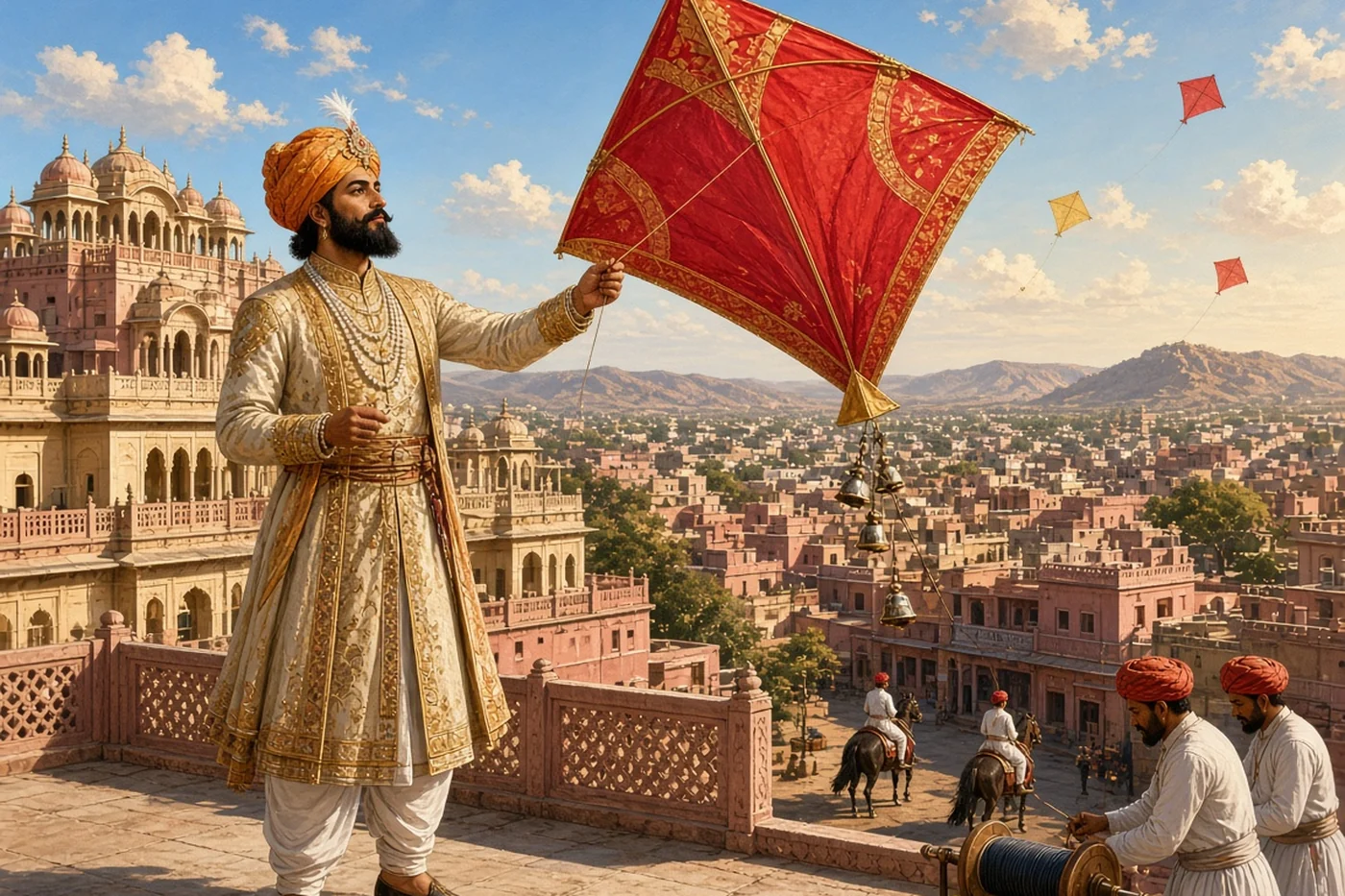
In Lucknow the kite became a sport of the court. The fighting kite was called a tukkal, and the best of the tukkals came to be called a patang. From Lucknow, Sawai Ram Singh II of Jaipur brought kite makers to his city after he came to the throne in 1835. He flew huge cloth tukkals hung with gold and silver bells from the roof of the Chandra Mahal, and his horsemen rode out after any kite that was cut.
Gujarat's rulers also sent for kite makers and string makers from the north. Many of the Muslim families who make Ahmedabad's kites today trace their roots to north India in Sultanate and Mughal times. A study by SEWA found that seven of every ten kite makers in Gujarat's main centres were Muslim and the rest Scheduled Caste and Christian, while the shopkeepers who sell the kites were mostly Hindu. Each January the whole state flies what they have made.