As the Padma Purana tells it
Uttara Khanda 49 · Bhadravati on the Sarasvati · 3 min read
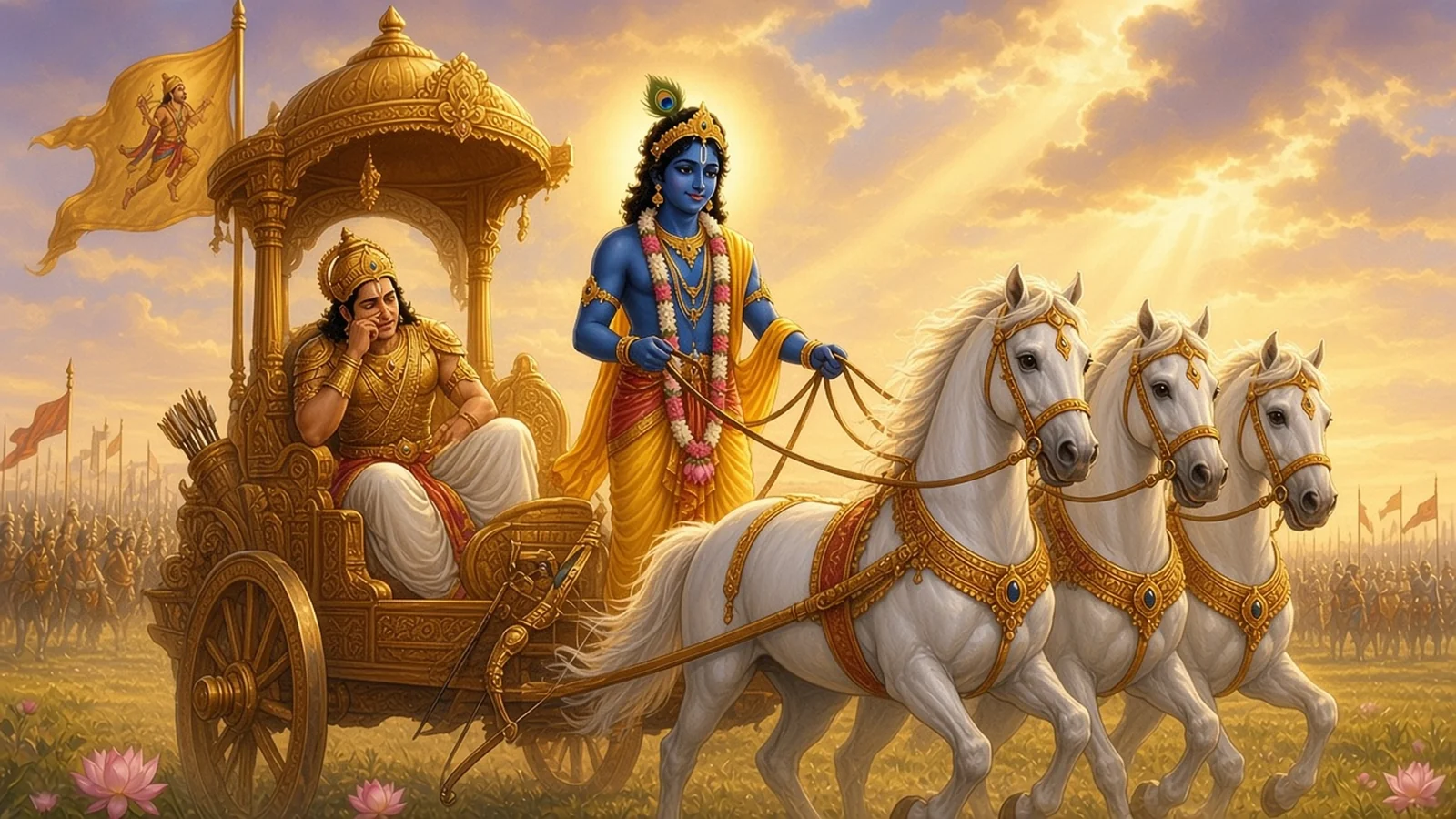
Yudhishthira asked Krishna about the Ekadashi that falls in the bright half of Vaishakha, the eleventh day of the waxing moon in spring.
"Rama asked the same question once," said Krishna, "and I will tell you the answer he was given."
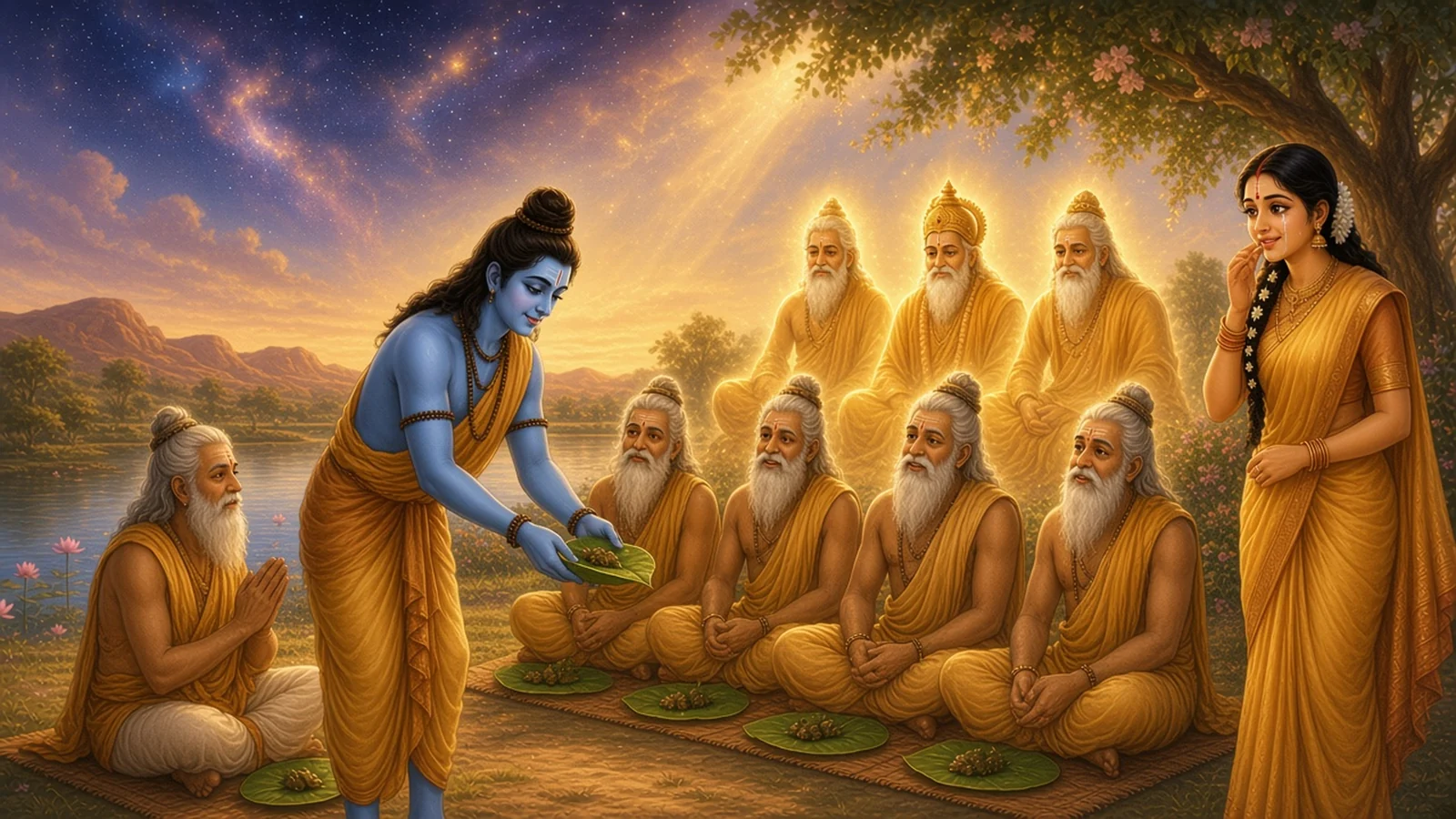
Rama had lost Sita, and the grief would not leave him. He went to his teacher Vasishtha.
"Tell me the vow that takes away sorrow," he said. "The one that frees a man from all of it."
"Your question alone is enough to make people pure," said Vasishtha. "But listen."
On the bank of the river Sarasvati there was a lovely city called Bhadravati, ruled by a king named Dyutimat of the moon's line. In that city lived a merchant, Dhanapala, rich in grain and gold and gentle in everything he did. He loved Vishnu. He dug wells and tanks for the city, planted gardens, built temples and houses for anyone who needed one.
He had five sons. The first four were Sumanas, Dyutimat, Medhavin and Sukrita, and they were good young men. The fifth was Dhrishtabuddhi, and he was nothing like them.
He gambled. He drank. He kept low company and spent his nights with it. He never once bowed to a god, never remembered his ancestors, never fed a guest, and he spent his father's money as if it were water.
At last his father had had enough.
"Go," said Dhanapala. "You are no son of mine."
Dhrishtabuddhi went, and he spent what he had left. When it was gone his friends were gone too. His brothers and his kinsmen turned away from him, and there was nobody left in the whole city who would give him a meal.
So he stole. The king's men caught him and let him go, because he was Dhanapala's son. He stole again and they caught him again. At last the king himself had him whipped and put out of the kingdom.
"If you are seen inside these borders again," the officers told him, "you will not be let go."
He went into the forest. He lived by hunting, partridges and peacocks, deer and wild pigs, and he was always hungry, always afraid, always sick at heart. Every day he did something new to be ashamed of.
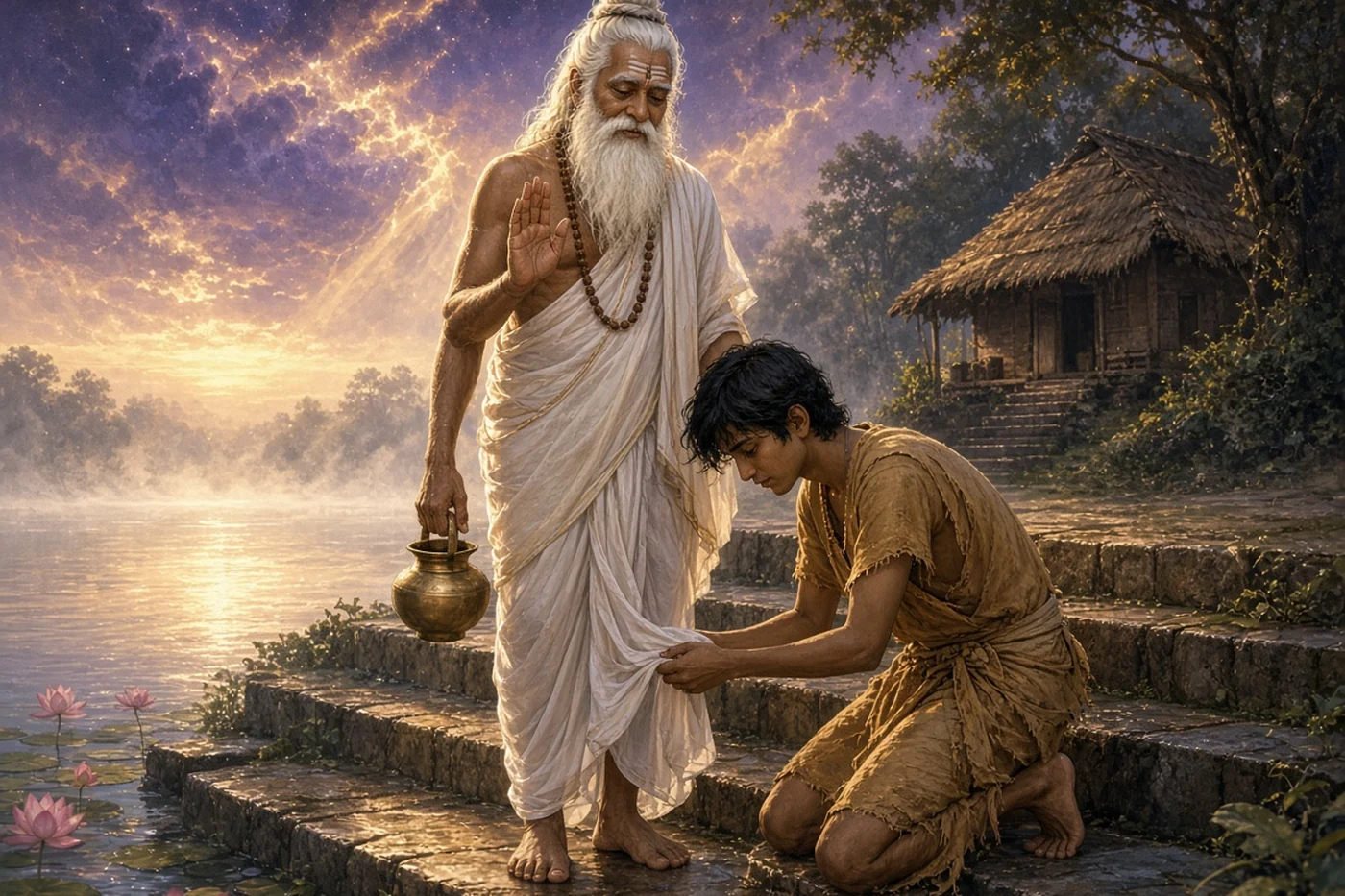
It was the month of Vaishakha, and he was wandering at random, when some last scrap of good he had once done brought him to a hermitage on the Ganga. The sage Kaundinya was walking up from the river after his bath.
Dhrishtabuddhi touched the hem of the sage's garment, and the weight he had carried for years slipped off him. He fell at Kaundinya's feet.
"I have done everything wrong that a man can do," he said. "I have no money left for gifts and no strength left for pilgrimages. Is there anything I can still do?"
The sage looked at him kindly.
"There is a fast," he said, "on the eleventh day of the moon in this month of Vaishakha. It is called Mohini. Keep it, all of it, and sins as high as Mount Meru will burn away."
Dhrishtabuddhi did exactly as he was told. He kept the fast of Mohini, and when it was over there was nothing left on him to burn.
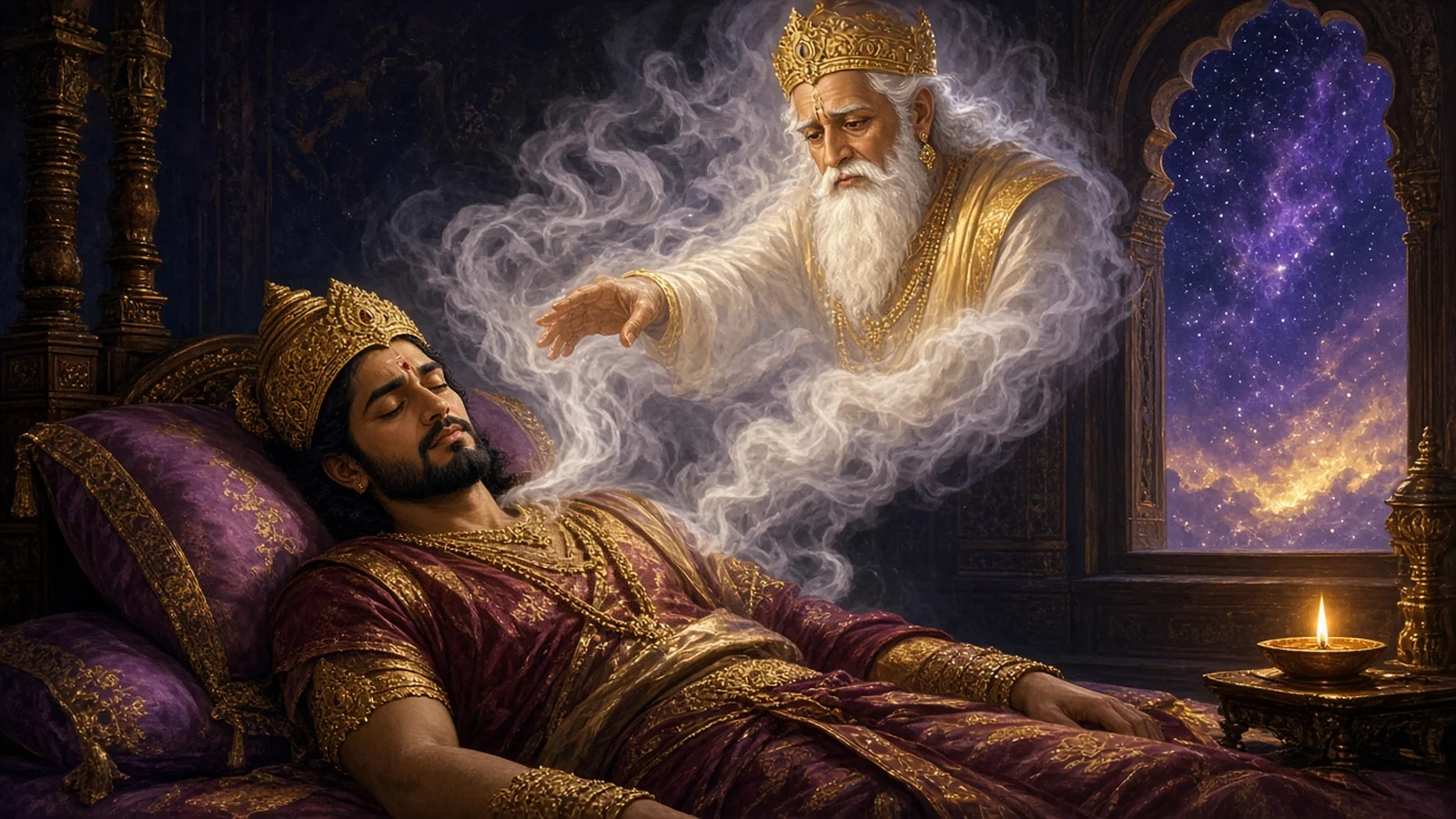
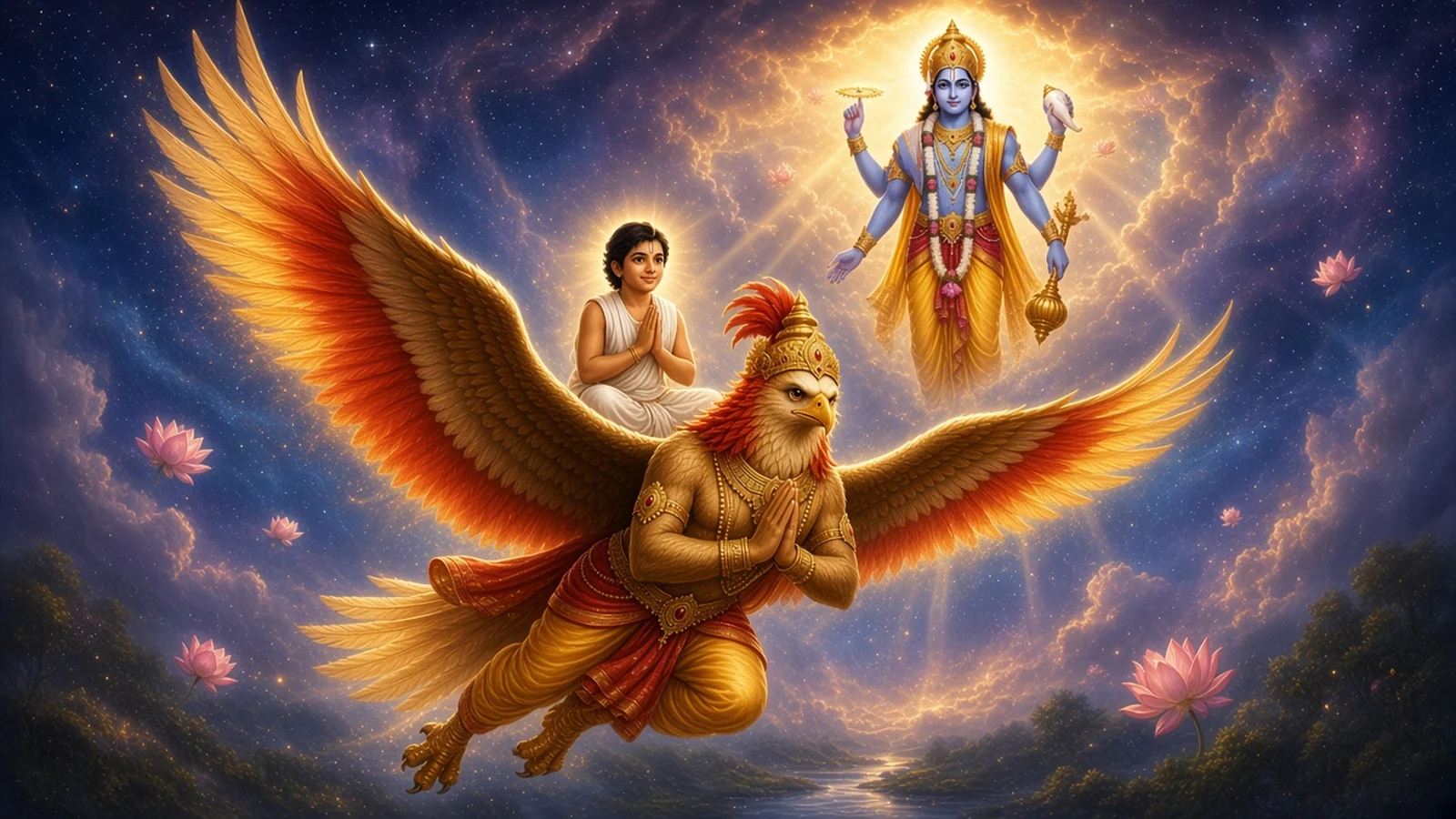
Then, says the Purana, a body of light was given him, and Garuda came down and carried him up to Vishnu's world.
"There is no vow like it in the three worlds," said Vasishtha to Rama. "Sacrifices, pilgrimages and gifts are not worth a sixteenth part of it. And whoever hears this story or tells it gains the merit of a thousand cows."
As households keep the day
the Mohini Ekadashi vrat katha · told across India · 2 min read
In homes and temples across India, the Ekadashi of bright Vaishakha comes round in April or May, and the families who keep it tell this story with one thing the Purana leaves out: the name.
"Why is it called Mohini?" a child will ask, and the answer comes back at once. Because on this day Vishnu became Mohini. The gods and the asuras had churned the ocean for the nectar, the asuras had snatched the pot, and Vishnu turned into the loveliest woman anyone had ever seen, took the pot from them and gave the nectar to the gods. So the day carries her name, and some calendars give her story as the day's katha instead of the merchant's.
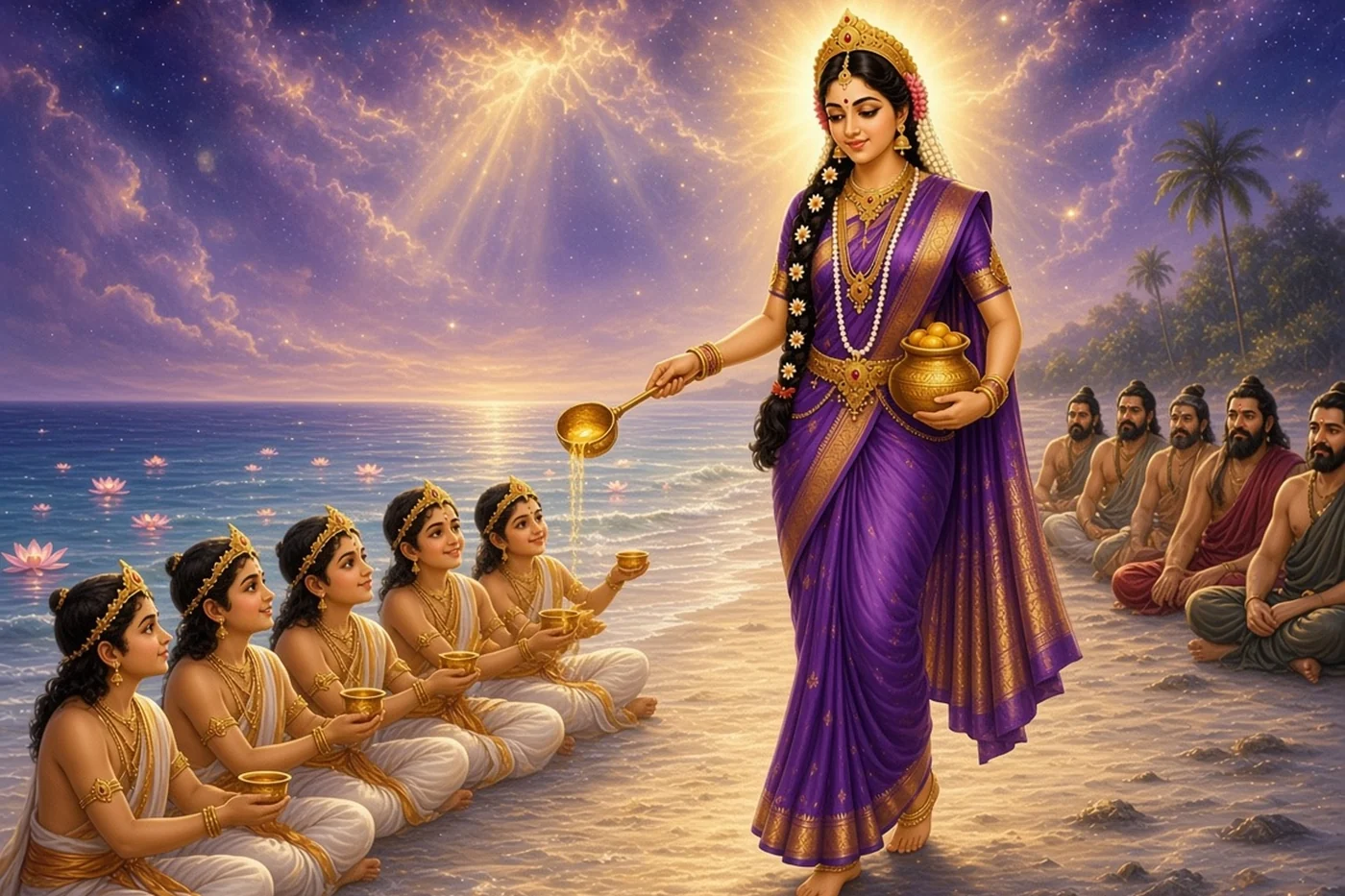
When it is the merchant's son, the story is the same in its bones, but small things move. The books it is read from name the Kurma Purana or the Surya Purana as its source. The sage does not let the boy touch his garment; drops of water fall from Kaundinya's cloth as he comes up from the Ganga, and the drops are what set him free. And the sage names the bright half of the month, without a slip.
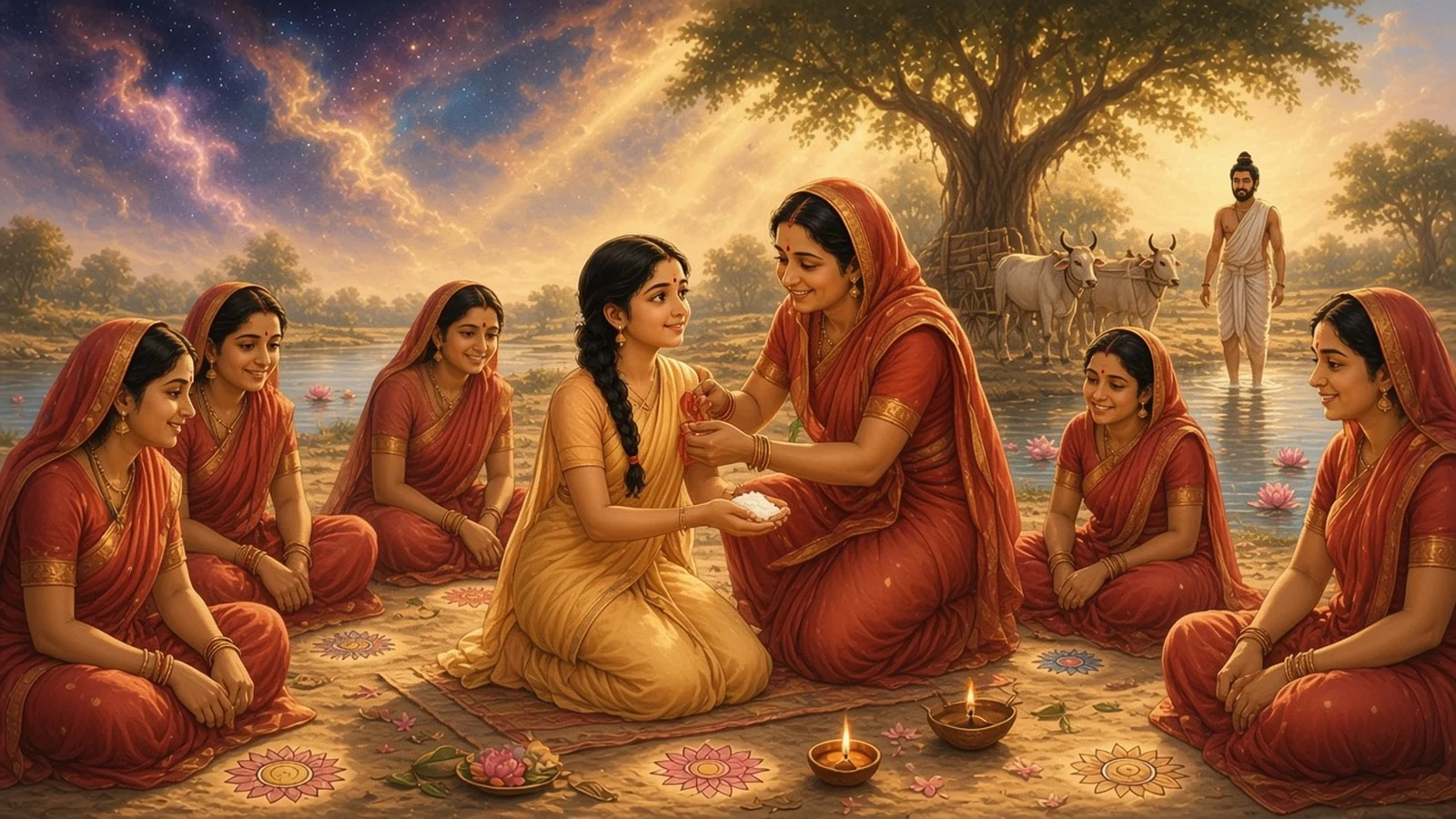
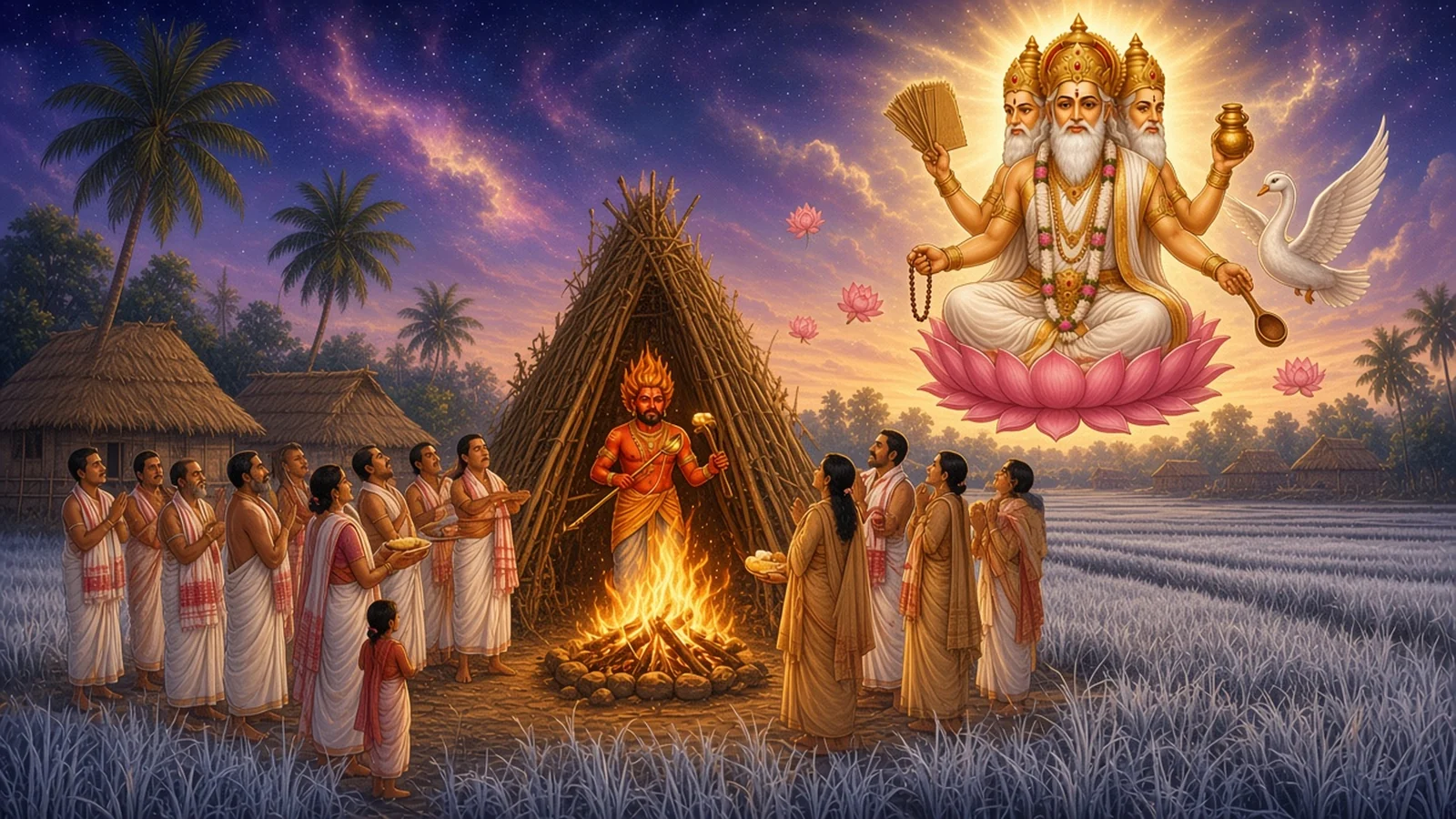
The fast is kept the household way. One plain meal on the day before, before sunset. No rice, no grain, no beans on the day itself, only fruit and milk. Vishnu's picture is set on a stool on a red or yellow cloth and given tulsi leaves, yellow flowers and sweets. The story is read aloud. Some stay awake through the night singing to him.
On the twelfth morning, after sunrise and within the hour the almanac gives, the fast is broken, often with a little milk, and something is given away in charity. The merchant's son had nothing left to give. The families who tell his story usually do.