As Karuppu's priests tell it
South India · Tamil Nadu, of Valmiki's hermitage and Ayodhya · 3 min read
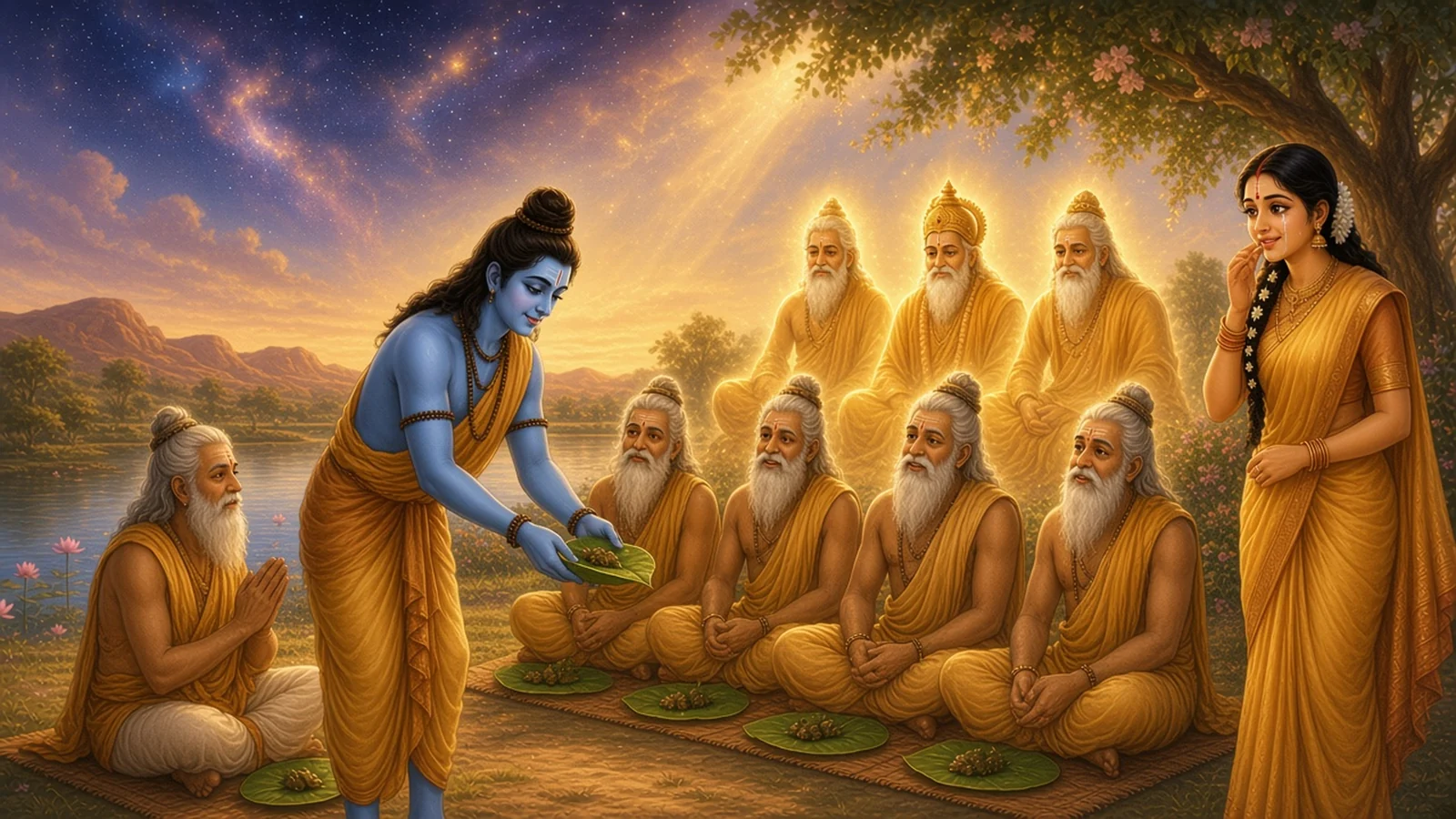
Rama had sent Sita away into the forest while she was carrying his children, and the sage Valmiki took her into his hermitage. There she gave birth to twin boys. One was golden, and he was called Lava. The other was blue, and he was called Kusha.
One day Sita had to go out.
"Watch them for me, father," she said to the old man. "I will not be long."
"Go," said Valmiki. "Nothing will happen to them while I am here."
But a sage's mind does not stay beside a cradle. Valmiki sat down by the two babies, closed his eyes and went deep into meditation, and the hut, the forest and the babies all slipped away from him.
Sita came back and found him sitting so still that she did not like to disturb him. She lifted Kusha softly from his place and carried him off with her. Valmiki never stirred.
When at last he opened his eyes, one cradle was empty.
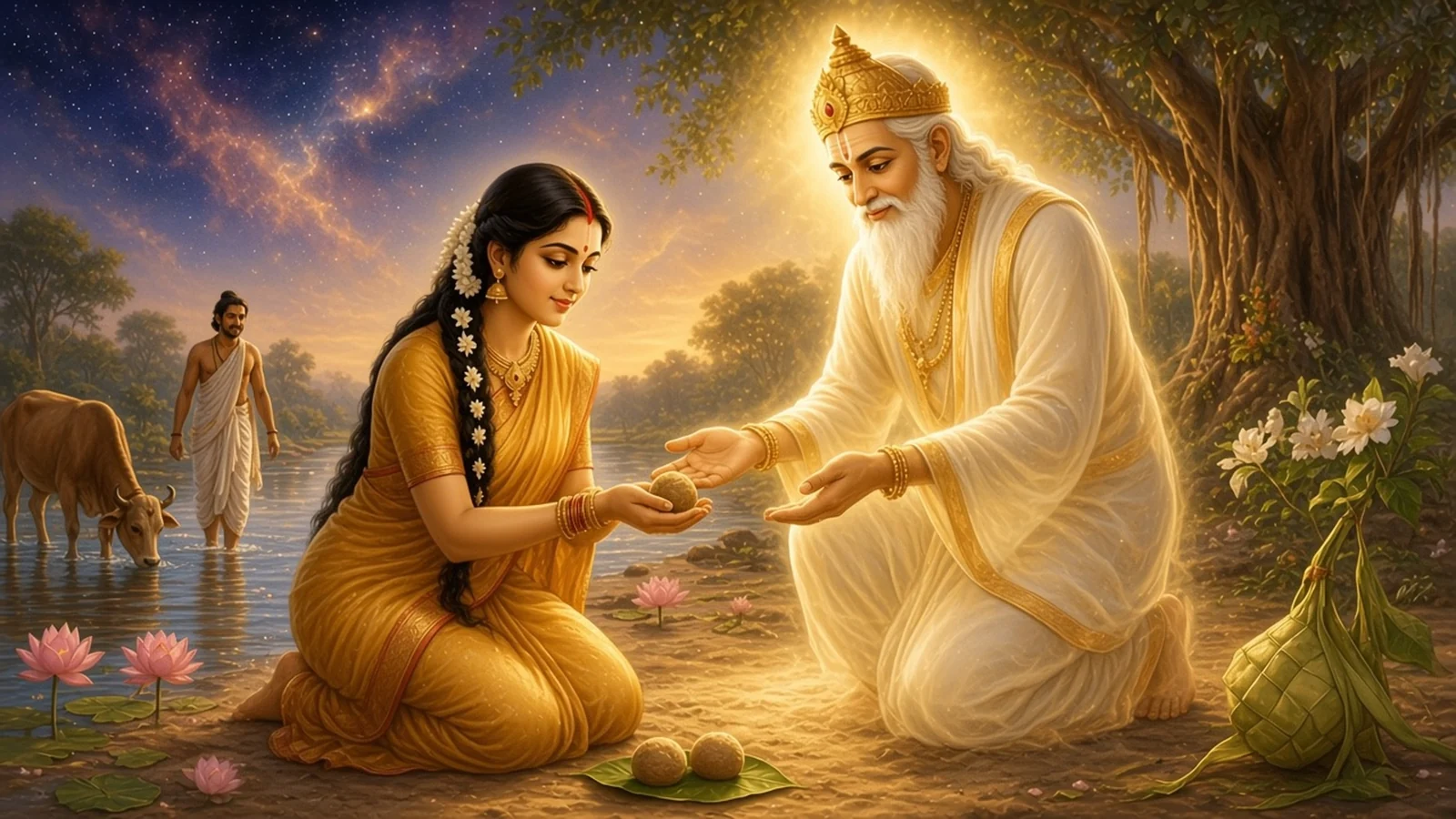
He looked all round the hut and out along the path, and there was no child anywhere. Then he did what only a sage could do. He gathered a handful of darbha, the sacred grass of the sacrifice, spoke his mantras over it and laid it in the empty cradle. A baby boy lay there, blue as Kusha, the very image of him.
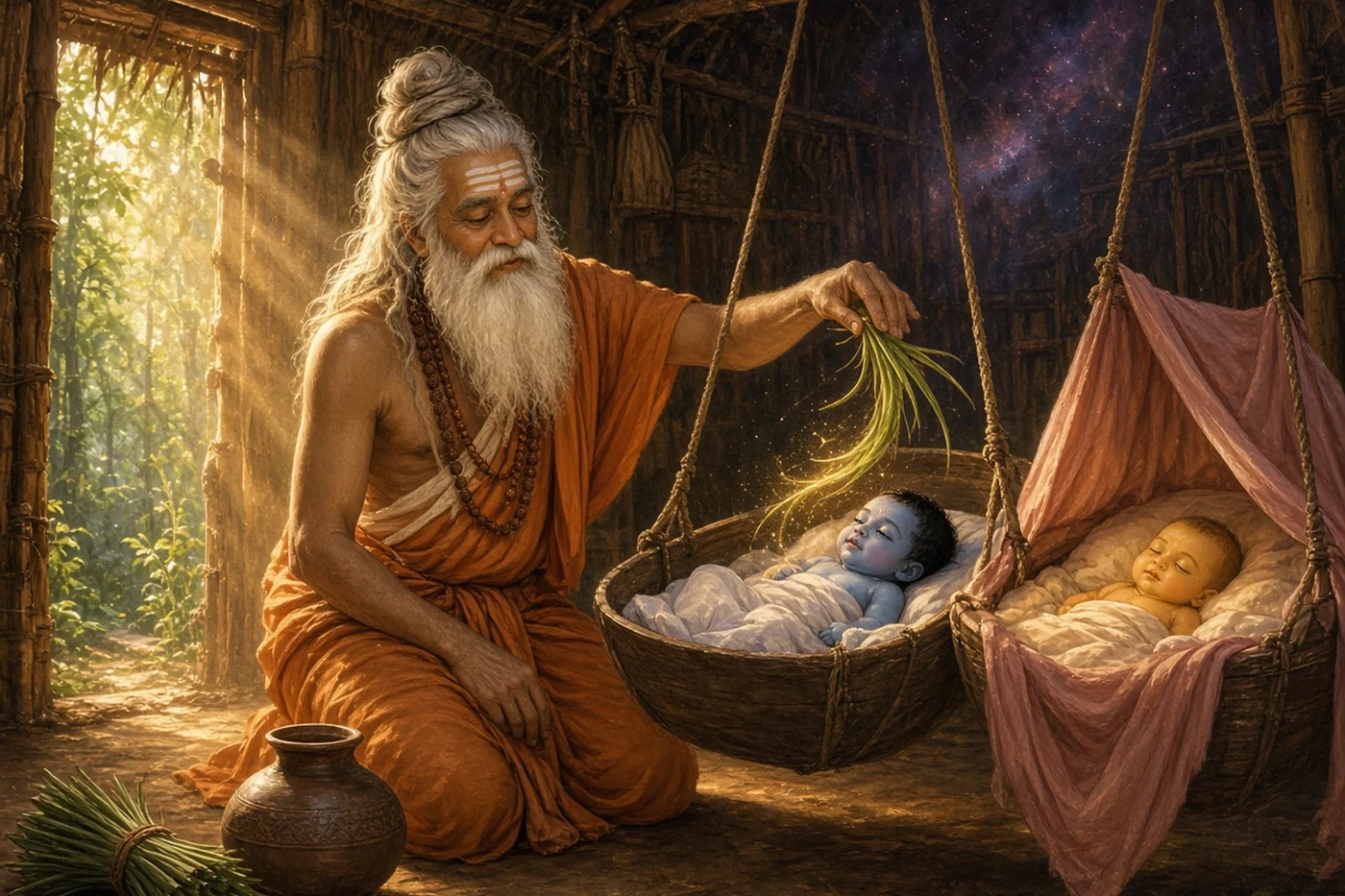
Sita came in with Kusha in her arms, and stopped. There were three children in the hut.
"Father, where did this one come from?"
Valmiki looked from the baby she was holding to the baby in the cradle, and he told her everything.
"I made him out of grass," he said. "But he breathes like any child. Will you raise him?"
Sita bent and picked him up. "He came because I took his brother," she said. "Then he is mine as well."
So she brought up three boys in the forest, and they grew up together as brothers.
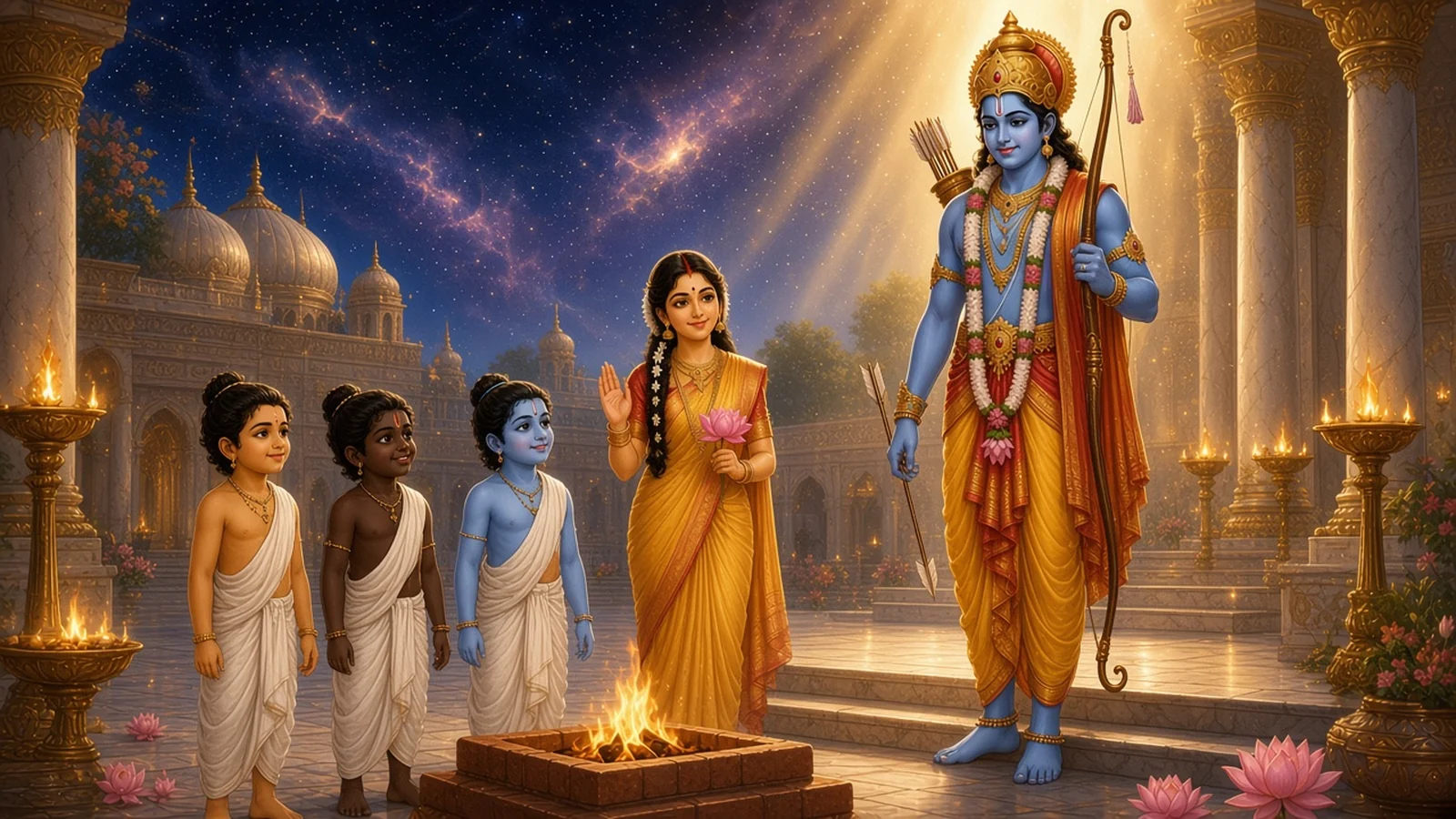
Years later Sita went back to Rama with her sons. Rama saw three boys where he had looked for two, and he had a fire built in front of him.
"Let my sons come to me through the fire," he said. "Whoever is truly of my line will cross it and not be burned."
All three walked into the flames. Lava came through untouched. Kusha came through untouched. The third boy came through too, but the fire had caught him, and his skin was scorched dark from head to foot.
Then Rama heard the whole of it: the sage's meditation, the empty cradle, the handful of grass. He looked at the dark boy for a long time.
"You walked into the fire for me," he said, "and you are not of my blood. You will not be my heir. You will be my guard. You will go before me and keep watch over me, and I name you Karuppu, the dark one."
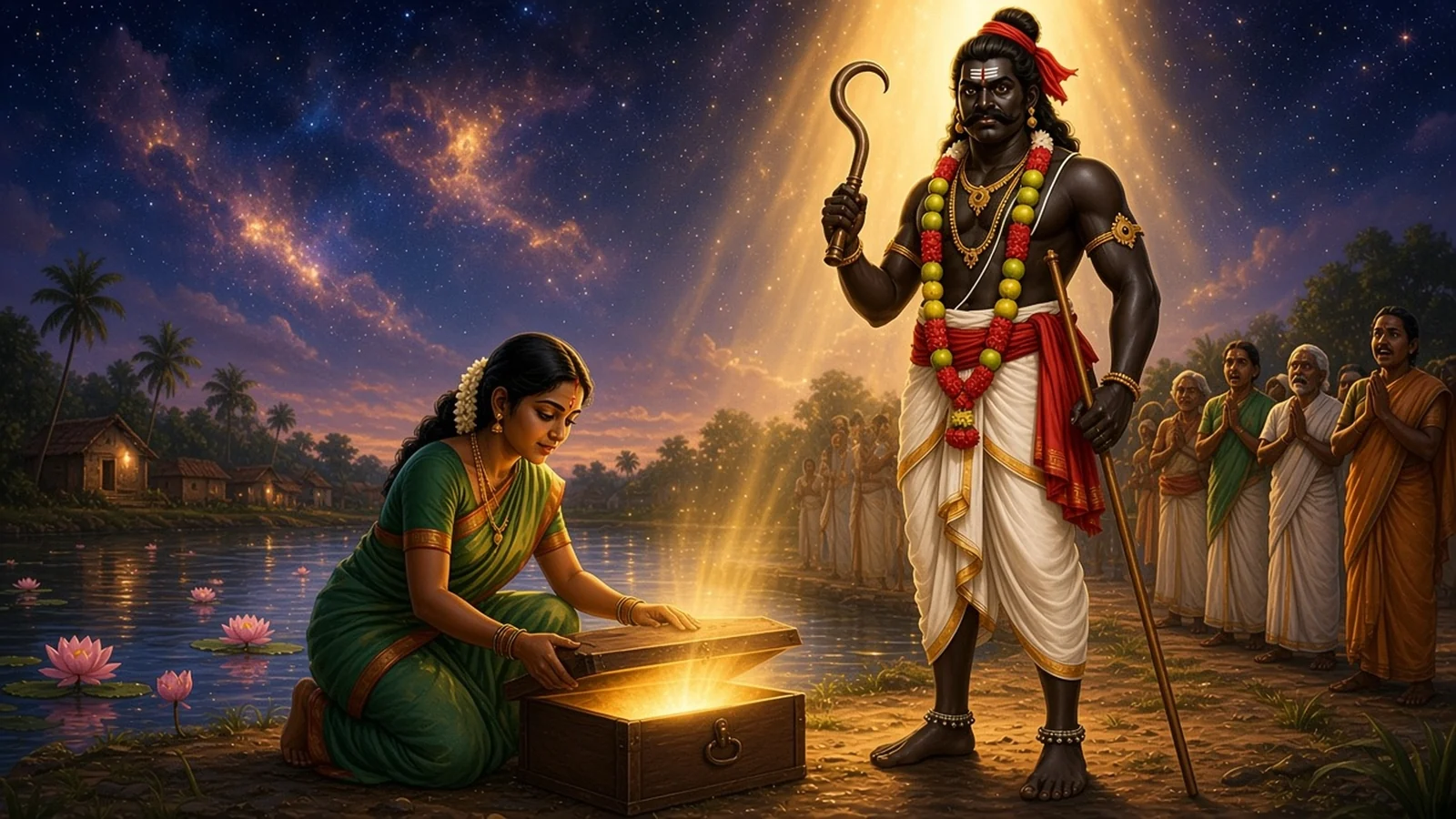
He was called Karuppannan after that, and the people of the Tamil country call him Karuppasamy. When his priests call him down at his festivals they sing to him as the one born of the darbha grass. He wears the three lines of Vishnu's people on his forehead, the devotees say, because he is Rama's own.
As the Kathasaritsagara tells it
Somadeva, Book 9, chapter 51 · Valmiki's hermitage, eleventh century · 2 min read
In Somadeva's great ocean of stories a queen tells this to her daughter, to show how long a loving heart can bear to be parted.
Rama, stung by what his people were saying, left the pregnant Sita in the forest, and she came to Valmiki's hermitage. The other hermits did not want her there. "Her husband threw her out," they said. "She must be guilty." Valmiki told them his meditation had shown him that she was faithful, and still they doubted, until Sita herself asked to be tested. She walked into the lake of Titthibhi, and the goddess Earth rose and carried her across in her lap. After that the hermits blessed her, and she bore one son. Valmiki named him Lava.
Sita used to leave the baby at the hut when she went to bathe. One day she took him with her instead. Valmiki looked in and saw that the child was gone. A wild beast has taken him, he thought. When she comes back and finds him missing she will die of sorrow.
So he took kusa grass and made from it a pure baby boy, Lava's double, and laid him where Lava had been lying.
Sita returned with her son on her hip and found a second baby waiting.
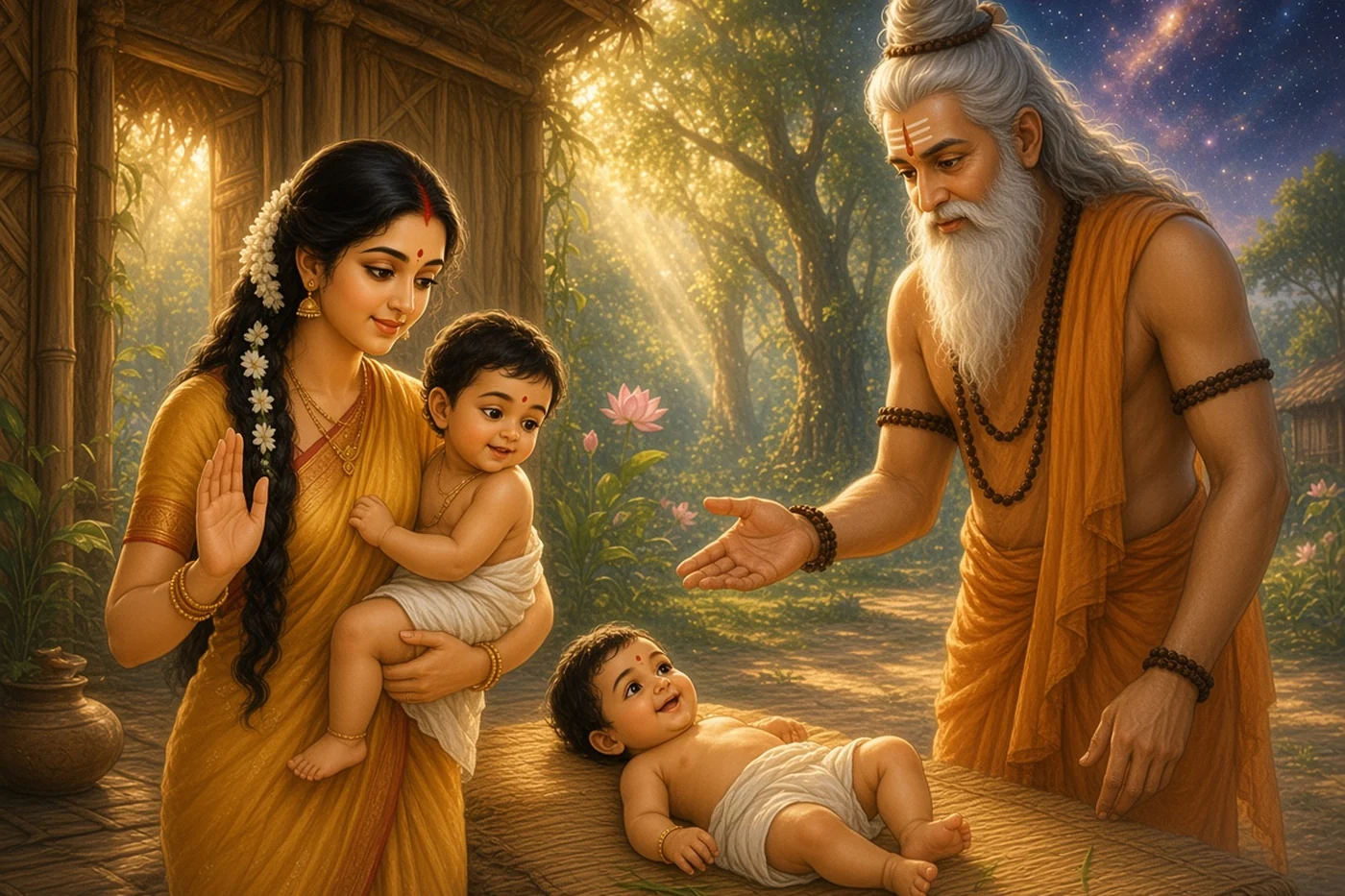
"Hermit, I have my own boy right here. Whose is this?"
Valmiki told her plainly what had happened. "Take him as your second son," he said. "I made him from kusa grass by my own power, and so his name is Kusa."
Sita raised the two of them, Lava and Kusa, and Valmiki performed their rites and taught them all the weapons of the gods and all the sciences. Years afterwards, when Lakshmana took Lava prisoner, it was Kusa who went to Ayodhya, beat Lakshmana in battle and held off Rama himself, until Rama learned who the boys were, wept, and brought Sita home.