Who Karuppasamy is
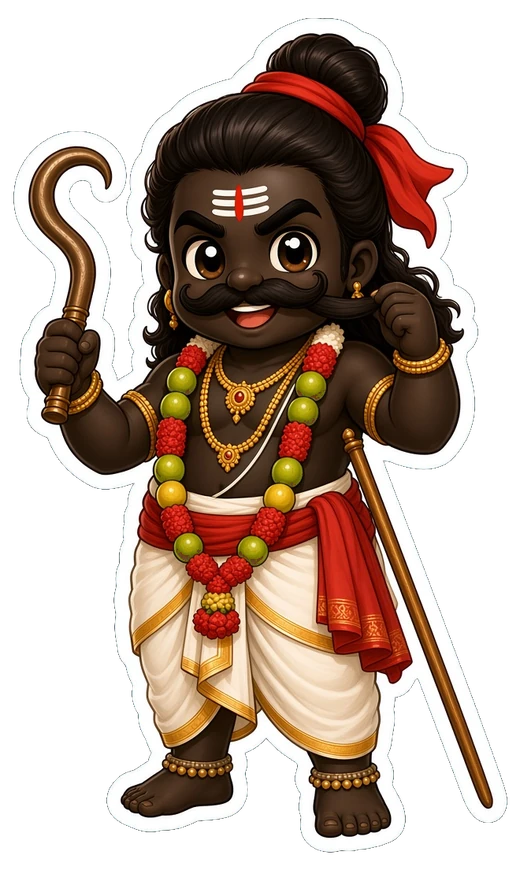
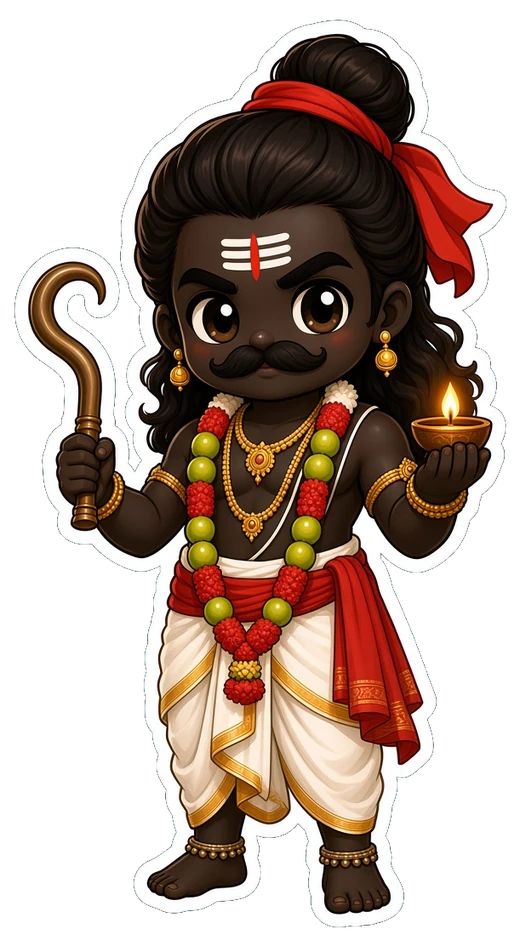
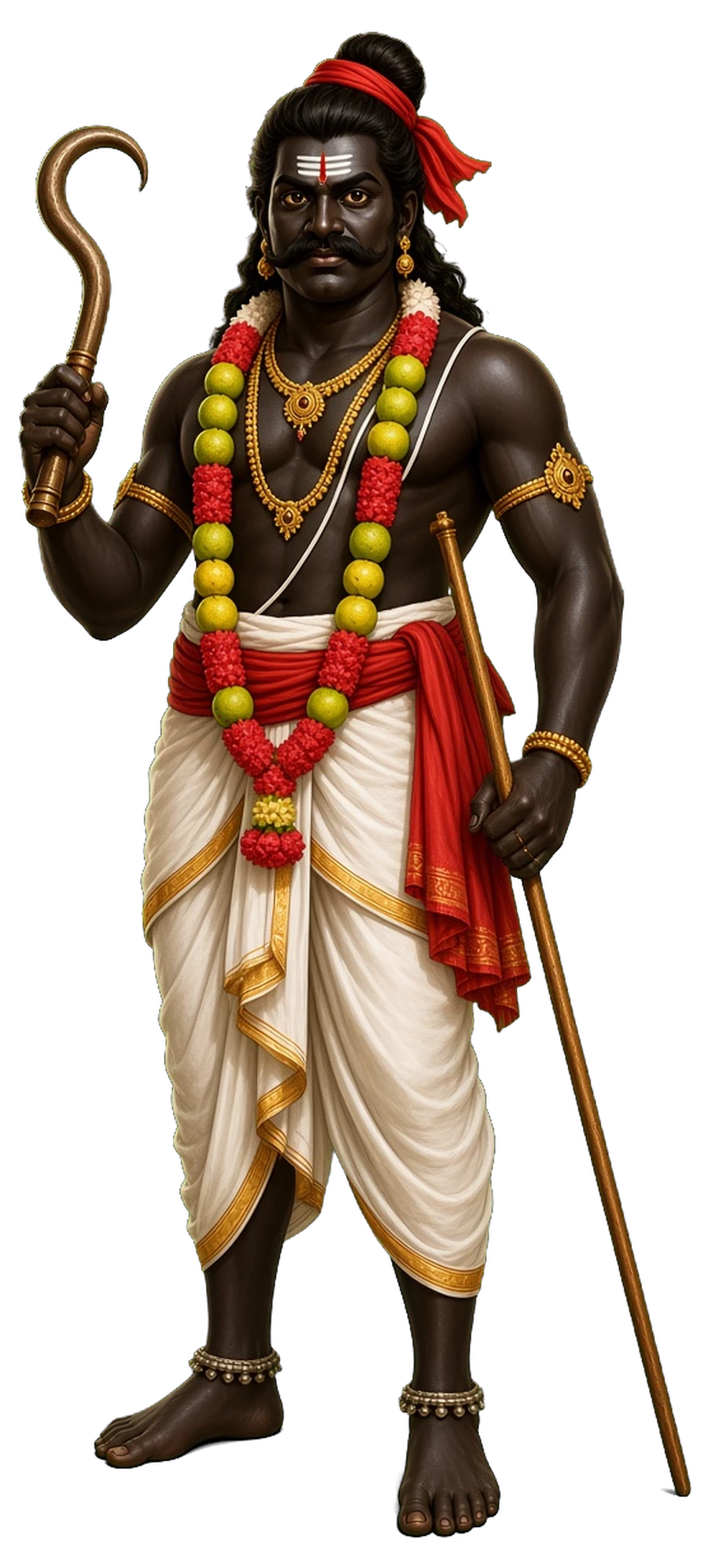
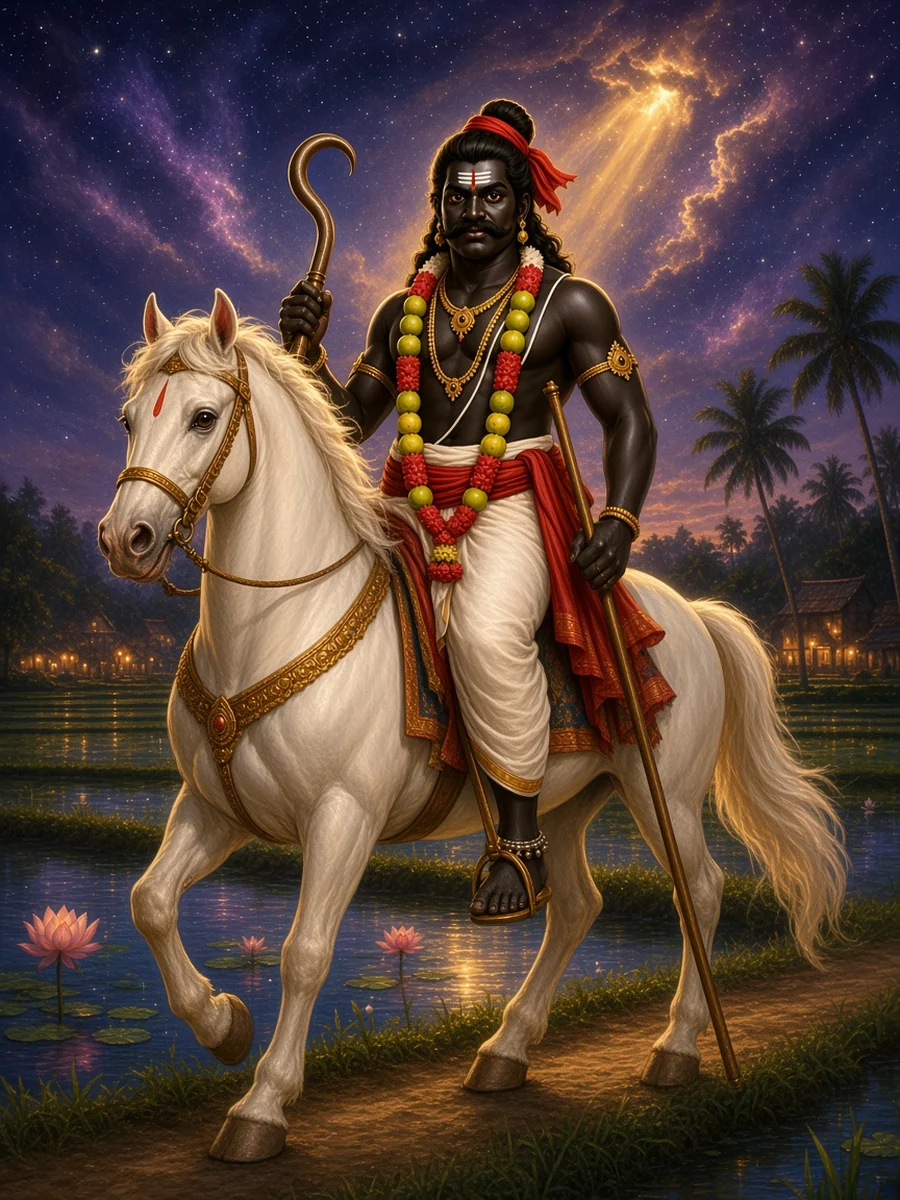
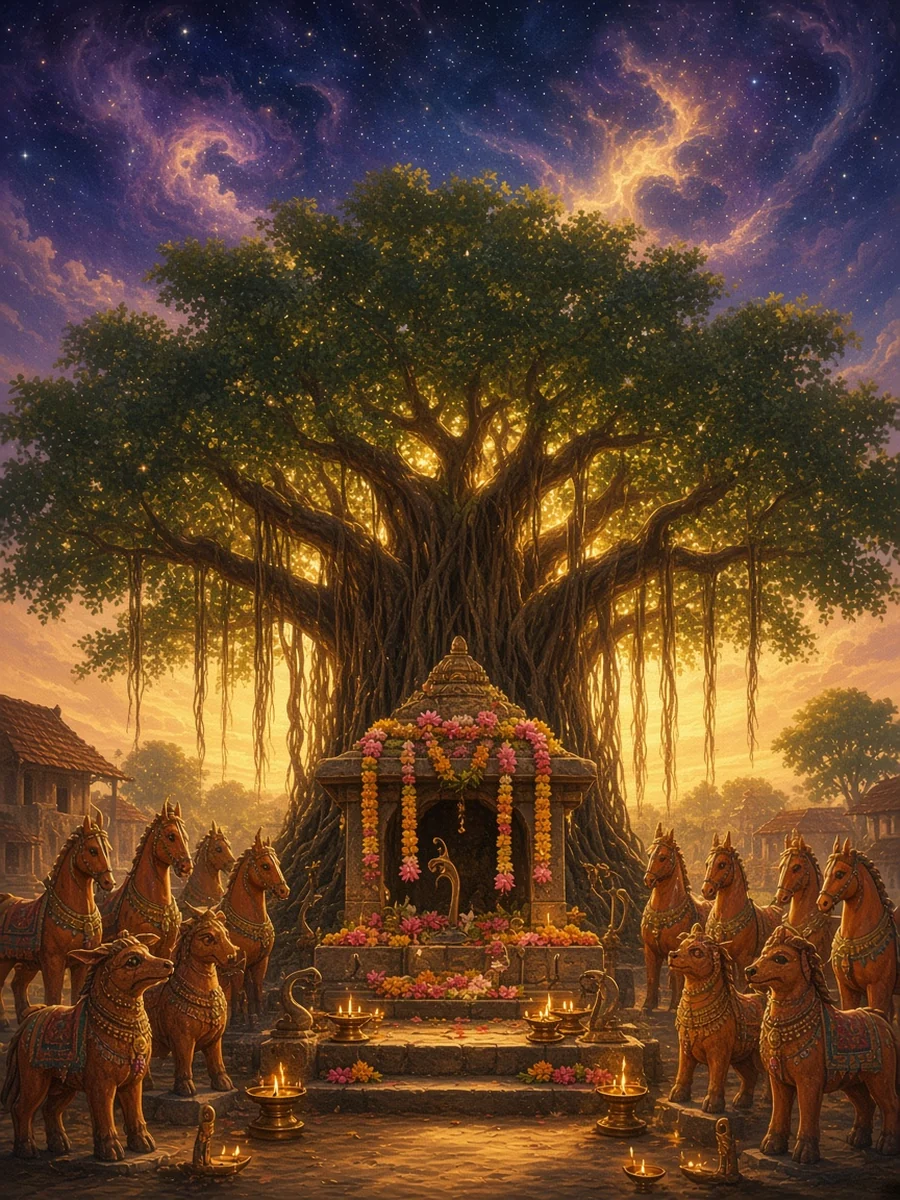
Karuppasamy, Karuppu to most of the people who call on him, is the black god of the Tamil village. His fuller name, Karuppannasamy, means the black elder brother god. He stands at the edge of the fields with his billhook raised, a moustached warrior with staring eyes, beside Aiyanar on his horse and the village goddesses, and he keeps watch through the night against thieves, spirits and every kind of wrong. Many families of south Tamil Nadu, the Kallars among them, keep him as their clan god. His shrines usually stand in the open outside the village, with no tower over them, and his priests come from the village itself. At his festivals he comes down on his oracle, the kodangi or samiyadi, and speaks.
He is not one god so much as many. Periya and Chinna Karuppu, Muthu Karuppu, Sangili Karuppu with his chain: the anthropologist Louis Dumont called Karuppu a category of gods, each one particular to its place, and most of his stories belong to a single shrine.
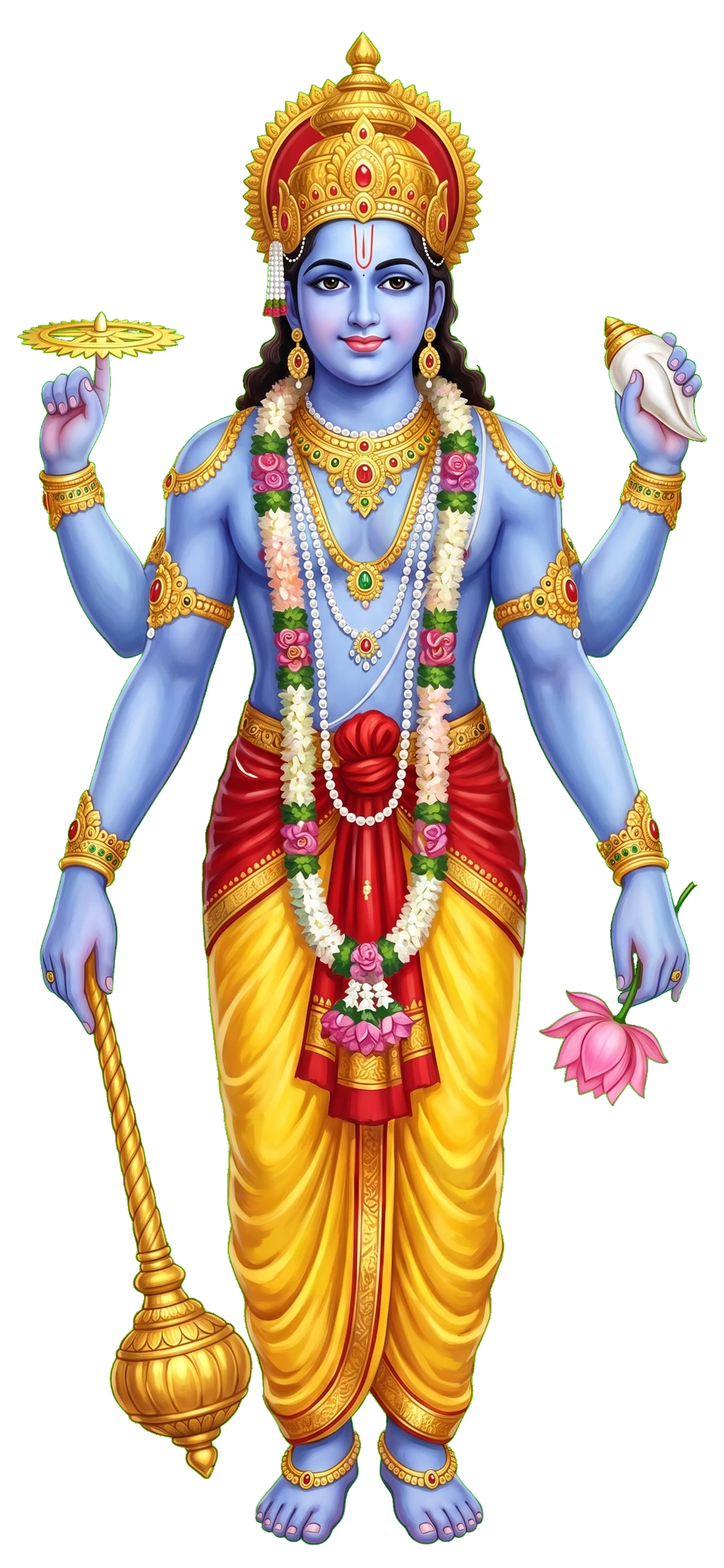
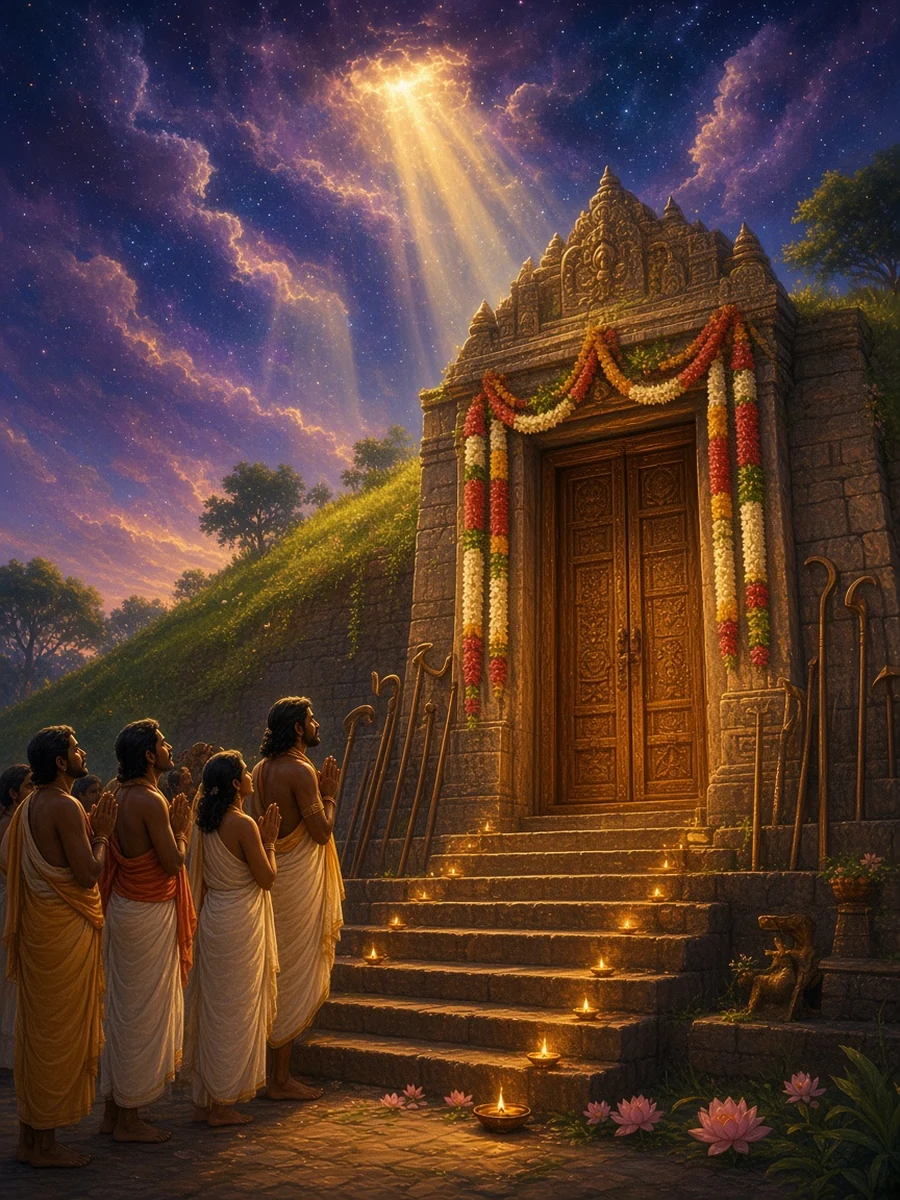
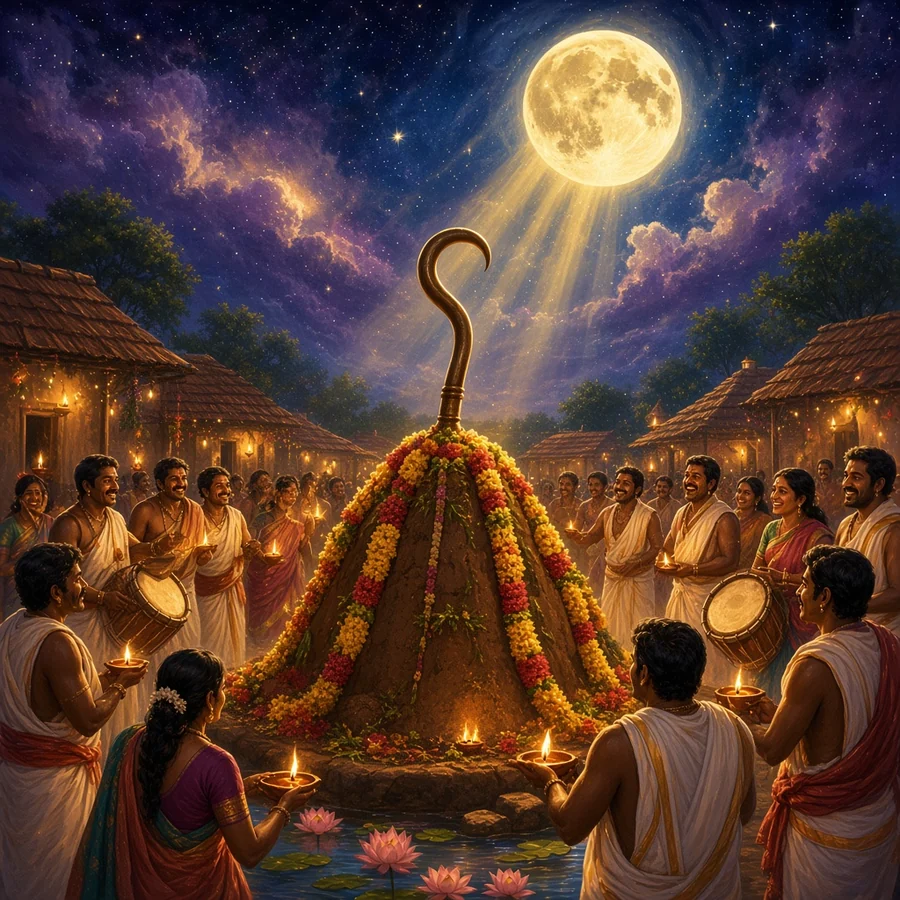
At Alagar Koil, the Vishnu temple on the hill north of Madurai, he has no image at all. The great gate tower stays shut, its door sealed with sandal paste, and behind it eighteen granite steps climb to an empty platform. That is Karuppu, the guard of the eighteen steps. The door opens on the full moon of Aadi, for a few minutes. The temple's key is laid before him at night, Alagar's jewels are counted out to him before every journey, and quarrels have long been settled by an oath at his steps.
His name is the Tamil word for black, which the oldest Tamil grammar says can also mean anger:
Karuppum sivappum vekulip porula; nirattu uru unarttarkum uriya enba: Karuppu and sivappu, black and red, carry the sense of anger; they are also used, it is said, to name a colour (Tolkappiyam, Sollatikaram, Uriyiyal 74 and 75).
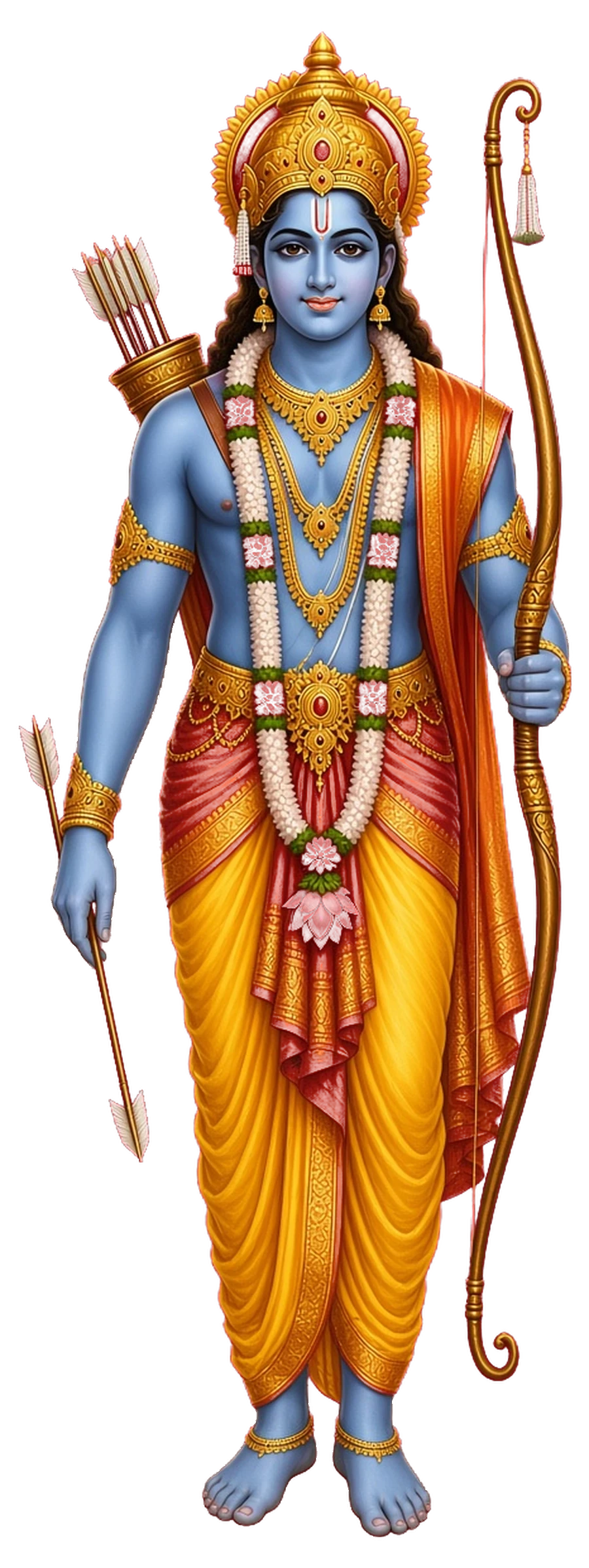
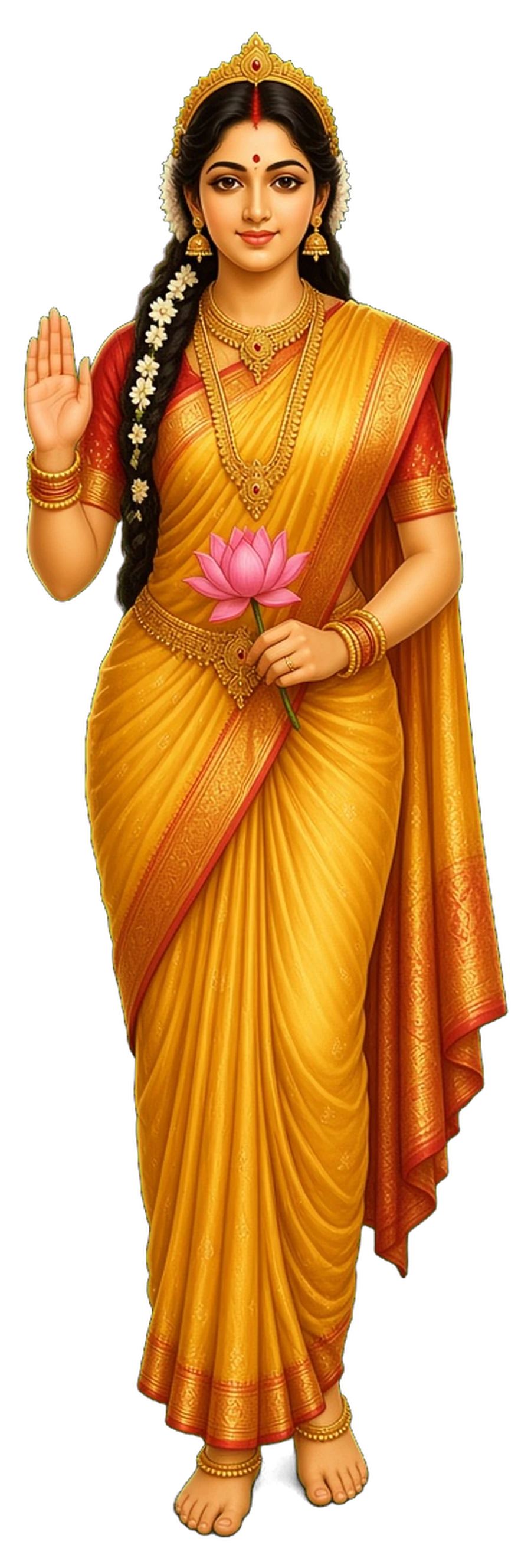
His stories on this site: The Eighteen Steps, where he comes to rob Alagar and stays to guard him; The Boy Made of Grass, where Rama's fire turns Valmiki's grass child dark; and The Box in the River, where a grieving priest's curse sends him down the Vaigai to Maranadu. Alagar sets out past his steps every Chithirai in The Brother Who Came Too Late.