As Alagar Koil tells it
South India · the hill temple of Alagar, north of Madurai · 3 min read
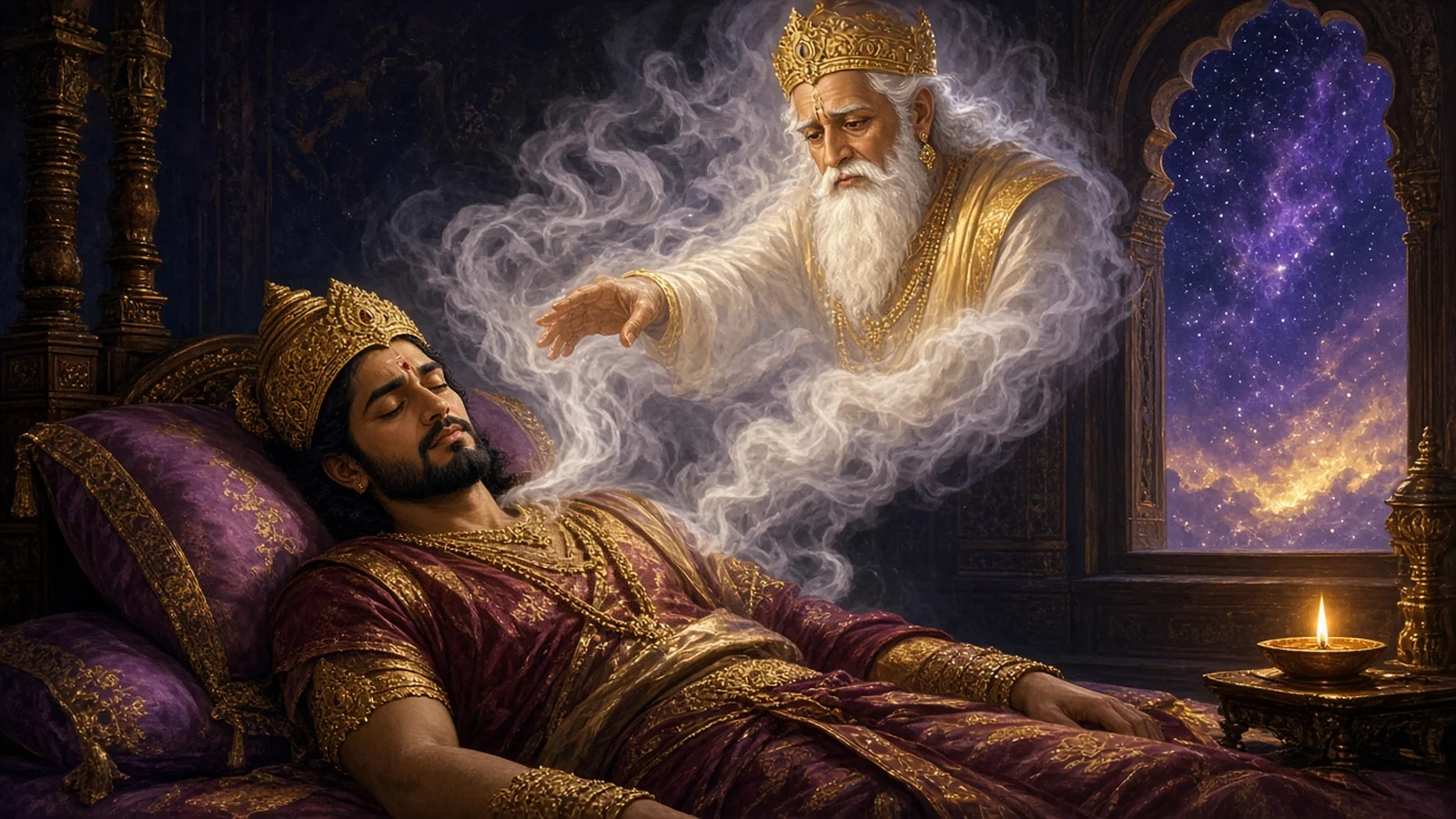
Beyond the western mountains, in the Malayalam country, there was a king who could not stop thinking about a face he had never seen. Travellers told him of Alagar, the Vishnu of the hill north of Madurai, and said that nothing on earth was as beautiful.
"A god like that belongs in my country," the king said. "Find me men who can bring him here."
He found eighteen. They were magicians, masters of spells and of the old arts of war, and they knew how to draw the power out of a sacred image until only stone and metal were left, light enough to carry away.
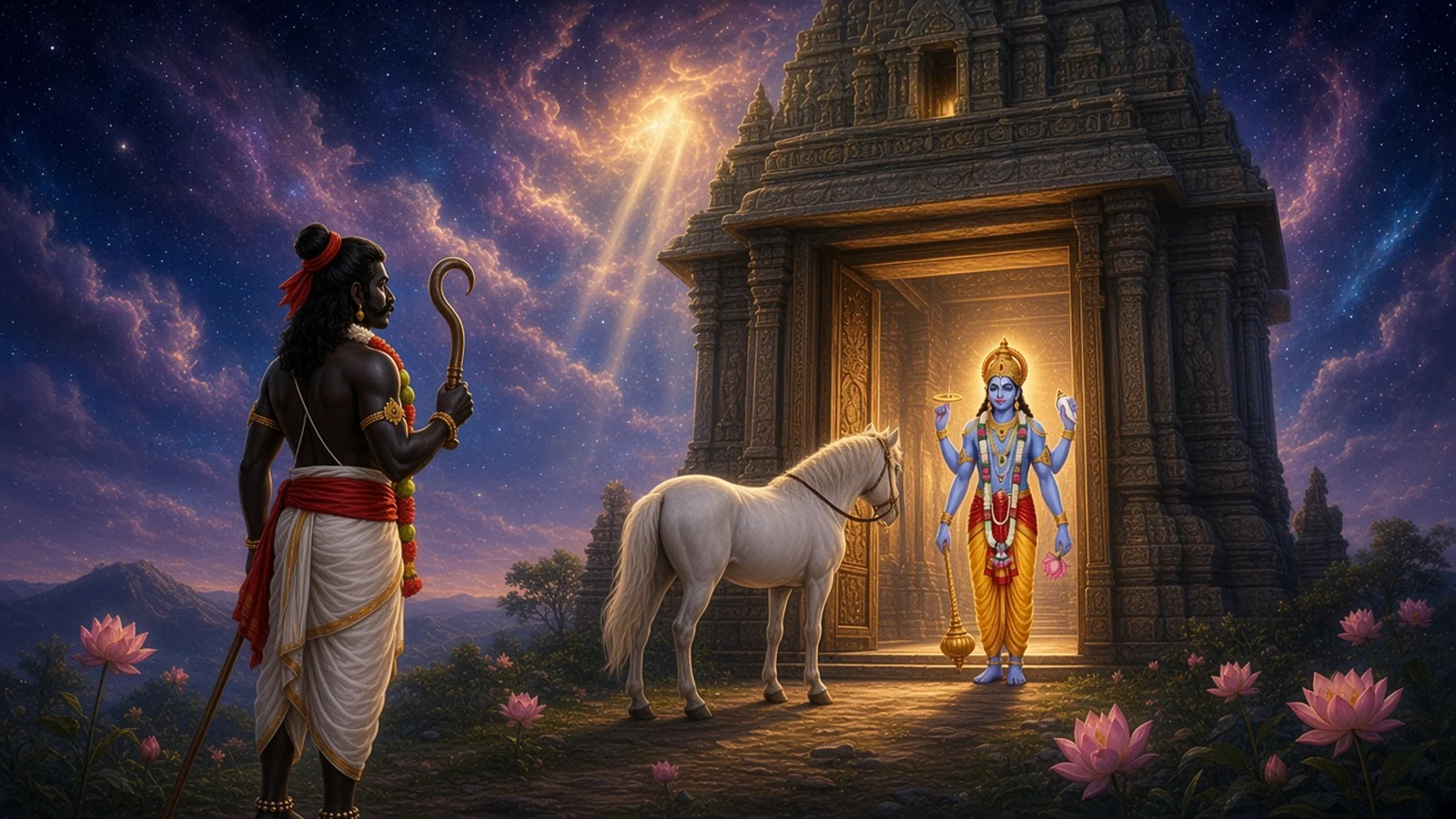
The king did not send them alone. Karuppu, the black god who kept watch over the Malayalam land, went with them. He rode ahead of the eighteen on a white horse, his billhook in his hand, and no one on the road dared to stand in their way.
So they crossed the hills and came to Alagar's mountain. The magicians slipped inside towards the sanctum. Karuppu rode up to the door to guard their backs, turned to look in, and saw Alagar.
He did not move again. He forgot the king, the road and the eighteen behind him. He stood in the doorway with his eyes on that face, as still as the stone posts on either side of him.
Inside, the magicians went to work on the ornaments and on the god himself. But a man of the village had seen strangers go into the shrine, and he ran out into the street.
"Thieves! There are thieves in Alagar's house!"
The whole hill woke. People came with torches and sticks, and the eighteen were caught in the sanctum with their hands on what they had come for. Nobody had stopped the crowd at the door. Their guard was still standing there, gazing at the god.
The eighteen were sentenced to death. They were buried in front of the great gate tower, each one under a step, eighteen steps in all.
Then Alagar spoke to the dark figure at his door.
"You came here to help them rob me. And all this while you have kept nobody out."
"I came for my king," said Karuppu. "I stayed for you. Do not send me back. Let me keep your door."
"Then keep it," said Alagar. "Stand on those eighteen steps. Watch the men who lie under them, and watch over everything that is mine."
So Karuppu stayed. He has no image there. The great door of the gate tower stays shut, sealed with sandal paste, and opens for only a few minutes on the full moon of Aadi; the door itself is worshipped as Karuppu of the eighteen steps. Later he asked for one thing more. A priest dreamed that the guardian wanted the food from the last worship of the night, and it has been offered to him ever since.
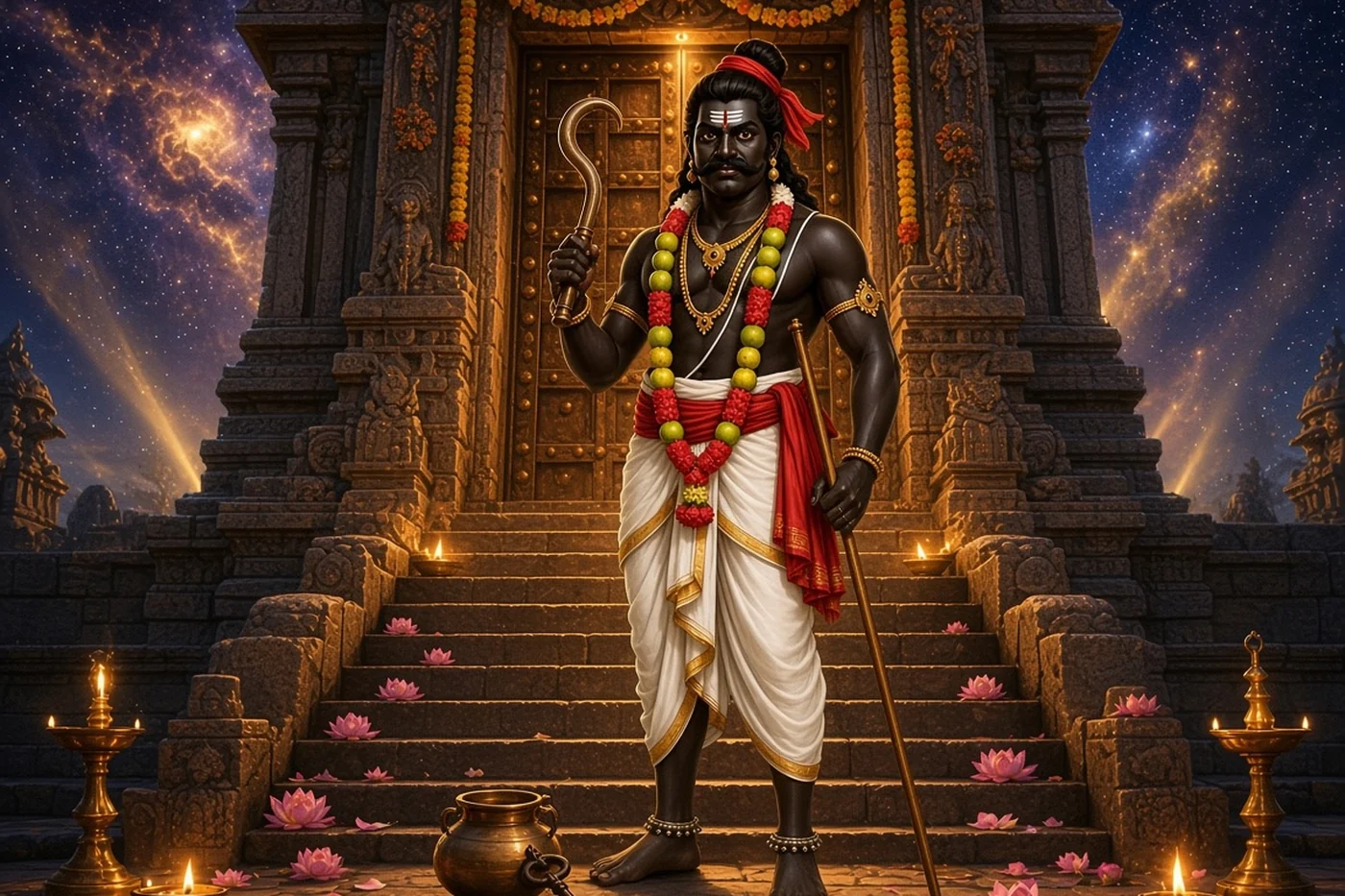
Alagar trusts him with everything. When the temple is locked at night the key is laid at Karuppu's door and fetched again in the morning. The water carried up from the Nupura Ganga spring for the god's bath is set down there first, and the man who carried it swears that it came pure. When Alagar goes down to Madurai in Chithirai, the list of the jewels he wears is read out to Karuppu, and when he comes home it is read again, and only when every jewel has been counted does Alagar go in.
The people of the Madurai country bring him their quarrels too. A man who swears at the eighteen steps is believed. Nobody, they say, would dare to lie to Karuppu's face.
As the Madura country told it in 1921
Henry Whitehead, The Village Gods of South India, pages 113 to 115 · 2 min read
Henry Whitehead, the Bishop of Madras, wrote this down from the folklore of the district, and in his telling Karuppu does not come with the thieves at all.
Some centuries ago, the story went, eighteen Mayavis came to Azhagar's shrine. The name means makers of illusion, for they could put whatever they liked into people's minds. They had not come for gold. They meant to take the holiness of the place itself, to draw the god's essence into a wooden cylinder and set it down somewhere far away.
Azhagar knew what was coming. He entered the body of a small boy, and the boy went before the king and spoke in the god's voice.
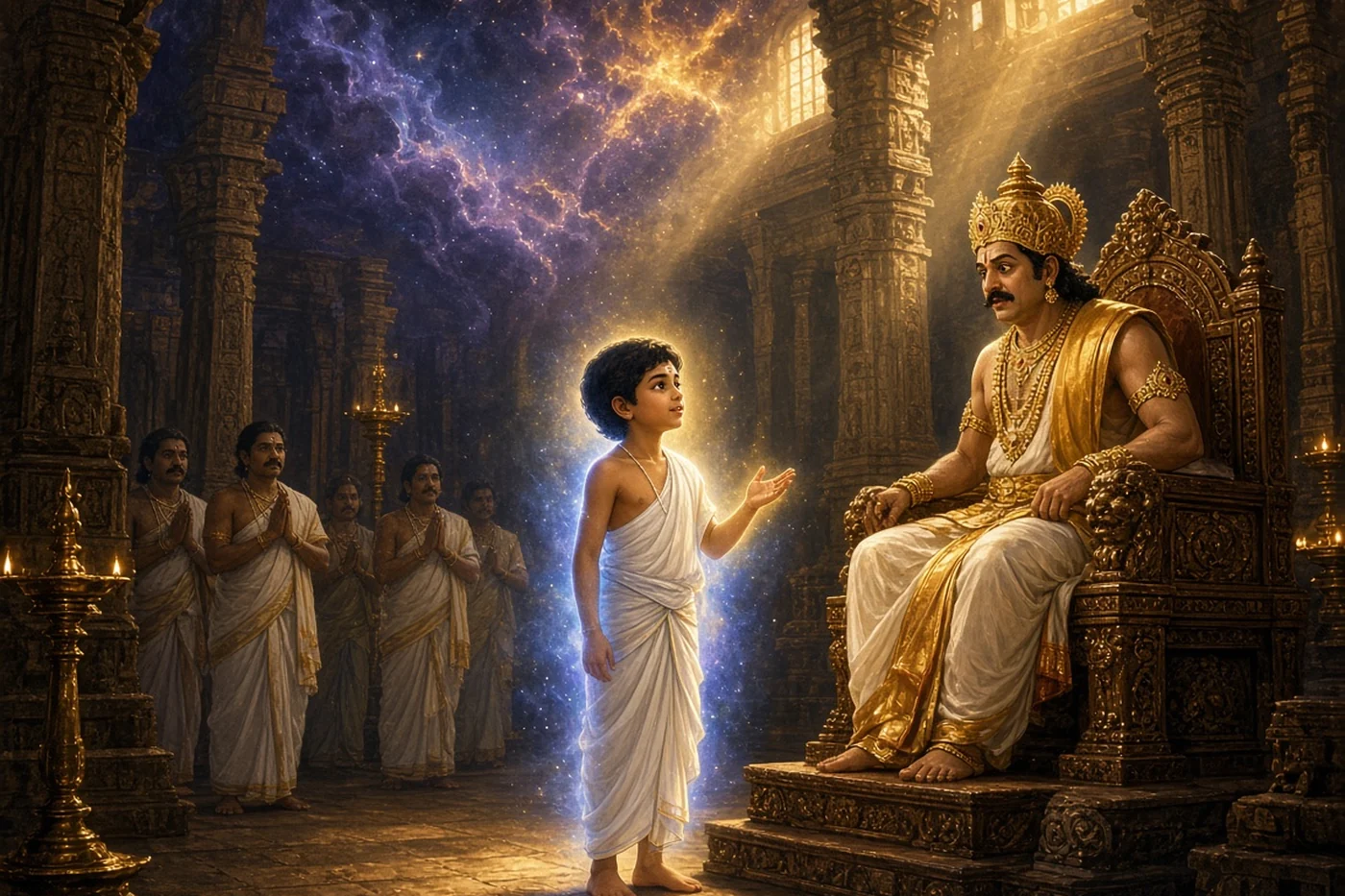
"Eighteen magicians are on their way to steal what makes my temple mine. Stop them. You will not see them, because they rub a black paste on their foreheads that hides them from every eye."
The king had no idea how to catch men he could not see. He went to Ramanuja, his family priest.
"Shut every door of the temple," said Ramanuja, "and pour boiling rice-water into the courtyard. The steam will melt the paste."
It was done. The courtyard filled with steam, and out of the mist, one after another, eighteen men took shape. The king's soldiers seized them, and they were put to death. Each was buried beneath one of the eighteen steps leading up to Karuppan's platform, as a warning to every liar and every thief.
Whitehead describes a huge Karuppan on that platform, twenty feet tall, with eyes as big as umbrellas, hung all over with spears and guns that people had brought in fulfilment of vows. The treasury was locked each night and its key left on the platform in front of him, and no one would ever dare to take treasure he was watching. Lawsuits came to the steps from all over the district. A man who swore there that his claim was just had it accepted, since no one was thought bold enough to swear falsely before Karuppan.