As the yoga schools tell it
The tradition of Patanjali's birth · India · 3 min read
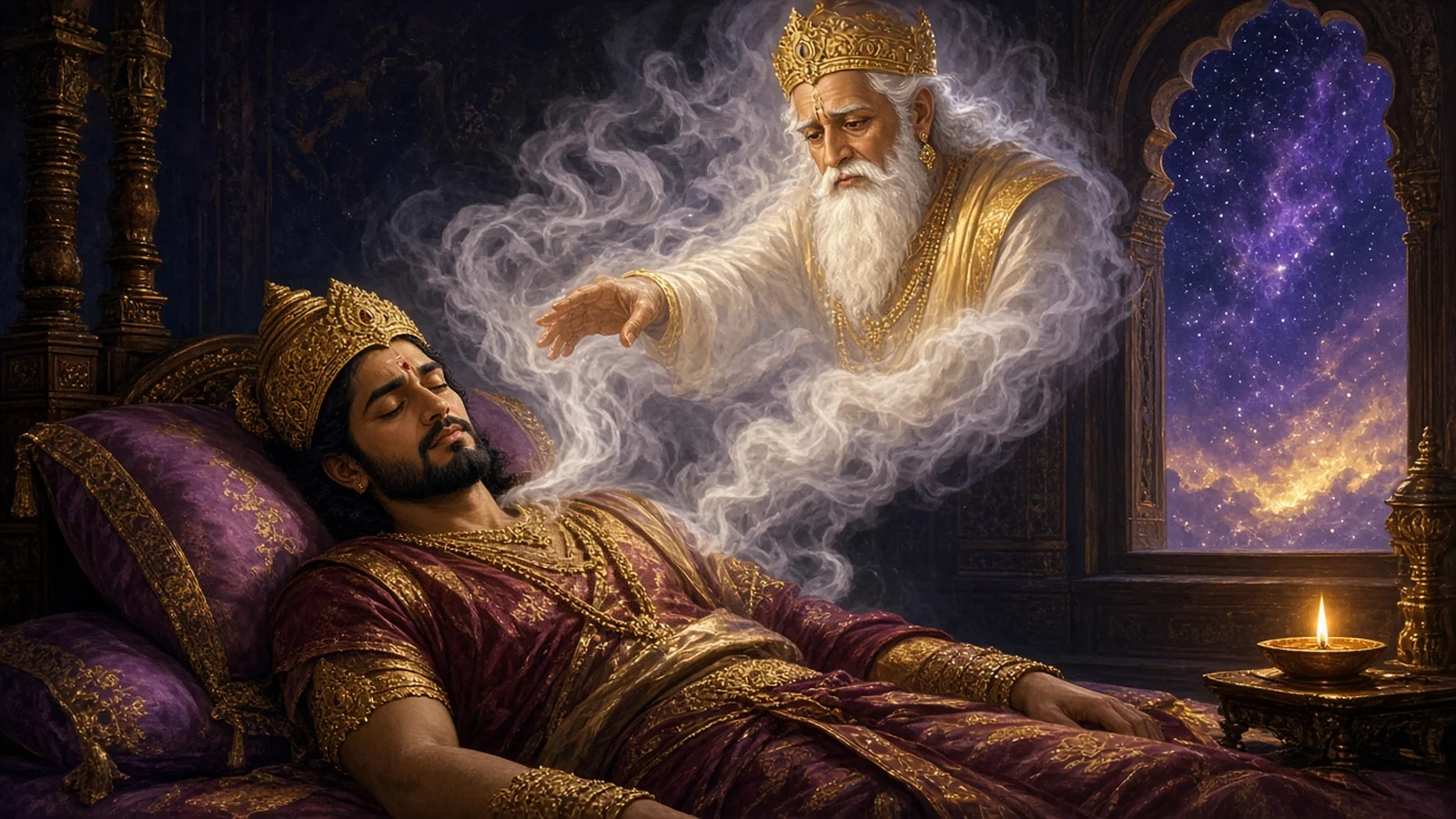
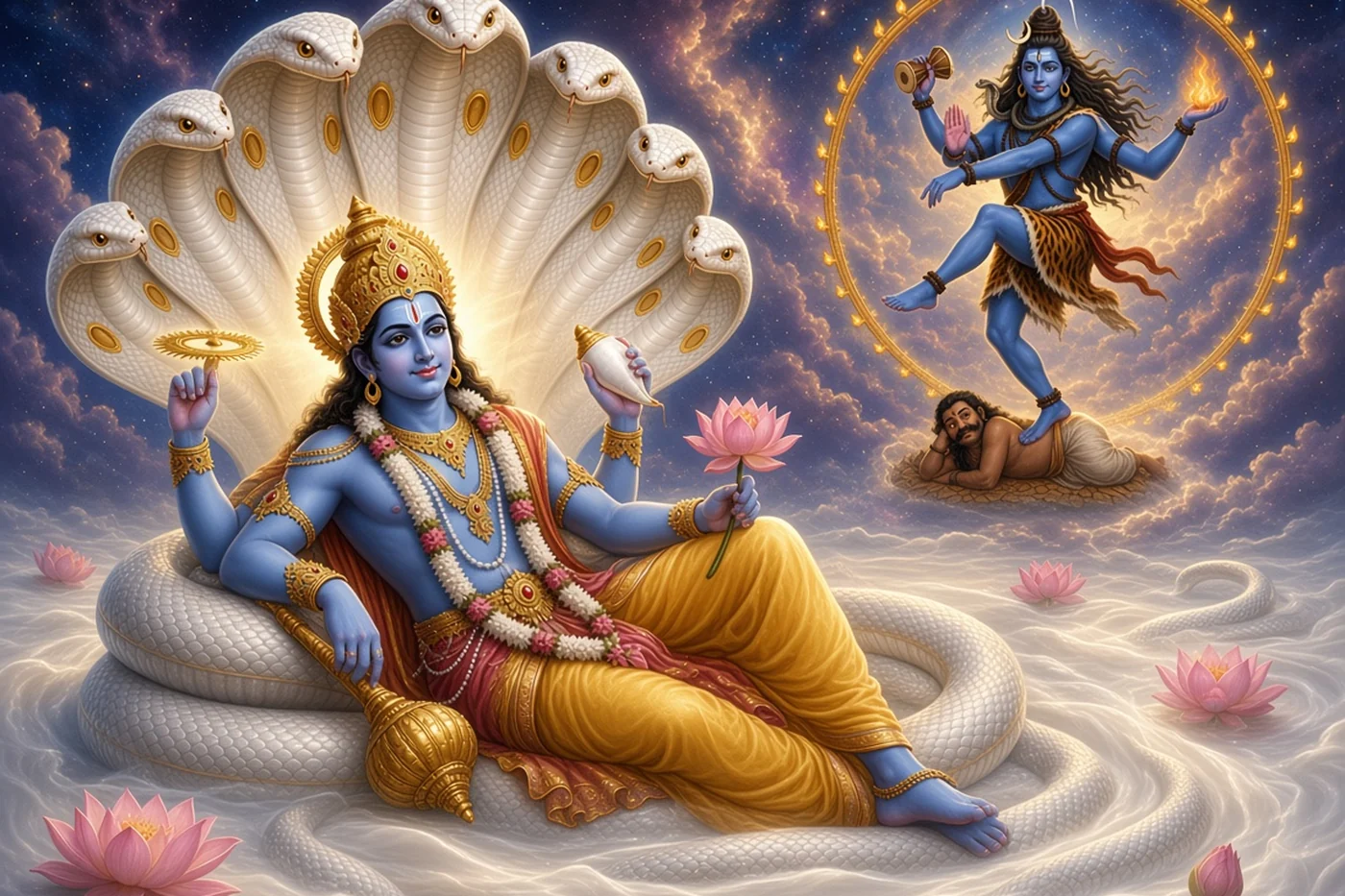
Vishnu was lying on Shesha on the ocean of milk, as he always does, when the serpent felt him grow heavy.
It began as a trembling. Vishnu's body seemed to sway to a rhythm Shesha could not hear, and with every beat it pressed harder into the coils, until the serpent who carries the worlds without effort was gasping for breath. Then, all at once, the weight was gone. Vishnu lay as light as ever, smiling to himself.
"Lord," said Shesha, "what was that? I have held you since before the worlds began, and I have never felt you so heavy."
"Shiva was dancing," said Vishnu. "I was watching him, and I forgot myself. His dance has such grace in it, such beauty and such power, that my body danced with it."
Shesha was quiet for a long time, all his thousand heads thinking the same thought.
"I want to learn that dance," he said at last. "I want to dance it for you, the way he danced for you just now."
Vishnu was pleased. "You will," he said. "Shiva will grant it to you, and soon. But first you must go down to earth and be born there among men. While you are there you will do the world a service: you will write a great commentary on grammar, so that the words of the sacred tongue are kept whole. After that you can give yourself to the dance."
So Shesha closed his eyes and looked for a mother.
On earth there lived a woman called Gonika, a yogini, who had given her whole life to prayer and to the discipline of yoga. She was growing old, and she had one sorrow. She knew a great deal, and she had no son and no pupil, nobody to give it to. She was afraid her life would end before she found one.
Shesha saw her, and knew that she was the mother he had been looking for, and he waited for the right moment.
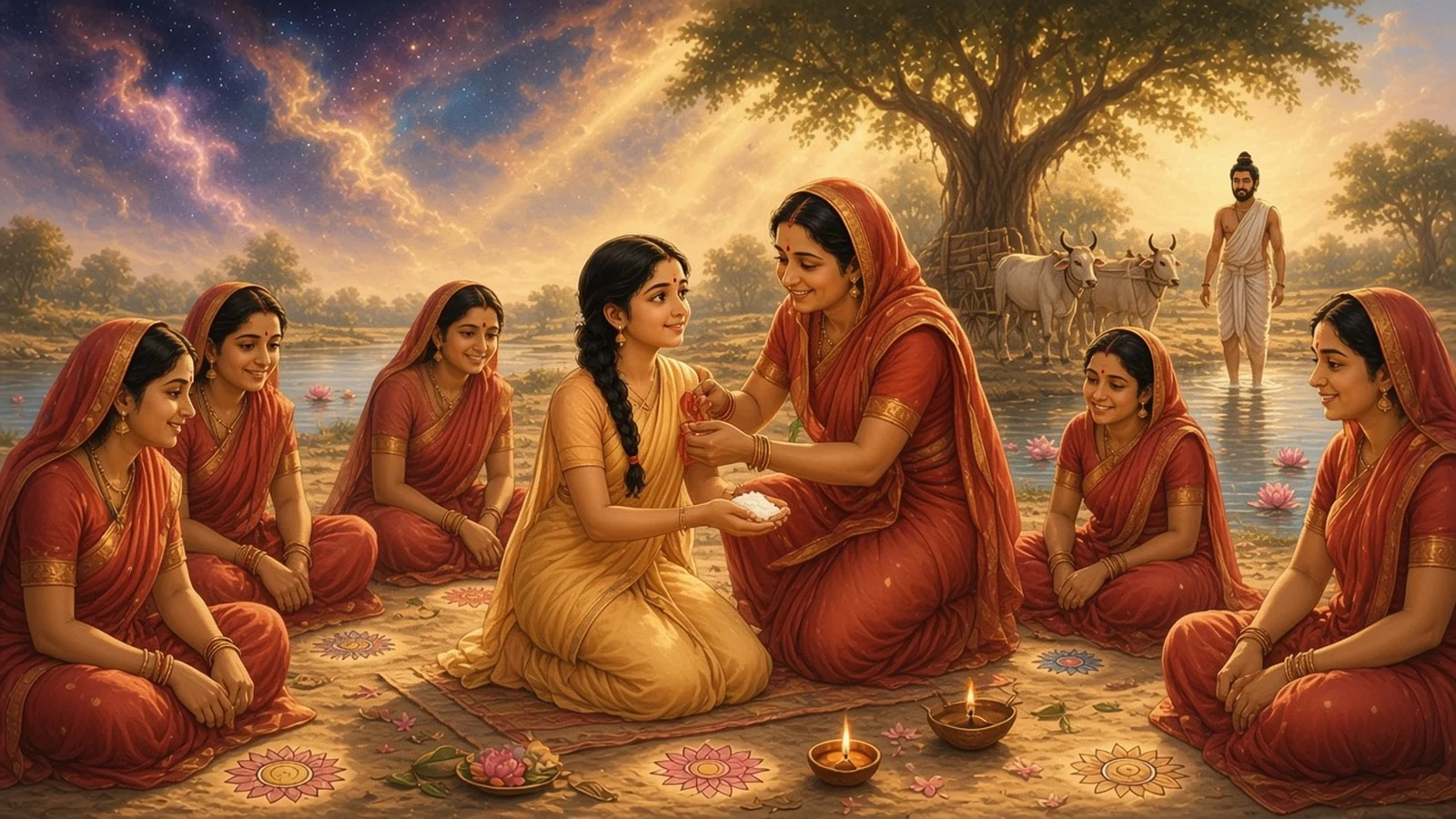
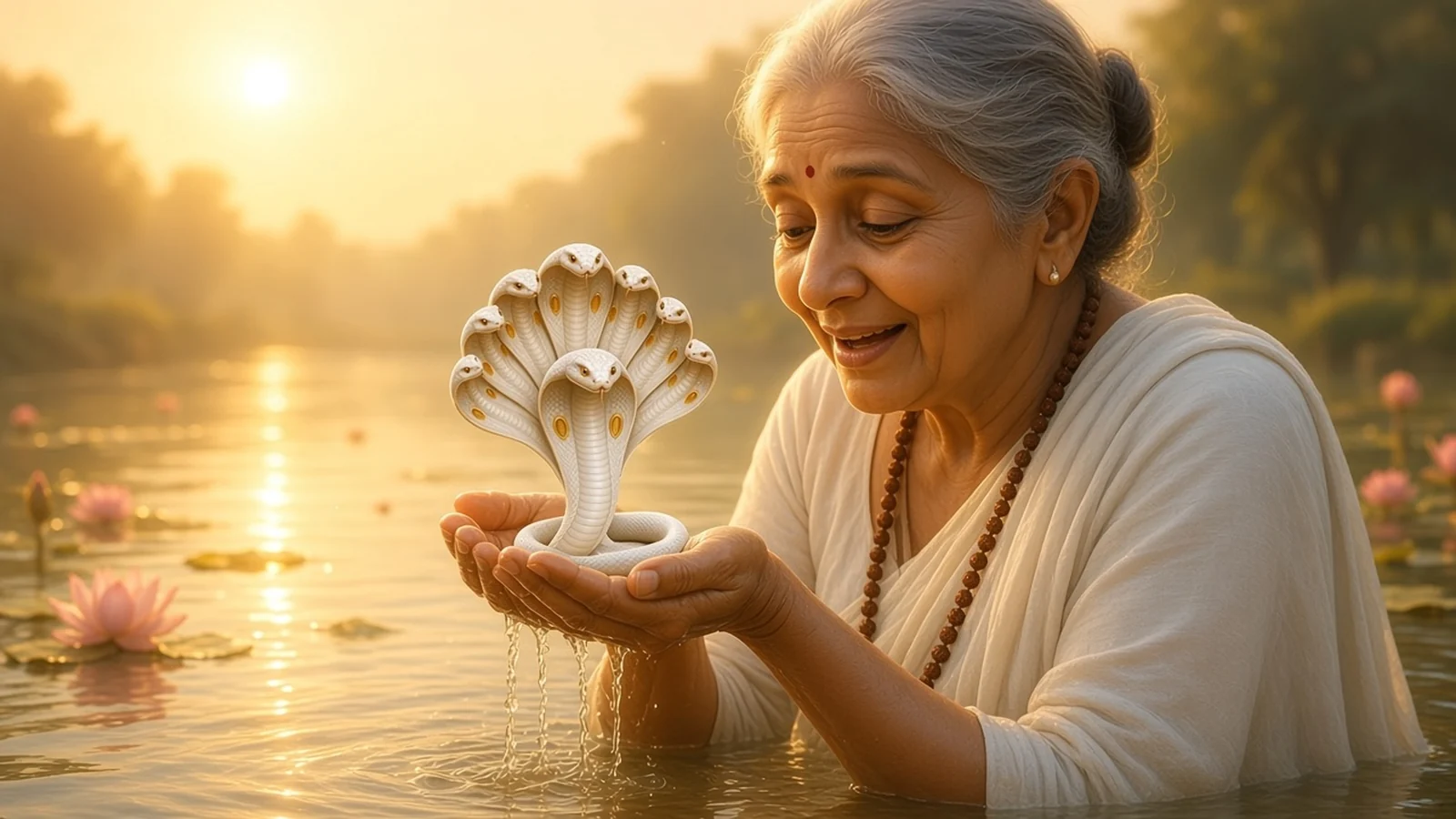
The day her long penance was finished, Gonika went down to the water to pray to the Sun, the light of God that everyone can see. She had nothing to offer him but water. She stood in the river, filled her two cupped hands, bowed her head and closed her eyes.
"I have nothing else to give," she said. "Take this. And send me a son worth teaching, before I go."
Then she opened her eyes and lifted her hands to pour the water to the Sun, and stopped. Something was moving in her palms. A serpent, very small, no longer than her finger, lay curled in the water she held.
Before she could cry out, it changed. Where the little serpent had been, a boy stood in front of her, and he bowed to her feet.
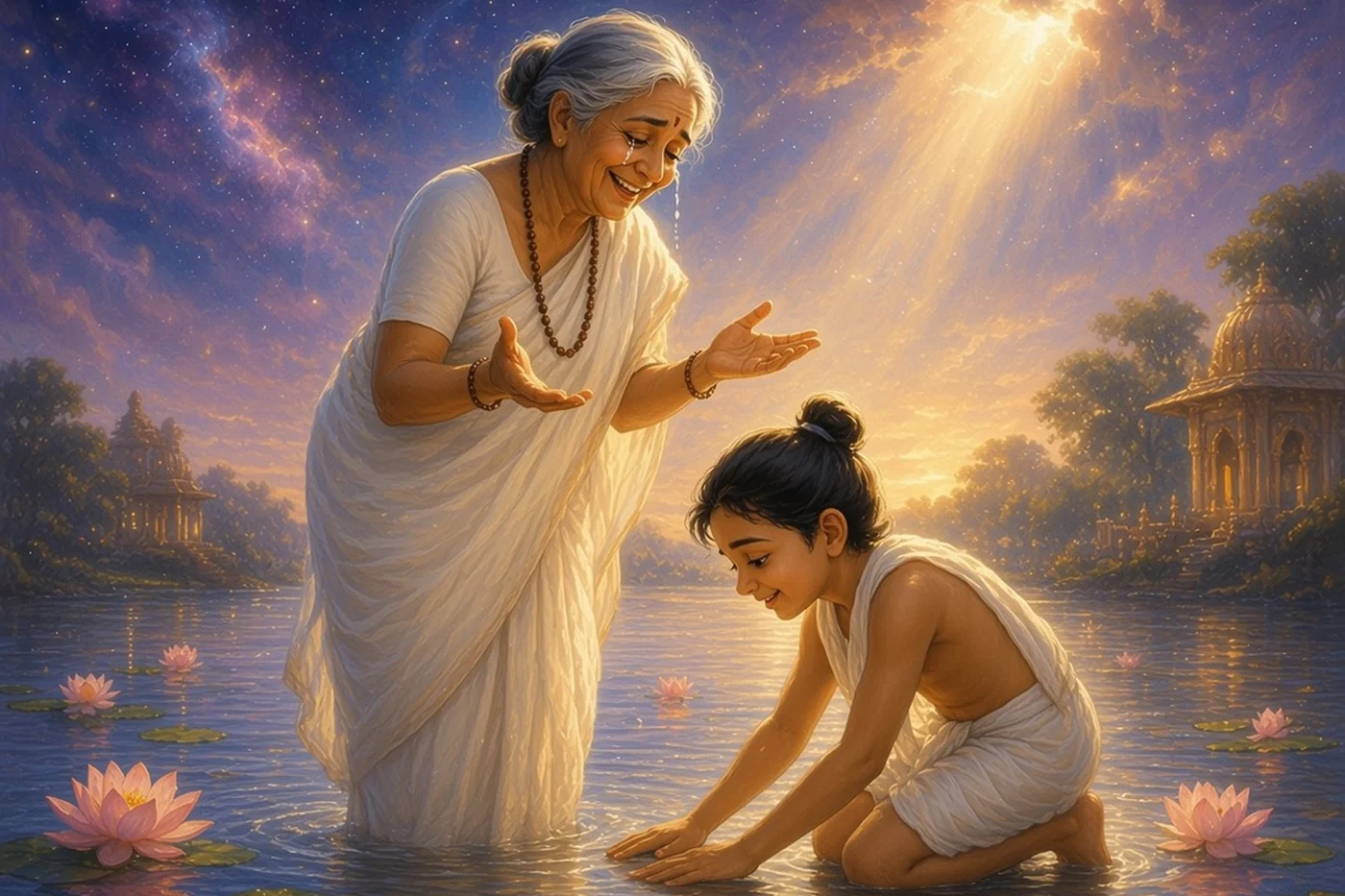
"Mother," he said, "will you take me for your son?"
Gonika laughed and wept together. She took him home, and because he had fallen into her joined hands, pata into her anjali, she called him Patanjali.
The yoga schools say he grew up to write the Mahabhashya, the great commentary on Panini's grammar, as Vishnu had said, and the tradition credits him with the Yoga Sutra too. That is why they picture him as they do: a sage from the waist up, coiled serpent below, a hood of cobras spread over his head. And he never forgot the dance that had made Vishnu heavy.