Who Shesha is
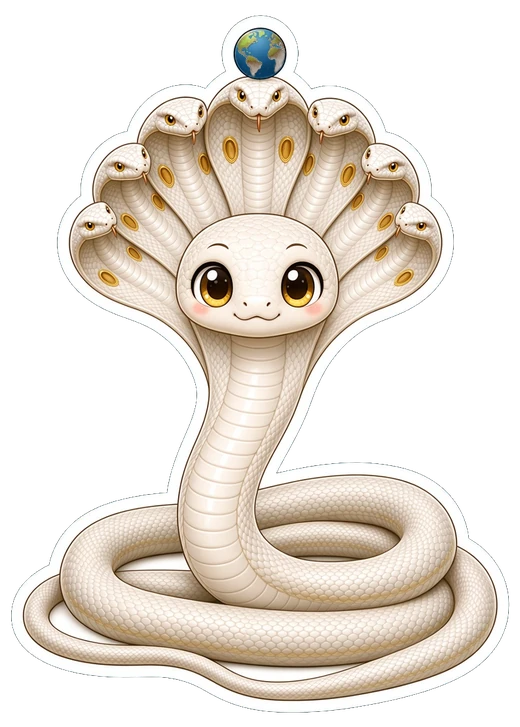
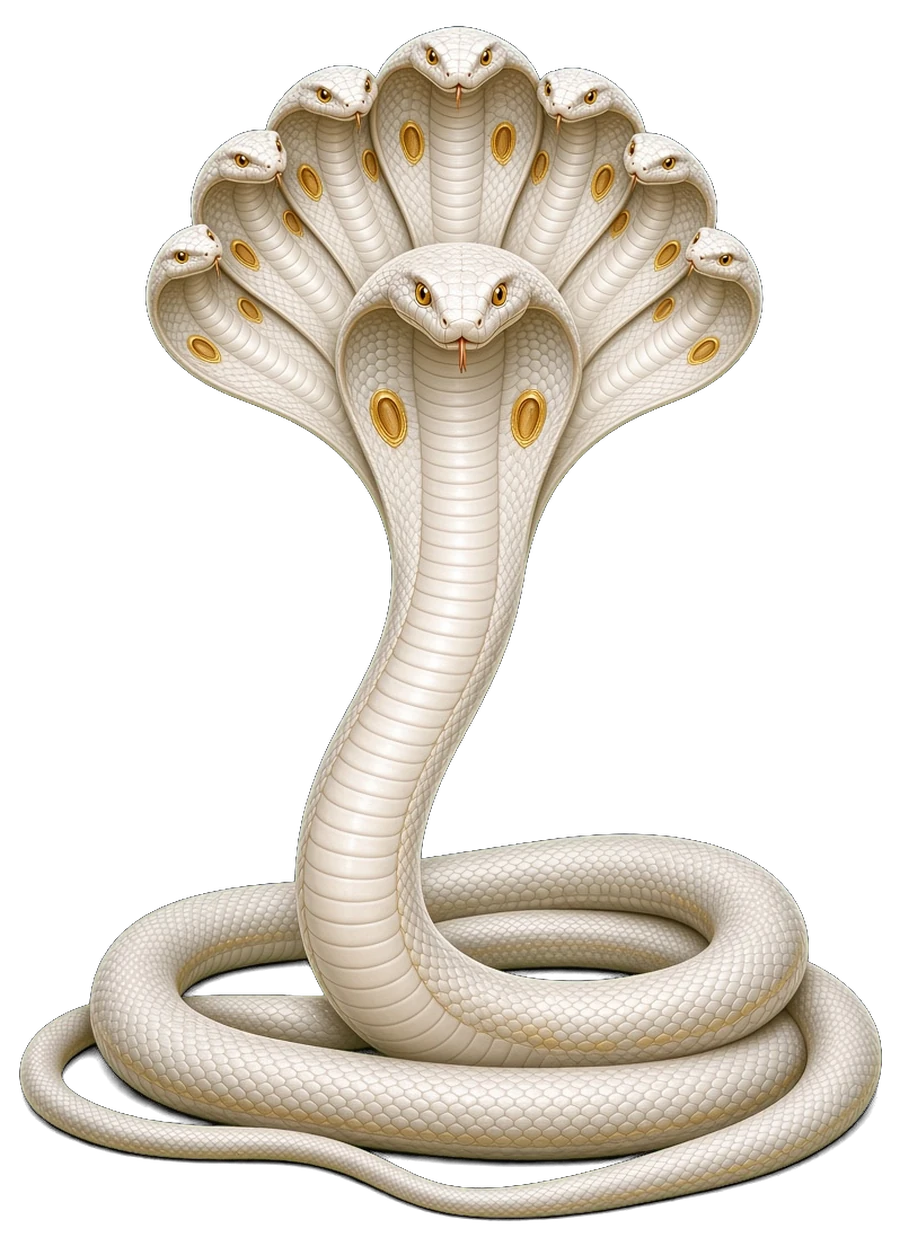
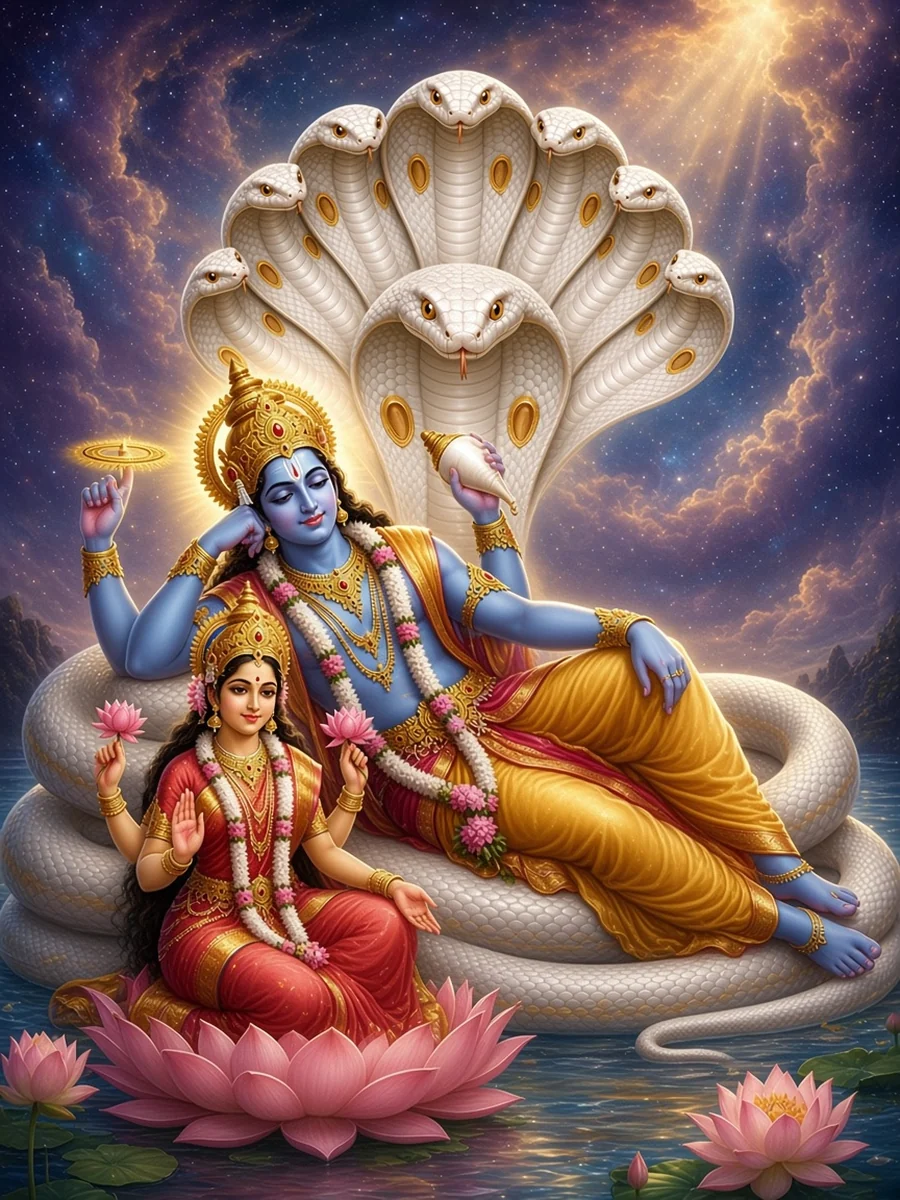
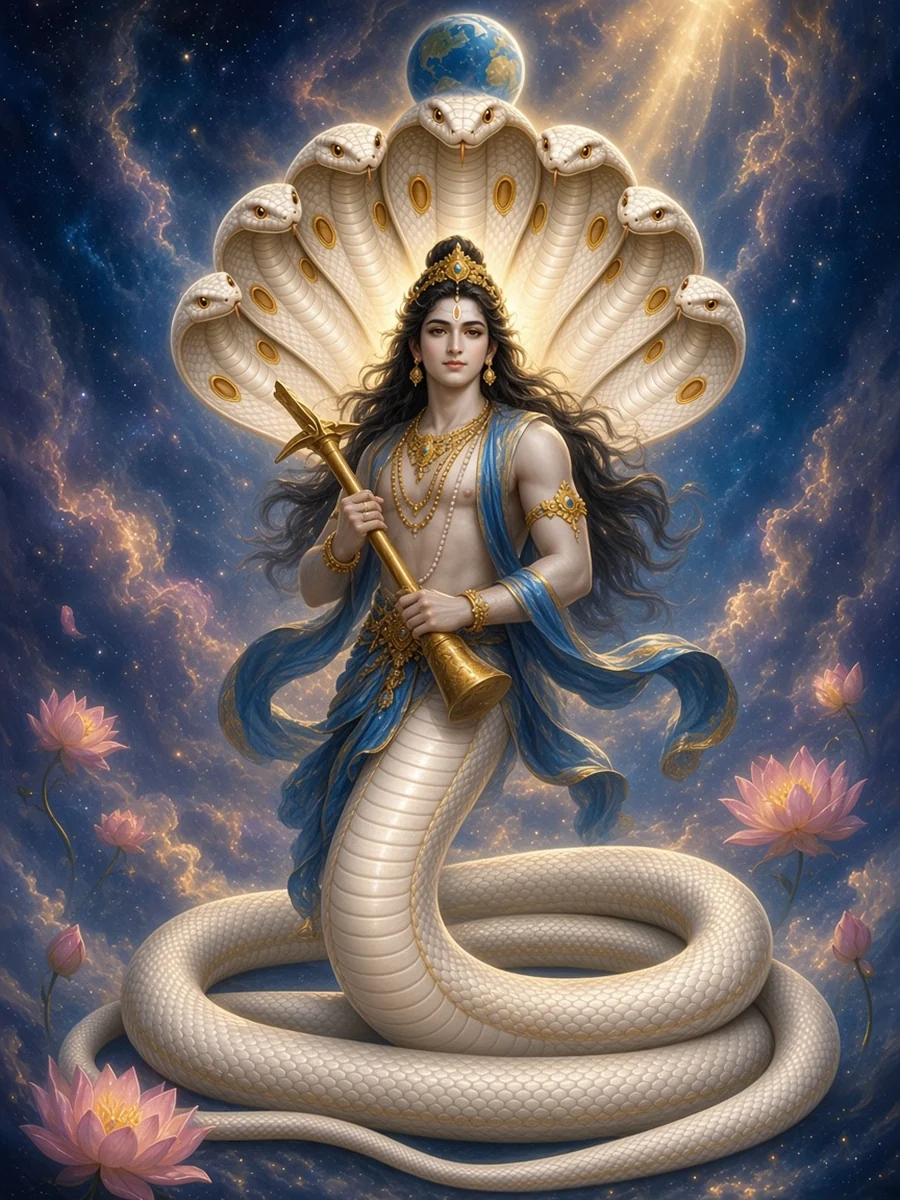
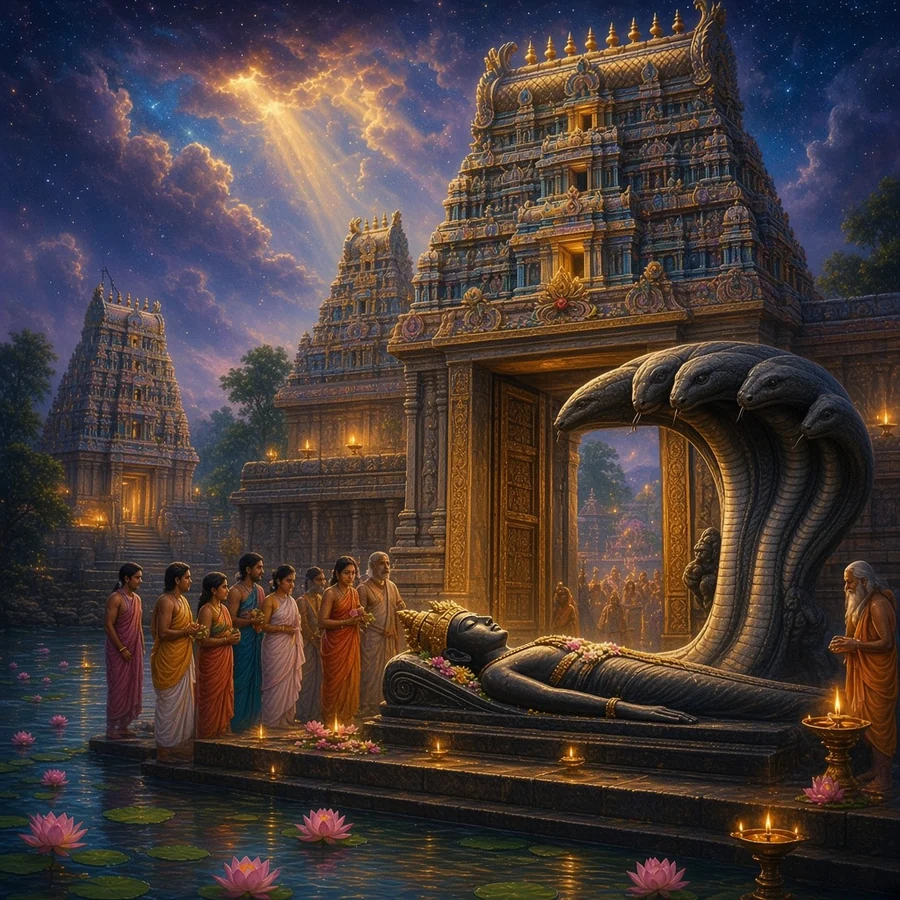
Shesha is the great serpent of a thousand hoods. Between one age of the world and the next, Vishnu sleeps on his coils on the ocean of milk, with the hoods spread over his head like a canopy. And the same serpent, far below the seven underworlds, carries the whole earth on his head.
His name means the remainder: what is left when everything else has ended. He is also Ananta, the endless one, and Adishesha, the first Shesha. The Mahabharata makes him the eldest of Kadru's thousand serpent sons, the one who would not live among his quarrelling brothers and was given the earth to hold instead. The Puranas go further and call him a form of Vishnu himself. The Bhagavata names him Sankarshana and says that the round earth sits on one of his hoods no bigger than a seed.
Yasyedam kshiti-mandalam bhagavato 'nanta-murteh sahasra-shirasa ekasminn eva shirshani dhriyamanam siddhartha iva lakshyate: This round earth, held on just one of the thousand heads of the Lord in his endless form, looks no bigger than a white mustard seed.
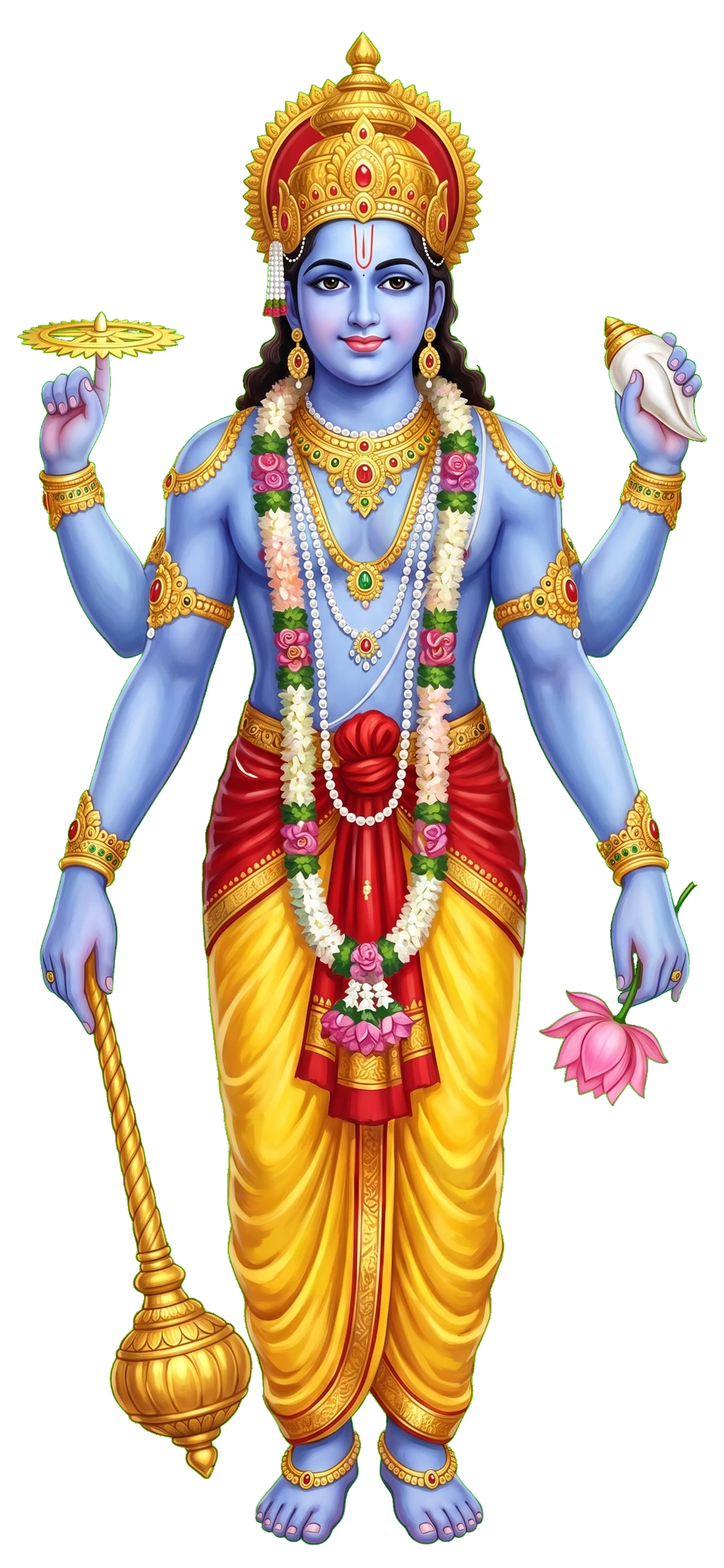
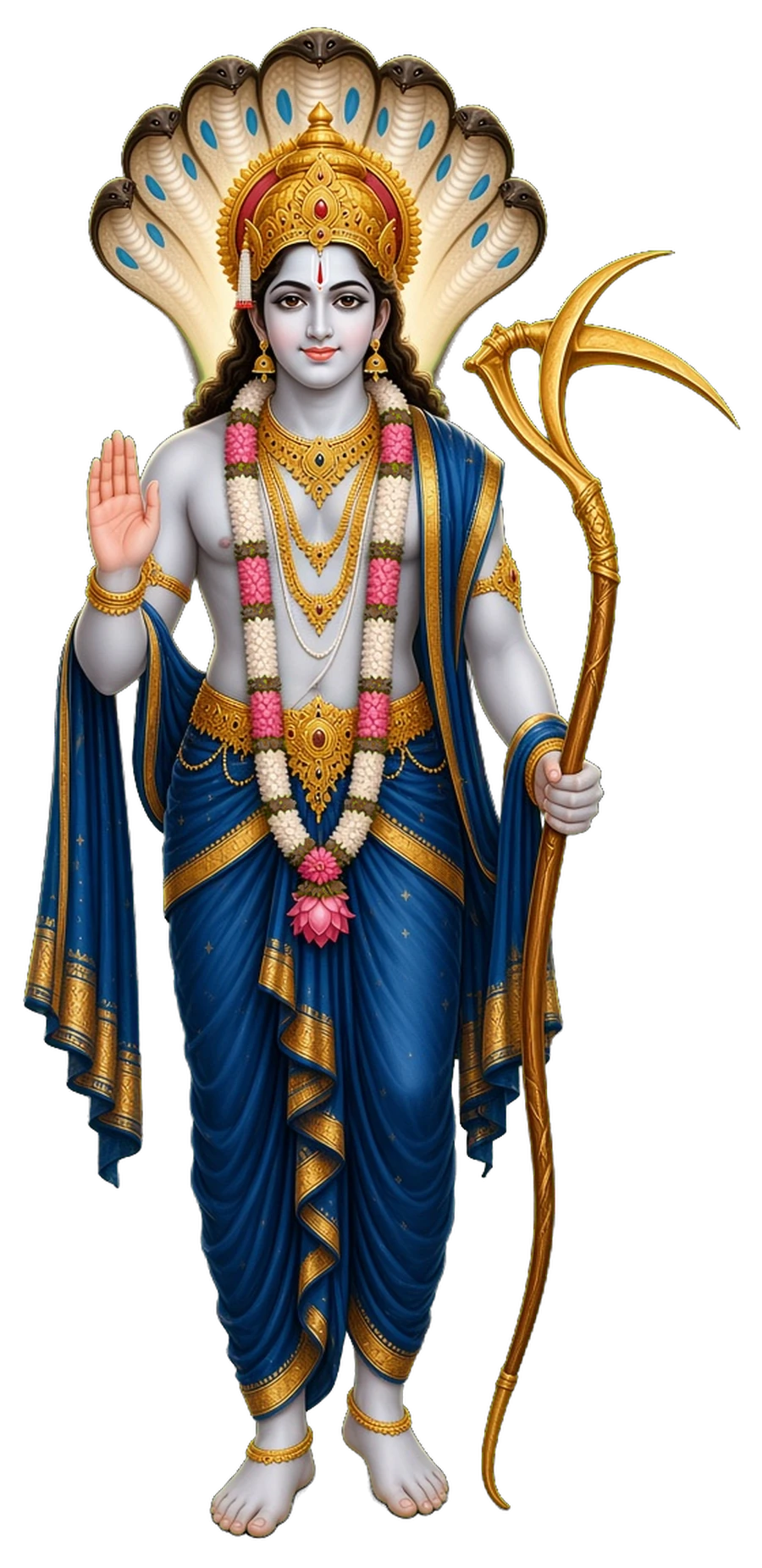
When Vishnu comes down to earth, Shesha comes with him. When Vishnu is Rama, Shesha is Lakshmana, the brother who never leaves his side. When Vishnu is Krishna, Shesha is Balarama, the fair elder brother with the plough, whose life the Mahabharata ends with a white serpent slipping out of his mouth and going home to the sea. Later traditions find him again in the grammarian Patanjali, who fell into his mother's hands as a tiny snake, and the Sri Vaishnavas of the south find him in the philosopher Ramanuja.
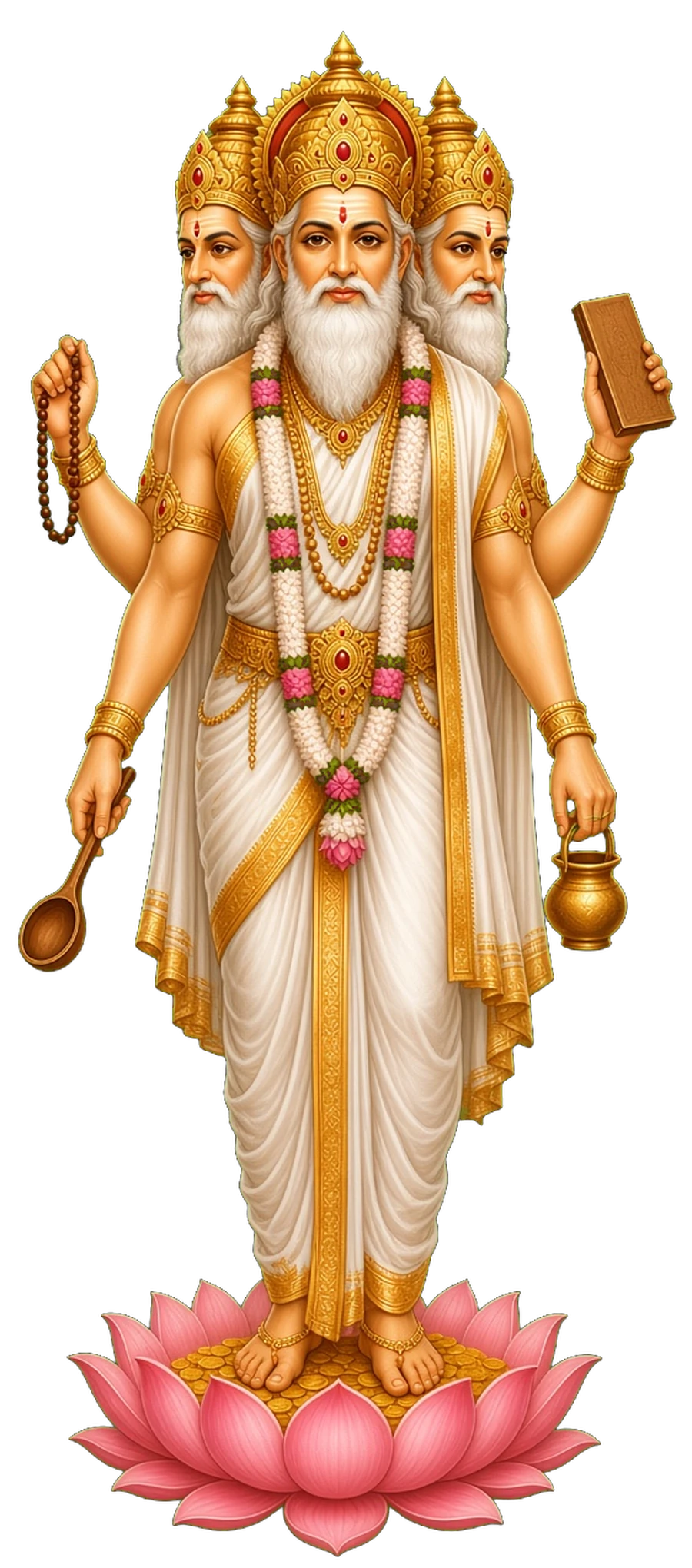
His older stories are on this site. The Serpent Who Holds the Earth tells how he left his brothers to do penance and how Brahma asked him to carry the earth. The Wind and the Serpent is his contest with Vayu on the mountain Meru. The Four Months the God Sleeps is Vishnu's rest on him in the rainy season, and The Boy and the Iluppa Tree is the god who lies on him at Thiruvananthapuram. Chidambaram's telling of how he came to the Thillai forest as Patanjali is The Dance in the Hall of Thillai.
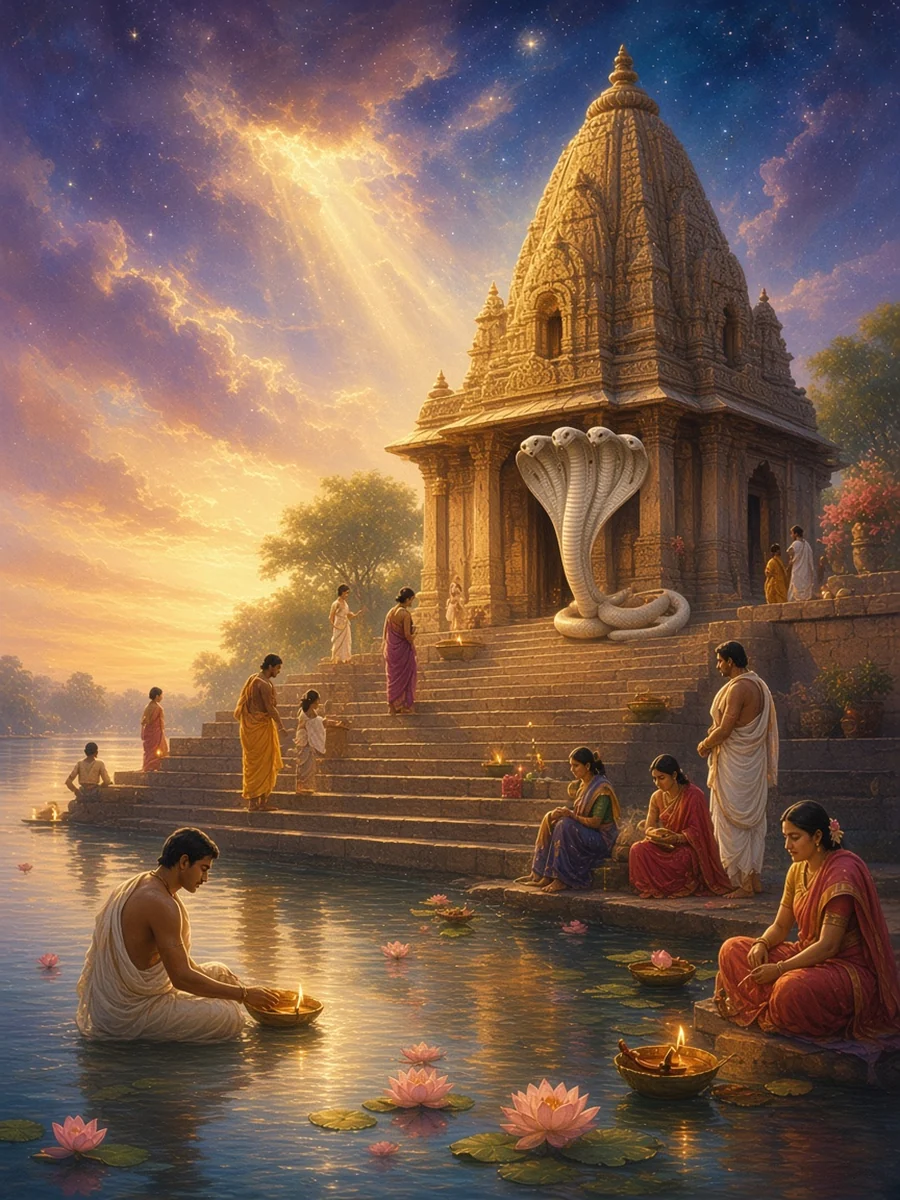
Wherever Vishnu lies down in a temple, Shesha is under him: as Padmanabha at Thiruvananthapuram, as Ranganatha on the island of Srirangam. In the villages he is honoured with the other Nagas at the anthill and the snake stone, and at Ayodhya a bathing ghat on the Sarayu keeps his name.