As the Vishnu Purana tells it
Vishnu Purana, Book 2, chapter 5 · beneath the seven underworlds · 3 min read
Narada had been everywhere, and he came back from under the earth full of news.
"You think heaven is beautiful," he told the gods. "I have just come up from Patala, and I tell you it is lovelier than Indra's city."
The gods wanted to know what he meant.
"There are seven worlds below the earth," said Narada, "one under another, each ten thousand yojanas deep: Atala, Vitala, Nitala, Gabhastimat, Mahatala, Sutala, and last of all Patala. The ground of the first is white, then black, then purple, yellow, sand, stone, and the deepest is gold. Daityas and Danavas live there, and Yakshas, and the great serpents, in palaces."
"And what is it like?"
"The Nagas wear jewels that light up the dark," he said. "There is a sun that gives light and no heat, and a moon that gives light and no chill. There are groves and streams and pools full of lotuses, and the koel sings. All day there is music of the lute and the pipe and the drum, and the people feast and never notice time going by."
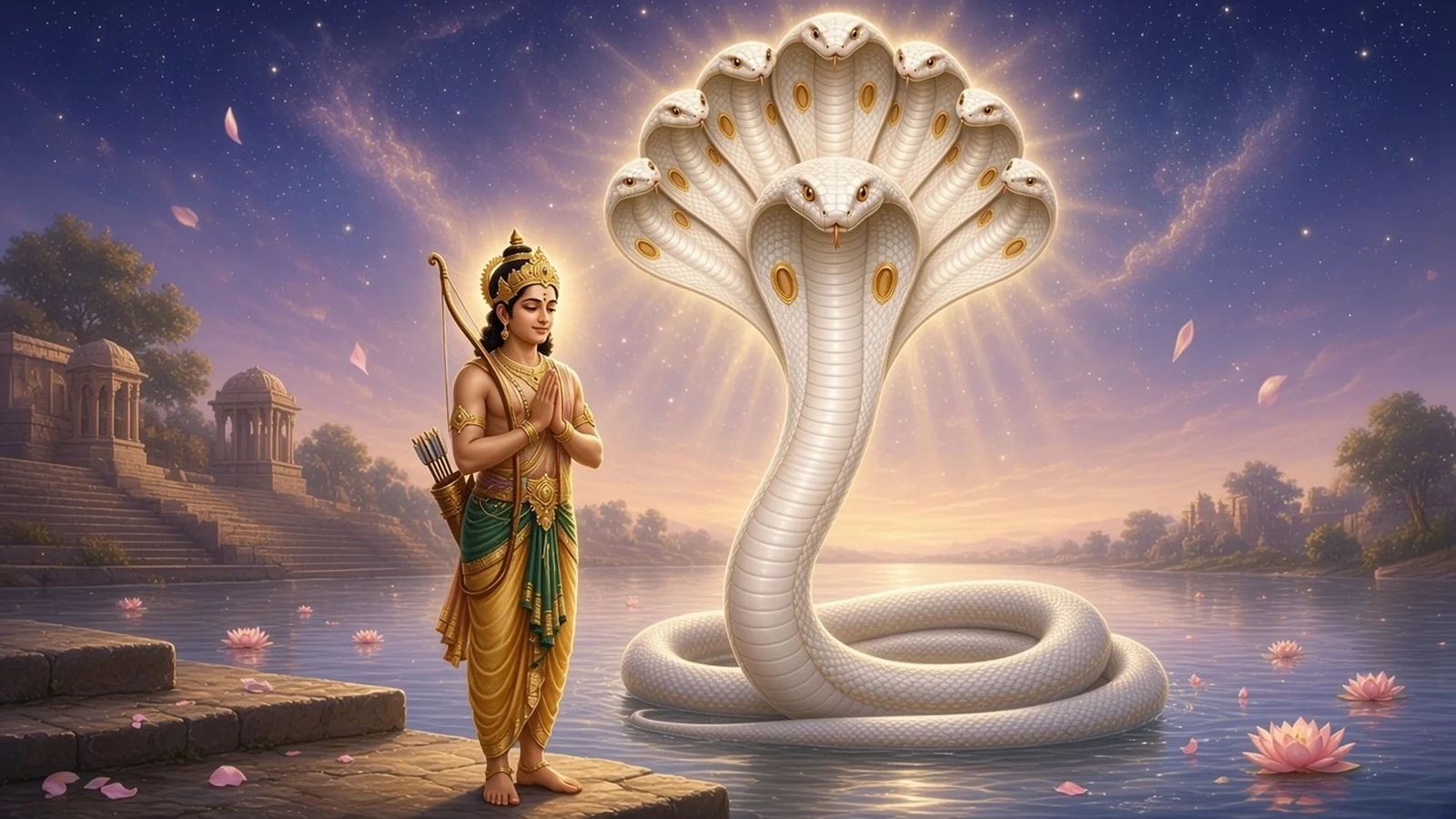
Under the seventh of the underworlds lies a form of Vishnu himself. He is Shesha, and the gods call him Ananta, the endless, because nobody can count his qualities, not the Daityas, not the Gandharvas or the Siddhas or the Kinnaras, though they all try.
He has a thousand heads, and the jewel in every crest lights up the regions round it. His eyes roll a little, as if with wine. He wears one earring, a crown, and a wreath of flowers on every brow. He is white, like a snow mountain crowned with fire, in purple garments with a white necklace, like Mount Kailasa with the Ganga pouring down its sides. In one hand he holds a plough, in the other a pestle. Beside him stands Varuni, the goddess of wine, who is his own radiance in a body. For the good of the world he drains the strength of the demons.
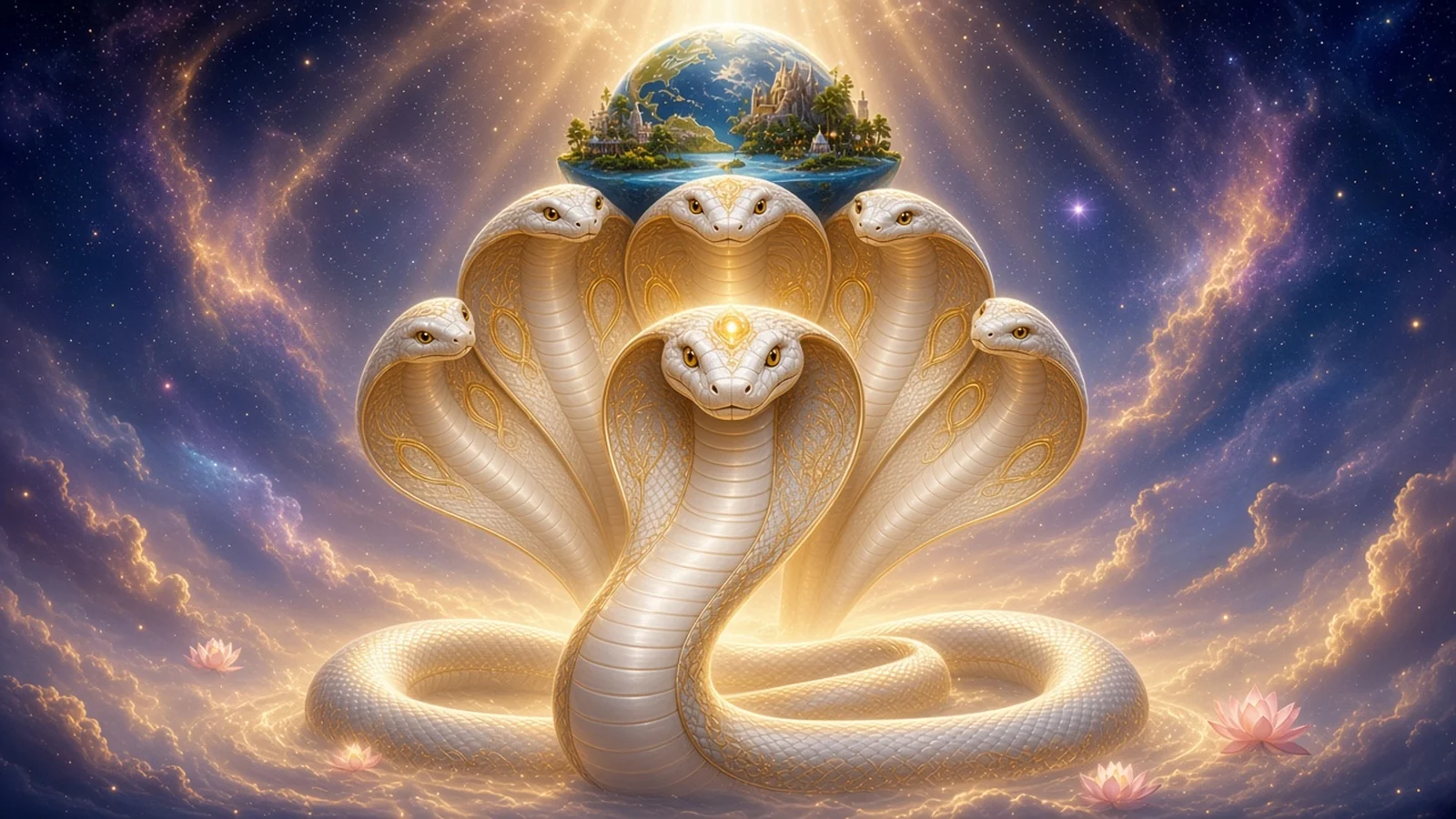
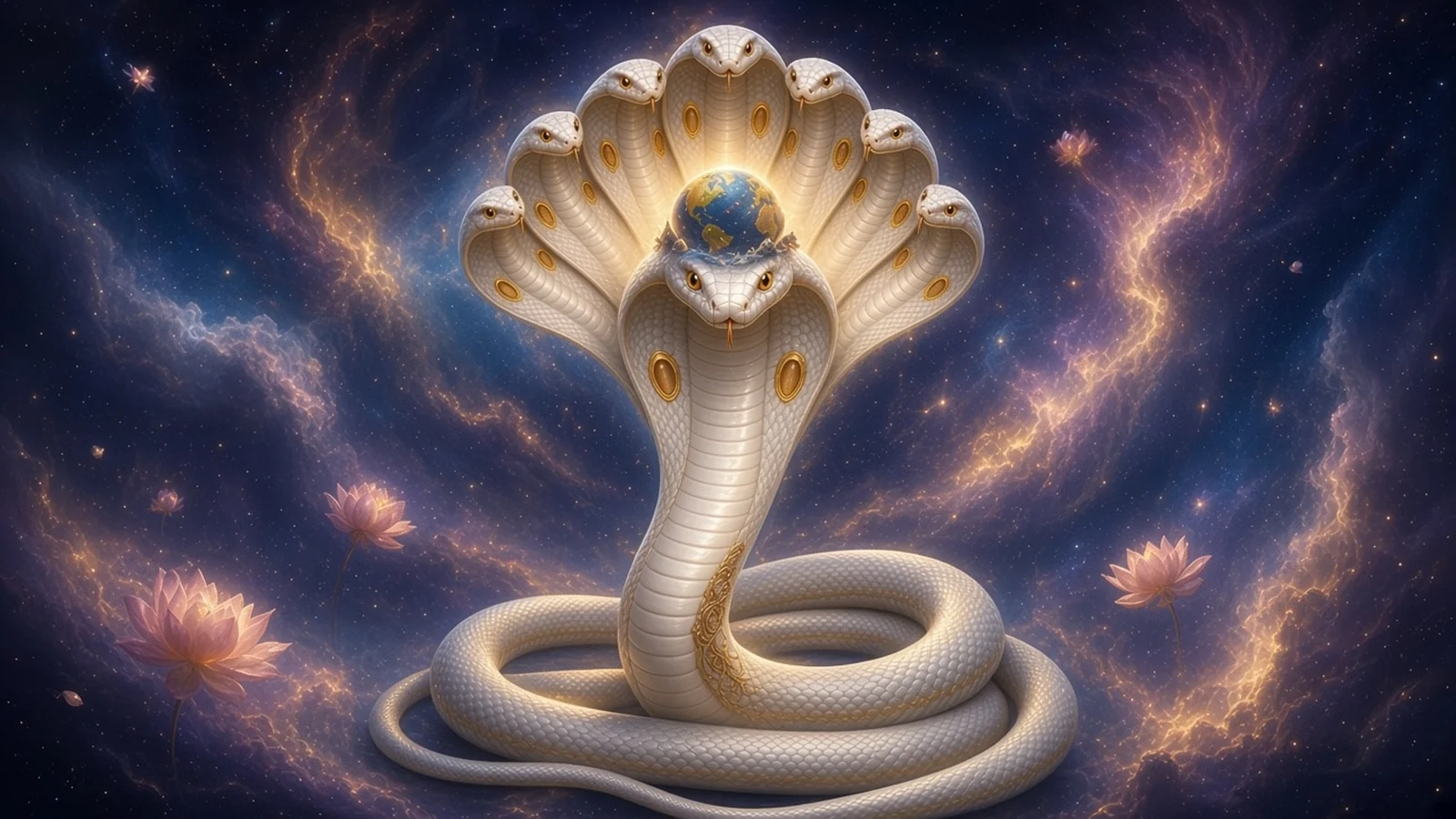
On his head he carries the whole earth, the way a king wears a crown. Her mountains and seas sit there like a garland of flowers, tinted purple by the light of his jewels. When he yawns, with his eyes half closed, the earth trembles, forest and mountain, sea and river together. The serpents' wives grind sandal paste for him, and his breath blows it about so that the whole sky is scented.
And at the end of the age, fire will pour from his mouths. That fire is Rudra, and it will burn the three worlds.
Long ago a sage named Garga went to that serpent, and prayed to him, and worshipped him, until Shesha was pleased.
"What do you want of me?" Shesha asked.
"Teach me the sky," said Garga. "The stars and the planets, and what they mean when they move."
So the serpent who holds up the world taught him from below it. He taught him the courses of the heavenly lights, and the planets, and the signs in the sky that tell good times from bad. Garga carried it all back up to the world of men, and the old books remember him as one of the first teachers of the stars.
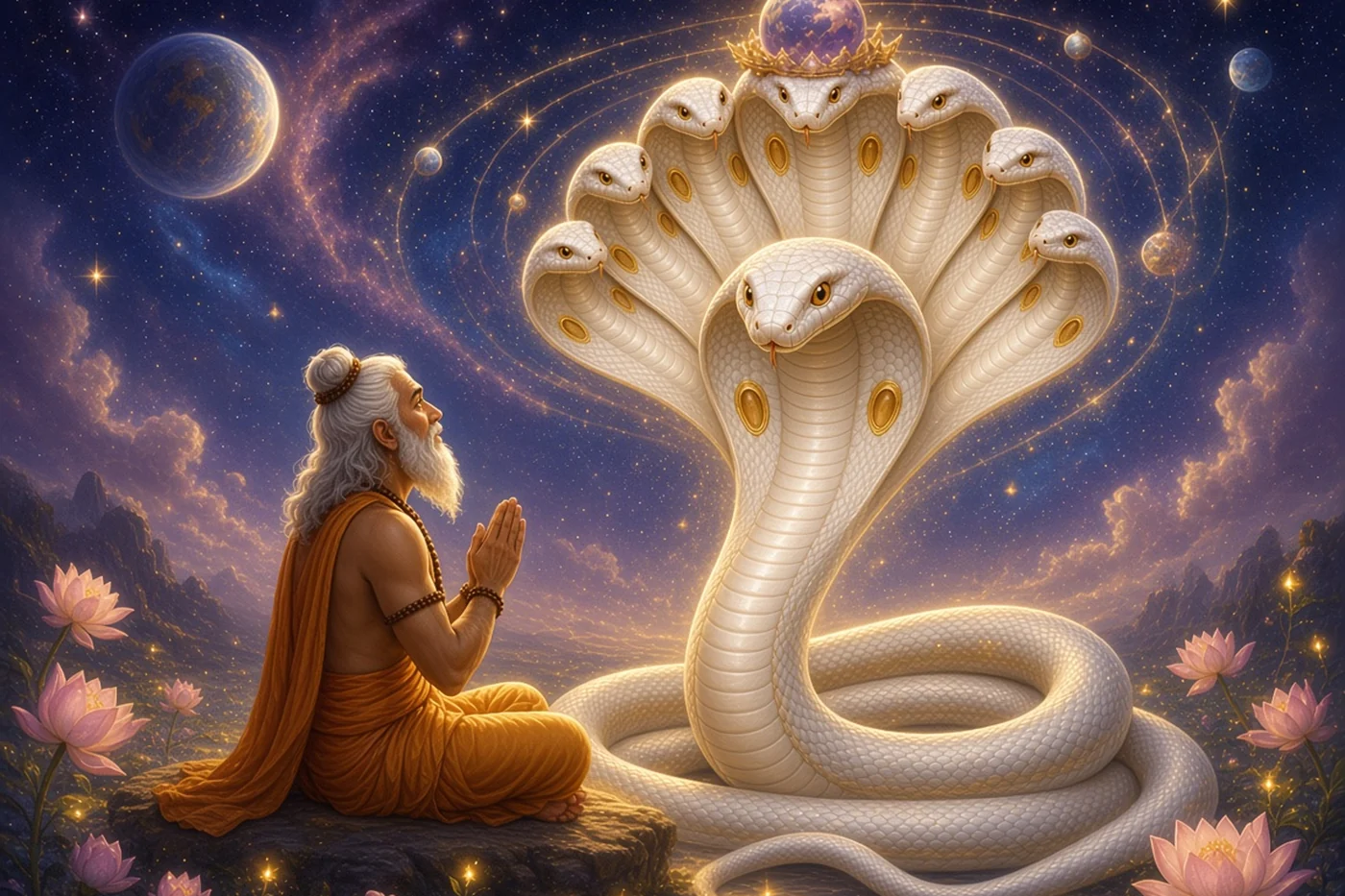
The earth sits on Shesha's head, the Purana says, and the earth carries the circle of the heavens, with gods and men and demons in it. So everything rests, at the bottom, on him.
As the Bhagavata tells it
Bhagavata Purana 5.25 · beneath Patala · 2 min read
In the Bhagavata it is the sage Shuka who describes him, sitting with King Parikshit, and he goes deeper still.
Thirty thousand yojanas below Patala, Shuka says, lives Ananta. He is a form of Vishnu, and his other name is Sankarshana. Every embodied being who thinks "I am the one who enjoys all this" takes that sense of self from him.
He has a thousand hoods, and the whole round earth, with its mountains, rivers, seas and creatures, sits on just one of them. Beside the hood it looks like a single white mustard seed.
At the end of the age he grows a little angry, and from between his eyebrows comes Rudra, three-eyed, a trident in his hand, the eleven Rudras in one, to bring the world to its end. But for the good of all creatures he holds that anger in, and stays quietly where he is.
The serpent kings come to bow to him, and his toenails shine like polished gems, so that each of them sees his own face reflected there and is happy. The serpent princesses anoint his arms, long and white like columns of silver, with sandal, aloe and saffron, and when he smiles at them they look shyly up at his face. He wears blue, with one earring and a golden belt, and a plough rests across his back. Round his neck hangs a garland of fresh tulasi, and the bees hum round it.
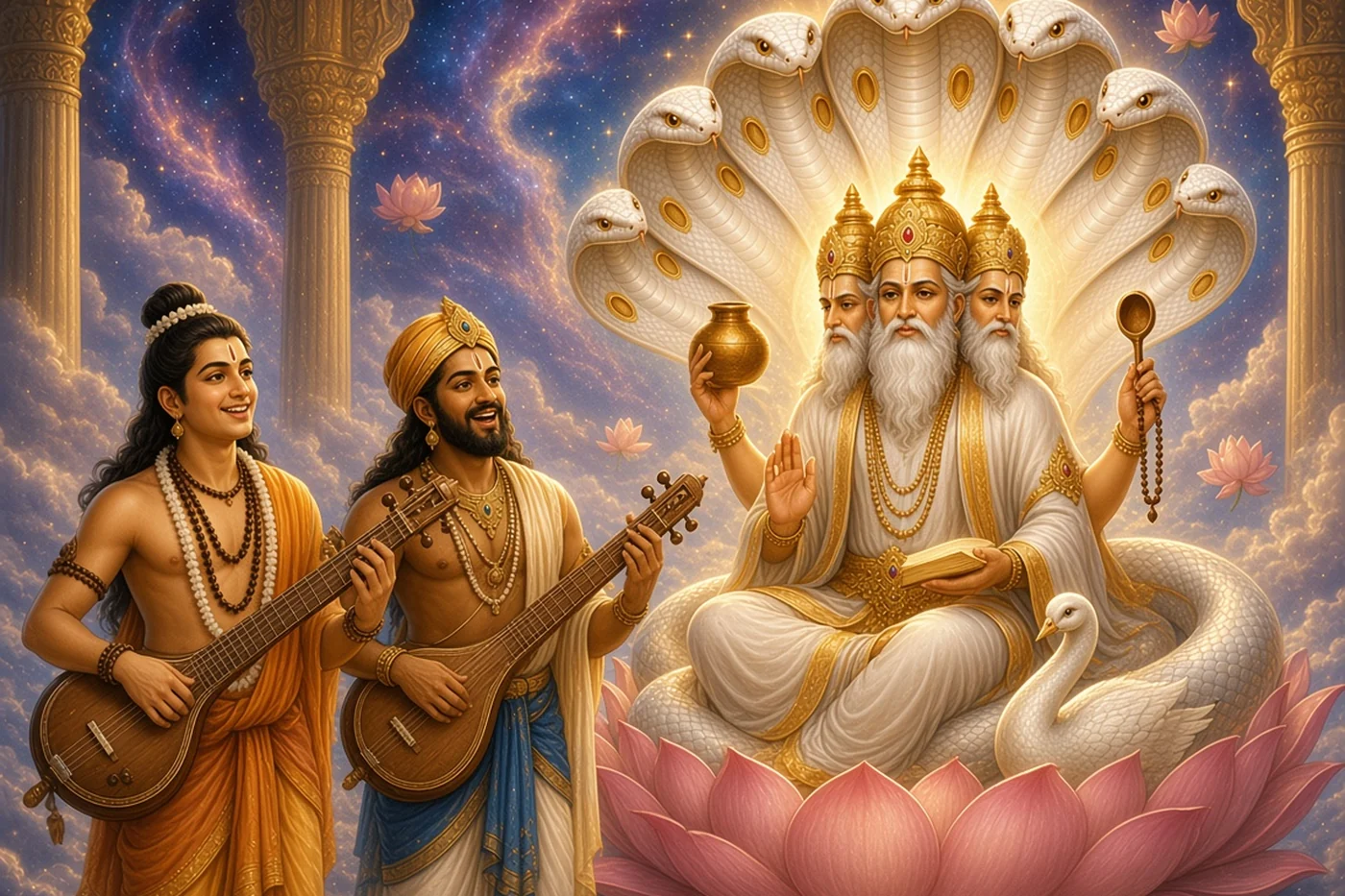
Gods and demons, Siddhas and Gandharvas and sages sing to him without stopping. And in the hall of Brahma, Narada sings the verses he has made about Ananta, with Tumburu at his side.
Whoever hears his name and takes it up, Shuka says, even in fun, even by chance, is freed of what weighs on him. Nobody can measure him. Even with a thousand tongues nobody could finish telling what he is.