As Valmiki tells it
Valmiki Ramayana, Uttara Kanda 103 to 106 · Ayodhya · 3 min read
Rama had ruled Ayodhya for a very long time. Sita had gone back into the earth, the old queens were dead, and his brothers' sons had kingdoms of their own. Lakshmana had come home from setting his two boys on their thrones, and he stayed close to Rama, as he always had.
One day an ascetic came to the palace gate. He blazed like the sun with the heat of his penance.
"Tell Rama that a messenger has come from a great sage," he said to Lakshmana. "My business is urgent."
Lakshmana went in and told his brother. "Bring him in," said Rama, and he gave the stranger water for his feet and a golden seat, and asked what message he carried.
"What I have to say is for you alone," said the ascetic. "No one else may hear it. Whoever overhears us, you must kill."
"So be it," said Rama. He turned to Lakshmana. "Send the doorkeeper away and stand at the door yourself. Anyone who hears us dies by my hand."
So Lakshmana stood at the door.
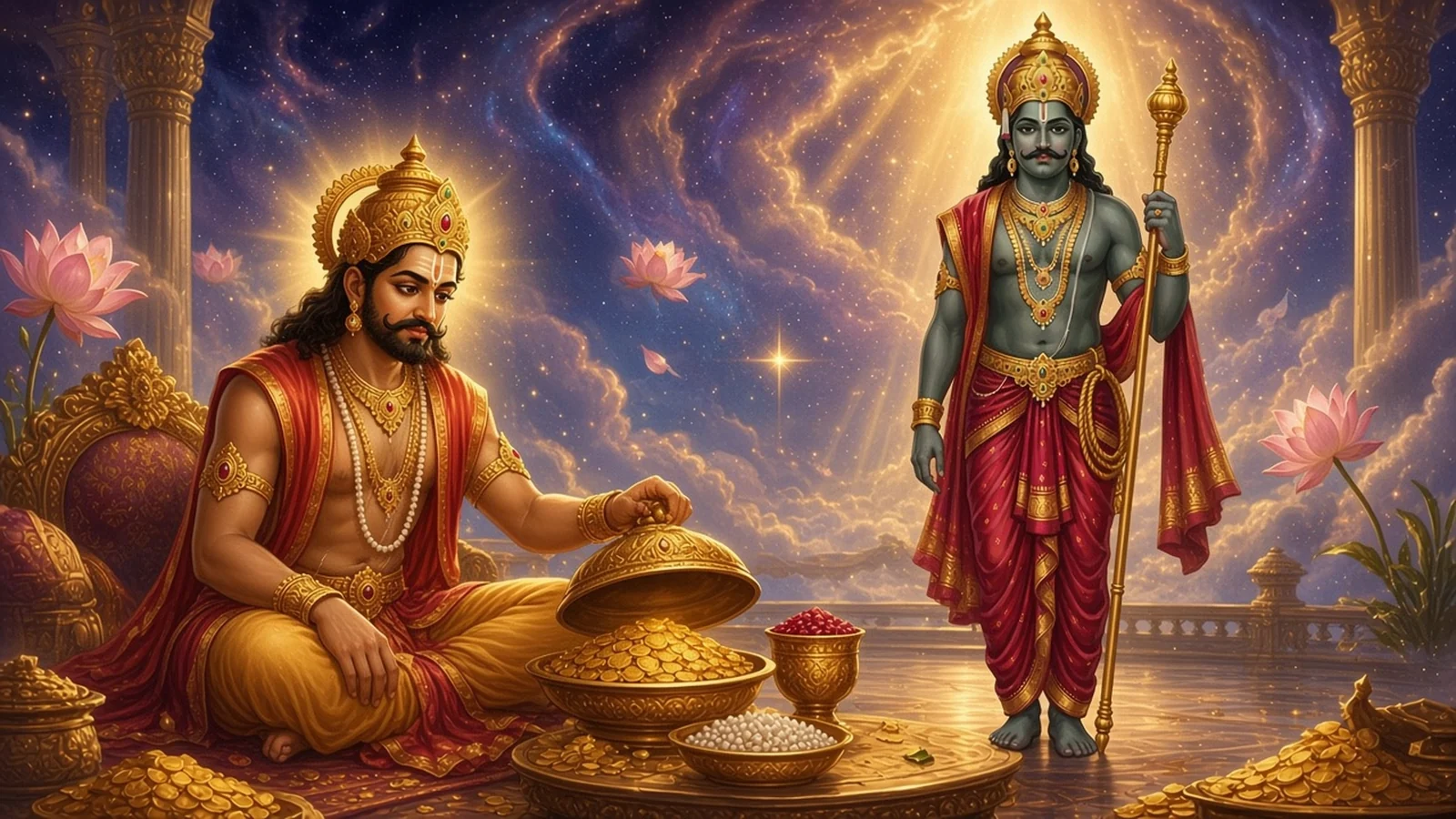
Inside, the ascetic told Rama who he was. He was Time, the destroyer of all, born long ago of Vishnu's own power, and Brahma had sent him.
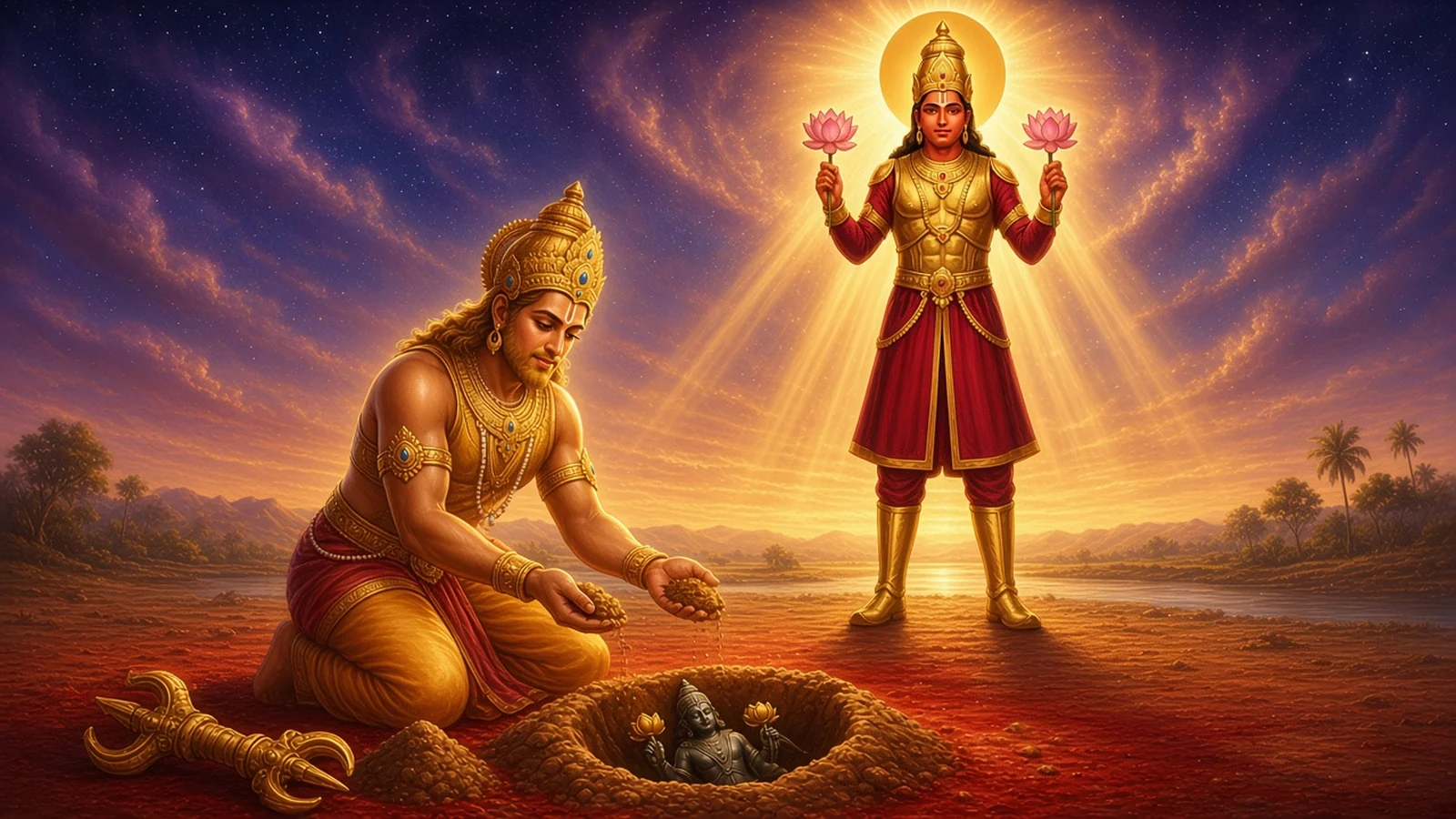
"Brahma bids me remind you," he said. "Once you drew all the worlds into yourself and lay upon the ocean. You made the great serpent Ananta of the long coils. From the lotus of your navel Brahma was born. When Ravana troubled the worlds you chose to live among men for eleven thousand years. Those years are over. Stay longer if you wish. Or come home, and the gods will rest easy."
Rama smiled. "I am glad you came," he said. "I came down for the good of the worlds. I will go back."
While they were still talking, the sage Durvasa came to the gate.
"Take me to Rama at once," he said. "It is urgent."
Lakshmana bowed to him. "Tell me what you need, holy one. Rama is busy. Wait a little while."
Durvasa's anger rose. "Announce me now," he said, "or I curse this kingdom and this city, and you, and Rama, and Bharata, and all your families with you. I cannot hold my anger any longer."
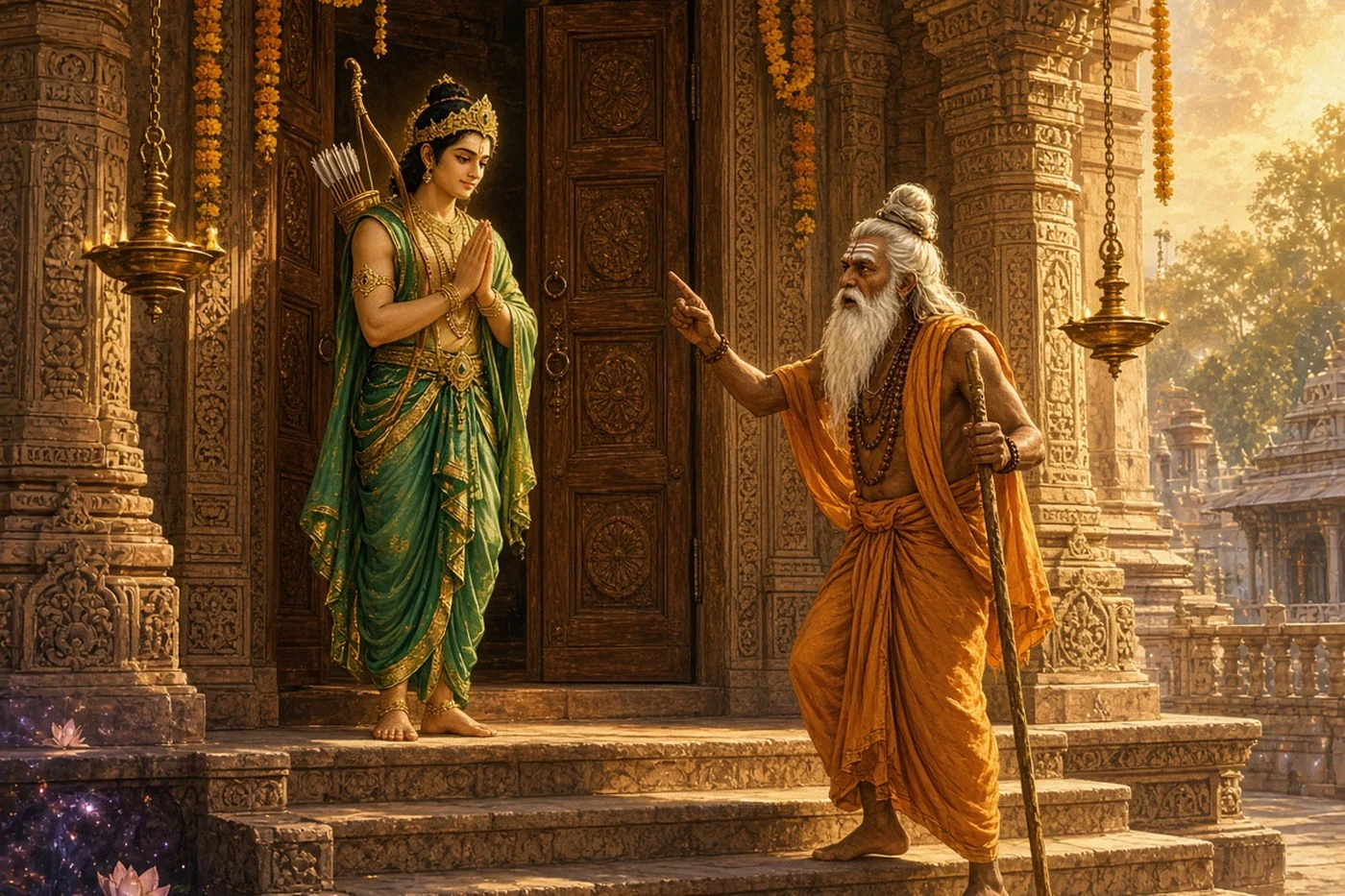
Lakshmana thought quickly. If he went in, he alone would die. If he did not, everyone would. He went in and told Rama.
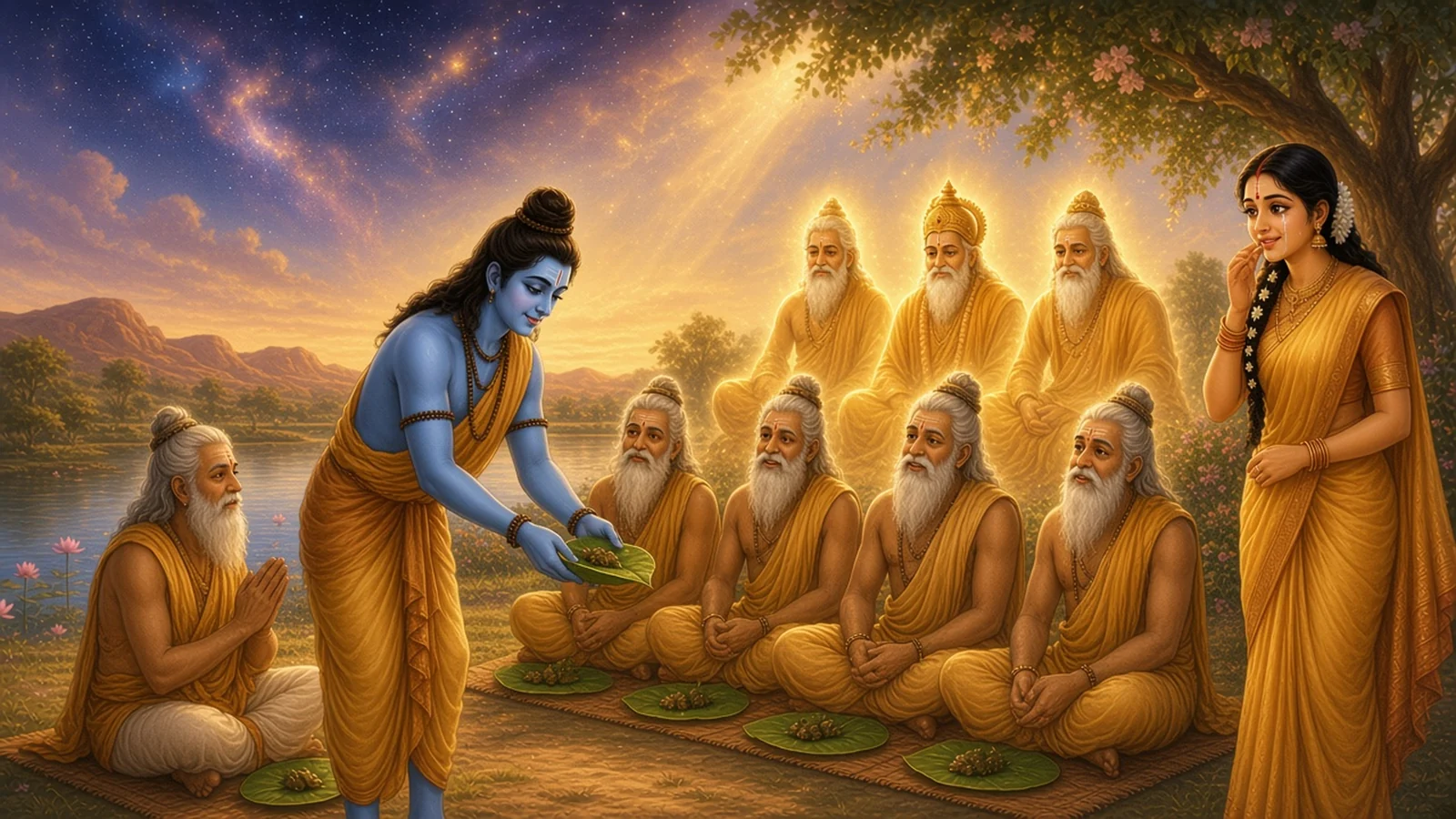
Rama left Time where he sat and hurried out to the sage with his hands joined. Durvasa had just ended a fast of a thousand years, and all he wanted was whatever food was ready. Rama fed him gladly. The sage said, "It is well," and went back to his hermitage.
Then Rama remembered his promise to Time, and his head sank, and he could not speak.
Lakshmana came and stood before him, and he was not afraid.
"Do not grieve for me," he said. "This was fixed long ago. Keep your word and kill me. A king who breaks his promise goes to hell."
Rama called his ministers and priests and told them everything, and nobody spoke. Then Vasishtha said, "If you break your word, dharma perishes, and the three worlds with it. Do not kill him. Banish him."
Rama turned to his brother. "I send you away, Lakshmana," he said, "so that dharma does not perish. For a good man, to be sent away and to die are the same."
Lakshmana did not go home. Weeping, he went straight out of the city to the bank of the Sarayu. He bathed in the river, joined his hands, drew his senses in one by one, and held his breath.
Flowers began to fall on him from the sky. The gods were there, and the rishis, and the apsaras. Indra came down, unseen by any man, and carried Lakshmana up to heaven, body and all. And the gods, looking at him, saw a fourth part of Vishnu coming home, and they rejoiced and bowed to him together.
As the Adhyatma Ramayana and the ghat at Ayodhya tell it
Adhyatma Ramayana, Uttara Kanda 8 · Sahasradhara, Ayodhya · 2 min read
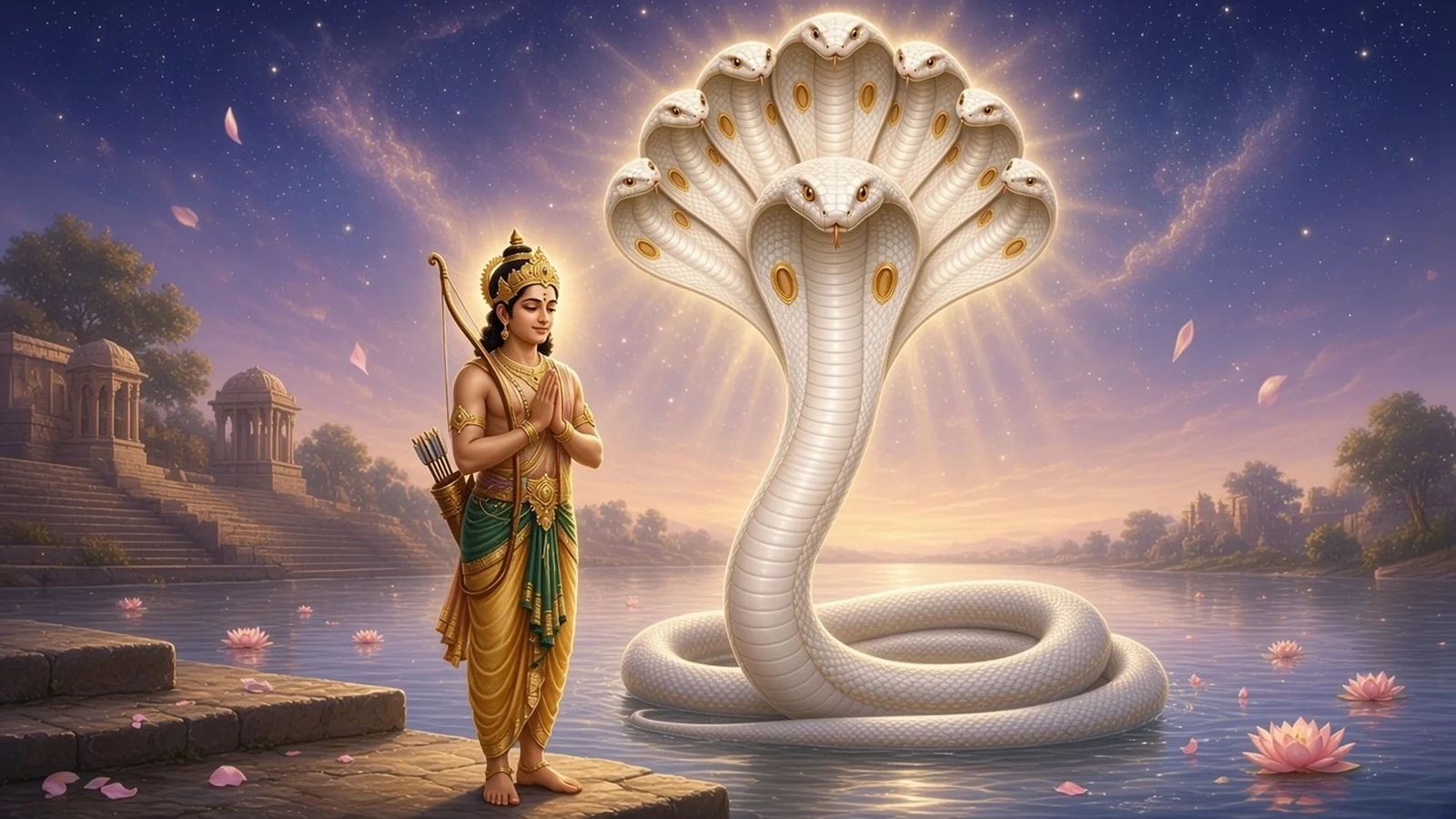
The Adhyatma Ramayana is Shiva's telling, spoken to Parvati, and in it Lakshmana is never only a younger brother. Again and again it says who he is: Shesha, the serpent who holds up the earth.
So when Time comes to Rama in the form of a sage, shining like a fire fed with butter, his message carries a hint. Vishnu, he says, once brought forth two first things, Time himself and the serpent who lies in the ocean. The serpent is standing guard outside, though nobody in the room says so.
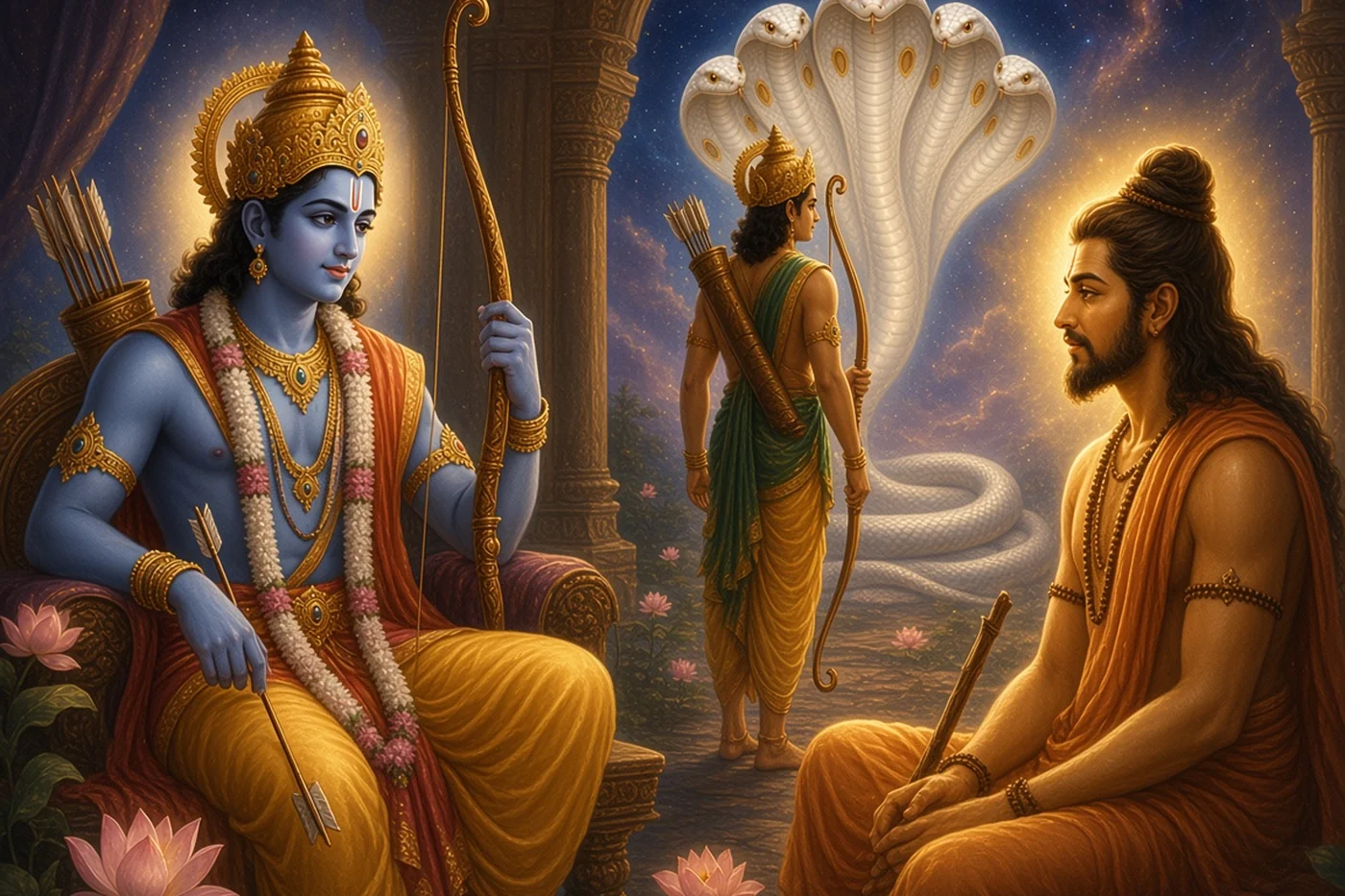
Here the rule is harder. Whoever hears the two of them, or only sees them talking, must die.
Durvasa comes burning like a flame. Lakshmana offers to do his errand himself, if only he will wait a moment. "Show me Rama this instant," says the sage, "or I burn your whole family and the kingdom to ashes." Lakshmana weighs it, and chooses his own death.
When Rama sits silent afterwards, his counsellors are not struck dumb. "We saw it long ago with the eye of knowledge," Vasishtha tells him. "You were always to be parted from Lakshmana. Give him up, and keep the world."
"Go where you please," Rama tells his brother. "Banishment and death are one for the good."
This time Lakshmana bows, goes to his own house first, and only then to the river. He sips the Sarayu's water, closes the nine gates of the body, gathers his breath into the crown of his head and fixes his mind on Vasudeva. Indra carries him up unseen. In heaven Brahma and the perfected yogis are glad, because they are looking at Shesha again: Lakshmana has taken back his serpent form. Soon after, Rama tells Ayodhya that he will follow the path his brother took.
Ayodhya shows the place. Among the bathing steps of Ram ki Paidi on the Sarayu is Lakshman Ghat, also called Sahasradhara, the Thousand Streams, and its guides cite the Ayodhya Mahatmya of the Skanda Purana. When Lakshmana sat on that bank, they say, the great serpent rose to meet him from below. His hoods broke through the ground in a thousand places, each lit by the jewel in its crest, and water poured out of every opening. Indra and the gods came, told Lakshmana what he was, and took him up. One summary of the Mahatmya says he first sat in penance to Shiva there, to wash away the fault of opening the door. The ghat keeps its festival on the fifth of the bright half of Shravana.