As the south tells it
Tamil Nadu and Karnataka · Mahalaya Paksha, Karna before Yama · 3 min read
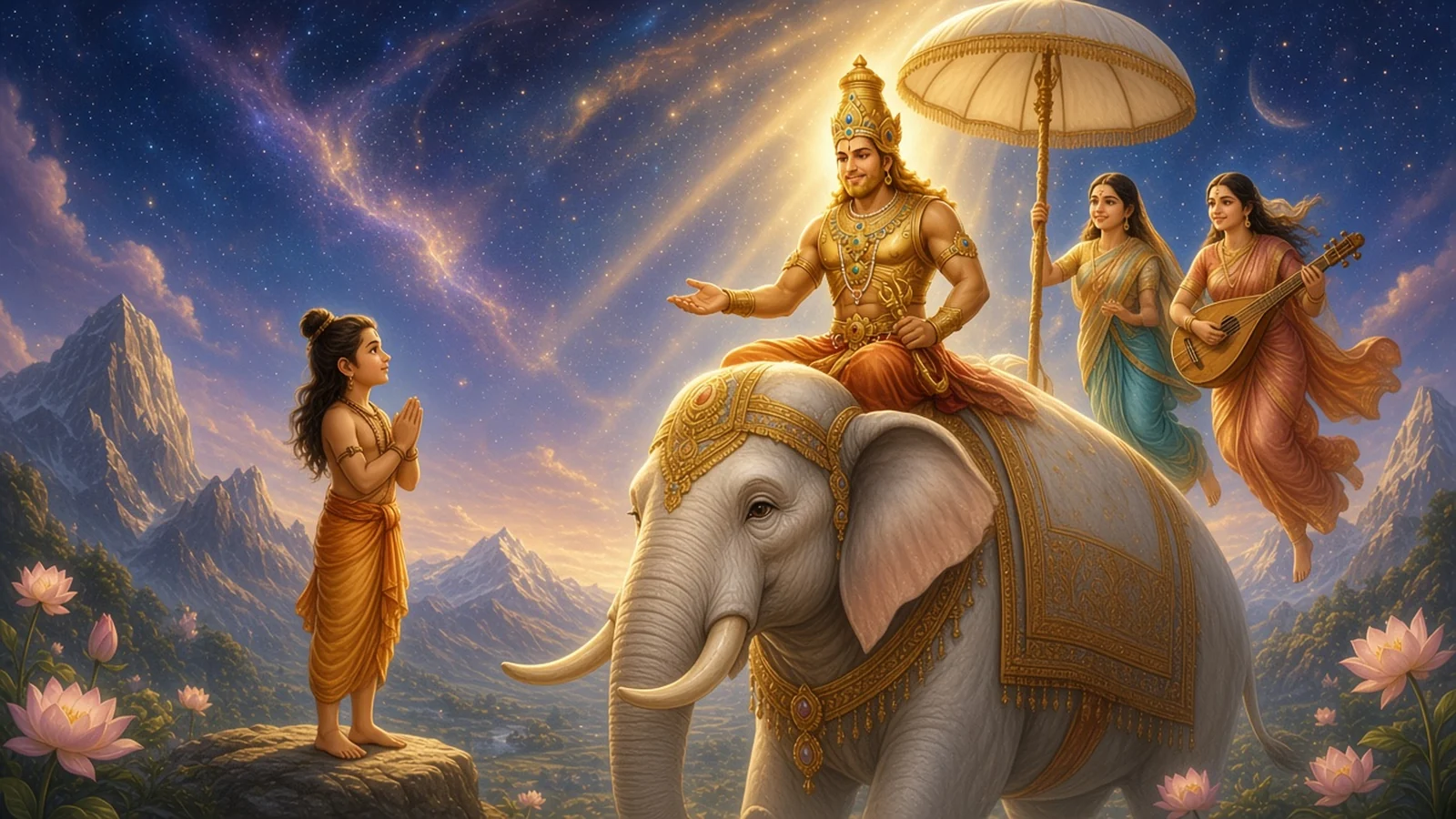
Karna came out of the war with nothing in his hands, and that was how he had always lived. All his life he had given. At the hour of his worship, when he stood in the river with his face to his father the Sun, no one who asked him for anything went away with less than he asked. Brahmins left his door with cows and gold. Strangers left with horses. A god in a beggar's clothes had once left with the armour that grew on his skin.
So the other world was ready for him. Everything he had given had gone ahead of him and come back a thousandfold. Gold lay in heaps along the way, and there were gems in the grass. The halls he was brought to shone with it.
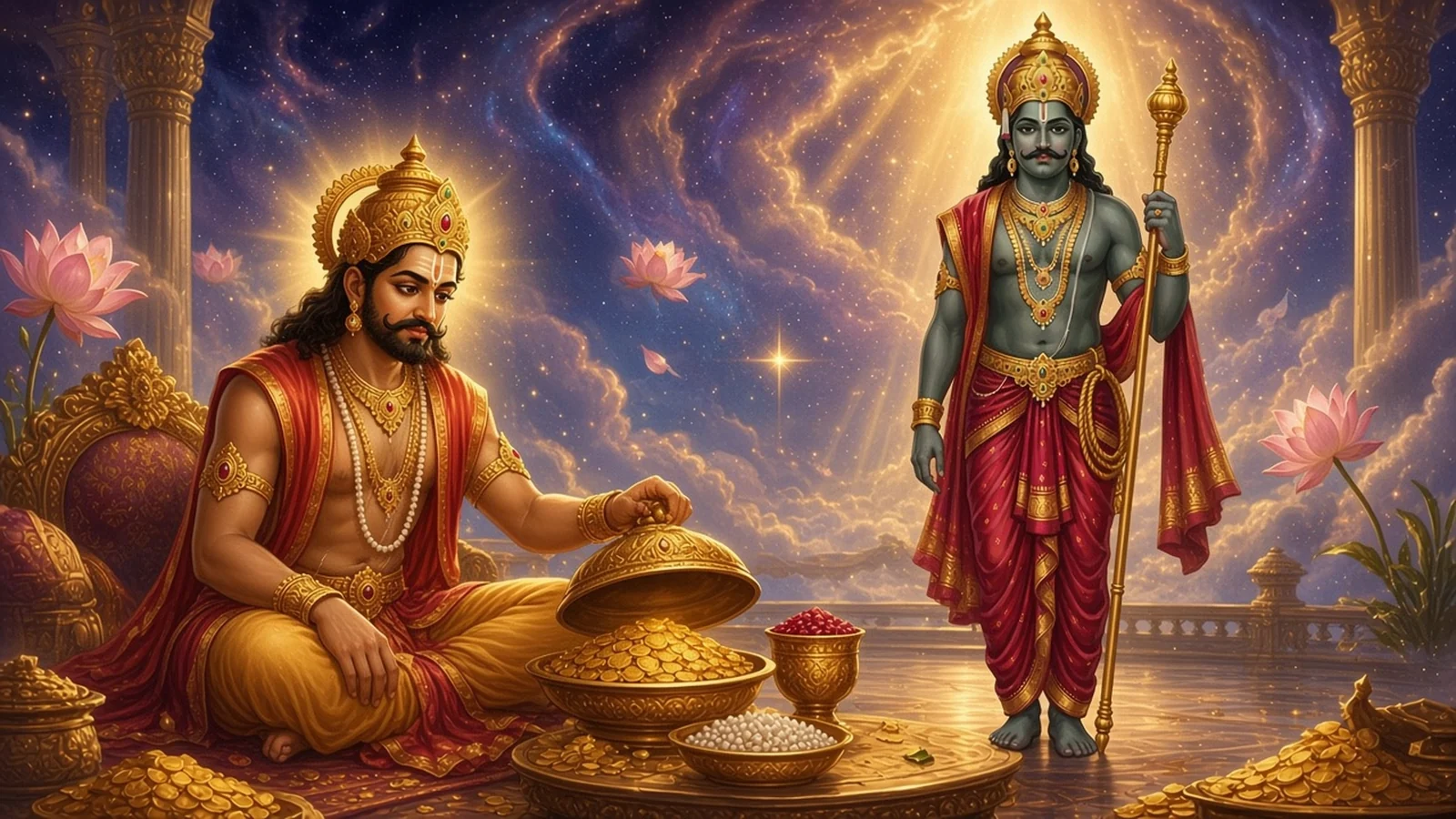
After a while he was hungry. He had not thought the dead could be hungry, but he was, and he sat down where a meal had been set for him and lifted the cover from the dish. It was full of gold coins. He lifted another. Pearls. The cup beside it held rubies, and there was no water anywhere.
He called for the one who keeps that world. Yama came, quietly, as he always comes.
"I gave my whole life," Karna said. "Is this my reward, to starve in a treasury?"
"This is your reward exactly," said Yama. "Here a man receives what he gave, and what was given in his name. You gave gold. Gold is what you have."
"Then let someone give food in my name."
"Who is left to do it? Your sons died on the field beside you. And in all those years of giving, you never once fed your fathers, or poured them a handful of water."
Karna was quiet for a long time. "I did not know who they were," he said at last. "I was found in a basket on a river. I was a charioteer's son until the eve of the war, when a woman came to me at the riverbank and told me she was my mother. How could I feed men whose names I did not know?"
Yama looked at him, and the god of the dead is not without pity.
"Then go back," he said. "Go back for one fortnight, in the dark half of the month, and do what you did not do."
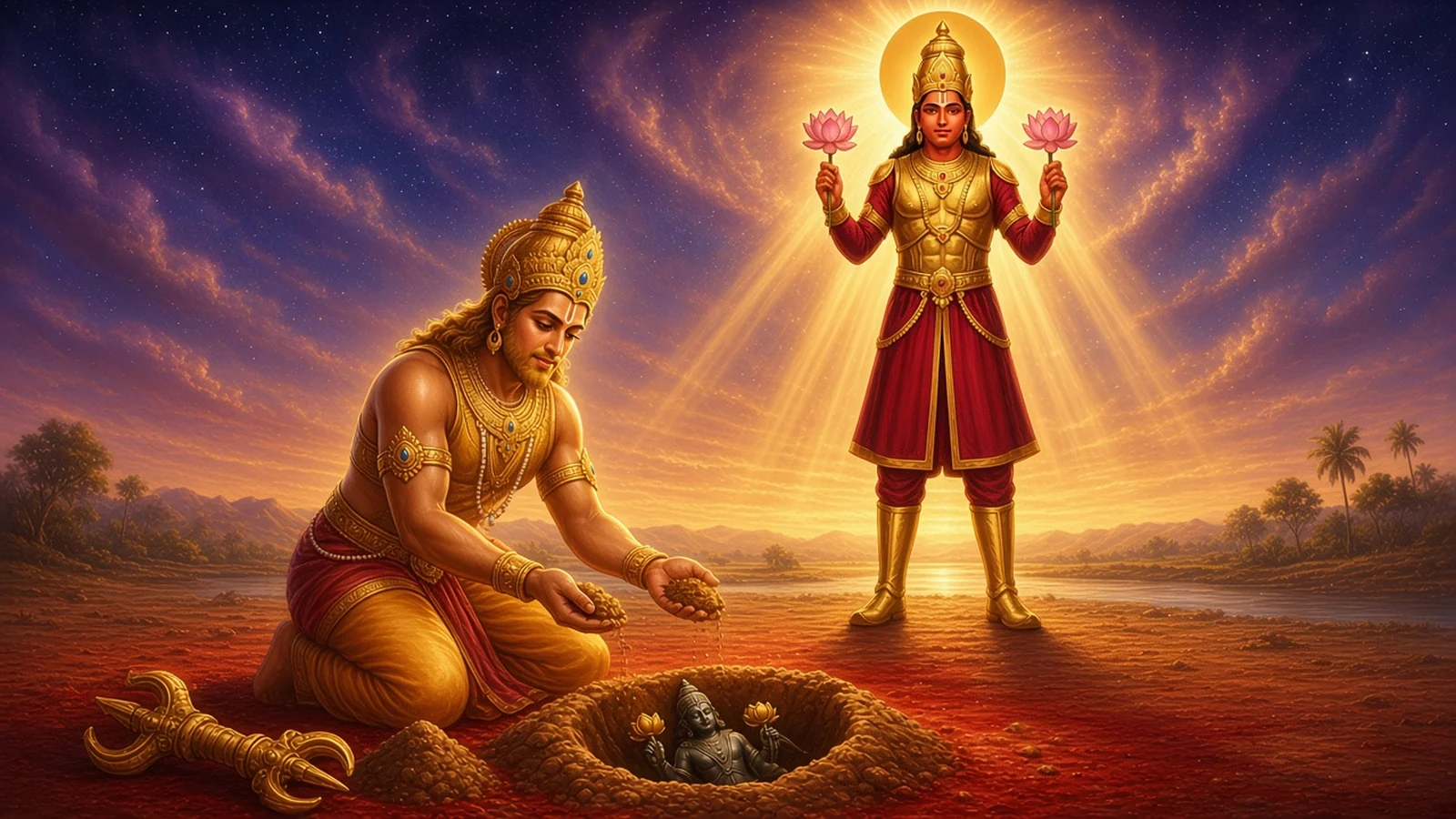
Karna came down to the earth in the waning half of Bhadrapada, when the rains were ending and the fields stood full. For fourteen days he did nothing but feed people. He fed Brahmins and beggars, widows and travellers, whoever came. He gave away cloth. Every morning he stood in the river as he used to stand for the Sun, but now he poured the water from his joined hands with black sesame in it, and said the names of fathers he would never see, as far back as he could learn them. For the rest he said only, "To my fathers, whoever they are."
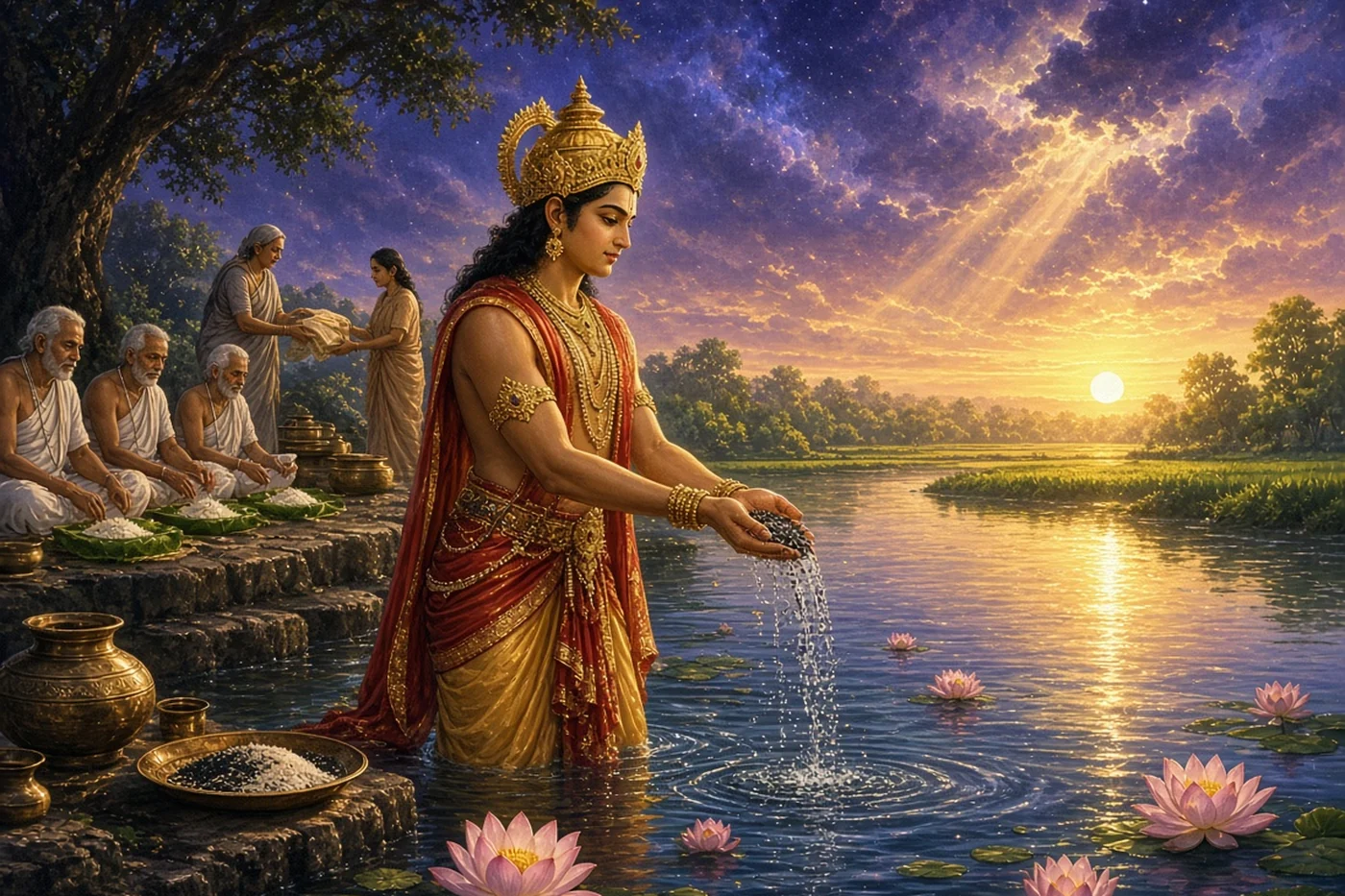
On the last day, the night of no moon, he set out rice for all of them together, and went back up.
This time when he lifted the cover from his dish there was rice under it, and payasam, and the cup beside it was full of water.
Yama came to watch him eat.
"There will be others like you," Yama said. "Men who never knew their fathers' names, or have forgotten the day they died, or have no son left to feed them. So let it be this way. Whatever is given on these days, in this half of the month, reaches every soul in my keeping, whether the giver knew them or not."
In the south the fortnight is Mahalaya Paksha, and its last night is kept for everyone at once. A family that cannot remember the day a grandmother died still feeds the priests on Mahalaya Amavasya, and sets out rice for the crows, and trusts that it will find her.
As the north tells it
Uttar Pradesh, Bihar and beyond · Indra's heaven · 2 min read
In the Hindi country the story is told with Indra, which gives it an edge, because Indra had met Karna before.
Killed at Kurukshetra, Karna was carried up to Indra's heaven, where the brave who fall in battle go, and given a seat of honour. Servants brought him dishes, and every dish held gold: gold shaped like sweets, rice that rang on the plate, jewels piled where the fruit should be. He could not eat any of it.
He went to Indra. The last time the two had stood face to face, the king of the gods had come to him dressed as a Brahmin and begged for his armour and earrings, and Karna had cut them from his own body and handed them over, knowing what that would cost him in the war. Now Karna was the one asking.
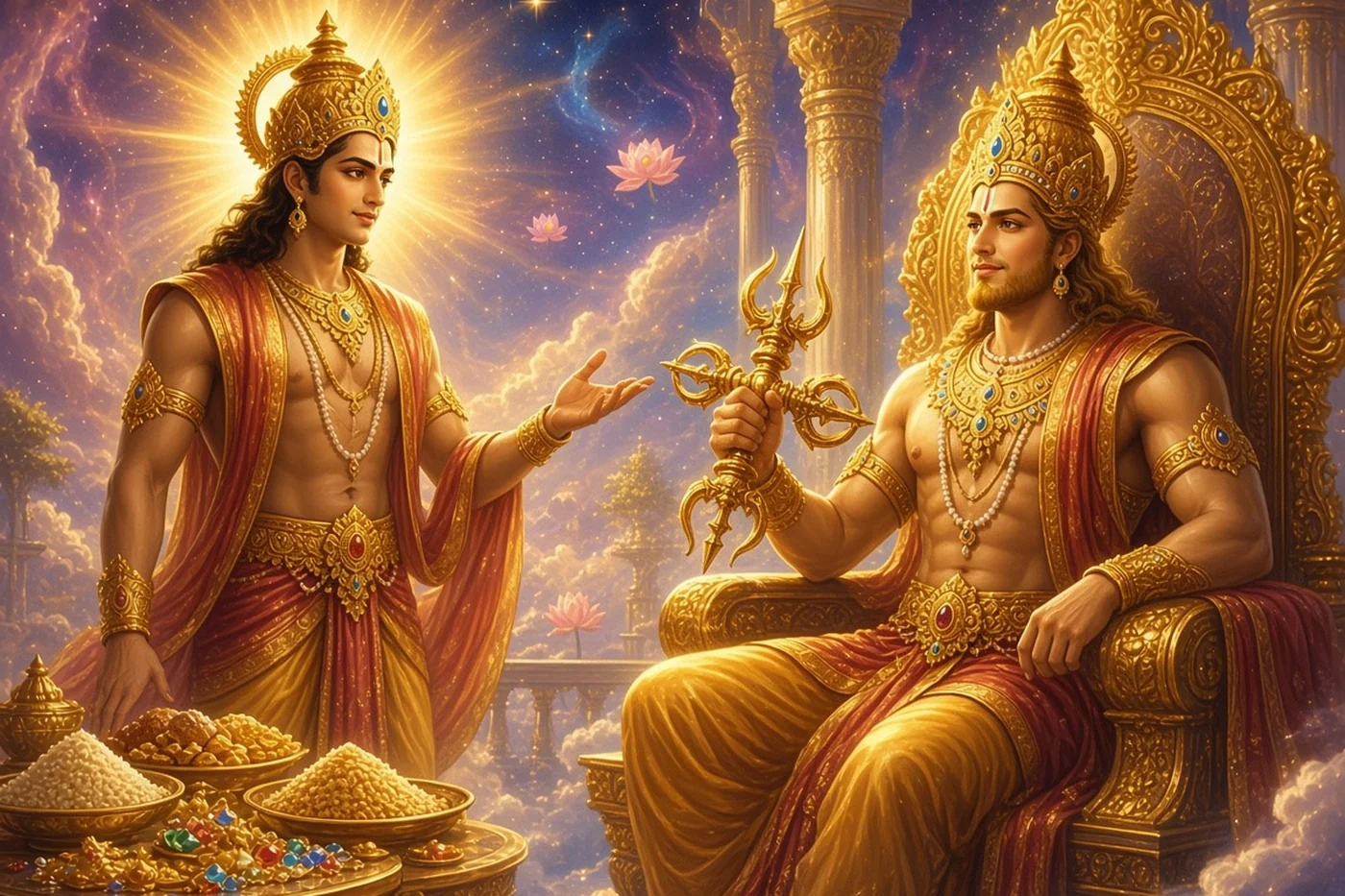
"Why is there nothing here but gold?"
"Because gold is all you sent ahead," Indra said. "You gave it away with both hands, to everyone. But you never offered food or water to your ancestors, not once, and here it is their blessing that feeds a man."
"I did not know who my ancestors were. I learned whose son I was only a few days before I died."
Indra thought about this. It was true, and the Sun, who had been Karna's father all along and had come to him in a dream to warn him about the beggar who wanted his armour, could have said the same.
"Then you shall have fifteen days," Indra said. "Go down, and make it right."
Karna came back to the earth for a fortnight. He fed the hungry, gave away water, and offered balls of rice and water with sesame in the name of ancestors he had never met. When he went up again there was food on his plate.
The fortnight he spent below, with the full moon before it, is the sixteen days that Hindus keep now for their dead, the Pitru Paksha, the fortnight of the fathers.