As the vow's katha tells it
Bhavishyottara Purana, as the digests quote it · Kamboja · 3 min read
Yudhishthira once asked Krishna about the seventh day of the bright half of Magha. "People call it the chariot seventh," he said. "What is kept on it, and what comes to the one who keeps it?"
Krishna answered him with a story.
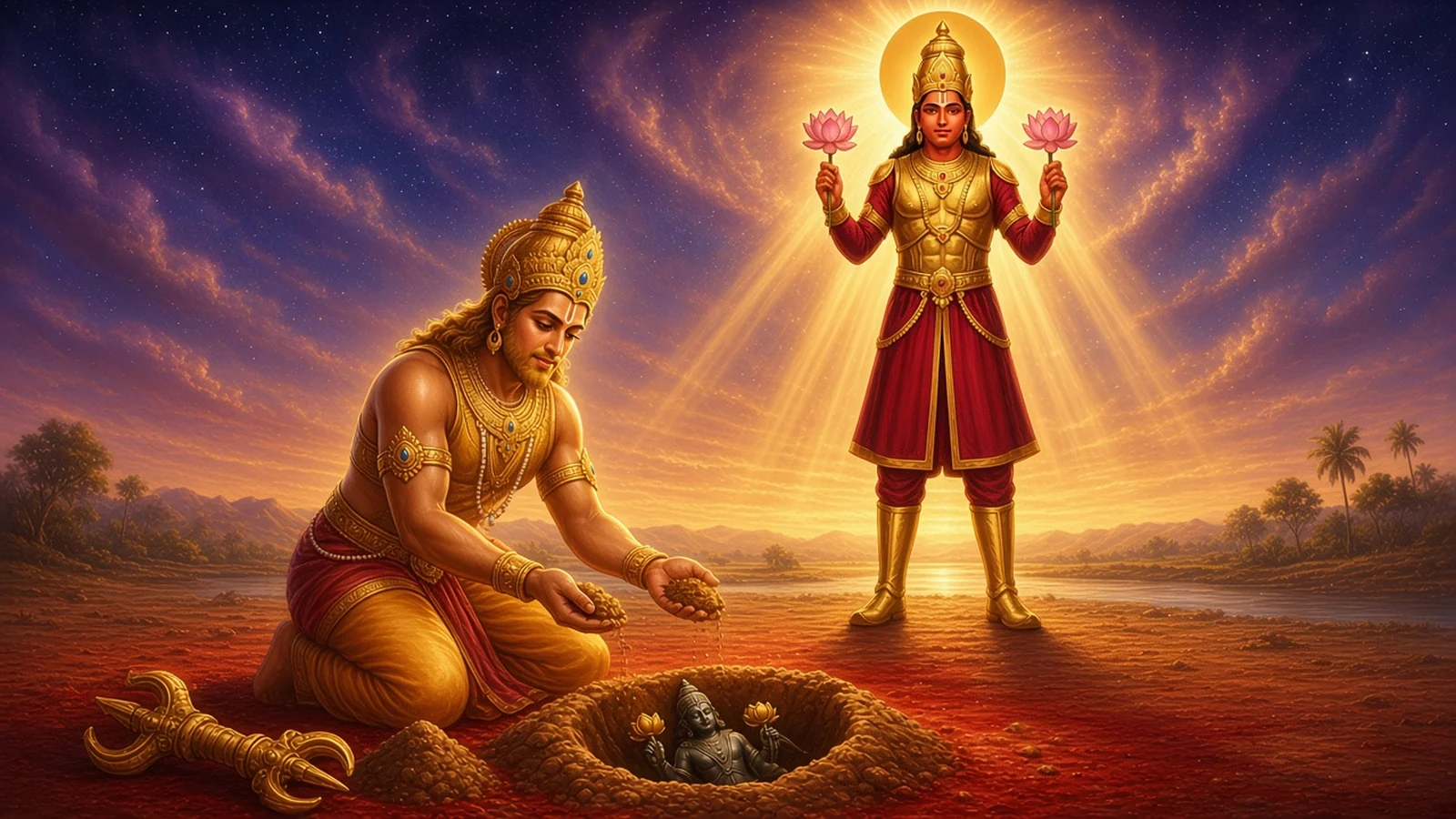
There was a king of Kamboja named Yashovarma. He ruled justly, his people spoke well of him, and he kept every rite his fathers had kept. Only one thing was missing. He had grown old without a son, and there was no one to take the kingdom after him.
So the old king prayed, and the prayer was heard. A son was born in the palace.
But the child was never well. One illness left him and another took its place. The physicians came with their roots and their oils, tried everything they knew, and went away without a cure.
"I asked for a son," the king said, "and I was given one. Why was he given like this?"
At last he sent for a learned Brahmin. Some tellers give him a name, the sage Vinita. He sat by the prince's bed, looked at him for a long while, and closed his eyes.
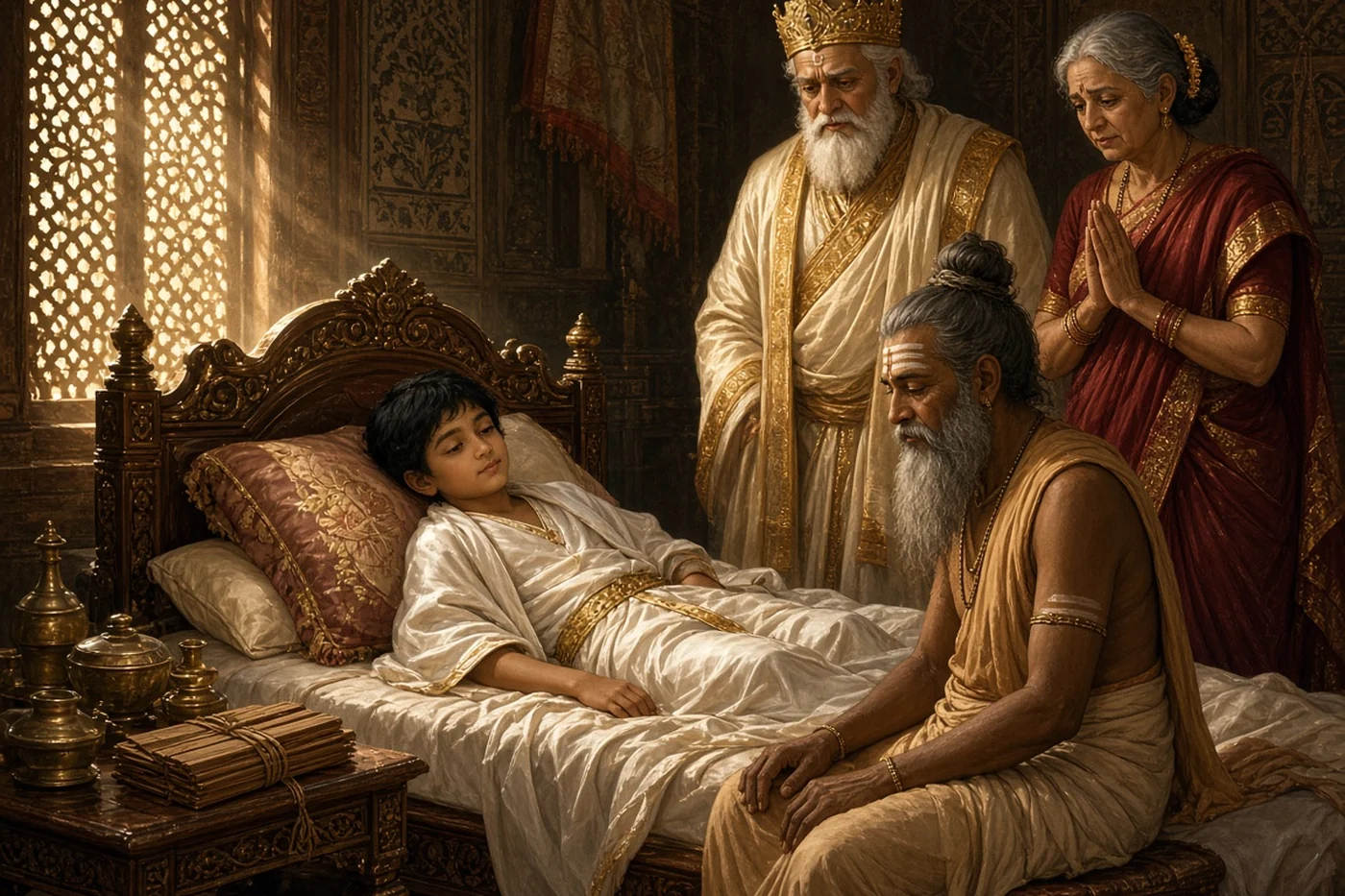
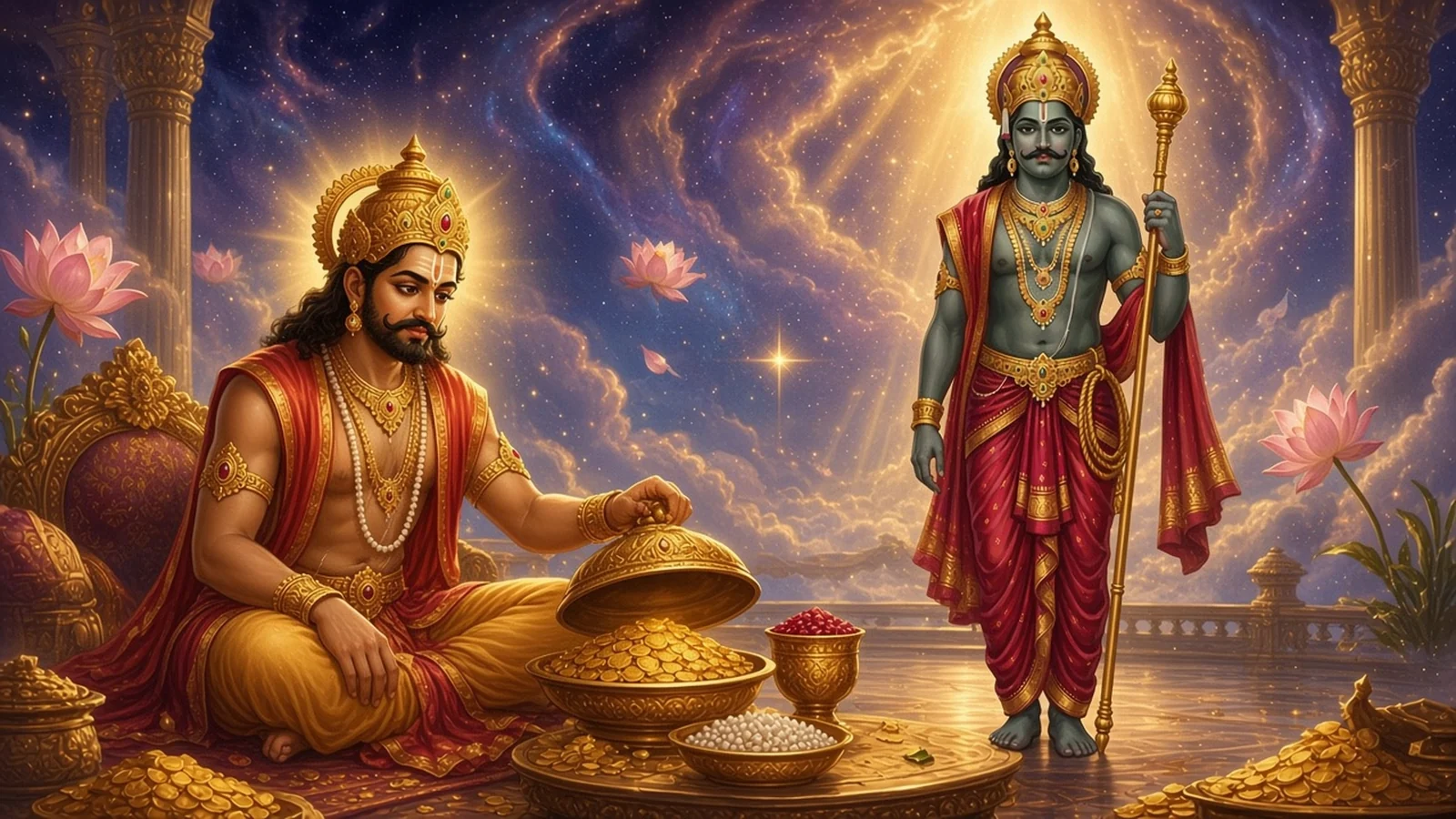
"King," he said when he opened them, "this is not the doing of this life. In the life before, your son was a merchant. He was clever with money and made a great deal of it, and in all those years he never gave anything away. What a man will not give comes back to him as want. Here he was born to everything, and he can enjoy none of it."
"Then is there nothing to be done?"
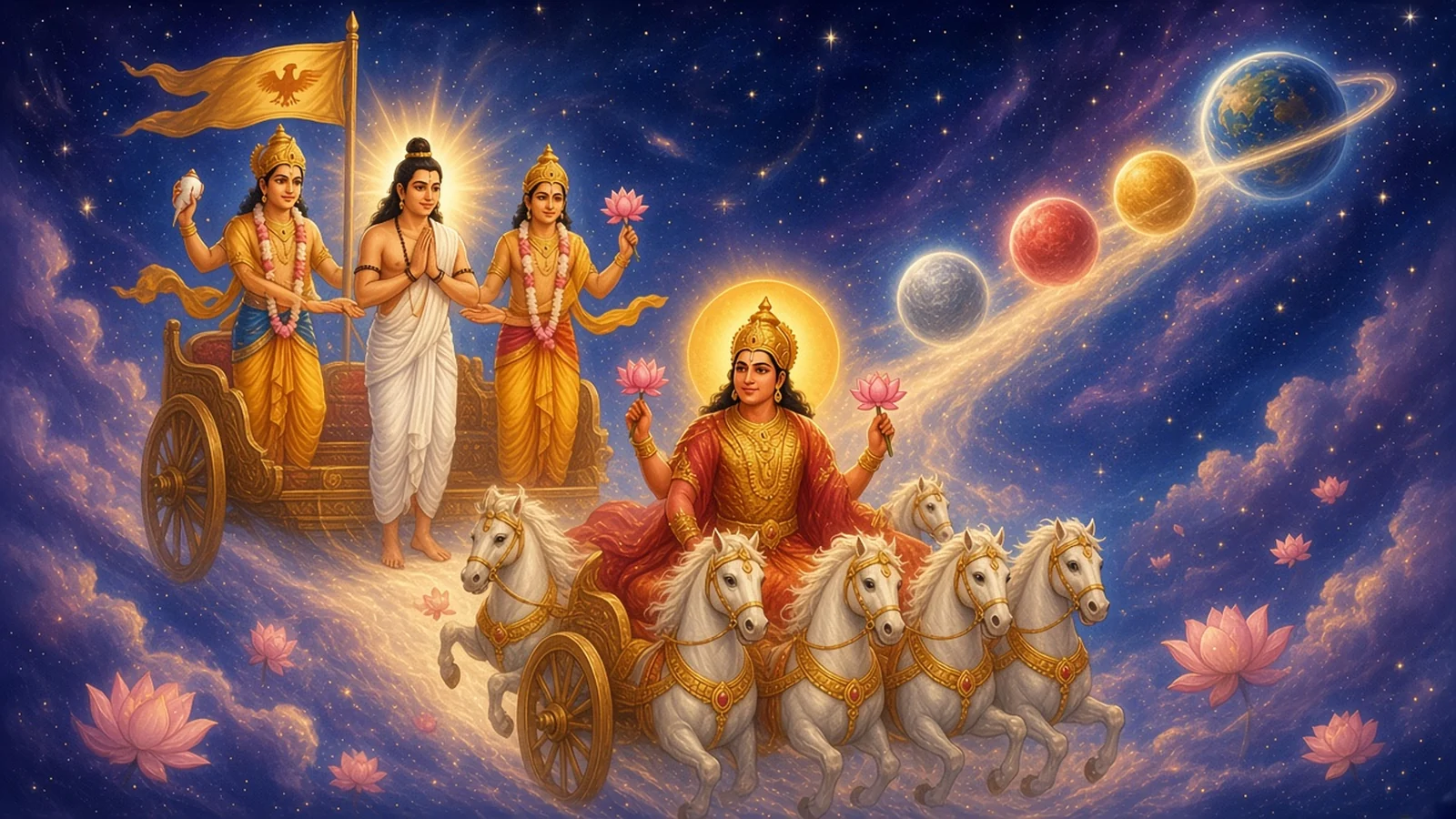
"There is a day," said the Brahmin. "The seventh of the bright half of Magha, the day the Sun first took his chariot. Keep its vow and let the boy see it kept, and the Sun will take the sickness from him."
He told the king how. On the sixth, the day before, he was to bathe without oil on his head, go to the Sun's temple, eat only once, and sleep that night on the floor. He was to have a chariot made, of gold if he could, or else of silver, with its horses and its charioteer, and the Sun seated in it.
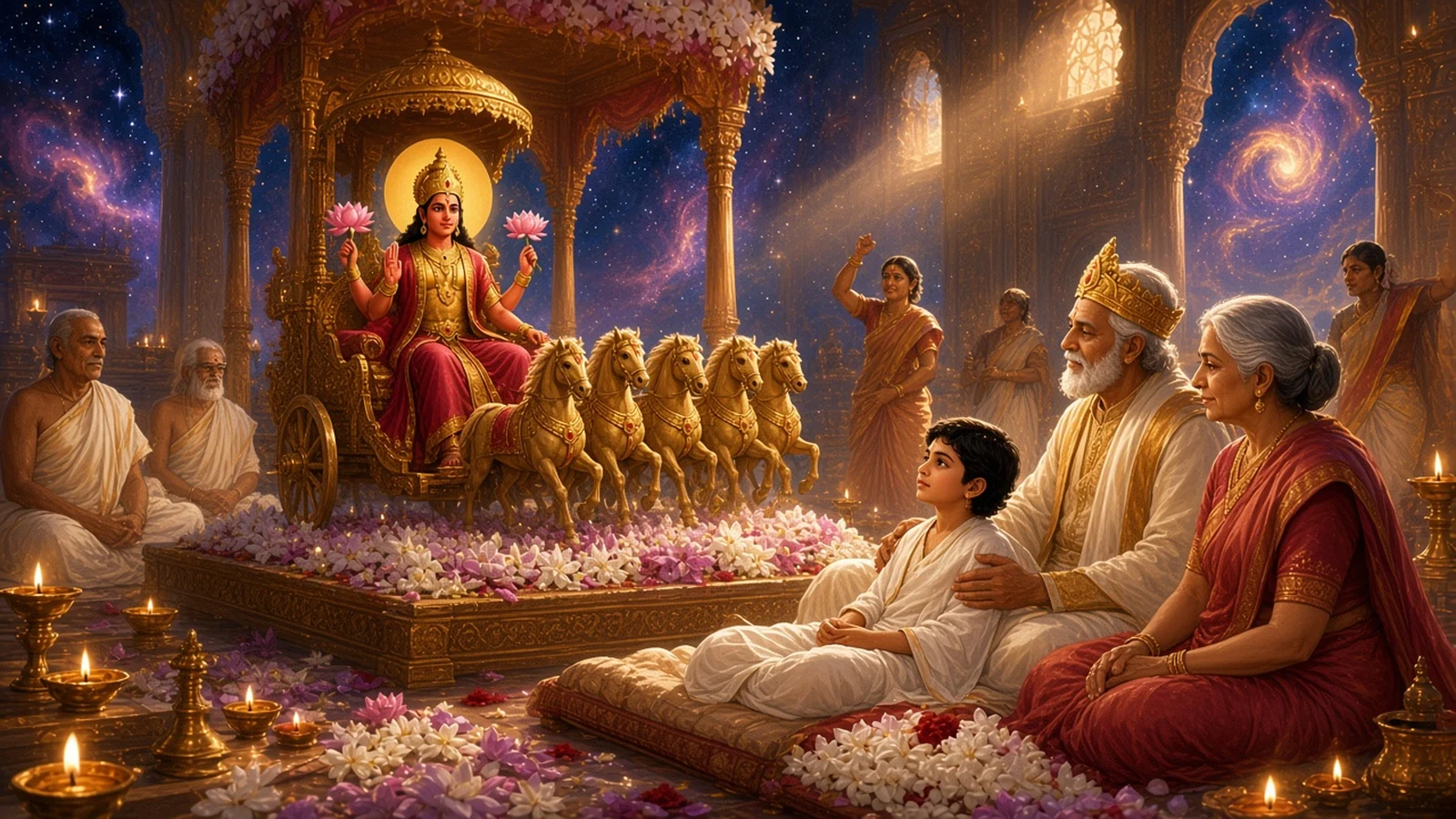
On the seventh he was to bathe again before dawn, set the chariot on a canopied platform and worship it with kumkum and flowers, the arka flowers above all, while the Brahmins recited the hymns to the Sun. He was not to eat that day, and no one was to sleep that night. The palace was to stay awake with songs and dancing until the morning. Then, after another bath, the chariot was to be given to his teacher, and the Brahmins fed before the king ate.
Yashovarma did all of it. The prince was carried in and laid where he could see the golden chariot and the lamps around it, and he watched through the night.
In the morning he got up by himself.
The illnesses went from him one after another, the way they had come. He grew strong, and when the old king died he took the throne and ruled so far and so well that he was counted among the emperors of the earth.
"That is the fruit of it," Krishna told Yudhishthira. "Whoever keeps that seventh as the king kept it is freed from sickness, and may rise as high as that prince rose."
As the dawn bath tells it: Bhishma and the seven leaves
Told in Tamil Nadu and the Telugu country with the arka bath · Kurukshetra · 2 min read
In the south, when people lay seven leaves of the arka plant on themselves before the sun is up, they tell another story, and it is about an old man lying on a battlefield.
Bhishma had been given the power to choose the hour of his death. He had waited for the sun's northern course, and now the sun had turned, and still his life would not leave him. The arrows held him off the ground. His breath stayed in his body.
Vyasa came and sat beside him.
"I have kept my vows all my life," Bhishma said. "What have I done, that I am held here?"
"Not what you did," Vyasa answered. "What you did not do. When Draupadi was dragged into the hall and shamed before the court, you sat there. You had eyes, and you watched. You had ears, and you heard her call. You had a voice every man in that hall would have obeyed, and you kept silent. Your arms were strong and stayed still, and your feet never left your seat."
Bhishma did not argue. "Then what can burn it out of me?"
"Only the Sun can burn away such a thing," said Vyasa. "But no man can bear the Sun himself."
He had brought leaves of the arka, the plant that bears the Sun's own name and is said to hold his heat. He laid them on Bhishma, one on the head and the others on the eyes, the shoulders and the feet. As they lay on him the old man grew quiet, and the restlessness went out of him.
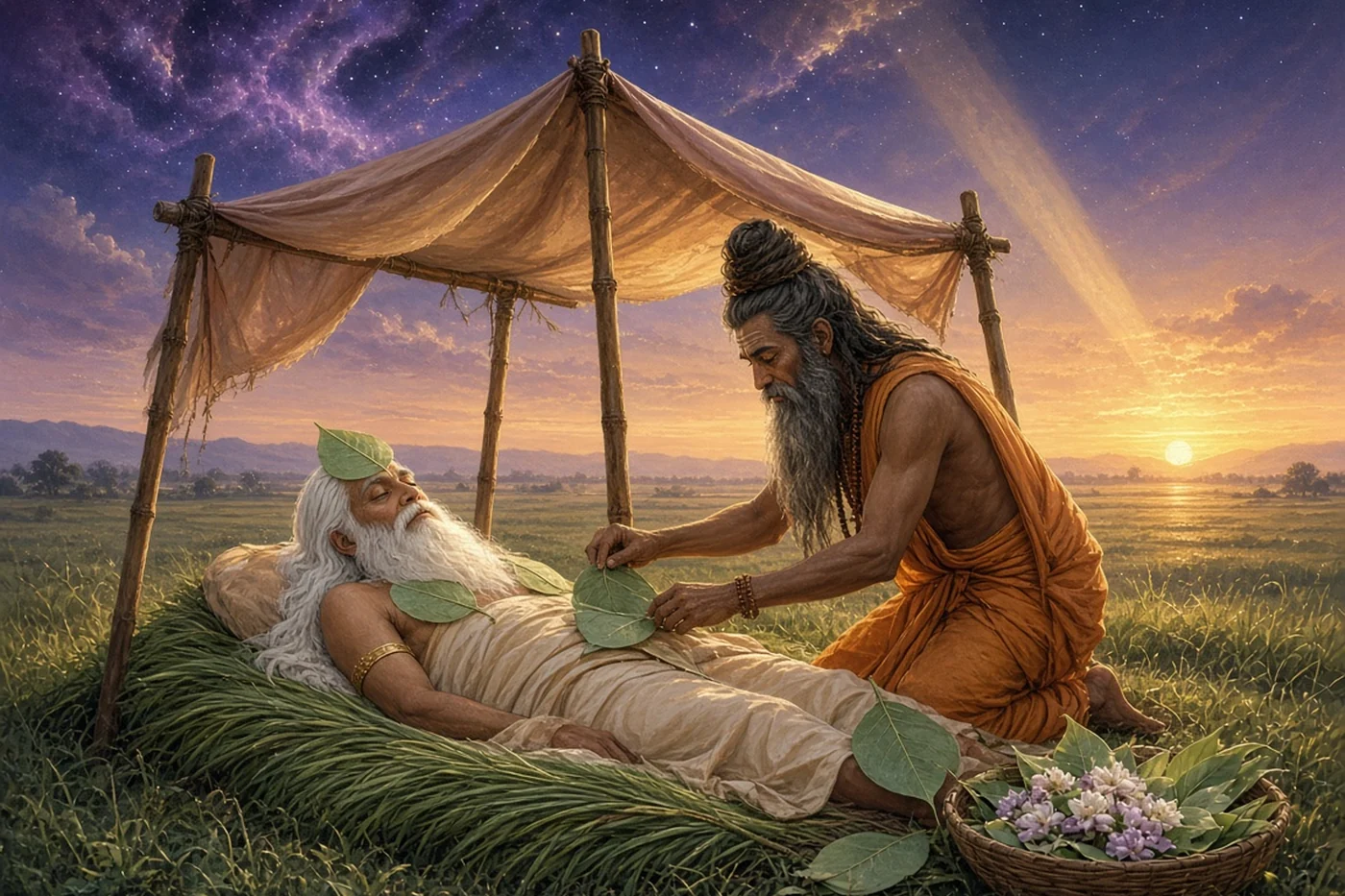
Some say he died that same day, and some say on the next, the eighth, which is kept as his day. And Vyasa, they say, made a promise for everyone who would come after. Whoever bathes on this seventh with arka leaves upon the body, and pours water in Bhishma's name, is washed clean as he was.